Illustrations

A collection of miscellaneous bits and pieces of information and illustrations to supplement your lessons. 


GENERAL

11 Rules for Children to Learn | Good advice for all kids.
177 Titles and Names of Christ | Based on the KJV.
• 25 Great One-Liners | Thoughts to ponder.
57 Cents | God can use the smallest to do His work.
• A Matter of Perspective | Regarding our troops.
A Mouse Story | When one of us is threatened we are all at risk.
A Refiner and Purifier of Silver | Insight into the refiner and his fire.
A Village of Just 100 People | If the world was reduced to a village of 100.
An 8 Year Old Explains God | A child’s homework assignment.
I Receive Your Smell | Saying “I Love You” in the Fon language of Benin.
Beauty of Mathematics | What will it take for you to give 101%?
Before You Decide | Ask these questions before making decisions.
Carrots, Eggs, and Coffee Beans | Which are you?
Cell Phones and Bibles | If we treated our Bibles like our cell phones.
Chain Reaction | Events set in motion by a Sunday School treacher.
Change Your Strategy | Think about how we say things.
Christ in the Word | Christ in all the books of the Bible.
Coal Basket Bible | Read a portion of God’s Word every day.
Corporate Geniuses | For lessons on leadership.
Dear God | Children’s prayers to God.
Do Good Now! | Don’t put off opportunities to do good.
Dogs | Are you the person your dog thinks you are?
Don’t We All? | Three words worth considering.
Dr. Christianson’s Donuts | Not all sermons are preached with words.
Easter 2008 | Why Easter came early in 2008.
Fellowship of the Unashamed | From the diary of a young African martyr.
God and the Spider | An unusual wall of protection.
Have a Cup of Coffee | A thought-provoking parable.
I Think About You Everyday | A man with a close walk with Jesus.
Information, Please | Never underestimate the impression you make.
Inspiring Thoughts | By great Christian speakers.
Integrity Counts | How much is your integrity worth?
Interest on the Widow’s Mite | Do the math on this small gift.
Interesting Signs | These give new meaning to “signs of the times.”
Isaiah 65:24 | An African child who prayed with boldness.
It Depends Whose Hands It’s In | Consider the worth of what is in your hands.
It’s Almost Jesus’ Birthday | What gift will you give to Jesus this year?
Jesus Had No Servants | Consider Jesus and how He lived.
Jesus Loves Me | Senior adult version.
Language Twists | Who said English was easy to learn?
Mean Moms and Dads | Why parents are so mean.
Old Cowboy in Church | Illustration of James 2:1-4.
One Sentence Themes of Bible Books | Based on the KJV.
One Solitary Life | A summary of Christ’s life.
Positive Diversity | People will remember how you made them feel.
Psalm 23 | A new look at a favorite psalm.
Quotes by Famous People
Random Thoughts | Modern day proverbs.
Resumé of Jesus Christ | Give Jesus the top position ion your heart.
Return the Cross to Golgotha | Don’t lose sight of where Jesus died.
Road Rage | Do others see Jesus in you?
Seven Great Changes | Insight from D.L. Moody.
State Constitution Preambles
Take the Son | Illustration of John 3:16.
Ten Ways to Stay Young
The Bible Attacked
The Bible in 50 Words
The Bottom Line | No excuses for living according to low expectations.
The Carpenter | Build wisely.
The Lord’s Baseball Game | It takes Grace to get you home.
The Lord’s Prayer
The Meaning of the Candy Cane | A symbol of the meaning of Christmas.
The Sand and the Stone | Advice for dealing with hurts and blessings.
The Seven Wonders of the World
The Tablecloth | Beautiful story about a reunion.
The Value | Value what is important.
The Whipping | What Jesus did for us.
Three Things | Consider this as you live your life.
To Kids Born in the 1930’s — 1960’s | Reflections on growing up.
Violinist in the Metro | It pays to stop to listen to the music.
What Will God Ask?
What Others Have Said About the Bible
When Insults Had Class | On the use of the tongue.
William Borden | A short life well-lived.
You Say / God Says | Keep things in perspective.

POETRY

Back Home | Reflecting on childhood.
Count Your Blessings
Failure | A reminder that failure does not have to be final.
Freedom Isn’t Free
Holy Alphabet
I Won’t Let Go | On perseverance.
Kiss My Foot | Every member of the body is important.
Ten Little Christians | Are you on the building or wrecking crew?
The Anvil | About the enduring nature of God’s Word.
The Cork and the Whale | About staying afloat in tough times.
The Oyster | Making the most of what gets under your skin.
The Weaver | On perspective.
Tomorrow | On procrastination.
When Tomorrow Starts Without Me | On loss and grief.

HUMOR

Average Christians Can’t Play Baseball
Bible Humor
Biblical Headlines
Can of Worms | An object lesson goes wrong.
Children’s Biblical Wisdom
Classes for Men
Daddy’s Gonna Eat Your Fingers
Eleven People on a Rope | The power of a moving speech.
Humorous Newspaper Ads
Holiday Tips
Inquiring Minds Want to Know
Just One of Those Days
Kids Answers to Questions About Moms
Melody in F | A different look at the parable of the prodigal son.
Noah’s Ark 2005
Pecans in the Cemetery | How fast can you run?
Praise Choruses and Hymns
Redneck Church
Religious Funnies
Riding a Dead Horse
Secret of a Long Marriage
A Senior Christmas | New twist on “Twas the Night Before Christmas.”
Signs You Are in For a Long Sermon
Summary of Last Year on Computer
Ten Reasons You Should Tithe
Test to See if You’re a Grinch
Ways to Know You’re in a Bad Church
Wrong E-mail Address | Double-check the address before sending email.

A Matter of Perspective

Your alarm goes off, you hit the snooze and sleep for another 10 minutes.
He stays up for days on end.

You take a warm shower to help you wake up.
He goes days or weeks without running water.

You complain of a “headache” and call in sick.
He gets shot at, as others are hit, and keeps moving forward.

You put on your anti war/don’t support the troops shirt, and go meet up with your friends.
He still fights for your right to wear that shirt.

You make sure you’re cell phone is in your pocket.
He clutches the cross hanging on his chain next to his dog tags.

You talk trash on your “buddies” that aren’t with you.
He knows he may not see some of his buddies again.

You walk down the beach, staring at all the pretty girls.
He walks the streets, searching for insurgents and terrorists.

You complain about how hot it is.
He wears his heavy gear, not daring to take off his helmet to wipe his brow.

You go out to lunch, and complain because the restaurant got your order wrong.
He does not get to eat today.

Your maid makes your bed and washes your clothes.
He wears the same things for months, but makes sure his weapons are clean.

You go to the mall and get your hair redone.
He doesn’t have time to brush his teeth today.

You are angry because your class ran 5 minutes over.
He is told he will be held an extra 2 months.

You call your girlfriend and set a date for that night.
He waits for the mail to see if there is a letter from home.

You hug and kiss your girlfriend, like you do everyday.
He holds his letter close and smells his love’s perfume.

You roll your eyes as a baby cries.
He gets a letter with pictures of his new child, and wonders if they’ll ever meet.

You criticize your government, and say that war never solves anything.
He sees the innocent tortured and killed by their own government and remembers why he is fighting.

You hear the jokes about the war, and make fun of the men like him.
He hears the gunfire and bombs.

You see only what the media wants you to see.
He sees the bodies lying around him.

You are asked to go to the store by your parents. You don’t.
He does what he is told.

You stay at home and watch TV.
He takes whatever time he is given to call and write home, sleep, and eat.

You crawl into your bed, with down pillows, and try to get comfortable.
He crawls under a tank for shade and a 5-minute nap, only to be awakened by gunfire.

You sit there and judge him, saying the world is a worse place because of men like him.
If only there were more men like him.

Pray for these soldiers and ask God to protect them.
God Bless America

57 Cents

A sobbing little girl stood near a small church from which she had been turned away because it was “too crowded.”

“I can’t go to Sunday School,” she sobbed to the pastor as he walked by.

Seeing her shabby, unkempt appearance, the pastor guessed the reason and, taking her by the hand, took her inside and found a place for her in the Sunday school class. The child was so happy that they found room for her, and she went to bed that night thinking of the children who have no place to worship Jesus.

Some two years later, this child lay dead in one of the poor tenement buildings. Her parents called for the kindhearted pastor who had befriended their daughter to handle the final arrangements.

As her poor little body was being moved, a worn and crumpled red purse was found which seemed to have been rummaged from some trash dump.

Inside was found 57 cents and a note, scribbled in childish handwriting, which read: “This is to help build the little church bigger so more children can go to Sunday School”

For two years she had saved for this offering of love.

When the pastor tearfully read that note, he knew instantly what he would do. Carrying this note and the cracked, red pocketbook to the pulpit, he told the story of her unselfish love and devotion.

He challenged his deacons to get busy and raise enough money for the larger building.

But the story does not end there…

A newspaper learned of the story and published it. It was read by a wealthy realtor who offered them a parcel of land worth many thousands.

When told that the church could not pay so much, he offered to sell it to the little church for 57 cents.

Church members made large donations. Checks came from far and wide.

Within five years the little girl’s gift had increased to $250,000.00—a huge sum for that time (near the turn of the century). Her unselfish love had paid large dividends.

When you are in the city of Philadelphia, look up Temple Baptist Church, with a seating capacity of 3,300. And be sure to visit Temple University, where thousands of students are educated.

Have a look, too, at the Good Samaritan Hospital and at a Sunday School building which houses hundreds of beautiful children, built so that no child in the area will ever need to be left outside during Sunday school time.

In one of the rooms of this building may be seen the picture of the sweet face of the little girl whose 57 cents, so sacrificially saved, made such remarkable history. Alongside of it is a portrait of her kind pastor, Dr. Russ H. Conwell, author of the book, “Acres of Diamonds.”

25 Great One-Liners

1. Give God what’s right — not what’s left.

2. Man’s way leads to a hopeless end — God’s way leads to an endless hope.

3. A lot of kneeling will keep you in good standing.

4. He who kneels before God can stand before anyone.

5. In the sentence of life, the devil may be a comma — but never let him be the period.

6. Don’t put a question mark where God puts a period.

7. Are you wrinkled with burden? Come to the church for a faith-lift.

8. When praying, don’t give God instructions – just report for duty.

9. Don’t wait for six strong men to take you to church.

10. We don’t change God’s message — His message changes us.

11. The church is prayer-conditioned.

12. When God ordains, He sustains.

13. WARNING: Exposure to the Son may prevent burning.

14. Plan ahead. It wasn’t raining when Noah built the ark.

15. Most people want to serve God, but only in an advisory position.

16. Suffering from truth decay? Brush up on your Bible.

17. Exercise daily — walk with the Lord.

18. Never give the devil a ride — he will always want to drive.

19. Nothing else ruins the truth like stretching it.

20. Compassion is difficult to give away because it keeps coming back.

21. He who angers you controls you.

22. Worry is the darkroom in which negatives can develop.

23. Give Satan an inch and he’ll be a ruler.

24. Be ye fishers of men — you catch them and He’ll clean them.

25. God doesn’t call the qualified, He qualifies the called.

177 Titles and Names of Christ

1.  Abraham’s Seed  Genesis 22:18; Galatians 3:16 
2.  Advocate  1 John 2:1 
3.  Almighty  Revelation 1:8 
4.  Alpha and Omega  Revelation 1:8; 22:13 
5.  Amen  Revelation 3:14 
6.  Angel  Genesis 48:16; Exodus 23:20-21 
7.  Angel of God’s Presence  Isaiah 63:9 
8.  Angel of the Lord  Exodus 3:2; Judges 13:15-22 
9.  Apostle  Hebrews 3:1 
10.  Arm of the Lord  Isaiah 51:9; 53:1 
11.  Authour and Finisher of our faith  Hebrews 12:2 
12.  Author of eternal salvation  Hebrews 5:9 
13.  Beginning of the creation of God  Revelation 3:14 
14.  Beloved  Ephesians 1:6 
15.  Beloved Son  Matthew 12:18 
16.  Blessed and only Potentate  1 Timothy 6:15 
17.  Branch  Jeremiah 23:5; Zechariah 3:8; 6:12 
18.  Bread of Life  John 6:35, 48 
19.  Bridegroom  Matthew 9:15 
20.  Bright and Morning Star  Revelation 22:16 
21.  Captain of Salvation  Hebrews 2:10 
22.  Captain of the Lord’s Host  Joshua 5:14-15 
23.  Carpenter  Mark 6:3 
24.  Carpenter’s Son  Matthew 13:55 
25.  Chief Cornerstone  Ephesians 2:20; 1 Peter 2:6 
26.  Chief Shepherd  1 Peter 5:4 
27.  Christ  Matthew 16:20; Mark 14:16; Luke 23:2 
28.  Christ Jesus  Acts 19:4; Romans 3:24; 8:1; 1 Corinthians 1:2, 30 
29.  Christ Jesus our Lord  Romans 8:39; 1 Timothy 1:12 
30.  Christ of God  Luke 9:20 
31.  Christ the Lord  Luke 2:11 
32.  Commander  Isaiah 55:4 
33.  Consolation of Israel  Luke 2:25 
34.  Cornerstone  Matthew 21:42; Ephesians 2:20 
35.  Counselor  Isaiah 9:6 
36.  Creator  John 1:3 
37.  David  Jeremiah 30:9; Ezekiel 34:23 
38.  Dayspring  Luke 1:78 
39.  Deliverer  Romans 11:26 
40.  Desire of all nations  Haggai 2:7 
41.  Door  John 10:7 
42.  Elect of God  Isaiah 42:1 
43.  Eternal life  1 John 1:2; 5:20 
44.  Everlasting Father  Isaiah 9:6 
45.  Faithful and True  Revelation 19:11 
46.  Faithful Witness  Revelation 1:5; 3:14 
47.  First and Last  Revelation 1:17; 2:8 
48.  Firstborn  Psalm 89:27; Hebrews 1:6; Revelation 1:5 
49.  Forerunner  Hebrews 6:20 
50.  Fountain  Zechariah 13:1 
51.  Glory of the Lord  Isaiah 40:5 
52.  God  Isaiah 40:9; John 20:28 
53.  God blessed forever  Romans 9:5 
54.  God’s fellow  Zechariah 13:7
55.  Good Shepherd  John 10:14 
56.  Governor  Matthew 2:6 
57.  Great High Priest  Hebrews 4:14 
58.  Head of the Church  Ephesians 5:23; Colossians 1:18 
59.  Heir of all things  Hebrews 1:2 
60.  High Priest  Hebrews 4:14 
61.  Holy Child  Acts 4:27 
62.  Holy One  Psalm 16:10; Acts 2:27; 3:14 
63.  Holy One of God  Mark 1:24 
64.  Holy One of Israel  Isaiah 41:14; 54:5 
65.  Horn of salvation  Luke 1:69 
66.  I AM  Exodus 3:14; John 8:58 
67.  Image of God  2 Corinthians 4:4 
68.  Immanuel  Isaiah 7:14; Matthew 1:23 
69.  Jesus  Matthew 1:21; 1 Thessalonians 1:10 
70.  Jesus Christ  Matthew 1:1 
71.  Jesus of Nazareth  Matthew 21:11; Mark 1:24; Luke 24:19 
72.  Judge  Acts 10:42; 2 Timothy 4:8 
73.  Judge of Israel  Micah 5:1 
74.  Just One  Acts 7:52; 22:14 
75.  King  Zechariah 9:9; Matthew 21:5 
76.  King of Glory  Psalms 24:7-10 
77.  King of Israel  John 1:49 
78.  King of Kings  1 Timothy 6:15; Revelation 17:14 
79.  King of peace  Hebrews 7:2 
80.  King of righteousness  Hebrews 7:2 
81.  King of saints  Revelation 15:3 
82.  King of Salem  Hebrews 7:1 
83.  King of the Jews  Matthew 2:2; 27:37; John 19:19 
84.  King of Zion  Matthew 21:25 
85.  Lamb  Revelation 5:6,12; 13:8; 21:22; 22:3 
86.  Lamb of God  John 1:29,36 
87.  Lawgiver  Isaiah 33:22 
88.  Leader  Isaiah 55:4 
89.  Life  John 14:6; Colossians 3:4; 1 John 1:2 
90.  Light of the world  John 1:8; 8:12 
91.  Lily of the valleys  Song of Solomon 2:1 
92.  Lion of the tribe of Judah  Revelation 5:5 
93.  Living bread  John 6:51 
94.  Living stone  1 Peter 2:4 
95.  Lord and Savior  2 Peter 1:11; 3:18 
96.  Lord Christ  Colossians 3:24 
97.  Lord God Almighty  Revelation 15:3 
98.  Lord God of the holy prophets  Revelation 22:6 
99.  Lord Jesus  Acts 7:59; Colossians 3:17 
100.  Lord Jesus Christ  Acts 11:17; 16:31; 20:21 
101.  Lord of all  Acts 10:36 
102.  Lord of glory  1 Corinthians 2:8; James 2:1 
103.  Lord of Hosts  Isaiah 44:6 
104.  Lord of Lords  1 Timothy 6:15; Revelation 17:14; 19:16 
105.  Lord our righteousness  Jeremiah 23:6; 33:16 
106.  Man of sorrows  Isaiah 53:3 
107.  Mediator  1 Timothy 2:5 
108.  Messenger of the covenant  Malachi 3:1 
109.  Messiah  Daniel 9:25; John 1:41 
110.  Mighty God  Isaiah 9:6 
111.  Mighty One of Israel  Isaiah 30:29 
112.  Mighty One of Jacob  Isaiah 49:26; 60:16 
113.  Moringstar  Revelation 22:16; 2 Peter 1:19 
114.  Most Holy  Daniel 9:24 
115.  Nazarene  Matthew 9:23 
116.  Offspring of David  Revelation 22:16 
117.  Only begotten  John 1:14 
118.  Only begotten Son John 1:18 
119.  Our Passover  1 Corinthians 5:7 
120.  Potentate  1 Timothy 6:15 
121.  Power of God  1 Corinthians 1:24 
122.  Prince  Acts 5:31 
123.  Prince of life  Acts 3:15 
124.  Prince of peace  Isaiah 9:6 
125.  Prince of the kings of the earth  Revelation 1:5 
126.  Prophet  Matthew 21:11; Luke 24:19; John 7:40 
127.  Rabbi  John 1:49 
128.  Rabboni  John 20:16 
129.  Ransom  1 Timothy 2:6 
130.  Redeemer  Job 19:25; Isaiah 59:20; 60:16 
131.  Resurrection and life  John 11:25 
132.  Rock  1 Corinthians 10:4 
133.  Rock of offence  1 Peter 2:8 
134.  Root of David  Revelation 5:5; 22:16 
135.  Root of Jesse  Isaiah 11:10 
136.  Rose of Sharon  Song of Solomon 2:1 
137.  Ruler of Israel  Micah 5:2 
138.  Savior  Luke 2:11; 2 Peter 2:20; 3:18 
139.  Savior of the body  Ephesians 5:23 
140.  Sceptre  Numbers 24:17 
141.  Second Adam  1 Corinthians 15:45 
142.  Second Man  1 Corinthians 15:47 
143.  Seed of David  2 Timothy 2:8 
144. Seed of woman  Genesis 3:15 
145.  Servant  Isaiah 42:1; 52:13; 53:11; Acts 4:30 
146.  Servant of Rulers  Isaiah 49:7 
147.  Shepherd  Mark 14:27 
148.  Shepherd and overseer of souls  1 Peter 2:25 
149.  Shepherd of Israel  Psalm 80:1 
150.  Shiloh  Genesis 49:10 
151.  Son of David  Matthew 9:27 
152.  Son of God  Luke 1:35; John 1:49 
153.  Son of Joseph  John 6:42 
154.  Son of man  John 5:27 
155.  Son of the Blessed  Mark 14:61 
156.  Son of the Father  2 John 1:3 
157.  Son ofthe Highest  Luke 1:32 
158.  Star  Numbers 24:17 
159.  Stone of stumbling  1 Peter 2:8 
160.  Sun of righteousness  Malachi 4:2 
161.  Sure foundation  Isaiah 28:16 
162.  Surety  Hebrews 7:22 
163.  Teacher  Matthew 23:8; John 3:2 
164.  Tender plant  Isaiah 53:2 
165.  True God  1 John 5:20 
166.  True light  John 1:9 
167.  True vine  John 15:1 
168.  Truth  John 14:6 
169.  Vine  John 15:1 
170.  Way  John 14:6 
171.  Wisdom  Proverbs 8:12 
172.  Wisdom of God  1 Corinthians 1:24 
173.  Witness  Isaiah 55:4; Revelation 1:5 
174.  Wonderful  Isaiah 9:6 
175.  Word  John 1:1; 1 John 5:7 
176.  Word of God  Revelation 19:13 
177.  Word of life  1 John 1:1 

11 Rules for Children to Learn

1. Life is not fair. Get used to it.

2. The world won’t care about your self-esteem. The world will expect you to accomplish something BEFORE you feel good about yourself.

3. You will NOT make 40 thousand dollars a year right out of high school.

4. If you think your teacher is tough, wait till you get a boss.

5. Flipping burgers is not beneath your dignity. Your grandparents had a different word for burger flipping … they called it “opportunity”.

6. If you mess up, it’s not your parents’ fault, so don’t whine about your mistakes. Learn from them.

7. Before you were born, your parents weren’t as boring as they are now. They got that way from paying your bills, cleaning your clothes and listening to you talk about how cool you are. So before you save the rain forest from the parasites of your parents’ generation, try organizing the closet in your own room.

8. Your school may have done away with “winners” and “losers,” but life has not. In some schools they have abolished failing grades, and they’ll give you as many times as you want to get the right answer. This doesn’t bear the slightest resemblance to ANYTHING in real life.

9. Life is not divided into semesters. You don’t get Summers off and very few employers are interested in helping you find yourself. Do that on your own time.

10. Television is NOT real life. In real life, people actually have to leave the coffee shop and go to jobs.

11. Be nice to “nerds.” Chances are you’ll end up working for one.


 The above rules are an excerpt from the book “Dumbing Down Our Kids: Why American Children Feel Good About Themselves, But Can’t Read, Write or Add”
by educator Charles Sykes.

The Resurrection of Christ

1 Corinthians 15:3-4

In his letter to the Corinthians, Paul summed up the essence of the gospel in the statement: “For I delivered to you as of first importance that which I also received, that Christ died for our sins according to the Scriptures, and that He was buried, and that He was raised on the third day according to the Scriptures.”

That is the gospel! That is the good news!

It may be stated in other ways quite more eloquently, more fully, and in more detail, but everything is summarized in the marvelous declaration that “Christ died for our sins…was buried…and was raised on the third day.” The death, burial, and resurrection of Jesus Christ are three events that forever changed the course of human history. Together, these events comprise the greatest event in human history.
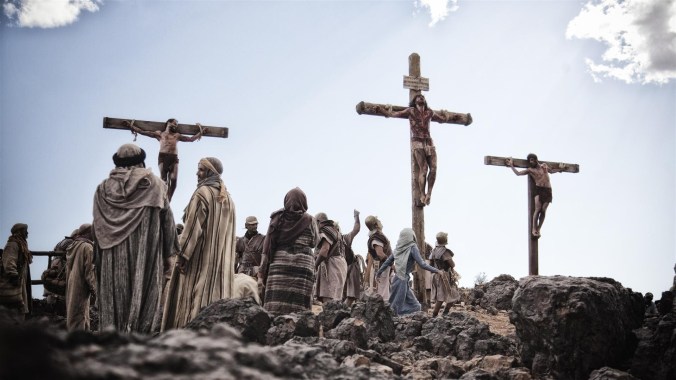
CHRIST DIED FOR OUR SINS

Paul stated in I Corinthians 15:3 “that Christ died for our sins according to the Scripture.” This verse contains three very important facts.

First, the fact that “Christ died.” That is history!

Second, the fact that “Christ died for our sins.” That was necessary!

Third, the fact that “Christ died for our sins according to the Scriptures.” That is accuracy!

Consider these three very important facts in reverse order, considering first what the Scriptures record about Christ’s death, considering second why His death was necessary, and considering third the historical/physical aspects of His death.

Consider first the fact that the death of Christ was “according to the Scriptures.”

Throughout the New Testament, the apostles appealed to two areas of Christ’s life to establish His Messiahship. These areas are the resurrection of Jesus Christ and fulfilled Messianic prophecy.

The Old Testament, written over a 1500 year period, contains several references to the coming Messiah. Ray Stedman comments, “To read the Old Testament is to be gripped by the feeling that Someone is coming! All the prophets speak of Him, all the sacrifices point to Him, all the longings and dreams of men are of someone who will come and solve all their problems. But when you close the Old Testament, He has not yet arrived.”

The references to Christ in the Old Testament are specific in regard to His birth, life, death, and resurrection (see Acts 2:22-32). All of these prophecies and references were fulfilled in the Person of Jesus Christ and solidly confirm His credentials as Messiah. For the moment however, we are concerned with those Messianic prophecies concerning the death of Jesus Christ. Consider the following:

Psalm 41:9 prophesied that the Messiah would be betrayed by a friend. This was fulfilled when Judas Iscariot betrayed Christ (see Matthew 10:4).

According to Zechariah 11:12, the Messiah would be sold for thirty pieces of silver. This was fulfilled when Judas Iscariot was paid thirty pieces of silver for betraying Christ (see Matthew 26:15).

Prophecy also recorded that the Messiah’s betrayer would throw money into God’s House. This was fulfilled when Judas Iscariot threw the thirty pieces of silver into the sanctuary and departed to hang himself (see Matthew 27:7).

Prophecy further stated that the betrayal money would be used to buy the Potter’s Field (see Matthew 27:9-10). This was fulfilled when the religious leaders took the money that Judas had thrown into the sanctuary and bought the Potter’s Field as a burial place for strangers.

In these prophecies we see that the Messiah would be betrayed by a friend for thirty (not 29) pieces of silver (not gold) and that the money would be thrown down (not placed) in the House of the Lord and ultimately be used to buy the Potter’s Field. All of these prophecies were accurately fulfilled in Christ Jesus. Time will not permit us to look at all of the Messianic prophecies that were fulfilled at the time of Christ’s death, but the following list contains a few of the many prophecies:

Prophecy stated that the Messiah would be forsaken by His disciples (Zechariah 13:7). This was fulfilled in Mark 14:50.

Prophecy stated that the Messiah would be accused by false witnesses (Psalm 35:11). This was fulfilled in Matthew 26:59-61.

Prophecy stated that the Messiah would be silent before His accusers (Isaiah 53:7). This was fulfilled in Matthew 27:12-19.

Prophecy stated that the Messiah would be wounded and bruised (Isaiah 53:5). This was fulfilled in Matthew 27:26.

Prophecy stated that the Messiah would be smitten and spat upon (Isaiah 50:6). This was fulfilled in Matthew 26:67.

Prophecy stated that the Messiah would be mocked (Psalm 22:7-8). This was fulfilled in Matthew 27:31.

Prophecy stated that the Messiah would fall under the weight of the cross (Psalm 109:24-25). This was fulfilled in Luke 23:26.

Prophecy stated that the Messiah’s hands and feet would be pierced (Psalm 22:16). This was fulfilled in Luke 23:33.

Prophecy stated that the Messiah would be crucified with thieves (Isaiah 53:12). This was fulfilled in Matthew 27:38.

Prophecy stated that the Messiah would make intercession for His persecutors (Isaiah 53:12). This was fulfilled in Luke 23:34.

Prophecy stated that the Messiah would be rejected by His own people (Isaiah 53:3). This was fulfilled in Matthew 21:42-43.

Prophecy stated that the Messiah would be hated without a cause (Psalm 69:4). This was fulfilled in John 15:25.

Prophecy stated that the Messiah’s friends would stand far off (Psalm 38:11). This was fulfilled in Luke 23:49.

Prophecy stated that people would shake their heads at the Messiah (Psalm 109:25). This was fulfilled in Matthew 27:39.

Prophecy stated that the Messiah would be stared upon (Psalm 22:17). This was fulfilled in Luke 23:35.

Prophecy stated that the Messiah’s garments would be parted and lots cast for them (Psalm 22:18). This was fulfilled in John 19:23-24.

Prophecy stated that the Messiah would suffer thirst (Psalm 69:21 fulfilled in John 19:28) and have gall and vinegar offered to Him (Psalm 69:21 fulfilled in Matthew 27:34).

Prophecy stated that the Messiah would cry out regarding being forsaken (Psalm 22:1). This was fulfilled in Matthew 27:46.

Prophecy stated that the Messiah would commit Himself to God (Psalm 31:5). This was fulfilled in Luke 23:46.

Prophecy stated that the Messiah’s bones would not be broken (Psalm 34:20). This was fulfilled in John 19:33.

Prophecy stated that the Messiah’s heart would be broken (Psalm 22:14). This was fulfilled in John 19:34.

Prophecy stated that the Messiah’s side would be pierced (Zechariah 12:10). This was fulfilled in John 19:34.

Prophecy stated that darkness would come over the land (Amos 8:9). This was fulfilled in Matthew 27:45.

Prophecy stated that the Messiah would be buried in a rich man’s tomb (Isaiah 53:9). This was fulfilled in Matthew 27:57-60.

All of these prophecies were accurately fulfilled in the Person of Jesus of Nazareth thus confirming Him as the Messiah (the Christ), the Son of God. The fulfillment of these prophecies shows that Christ indeed died according to the Scriptures. These 29 prophecies from the Old Testament which speak of the betrayal, trial, death, and burial of the Lord Jesus Christ were spoken at various times by various voices during the five centuries from 1000-500 B.C., and yet all of them were literally fulfilled in Jesus in one twenty-four hour period. Thus, “Christ died according to the Scriptures.”

Consider second the fact that “Christ died for our sins.”

This is a statement of purpose. Christ “came to seek and to save that which was lost” (Luke 19:10). Christ died according to the Scripture. That is accuracy! But Christ died for our sins. That was necessary!

The death of Christ was necessary because the Scriptures declare that “all have sinned and fall short of the glory of God” (Romans 3:23). Sin separates man from God (Isaiah 59:2) and carries with it a death penalty (Romans 6:23a).

Jesus came to pay the penalty that we were obligated to pay. He came to be our substitute by taking our place on the cross. We must however, accept what He has done on our behalf before we can enter into a right relationship with God. We must accept the free gift of eternal life (Romans 6:23b) which God offers to all men.

This gift can only be accepted or rejected, we cannot work for it. We receive it by grace through faith (Ephesians 2:8-9). We must place our faith and trust in the Lord Jesus Christ (Romans 10:9-10) in order to receive eternal life and enter into a right relationship with God (John 3:16 and 1:12).

Consider third the fact that “Christ died.”

Jesus Christ died an actual physical/historical death. Let’s consider some of the physical/historical aspects of His death. According to the Scripture (Mark 15:15 and Matthew 27:26), Pilate turned Jesus over to be scourged prior to His crucifixion. The Jewish limit for scourging was forty lashes, but they usually administered only thirty-nine lashes (in case of a miscount). Paul stated in II Corinthians 11:24, “Five times I received from the Jews thirty-nine lashes.” Jesus however, was whipped by the Romans and not the Jews, and the Romans set no limitations.

A victim was usually stripped of clothing and tied to an upright post, exposing his back to the lictors. The instrument used by the scourgers (or lictors) was called a “flagrum” (or “flagellum”). It was a whip-like instrument with several leather thongs of different lengths with pieces of bone and metal attached at intervals. Such an instrument literally laid open the back of the victim, lacerating veins, muscle, and tissue, and chipping bones. The victim’s back was usually a mass of bleeding flesh.

According to Mark 15:15-20, Jesus was mocked by the Roman soldiers after He had been scourged. The Roman soldiers put mock royal garments upon Jesus along with a crown of thorns, beating Him on the head, spitting upon Him, and abusing Him violently. The soldiers then stripped Him of these garments and clothed Him with His own. The stripping off of the mock garments must have been excruciatingly painful as they had undoubtedly come into contact with His bleeding back. After these things, Jesus was led away to be crucified (see Mark 15:20).

Crucifixion was a form of torture perfected by the Romans. It was a form of execution “designed to produce a slow death mixed with maximum pain and suffering” (Edwards). Josh McDowell writes that the pain of crucifixion included dizziness, cramps, thirst, starvation, fever, tetanus, the pain of untended wounds, difficulty in breathing, and much more. All of this was intensified to a point at which the victim could barely endure the pain and agony, but stopping just short of the point of relief of unconsciousness and death.

Marcus Tillius Cicero, the famous Roman orator, spoke of the horrifying cross saying, “Even the mere word, cross, must remain far not only from the lips of the citizens of Rome, but also from their thoughts, their eyes, their ears.” After enduring a sleepless night without food, the mockery of three Jewish trials and three Roman trials, a scourging and mocking by Roman soldiers, Jesus was led away to be nailed to a cross. Jesus suffered all of these horrible things and then cried out “It is finished,” breathed His last and then died (see Luke 23:46 and John 19:30).

After the death of Christ, Joseph of Arimathea asked Pilate for the body of Jesus (see Luke 23:50-52). Before Pilate could release the body however, he required official certification of Christ’s death. This certification of Christ’s death was confirmed by the Roman soldiers who had gone to the execution sight to break the legs of the victims to expedite their death. When these soldiers, who were not unfamiliar with the signs and evidences of death, came to Jesus, “they saw that He was already dead, and they did not break His legs” (John 19:31-33).

John tells us that “one of the soldiers pierced His side with a spear, and immediately there came out blood and water” (John 19:34). McDowell comments that this proves death by crucifixion and rupture of the heart. Had Jesus been alive when the Roman soldier pierced His side, blood would have spurted out with every heart-beat, but it did not, it merely flowed out. Thus, “Christ died [in this terrible manner] for our sins according to the Scriptures.”
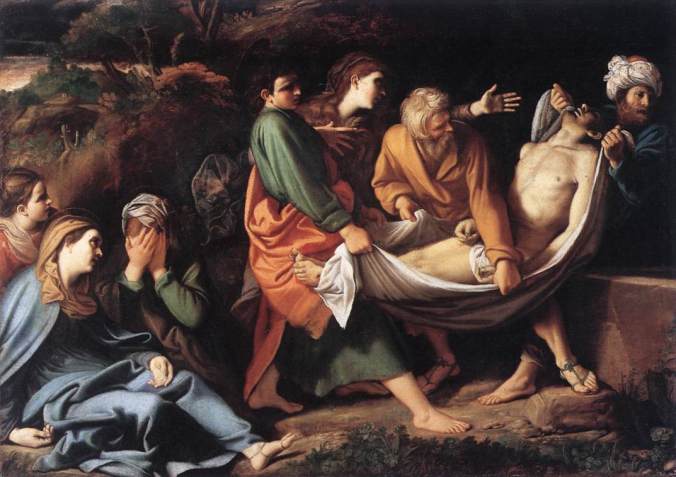

CHRIST WAS BURIED

Paul stated in 1 Corinthians 15:4 that after Christ died “He was buried.”

First, consider where Christ was buried.

Some eight hundred years before the death of Jesus, the prophet Isaiah prophesied that the Messiah would be buried in a rich man’s tomb (see Isaiah 53:9). According to Matthew 27:57-60, on the evening of Christ’s death, a rich man from Arimathea named Joseph “gathered up courage” (see Mark 15:42-43) and asked Pilate for the body of Jesus. After ascertaining that Jesus was already dead, Pilate “granted the body to Joseph” (see Mark 15:44-45).

Joseph then took the body of Jesus, wrapped Him in a linen cloth, and placed Him in his (Joseph’s) own new tomb (see Matthew 27:59-60). According to Matthew 27:60 and Mark 15:16, this tomb had been “hewn out in the rock.” It was not a natural cave. It was an excavation in the rock. The tomb had a resting place for the body cut out of the rock. The stone outside of the tomb was large and had been cut to such dimensions as to form a tight seal around the mouth of the tomb once rolled into place. And so Christ was buried in a rich man’s tomb according to the Scriptures.

Second, consider how Christ was buried.

According to John 19:38-40, after Joseph was granted permission to take the body of Jesus, he was joined by Nicodemus, who helped him prepare the body of Jesus for burial according to the Jewish customs of the day.

John 19:39 records that Nicodemus brought with him “a mixture of myrrh and aloes, about a hundred pounds weight.” Joseph and Nicodemus then straightened and washed the body of Jesus. Once this was done, they took linen wrappings (strips of linen cloth about a foot wide) and wrapped the body of Jesus from the ankles to the shoulders (see comments on Lazarus in John 11:44). The “mixture of myrrh and aloes” were of a gummy consistency. These spices were placed between the folds of the linen wrappings and served as both a preservative and as a cement to glue the linen wrappings into a solid covering.

According to John 20:7, the head of Christ was wrapped with a separate piece of cloth. [See again in John 11:44 that the face of Lazarus was also wrapped around with a cloth.] This fact argues against the Shroud of Turin being the burial cloth of Christ. When John and Peter arrived at the empty tomb, they noticed “the face-cloth, which had been on His head, not lying with the linen wrappings, but rolled up in a place by itself” (John 19:4-8).

Third, consider what was done after Christ was buried.

After the body of Christ had been prepared for burial, a large stone was rolled into place, tightly covering the entrance to the tomb. Regarding the size of the stone, a marginal note in one of the earliest manuscripts states that the stone was of such proportions as to require twenty men to roll it away. Two Georgia Tech engineering professors who toured the Holy Land calculated that it would require a stone weighing no less than one and one-half tons to cover the doorway of the Garden Tomb.

According to Matthew 27:62-66, the chief priests and Pharisees went to Pilate and asked that the tomb of Christ be secured until the third day because they remembered that Christ had said, “After three days I am to rise again.” Pilate, who was as concerned as the Jews that there be no more trouble, gave the Jews a Roman Guard. A Roman Guard was comprised of sixteen soldiers, each well armed and trained to protect six-feet of ground. In addition, each man in a Roman Guard was cognizant of the fact that failure to successfully fulfill an assigned duty was punishable by death.

Matthew 27:66 states that “along with the guard they set a Roman seal on the stone.” This was an extra precautionary measure that was taken to prevent anyone from tampering with the contents of the tomb.

A seal was set by stretching a cord across the face of the rock and sealing it on either end with a sealing clay. This sealing clay was then stamped with the official signet of the Roman governor. [See Daniel 6:17 for an Old Testament example of “sealing.”] Breaking or violating the Roman seal was a serious offense, bringing upon the lawbreaker the weight of Roman law and the terror of Roman wrath. That seal was far more sacred to the Roman soldiers who guarded the tomb than Israel’s law or the concern of the Jewish religious leaders. They would not risk jeopardizing their lives by allowing anyone to tamper with the seal. Thus was Christ buried.

Mgr. E. Le Camus comments, “Never had a criminal given so much worry after his execution. Never had a crucified man been granted the honor of being guarded by a squad of soldiers.” Jesus was dead and securely buried in a rich man’s tomb…or so it seemed!
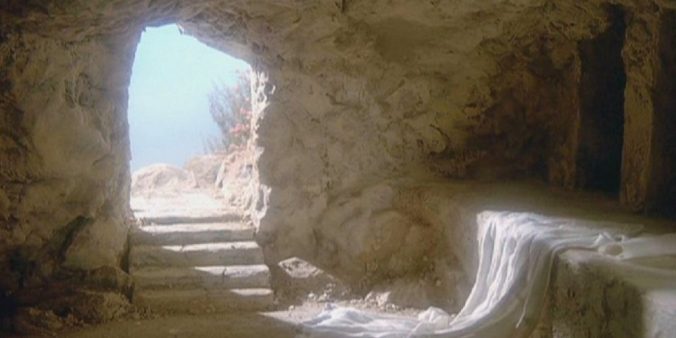
CHRIST WAS RAISED

Paul wrote in I Corinthians 15:4 that after Christ died for our sins according to the Scriptures and was buried, “He was raised on the third day according to the Scriptures.” Something happened on the third day, something so great that it changed the course of human history from B.C. (Before Christ) to A.D. (Anno Domini – “the year of our Lord”). Something so dramatic happened that it completely changed eleven men’s lives so that all but one died a martyr’s death. That something was an empty tomb, an empty tomb that a fifteen minute walk from the center of Jerusalem could have either confirmed or disproved. Consider the following facts about the resurrection of Jesus Christ.

First, the Roman seal was broken.

The seal that had been stretched across the face of the stone and represented the power and authority of the Roman Empire was broken! Who would be brave (or foolish) enough to break the Roman seal. Certainly not the Roman soldiers who knew the penalty of such a crime, and certainly not the disciples who had displayed signs of cowardice and hidden themselves (see Mark 14:50). Only John was present at the crucifixion.

Second, the empty tomb.

Paul Althus comments that the resurrection proclamation “could not have been maintained in Jerusalem for a single day, for a single hour, if the emptiness of the tomb had not been established as a fact for all concerned.” Christianity had its beginnings in the one city in the entire world where it could have been forever stopped had the tomb not been empty. The Jews, the Romans, and the followers of Jesus all knew that the tomb was empty. J.N.D. Anderson comments, “There was no point in arguing about the empty tomb. Everyone, friend and opponent, knew that it was empty. The only questions worth arguing about were why it was empty and what its emptiness proved.”

Third, the large stone covering the entrance of the tomb was moved.

The stone probably weighed no less than one and one-half tons. Mark 16:4 records that the stone “was extremely large.” Regarding the position of the stone on that first Easter morning, the Gospel writers used the following words:

Matthew used the Greek word “kulio” which means “to roll.” (See Matthew 27:60).

Mark used the word “anakulio.” (See Mark 16:3-4). The word “kulio” used with the preposition “ana” means “to roll up or upward,” suggesting a slope or incline at the tomb’s entrance.

Luke used the word “apokulio.” (See Luke 24:2). The word “kulio” used with the preposition “apo” means “rolled away from” (in the sense of distance) from the tomb.

John used an entirely different Greek word to describe the position of the stone (see John 20:1). John used the word “airo” which means “to pick up and carry away.”

Thus, it would have been virtually impossible for the cowardly disciples to roll away the stone by virtue of its size and the presence of the Roman Guard.

It would also have been impossible for a man to push it away from the inside as is suggested by the proponents of the “Swoon Theory,” who posit that Jesus did not die on the cross but merely swooned (or fainted).

Proponents of the Swoon Theory hold that Jesus was revived by the cool dampness of the tomb, somehow managed to get out of the linen wrappings (remember that Jesus gave instructions for Lazarus to be unbound when He raised Lazarus from the dead – John 11:44), walked on feet that had been pierced through, pushed the stone away with hands that had borne the weight of His entire body while on the cross, fought off an entire Roman Guard, and then appeared to His disciples as the Lord of Life!

No, it was a power far greater than any human power that moved the stone far away from the entrance of the tomb.

Fourth, consider the fact that the Roman Guard went A.W.O.L.

Something happened on that first Easter morning that made the Roman guards like dead men and frightened them away (see Matthew 28:4). After the stone had been rolled away and the Roman Seal broken, the guards fled to the chief priests and reported to them what had happened. The chief priests then bribed them to say that the disciples had stolen the body and assured them that should the event come to the governor’s attention, they would keep them out of trouble (see Matthew 28:11-15).

Fifth, the grave-clothes were still in the tomb.

When Peter and John arrived at the tomb, they saw the linen wrappings lying there with the face-cloth rolled up in a place by itself (see John 19:4-8). The first thing that struck Peter and John was not the empty tomb, but rather the empty linen wrappings. The linen wrappings were undisturbed. They were lying in the tomb like an empty cocoon. The body had vanished from within the linen wrappings.

Sixth, consider the post-resurrection appearances of Christ.

According to 1 Corinthians 15, Jesus appeared to many people after His resurrection, friends and foes alike. He appeared to Mary Magdalene and the other women, Peter, the Emmaus disciples, to over 500 people at one time, to James, Stephen, Paul, and John (while on Patmos).

In 1 Corinthians 15:6, Paul inserted the little phrase, “most of whom remain until now.” Paul was stating that the majority of those who saw Christ after His resurrection were still alive and available for questioning. These post-resurrection appearances were not hallucinations as some skeptics have suggested.

According to the field of psychiatry, hallucinations are individualistic, subjective, and tend to recur with regularity over an extended period of time. Yet over 500 people saw the same thing at the same time and at the same place, thus arguing against the individualistic and subjective nature of hallucinations. In addition, the post-resurrection appearances took place over a forty day period and then abruptly stopped, thus arguing against the long-term recurrence of hallucinations.

Finally, consider the fact that it was the women who saw Jesus first.

McDowell sees this as an “authenticating feature” of the resurrection because according to the Jewish principle of legal evidence, women were invalid witnesses and did not have the right to give testimony in a court of law. If the resurrection accounts had been contrived, then the fabricators of the account would not have included women in the story, at least not as the first witnesses.

Thus, Christ was “raised on the third day according to the Scriptures.” The tomb of Confucius is still occupied. The tomb of Buddah is still occupied. The tomb of Mohammed is still occupied. But the tomb of Christ is empty. The resurrection confirms the Messiahship of Jesus. It confirms the fact that Jesus is exactly who He claimed to be, the Son of God who came to make a way for man to be reconciled to God. The empty tomb is the silent witness to the resurrection of Christ which has never been refuted.

The Romans and Jews could not produce the body of Christ or explain where it went. Those who suggest that the disciples stole the body cannot explain how these cowardly men, who fled when Jesus was crucified, could have mustered the courage to fight off a Roman Guard and steal the body.

In addition, they cannot explain why such men would then devote their entire lives to a lie and die a martyr’s death for a lie. No, the lives of these men and countless millions of others throughout history have been changed because Jesus Christ is alive.

McDowell notes that it is not because of the insufficiency of the evidence that men reject the resurrection, but rather in spite of the sufficiency of evidence. When it comes to the resurrection, notes McDowell, the burden of unbelief is far greater than the burden of belief. The difficulties of belief may be great, but the absurdities of unbelief are greater. In the words of the great hymn , “I serve a risen Savior, He’s in the world today, I know that He is living, whatever men may say.”

SOURCES

Evidence That Demands A Verdict
by Josh McDowell

The Resurrection Factor
by Josh McDowell

Answers to Tough Questions Skeptics Ask About the Christian Faith
by Josh McDowell and Don Stewart

“On the Physical Death of Jesus Christ”
by William D. Edwards, M.D., et. al.
Article published in the Journal of the American Medical Association, March 21, 1986

The Work of an Under-Rower

HUPERETES
The word huperetes is one of the more unusual words for servant in the Greek language. The word huperetes means under-rower. The word originally referred to a rower on board a trireme or a war-galley. It later came to refer to someone who performed hard labor. Paul used this particular word when he wrote to the Corinthian believers.

“So then, men ought to regard us as servants of Christ and as those entrusted with the secret things of God” (1 Cor. 4:1).


5 Aspects of an under-rower’s work.

• An under-rower had to row to the captain’s beat.
• The under-rowers had to row together.
• An under-rower had to trust the captain.
• An under-rower was committed for life.
• An under-rower received no honor.

Paul modeled the attitude of an under-rower.

• He was submissive because he rowed to the captain’s beat.
• He was sensitive because he rowed in harmony with others.
   There are 35 “one another” passages in the New Testament.
• He was trusting because he didn’t care where he labored.
• He was dedicated because he was willing to die at his post.
• He was humble because he wanted no glory for himself, only for his captain.

We should adopt the attitude of an under-rower.

• Obey our master. Order our steps according to his cadence.
• Cooperate with our fellow servants. Sail with the fleet.
• Trust the Lord to guide us. Put His preferences above our own.
Remain in service for a lifetime.
• Give Christ all the glory.

One Who Renders Service

Five Greek words in the NT that speak of one who renders service. Each one has a distinctive meaning in the Greek Language but are translated by the English word “servant”.

DOULOS
This is the most common word for “servant”. This word designated…
• one who was born into his condition of slavery
• one bound to his master as a slave
• one who was in a permanent relationship to his master (only broken by death)
• one whose will was swallowed up in the will of his master
• one who served his master even to the extent of disregarding personal interests

“Paul, a servant of Christ Jesus, called to be an apostle and set apart for the gospel of God.” (Rom. 1:1)

THERAPON
This word emphasizes a voluntary service that is rendered in a tender and noble way — whether by a freeman or a slave, whether out of a sense of duty or impelled by love. This word also describes the kind of service a physician rendered to someone who was ill.

“Moses was a faithful servant in all God’s house…” (Heb. 3:5)

DIAKONOS
This word refers to one who executes the commands of another, especially of a master. It is translated “minister, servant, deacon.”

“His mother said to the servants, ‘Do whatever He tells you.'” (John 2:5)

OIKETES
This word has the same root as the Greek word for “house” (oikos). It designated a house-servant — one who held closer relations to the family than other slaves.

“When the angel who spoke to him had gone, Cornelius called two of his servants and a devout soldier who was one of his attendants.” (Acts 10:7, cf. Rom. 14:4)

HUPERETES
The word huperetes is one of the more unusual words for servant in the Greek language. The word huperetetes means under-rower. The word originally referred to a rower on board a trireme or a war-galley. It later came to refer to someone who performed hard labor. Paul used this particular word when he wrote to the Corinthian believers.

“So then, men ought to regard us as servants of Christ and as those entrusted with the secret things of God” (1 Cor. 4:1).

Introduction to Hebrews

Authorship
Although the author of the book of Hebrews is not identified in the book, scholars through the centuries have suggested several possibilities.

Among the suggested authors are …
• Barnabas — suggested in the first centuries after Christ
• Luke — suggested in the first centuries after Christ
• Apollos — suggested by Martin Luther in the Reformation years because of Apollos’ oratory skills
• Paul — suggested by scholars from the 5th to the 16th centuries
• Philip the evangelist, Peter, Silas, and Jude are among others suggested as possible authors
• “But who wrote the epistle, God only knows the truth.”
(Origen, a third century Christian writer, as quoted by Eusebius in Ecclesiastical History)

Clues about the author include …
• He was a second-generation Christian (see Heb. 2:3).
• He had intimate knowledge of Jewish traditions, institutions, and history.
• He was very familiar with the Old Testament and quoted extensively from the Septuagint
(ancient Greek translation of the OT).
• The mention of Timothy in Heb. 13:23 suggests that he probably knew Paul or those close to him.
• He had visited his readers and hoped to visit them again soon (Heb. 13:19,23).

Date
Scholars generally agree that the book was probably written sometime after the Roman Emperor Claudius expelled the Jews and Jewish Christians from Rome (in AD 49) and before the persecution under Nero (beginning in AD 64) in which many believers died. A date in the sixties is supported because the destruction of the temple in Jerusalem in AD 70 is not mentioned.

Audience
The book was written to Hebrew (or Jewish) persons who had come to believe in Jesus as the Messiah but who had grown content or complacent about the salvation they had received. Some of these believers were considering renouncing their faith and returning to Judaism, perhaps because of persecution (Heb. 10:32-34). The book warns these believers of the danger of drifting away from Christ (2:3), to persevere in the faith (3:6), and encourages them to grow up in Christ!

Major Theme
The recurring theme of the book of Hebrews is found in the use of the word “superior” or “better” which occurs throughout the book (see 1:4; 6:9; 7:7,19,22; 8:6; 9:23; 10:34; 11:16,35,40; 12:24).

Basic Outline
The Superiority of Christ
Hebrews 1:1—2:18……………………….Jesus is superior to the prophets and angels
Hebrews 3:1—4:16……………………….Jesus is superior to Moses
Hebrews 5:1—8:5…………………………Jesus is superior to the Jewish priesthood
Hebrews 8:6—10:39……………………..The new covenant is superior to the old covenant
The Superiority of Faith
Hebrews 11:1—13:25…………………….Faith is important

Why Study the book of Hebrews?

Encouragement
The writer of Hebrews encouraged persecuted Jewish believers to stay the course and to not renounce their faith and return to their former religion. Hebrews challenges us to persevere and to not yield to the temptation to turn back to the inferior things we knew before coming to Christ—old life-styles, materialism, selfishness.

Exclusiveness
In our pluralistic and highly tolerant post-modern society in which all religions, isms, philosophies, and alternate life-style are embraced, Hebrews challenges us to look to Christ alone for salvation. He alone is qualified to be the savior of mankind.

Entrance
Hebrews pictures Jesus as our high priest. The role of the high priest in the Old Testament was to represent the people before God and to offer sacrifices to atone for their sins. As our high priest Jesus is available to hear us when we pray and guarantees our access to the Father.

End
Hebrews affirms that Jesus died on the cross to pay the penalty for our sins and forever put an end to the need for any other sacrifices. In Christ our sins are completely forgiven—past, present, and future.

Endurance
Hebrews encourages believers to move past immaturity and to journey toward spiritual maturity. Although the path to maturity has many obstacles, we must develop the spiritual disciples that will enable us to press on.