• Chapter 1
• Chapter 2
• Chapter 3
• Chapter 4
• Chapter 5
• Chapter 6
• Your Legacy | Reflections on Deuteronomy 6
• Chapter 7
• Chapter 8
• Chapter 9
• Chapter 10
• Chapter 11
• Chapter 12
• Chapter 13
• Chapter 14
• Chapter 15
• Chapter 16
• Chapter 17
• Chapter 18
• Chapter 19
• Chapter 20
• Chapter 21
• Chapter 22
• Chapter 23
• Chapter 24
• Chapter 25
• Chapter 26
• Chapter 27
• Chapter 28
• Chapter 29
• Chapter 30
• Chapter 31
• Chapter 32
• Chapter 33
• Chapter 34
Old Testament
Numbers
• Chapter 1
• Chapter 2
• Chapter 3
• Chapter 4
• Chapter 5
• Chapter 6
• Chapter 7
• Chapter 8
• Chapter 9
• Chapter 10
• Chapter 11
• Chapter 12
• Chapter 13
• Chapter 14
• Chapter 15
• Chapter 16
• Chapter 17
• Chapter 18
• Chapter 19
• Chapter 20
• Chapter 21
• Chapter 22
• Chapter 23
• Chapter 24
• Chapter 25
• Chapter 26
• Chapter 27
• Chapter 28
• Chapter 29
• Chapter 30
• Chapter 31
• Chapter 32
• Chapter 33
• Chapter 34
• Chapter 35
• Chapter 36
Leviticus
• Chapter 1
• Chapter 2
• Chapter 3
• Chapter 4
• Chapter 5
• Chapter 6
• Chapter 7
• Chapter 8
• Chapter 9
• Chapter 10
• Chapter 11
• Chapter 12
• Chapter 13
• Chapter 14
• Chapter 15
• Chapter 16
• Chapter 17
• Chapter 18
• Chapter 19
• Chapter 20
• Chapter 21
• Chapter 22
• Chapter 23
• Chapter 24
• Chapter 25
• Chapter 26
• Chapter 27
Exodus
• Chapter 1
• Chapter 2
• Chapter 3
• Chapter 4
• Chapter 5
• Chapter 6
• Chapter 7
• Chapter 8
• Chapter 9
• Chapter 10
• Chapter 11
• Chapter 12
• Chapter 13
• Chapter 14
• Chapter 15
• Chapter 16
• Chapter 17
• Chapter 18
• Chapter 19
• Chapter 20
• Chapter 21
• Chapter 22
• Chapter 23
• Chapter 24
• Chapter 25
• Chapter 26
• Chapter 27
• Chapter 28
• Chapter 29
• Chapter 30
• Chapter 31
• Chapter 32
• Chapter 33
• Chapter 34
• Chapter 35
• Chapter 36
• Chapter 37
• Chapter 38
• Chapter 39
• Chapter 40
Genesis 3
Sin changes things! The instant sin is introduced into a matter, things will change — perhaps not immediately but, without question, eventually. Sin also changes us. No one who has ever lived has sinned with impunity. Sooner or later sin will deliver its consequences and demand its payment without regard to rank, race, or riches. One thing is certain, sin will never leave its account books unbalanced.
Sin is only accessible by one avenue — our choices. The most spiritual exercise we engage in on any given day is making choices. Our choices will either draw us closer to God and the blessings that come through obedience, or they will distance us from Him and expose us to the dangers of disobedience. The freedom to make choices lies with us.
God judges sin. God is holy and must hold us accountable for the choices we make. Adam and Eve were the first to taste the bitter consequences of disobeying God. Everything changed when they chose to willfully disregard God’s clear instructions. They discovered that sin did not deliver on its promises and that God had been telling them the truth all along. And, for the first time, they experienced guilt, shame, and fear.
Nothing about sin has changed since Adam and Eve bought in to the serpent’s lies in the garden of Eden. Sin still damages, separates, destroys, ruins, and kills. Satan, the great deceiver, still uses the same tactics — appealing to “the lust of the flesh, the lust of the eyes, and the pride in one’s lifestyle” (1 John 2:16). And God still judges sin.
The Context
For the first time, Eve heard a voice other than God’s in the garden of Eden. Disguised as a serpent, Satan spoke to her. His words sounded so reasonable that they caused her to question God’s words. Satan eventually deceived Eve and she ate the fruit of the tree in the middle of the garden and then gave some to her husband. As a result, the eyes of both of them were opened and they realized they were naked.
For the first time, Adam and Eve experienced guilt and fear. They covered their nakedness and then hid from God. God called out to Adam and asked the first question in the Bible, “Where are you?” (Gen. 3:9). God wanted for Adam and Eve to consider where they were in relation to Him. Adam’s answer revealed that he understood that he had violated God’s command but he blamed the woman for leading him astray. The woman then blamed the serpent for deceiving her.
For the first time, God pronounced judgment on sin. He cursed the serpent for his role in leading Adam and Eve astray. God then told Adam and Eve the painful consequences they would suffer as a result of their disobedience. God also made clothing out of animal skin for Adam and his wife to cover their nakedness. This means that, for the first time, God shed innocent blood in order to clothe the man and the woman.
For the first time, God promised the coming of a Redeemer — the seed of the woman who would crush the head of the serpent. And for the first time, God prohibited Adam and Eve from partaking of the tree of life. God drove them out of the garden of Eden and stationed cherubim, angelic beings, to guard the way to the tree of life.
3:1 Now the serpent [selected by Satan as his instrument; cf. Rev. 12:9; 20:2] was more crafty [cunning; deceptive; Satan chose to use the craftiest of God’s animal creation] than any of the wild animals the LORD God had made. He said [misquoted 2:16-17] to the woman [humanity’s first encounter with evil], “Did God [generic name for God] really say [introduction of doubt rather than request for information], `You must not eat from any [distortion] tree in the garden’?”
Moses introduced an intriguing new character in the story of the first man and woman — the serpent. He affirmed that the serpent was an actual animal created by God and that lived in the garden of Eden. Of all the animals God had created, the serpent was the most cunning, suggesting that it was crafty and shrewd. The serpent initiated a conversation with the woman. Eve seemed neither surprised, threatened, nor disturbed by the serpent’s presence or its speech.
Moses did not offer any explanation for the existence of Satan and evil. Instead, he introduced Satan in the guise of the serpent. The Bible elsewhere affirms that Satan is a master of disguise (see 2 Cor. 11:14). Satan, which means “adversary,” disguised himself as a serpent at the beginning of the Bible and is referred to as “that ancient serpent” (Rev. 20:2) near the end of the Bible.
The serpent asked the first question in the Bible, not to get information but to create doubts about God’s intentions. This sly and cunning creature began his query with the words Did God really say. The tone of these words lean toward creating doubt and suspicion. The serpent asked Eve if God had really told them that they were not allowed to eat from any tree in the garden. This was the first time Eve had heard anyone doubt the truthfulness of God’s word and question the goodness of His divine motives.
3:2 The woman said [corrected serpent’s distortion] to the serpent, “We may eat fruit from the trees in the garden,
To her credit, Eve tried to correct the serpent. God had provided an abundance of trees in the garden, both to make it a beautiful place and to provide food. The woman acknowledged that God had indeed given them permission to eat the fruit from the trees in the garden. However, in restating God’s command, she omitted the words “you are free to eat” (Gen. 2:16) — words that speak of God’s generous provision. With so many fruit-bearing trees in the garden, Adam and Eve did not need to eat the fruit of the tree in the middle of the garden.
3:3 but God did say, `You must not eat fruit from the tree that is in the middle of the garden, and you must not touch [not a part of God’s instructions] it, or you will [omitted the word “surely”] die.'”
Eve’s reply to the serpent contained additional inaccuracies. She said that God had prohibited them from touching the tree. God had never said anything to Adam about not touching the tree (see Gen. 2:16-17). Perhaps Adam and Eve had discussed that they would neither touch this tree nor eat of its fruit. There is certainly wisdom in keeping a safe distance from the things that can tempt us to sin against God.
Eve also altered God’s original command to Adam by softening the consequences of disobedience. She changed the consequences from “you will surely die” (Gen. 2:17) to you will die. Eve erred by adding to and changing God’s word. When we fail to accurately handle the Word of God (see 2 Tim. 2:15), we become vulnerable to the suggestions of the enemy.
3:4 [the serpent’s counterclaims to God’s command: 1] “You will not surely die [denial that God will punish sin; direct denial/contradiction of what God had said in 2:17; planted doubt in Eve’s mind; cf. Jn. 8:44 re: Satan as “the father of lies”],” the serpent said to the woman.
The serpent moved from questioning God’s goodness to directly contradicting what God had told Adam (see Gen. 2:17). The “father of lies” (John 8:44) called God a liar and continued to sow doubt in Eve’s mind. He insisted that eating the fruit of the tree of the knowledge of good and evil would not result in death. Eve should have walked away from the serpent at this point but instead lingered and listened. Satan’s pattern is predictable. He promises to give people what they want so that he can take what they have. However, Satan never delivers on his promises.
3:5 “For God knows [implication: God is selfish and does not want to share His wisdom] that when you eat of it [2] your eyes will be opened [and thus gain knowledge], and [3] you will be like God [divine status], knowing good and evil [or “everything”].”
Satan’s next step was to replace the truth of God with a convincing lie. He characterized God as being unreasonable and unfair. The great deceiver explained to Eve that God had lied because He wanted to keep something from them. God, the serpent insisted, did not intend to put them to death (Gen. 3:4). Instead, He was keeping them from experiencing something greater. Eating the fruit of the tree of the knowledge of good and evil would indeed open their eyes. Satan suggested that this fruit held the potential to make them like gods and would endow them with the ability to know good and evil.
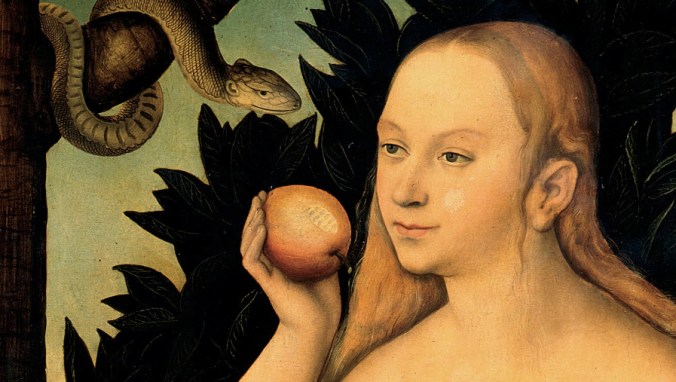
3:6 When the woman saw [unfortunately Eve failed to see the destruction her actions would bring] that the fruit of the tree was good for food [appealed to physical appetite] and pleasing to the eye [aesthetically appealing], and [appealed to human vanity] also desirable for gaining wisdom [sight, insight, success], she took [decisive act] some and ate it. She also gave some to her husband, who was with her, and he ate it [by eating, Adam and Eve no longer believed God, which is the essence of sin; cf. 1 Tim. 2:14].
The serpent never directly told Eve to disobey God’s command but his words did cause her to see God’s command with less clarity. Eve now looked at the tree and its fruit in a different way. The tree no longer seemed dangerous but instead was delightful to look at. Once Satan had minimized the consequences of disobedience and exaggerated the benefits of eating the forbidden fruit, it became very easy for Eve to take the next step. She reached out and took some of its fruit and ate it — and in so doing became the first human being to disobey God.
Once she had eaten the fruit, Eve offered some to Adam, who was with her. These words suggest that Adam was either with Eve when she conversed with the serpent or was close by. When Eve offered Adam some fruit he ate it. Adam, who had directly received God’s specific and clear command, willingly and knowingly violated that command. Later, the Apostle Paul would point to Adam, not Eve, as the one who brought sin and death into the human race because of his act of disobedience (see Rom. 5:12-21).
Note: When were you recently tempted to disobey God? How did you respond to Satan’s tactics? What made the fruit so tempting to Eve? What are some specific ways Satan makes sin look good to us today? If sin is so fun and great, why must Satan disguise the consequences of sin?
3:7 Then the eyes of both of them were opened [immediate consequence of their sin], and they realized they were naked; so they sewed fig leaves together and made coverings for themselves.
The most immediate and noticeable consequence of Adam and Eve’s disobedience was that their eyes were opened. Instead of making them God-conscious, eating the forbidden fruit made them self-conscious. They had lost their innocence and became aware that they were naked. However, instead of seeking God and confessing to Him what they had done, the first couple tried to cover up their sin. They sewed fig leaves together to hide their nakedness and then they “hid themselves from the Lord God.” (Gen. 3:8). Life would never be the same again.
Note: What kind of “fig leaves” do we try to sew together in an attempt to cover our sin?
3:8 Then the man and his wife heard the sound of the LORD God as he was walking in the garden in the cool of the day [perhaps reference to particular time of day when they met with God for fellowship], and they hid [one sign of sin is the attempt to hide our sins and ourselves from God] from the LORD God among the trees of the garden.
3:9 But the LORD God called to the man [God asked four questions (like the proceedings of a court session)], [1] “Where are you [God knew where they were geographically; question was intended to cause them to consider where they were spiritually; first step in God’s search for the lost]?”
3:10 He answered, “I heard you in the garden, and I was afraid because I was naked; so I hid.”
3:11 And he said, [2] “Who told you that you were naked? [3] Have you eaten from the tree that I commanded you not to eat from?”
3:12 The man said, “The woman [Adam blamed Eve] you [Adam, by insinuation, also blamed God; Adam saw the good gift God had given him as the source of his trouble] put here with me — she gave me some fruit from the tree, and I [made a personal choice] ate it.”
Note: Can you describe a time when you played the blame game? What was God’s purpose in questioning Adam and Eve?
3:13 Then the LORD God said to the woman, [4] “What is this you have done?” The woman said, “The serpent [Eve blamed the tempter] deceived me, and I ate.”
3:14 So the LORD God said to the serpent, “Because you have done this, “Cursed are you above all the livestock and all the wild animals! You will crawl on your belly and you will eat dust [punishment for tempting the woman to eat fruit; represent humiliation and subjection; an expression that carries the meaning of total defeat (cf. Isa. 65:25; Mic. 7:17)] all the days of your life.
Sin always leaves a wake of destruction. God is holy and must deal with and judge sin. The first to experience God’s judgment was the serpent — culpable for its role in leading Adam and Eve to disobey God. He cursed the serpent and told it that it would forever crawl on its belly and eat dust. Eating dust is a metaphor that carries the idea of humiliation and total defeat and a reminder of Satan’s ultimate defeat. This curse set apart the serpent from all of the other wild animals that God had created.
3:15 [cf. Rom. 16:20] And I will put enmity [intense hostility] between you [Satan] and the woman [representing the human race], and between your offspring [Satan’s followers] and hers [Christ; cf. Gal. 3:16]; he will crush [lethal blow; cf. Rev. 20:7-10] your head, and you [Satan] will strike [nonlethal blow] his heel.”
When Adam and Eve disobeyed God’s command, they set in motion a spiritual battle between good and evil that continues to this day. God’s words to the serpent are essentially a declaration of war against Satan. God put hostility or enmity between the serpent and the woman. The seed of one would forever be at odds with the seed of the other.
This verse is called the “protoevangelium” or the first gospel because it is the first indication in the Bible of God’s plan to send a Redeemer. Christ is later identified in the Bible as “the seed” (see Gal. 3:16). Satan would strike Christ on the heel at the cross. However, because of His death and resurrection, Christ would crush Satan’s head and win the victory over him.
Note: Genesis 3:15 has been called the protoevangelium, a Latin term meaning “first mention of the gospel.”
3:16 [benefits Satan promised did not materialize, only the consequences of sin; sin may give you what you want, but it will take what you have] To the woman he said, “I will greatly increase [implies that childbirth otherwise would have involved little or no pain] your pains in childbearing; with pain [pain in childbearing was the punishment] you will give birth to children. Your desire will be for your husband [to control him], and he will rule over you.”
God cursed the serpent but He did not curse Adam and Eve. Instead, He defined the consequences of their sin. God had originally blessed the man and the woman and told them to be fruitful and multiply (see Gen. 1:28). However, after the Fall, God told the woman that she would experience intense labor pains in fulfilling her role to be fruitful. Additionally, the woman would be subject to her husband. This is not a mandate for husbands to lord it over their wives or to treat them with disrespect. Husbands are to love their wives as Christ loved the church (see Eph. 5:22-30).
3:17 To Adam he said, “Because you listened to your wife [instead of God] and [in addition to this, violated a specific command from God] ate from the tree about which I commanded you, `You must not eat of it,’ “Cursed [consequences of human sin extended to creation itself] is the ground because of you; through painful toil you will eat of it all the days of your life.
3:18 It will produce thorns and thistles [plants that offer no nutritional benefit although they rob the soil of nutrients and destroy crops] for you, and you will eat the plants of the field.
God had intended for Adam and his wife to be happy in the garden. He had given Adam the meaningful work of tending his beautiful garden home. As a consequence of his disobedience, God told Adam that the ground was now cursed. Just as the woman would experience pain in childbearing, Adam would experience painful labor in working the ground. For the first time he would have to contend with thorns and thistles and troublesome weeds that robbed the ground of nutrients and choked out food-bearing plants. Adam’s work would be tiresome and difficult and serve as a reminder of how sin had drastically changed things.
3:19 By the sweat of your brow you will eat your food until you return to the ground [phrase refers to physical death], since from it you were taken; for dust you are and to dust you will return.”
Adam and Eve lost access to the abundance of food in the garden. A part of the penalty for sinning against God included Adam having to work hard to eke out a living by the sweat of his brow. His work would be much more difficult and much less rewarding. Another result of the Fall was the introduction of death into the human family. Adam and Eve would no longer have access to the tree of life. Instead, they would return to dust, an expression that refers to physical death. Although Adam and Eve lived for many years, they both eventually died and returned to dust just as God had said.
3:20 Adam named his wife Eve [that is, “life”], because she would become the mother of all the living.
3:21 The LORD God made [indicates God’s intention to continue to love and care for humans] garments of skin [to replace the fig leaf coverings (3:7)] for Adam and his wife and clothed them.
3:22 And the LORD God said, “The man has now become like one of us, knowing good and evil. He must not be allowed to reach out his hand and take also from the tree of life and eat, and live forever.”
3:23 So the LORD God banished him [Adam and Eve banished; they became “like” God (3:22), but would no longer be “with” God in the garden; a reminder that sin is costly] from [in order to prevent them from eating from the tree of life (3:22)] the Garden of Eden to work the ground from which he had been taken.
3:24 After he drove the man out, he placed on the east side [suggests that this is where the entrance to the garden was located] of the Garden of Eden cherubim [winged angels who functioned as guards (3:24) and attendants (Ezek. 10:3-22)] and a flaming sword flashing back and forth to guard the way to the tree of life.
Note: Reflect on a specific occasion when you chose to disobey God. What consequences did you experience? How did your decision affect other people?
Genesis 2
The question of why we are here is important. Something deep inside us yearns to know where we have come from, where we are headed, and why we exist. There seems to be no shortage of answers to these and other persistent questions concerning our origin and our purpose in life.
Every worldview tries to answer these questions. The answers are important because they deeply influence how we see the world around us, how we interact with our fellow human beings, and our understanding of our purpose in the world.
God did not create humans to be idle or indifferent to Him but to play a role in the fulfillment of His purposes. The Bible affirms that human beings are the intentional and special creation of God. Made in His image and endowed with the capacity to love and worship God, humans are different than the animals.
God, in fact, placed the animal kingdom under the dominion of humans (see Psalm 8). Ruling over the animals and being a steward of the earth is a role reserved exclusively for mankind. God also assigned Adam, the first man, the responsibility of tending the garden of Eden. In the same way, God expects us to be faithful in carrying out our responsibilities as stewards of His creation. Our love and our labor should give evidence that we desire to honor and serve Him above all.
The Context
Moses provided additional details about the creation of the first humans and their place in God’s plan. The information in the second chapter of Genesis complements the information in the first chapter. After completing His creative activity God rested and set apart the seventh day as a day of rest (see Gen. 2:1-3).
God prepared a garden in Eden for Adam. Once everything was ready, God placed the first man in the first home. God also gave him the responsibility of caring for and maintaining his new home. In doing so, God dignified work as something good and honorable. Work was not a curse but instead a part of man’s role in caring for the creation.
God also set limits on Adam’s freedom by prohibiting him to eat the fruit of one particular tree in the garden — the tree of the knowledge of good and evil. God wanted Adam’s obedience. In order to demonstrate his loyalty to God, Adam needed to have a real choice. The presence of the tree of the knowledge of good and evil made that choice possible.
For the first time in Genesis, God declared that something was not good. It was not good for the man to be alone. Because none of the animals corresponded to or were suitable companions for the man, God created the perfect companion for him. Adam named his new companion “woman” (Gen. 2:34) and later called her Eve (see Gen. 3:20).
God established marriage as a union between a man and a woman. Marriage provides the perfect setting for a man and a woman to meet one another’s need for companionship and intimacy and to fulfill God’s charge to be fruitful and multiply.
2:1 Thus the heavens and the earth were completed in all their vast array.
As with the first verse in the first chapter of Genesis, the first verse of the second chapter begins with a summary statement. Once everything God had created was exactly as He wished it to be there was nothing left to do. God had thoughtfully created everything in the universe and everything necessary to sustain life on the earth. His creation was completed.
2:2 By the seventh day God had finished the work he had been doing; so on the seventh day he rested from all his work.
On the seventh day, God neither spoke nor worked as He had on previous days. Instead, He rested from all His work — not because He was exhausted but because His work was completed and He was pleased with it. God did not fall asleep or walk away after creating the world or leave things to run on their own. The word rested does not suggest inattention or inactivity but instead a change of activity.
Jesus affirmed, “My Father is working until now, and I am working” (John 5:17). While God rested from the work of creation, He has continued His work of sustaining creation (Col. 1:17). If God ceased from doing this work, the universe would disintegrate into chaos (Heb. 1:2-3).
2:3 Then God blessed the seventh day and made it holy, because on it he rested from all the work of creating that he had done.
The seventh day is unique because God blessed this particular day. He declared it holy or set it apart from all the other days as a special day. Israel’s calendar identifies the seventh day as the sabbath, a word meaning rest, because God rested on the seventh day. God set this day apart for the benefit of humanity. He does not want or expect us to become enslaved to the tyranny of endless work. Instead, He wants us to have a day of rest when we can worship Him, enjoy His creation, and be refreshed.
God later instructed the Israelites to remember the Sabbath day, the fourth commandment. The people were to treat the sabbath as holy or set apart from the other days of the week. Remembering the sabbath is more than a cognitive exercise. Remembrance requires action, as in remembering a wedding anniversary. The people, their animals, and any foreigners in their land were to rest on the sabbath day. The phrase used at the conclusion of each of the previous days of creation — Evening came, and then morning — is not used in reference to the seventh day.
2:4 This is the account of the heavens and the earth when they were created, when the Lord God made the earth and the heavens.
Moses summarized the records or the account of the start of human history with a description of the earth prior to the creation of human beings. Genesis 2:4—4:25 is the first of several accounts in Genesis that are introduced by similar “these are the records of” expressions.
Moses also introduced a new title for God. In the previous chapter, he identified God as Elohim. In this verse, Moses added the personal word Lord to God’s title. When the term Lord is printed in upper case letters in the Bible, it indicates that it is a translation of the Hebrew word Yahweh. Yahweh is a transliteration of a Hebrew word meaning “I am who I am” and refers to God as “the self-existent one.” This title also stresses that the all-powerful God who created the world relates to humanity in a personal way.
2:5 Now no shrub had yet appeared on the earth and no plant had yet sprung up, for the Lord God had not sent rain on the earth and there was no one to work the ground,
Moses described the condition of the earth prior to the creation of human beings. He provided additional details of what the earth looked like after God had formed the seas and the dry land. “At that time” (Gen. 2:4) there was no vegetation or plant life on the earth. Moses also added that there was no one to work the ground. This phrase implies that creation was incomplete without mankind and that human beings are necessary for the cultivation of the earth. These words also suggest that God was preparing the earth specifically for the man He would later make out of the dust of the ground.
2:6 but streams came up from the earth and watered the whole surface of the ground.
“At that time” (Gen. 2:4), or in the period when God separated the seas from the earth, “the Lord God had not made it rain on the land” (Gen. 2:5). The first occurrence of rain in Genesis is at the time of the flood. Before then, God made provision for the dry ground to be moistened by water that would periodically come out of the ground. These underground streams bubbled up into springs of water that softened and prepared the entire surface of the land to sustain vegetation.
2:7 the LORD [designates the personal name of God; designation most frequently used in Scriptures; when printed in upper case letters indicates that it is translation of Heb. word often written in English as Yahweh] God formed [to fashion or shape something already created (in this case the dust of the ground); God created the human last (last creative act on sixth day)] the man [Heb. ’adam] from the dust [denotes loose earth; cf. 2:19 re: creation of animals] of the ground [Heb. adamah] and breathed [this not the case in creation of animals; expresses face-to-face intimacy; signified act of giving; Adam alone received breath of God breathed personally into his nostrils] into his nostrils the breath of life, and the man became a living being [humanity alone created in God’s image].
God formed the first man out of the dust from the ground. The Hebrew words translated “man” and “ground” are related. Just as a potter fashions the clay in his hands, so God fashioned the first man’s body from dust (see Ps. 103:14). After death, our physical body will return to dust (see Gen. 3:19). Human beings, however, are more than dust. If our bodies were reduced to the various chemical elements of which they are made then they would be worth very little, perhaps only a few dollars. However, because we are made in God’s image (see Gen. 1:27), we are of infinite worth to God. According to Psalm 8 we are more prized to God than the planets and greater than all of the galaxies in the universe.
After forming man out of the dust, God did something special that sets human beings apart from all other creatures. He breathed the breath of life into his nostrils, an expression that denotes face-to-face intimacy. God also formed the animals “out of the ground” (Gen. 2:19) but did not breathe the breath of life into their nostrils. When the first puff of God’s divine breath entered into the first man’s nostrils, man became a living being — a living soul capable of having fellowship with the Creator. Saint Augustine wrote, “You have made us for yourself, O Lord, and our heart is restless until it rests in you.” As a living soul, every human being is destined to live eternally, either with or apart from God.
Note: Because human life comes from God, how should I value my life? How should I value others’ lives? Do you think God cares what you do with the person He created you to be and the body He gave you?
2:8 Now the LORD God had planted a garden in the east [likely in the area of ancient Babylon (modern Iraq)], in Eden [Heb. word closely related to term meaning “delight” or “luxury”]; and there [the place prepared by God] he put the man he had formed.
The Lord God made provision for the welfare of Adam, the man He had formed out of the dust from the ground. He did so by planting a garden or a place for Adam to call home. This garden was located in Eden, a specific place located somewhere to the east of where the Israelites lived. While we can never know for certain, the garden may have been located in the region that we know as modern-day Iraq near the Tigris and Euphrates rivers.
Every garden requires water in order to thrive and the garden in Eden had an ample supply (see Gen. 2:10-14). The Hebrew word Eden comes from a similar Hebrew word that suggests it was a delightful or pleasant place, a kind of paradise. The word garden indicates a secure enclosure — in this case, a geographically defined place located within the larger region called Eden. Only in this verse is Adam’s home called a garden in Eden. In later verses it is referred to as “the garden of Eden” (see Gen. 2:15). God personally prepared the garden for Adam and placed him in this new home.
2:9 And the LORD God made all kinds of trees grow out of the ground—trees that were pleasing to the eye [some trees gave aesthetic beauty to garden] and good for food [some trees provided nourishment to sustain life]. In the middle of the garden were the tree of life and the tree [eating fruit from this tree resulted in continuation of life] of the knowledge of good and evil [this tree alone was forbidden to human beings; presence of this tree gave humanity moral accountability].
The garden was a beautiful place — a paradise. God provided trees in the garden that produced fruit to sustain human life. He also planted trees that were pleasing to look at and added to the beauty of the garden. These trees provided food, shade, and shelter for human beings and animals.
God also planted two other trees in the garden. The tree of life may have produced fruit with some quality capable of prolonging human life for an indefinite period. The tree of the knowledge of good and evil was located in the middle of the garden (see Gen. 3:3). This tree represented the opportunity for Adam and Eve, the first residents of the garden, to demonstrate their loyalty to God. When Adam and Eve disobeyed God and ate the fruit of this tree, God no longer gave them access to the tree of life (see Gen. 3:22-24).
2:10 A river watering the garden flowed from Eden; from there it was separated into four headwaters.
2:11 The name of the first is the Pishon; it winds through the entire land of Havilah, where there is gold.
2:12 (The gold of that land is good; aromatic resin[d] and onyx are also there.)
2:13 The name of the second river is the Gihon; it winds through the entire land of Cush.
2:14 The name of the third river is the Tigris; it runs along the east side of Ashur. And the fourth river is the Euphrates. A river watering the garden flowed from Eden; from there it was separated into four headwaters.
2:15 The LORD God took the man and put him in the Garden of Eden to [notice that human existence had a purpose; part of God’s purpose for humanity involved work] work it [Eden was not a place for idleness] and take care of it [involved various agricultural activities necessary to make garden productive].
God took the man and placed him in the garden. The garden was a safe and secure home where Adam could enjoy rest and fellowship with God. However, the garden was never intended to be a place for idleness. God charged Adam with the responsibility of working and watching over his new home. This involved all kinds of horticultural activities necessary to make the garden productive — a key aspect of subduing the earth (see Gen. 1:28).
At that time, there were no thorns, thistles, or weeds to frustrate Adam. The ground would produce these after the fall (see Gen. 3:18). Moses had earlier written that “there was no man to work the ground” (Gen. 2:5), a need that Adam filled. Human existence has a purpose and an important part of that purpose involves work and being good stewards of God’s creation.
Note: What work has God given you to do?
2:16 [enjoy freedom given by God] And the LORD God commanded [first use of this word in the Bible] the man, “You are free [gracious offer] to eat from any [generous provision of good things for the well-being of His creation] tree in the garden;
Note: God is good and offered the best to His creation. God also made His creation free to obey Him or disobey Him.
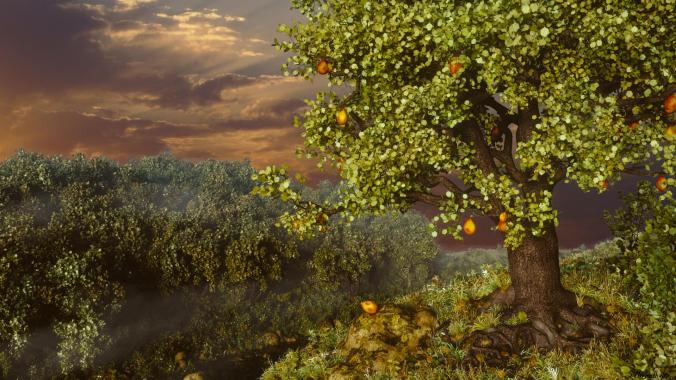
2:17 [obey limitations placed by God] but [signals one exception] you must not [strong prohibition; two principles behind every negative command: protection and provision; prohibition gave opportunity to demonstrate obedience and devotion to God] eat from the tree of the knowledge of good and evil, for when you eat of it you will surely [certainty] die [the process of death will begin in human life].”
God made provision for Adam’s well-being by generously filling the garden with a variety of fruit-bearing trees. He gave Adam simple yet specific instructions about which fruit he was permitted to eat. God gave these instructions in the form of a command that included a single yet strong prohibition. God commanded Adam to not eat from the tree of the knowledge of good and evil. This is the first negative command in the Bible and was intended to protect Adam. This prohibition also gave Adam the opportunity to demonstrate his devotion and obedience to his Creator.
Note: In what ways is a prohibition or a warning a demonstration of love? How have you used prohibitions or warnings to demonstrate your love for others, especially your children? Why do people often regard prohibitions as something negative or not in their best interests?
Choosing to disobey God’s command would have dire consequences. God warned that disobedience would introduce the process of death in human life. Death destroys and separates. God told Adam that the penalty for disobeying His command was that he would certainly die. This particular death is both spiritual and physical. Disobedience would result in a spiritual death that would separate Adam from God. Eventually, death would end Adam’s physical existence.
As humans, we are moral beings capable of choosing either to obey or disobey God’s commands. The most spiritual exercise any of us engage in on any given day is making choices (see Prov. 13:13). All choices have consequences (see Col. 3:25). Our choices either draw us closer to God or distance us from Him. God knows what is good for us and we must obey Him in order to experience and enjoy what He deems as good.
Note: God warned His creation of the serious consequences of disobeying Him. People are responsible for their actions.
2:18 The LORD God said, “It is not good [first mention in Genesis of something not good] for the man to be alone [companionship is important]. I will make a helper [a helping counterpart; an indispensable partner; one who comes to the aid of another to help him fulfill a task he could not accomplish alone] suitable [corresponding to; literally “like his presence”] for him.”
Adam needed more than a job and good food to eat in order to find fulfillment in the garden. God had placed Adam in the midst of everything good and yet declared that there was something not good in regard to the man. It was not good, God said, for the man to be alone. Companionship and intimacy are essential to human happiness, enjoyment, and fulfillment. Being alone or being lonely is not good. Loneliness is not the absence of people but instead the absence of meaningful relationships. God designed humans to live in relationship or in community with others.
Note: How has your life been enriched by friendships? Do you know any lonely individual who could benefit from your friendship? If so, what steps can you take to befriend and encourage that person?
God acted intentionally in order to meet the man’s need for companionship. He made a helper who was like him or suitable for him. Adam did not find a complementary helper among any of the creatures God had created because not a single creature corresponded to him. So, God made “a woman and brought her to the man” (Gen. 2:22). Adam immediately acknowledged that the woman was the perfect and most suitable companion for him. (Gen. 2:23). God’s design for marriage is one man and one woman (Gen. 2:24). Together, Adam and Eve established the first home, fulfilled God’s instructions to be fruitful and multiply, and enjoyed the kind of companionship that keeps loneliness at bay.
2:19 Now the Lord God had formed out of the ground all the beasts of the field and all the birds of the air. He brought them to the man [God had delegated to humanity dominion over animal life (Gen. 1:28)] to see what he would name them; and whatever the man called each living creature, that was its name.
2:20 So the man gave names to all the livestock, the birds of the air and all the beasts of the field. But for Adam [first time in NIV that the man is identified by his personal name] no suitable helper [face-to-face counterpart] was found.
2:21 So [God took steps to change a “not good” situation into a good situation] the LORD God caused the man to fall into a deep sleep; and while he was sleeping, he took one of the man’s ribs [literally “side”] and closed up the place with flesh.
2:22 Then the LORD God made [from common verb meaning “to build”] a woman [the final work of His creation] from the rib he had taken out of [side; bone not taken from head to rule over or foot to trample under] the man, and He brought her to the man [signifies the first marriage].
2:23 The man [Heb. ish] said [Adam’s first recorded words; Adam recognized that Eve perfectly corresponded to him and was exactly what he needed], “This is now bone of my bones and flesh of my flesh; she shall be called ‘woman [Heb. ishah],’ for she was taken out of man.”
Note: God created two genders to complement (and compliment) each other.
2:24 For this reason a man [and a woman] will leave [in order to give priority to his wife] his father and mother and be united [permanently glued or adhered; spiritually, emotionally, bodily] to his wife, and they will become one flesh [physical intimacy and more; God’s first command to the first couple was to have children (Gen. 1:28)].
2:25 The man and his wife were both naked, and they felt no shame [prior to the entry of sin into the world].
Genesis 1
Genesis Timeline
・4000 BC Adam
・2000 BC Abraham
・1800 BC Death of Joseph (1804 BC)
・1500 BC Moses
In the Bible, Genesis is the book of beginnings. The opening words of the book invite us on a breathtaking journey of the beginning of the universe and the planet we call home. God, who existed before our beginning, is introduced as the One who brought the universe and everything in it into existence out of nothing.
Moses, the human writer of Genesis, made no attempt to prove God’s existence. He merely declared it.
The opening chapters of Genesis also give us important information about the beginning of human life and the entrance of sin and death into the world. Thankfully, we are also given the first hint of God’s plan to redeem His fallen creation in Genesis 3:15. Redemption offers each of us the opportunity to begin anew.
The Context
Moses, the human author of Genesis, described the creation of the universe, and more specially the earth, in Genesis 1. After creating the heavens and the earth, God began the process of shaping and filling what He had created. God shaped the creation over a three-day period. On day one He created light and separated it from the darkness (1:3-5). On the second day He separated the seas from the skies (1:6-8). And on the third day of creation, God formed the dry land, called earth, and added vegetation capable of reproducing according to their kinds (1:9-13).
After God shaped the creation, He began the process of filling or populating what He had created. On the fourth day, God filled the heavens with the sun, moon, and stars (1:14-19). On the fifth day He filled the oceans with sea creatures and the skies with birds (1:20-23). God then blessed the creatures He had made and commanded them to multiply and fill the earth (1:22). Finally, on the sixth day of creation, God made the animals and then made human beings in His image (1:26-29). God gave man dominion over the earth and its creatures and resources.
Once God had completed His work of shaping and filling the creation, He rested on the seventh day. This day of rest is later referred to in the Bible as the “sabbath” (Ex. 16:23). The word sabbath comes from the Hebrew word “shabbat.” This word is related to the Hebrew word for “seven” and means to rest or to cease from labor. God blessed the seventh day and declared it holy (2:3) or set apart from the other days of creation.
1:1 In the beginning [marks the start of time on earth] God [(Heb. ’elohim) only God can create something out of nothing; God did not create everything simultaneously] created [(Heb. bara’); Latin ex nihilo means “out of nothing”; note comprehensive phrase that indicates the totality of the universe…] the heavens [the infinite space above the earth (includes sun, moon, stars)] and the earth [the world in which humanity exists].
The opening words of Genesis, the book of beginnings, take us back to the point when God brought the universe into existence out of nothing. This beginning marks the start of time. Prior to the beginning, only God existed. He had no beginning.
Elohim, the Hebrew term used for God, is a plural word that denotes strength, emphasizes God’s majesty, and alludes to the Trinity. The triune God revealed His power by creating the heavens and the earth, a comprehensive phrase that refers to the universe and everything in it. As Creator, He has dominion over all His creation.
These opening words of the Bible set the Lord God distinctly apart from all mythical deities in pagan creation stories (see Jer. 10:11).
1:2 Now the earth was formless [implies that the earth had not received its final shape; unformed] and empty [lacked contents; unfilled; no life on it], darkness [light had not yet been created] was [looks back at the state of the earth as created in 1:1] over the surface of the deep, and the Spirit [(Heb. ruah which means to breathe or blow)] of God was hovering [supervising His handiwork; root used in Deut. 32:11 of eagle brooding over its young to develop them] over the waters.
The story of creation immediately shifts from the universe to one of the smallest planets in the cosmos, the earth. The earth is important because it is the stage on which God’s redemptive purposes are revealed.
The initial condition of the earth is described as being formless and empty, not yet inhabited and not yet habitable for people — God’s crowning creation. However, all of that changed when the Spirit of God, the third Person of the Trinity, engaged in the creative process.
Like an eagle brooding over her nest to develop her young (Deut. 32:11), the Spirit of God was hovering over the undeveloped earth to bring order out of chaos and fullness out of emptiness.
1:3 And God said [these words mark off the stages of creation; note that God created by the spoken word], “Let there be light [essential element of life and growth],” and there was light [thus starting the flow of time as measured in days].
God demonstrated His power by speaking everything that is into existence. Some ancient creation accounts involve monsters and gods and cosmic struggles. Unlike ancient creation myths, Genesis presents one God who merely spoke creation into being and who is still in control of His creation.
The phrase “Then God said” introduces each new phase of God’s creative activity. God did not create everything simultaneously but instead in a specific order and with a specific purpose in mind. The command “Let there be light” are the first recorded words of God in Scripture. The Bible affirms that all of creation is the product of “the word of the Lord” and “the breath of His mouth” (Ps. 33:6).
The Creative Work of God
・Days 1 – 3 God shaped the creation
・Day 1: light (1:3-5)
・Day 2: water, atmosphere (1:6-8)
・Day 3: earth, vegetation (1:9-13)
・Days 4 – 6 God populated the creation
・Day 4: sun, moon, stars (1:14-19)
・Day 5: sea creatures, birds (1:20-23)
・Day 6: animals (1:24-25), man (1:26-29)
1:4 God saw that the light was good, and he separated the light from the darkness.
God commanded the light to shine and saw that this creative act was good. The word good suggests something that was beneficial for everything yet to be created — plants, animals, and mankind. God knows what is good and is intent on providing what is good for the well-being of His creation.
Light is good because it is essential to the welfare of all living things. Light is also good because it restricts the influence of the darkness. Once He created the light, God separated it from the darkness. Light and darkness, a metaphor for good and evil elsewhere in Scripture, have nothing in common.
1:5 God called the light “day,” and the darkness he called “night.” And there was evening, and there was morning—the first day.
God defined the respective functions of light and darkness and named them accordingly. He called the light day and He called the darkness night. Giving something a name indicates God’s dominion over that which He had named. The cycle of evening and morning became the first day. God’s creative activity took place over a period of six days and then God rested on the seventh day.
1:6 And God said, “Let there be an expanse [derived from a root that means “to beat out” or “to spread out” and denotes an extended surface (like a dome)] between the waters to separate water [surface water] from water [water in atmosphere].”
1:7 So God made the expanse and separated the water under the expanse from the water above it. And it was so.
1:8 God called the expanse “sky.” And there was evening, and there was morning—the second day.
1:9 And God said, “Let the water under the sky be gathered to one place [surface water organized into seas], and let dry ground [would be inhabited by animals and humans, which would be created on day six] appear.” And it was so.
1:10 God called the dry ground “land,” and the gathered waters he called “seas.” And God saw that it was good.
1:11 Then God said, “Let the land produce vegetation: seed-bearing [the means by which each plant and tree would continue to reproduce itself] plants and trees on the land that bear fruit with seed [the means by which each plant and tree would continue to reproduce itself] in it, according to their various kinds [solid, unbreakable unit that allows for varieties within the kind].” And it was so.
1:12 The land produced vegetation: plants bearing seed according to their kinds and trees bearing fruit with seed in it according to their kinds. And God saw that it was good.
1:13 And there was evening, and there was morning—the third day.
1:14 And God said, “Let there be lights in the expanse of the sky to [three services the lights provide…] [1] separate the day from the night, and let them [2] serve as signs to mark seasons and days and years,
1:15 and let them [sun and moon] be lights in the expanse of the sky to [3] give light on the earth.” And it was so.
1:16 [described from the vantage point of looking from earth out into space] God made two great [in comparison (size and significance) to the other heavenly bodies (including stars) viewed from the earth] lights — the greater light [sun] to govern [dominate] the day and the lesser light [moon] to govern [dominate] the night. He also made the stars [cf. Ps. 147:4].
1:17 God [not a big bang or some other cosmic event] set [purposefully and intentionally] them in the expanse of the sky to give light on the earth [cf. 1:15],
1:18 to govern the day and the night [cf. 1:14], and to separate light from darkness. And God saw that it was good [because they provide the light and warmth needed to survive on earth].
1:19 And there was evening, and there was morning — the fourth day.
1:20 And God said, “Let the water [see 1:6] teem with living creatures, and let birds fly above the earth across the expanse of the sky [see 1:6].”
1:21 So God created the great creatures of the sea and every living and moving thing with which the water teems, according to their kinds, and every winged bird according to its kind. And God saw that it was good.
1:22 God blessed them and said, “Be fruitful and increase in number and fill the water in the seas, and let the birds increase on the earth.”
1:23 And there was evening, and there was morning—the fifth day.
1:24 And God said, “Let the land [see 1:9] produce living creatures according to their kinds: livestock [large four-footed beasts], creatures that move along the ground, and wild animals, each according to its kind [solid, unbreakable unit that allows for varieties/mutations within the kind (but not transmutation or one kind becoming another kind)].” And it was so.
1:25 God made the wild animals according to their kinds, the livestock according to their kinds, and all the creatures that move along the ground according to their kinds. And God saw that it was good.
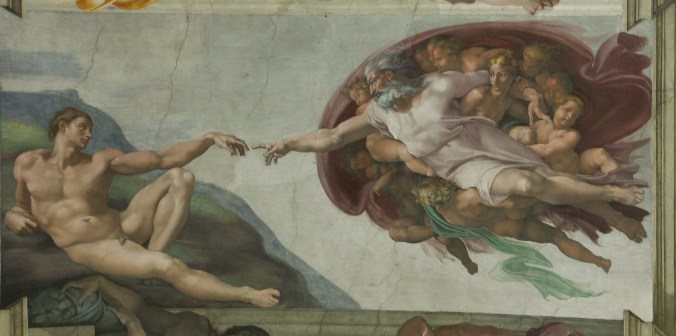
1:26 Then God said, “Let us [personal (first person); contrast with the impersonal (third person) “Let there be…”; “a plurality in singularity of being” (Hobbs, “The Origin of All Things,” p. 28)] make [out of already created material (Gen. 3:19); no definite article before “man” — therefore could read “mankind”] man [from Hebrew adham, root for soil; term includes both man and woman] in our [“But to me the most satisfactory answer is the Trinity.” (Hobbs, “The Origin of All Things,” p. 28)] image [contrast with the creation account of each creature (“according to their kinds”); from Hebrew root meaning “to cut out or off” as in our expression “a chip off the old block”], in our likeness [or appearance; a more indefinite term than image; emphasizes that although man is like God, he is not God or deity], and let them rule [only man given dominion in God’s creation; to rule over in the sense of subduing, managing, and developing the potential; stewards of God’s creation; dominion over not evolved from] over the fish of the sea and the birds of the air, over the livestock, over all the earth, and over all the creatures that move along the ground.”
God made man on the sixth day of creation. Man did not just happen or evolve from previously created forms of life. Instead, man is the purposeful and special creation of God. Unlike God’s previous acts of creation, the creation of man is introduced in a more personal way: “Let Us make man in Our image, according to Our likeness.” God referred to Himself in the plural, a reference to the Trinity. The Scriptures affirm that both Jesus (John 1:3) and the Holy Spirit were involved in the creation of the world.
Unlike the animals that were created after their kind, God made man in His own image. The term image suggests a resemblance to God. Men and women are intellectual, emotional, moral, and spiritual beings that will never cease to exist. Man also has the capacity to know, to have fellowship with, and to worship God. The more indefinite term likeness emphasizes that although man reflects the divine nature, he is not divine. Sadly, the image of God in man was marred by sin after the fall of humanity.
Being made in God’s image has profound moral implications. All human life, including life in the womb, is sacred and should be treated with dignity and respect. The belief in the sanctity of human life is ultimately rooted in the understanding that all human beings bear the image of God. The sixth commandment prohibits murder (Ex. 20:13). This prohibition is grounded in the belief that life is sacred because we are created in God’s image. Because of the sanctity and inherent worth of life, we should cherish and protect this precious gift from God.
Mankind is the crowning point of God’s creation. While God charged the animals to be fruitful and multiply, He gave man the additional responsibility and privilege of having dominion over His creation. God expects man to exercise responsible stewardship of the earth and all of its natural resources.
1:27 So God created [definite article included in Hebrew, therefore indicating that God began with one man, Adam] man [term includes both man and woman; sexuality makes it possible for them to reproduce after their kind] in his own image, in the image of God he created him; male and female [cf. 2:18,21-24 re: details as to how woman came to be] he created them.
Humanity is not the product of a cosmic accident or blind forces. We learn from the first chapter of Genesis that a loving God created man as part of a wonderful plan. The words “so God created” indicate that creation was the intentional act of God.
The Hebrew word man is “adam,” which is also the name given to the first man. This word can also be translated “mankind” and includes man and woman. God declared that mankind and all that He had made was “very good” (1:31). However, the creation of man and woman is the pinnacle of God’s creative activity. David marveled that out of all that God had created, He crowned man alone “with glory and honor” (Ps. 8:5).
God created man in his own image while He “made the wild animals according to their kinds” (1:25). The phrase “in his own image” does not refer to physical likeness, for God is Spirit (John 4:24). Rather, it means that, like God, we are spiritual beings with the capacity to love, communicate, and have fellowship with God and one another.
The truth that each person is created in the image of God is the primary reason for individual worth and responsibility. Our individual worth is not grounded in our abilities, skills, achievements, resources, or possessions, but in the fact that we are created in God’s image. Human life is sacred because God created man and woman in His image. Because human life is sacred, all people should honor and protect it.
When God created man in His image, He created them male and female. The next chapter of Genesis provides additional details about the creation of the first man and the first woman. Because both male and female bear the image of God, there are no qualitative differences between them. They are equal in dignity and worth and share the responsibility of dominion over God’s creation.
1:28 God blessed [the blessing is primarily “posterity”] them [male and female] and said to them, “Be fruitful and increase in number; fill the earth and subdue it. Rule [invested authority, dominion] over the fish of the sea and the birds of the air and over every living creature that moves on the ground.”
God blessed the man and the woman He had made and gave them the same charge He had given to other living creatures: be fruitful, multiply, fill the earth. Sexuality is an important part of God’s design for His creation and essential for being fruitful and multiplying in order to fill the earth.
The Bible again emphasizes that God assigned humans the responsibility of subduing the earth and ruling over every creature. This command does not give humans the right to abuse God’s creation but instead the privilege of promoting the well-being of the planet and all of its inhabitants and resources. Our own welfare is ultimately linked to the welfare of the planet.
1:29 Then God said, “I give you every seed-bearing plant on the face of the whole earth and every tree that has fruit with seed in it. They will be yours for food.
1:30 And to all the beasts of the earth and all the birds of the air and all the creatures that move on the ground—everything that has the breath of life in it—I give every green plant for food.” And it was so.
God graciously made provision for the dietary needs of His creation. Humans and animals must have nourishment in order to survive. God therefore gave man and all the wildlife of the earth access to the vegetation He had created on the third day. In the beginning, humans were vegetarians, surviving on plants and fruit. Only after the flood did humans begin to consume the flesh of animals. According to Isaiah 11:7, after Jesus Christ returns to establish His kingdom on earth, carnivorous animals will again return to a vegetarian diet.
1:31 God saw all that he had made, and it was very good. And there was evening, and there was morning [note Heb. method of reckoning time from sunset to sunset]—the sixth day.
After the creation of man, God surveyed the totality of His creative work and declared that it was very good. And indeed it was. At this point there was harmony in creation. All that God had created supported all life forms. The world was not yet marred by sin and its consequences.
Genesis
• Chapter 1
• Chapter 2
• Chapter 3
• Chapter 4
• Chapter 5
• Chapter 6
• Chapter 7
• Chapter 8
• Chapter 9
• Chapter 10
• Chapter 11
• Chapter 12
• Chapter 13
• Chapter 14
• Chapter 15
• Chapter 16
• Chapter 17
• Chapter 18
• Chapter 19
• Chapter 20
• Chapter 21
• Chapter 22
• Chapter 23
• Chapter 24
• Chapter 25
• Chapter 26
• Chapter 27
• Chapter 28
• Chapter 29
• Chapter 30
• Chapter 31
• Chapter 32
• Chapter 33
• Chapter 34
• Chapter 35
• Chapter 36
• Chapter 37
• Chapter 38
• Chapter 39
• Chapter 40
• Chapter 41
• Chapter 42
• Chapter 43
• Chapter 44
• Chapter 45
• Chapter 46
• Chapter 47
• Chapter 48
• Chapter 49
• Chapter 50
 Bible Teaching Notes