Jeremiah 44

44:1 This word came to Jeremiah concerning all the Jews living in [Jeremiah named several Jewish settlements…] Lower Egypt—in Migdol [located near the Red Sea; Hebrews camped there after leaving Egypt (cf. Num. 33:7)], Tahpanhes [located in the eastern Nile Delta region] and Memphis [located south of modern Cairo]—and in Upper Egypt:

44:2 “This is what the LORD Almighty, the God of Israel, says: You saw the great disaster I brought on Jerusalem and on all the towns of Judah [the tragic results of religious apostasy that had befallen the Judean homeland should have served as a warning to them; they should have learned from the mistakes of others]. Today they lie deserted and in ruins

44:3 because [the reason for “the great disaster” brought on Jerusalem and Judah] of the evil [idolatrous practices] they [the inhabitants of Jerusalem and Judah] have done. They provoked me to anger by burning incense [can also mean “to offer sacrifices of animals” (cf. Lev. 1:9; 3:11; 1 Sam. 2:16)] and by worshiping other gods [these gods had become the focal point of the people’s allegiance] that neither they nor you nor your fathers ever knew.

44:4 Again and again [literally “rising early and sending”; indicates persistence] I sent my servants the prophets, who said [note that God’s message was always unmistakably clear…], ‘Do not do this detestable thing that I hate!’

44:5 But [in spite of a clear word from God] they did not listen or pay attention [literally “incline their ear”]; they did not turn from their wickedness or stop burning incense to other gods.

44:6 Therefore [because they failed to heed God’s repeated warnings], my fierce anger was poured out; it raged against the towns of Judah and the streets of Jerusalem and made them the desolate ruins they are today.

44:7 “Now this is what the LORD God Almighty [“the God of Hosts”; emphasizes the Lord’s sovereign power and shows He controlled the armies that brought on His people the consequences of their unfaithfulness], the God of Israel, says: Why bring such great disaster on yourselves by cutting off [destruction was a consequence of persistence in idolatry] from [note description of the entire community…] Judah the men and women, the children and infants, and so leave yourselves without a remnant?

44:8 Why provoke me to anger with what your hands have made [their idols], burning incense to other gods in Egypt, where you have come to live? [note consequences of persisting in idolatry…] You will destroy yourselves and make yourselves an object of cursing and reproach among all the nations on earth.

44:9 Have you forgotten [a short memory can be a dangerous thing] the wickedness committed by your fathers and by the kings and queens of Judah and [the people of Judah could not blame their woes on the sins of others alone] the wickedness committed by you [personal] and your wives in the land of Judah and the streets of Jerusalem?

44:10 To this day they [includes past generations] have not humbled themselves [literally “crushed themselves”] or shown reverence [fear], nor have they followed my law and the decrees I set before you and your fathers.

44:11 “Therefore, this is what the LORD Almighty, the God of Israel, says: I am determined to bring disaster on you [literally “set my face against you”] and to destroy all Judah.

44:12 I will take away the remnant of Judah who were determined [literally “set their faces”] to go to Egypt to settle there. They will all [“from the least to the greatest”] perish in Egypt; they will fall by the sword or die from famine. From the least to the greatest, they will die by sword or famine. They will become an object of cursing and horror, of condemnation and reproach.

44:13 I will punish those who live in Egypt with the sword, famine and plague, as I punished Jerusalem.

44:14 None of the remnant of Judah who have gone to live in Egypt will escape or survive to return to the land of Judah, to which they long to return and live; none will return except a few fugitives.”

44:15 Then all the men who knew that their wives were burning incense to other gods, along with all the women who were present—a large assembly—and all the people living in Lower and Upper Egypt, said to Jeremiah,

44:16 “We will not listen to the message you have spoken to us in the name of the LORD!

44:17 [the people defended their practice of idolatry] We will certainly do everything we said we would: We will [because they were convinced that worshiping the Queen of Heaven would bring prosperity] burn incense to the Queen of Heaven [goddess of fertility, sexual love, maternity] and will pour out drink offerings to her just as we and our fathers [a reminder of the fact that idolatry had been continuous among the Hebrews], our kings and our officials did in the towns of Judah and in the streets of [indicates that shrines to Canaanite deities were situated along the streets] Jerusalem. At that time we had plenty of food and were well off and suffered no harm.

Note: The Queen of Heaven was known by several names:
• To the Hebrews Asherah
• To the Babylonians Ishtar
• To the Canaanites Astarte
• To the Greeks Aphrodite
• To the Romans Venus

44:18 But ever since we stopped [allusion to Josiah’s reforms (cf. 2 Kings 23:4-25)] burning incense to the Queen of Heaven and pouring out drink offerings to her, [note that the people thought their idols had done more for them than God] we have had nothing and have been perishing by sword and famine.”

44:19 The women added, “When we burned incense to the Queen of Heaven and poured out drink offerings to her, did not our husbands [the women claimed to have their husbands’ permission as required by law (Num. 30:3-16)] know that we were making cakes like her image and pouring out drink offerings to her?”

44:20 Then Jeremiah said [Jeremiah told the people that God had not failed them as they supposed, but that they had failed God] to all the people, both men and women, who were answering him,

44:21 “Did not the LORD remember and think about the incense burned in the towns of Judah and the streets of Jerusalem by you and your fathers, your kings and your officials and the people of the land?

44:22 When the LORD could no longer endure your wicked actions and the detestable things you did, your land became an object of cursing and a desolate waste without inhabitants, as it is today.

44:23 Because you have burned incense and have sinned against the LORD and have not obeyed him or followed his law or his decrees or his stipulations, this disaster has come upon you, as you now see.”

44:24 Then Jeremiah said to all the people, including the women, “Hear the word of the LORD, all you people of Judah in Egypt.

44:25 This is what the LORD Almighty, the God of Israel, says: You and your wives have shown by your actions [literally “have spoken with your mouths and with your hands”] what you promised when you said, ‘We will certainly carry out the vows we made to burn incense and pour out drink offerings to the Queen of Heaven.’ [note sarcasm…] “Go ahead then, do what you promised! Keep your vows!

44:26 But [there are consequences to persisting in doing wrong] hear the word of the LORD, all Jews living in Egypt: ‘I swear by my great name,’ says the LORD, ‘that no one from Judah living anywhere in Egypt will ever again invoke my name or swear [the people had forfeited such a right by embracing idolatry; cf. Ex. 20:3-4], “As surely as the Sovereign LORD lives.”

44:27 For I am watching over them for harm [their beliefs, choices, and conduct guaranteed disaster], not for good; the Jews in Egypt will perish by sword and famine until they are all destroyed.

44:28 Those who escape the sword and return to the land of Judah from Egypt will be very few. Then the whole remnant of Judah who came to live in Egypt will know whose word will stand—mine or theirs.

44:29 “‘This will be the sign [to emphasize the certainty of punishment of the Jews in Egypt] to you that I will punish you in this place [the place where they had sinned against God],’ declares the LORD, ‘so that you will know that my threats of harm against you will surely stand.’

44:30 This is what the LORD says: ‘I am going to hand Pharaoh Hophra [reigned from 588–569 BC; Hophra had declared “Not even a god can move me from my throne.”] king of Egypt over to his enemies who seek his life [Pharaoh Hophra was indeed overthrown as Jeremiah had prophesied, yet the Jewish settlers in Egypt still refused to heed Jeremiah’s warnings], just as I handed Zedekiah king of Judah over to Nebuchadnezzar king of Babylon, the enemy who was seeking his life.’”
Jeremiah 38

Jeremiah 38:1-18
38:1 Shephatiah son of Mattan, Gedaliah son of Pashhur, Jehucal son of Shelemiah, and Pashhur son of Malkijah heard [Jeremiah’s message concerned/troubled those in high places] what Jeremiah was telling all the people when he said,

38:2 This is what the LORD says [cf. Jer. 21:9]: ‘Whoever stays in this city will die by the sword, famine or plague, but whoever goes over to [probably bears the sense “to desert to”; these words have a traitorous tone] the Babylonians will live. He will escape with his life; he will live.’

38:3 And this is what the LORD says [cf. Jer. 21:7; 34:2,22; 37:8; etc]: ‘This city [Jerusalem] will certainly [indicates that Jerusalem’s fate was sealed] be handed over to the army of the king of Babylon, who will capture it.’”

38:4 Then the officials said to the king, “This man should be put to death [an understandable request since Jeremiah’s words seemed traitorous]. He is discouraging [Jeremiah’s words had a demoralizing effect on the soldiers and people] the soldiers who are left in this city, as well as all the people, by the things he is saying to them. This man is not seeking the good of these people but their ruin.”

38:5 “He is in your hands,” King Zedekiah answered [his answer indicates that the real power lay with his officials]. “The king can do nothing to oppose you [he did not have the courage to stand up to those who wanted to put Jeremiah to death].”

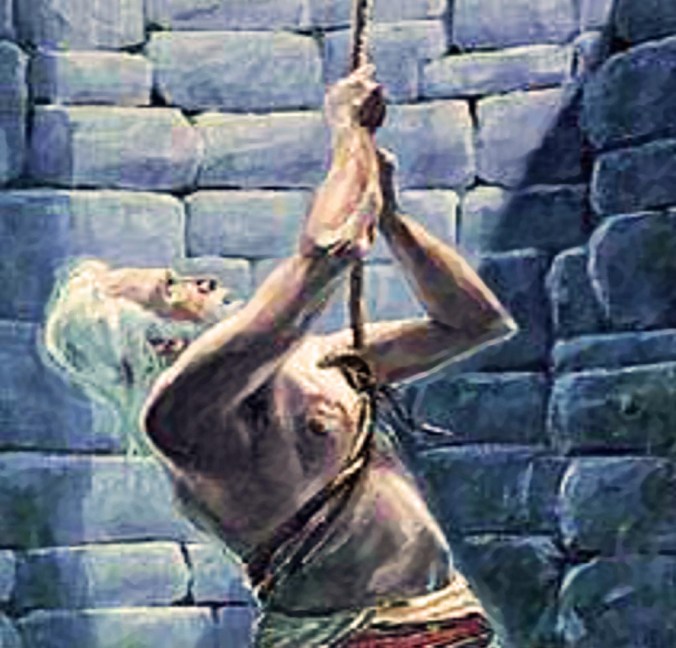
38:6 So they took Jeremiah and put him into the cistern [where he was sure to die a slow and painful death; cf. Ps. 69:14] of Malkijah, the king’s son, which was in the courtyard of the guard. They lowered Jeremiah by ropes [an indication that this particular cistern was deep] into the cistern; it had no water in it, only mud, and Jeremiah sank down into the mud [the only way for Jeremiah to survive was by standing or sitting upright].

38:7 But Ebed-Melech [name means “servant of the king” (i.e. God)], a Cushite [Ethiopian], an official [this word can also be translated as “eunuch”] in the royal palace [Eded-Melech may have been in the palace “for such a time as this”], heard that they had put Jeremiah into the cistern. While the king was sitting in the Benjamin Gate [the place where justice was dispensed (ironic because of the injustice he permitted Jeremiah to suffer)],

38:8 Ebed-Melech [a foreigner was the only one who made an attempt to rescue Jeremiah] went out of the palace and said to him [the king],

38:9 “My lord the king, these men have acted wickedly in all they have done [Eded-Melech courageously pointed out injustice] to Jeremiah the prophet. They have thrown him into a cistern, where he will starve to death [Jeremiah was as good as dead if left in the cistern] when there is no longer any bread in the city.”

38:10 Then the king [the king demonstrated a little courage at this point] commanded Ebed-Melech the Cushite, “Take thirty men from here with you and lift Jeremiah the prophet out of the cistern before he dies. [indicates that Ebed-Melech had influence with the king]

38:11 So Ebed-Melech took the men with him and went to a room under the treasury in the palace. He took some old rags and worn-out clothes from there and let them down with ropes to Jeremiah in the cistern.

38:12 Ebed-Melech the Cushite said to Jeremiah, “Put these old rags and worn-out clothes under your arms to pad the ropes.” Jeremiah did so,

38:13 and they pulled him up with the ropes and lifted him out of the cistern. And Jeremiah remained in the courtyard of the guard [the reaction of Jeremiah’s enemies is not recorded].

38:14 Then King Zedekiah sent for Jeremiah [this was his last encounter with the king before Jerusalem fell] the prophet and had him brought to the third entrance [some believe that this was the king’s private entrance to the temple from the palace] to the temple of the LORD. “I am going to ask you something [Zedekiah sought a word (or an oracle) from God],” the king said to Jeremiah. “Do not hide anything from me.”

38:15 Jeremiah said to Zedekiah, “If I give you an answer, will you not kill me? Even if I did give you counsel, you would not listen to me.”

38:16 But King Zedekiah swore this oath [though Zedekiah was a moral weakling, Jeremiah trusted him to keep his oath] secretly to Jeremiah: “As surely as the LORD lives, who has given us breath, I will neither kill you nor hand you over to those who are seeking your life.”

38:17 Then Jeremiah said to Zedekiah, “This is what the LORD God Almighty, the God of Israel, says: ‘If you surrender to the officers of the king of Babylon, your life will be spared and this city will not be burned down; you and your family will live.

38:18 But if you will not surrender to the officers of the king of Babylon, this city will be handed over to the Babylonians and they will burn it down; you yourself will not escape from their hands.’”

Jeremiah 37

Jeremiah 37:13-17
37:13 But when he reached the Benjamin Gate [located on north wall of city on road leading to Benjamin], the captain of the guard, whose name was Irijah [name means “the Lord sees or provides”] son of Shelemiah, the son of Hananiah [not the false prophet who had challenged Jeremiah (cf. Jer. 28:1,10)], arrested him and said, “You are deserting [an understandable accusation since Jeremiah had urged others to desert (cf. Jer. 21: 9; 38:2); others had already defected to the enemy (cf. Jer. 38:19; 52:15)] to the Babylonians!”

37:14 “That’s not true!” Jeremiah said. “I am not deserting to the Babylonians.” But Irijah would not listen to him; instead, he arrested Jeremiah and brought him to the officials.

37:15 They [these officials showed no sympathy to Jeremiah] were angry with Jeremiah and had him beaten and imprisoned in the house [presumably a large house] of Jonathan the secretary, which they had made into a prison.

37:16 Jeremiah was put into a vaulted cell in a dungeon [a filthy and unhealthy place], where he remained a long time [the exact duration not specified].

37:17 Then King Zedekiah [Zedekiah was a puppet king set up by Nebuchadnezzar after the exile of Jehoiachin (cf. Jer. 37:1)] sent for him and had him brought to the palace, where he asked him privately [Zedekiah was afraid of his officials], “Is there any word from the LORD?” “Yes,” Jeremiah replied [note that Jeremiah did not compromise the truth, even under duress], “you will be handed over to the king of Babylon.”

Jeremiah 36

The events of this chapter took place in 605-604 BC. Jerusalem fell in 586 BC.

36:1 In the fourth year of Jehoiakim [between Nisan (April) 605 BC and Nisan 604 BC] son of Josiah king of Judah, this word came to Jeremiah [the “weeping prophet”; a priest’s son; called of God around 627 BC to be His prophet; prophesied in Judah, calling nation to repentance; imprisoned because of his strong preaching] from the LORD [God told Jeremiah to put the spoken words into writing; Jeremiah dictated to Baruch (cf. vv. 4,21)]:

36:2 “Take a scroll [made of papyrus or leather sheets sewn together] and write [Jeremiah wrote at God’s initiative] on it all [all the messages God had given him from beginning of his prophetic ministry] the words [note that God’s revelation was in words (not in vague impressions) which a man recorded and God preserved] I have spoken [most of these messages recorded in the first twenty chapters of this book] to you concerning [pertaining to] Israel, Judah and all the other nations from the time I began speaking to you in the reign of Josiah [around 627 BC] till now [605 BC].

36:3 Perhaps when the people of Judah hear [when they gathered in the temple] about [God warned His people about the destructive consequences of their sin] every disaster I plan to inflict on them [unless they repented], each of them will turn from [purpose of Scripture was to encourage people to repent and thus to experience forgiveness] his wicked way; then I will forgive their wickedness and their sin.”

Note: What did Jeremiah identify as the purpose of God’s Word? How does God’s Word help people today to turn from disastrous courses?

36:4 So Jeremiah called Baruch [a trusted friend; personal secretary] son of Neriah, and while Jeremiah dictated all the words the LORD had spoken to him [to Jeremiah], Baruch wrote them on the scroll [some suggest the scroll was not large because it was read three times in a single day].

36:5 Then Jeremiah told Baruch, “I am restricted [it is likely that Pashhur restricted Jeremiah from the Temple (read Jer. 20:1-3)]; I cannot go to the LORD’S temple.

36:6 So you go to the house of the LORD on a day of fasting [fasts were often proclaimed on urgent occasions (cf. 1 Sam. 7:6; 2 Sam. 1:12; 12:16; 1 Kings 21:8-14); possible occasion for the fast was the fall of Ashkelon to Babylonian forces] and read to the people [an audience composed of citizens of Jerusalem and people from nearby towns] from the scroll the words of the LORD that you wrote as I dictated. Read them to all the people of Judah who come in from their towns.

36:7 Perhaps they will bring their petition before the LORD, and each will turn from his wicked ways, for the anger and wrath pronounced against this people by the LORD are great.”

36:8 Baruch son of Neriah did everything Jeremiah the prophet told him to do; at the LORD’S temple he read [this is the first reading of the scroll on that day (cf. vv. 8,15,21)] the words of the LORD from the scroll.

Note :Jeremiah’s words were read to three concentric circles of hearers on a single day:
• The people 36:8-10
• The government officials 36:11-19
• The king 36:20-26

36:9 In the ninth month of the fifth year [(December) 604 BC] of Jehoiakim son of Josiah king of Judah, a time of fasting before the LORD was proclaimed for all the people in Jerusalem and those who had come from the towns of Judah.

36:10 From the room of Gemariah [name means “the Lord has accomplished”; likely was friendly to Jeremiah because Baruch was allowed to use his room] son of Shaphan [read 2 Kings 22:3–23:3; read the book of the law found during the temple restoration to King Josiah] the secretary, which was in the upper courtyard [a position overlooking the people gathered in the courtyards] at the entrance of the New Gate of the temple, Baruch read [approximately nine months after God command Jeremiah to record the message on a scroll] to all the people at the LORD’S temple the words of Jeremiah from the scroll.

36:11 When Micaiah [name means “who is like the Lord?”] son of Gemariah, the son of Shaphan, heard all the words of the LORD from the scroll,

36:12 he [Micaiah] went down [indicates the content of the message was disturbing enough for Micaiah to report to the palace] to the secretary’s [the state secretary] room in the royal palace, where all the officials [high government officials] were sitting: Elishama the secretary, Delaiah son of Shemaiah, Elnathan son of Acbor [held high office under Josiah (the previous king)], Gemariah son of Shaphan [served as state secretary under Josiah], Zedekiah son of Hananiah, and all the other officials.

36:13 After Micaiah told them everything [the message likely contained unpopular views or what was construed as anti-government statements concerning the coming destruction of the nation at the hands of the Babylonians] he had heard Baruch read to the people from the scroll,

36:14 all the officials sent Jehudi son of Nethaniah, the son of Shelemiah, the son of Cushi, to say to Baruch, “Bring the scroll from which you have read to the people and come.” So Baruch son of Neriah went to them with the scroll in his hand.

36:15 They said to him [note that these high officials treated Baruch with respect], “Sit down, please, and read it to us.” So Baruch read [this was the second reading that day (cf. vv. 8,15,21)] it to them.

36:16 When they heard all these words, they looked at each other in fear [dread; perhaps because the material was inflammatory; perhaps because they were not living according to its teaching] and said to Baruch, “We must report all these words to the king.”

36:17 Then they asked Baruch, “Tell us, how did you come to write all this? Did Jeremiah dictate it?”

36:18 “Yes,” Baruch replied, “he dictated all these words to me, and I wrote them in ink [this is the only mention of “ink” in the OT] on the scroll.”

36:19 Then the officials said [because they did not expect that Jehoiakim would respond favorably to the message] to Baruch, “You and Jeremiah, go and hide [cf. Jer. 36:26]. Don’t let anyone know where you are.”

36:20 After they put the scroll in the room of Elishama the secretary, they went to the king in the courtyard and reported everything to him.

36:21 The king [Jehoiakim] sent Jehudi to get the scroll, and Jehudi brought it from the room of Elishama the secretary and read [this was the third reading of Jeremiah’s prophecies in one day (cf. vv. 8,15,21)] it to the king and all the officials standing beside him.

36:22 It was the ninth month [Chislev corresponds to parts of November and December] and the king was sitting in the winter apartment [sheltered section of king’s apartment facing winter sun], with a fire burning in the firepot in front of him.

36:23 Whenever Jehudi had read three or four columns of the scroll, the king [contrast the respect for God’s Word that Josiah, his father, had shown years before (2 Kings 22:11-20)] cut them off with a scribe’s knife and threw them into the firepot, until the entire scroll was burned in the fire [perhaps the king thought he could annul the power of the Word by burning the words].

Note: What are some ways in which people today reject God’s Word?

36:24 The king and all his attendants who heard all these words [1] showed no fear, [2] nor did they tear their clothes [an outward sign of inner remorse; cf. Josiah’s response in 2 Kings 22:11].

36:25 Even though [note that only three of those present objected to the king’s action] [1] Elnathan, [2] Delaiah and [3] Gemariah urged the king not to burn the scroll, he would not listen to them.

36:26 Instead, the king commanded Jerahmeel, a son of the king, Seraiah son of Azriel and Shelemiah son of Abdeel to arrest Baruch the scribe and Jeremiah the prophet [having destroyed the scroll, the king sought to destroy its author]. But the LORD had hidden them [cf. Jer. 36:19].

36:27 After the king burned the scroll containing the words that Baruch had written at Jeremiah’s dictation, the word of the LORD came to Jeremiah:

36:28 “Take another scroll and write [written words outlasted Jeremiah] on it all the words that were on the first scroll [cf. 36:32], which Jehoiakim king of Judah burned up.

Note: “Heaven and earth will pass away, but my words will never pass away.” (Matthew 24:35)

36:29 Also tell Jehoiakim king of Judah, ‘This is what the LORD says: You burned that scroll and said, “Why did you write on it that the king of Babylon would certainly come and destroy this land and cut off both men and animals from it?”

36:30 Therefore, this is what the LORD says about Jehoiakim king of Judah: He will have no one [his son Jehoiachin succeeded him as king and reigned only three months; Jehoiachin was deposed and died in exile (cf. 2 Kings 24:8,9; 25:27-30)] to sit on the throne of David; his [Jehoiakim] body will be thrown out [unburied] and exposed to the heat by day and the frost by night [cf. Jer. 22:18-19].

36:31 I will punish him and his children and his attendants for their wickedness; I will bring on them and those living in Jerusalem and the people of Judah every disaster I pronounced against them, because they have not listened.’”

36:32 So Jeremiah took another scroll and gave it to the scribe Baruch son of Neriah, and as Jeremiah dictated, Baruch wrote on it all the words of the scroll that Jehoiakim king of Judah had burned in the fire. And many similar words were added to them.

Jeremiah 35

35:1 This is the word that came to Jeremiah from the LORD [Jeremiah spoke for the Lord] during the reign of Jehoiakim [609-598 BC; led people into disobedience and worship of pagan gods; disregarded his father’s example; one of Judah’s worst kings] son of Josiah [had been a godly leader] king of Judah:

35:2 “Go to the Recabite [relatives of the Kenites (1 Chron. 2:55) and the Midianites] family [refers to the small nomadic tribe; descendants of Jonadab, who supported Jehu in overthrow of evil house of Ahab (2 Kings 10:15-17)] and invite them to come to one of the side rooms [living quarters for those who ministered at the temple] of the house of the LORD [refers to Solomon’s temple] and give them wine to drink [this occasion would become an object lesson to people of Judah and test of the faithfulness of the Recabites].”

35:3 So I [Jeremiah obeyed God’s instructions] went to get Jaazaniah son of Jeremiah, the son of Habazziniah, and his brothers and all his sons—the whole family of the Recabites.

35:4 I brought them into the house of the LORD, into the room of the sons of Hanan son of Igdaliah the man of God [this man was known for his faithfulness]. It was next to the room of the officials, which was over that of Maaseiah son of Shallum the doorkeeper.

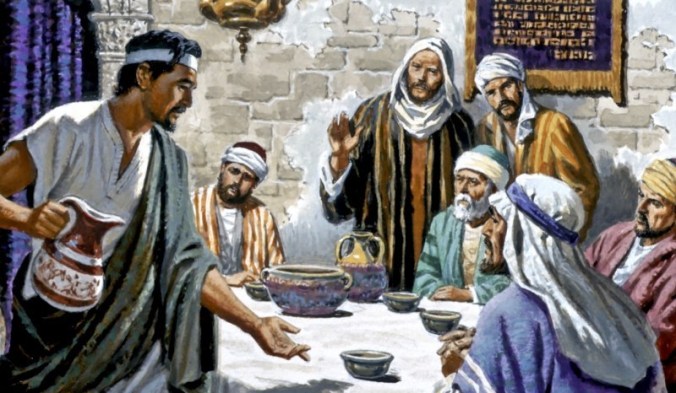
35:5 Then I set bowls full of wine and some cups before the men of the Recabite family and said to them, “Drink some wine.”

35:6 But they replied [cited instructions given about 250 years earlier], “We do not drink wine, because our forefather [ancestor] Jonadab [a man of great moral strength] son [descendant] of Recab gave us this command [a permanent prohibition]: ‘Neither you nor your descendants must ever drink wine.

Note: What moral truths are you teaching your descendants?

35:7 Also you must never build houses, sow seed or plant vineyards; you must never have any of these things, but must always live in tents. Then you will live a long time in the land [reminiscent of commandment God had given Israel by Moses (Ex. 20:12)] where you are nomads.’

35:8 We have obeyed everything [a testimony to their faithfulness and loyalty] our forefather Jonadab son of Recab commanded us. Neither we nor our wives nor our sons and daughters have ever [indicates their consistency in obedience to command of their forefather] drunk wine

35:9 or built houses to live in or had vineyards, fields or crops.

35:10 We have lived in tents and have fully obeyed everything our forefather Jonadab commanded us.

35:11 But when Nebuchadnezzar king of Babylon invaded this land, we said, ‘Come, we must go to Jerusalem to escape the Babylonian and Aramean armies.’ So we have remained in Jerusalem.”

35:12 Then the word of the LORD came to Jeremiah, saying:

35:13 “This is what the LORD Almighty, the God of Israel, says: Go and tell the men [fathers responsible for setting godly examples for their families] of Judah and the people of Jerusalem, ‘Will you not learn a lesson [implies a need for correction of wrong action] and obey my words?’ declares the LORD.

35:14 ‘Jonadab son of Recab ordered his sons not to drink wine and this command has been kept. To this day they do not drink wine, because they obey their forefather’s [Recabites were obedient to their earthly father] command. But I have spoken [through prophets] to you again and again [the people repeatedly heard God’s word], yet you have not obeyed me [people of Judah disobedient to their Heavenly Father].

35:15 Again and again I sent all my servants the prophets [spoke for God; cf. Heb. 1:1] to you. They said, “Each [response to God’s word had to be individual] of you must [indicates obligation] turn from your wicked ways and reform your actions; do not follow other gods to serve them. Then you will live in the land I have given to you and your fathers [cf. Lev. 26:6-8; Deut. 28:1-14].” But [unlike the descendants of Jonadab] you have not paid attention or listened to me [indicates the people disobeyed the words of God; cf. Prov. 13:13].

35:16 The descendants of Jonadab son of Recab have carried out the command their forefather [earthly father] gave them, but these people [the people of Judah] have not obeyed me [Heavenly Father].’

35:17 “Therefore [introduces consequence of persistent defiance], this is what the LORD God Almighty, the God of Israel, says: ‘Listen [a call to hear and obey or suffer the consequences]! I am going to bring [indicates certainty] on Judah [judgment on nation] and on everyone [judgment on individuals] living in Jerusalem [the holy city and location of the temple] every disaster [included defeat at the hands of their enemies (cf. Lev. 26:14-39; Deut. 28:15-68); Jerusalem fell to Babylonians in 586 BC] I pronounced against them. I spoke to them, but they did not listen; I called to them, but they did not answer.’”

Note: Complete the following:
• Our nation needs to repent of…
• I need to repent of…

35:18 Then Jeremiah said to the family of the Recabites, “This is what the LORD Almighty, the God of Israel, says [Recabites commended for their faithfulness]: ‘You have obeyed the command of your forefather Jonadab and have followed all his instructions and have done everything he ordered.’

Note: How faithful are you in keeping your commitments to God and in obeying His instructions?

35:19 Therefore [note that the faithfulness of the Recabites was rewarded], this is what the LORD Almighty, the God of Israel, says: ‘Jonadab son of Recab will never fail to have a man to serve me [literally “stand before me”; cf. Neh. 3:14].’”

Jeremiah 19

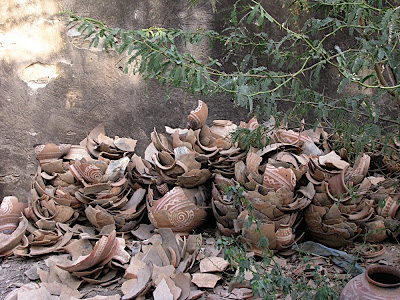
19:1 This is what the LORD says: “Go and buy a clay jar from a potter. Take along some of the elders of the people and of the priests

19:2 and go out to the Valley of Ben Hinnom, near the entrance of the Potsherd Gate. There proclaim the words I tell you,

19:3 [cf. 2 Kings 21:1-6 re: the sins of Manasseh (son of Hezekiah) and the Southern Kingdom of Judah] and say, ‘Hear the word of the LORD, O kings of Judah [the entire royal family] and people of Jerusalem. This is what the LORD Almighty, the God of Israel, says: Listen! I am going to bring a disaster [Judah’s moral weakness invited God’s judgment] on this place that will make the ears of everyone who hears of it tingle [because of the magnitude of the disaster].

19:4 For they have forsaken [abandoned; this sin opened the floodgate for a multitude of other sins] me [the one true God] and made this [Jerusalem (the city of God)] a place of foreign gods [with a morality opposite to that of God]; they have burned sacrifices in it to gods that neither they nor their fathers nor the kings of Judah ever knew, and [because the worship of false gods desensitized their moral nature…] they have filled this place with the blood [cf. 2 Kings 21:16] of the innocent [children].

19:5 They have built the high places of Baal [the principal deity (storm and fertility god) of Canaanite worship; reference here is to idols in general] to burn their sons in the fire as offerings to Baal [Ahaz (2 Kings 16:3) and Manasseh (2 Kings 21:6) were two kings of Judah who sacrificed children to pagan gods]—something I did not command or mention, nor did it enter my mind [the sacrifice of children was alien to God’s mind and opposed to His will].

19:6 So beware, the days are coming, declares the LORD, when people will no longer call this place Topheth or the Valley of Ben Hinnom [located outside the south wall of Jerusalem; the city dump was located there; this place became known as “Gehenna” in Greek; the place where Judah’s kings offered human sacrifices], but the Valley of Slaughter.

19:7 “‘In this place I will ruin the plans of Judah and Jerusalem. I will make them fall by the sword before their enemies, at the hands of those who seek their lives, and I will give their carcasses as food to the birds of the air and the beasts of the earth.

19:8 I will devastate this city and make it an object of scorn; all who pass by will be appalled and will scoff because of all its wounds.

19:9 I will make them eat the flesh of their sons and daughters, and they will eat one another’s flesh during the stress of the siege imposed on them by the enemies who seek their lives.’

19:10 “Then break the jar while those who go with you are watching,

19:11 and say to them, ‘This is what the LORD Almighty says: I will smash this nation and this city just as this potter’s jar is smashed and cannot be repaired. They will bury the dead in Topheth until there is no more room.

19:12 This is what I will do to this place and to those who live here, declares the LORD. I will make this city like Topheth.

19:13 The houses in Jerusalem and those of the kings of Judah will be defiled like this place, Topheth—all the houses where they burned incense on the roofs to all the starry hosts and poured out drink offerings to other gods.’”

19:14 Jeremiah then returned from Topheth, where the LORD had sent him to prophesy, and stood in the court of the LORD’S temple and said to all the people,

19:15 “This is what the LORD Almighty, the God of Israel, says: ‘Listen! I am going to bring on this city and the villages around it every disaster I pronounced against them, because they were stiff-necked and would not listen to my words.’”

Jeremiah 31

Jeremiah 31:27-37
31:27 [God would reestablish His people, give them a new beginning, and relate to them through a new covenant] “The days are coming [a reference to the messianic age],” declares the LORD, “when I will plant [a promise to repopulate the land] the house of Israel and the house of Judah [a way of referring to the whole people of God] with the offspring of men and of animals.

31:28 Just as I watched over them to uproot and tear down [God had watched over the judgments on Israel and Judah], and to overthrow, destroy and bring disaster, so I will watch over them to build and to plant [God would carefully watch over the restoration],” declares the LORD.

Note: God would be as faithful in restoration as in judgment.

31:29 [cf. Ezek. 18:2] “In those days [refers to the time of God’s replanting] people will no longer say [the particular proverb implied that the people were innocent victims of the sins of past generations], ‘The fathers [previous generations] have eaten sour grapes [sinned], and the children’s teeth are set on edge [interpretation (and misapplication of the proverb): we are being unfairly punished for the sins of the previous generation].’

Note: In what ways do people today try to “pass the buck”? Why do people tend to blame others for their mistakes or failures? How does society contribute to these attitudes toward responsibility? When you have been faced with personal failure, have you taken ownership or have you sought to place blame on others?

31:30 Instead [the coming restoration would be a time marked by the acceptance of individual responsibility before God], everyone will die for his own sin; whoever eats sour grapes—his own teeth will be set on edge.

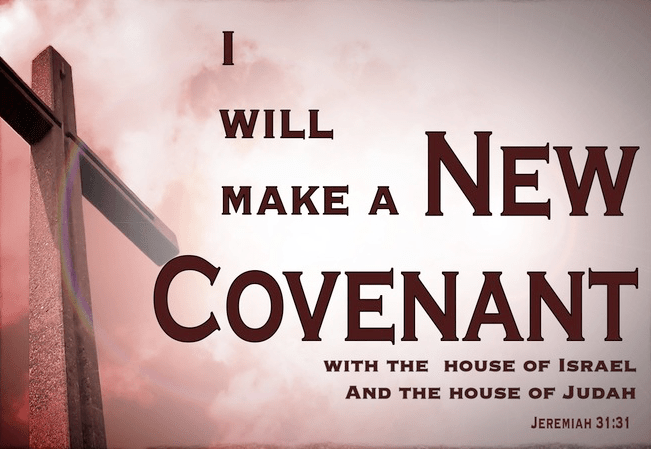
31:31 “The time is coming [new covenant would be fulfilled in the future],” declares the LORD [emphasizes the Lord as initiator of new covenant], “when I will [certainty] make a new [Mosaic covenant at Sinai (cf. Ex. 19-24) in effect until new covenant made] covenant [inaugurated with Christ’s coming; cf. Lk. 22:20 and 1 Cor. 11:25] with the house of Israel and with the house of Judah.

31:32 It will not be like the covenant I made with their forefathers when I took them by the hand to lead them out of Egypt, because they broke [repeatedly failed to live according to terms of old covenant] my covenant, though I was a husband [and Israel like an unfaithful wife] to them [Israelites],” declares the LORD.

31:33 “This is the covenant I will make with the house of Israel after that time,” declares the LORD. “[old covenant on stone tablets; note distinctives of new covenant] [1] I will put my law in [internalized] their minds and write it on their hearts [center of intellect, emotions, will]. [2] I will be their God, and they will be my people.

31:34 No longer will a man teach his neighbor, or a man his brother, saying, ‘Know the LORD,’ because they will all [able to] know [refers to intimate, personal knowledge] me, from the least of them to the greatest,” declares the LORD. “For [3] I will forgive [basis of a personal relationship with God under the new covenant] their wickedness and will remember their sins no more.”

31:35 [confirms covenant would be fulfilled] This is what the LORD says [these words and the last words of v. 37 form brackets around this message], he who appoints [same word translated “set” in Gen. 1:17; emphasizes the eternal duration of the covenant] the sun to shine by day, who decrees the moon and stars to shine by night, who stirs up the sea so that its waves roar — the LORD Almighty is his name:

31:36 [existence of a remnant of God’s people as secure as creation itself] “Only if these decrees vanish from my sight,” declares the LORD, “will the descendants of Israel ever cease to be a nation before me.”

31:37 This is what the LORD says: “Only if the heavens above can be measured and the foundations of the earth below be searched out will I reject all the descendants of Israel because of all they have done [people’s sins and unfaithfulness to the Lord],” declares the LORD.

Note: The Covenants of the Bible
• To Noah (Gen. 9:8-17) Never to destroy the Earth again with a natural catastrophe.
• To Abraham (Gen. 15:9-21) To give Abraham land.
• To Abraham (Gen. 17) To be Abraham’s God and the God of Abraham’s descendants.
• At Sinai (Ex. 19-24) To be the God of Abraham and his descendants.
• To Phinehas (Num. 25:10-13) To maintain a lasting priesthood with this family.
• To David (2 Sam. 7:5-19) To maintain a descendant of David on Israel’s throne.
• New (Jer. 31:31-34) To forgive sins and establish a permanent relationship with God.

Jeremiah 28

28:1 In the fifth month of that same year [594/3 BC], the fourth year, early in the reign of Zedekiah king of Judah, the prophet [LXX has “false prophet”] Hananiah [a common name in ancient Israel; name means “the Lord has been gracious”] son of Azzur, who was from Gibeon [village located six miles northwest of Jerusalem in territory of Benjamin (as was Anathoth, Jeremiah’s hometown)], said [Hananiah’s words a response to Jeremiah’s enacted prophecy (wearing a yoke) in Jer. 27:2 and a contradiction of what God had said to Jeremiah] to me [Jeremiah] in the house of the LORD in the presence of [Hananiah boldly and authoritatively addressed Jeremiah in a public setting] the priests and all the people:

28:2 “This is what the LORD Almighty, the God of Israel, says [the Lord had in fact not given such a message to Hananiah]: ‘I will break [Hananiah used the prophetic perfect (the perfect of certainty) which could be translated “I have broken…”] the yoke [symbolized submission] of the king of Babylon [cf. Jer. 27:14-15].

28:3 [cf. Jer. 27:16] Within two years [Hananiah boldly used definite dates] I will bring back to this place all the articles of the LORD’S house [this was a contradiction of Jeremiah’s statement (cf. Jer. 27:21-22); read Ezra 1:7-11 re: decree of Cyrus that allowed the return of these items] that Nebuchadnezzar king of Babylon removed from here and took to Babylon.

28:4 I will also bring back to this place Jehoiachin [Hananiah boldly used a specific name; this was a contradiction of Jeremiah’s prophecy that Jehoiachin (or Jeconiah) would die in Babylon (cf. Jer. 22:26-27); Hananiah’s prediction indicates that the exiled king still considered legitimate ruler of Judah] son of Jehoiakim king of Judah and all the other exiles from Judah who went to Babylon,’ declares the LORD, ‘for I will break the yoke of the king of Babylon.’”

28:5 Then the prophet Jeremiah replied to the prophet Hananiah before the priests and all the people who were standing in the house of the LORD.

28:6 He said [Jeremiah was polite and sincerely hoped Hananiah was correct], “Amen [means “I hope so” or “may it be so”]! May the LORD do so! May the LORD fulfill the words you have prophesied by bringing the articles of the LORD’S house and all the exiles back to this place from Babylon.

28:7 Nevertheless, listen to what I have to say in your hearing and in the hearing of all the people:

28:8 From early times the prophets who preceded you and me have [note that Hananiah’s prophecy was not consistent with the messages of the great prophets who preceded him…] prophesied war, disaster and plague against many countries and great kingdoms.

28:9 But the prophet who prophesies peace will be recognized as one truly sent by the LORD only if his prediction comes true [cf. Deut. 18:21-22 re: the mark of a true prophet].”

28:10 Then the prophet Hananiah took the yoke off the neck of the prophet Jeremiah and broke it [Hananiah counteracted Jeremiah’s symbolic act by performing his own],

28:11 and he said before all the people, “This is what the LORD says: ‘In the same way will I break the yoke of Nebuchadnezzar king of Babylon off the neck of all the nations within two years.’” At this, the prophet Jeremiah went on his way [he did not offer a rebuttal to Hananiah at this time].

28:12 Shortly after [we are not told how much time elapsed] the prophet Hananiah had broken the yoke off the neck of the prophet Jeremiah, the word of the LORD came to Jeremiah [note: text never says the word of the Lord came to Hananiah]:

28:13 “Go and tell Hananiah, ‘This is what the LORD says: You have broken a wooden yoke, but in its place you will get a yoke of iron [indicated Judah would not escape Babylonian’s yoke].

28:14 This is what the LORD Almighty, the God of Israel, says: I will put an iron yoke on the necks of all these nations to make them serve Nebuchadnezzar king of Babylon, and they will serve him. I will even give him control over the wild animals [a way of emphasizing the extent of Babylon’s sovereignty].’”

28:15 Then the prophet Jeremiah said to Hananiah the prophet, “Listen, Hananiah! The LORD has not sent you [Hananiah was an unauthorized spokesman for God], yet you have persuaded this nation to trust in lies [falsehood].

28:16 Therefore, this is what the LORD says: ‘I am about to remove you from the face of the earth. This very year you are going to die [the penalty for false prophets (cf. Deut. 13:5; 18:20); read Matt. 12:36 re: accountability for our careless words], because you have preached rebellion [rejection of God’s word (as spoken through Jeremiah) was an act of rebellion] against the LORD.’”

28:17 In the seventh month of that same year [two months later (cf. Jer. 28:1)], Hananiah [who had predicted deliverance in two years (cf. Jer. 28:3)] the prophet died [Hananiah’s death authenticated Jeremiah’s position as a true prophet].

Note: Read about other similar deaths in the Bible:
• Pelatiah (Ezek. 11:13)
• Ananias and Sapphira (Acts 5:1-11)

Jeremiah 18

Jeremiah 18:1-17
18:1 This is the word that came to Jeremiah from the LORD:

18:2 “Go down to the potter’s [making of pottery an essential trade in ancient Israel] house, and there [a specific place] I will give you my message.”

18:3 So I went down to the potter’s house, and I saw him working at the wheel [literally “at the two stones”].

18:4 But the pot he was shaping [the potter exercises sovereignty over the clay] from the clay was marred [suggests imperfections in the clay (e.g., too much sand); quality of the clay determined what the potter could do with it; two possible meanings: “corrupted morally” (cf. Gen. 6:11) or “physically ruined” (cf. Jer. 13:7)] in his hands; so the potter formed it into another [not the particular vessel he had initially hoped to make] pot, shaping it as seemed best to him [yet another indication of the potter’s sovereignty over the clay].

18:5 Then [after observing the potter at work] the word of the LORD came to me:

18:6 [God also pictured as a potter in Isa. 29:16; 45:9; 64:8 and Rom. 9:19-24] “O house of Israel, can I not do with you as this potter [the verb from which the word “potter” is derived also means “to create”] does [God’s sovereignty over people is His by right of His role as Creator]?” declares the LORD. “Like clay in the hand of the potter, so are you in my hand, O house of Israel.

Note: Are you pliable or unpliable clay in the potter’s hands?

18:7 [note that the character of the clay determined what the potter could do with it] If at any time I announce that a nation [any people] or kingdom is to be uprooted, torn down and destroyed,

18:8 and if that nation I warned repents of its evil, then [God has the right and authority to forgive; He always acts according to His character] I will relent [Heb. “nacham” conveys idea of changing one’s course of action (and does not necessarily imply that the first action is inferior to the second)]; God can do so without compromising His sovereignty or holiness] and not inflict on it the disaster I had planned.

18:9 And if at another time I announce that a nation or kingdom is to be built up and planted,

18:10 and if it does evil in my sight and does not obey me, then I will reconsider the good I had intended to do for it.

Note: God will bless if we obey and punish if we disobey.

18:11 “Now therefore say to the people of Judah and those living in Jerusalem, ‘This is what the LORD says: Look! I am preparing [literally “shaping” (from same root as “potter”)] a disaster for you and devising a plan against you. So turn from your evil ways, each one of you, and reform [literally “make good”] your ways and your actions.’

18:12 But they will reply [note that the people had reached a point where they no longer had any desire to repent…], ‘It’s no use. We will [indication of a deliberate refusal to repent] continue with our own plans; each of us will follow the stubbornness of his evil heart.’”

18:13 Therefore this is what the LORD says: “Inquire among the nations [Heb. “goyim”]: Who has ever heard anything like this [a nation rejecting an opportunity to avoid the judgment and disaster brought on by stubborn rebellion]? A most horrible [utterly shocking] thing has been done by Virgin [virgin should keep herself clean for her future husband] Israel [term “Virgin Israel” was a reminder of the purity of their relationship at Mt. Sinai].

18:14 [the thought here is that nature is dependable and obeys God] Does the snow of Lebanon [word means “white”; snow-capped mountain range] ever vanish from its rocky slopes? Do its cool waters from distant sources ever cease to flow?

18:15 Yet my people [the Virgin Israel (Jer. 18:13)] have forgotten me; they burn incense to worthless [empty, vanity, nothingness] idols [Virgin Israel prostituted herself by worshipping idols], which made them stumble in their ways and in the ancient paths [the paths walked by those who were obedient to the covenant (cf. Jer. 6:16); the way of covenant obedience; the people would experience the curses of a broken covenant]. They made them walk in bypaths and on roads not built up [paths that lead nowhere].

18:16 Their land will be laid waste, an object of lasting scorn; all [future generations] who pass by will be appalled and will shake their heads [amazed that a people could have done such a thing to themselves].

18:17 Like a wind from the east [fierce and scorching sirocco wind from the desert; a symbol of destruction; unlike the west wind that swept in from the sea; the Babylonian army would be that hot wind bringing destruction], I will scatter them [those who have forgotten Him (Jer. 18:15)] before their enemies; I will show them my back [even as the people had turned their backs on Him; cf. Ps. 13:1; 27:8-9; Mic. 3:4; an expression of disapproval] and not my face in the day of their disaster.”

Jeremiah 11

Jeremiah 11:6-14
11:6 The LORD said to me, “Proclaim all these [Jeremiah had no right to change God’s words, however hard they might seem] words [Jeremiah was to make God’s message clear, not easy] in the towns of [may indicate that Jeremiah had an itinerant ministry] Judah and in the streets of Jerusalem: ‘Listen to the terms of this covenant [the Lord’s covenant with Moses and His people at Sinai (cf. Ex. 24:1-11); Josiah called for a reaffirmation of the old Mosaic covenant] and follow them.

11:7 [note broad review of Israel’s history; Jeremiah’s warnings were not without precedent] From the time I brought your forefathers up from Egypt until today, I warned [through His prophets] them again and again [God was persistent in warning the people], saying, “Obey me [God wanted for the people to fulfill the obligations of the covenant].”

11:8 But [sadly, the people did not heed God’s warnings] they did not listen or pay attention; instead, they followed the stubbornness of their evil hearts. So [the fate of the Northern Kingdom should have served as a constant warning to Judah] I brought on them all the curses of the covenant [cf. Deut. 28:15] I had commanded them to follow but that they did not keep.’”

11:9 Then the LORD said to me, “There is a conspiracy [a metaphor; indicates that individuals had banded together; mutiny; resistance to Josiah’s policy of reform] among the people of Judah and those who live in Jerusalem.

11:10 They have returned [to turn back; when we turn from the Lord the only direction we can go is “back”] to the sins of their forefathers, who refused to listen to my words. They have followed other gods to serve them [constituted a breach of covenant]. Both the house of Israel and the house of Judah have broken the covenant I made with their forefathers.

11:11 Therefore [introduces consequences of violating the covenant] this is what the LORD says [note the fruit of rebellion…]: ‘I will bring on them a disaster they cannot escape [someone said that the wheels of God’s justice move slowly but when they come they grind finely]. Although they cry out to me, I will not listen to them [cf. Prov. 28:9; the hour of God’s patience has passed].

11:12 The towns of Judah and the people of Jerusalem will go and cry out to the gods [impotent and deaf idols] to whom they burn incense, but they will not help them at all [there was not the slightest shred of hope that their idols would help them when they faced the judgment of God (a sobering lesson they would learn too late)] when [not if] disaster strikes.

11:13 You have as many gods as you have towns, O Judah; and the altars you have set up to burn incense to that shameful god Baal are as many as the streets of Jerusalem.’

11:14 “Do not pray for this people nor offer any plea or petition for them [this was a specific command to Jeremiah in a particular historical context], because I will not [the reason: because the people were not repentant; cf. Prov. 28:9] listen when they call to me in the time of their distress.