Genesis 50:12-26
50:12 So Jacob’s sons did as he had commanded them [cf. Gen. 49:29-33]:
50:13 They carried him to the land of Canaan and buried him in the cave in the field of Machpelah, near Mamre, which Abraham had bought as a burial place from Ephron the Hittite, along with the field.
50:14 After burying his father, Joseph returned to Egypt, together with his brothers and all the others who had gone with him to bury his father.
50:15 When Joseph’s brothers saw that their father was dead, they said [Joseph’s brothers feared the worst], “What if Joseph holds a grudge against us and pays us back for all the wrongs we did to him?”
50:16 So they sent word to Joseph, saying, “Your father [Jacob] left these instructions before he died:
50:17 ‘This is what you are to say to Joseph [there is no indication that Jacob actually spoke these words although one can safely assume that he would have agreed with their sentiment …]: I ask you to forgive your brothers the sins and the wrongs [the words “sins” and “wrongs” accentuate the true nature of their past deeds] they committed in treating you so badly.’ Now please forgive the sins of the servants of the God of your father.” When their message came to him, Joseph wept [perhaps Joseph thought of all that he had suffered because of “the sins and the wrongs” committed against him; perhaps he wept because he felt bad about the guilt and anxiety that his brothers still felt; perhaps he wept because these words indicated that his brothers were genuinely sorry for their past sins and wrong].
50:18 His brothers [still anxious because of what they had done to Joseph in the past] then came [personally] and threw themselves down [cf. Gen. 37:5-11] before him [Joseph]. “We are your slaves [indicates attitude of complete submission],” they said [the brothers wanted Joseph’s forgiveness].
50:19 But Joseph said to them, “Don’t be afraid. Am I in the place of God [Joseph was unwilling to evaluate why God had chosen to work as He had; Joseph was unwilling to seek revenge]?
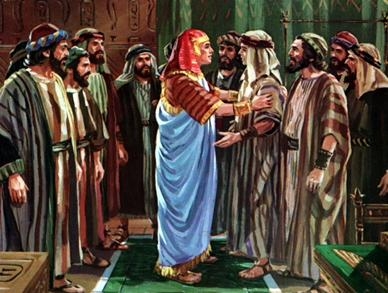 50:20 [cf. Gen. 45:5-8; this verse has been called the Romans 8:28 of the OT] You intended to harm me, but God [who is always at work behind the scenes] intended it [the evil his brothers had done to him] for good [Joseph came to this conviction over a period of years] to accomplish what is now being done, the saving of many lives [both his own family and many people in the land of Egypt].
50:21 So then, don’t be afraid. I will provide [indication that Joseph harbored no ill feelings toward his brothers] for you and your children.” And he reassured them and spoke kindly to them [Joseph reassured his frightened brothers by speaking to their hearts].
50:22 Joseph stayed in Egypt, along with all his father’s family. He lived a hundred and ten years [Joseph lived a long and full life]
50:23 and saw the third generation of Ephraim’s children. Also the children of Makir son of Manasseh were placed at birth on Joseph’s knees.
50:24 Then Joseph said to his brothers, “I am about to die [cf. Jacob’s awareness of his approaching death in Gen. 49:29]. But God will surely come to your aid and take you up out of this land to the land he promised on oath to Abraham, Isaac and Jacob [Joseph added the name of his father to the list of patriarchs].”
50:25 And Joseph made the sons of Israel swear an oath and said, “God will surely come to your aid, and then you must carry [not immediately as in the case of Jacob (cf. Gen. 49:29-30)] my bones up from this place [to the land of Canaan for final burial; Joseph buried at Shechem (Josh. 24:32)].”
50:26 So Joseph died at the age of a hundred and ten. And after they embalmed [Joseph had ordered the physicians in his service to embalm the body of Jacob (Gen. 50:1-3)] him, he was placed in a coffin [a sarcophagus] in Egypt [until the time of the Exodus; cf. Ex. 13:19].
 49:31 There Abraham [cf. Gen. 25:9] and his wife Sarah [cf. Gen. 23:19] were buried, there Isaac and his wife Rebekah were buried, and there I buried Leah.
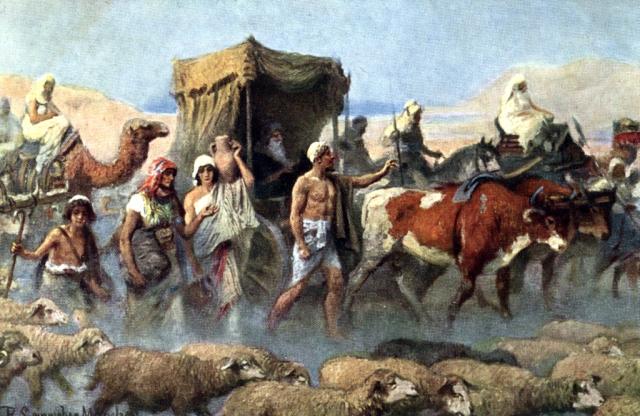 46:4 I will go down to Egypt with you, and I will surely bring you back again [after they had become a great nation]. And Joseph’s own hand will close your eyes [Joseph would be with his father at death].”
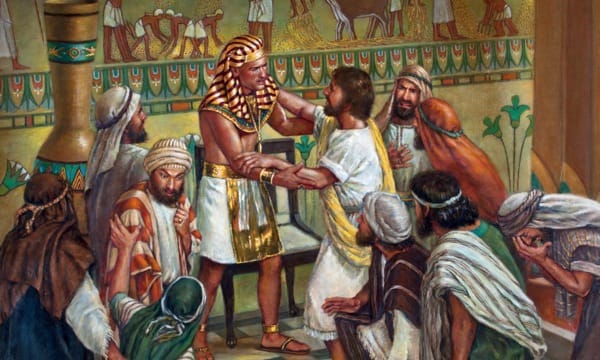 45:4 Then Joseph said to his brothers, “Come close to me.” When they had done so, he said, “I am your brother Joseph, the one you sold into Egypt [this detail validated Joseph’s claim]!
 42:6 Now Joseph was the governor [cf. Gen. 41:40-43] of the land, the one who sold grain to all its people. So when Joseph’s brothers arrived, they bowed down [cf. Gen. 37:7,9] to him with their faces to the ground.
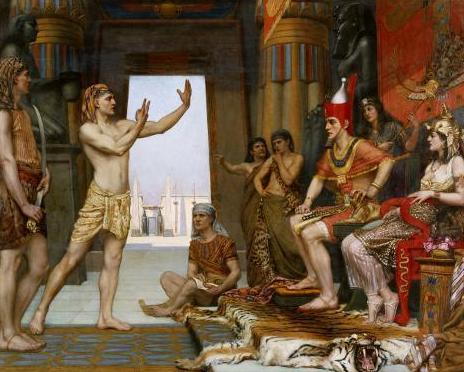 41:25 Then Joseph said to Pharaoh, “The dreams of Pharaoh are one and the same. God has revealed to Pharaoh what he is about to do.
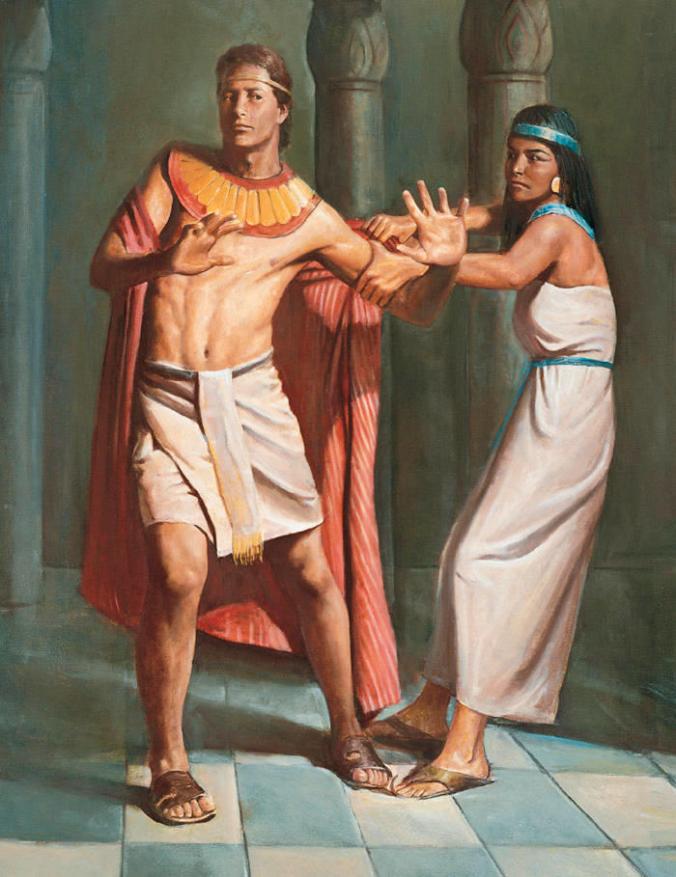 39:7 and after a while [temptation often comes when everything seems to be going well] his master’s wife took notice [continually did so] of Joseph and said, “Come to bed with me! [an invitation to have sexual relations]”
 37:23 So when Joseph came to his brothers [who were tending the flocks in the vicinity of Shechem and, later, Dothan], they stripped him of his robe [the focal point of their growing anger; their hatred moved from abusive words (cf. Gen. 37:8,19) to violent action]—the richly ornamented robe he was wearing [Joseph seemed insensitive or ignorant with regard to how his brothers felt about the coat]—
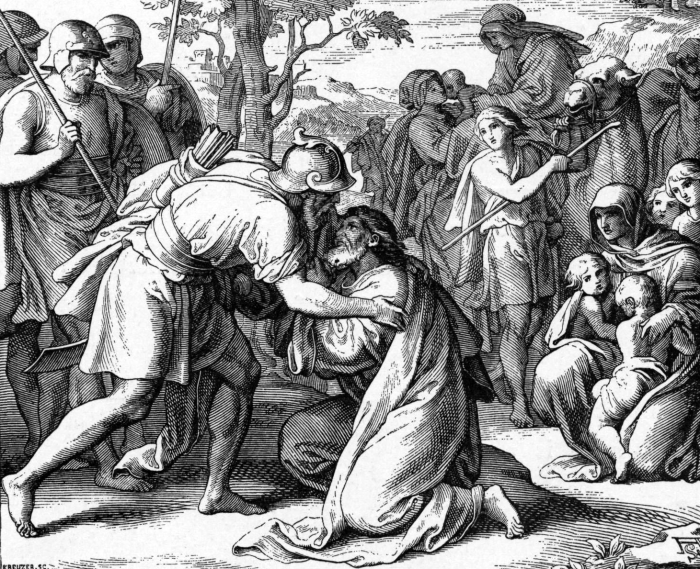 33:3 He himself went on ahead [Jacob did not try to hide from his brother or to protect himself] and bowed down to the ground [a customary way to greet high officials] seven times [repetition was token of respect and a way to indicate to his older brother that he only desired peace and reconciliation] as he approached his brother.
 Bible Teaching Notes