Joshua 23

Joshua 23:1-3


23:1 After a long time [perhaps a long time after Joshua had assumed leadership] had passed [perhaps refers to the twenty-seven years that had passed since the end of the conquest] and the LORD had given Israel rest [major battles ended; Israel settled in the land] from all their enemies around them, Joshua, by then old and well advanced in years [Joshua was 110 when he died (Josh. 24:29)],

23:2 summoned all [perhaps only those tribes living west of the Jordan] Israel—their elders, leaders, judges and officials—and said to them [note reason for calling the leaders together]: “I am old and well advanced in years.

23:3 You yourselves have seen [eyewitnesses] everything the LORD your God has done to all these nations [God’s enemies were Israel’s enemies] for your sake; it was the LORD your God who fought for you.

Joshua 23:6-8
23:6 “Be very strong; be careful to obey [condition to be observed in order to enjoy the land; knowing God’s Word is not enough, we must obey it] all that is written in the Book of the Law of Moses, without turning aside to the right or to the left.

23:7 Do not [explicit warning] associate [intermingle; there must be a significant line of demarcation between God’s people and the world] with these nations that remain [reason for caution] among you; [note prohibitions (underlined) against any form of worship of the pagan deities of their defeated enemies] do not invoke the names of their gods or swear by them. You must not serve them or bow down to them.

23:8 But you are to hold fast [intimate and binding relationship] to the LORD your God, as you have until now.

Joshua 23:14
23:14 “Now I am about to go the way of all the earth [an idiom for death; people come and go but God’s work endures]. You know with all your heart and soul that not one of all the good promises the LORD your God gave you has failed [literally means “to fall”]. Every promise has been fulfilled; not one has failed.

Joshua 4

4:1-9 12 | Stones set up as memorial at Gilgal (vv. 1-8) and in midst of river (v. 9).

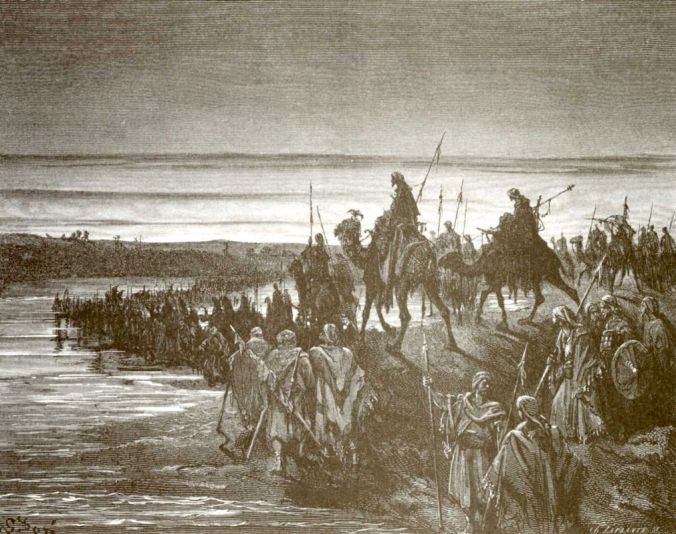
4:1 When the whole nation had finished crossing the Jordan, the LORD said to Joshua [and Joshua obeyed everything the Lord said],

4:2 “Choose twelve men from among the people, one from each tribe,

4:3 and tell them to take up twelve stones from the middle [evidence that the river had actually stopped flowing to allow the people to cross over] of the Jordan from right where the priests stood and to carry them over with you and put them down at the place where you stay tonight.”

4:10-14 | All the people safely across.

4:15 Then the LORD said to Joshua,

4:16 “Command the priests carrying the ark of the Testimony [so called because God’s testimony (the Law) was placed in the ark; cf. Ex. 25:16,21 (two tablets containing the Ten Commandments)] to come up out of the Jordan.”

4:17 So Joshua commanded [as the Lord instructed him to do] the priests, “Come up out of the Jordan.”

4:18 And the priests came up out of the river carrying the ark of the covenant of the LORD. No sooner had they set their feet on the dry ground [river bank (as opposed to river bed in 3:17)] than the waters of the Jordan returned to their place and ran at flood stage as before [evidence that the Lord had performed this miracle].

4:19 On the tenth day [cf. Ex. 12:2-3 (the day the lambs had been chosen for Passover prior to exodus)] of the first month [corresponds to parts of our months of March-April] the people went up from the Jordan and camped at Gilgal [became Israel’s first worship place] on the eastern border of [about two miles from] Jericho.

4:20 And Joshua set up [as a memorial] at Gilgal the twelve stones they had taken out of the Jordan.

4:21 He said to the Israelites, “In the future when your descendants ask their fathers, ‘What do these stones [an object lesson; visible reminder of miraculous crossing] mean [opportunity for fathers to review God’s great work; opportunity to encourage new generation to obey God]?’

4:22 tell them, ‘Israel crossed [thus making a break with the past] the Jordan [a river] on dry ground [emphasizes miraculous nature of the event].’

4:23 For the LORD your God [Joshua gave God credit for the miraculous crossing] dried up the Jordan before you [later generations were told the story as if the event had happened to them] until you had crossed over [safely across]. The LORD your God did [God accomplished what no other god could do] to the Jordan just what he had done to the Red Sea when he dried it up before us until we had crossed over.

4:24 He did this [two purposes of God’s mighty work] [1] so that all the peoples of the earth [including surrounding nations (3:10b)] might know that the hand of the LORD is powerful [opportunity to testify to world about God’s greatness] and [2] so that you might always fear [awe and reverence toward God] the LORD your God.”

Joshua 1

Joshua 1:1-9
1:1 After the death of Moses [cf. Deut. 34; leaders do not lead forever; Moses mentioned 57 times in Joshua; “God buries His workmen, but His work goes on.”] the servant of the LORD [title of honor and authority; this title used more often to refer to Moses than to any other individual in OT], the LORD said to Joshua son of Nun, Moses’ aide [an assistant; one who gives personal service to a leader]:

1:2 “Moses my servant is dead. Now then, you and all these people, get ready to cross the Jordan River into the land I am about to give [the promised land was a “gift” from God] to them—to the Israelites.

1:3 I will give you every place where you set your foot, as I promised Moses [cf. Deut. 11:24-25a].

1:4 Your territory will extend from the desert to Lebanon, and from the great river, the Euphrates—all the Hittite country—to the Great Sea on the west.

1:5 No one will be able to stand up against you all the days of your life [assurance of victory]. As I was with Moses, so I will be with you [assurance of God’s presence is still essential to spiritual success (cf. Matt. 28:19-20)]; I will never leave [Heb. verb can also mean “fail”] you nor forsake you [cf. Heb. 13:5].

1:6 “Be strong and courageous [Joshua faced an awesome task], because you will lead these people to inherit the land I swore to their forefathers to give them.

Note: Why is courage essential to leadership?

1:7 Be strong and very courageous [always good to repeat encouragement]. Be careful to obey [necessary for victory] all [not some; you cannot pick and choose which portions you want to obey] the law [probably some or all of Deuteronomy (cf. Deut. 1:5 re: “this law”)] my servant Moses gave you; do not turn from [deviate] it to the right or to the left, that you may be successful wherever you go.

Note: Why is obedience to God’s Word essential to leadership?

1:8 Do not let this Book of the Law depart from your mouth; meditate [Heb. word means “mutter” and was usually done aloud] on it day and night, so that you may be careful to do [knowing is not enough] everything written in it. Then you will be prosperous and successful [the by-products of a life devoted to God and His Word (Wiersbe); emphasize wise and prudent behavior rather than “financial success”].

1:9 Have I not commanded you? Be strong and courageous. Do not be terrified; do not be discouraged, for the LORD your God will be with you [God’s presence is the best antidote to fear] wherever you go.”

Joshua 1:16-17
1:16 Then they answered Joshua, “Whatever you have commanded us we will do, and [expanded their affirmation] wherever you send us we will go [new leaders need encouragement more than advice].

1:17 Just as we fully obeyed Moses, so we will obey you. Only may the LORD your God be with you as he was with Moses [new leaders need prayer].

Exodus 33

33:1 Then the LORD said to Moses, “Leave this place, you and the people you brought up out of Egypt, and go up to the land I promised on oath to Abraham, Isaac and Jacob, saying, ‘I will give it to your descendants.’

33:2 I will send an angel before you and drive out the Canaanites, Amorites, Hittites, Perizzites, Hivites and Jebusites.

33:3 Go up to the land flowing with milk and honey. But I will not go with you, because you are a stiff-necked people and I might destroy you on the way.”

33:4 When the people heard these distressing words, they began to mourn and no one put on any ornaments.

33:5 For the LORD had said to Moses, “Tell the Israelites, ‘You are a stiff-necked people. If I were to go with you even for a moment, I might destroy you. Now take off your ornaments and I will decide what to do with you.’ “

33:6 So the Israelites stripped off their ornaments at Mount Horeb.

33:7 Now Moses used to take a tent and pitch it outside the camp some distance away [the tent of meeting was set apart from the rest of the camp; location of tent underscores the holiness of God; unlike the tent of meeting, the tabernacle stood at the center of the camp (cf. Num. 2)], calling it the “tent of meeting [predated the tabernacle; God met with Moses there in the form of a “pillar of cloud” (33:9); cf. Num. 11:16,24 re: others invited to meet there].” Anyone inquiring of the LORD would go to the tent of meeting outside the camp.

Note: Three tents in the OT
1. The tent of meeting Ex. 33:7
2. The tabernacle Ex. 25–40
3. Tabernacle erected in Jerusalem for the reception of the ark 2 Sam. 6:17

33:8 And whenever Moses went out to the tent, [note reverent attitude of the people when Moses went to meet with God at the tent of meeting…] all the people rose and stood at the entrances to their tents, watching Moses until he entered the tent.

33:9 As Moses went into the tent [to seek the wisdom and strength of God for the task of leading the people], the pillar of cloud [visible evidence of God’s presence during Exodus and wilderness wanderings (cf. Ex. 14:24; 33:9-10; Num. 12:5; Deut. 31:15)] would come down and stay at the entrance [indicated God’s presence with Moses in the tent], while the LORD spoke with Moses.

33:10 Whenever the people saw the pillar of cloud standing at the entrance to the tent, they all stood and worshiped, each at the entrance to his tent.

33:11 The LORD would speak to Moses face to face [means directly, clearly, intimately (rather than through dreams and visions); cf. Num. 12:8; Deut. 34:10], as a man speaks with his friend [personal and intimate communication]. Then Moses would return to the camp, but his young aide Joshua son of Nun did not leave the tent [Joshua protected and cared for the tent in Moses’ absence; became Moses’ successor at the tent (cf. Deut. 31:14-15)].

33:12 Moses said to the LORD , “You have been telling me, ‘Lead these people,’ but you have not let me know whom you will send with me. You have said, ‘I know you by name [intimately] and you have found favor [grace: God’s unmerited favor] with me.’

33:13 If you are pleased with me, teach me your ways [cf. Ps. 103:7] so I may know you and continue to find favor with you. Remember that this nation is your people [cf. Ex. 3:7,10].”

33:14 The LORD replied, “My Presence [literally “face”] will go with you, and I will give you rest [quietness; absence of strife].”

33:15 Then Moses said to him, “If your Presence [a request that God himself and not a surrogate would accompany Israel to Canaan] does not go with us, do not send us up from here.

33:16 How will anyone know that you are pleased with me and with your people unless you go with us? What else [other than God’s presence] will distinguish me and your people from all the other people on the face of the earth [cf. Ex. 19:5; Deut. 4:32-34; 7:6]?”

33:17 And the LORD said to Moses, “I will do the very thing you have asked [cf. Ex. 33:15], because I am pleased with you and I know you by name [to know intimately].”

33:18 Then Moses said, “Now show me your glory [God’s manifest presence; from Heb. Word that has root meaning of “heavy” (God is heavy with attributes and characteristics that set Him apart from all other beings)].”

33:19 And the LORD said, “I will cause all my goodness [appears to be a synonym for God’s presence or His glory] to pass in front of you, and I will proclaim my name, the LORD [Yahweh; cf. Ex. 3:13-15], in your presence. I will have [God’s mercy is His to give] mercy on whom I will have mercy, and I will have [God’s compassion is His to give] compassion on whom [in this case Moses] I will have compassion [cf. Rom. 9:13-18].

33:20 But,” he said, “you cannot see my face [God’s unveiled glory; cf. 1 Cor. 13:12], for no one may see me and live.”

33:21 Then the LORD said, “There is a place near me where you may stand on a rock.

33:22 When my glory passes by, I will put you in a cleft [crevice] in the rock and cover you with my hand until I have passed by [cf. Elijah’s experience in 1 Kings 19:11-13].

33:23 Then I will remove my hand and you will see my back [not to be taken in a physical sense; Heb. is best rendered “my afterwards”]; but my face must not be seen [God manifested Himself to Moses in terms he would understand].”
Exodus 20

Exodus 20:1-17


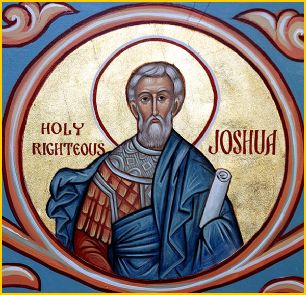
20:1 And God [the source of the Commandments] spoke all these words [the Ten Commandments]:

20:2 “I am the LORD [Yahweh; the covenant name revealed to Moses (cf. Ex. 3:14-15)] your God [Elohim (cf. Gen. 1:1); refers to the absolute, infinite Lord over creation and history], who brought you out of Egypt [emphasizes God’s intervention in history], out of the land of slavery [a reminder that God’s actions were redemptive].

The first two commandments call for a distinctive relationship with God.

20:3 [1] “You shall have no other [many people worshiped other gods; Israel was to have an exclusive loyalty to God] gods before me [cf. Isa. 44:6].

20:4 [2] “You shall not make for yourself an idol [something cut or shaped from material such as stone or wood; God’s people were to demonstrate an exclusive devotion to Him in their worship] in the form [in the ancient world people depicted deities in figurines, poles, statutes, carvings] of anything in heaven above or on the earth beneath or in the waters below.

Note: List some modern-day idols.

20:5 You shall not bow down to them or worship [many people worshiped inanimate and impotent objects (cf. Isa. 44:6-23; Rom. 1:22-25)] them; for I, the LORD your God, am a jealous God, punishing the children for the sin of the fathers to the third and fourth generation of those who hate me,

20:6 but showing love to a thousand [generations] of those who love me and keep my commandments.

The next two commandments call for a distinctive reverence for God.

20:7 [3] “You shall not misuse [“in vain” means “emptily, falsely, deceitfully”; to lift the name of God to vanity or emptiness] the name [represented His being and character; cf. Mal. 1:11] of the LORD your God, for the LORD will not hold anyone guiltless who misuses his name.

Note: List ways in which God’s name is misused today and ways in which people mar His reputation.

20:8 [4] “Remember [to recall and to act on what is remembered] the Sabbath [means “rest” or “cessation”; the seventh day] day by keeping it holy [set apart for the Lord; to separate from improper things].

Note: Christians observe Sunday (the first day of the week ) as the time for spiritual renewal because that is the day Jesus was raised from the dead (Lk. 24:1; Acts 20:7; 1Cor. 16:2).

20:9 Six days you shall labor and do all your work,

20:10 but the seventh day is a Sabbath to the LORD your God. On it you shall not do any work, neither you, nor your son or daughter, nor your manservant or maidservant, nor your animals, nor the alien within your gates.

20:11 For in six days the LORD made the heavens and the earth, the sea, and all that is in them, but he rested on the seventh day. Therefore the LORD blessed the Sabbath day and made it holy.

The last six commandments call for a distinctive treatment of other people.

20:12 [5] “Honor [for children still living at home: to give weight or consideration to their parents instruction; for grown children: to give weight or consideration to their parents counsel and welfare] your father and your mother, so [cf. Eph. 6:2] that you may live long [the general principle is that children who hear and heed their parents instruction are more likely to avoid the things that can shorten life] in the land the LORD your God is giving you.

Note: List ways in which you can honor your parents.

20:13 [6] “You shall not murder [premeditated murder; violation of the sanctity of human life].

Note: The Hebrew word translated “murder” in this commandment generally indicated the premeditated taking of another life. This prohibition does not apply to all forms of taking human life, such as the execution of murders by the state (Gen. 9:6) or defending one’s home from a thief (Ex. 22:2). The prohibition does, however, apply to abortion, to being an accessory to murder (2 Sam. 12:9), and to taking one’s own life.

20:14 [7] “You shall not commit adultery [violation of the sanctity of marriage; punishable by death (Deut. 22:22); Jesus taught that faithfulness in marriage extends to the sexual thoughts and attitudes we harbor (Matt. 5:27-28); adultery destroys the unity of the home and family].

Note: When it comes to adultery, is your brain as faithful as your body?

20:15 [8] “You shall not steal [cf. Lk. 10:30; Amos 8:5-6; Jas. 5:1-6].

Note: List some of the many ways in which people steal.

20:16 [9] “You shall not give false testimony [damages reputation; gossip, slander, and lying are common ways people give false testimony; cf. Prov. 6:16-19] against your neighbor.

20:17 [10] “You shall not covet [to desire or yearn for what another person has; coveting is often rooted in dissatisfaction with what God has provided for us; cf. Lk. 12:13-21; 1 Tim. 6:6] your neighbor’s house. You shall not covet your neighbor’s wife, or his manservant or maidservant, his ox or donkey, or anything that belongs to your neighbor.”

Exodus 19

Exodus 19:3-6
19:3 Then Moses went up to God, and the LORD called to him from the mountain [Mt. Sinai] and said, “This is what you are to say to the house of Jacob and what you are to tell the people of Israel:

19:4 `You yourselves have seen what I did to Egypt, and how I carried you on eagles’ wings and brought you to myself.

19:5 Now if [reminder that the people could choose or reject God’s covenant initiated by God at Mt. Sinai] you obey me fully [to obey all of God’s laws all the time; cf. Jer. 11:7-8] and keep my covenant, then [1] out of all nations you [points to Israel’s relationship with the Lord] will be my treasured [special; the one most highly prized] possession. Although the whole earth is mine,

19:6 [2] you will be for me a kingdom of priests [points to Israel’s special role: to represent God to the world and to represent the world to God; Israel was to be a missionary people, bringing people from all nations to Him] and [3] a holy [to be set apart; points to a distinctive lifestyle; God expected His people to live morally upright lives consistent with His character and nature] nation.’ These are the words you are to speak to the Israelites.”

Exodus 18

Exodus 18:14-24


18:14 When his father-in-law [cf. Ex. 3:1; Jethro, the priest of Midian (located near Mount Sinai); a non-Israelite who worshiped the one true God] saw [Jethro patiently observed] all that Moses was doing for the people, he said [Jethro asked Moses for an explanation], “What is this you are doing for the people? [Jethro’s questions indicate two concerns…] [1: working alone] Why do you alone sit as judge [one who arbitrates legal issues between parties], [2: working too long] while all these people stand around you from morning till evening?”

18:15 Moses answered him, “Because the people come to me to seek God’s will [or “to inquire of God” (in this case, concerning legal and personal matters/difficulties)].

18:16 Whenever they have a dispute [difficulty], it is brought to me, and I decide between the parties and inform them of God’s decrees and laws.”

18:17 Moses’ father-in-law replied, “What you are doing [trying to do so much alone] is not good.

18:18 You and these people who come to you will only wear yourselves out [many people were worn out because they had to wait all day for their cases to be heard]. The work is too heavy for you; you cannot handle it alone.

Note: When have you felt on the verge of burnout? In what ways are you currently overextending yourself?

18:19 Listen now to me and I will give you some advice, and may God be with you. You must be the people’s representative [mediator, intercessor] before God and bring their disputes to him.

Note: Who is the most difficult person for you to receive advice from and why?

18:20 Teach [proper instruction about God’s laws could potentially lead to fewer disputes among the people] them the decrees and laws, and show them the way to live and the duties they are to perform.

18:21 But select [a key task of any leader is to help others grow in leadership abilities] capable [refers to persons of strength, valor, and virtue] men from all the people—men who fear God, trustworthy men who hate dishonest gain [decisions not motivated by want of personal wealth and power; bribery is a temptation to be avoided by those in leadership (cf. 1 Sam. 8:3; Jer. 22:17)]—and appoint [meant that Moses had to be willing to share some of his authority over the people] them as officials over thousands, hundreds, fifties and tens.

Note: If God were standing before you as Jethro stood before Moses, what would He ask you to change or give up in your daily routine?

18:22 Have them serve as judges for the people at all times, but have them bring every difficult case to you; the simple cases they can decide themselves. That will make your load lighter, because they will share it with you.

18:23 If you do this and God so commands, you will be able to stand the strain, and all these people will go home satisfied.”

18:24 Moses listened to his father-in-law and did everything he said [humble people have the strength of character to accept sound advice].

Exodus 13

Exodus 13:1-2
At Succoth (12:37), the Lord instructed the Israelites about an act of devotion that was to become a part of Hebrew religious life.

13:1 The LORD said to Moses,

13:2 “Consecrate [set apart from common usage for holy purposes] to me every firstborn male [because God had delivered them from Egyptian bondage]. The first offspring of every womb among the Israelites belongs to me, whether man or animal.”

Exodus 13:11-16
13:11 “After the LORD brings you into the land of the Canaanites [emphasizes positive side of being set free; freed from bondage for a new relationship with God (19:3-6)] and gives it to you, as he promised on oath to you and your forefathers,

13:12 you are to give over [devote, surrender] to the LORD the first offspring of every womb. All the firstborn males of your livestock belong to the LORD.

13:13 Redeem [to buy back for a price] with a lamb every firstborn donkey [an unclean animal], but if you do not redeem it, break its neck [so that it could not be used or sacrificed]. Redeem [initially done by sacrificing an animal] every firstborn among your sons [“symbolized the Lord’s redemption of Israel and the firstborn’s devotion to God” (Advanced Bible Study)].

13:14 “In days to come, when your son asks you, ‘What does this [significance of Passover and consecration of the firstborn] mean?’ say [opportunity for instruction; cf. Ps. 107:2] to him, [summary of basic confession of faith of the Israelites; summary of historical events that brought about the exodus] ‘With a mighty hand the LORD [exodus was God’s doing, not man’s: divine deliverance not human escape] brought us out of Egypt, out of the land of slavery [condition from which the Lord delivered them].

13:15 When Pharaoh stubbornly refused to let us go, the LORD killed every firstborn in Egypt, both man and animal. This is why I sacrifice to the LORD the first male offspring of every womb and redeem each of my firstborn sons.’

13:16 And it will be like [in later times Jews wore phylacteries] a sign on your hand [a reminder “that what they reached out to do was to be in conscious recollection of what God had done for them and commanded them to do” (Dean)] and a symbol on your forehead [“indicates that what they looked at, how they saw and interpreted their world, was to be through this lens” (Dean)] that the LORD brought us out of Egypt with his mighty hand.”

Exodus 12

Exodus 12:1-14
12:1 The LORD said to Moses and Aaron in Egypt [regulations concerning Passover and Feast of Unleavened Bread given to Moses while Israelites still in Egypt],

12:2 “This month [the month of their deliverance] is to be for you the first month [called Abib (13:4) and later renamed Nisan (Neh. 2:1)], the first month of your year [religious New Year; passover provided a new beginning for Israel].

12:3 Tell the whole community of Israel [expression used to describe Israel in a religious sense] that on the tenth day [lamb killed at sunset on the 14th day (cf. 12:6)] of this month each man is to take a lamb for his family, one for each household.

12:4 | provision for small households

12:5-6 | instructions concerning lamb

12:7 | lamb’s blood on doorframes

12:8-10 | preparing and eating lamb

12:11 This is how you are to eat it: with your cloak tucked into your belt [for easy movement], your sandals on your feet [ready to travel] and your staff [walking stick] in your hand. Eat it in haste [anxious haste]; it is the LORD’s Passover [Heb. pesah: can refer to either the feast or the sacrificial victim].

12:12 “On that same night I will pass through [indicates coming judgment] Egypt and strike [smite] down every firstborn – both men and animals – and I will bring judgment [cf. God’s warning of this in 4:23; 11:5 and fulfillment in 12:29] on all the gods [in addition to Pharaoh and the people; Pharaoh’s firstborn son was considered deity; would demonstrate the impotence of Egypt’s gods] of Egypt. I am the LORD.

12:13 The blood [on the doorframes] will be a sign [a sign of faith that God would do what He promised] for you on the houses where you are; and when I see the blood, I will pass over [indicates act of grace] you. No destructive plague will touch you when I strike Egypt.

12:14 Israel charged to commemorate day for generations to come

Note: “Passover was the ancient Hebrews’ Easter and the Fourth of July all wrapped up into one” (Page H. Kelley). The feast “looked forward to a greater event – the death of Christ” … [who] “was crucified at Passover and shed His blood…” (Stephen Carlson).

Exodus 4

Exodus 4:18-26
4:18 Then Moses went [from the region of Sinai] back to [to Midian] Jethro his father-in-law and said [asked (out of respect for Jethro)] to him, “Let me go back to my own people in Egypt to [introduces Moses’ motive for wanting to return to Egypt] see if any of them are still alive.” Jethro said, “Go, and I wish you well.”

4:19 Now the LORD had said to Moses in Midian, “Go back to Egypt, for all the men [presumably Pharaoh’s officials] who wanted to kill you are dead.”

4:20 So Moses took his wife and sons [Gershom (Ex. 2:22) and Eliezer (Ex. 18:4)], put them on a donkey and started back to Egypt. And he took the staff of God in his hand.

4:21 The LORD said to Moses, “When you return to Egypt, see that you perform before Pharaoh all the wonders I have given you the power to do. [note: this is first use of this expression in Exodus…] But I will harden his heart [make him stubborn] so that he will not let the people go.

4:22 Then say [cf. Ex. 4:12] to Pharaoh, ‘This is what the LORD says: Israel [the whole people] is my firstborn [first in rank; Israel has a privileged status among he nations] son [Pharaoh was accustomed to regarding himself and no other as the “son of the gods”],

4:23 and I told you, “Let my son go, so he may worship me.” But you refused to let him go; so [Pharaoh would pay a penalty for refusing to acknowledge Israel as the Lord’s firstborn] I will kill your firstborn son [an explicit allusion to the tenth plague (cf. Ex. 11:1–12:36)].’”

4:24 At a lodging place on the way, the LORD met [in order to prompt Moses to comply with His requirements (cf. Gen. 17:1-27)] Moses and was about to kill him [this statement “represents a common attitude toward severe illness in the ancient world” (BBC, Vol. 1); Moses was likely suffering a severe illness of some kind for his failure to circumcise his son on the eighth day as per Gen. 17:12 (Moses may have failed to circumcise his son out of deference for Zipporah’s wishes); cf. Gen. 17:1-27)].

4:25 But Zipporah [instinctively connected whatever malady Moses was experiencing with their failure to circumcise their son; perhaps she performed the circumcision because Moses was too ill to do so himself] took a flint knife, cut off her son’s [the particular son not specified] foreskin and touched Moses’ feet with it. “Surely you are a bridegroom of blood [refers to circumcision as per v. 26] to me [expression reveals Zipporah’s disgust with the rite of circumcision],” she said.

4:26 So the LORD let him alone [essential that Moses (who was destined to be the great lawgiver to his people) demonstrate complete commitment to God’s law]. (At that time she said “bridegroom of blood,” referring to circumcision.)