2 Samuel 19

2 Samuel 19:5-8
19:5 Then Joab went into the house to the king and said, “Today you have humiliated all your men, who have just saved your life and the lives of your sons and daughters and the lives of your wives and concubines.

Note: David never indicates that he knew it was Joab who had killed Absalom (see 1 Kings 2:5).

19:6 [Joab tried to help David see how others perceived his behavior; note Joab’s three charges against David…] [1] You love those who hate you and hate those who love you. [2] You have made it clear today that the commanders and their men mean nothing to you. [3] I see that you would be pleased if Absalom were alive today and all of us were dead.

Note: What are some appropriate and inappropriate things to say to one experiencing overwhelming grief?

19:7 Now go out and encourage your men [needed to hear words of reassurance and appreciation]. I swear by the LORD that if you don’t go out, not a man will be left with you by nightfall. This will be worse for you than all the calamities that have come upon you from your youth till now.”

Note: How can we help those who grieve to act responsibly?

19:8 So the king [in response to Joab’s counsel] got up and took his seat in the gateway. When the men were told, “The king [David] is sitting in the gateway,” they all came before him. Meanwhile, the Israelites had fled to their homes.

2 Samuel 20

20:1 Now a troublemaker [literally “man of worthlessness” or “scoundrel”] named Sheba [a reckless person who took advantage of a tense situation (19:40-43) to call for secession] son of Bicri, a Benjamite [Saul’s tribe (1 Sam. 19:1)], happened to be there [in Gilgal (19:40-43)]. He sounded the trumpet [a ram’s horn] and shouted [Sheba exploited the Israelites jealousy of the men of Judah rather than helping to restore harmony], “We have no share in David, no part in Jesse’s son [likely said in a contemptuous and disparaging sense]! Every man to his tent, O Israel!”

20:2 So all the men of Israel deserted David to follow Sheba son of Bicri. But the men of Judah stayed by [literally “clung to” (cf. Ruth 1:14)] their king all the way from the Jordan to Jerusalem [a distance of approximately 17 miles].

20:3 David made provision for the 10 concubines he had left behind to take care of the palace (15:16). Absalom had raped these women when he seized power (16:22). David therefore abstained from sexual relations with them in accord with the law (Lev. 18:15).

20:4-5 David ordered Amasa (a cousin of Joab; replaced Joab as general) to assemble the men of Judah within three days to deal with Sheba. Amasa failed to meet the deadline.

20:6 David [acted immediately and decisively to deal with Sheba] said to Abishai [Joab’s brother and Amasa’s cousin; chosen by David to lead his forces against Sheba], “Now Sheba son of Bicri will do us more harm than Absalom did. Take your master’s men and pursue him, or he will find fortified cities and escape from us.”

Note: Do you sit back and avoid efforts to defuse potentially hostile situations? Why is it important to respond promptly and prudently to defuse hostile situations? What might happen if we respond too slowly and too meekly when facing hostile situations? What are some risks of ignoring hostility?

20:7-13 Joab murdered Amasa and took control of David’s troops.

20:14 Sheba continued to recruit volunteers for his revolt.

20:15 All the troops with Joab came and besieged Sheba in Abel Beth Maacah [located in far northern Israel near the city of Dan]. They built a siege ramp up to the city, and it stood against the outer fortifications. While they were battering the wall to bring it down,

20:16 a wise woman called from the city, “Listen! Listen! [words convey a sense of urgency] Tell Joab to come here so I can speak to him.”

Note: Read about other women who acted to save their people: Judges 4:17-21, Judges 9:52-54, and 1 Samuel 25:14-35.

20:17-18 The woman spoke personally with Joab about the welfare of her city and to assure him that the inhabitants of the city did not share Sheba’s views.

20:19 We are the peaceful and faithful in Israel. You are trying to destroy a city that is a mother in Israel [the woman cited the city’s cultural and historical value]. Why do you want to swallow up the LORD’S inheritance?”

20:20 “Far be it from me!” Joab replied, “Far be it from me to swallow up or destroy!

20:21 [Joab explained Sheba’s crime to the woman] That is not the case. A man named Sheba son of Bicri, from the hill country of Ephraim, has lifted up his hand [rebelled; cf. 2 Sam. 18:28] against the king, against David. Hand over this one man, and I’ll withdraw from the city.” The woman said to Joab, “His [Sheba, the troublemaker whose presence threatened the lives of all the city’s citizens] head will be thrown to you from the wall.”

20:22 Then the woman went to all the people with her wise advice, and they cut off the head of Sheba son of Bicri and threw it to Joab. So he sounded the trumpet [to indicate the end of the battle and the end of the threatened rebellion], and his men dispersed from the city, each returning to his home. And Joab went back to the king in Jerusalem.

Note: Of what hostile situations are you aware of in your family, church, or community? What actions do you need to take to defuse these situations before they get out of hand?

20:23-26 List of David’s new officers.

2 Samuel 24

24:1 Again [cf. 2 Sam. 21:1 re: famine as punishment for Saul’s slaughter of the Gibeonites] the anger of the LORD burned against Israel [precise reason not stated, but likely involved some violation of the law God had given His people], and he [God; note that 1 Chron. 21:1 names “Satan” as the one inciting David – an indication that everything is under God’s sovereign control and a reminder that Satan can act only in accord with what God allows him to do (cf. Job. 1:12; 2:6; Lk. 22:31)] incited David against them, saying, “Go and take a census of Israel and Judah.”

24:2 David wanted to know how many fighting men there were in the kingdom. The fact that the nation was not facing a national emergency hints that pride in his expanded kingdom may have motivated David. David’s census may also indicate that he began trusting more in his military might and human resources than in the Lord.

24:3-4 Joab expressed hesitancy about taking the census but obeyed David’s orders.

24:5-8 Description of Joab’s journey to conduct the census.

24:9 Joab’s report to David.

24:10 David was conscience-stricken [literally means “David’s heart struck him”] after he had counted the fighting men, and he said to the LORD, “I [David took ownership of his sin; we must first own and then disown our sins] have sinned [cf. 2 Sam. 12:13 re: David’s earlier confession to Nathan concerning his sins against Bathsheba and Uriah] greatly in what I [David did not try to make excuses for his actions, or to blame others, or to blame circumstances, or to try to minimize or rationalize what he had done] have done. Now, O LORD, I beg you [words emphasize the emotion with which David spoke], take away the guilt [literally “perversity”] of your servant. I have done a very foolish [this Heb. term usually has a moral connotation] thing.”

Note: Why should we quickly repent of our sins when God convicts us of them? How does unconfessed sin impact our walk with God and our relationship with others?

24:11-14 The prophet Gad announced three options of punishment for David’s sin — a reminder that sin always has negative consequences. David could choose three years of famine, three months of military defeat, or three days of plague. David chose the third option.

24:15 So the LORD sent a plague on Israel from that morning until the end of the time designated, and seventy thousand of the people from Dan [one of Israel’s northernmost cities] to Beersheba [located in the extreme south of David’s kingdom] died.

24:16 Summary of the end of the plague (text seems to indicate that the Lord stopped the plague before the three specified days).

24:17 When David saw the angel [read detailed account in 1 Chron. 21:14-17] who was striking down the people, he said to the LORD, “I [David assumed full blame for his action] am the one who has sinned and done wrong. These are but sheep. What have they done? Let your hand [symbol of God’s power and judgment] fall upon me and my family.”

Note: How consistently do you take responsibility for your sins and their consequences? Why is it important to take personal responsibility for your own sins and the consequences?

24:18-19 David instructed to build an altar on Araunah’s threshing floor where the plague had stopped.

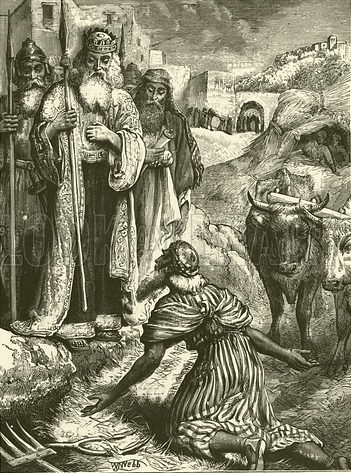
24:20 Araunah bowed before David.

24:21 Araunah said, “Why has my lord the king come to his servant?” “To buy your threshing floor [typically an enclosed area with a base of flat stones built on an elevated place],” David answered, “so I can build an altar [Israelites often built a marker or altar to commemorate a particular place the Lord had met them (cf. Gen. 12:7; 1 Sam. 7:12)] to the LORD, that the plague on the people may be stopped.”

24:22 Araunah [willing to offer more than what David had requested] said to David, “Let my lord the king take whatever pleases him and offer it up. Here are oxen for the burnt offering, and here are threshing sledges and ox yokes for the wood.

24:23 O king, Araunah gives [as a gift] all this [everything the king needed] to the king.” Araunah also said to him, “May the LORD your God accept you.”

24:24 But the king replied to Araunah, “No, I insist on paying you for it. I will not sacrifice to the LORD my God burnt offerings that cost me nothing [words reveal the depth of David’s relationship to the Lord].” So David bought the threshing floor and the oxen and paid fifty shekels of silver [cf. 1 Chron. 21:25 re: David’s payment for enough land to hold entire temple complex] for them.

24:25 David built an altar to the LORD there [Solomon would later build the temple at this site (cf. 2 Chron. 3:1)] and sacrificed burnt offerings [often made as a general atonement for sins (cf. Lev. 1)] and fellowship offerings [also known as peace offerings, included fellowship meal between worshiper and priest (cf. Lev. 7:11-21, 28-36); represented restored fellowship between the worshiper and the Lord]. Then the LORD answered prayer in behalf of the land, and the plague on Israel was stopped.

1 Chronicles 22

22:1 Then David said, “The house of the Lord God [see Ps. 30] is to be here [at the site of Araunah’s threshing floor], and also the altar of burnt offering for Israel.”

Note: The “house of the Lord God” stood at the sight of Araunah’s threshing floor for the next thousand years, except for the period of its destruction by Nebuchadnezzar.

22:2 So David gave orders to assemble [forced labor] the aliens [foreigners] living [personally free] in Israel [without political rights and vulnerable to exploitation], and from among them he appointed stonecutters to prepare dressed stone for building the house of God.

22:3 He provided a large amount of iron to make nails for the doors of the gateways and for the fittings, and more bronze than could be weighed.

22:4 He also provided more cedar logs [see 1 Kings 5:13-14 concerning the amount of labor it took to handle the logs] than could be counted, for the Sidonians [from Sidon] and Tyrians [from Tyre] had brought large numbers of them to David.

Note: Phoenician cities of Sidon and Tyre located on the coastal plain between the mountains of Lebanon and the Mediterranean Sea.

22:5 David said, “My son Solomon [fourth son born to David by Bathsheba] is young [Josephus suggested he was 14] and inexperienced, and the house to be built for the Lord should be of great magnificence and fame and splendor in the sight of all the nations. Therefore I will make preparations for it.” So David made extensive preparations before his death.

David skillfully led and united Israel into a powerful nation that enjoyed both security and prosperity. The first seventeen years of his reign are characterized by military and political successes. One of the high points of David’s reign was returning the ark of the covenant to Jerusalem (2 Sam. 6). The ark was the symbolic embodiment of God’s power and presence. The ark had been kept at a place north of Jerusalem called Kiriath Jearim (1 Chron. 13:5) for more than sixty years. David went to Kiriath Jearim and transported the ark the short distance to Jerusalem and set it inside a tent (1 Chron. 16:1).

Once the ark was safely in its place within the city walls, David returned to the comfort of his palace. As David enjoyed a well-deserved rest, he noticed the splendor of his surroundings and had one of those “What’s wrong with this picture?” moments. David said to Nathan, “Here I am, living in a palace of cedar, while the ark of the covenant of the Lord is under a tent (1 Chron. 17:1).” David then shared with Nathan that he wanted to build a beautiful temple for the ark — a place suitable for God to dwell.

Nathan initially responded by telling the king to proceed with his plans to build a temple (1 Chron. 17:2). However, the following day Nathan told David that he would not be the person to build the temple (1 Chron. 17:3-4). Instead, one of David’s “offspring” (Solomon) would build the temple (1 Chron. 17:11-12).

David accepted Nathan’s message with humility and thanksgiving (1 Chron. 17:16-27). Rather than growing despondent, David willingly and sacrificially invested in what he would not personally see through to completion. When Solomon was a young man, David made extensive preparations for building the temple (v. 5). He personally purchased a parcel of land from Araunah the Jebusite (see 1 Chron. 21:20-30) and instructed his young son to build the temple at that site (22:1). He also organized workers (22:2) and gathered materials for the project (22:3-4). David did his best to strengthen the hand of the one who would fulfill his dream (22:14-16).

Perhaps you have dreamed of how God might use you to advance His kingdom or have made plans to serve God through a worthy and noble endeavor. And perhaps, like David, you have discovered that you will not be able to see your dream become a reality. If you are hindered from doing for God what you planned, do not despair. Instead, follow David’s example. Identify some way you can serve God and do your best at that. One answer to the question, How can I show my devotion to the Lord? is that I can do my best.

Note: David gathered materials, organized workers, and developed plans for a project he conceived but would not personally accomplish.

22:6 Then he called for his son Solomon and charged him [see 1 Kings 8:17-18] to build a house for the Lord, the God of Israel.

22:7 David said to Solomon: “My son, I had it in my heart [25 years earlier: see 2 Sam. 7] to build a house for the Name of the Lord my God.

David charged or entrusted his young son Solomon with the responsibility of building a house or temple for the Lord (v. 6). David explained the significant role Solomon would play in accomplishing this task. Years before Solomon’s birth, David had wanted to build a house for the Lord (v. 7). His heart was in the right place (see 1 Kings 8:17-18), but God said no to David’s dream.

Sometimes God says no to our plans and we wrestle to understand why. Sometimes we simply fail to accept that our good ideas may not necessarily be God’s ideas. Like David, we must learn to trust God even when we do not understand the reason why He has said no to our plans.

22:8 But this word of the Lord came to me [by the prophet Nathan before Solomon’s birth: see 1 Chron. 17:4]: ‘You have shed much blood [see also 1 Chron. 28:3] and have fought many wars. You are not to build a house for my Name [since purpose of God to eliminate war one day, appropriate for a man of peace to build His Temple], because you have shed much blood on the earth in my sight.

God’s refusal to allow David to build the temple was not a rejection of David. The king had the right idea in wanting to build a house for the Lord, but he was not the right person for the job. Nathan told David the Lord would not permit him to build the temple because he was a warrior. David had shed much blood and fought many wars (v. 8). David’s purpose in life had been to defend and unite his kingdom. Because of David’s successful military campaigns, Israel’s borders were secure. David’s victories provided a window of peaceful opportunity for his descendant to build the temple.

Note: David’s heart was in the right place but he was not the one God would allow to build the Temple (2 Chron. 6:8) because he was guilty of excessive violence as in the case of the Moabites (see 2 Sam. 8:2).

22:9 But you will have a son who will be a man of peace [engaged in only one known battle (2 Chron. 8:3)] and rest, and I will give him rest from all his enemies on every side. His name will be Solomon, and I will grant Israel peace and quiet during his reign [Solomon divinely favored to follow David: see 2 Sam. 12:24-25].

David told Solomon that God wanted a man of peace and rest to build His house (v. 9). Solomon was that man (v. 10; see also 1 Chron. 17:12-14). Interestingly, the name Solomon sounds like and may be derived from the Hebrew word “shalom,” which means peace. God assured David He would grant Israel peace and quiet during Solomon’s reign (v. 9). Solomon would therefore have the freedom to direct all of his attention and resources to the important task of building the temple.

David humbly accepted the fact that God would use another to fulfill his dream. He willingly followed God’s plan rather than trying to impose his own. We too need to know that when God interrupts our plans to do something for Him, He may be designing a different way for His plans to be accomplished. And, like David, we should be willing to follow God’s plans rather than our own. In addition to doing my best, a second answer to the question, How can I show my devotion to the Lord? is that I must be willing to follow God’s plan.

Note: The name Solomon derived from “shalom” which means peace. Solomon’s name was actually Jedidiah, which means “beloved of the Lord” (see 2 Sam. 12:24-25).

22:10 He [Solomon] is the one [chosen by God] who will build a house for my Name. He will be my son, and I will be his father [fulfilled in Jesus Christ]. And I will establish the throne of his kingdom over Israel forever [Davidic covenant].’

Note: See Nathan’s prophecy in 1 Chronicles 17:12-14.

22:11 “Now, my son, the Lord be with you [should be prayer of every parent], and may you have success [by doing what God has called you to do] and build the house of the Lord your God, as he said you would.

David understood the power of words. As the leader of his nation he could speak a word and send an army into battle. A word from his lips could send a servant on an errand or condemn a person to death. His position entitled him to the final word on any matter.

When the time came to charge Solomon with the responsibility of building a house for God, David skillfully employed words to deliver a blessing to his young son. Parents should never underestimate the power of their words to build up or tear down their children. Like David, parents today should look for opportunities to speak words of blessing to their children.

David’s words of blessing revealed the deepest desires of his heart for his young son. He expressed the hope that Solomon would know and experience the presence of the Lord in his life (v. 11). We should hope and express the same desire for our children. David also expressed the hope that his son would have success (v. 11).

Note: David encouraged the person God had chosen to fulfill his dream.

22:12 May the Lord give you [1 Kings 3:9-12] discretion [good judgment] and understanding when he [God] puts you in command over Israel, so that you may keep the law of the Lord your God.

One measure of success is doing what God has called us to do. God had chosen Solomon to build the temple. David therefore wished Solomon success in doing what God had chosen him to do. David further expressed his desire that the Lord would give his young and inexperienced son discretion and understanding, two of the qualities indispensable to a successful leader (v. 12).

Note: Discretion and understanding are qualities indispensable to a leader intent on keeping the law of the Lord.

22:13 Then you will have success if [condition] you are careful to observe [obey] the decrees and laws [success measured by obedience] that the Lord gave Moses for Israel. Be strong and courageous. Do not be afraid or discouraged.

Many people today erroneously define success in terms of wealth, fame, or power. Some people have ordered their lives around the worldly adage, “The one with the most toys when he dies wins!” We must be careful not to order or measure our lives against that kind of worldly and relative definition of success. David’s blessing helped Solomon understand the real secret of success — seeking God’s heart and obeying His Word.

Like David, we must help our children develop a proper understanding of success. In addition to doing my best and following God’s plan, a third answer to the question, How can I show my devotion to the Lord? is that I must understand the real secret of success.

22:14 “I have taken great pains [affliction: perhaps because David accumulated his wealth in the midst of wars and personal troubles] to provide for the temple of the Lord a hundred thousand talents of gold, a million talents of silver, quantities of bronze and iron too great to be weighed [phrase indicates the Chronicler used hyperbole to make his point], and wood and stone. And you may add to them.

Note: David invested billions of dollars by today’s standards.

22:15 You have many workmen: stonecutters, masons and carpenters, as well as men skilled in every kind of work

22:16 in gold and silver, bronze and iron — craftsmen beyond number. Now begin the work, and the Lord be with you.”

22:17 Then David ordered all the leaders of Israel to help his son Solomon.

After speaking to Solomon, David ordered all the leaders of Israel to help his son in his building operations (v. 17). David knew that cooperation was essential to the success of the task. Solomon would need the assistance of those with special gifts and talents in order to build the temple.

Note: David made provision for others to help his son in building the temple.

22:18 He said to them, “Is not the Lord your God with you? And has he not granted you rest on every side? For he has handed the inhabitants of the land over to me, and the land is subject to the Lord and to His people.

David reminded the leaders of Israel that God had provided a perfect window of opportunity for building the temple. David’s military victories helped secure rest on every side for the people of Israel (v. 18). Solomon’s generation had the special and unique opportunity to do a great work for God.

Our generation also has the unique opportunity to do a great work for God. In recent years, changes in governments have provided windows of opportunity for Christians to labor for the kingdom in parts of the world once closed to them. In some cases those opportunities are only available for a brief period of time. Like Solomon and his generation, we too must make the most of every opportunity we have to advance God’s kingdom.

22:19 Now devote your heart and soul to seeking the Lord your God. Begin to build the sanctuary of the Lord God, so that you may bring the ark of the covenant of the Lord and the sacred articles belonging to God into the temple that will be built for the Name of the Lord.”

David instructed Israel’s leaders to devote their hearts to seeking the Lord and to helping Solomon build the temple (v. 19). The word devote means to give or to apply something to a specific purpose. Every individual involved in assisting Solomon was to live a life characterized by personal devotion to the Lord. David wanted his son to be surrounded by people whose hearts were fixed on seeking the Lord.

As a parent, I too want my children to be surrounded by positive influences (see 1 Cor. 15:33). Like Solomon and Israel’s leaders we must devote ourselves to seeking the Lord in everything we do. In addition to doing my best, following God’s plan, and understanding the real secret of success, a fourth answer to the question, How can I show my devotion to the Lord? is that I must keep seeking the Lord.

Note: The word “devote” translates the Hebrew word “nathan” which means “to give, place, add, send forth … fasten something in place … apply something to a specific purpose.”

Note: Before You Build for God
Consult the Architect: Ask God to help you understand how you can best serve Him.
Study His Plans: Seek and obey His will above any personal agenda. Build according to His plans.
Recruit Your Crew: Solicit help from those whose lives are characterized by devotion to the Lord in all they do.
Roll Up Your Sleeves: Depend on the power of the Holy Spirit as you labor.
• Look Beyond the Present: Be willing to invest and to labor even if you will not have the opportunity to see things through to completion.

1 Chronicles 17

1 Chronicles 17:1-4
17:1 [events that preceded the building of the temple] After David was settled in his palace, he said to Nathan the prophet, “Here I am, living in a palace of cedar, while the ark of the covenant [the symbolic embodiment of God’s power and presence; had been kept at a place north of Jerusalem called Kiriath Jearim (1 Chron. 13:5) for more than sixty years; David returned the ark to Jerusalem (1 Chron. 16:1)] of the LORD is under a tent.”

17:2 Nathan replied [some think Nathan replied too soon (God did not speak to him until later that night)] to David, “Whatever you have in mind, do it, for God is with you. [Nathan was right in saying the temple should be built, but erred in thinking David should be the one to build it; Nathan did not consult the Lord before speaking to David; probably never imagined project would be contrary to God’s will for David]

17:3 That night the word of God came to Nathan [God’s word to David through Nathan recorded in vv. 4-15], saying:

17:4 “Go [a command, not an option] and tell my [God’s] servant [as king of Israel, David was God’s servant] David, ‘This is what the LORD [the message recorded in these verses came from God] says: You are not [David had a role in a specific part of God’s plan, but he was simply a part; David was not the plan] the one [cf. 1 Chron. 22:8-10] to build me a house [temple] to dwell in [in reality, God would rather dwell in people’s hearts (cf. 1 Pet. 2:4-5)].

1 Chronicles 17:7,10b-14
17:7 “Now then [after summary of what God had done for Israel and for David], tell my servant David, ‘This is what the LORD Almighty says: I took you from the pasture and from following the flock, to be ruler [leader, captain; people needed a ruler to give stability and lead nation militarily] over my people Israel.

—————–

17:10b “‘I declare to you that the LORD will build a house [dynasty; this “house” would outlast the temple house which was ultimately destroyed by Nebuchadnezzar in 6th century BC] for you:

17:11 When your days are over and you go to be with your fathers, I will raise up your offspring [can refer to immediate offspring (Solomon) or future descendants] to succeed you, one of your own sons, and I will establish his kingdom.

17:12 He [Solomon: sounds like and may be derived from the Hebrew word for peace (shalom); cf. 1 Chron. 22:9-10] is the one who will build a house for me, and I will establish his throne [a continuing dynasty] forever [made possible by Jesus Christ, the only one to possess a rule that is endless (cf. Lk. 1:32-33)].

17:13 [vv. 13-14 look beyond Solomon to Jesus Christ — the son of David and the son of God (cf. Ps. 2)] I will be his father, and he will be my son [cf. Heb. 1:5]. I will never take my love [Heb. hesed: mercy; lovingkindness] away from him [God’s covenant with David (cf. Ps. 89:3,28)], as I took it away from your predecessor [Saul].

17:14 I will set him over my house and my kingdom forever [permanent status over God’s kingdom]; his [Jesus Christ] throne will be established forever.’ “

17:16-27 David’s prayer of response to the promise
17:16-19 Gratitude for promise of a everlasting kingdom ruled by descendant
17:20-22 Praise for what God had done in redeeming Israel

1 Chronicles 17:23-27
17:23 [David prayed in line with God’s will; note two requests] “And now, LORD, [1] let the promise [basically means word; to build an eternal house/dynasty through David’s descendants] you have made concerning your servant and his house be established forever [points toward a time beyond that of David and Solomon]. Do as you promised [or have spoken; cf. vv. 10b-14],

17:24 [2] so that it will be established and that your [God’s] name [represented a person’s character or reputation] will be great [cf. v. 8 where God promised to make David’s name great] forever [David wanted God’s name (not his) to be remembered forever]. Then men will say, ‘The LORD Almighty, the God over Israel, is Israel’s God!’ And the house of your servant [even as king of Israel, David recognized he was ultimately under the Lord’s rule] David will be established before you.

17:25 “You, my God, have revealed to your servant that you will build a house for him. So your servant has found courage to pray to you.

17:26 [David expressed his faith in the immediate and eternal fulfillment of God’s words] O LORD, you are God! You have promised these good things to your servant.

17:27 Now you have been pleased to bless the house of your servant, that it may continue forever in your sight; for you, O LORD, have blessed it, and it will be blessed forever.”

1 Chronicles 16

16:1 They [the qualified Levites] brought [the ark had been left at Kiriath Jearim (1 Sam. 5–7] the ark of God [the symbol of God’s presence] and set it inside the tent that David had pitched for it, and they presented burnt offerings and fellowship offerings [also known as “peace offerings” (KJV), included fellowship meal between worshiper and priest (cf. Lev. 7:11-21, 28-36); represented restored fellowship between the worshiper and the Lord] before God.

16:2 After David had finished sacrificing [through mediation of qualified priests as per v. 1] the burnt offerings and fellowship offerings, he blessed the people in the name of the LORD.

16:3 Then he [David] gave a loaf of bread, a cake of dates and a cake of raisins [these baked goods were for the sacrificial meal following fellowship offerings (Lev. 3:1-17; 7:11-21,28-36] to each Israelite man and woman.

16:4 He appointed some of the Levites to minister before the ark of the LORD, to make petition, to give thanks, and to praise the LORD, the God of Israel:

Note: What various worship responsibilities are assigned to those who lead worship today?

16:5 Asaph [represented the senior Levitical clan of Gershon (6:39-43); Asaph and his descendants composed twelve OT psalms (Pss. 50, 73-83)] was the chief, Zechariah second, then Jeiel, Shemiramoth, Jehiel, Mattithiah, Eliab, Benaiah, Obed-Edom and Jeiel. They were to play the lyres and harps, Asaph was to sound the cymbals,

16:6 and Benaiah and Jahaziel the priests [the two priests listed here were permanently assigned to service before the ark] were to blow the trumpets regularly before the ark of the covenant of God.

16:7 That day [the day the ark of the covenant was placed in its new location in Jerusalem] David first committed to Asaph [a descendant of Levi] and his associates this psalm [cf. Pss. 96, 105, 106] of thanks to the LORD:

Note: Compare the following verses:
• 1 Chronicles 16:8-22 to Psalm 105:1-15
• 1 Chronicles 16:23-33 to Psalm 96
• 1 Chronicles 16:34-36 to Psalm 106:1, 47-48

16:8 [God’s works: vv. 8-13] [note three aspects of true worship…] [1] Give thanks to the LORD [in Heb. the personal name of Israel’s God], [2] call [cf. Ps. 79:6; Rom. 10:13] on his name; [3] make known [those who have experienced what the Lord has done should not/must not remain silent; cf. Ps. 66:16] among the nations [peoples; those who do not know; cf. Ps. 18:49] what he has done [cf. Ps. 9:1; 103:7].

Note: Over 2000 people groups are still waiting to hear the message of what God has done through Christ to provide salvation.

16:9 Sing [those listening would hear about what God had done] to him, sing praise [means to speak of someone’s excellence] to him; tell of all his wonderful acts [either cosmic deeds or historical actions that were beyond human capabilities].

Note: Do you talk to others about what God has done and is doing in your life?

16:10 Glory [an imperative summons for Israel to praise God] in his holy name [God’s name reflected who God is (His attributes and activity)]; let the hearts [the center of human will or volition in Heb. thought] of those who seek the LORD rejoice [cf. Ps. 40:16].

16:11 Look to [1] the LORD and [2] his strength [only true and utterly reliable source of protection]; seek [3] his face [His presence; sadly, some only seek the provision that comes from His hand] always [continually; not just in times of crisis].

16:12 Remember [more than an intellectual exercise; includes acting upon that which is remembered; forgetfulness is an indication of ingratitude] the wonders [same Heb. Word translated “wonderful acts” in 16:9; word denotes what human beings cannot do; cf. Ps. 40:5] he has done, his miracles [special displays of God’s power], and the judgments [judicial decisions] he pronounced,

Note: How can remembering the wonders God has done in the past encourage you in the present?

16:13 O descendants of Israel [Ps. 105:6 uses “Abraham” instead of “Israel”] his servant, O sons of Jacob, his chosen ones.

16:14 [God’s words: vv. 14-22] He is the LORD our God; his judgments are in all [defines the scope of His jurisdiction] the earth.

16:15 He remembers his covenant [a legal contract; here probably refers to covenant established at Mt. Sinai] forever, the word [the word of promise; cf. Ps. 105:9-10] he commanded [ordained], for a thousand generations [perpetually or forever; cf. Deut. 7:9 (Ex. 20:6)],

16:16 the covenant he made with Abraham [cf. Gen. 12:1-7], the oath [a binding promise; was often associated with covenant making] he swore to Isaac [Abraham’s son].

16:17 [promise made to Abraham was passed from generation to generation to the time of David] He confirmed it to Jacob [cf. Gen. 28:13] as a decree, to Israel as an everlasting covenant:

16:18 “To you I will give the land of Canaan as the portion you will inherit.”

16:19 When they were but few in number [cf. Jacob’s words in Gen. 34:30], few indeed, and strangers [sojourners] in it [the land of their future inheritance; cf. Heb. 11:9],

16:20 they wandered from nation to nation, from one kingdom to another [from one dangerous location to another (Egypt, wilderness, Canaan].

16:21 He allowed no one to oppress them; for their sake he rebuked kings [Pharaoh of Egypt (Gen. 12:17) and Abimelech of Gerar (Gen. 20:3)]:

16:22 “Do not touch [cf. Gen. 26:11] my anointed ones [those set apart by God; here used as a reference to the patriarchs]; do my prophets [here used as a reference to the patriarchs, called prophets in sense of being recipients of God’s special revelation] no harm.”

16:23 [God’s wonder: vv. 23-36] Sing to [Godward direction] the LORD, all the earth; proclaim [manward direction; those who have experienced His salvation have a responsibility to eagerly proclaim it and not remain silent (cf. Ps. 40:16; 71:23; Rom. 1:15)] his [God is the source and giver of salvation; cf. Ps. 51:12] salvation day after day [continuously].

16:24 Declare [to your own generation and to the next generation (cf. Ps. 71:17-18)] his glory among the nations [people groups (cf. Matt. 24:14; 28:19)], his marvelous deeds [cf. Ps. 40:5] among all [none should be excluded; “every tribe and language and people and nation” (Rev. 5:9)] peoples.

16:25 For great [“his greatness no one can fathom” (Ps. 145:3)] is the LORD and most worthy [because of who He is and what He has done] of praise [“We cannot praise Him too much, too often, too zealously, too carefully, too joyfully.” -C.H. Spurgeon]; he is to be feared [reverence produced by respect for God’s holiness and power] above [cf. Ps. 89:6-7] all gods [false, alleged, worthless, lifeless gods or images; cf. Ps. 86:8; 97:7; 106:28].

Note: Why is the Lord worthy of praise and our exclusive worship? What sets Him apart from the many pagan gods worshiped by Israel’s neighbors?

16:26 For all [without exception] the gods of the nations are idols [lifeless images made by human hands; literally “nonentities” or “no gods” from root meaning “to be weak, deficient”], but [unlike lifeless and impotent idols] the LORD made [only the living God can make/create] the heavens [cf. Ps. 33:6; 102:25].

16:27 Splendor and majesty [“you are clothed with splendor and majesty” (Ps. 104:1b)] are before him; strength and joy in his dwelling place [presumably refers to the site where the ark was located, the place of worship].

16:28 Ascribe [lit. give; acknowledge; to attribute to a specific cause, source, or origin] to the LORD, O families of nations, ascribe [recognize His glory and strength] to the LORD glory [originally described something’s physical weight; later referred to person’s importance or prominence in the sense of honor] and strength,

16:29 ascribe to the LORD the glory due [all conceivable glory is due Him] his name. Bring an offering [refers to entire OT sacrificial system; way to “ascribe to the Lord” or to acknowledge God] and come before him; worship [the proper human response to God’s presence; literally means “to bow down”] the LORD in the splendor of his holiness [literally, “an adornment of holiness”].

Quote: “For to worship is to quicken the conscience by the holiness of God, to feed the mind with the truth of God, to purge the imagination by the beauty of God, to open the heart to the love of God, to devote the will to the purpose of God.” (Archbishop William Temple)

16:30 Tremble [“There is a sacred trembling, which is quite consistent with joy…” -C.H. Spurgeon] before him, all the earth! The world is firmly established; it cannot be moved.

16:31 [David called on nature to join the chorus of praise to God (vv. 31-33)] Let the heavens rejoice, let the earth be glad; let them say among the nations, “The LORD reigns!”

16:32 Let the sea resound, and all that is in it; let the fields be jubilant, and everything in them!

16:33 Then the trees of the forest will sing, they will sing for joy before the LORD, for he comes to judge the earth [the whole earth is under His jurisdiction].

16:34 Give thanks to the LORD, for he is good [Heb. term depicts the absolute superiority of God when compared to all else]; his love [designates God’s covenant love for His people] endures forever [limitless].

Note: Verses 34-36 originally come from Psalm 106:1,47-48.

16:35 Cry out, “Save us, O God our Savior [the only One who can deliver humanity from its plight]; gather us and deliver us from the nations [like the Philistines], that we may give thanks to your holy name, that we may glory in your praise.”

16:36 Praise be to the LORD, the God of Israel, from everlasting to everlasting. Then all the people [those present] said “Amen” [literally, “firm, steady” and could be rendered “True indeed!”] and “Praise the LORD.” [“Hallelu Yah!”]

16:37 David left Asaph and his associates before the ark of the covenant of the LORD to minister there regularly, according to each day’s requirements.

16:38 He also left Obed-Edom and his sixty-eight associates to minister with them. Obed-Edom son of Jeduthun, and also Hosah, were gatekeepers.

16:39 David left Zadok the priest and his fellow priests before the tabernacle of the LORD at the high place in Gibeon

16:40 to present burnt offerings to the LORD on the altar of burnt offering regularly, morning and evening, in accordance with everything written in the Law of the LORD, which he had given Israel.

16:41 With them were Heman and Jeduthun and the rest of those chosen and designated by name to give thanks to the LORD, “for his love [Heb. “chesed”] endures forever.”

16:42 Heman and Jeduthun were responsible for the sounding of the trumpets and cymbals and for the playing of the other instruments for sacred song. The sons of Jeduthun were stationed at the gate.

16:43 Then all the people left, each for his own home, and David returned home to bless his family

1 Chronicles 4

1 Chronicles 4:9-10
4:9 Jabez
[a descendant of Judah (cf. 4:1); name sounds like the Hebrew word for pain; name means “hollow,” “depression,” or “he hurries”] was more honorable [heavy or weighty; conveys the idea of noteworthy or impressive; text does not tell us why] than his brothers. His mother had named [name represented one’s character] him Jabez [name insinuated “he causes pain”; to commemorate the great pain she experienced during childbirth], saying, “I gave birth to him in pain.”

4:10 Jabez [possibly motivated by the stigma of his name] cried out to the God of Israel [reminder that Israel lived in covenant with God], [note four specific requests] “Oh, that you would [1] bless [verb means “to bestow with the power for success”; prayer of surrender to all that God wanted to do for, in, and through him] me and [2] enlarge my territory [either geographical border or territory as a whole; a petition for more responsibility and influence; request for opportunity to have greater impact for God]! [3] Let your hand [cf. Ex. 15:6; Ps. 136:12; God’s hand strengthens and guides; cf. Ps. 73:23-24] be with me [a request for the power to accomplish a task and for God’s protection in difficult circumstances; a prayer of dependence on and confidence in God], and [4] keep me from harm [means evil, trouble, calamity, or a time of distress] so that I will be free from pain [either grief, physical suffering, or emotional distress].” And God granted his request [an indication that Jabez’s prayer pleased God].

Lessons from Jabez
• Whenever we are in pain we should turn to God in prayer, acknowledging our need for Him.
• We should not allow the painful things in life to keep us down but should use them as motivators for reaching higher and doing more.
• We ought to be courageous in our praying, making our hearts fully known to God.

For more on Jabez, please read When Life Pains You.

2 Chronicles 7

2 Chronicles 7:1-3
7:1 When Solomon finished praying [note that God gave an immediate sign of His basic approval of Solomon’s prayer; a more definitive answer to his prayer would come 13 years later], fire came down from heaven and consumed the burnt offering and the sacrifices, and the glory of the LORD filled the temple.

7:2 The priests could not enter the temple of the LORD because the glory of the LORD filled it.

7:3 When all the Israelites saw the fire coming down and the glory of the LORD above the temple, [note the response of the people to the evidence of God’s glory] [1] they knelt on the pavement with their faces to the ground, and [2] they worshiped and [3] gave thanks to the LORD, saying, “He is good; his love endures forever.”

2 Chronicles 7:11-22
Solomon’s prayer at the dedication of the temple is recorded in 2 Chronicles 6:14-42. God’s answer to Solomon’s prayer came 13 years later and is recorded in these verses. The reason for the delay of 13 years is not given. God in His infinite wisdom answers our prayers in His own time and in His own way.

7:11 When Solomon had finished the temple [took seven years to build (1 Kings 6:38; 9:10)] of the LORD and the royal palace [construction of his personal palace took thirteen years (1 Kings 7:1)], and had succeeded in carrying out all he had in mind to do [emphasizes the thoroughness of Solomon’s work] in the temple of the LORD and in his own palace,

7:12 the LORD appeared to him at night and said: “I have heard [to hear and to take appropriate action in response to the message received] your prayer and have chosen this place [cf. Deut. 12:5] for myself as a temple for sacrifices.

Note: Someone has said that God always answers prayer, but His answer may be yes, no, or later. How do you respond when the answers to your prayers are delayed? Why does God sometimes delay the answer to our prayers? What do you say to God while awaiting His answer? Read Habakkuk 1:2.

7:13 [note three potential natural disasters for disobedience; cf. covenant curses in Deut. 28:15-68] “When I [1] shut up the heavens so that there is no rain [drought], or [2] command locusts to devour the land [read about the destructive power of locusts in Joel 1:4-7] or [3] send a plague [a fatal illness that affects both people and animals] among my people,

7:14 if [clause leaves no room for negotiation] my people, who are called by my name [in OT a name represented one’s existence, character, reputation], will [note four conditions that must be met…] [1] humble [abandon trust in self and submit totally to God; complete rejection of human pride and absolute submission to God; cf. Jas. 4:6] themselves and [2] pray [cf. Jas. 4:2-3 re: two faults of many people’s prayer life] and [3] seek [searching until finding] my face [represented His disclosed presence] and [4] turn [to change direction or loyalty; start living according to terms of covenant] from their wicked [evil; cf. Lev. 18:1-30] ways, then [note God’s specific response when conditions met…] will I [A] hear [verb implies acting upon that which is heard] from heaven and will forgive [remove sin as a barrier to fellowship with God; forgiveness was their greatest need] their sin [every wrong deed] and will [B] heal [reversal of conditions mentioned in 7:13 (remove drought, locusts, plague)] their land.

7:15 [direct response to Solomon’s request in 2 Chron. 6:40] Now my eyes will be open and my ears attentive [indicates giving full attention] to the prayers offered in this place.

7:16 I have chosen and consecrated [literally “I have caused it to become holy”; God set apart the temple as His special place for people to worship Him] this temple so that my Name [represents God’s presence] may be there forever. My eyes and my heart [“eyes” and “heart” show God’s personal involvement] will always be there.

7:17 “As for you, if [condition; God expects the same of us] you [Solomon] walk before me as [following the example of] David your father did, and do all I command [probably refers to specific directions in specific circumstances that might arise], and observe my decrees and laws [encompasses fixed teachings from written Word of God; cf. Deut. 17:18-20],

Note: Prayer must be accompanied by an obedient life. God expects obedience from those who pray.

7:18 I will establish [literally “cause to stand”] your royal throne, as I covenanted with David your father when I said [cf. 2 Sam. 7:12-16], ‘You shall never fail to have a man to rule over Israel.’

7:19 “But [reminder that Solomon, like us, had the capacity to disobey God] if [condition] you [Solomon and his descendants and the people as a whole] turn away and forsake the decrees and commands I have given you and go off to serve other gods and worship them,

7:20 then [consequence] I will uproot Israel [punishment against entire nation, not just king] from my land, which I have given them, and will reject this temple [the place God was accepting as a place for worship and prayers] I have consecrated for my Name. I will make it a byword and an object of ridicule among all peoples.

7:21 And though this temple is now so imposing [literally “most high”], all who pass by will be appalled and say, ‘Why has the LORD done such a thing to this land and to this temple?’

7:22 People will answer, ‘Because they have forsaken the LORD, the God of their fathers, who brought them out of Egypt, and have embraced other gods, worshiping and serving them—that is why he brought all this disaster on them.’”

Ezra 10

A Penitent Proposal
Ezra 10:1-6

Ezra’s actions and prayer had a tremendous impact on the people. Their consciences were awakened to the seriousness of the problem. At this time a man named Shecaniah stepped forward to make a penitent proposal. He was a man who was not only willing to admit sin, but to do something about it. He proposed that the offenders “put away [divorce] all the [pagan] wives and their children.” While this proposal seems harsh by modern standards, the religious identity of the Jewish people was at stake. Shecaniah exhorted Ezra to act on his proposal and promised him the support of the people. Ezra responded by calling upon the people to take an oath to put Shecaniah’s proposal into action.

A Powerful Proclamation
Ezra 10:7-9

A proclamation was issued throughout Judah and Jerusalem commanding all the exiles (repatriates) to assemble in Jerusalem within three days to stand examination concerning the issue of mixed [Jewish/pagan] marriages. Those who failed to comply with the proclamation were subject to a two-fold penalty: the forfeiture of their property and exclusion from the assembly [community] of exiles (which meant that they would be treated as foreigners). Ezra had the authority to inflict such a penalty (see Ezra 7:26). According to Ezra 10:9, “all” the people responded by being present within the specified period of time. They all assembled before the Temple were they stood trembling in the cold winter rain.

A Painful Procedure
Ezra 10:10-44

Ezra addressed the assembly of people and accused them of unfaithfulness to the Lord and exhorted them to repent of their sin by separating themselves from their foreign wives. The people responded by agreeing with Ezra. A court system was set up to hear every individual case. This was important because there were probably women who, like Ruth, were devout followers of God and were bringing their children up in the fear of the Lord. The intent was not to break up such marriages. The investigation resulted in 113 men guilty of marrying pagan women with almost 25 percent of those offenders being religious leaders. Through this painful procedure Ezra helped preserve the national identity and religious purity of Israel for at least one more generation.

Practical Considerations:

We should pray for revival in our churches and nation.
Just as Ezra’s prayer brought about repentance and revival in Judah, so we should pray to the end that God will send revival in our lives, in our church, and in our nation.

True repentance is evidenced by a changed life.
When the people of Judah were convicted of their sin they confessed it and repented of it. Their repentance was evidenced by the fact that they separated themselves from their foreign wives. Someone has said, “‘Tis not enough to say, ‘I’m sorry and repent’ and then go on from day to day just as I always went.”

Ezra 9

Ezra Prepared. Prepare Yourself.

A story is told of a couple who sent their only son away to college. Their expectations were high, but his grades were low. After a few months the collegian was kicked out of school. Knowing the disappointment that his parents would feel, he sent his mother a telegram that read, “Flunked all my courses-kicked out of school-coming home-prepare Pop.” The next day the young man received a telegram that read: “Pop prepared-prepare yourself!”

So it was with the people of Jerusalem and Judah when Ezra was made aware of their failure and the fact that they had embraced a perilous sin. The message to the people was, “Ezra prepared-prepare yourself!” Ezra 9 and 10 record how Ezra dealt with the sin of the people that threatened the security and well being of the nation.

A Perilous Problem
Ezra 9:1-4

Ezra 9:1-4 introduces the account of a problem that Ezra encountered in Jerusalem and Judah. Ezra was approached by a group of community leaders who informed him about a perilous problem: the intermarriage of the Jews with the idolatrous pagan peoples of the land.

According to Ezra 9:1-2, the problem was prevalent throughout the Jewish community. Sadly, the very people charged with the responsibility of modeling obedience to God’s Word (the priests, Levites, princes, and rulers) set the worst example in the matter.

This problem was especially perilous because it threatened the distinctiveness of the Jewish faith and threatened to reintroduce idolatry to the land. Deuteronomy 7:4 tells us why this sin was so dangerous: “For they [pagan wives] will turn your sons away from following Me to serve other gods; then the anger of the Lord will be kindled against you, and He will quickly destroy you.”

Ezra responded to the problem by tearing his garment and robe and pulling the hair from his head and beard. This was a convicting display of Ezra’s intense distress over the news. Ezra did not speak or preach but merely sat down appalled [dumbfounded] for several hours. As he sat speechless, “everyone who trembled at the words of the God of Israel on account of the unfaithfulness of the exiles” gathered around him. Ezra’s actions caused many people to reflect on the gravity of the matter and convicted many others of the need to repent of the sin in question.

A Public Prayer
Ezra 9:5-15

Ezra did not rise until the time of the evening offering, at which time he fell on his knees and began to pray. His prayer was something of a prayer-sermon. Although Ezra was not guilty of the sin in question, he nevertheless identified himself with the people.

In his prayer, Ezra recounted the painful past of the Jews and how they had experienced the wrath and judgment of God because of their refusal to forsake idolatrous relationships and practices. Most recently they had been in exile when God, in His mercy, ordered events to permit their return to their homeland. God had given them an opportunity to begin anew but they had once again violated His command to remain separate from pagan peoples.

Ezra ended his prayer with the warning that if they repeated the sins of the earlier generations, they would experience even greater judgment.

Practical Considerations:

Leaders must set the proper example.
When Ezra was informed that the people had sinned against God by marrying their heathen neighbors, he learned that the leaders (priests, Levites, princes, and rulers) had “been foremost in this unfaithfulness.” The very people charged with the responsibility of modeling obedience to the law violated that trust by transgressing the law. Their disobedience no doubt emboldened others to do the same. We must keep in mind that God will hold leaders accountable for the example they set.

We must be aware of the danger of bad habits.
Someone has said that bad habits are hard to break. That was certainly the case with the repatriates. Their sin was the same sin that, generations earlier, had opened the door to idolatry. We must be on guard lest we allow ourselves to be enslaved by practices that will cool our love for God, stifle our longing to know God, and hinder our service for God. If we don’t break bad habits then bad habits will break us.

Parents should teach their children the importance of seeking a Christian marriage partner.
The problem with Jewish/pagan marriages was explained by God in Deuteronomy 7:4, “For they will turn your sons away from following Me to serve other gods.” That is exactly what happened in Judah. Their own history illustrated how Solomon’s foreign wives had turned his heart away from the Lord. The same problem will plague Christian/non-Christian marriages. In such cases compromise precedes compatibility. Unfortunately, it is often the Christian partner in such a relationship who compromises for the sake of compatibility and peace in the relationship.