Isaiah 23

23:1-18
What word did God give regarding Phoenicia?
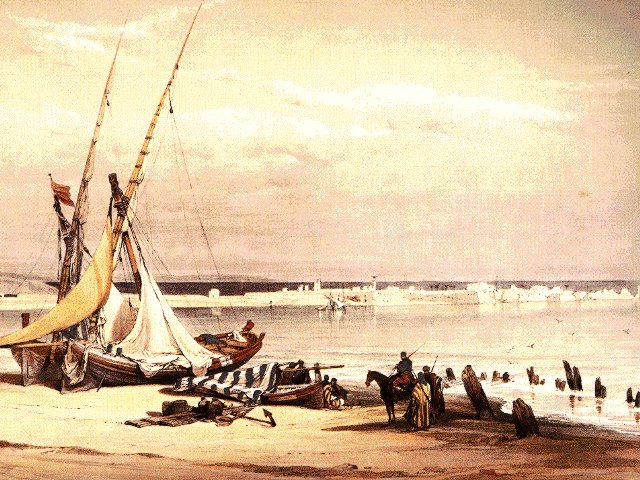
The Phoenicians were a seafaring people and the world’s first great maritime power. They established several trading colonies throughout the Mediterranean, including: Cyprus, Greece, North Africa, Malta, Sicily, and Spain.

Isaiah’s oracle concerns the destruction of Tyre and Sidon, two leading cities of Phoenicia, which had a devastating impact upon the Mediterranean economy (23:1-7). Pride is listed as the reason for God’s judgment on Phoenicia (23:8-12). Things would be difficult in Phoenicia for a period of seventy years (23:13-18).

Isaiah 22

22:1-14
What word did God give regarding Judah?
These verses describe the jubilant scene in Jerusalem after Sennacherib lifted the siege of the city in 701 B.C. The people became boisterous and exultant, even though their conduct during the siege had been less than commendable (22:1-3). The dangerous situation from which God delivered the people did not lead them to repent. Instead, they celebrated and remained insensitive to God. This caused Isaiah to “weep bitterly” (22:4) while the rest of the city celebrated.

Looking back on the siege of Jerusalem, Isaiah pointed out that when the enemy surrounded the city, the people worked to strengthen their own defenses rather than put their trust in God (22:5-11). Notice the language in verses 8-11: “you depended on … you saw … you collected … you counted … you tore down … you made … but you did not depend on Him … ”

They had depended on their own power and plans rather than on the Lord. Rather than responding to their deliverance with repentance and contrition, the people engaged in unrestrained feasting, shouting, “Let us eat and drink, for tomorrow we may die” (22:13). They would indeed die (22:14)!

Practical Consideration: There is a time to feast and a time to fast.
After the Lord struck the Assyrian army besieging Jerusalem (see 2 Kings 19:35-36), the inhabitants of Jerusalem began to celebrate rather than evaluate. They shouted for joy when they should have repented of the sin that brought the breath of judgment so close. They feasted when they should have fasted. Their attitude reflected their failure to grasp the significance of the situation.

22:15-25
What word did God give regarding a political opportunist named Shebna?
Shebna was an individual charged with great responsibility in Hezekiah’s administration. He was second in command. He used his political position however, to feather his nest. He had a tomb hewn in the rock in a prominent place in Jerusalem (22:16) and acquired chariots (22:18). Isaiah asked what business Shebna had in building himself a tomb in Jerusalem when he was destined to die in a foreign land (22:16-17).

Isaiah prophesied that God would pull him down (demote him) and replace him with a man named Eliakim (19-25). Refer to 2 Kings 18:18, 26, 37 and 19:2 for more information on Eliakim.

Isaiah 21

Oracle of the Fall of Babylon

21:1-10
What vision did Isaiah receive regarding the fate of Babylon?
Isaiah received an awesome and harsh vision regarding the fall of Babylon (21:1-2). Babylon, identified as the “treacherous one” and “destroyer” and the nation which caused the world to groan, will be destroyed at the hands of Elam and Media (21:2). This is a reference to the armies of Cyrus, king of the Medes and Persians, who conquered Babylon in 538 B.C. The vision of Babylon’s destruction was horrifying to Isaiah (21:3-4) and imminent (21:5-9), but would mean the end of oppression and suffering for God’s people (21:10).

Various Warnings and Judgments

21:11-12
What word did God give regarding Edom?
Edom is pictured as urgently requesting a report from the watchman (Isaiah) regarding the international situation. The watchman asked the people to come back and inquire again at a later time. Edom, who had cooperated with the Babylonians in their attack upon Jerusalem in 587 B.C., would however, fall.

21:13-17
What word did God give regarding Arabia?


Arabia and its nomadic tribes would suffer defeat at the hands of their more powerful enemies (the Assyrians). In light of this, Judah certainly had no business looking to Arabia for any help against Assyria or any other threat.

Isaiah 20

Isaiah’s Symbolic Warning to Judah

20:1-6
What measures did Isaiah take to warn Judah against trusting in Egypt?
Isaiah, at the instruction of God, went about “naked and barefoot” (like a prisoner of war) for a period of three years in order to dramatically warn Judah (under Hezekiah) against the folly of trusting in Egypt (or any foreign powers) in an effort to stand against the growing Assyrian threat.

It is interesting to note that even the Assyrian messengers sent to intimidate Hezekiah warned him against trusting in Egypt’s help (see 2 Kings 18:19-20). The Assyrian messengers, however, also told Hezekiah and the people of Jerusalem that they were foolish for trusting in the Lord (see 2 Kings 18:28-30). They tried to intimidate the people into casting themselves on the mercy of Assyria (see 2 Kings 18:31-32).

Isaiah’s symbolic, enacted prophecy also depicted the fate that awaited Egypt.

Practical Consideration: God often goes to great lengths to warn us of danger.
Isaiah went about “barefoot and naked” (Isaiah 20:1-6) for a period of three years in an effort to warn Judah of the folly of trusting in foreign nations rather than God. He enacted his message to get the attention of the people. God loves us enough to take great measures to warn us of danger. Such measures leave us without excuse if we persist on a sinful course and suffer as a result.

Isaiah 19

19:1-25
What word did God give regarding Egypt?
Isaiah spoke to Judah against relying upon Egypt’s help against the Assyrian threat. He described the coming judgment of the Lord upon Egypt and its impact upon the nation: their idols would tremble (19:1); they would engage in civil war (19:2) and look to the wrong sources for counsel (19:3); they would be delivered into the hand of a cruel master (perhaps the Ethiopians or Assyrians, 19:4); the Nile River would dry up and they would experience a terrible drought resulting in devastating economic problems (19:5-10); and Egypt would suffer at the hands of stupid leaders (19:11-15).

Isaiah 19:16-25 contains five oracles each of which is introduced by the formula “in that day.”

The first oracle (19:16-17) describes the fear that will be felt by the Egyptians in the day of God’s judgment.

The second oracle (19:18) predicts a day when five cities in Egypt will speak the language of Canaan (Hebrew). This oracle looks to a day when many in Egypt will turn to the Lord.

The third oracle (19:19-22) points to the day when the Lord will be worshiped in Egypt.

The fourth oracle (19:23) envisions a day when an intercontinental highway will join Egypt with Assyria and the peoples of both nations will worship the Lord.

The fifth oracle (19:24-25) looks to the day when Israel, Egypt, and Assyria will unite in the worship of the Lord and there will at last be peace in the Middle East.

Isaiah 18

Prophesies Directed Against Ethiopia and Egypt

18:1-7
What word did God give regarding Ethiopia?
This oracle pictures the frantic diplomatic activity of Ethiopia (18:1) in its efforts to entice Judah to join in a coalition against the Assyrians (18:2). Isaiah diplomatically told the Ethiopians to return to their home (8:2) and advised Judah to trust in the Lord who would deal with the Assyrian threat (18:3-7).

An Ethiopian dynasty ruled Egypt during Isaiah’s lifetime. Isaiah cautioned Judah against entering into an alliance with the Ethiopians and predicted their destruction (18:3-7).

Isaiah 17

17:1-14
What word did God give regarding Damascus (Syria) and Ephraim (Israel)?
This oracle has as its background the Syro-Ephraimitic alliance against Judah (735-732 B.C.). Isaiah prophesied the fall of Damascus (17:1-2) and Samaria (“the fortified city” – 17:3).

Isaiah prophesied that Damascus would “be like the glory of the sons of Israel” (17:3) which was destined to “fade” (17:4). The judgment (through Assyria) upon Syria and Israel (the Northern Kingdom) would leave very little (17:4-6). Isaiah likened them to a field or olive grove after the reapers and gleaners have finished with it.

The judgment would have a cathartic effect upon God’s people causing them to abandon the worship of idols (17:7-8) which was leading the nation toward ruin (17:9-11).

Isaiah 17:12-14 describes the deliverance of Judah from an attack by hostile foes (some scholars identify the foe as the Syro-Ephraimitic threat and others suggest the Assyrian threat). These verses depict God as the deliverer of those seeking to despoil and plunder His people. The people needed to trust in God rather than in international alliances.

Practical Consideration: Those who forget God fall prey to false trusts.
When the people of Israel (the Northern Kingdom) forgot God, they fell prey to false trusts and engaged in the worship of false and strange gods (Isaiah 17:10-11). One writer comments, “The throne of our heart cannot remain vacant; if God be not there, unworthy objects will surely take His place. . .forgetfulness of God necessarily leads to idolatry in some form or other.”

Isaiah 16

15:1-16:14
What word did God give regarding Moab?
Moab was destined for destruction at the hands of the Assyrians. Isaiah 15 solemnly describes the mourning of the Moabites. The Moabites expressed their grief by shaving their heads and beards (15:2), wearing sackcloth (15:3), and crying aloud (15:3-4).

The fugitives fled as far south as possible in an effort to escape destruction (15:5-8), but Isaiah prophesied that even this Moabite remnant would not escape (15:9). The Moabites sent tribute to Jerusalem in an effort to secure political asylum (16:1-5). The request of the proud and arrogant Moabites was rejected (16:6-7).

Isaiah 16:8-11 describes the desolation of Moab. Isaiah also expressed personal sorrow for the destruction of Moab (16:11). Moab was even beyond the help of prayer (16:12). Isaiah predicted that Moab would be reduced to a “very small and impotent” remnant within three years (16:13-14).

Isaiah 15

15:1-16:14
What word did God give regarding Moab?
Moab was destined for destruction at the hands of the Assyrians. Isaiah 15 solemnly describes the mourning of the Moabites. The Moabites expressed their grief by shaving their heads and beards (15:2), wearing sackcloth (15:3), and crying aloud (15:3-4).

The fugitives fled as far south as possible in an effort to escape destruction (15:5-8), but Isaiah prophesied that even this Moabite remnant would not escape (15:9). The Moabites sent tribute to Jerusalem in an effort to secure political asylum (16:1-5). The request of the proud and arrogant Moabites was rejected (16:6-7).

Isaiah 16:8-11 describes the desolation of Moab. Isaiah also expressed personal sorrow for the destruction of Moab (16:11). Moab was even beyond the help of prayer (16:12). Isaiah predicted that Moab would be reduced to a “very small and impotent” remnant within three years (16:13-14).

Isaiah 14

14:1-23
What lay in store for God’s people after the defeat of Babylon?
After the defeat of Babylon, Isaiah envisioned a day when God’s people would repatriate their land and rule over their oppressors (14:1-4). In addition, God’s people would rejoice and take up a taunt against the (defeated) king of Babylon (14:4-8). The taunt song pictures the defeated and dead king as being welcomed into Sheol, the abode of the dead (14:9-11).

Pride is listed as the downfall of the Babylonian king, who sought to make himself like the Most High (14:12-15). Curious onlookers ponder the ignominious end of one who once wielded such great power (14:16-19). The taunt song concludes with a curse upon the progeny of the king of Babylon and a word about the utter destruction of the city of Babylon (14:20-23).

Practical Consideration: Death is the conqueror of conquerors.
Isaiah saw the rise and fall of many rulers and nations. He prophesied the rise to power of nations who were used by God to accomplish His purposes, and the fall of those same nations. He saw many rulers rise to power and exercise leadership unrestrained by the moral and ethical demands of God’s Word, and the fall of those same leaders.

Every conqueror was conquered by death. Every conqueror, who sought to expand his borders and multiply his influence and erect structures to commemorate his life, was eventually conquered by death. May the fact of life’s brevity motivate us to live our days in a manner pleasing to God. May the things that outlast us bring honor to God.

Prophecies Against Assyria, Philistia, Moab, and Syria

14:24-27
What word did God give regarding Assyria?
Assyria, once the rod of God’s anger (Isaiah 10:5), would experience the rod of God’s judgment. God would “break Assyria in My land” (14:25). Assyria, under the leadership of Sennacherib, invaded Judah in 701 B.C. during the reign of Hezekiah. God however, protected the city of Jerusalem from the Assyrian threat (2 Kings 19:24) by sending an angel who “struck 185,000 in the camp of the Assyrians” (2 Kings 19:35).

14:28-32
What word did God give regarding Philistia?
Isaiah received an oracle regarding Philistia in the year that King Ahaz died, approximately 715 B.C. (14:28). He warned the Philistines not to rejoice over the death of an (unnamed) Assyrian leader because his offspring/successor would be even worse (14:19). Philistia was doomed (14:31). Isaiah also warned Judah to take refuge in the Lord rather than in foreign alliances (14:32). Note: The Philistines are not mentioned again in the book of Isaiah.