Isaiah 53


The Servant’s Beginning
| Isa. 53:1-3
First, he is likened to “a tender shoot” and “a root out of parched ground” (53:2). These are references to His humble beginnings in a hostile environment. Second, he was unattractive (53:2). There was nothing charismatic about His appearance. Third, he experienced the sting of rejection and scorn (53:3).

53:1 Who has believed our message [concerning a Servant who would suffer on behalf of others; message seemed too incredible to believe] and to whom has the arm [strength] of the LORD been revealed [God’s saving power revealed through Servant]?

53:2 He grew up before him [w/ God’s attention centered on Him] like [note unimpressive credentials] a tender [frail] shoot [cf. Isa. 11:1], and like a root out of dry ground [lowly conditions out of which Servant came; struggle in unresponsive soil]. [re: Servant’s outward appearance] He had no beauty or majesty to attract us to him [did not look like a winner], nothing in his appearance that we should desire him [appeared to be a less-than-ordinary person; no striking physical characteristics; cf. 1 Sam. 16:7].

53:3 He was despised [treat w/ contempt; to scorn; sold out for 30 pieces of silver (Lk. 22:4-6)] and rejected by men [did not consider Him worthy of their time], a man of sorrows [His life was filled with grief and pain (due to sins of human race)], and familiar with suffering [greatest suffering on cross]. Like one from whom men hide their faces [as if He had loathsome disease; sickened by sight of His agony on the cross] he was despised, and we esteemed him not [John 1:10-11; we did not give Him a thought].

The Servant’s Suffering | Isa. 53:4-6
First, people who looked upon him thought that he was suffering on account of His own sins (53:4) rather than theirs (53:5). Second, he suffered a violent physical death (53:5). He was “pierced,” “crushed,” chastened, and scourged. Third, God laid our sins upon the Servant (53:6). The use of personal pronouns in these verses accentuate the fact that the Servant suffered because of what we had done and not because of anything he had done. Our sins were the cause of His agony. Fourth, all that the Servant did He did for us. . .”for our well-being” and healing (53:5).

53:4 Surely he took up [conveys idea of bearing, lifting up, carrying] our [Messiah’s pain was for our sake] infirmities [sickness, diseases, illnesses] and carried [cf. 1 Pet. 2:24] our sorrows [pain/suffering caused by sin], yet we [mistakenly] considered him [instead of considering what our sins had done to Him] stricken by [common conception that sickness/pain punishment for wrongdoing] God, smitten by him, and afflicted [humiliated].

Note: Matthew 8:14-17 applies this verse to Jesus’ healing ministry and not His atoning death.

53:5 But [transition to real reason for His sufferings] he [voluntarily] was pierced [mortal wound; pierced to point of death; indicates violent death; points to crucifixion] for our [cause of His agony] transgressions [deliberate revolt against God], he was crushed [death by crucifixion as weight of body crushes lungs; under weight of our sin] for our iniquities [moral twistedness or crookedness]; the punishment [of our sin] that brought us peace [wholeness, well-being: result of being in right relationship w/ God] was upon him, and by his wounds [cf. Jn. 19:1; 1 Pet. 2:24] we are healed [refers to healing of our souls and of our relationship to God; forgiveness of sins, not healing of body as per 1 Pet. 2:24].

53:6 We all, like sheep, have gone astray [reason for Servant’s suffering; cf. Rom. 3:23], each of us has turned to his own [rather than God’s] way [cf. Prov. 14:12]; and the LORD has laid [to hit, to strike violently, He bore the blows of our sins and blows of God’s judgment upon our sins] on him [substitutionary atonement] the iniquity of us all.

The Servant’s Death | Isa. 53:7-9
These verses should be read with an understanding of all that Christ experienced from Pilate’s court to Joseph’s tomb. First, His death was sacrificial (53:7). Second, he remained silent while being led to the slaughter (53:7). Third, he suffered a gross miscarriage of justice and was led to His death (53:8). Fourth, he was buried in the tomb of a rich man (53:9).

53:7 He was oppressed [treated harshly] and afflicted [abused], yet he did not open his mouth [quietly accepted the punishment other people deserved; cf. 1 Pet. 2:23]; he was led like a lamb [emphasizes victim’s silent submission; cf. sacrificial lamb of Passover in Ex. 12:3] to the slaughter, and as a sheep before her shearers is silent [Jesus did not protest unjust treatment He received (cf. Mk. 14:60-61); He did not protest even though He knew what was ahead], so he did not open his mouth.

Note: The Ethiopian eunuch was reading this text when Philip approached him on the desert road between Jerusalem and Gaza (Acts 8:30-35).

53:8 By oppression and judgment [Jesus tried, convicted, executed (miscarriage of justice)] he was taken away. And who can speak of his descendants [possibly reference to terrible fate of dying childless; or, Who spoke up for Him? Who has given slightest thought re: reason for His suffering]? For he was cut off [conveys violent severance] from the land of the living [confirms that Servant died]; for the transgression of my people [portrays substitutionary nature of Servant’s death] he was stricken.

53:9 He was assigned a grave with the wicked [put to death like criminal; executioners planned to bury Him in place reserved for wicked], and with the rich in his death [God did not allow His Servant to be buried like criminal; Jesus buried in Joseph of Arimathea’s tomb (cf. Matt. 27:57-60)], though [affirmation of Servant’s innocence] he had done no violence [although charged otherwise: cf. Matt. 26:59-61], nor was any deceit in his mouth.

The Servant’s Triumph | Isa. 53:10-12

First, His death was part of a divine plan (53:10). His death was not an accident. Second, the Servant did not remain dead. God prolonged His days (53:10). He was resurrected. Third, the Servant will have a numerous spiritual posterity (53:10), a reference to all who place their faith in Christ through the centuries.

53:10 Yet it was the LORD’s will [Servant’s death by God’s design; God in control: cf. Jn. 19:10-11; in God’s plan for our redemption (Acts 2:22-23)] to crush him and cause him to suffer [because God had our redemption in view], and though the LORD makes his life a guilt offering [only place in Bible where person referred to in this way], he will see his offspring [spiritual descendants] and prolong his days [reference to resurrection], and the will of the LORD will prosper in his hand.

53:11 After the suffering of his soul, he will see the light of life [reference to the resurrection; cf. Ps. 22:30] and be satisfied [because of the results of His death and resurrection]; by his knowledge [either knowledge Christ possesses concerning Father or knowledge we receive through faith in Christ (Jn. 17:3)] my righteous servant will justify many, and he will bear their iniquities.

53:12 [affirmation of victory; image of a king who has led his troops into battle, has won, and is enjoying the fruits of victory] Therefore I will give him a portion among the great, and he will divide the spoils with the strong, because he poured out his life unto death, and was numbered with the transgressors [cf. Lk. 22:37; 1 Cor. 1:18]. For he bore the sin of many, and made intercession for the transgressors.

Note: Isaiah 53 teaches us that His suffering was…
• vicarious
• voluntary
• in obedience to the Lord
• for us all
• mediatorial, that is, it was to have the power of effecting peace and reconciliation
Isaiah 32

Rule of the Righteous King

32:1-8
What kind of leadership did Isaiah envision in Judah’s future?
Isaiah 32:1-8 records Isaiah’s prophecy regarding the future leadership of Judah. He envisioned the day when Judah’s leaders would be men of integrity who would rule justly (32:1). They would provide protection for their people (32:2) whose eyes and ears would be open to the truth (32:3). Under righteous rule hasty men would learn restraint, stammering men would learn to speak (32:4), and fools would be known for what they are (32:5-8).

Warning to Complacent Women of Jerusalem

32:9-14
What word did Isaiah have for the women of Jerusalem?
The language of verse 10 suggests that this oracle was spoken in the year(s) prior to 701 B.C. when Sennacherib invaded Judah and devastated the land. Isaiah called on the complacent women of Jerusalem to give ear to his word regarding the serious political situation of the day (32:9). He told these women to put on sackcloth and put away their frivolity because of the imminent problems the city and its environs were about to face.

Description of a Glorious Future

32:15-20
What did Isaiah envision would happen when the Spirit of the Lord is poured out?


Isaiah envisioned the day when the Spirit of the Lord will be poured out on the earth (32:15). In that day the earth will become fertile (32:15) and justice and righteousness will be established (32:16-17). The people will dwell in security, able to carry on their normal daily activities without fear (32:18). They will sow their crops without fear of failure and allow their livestock to roam freely (32:20).

Isaiah 31

Admonitions to Trust God for Deliverance — continued
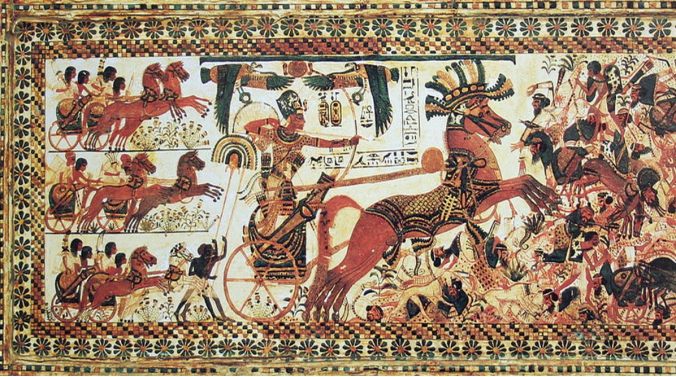
The woe oracle contained in Isaiah 31:1-3 addresses the foolishness of trusting in Egypt rather than in God. Judah was impressed with Egypt’s army (see Deuteronomy 17:14-16 regarding the prohibition against going to Egypt for help). Isaiah told the people they must choose between trusting in the Egyptian army (made up of men and horses of flesh) or trusting in the Lord.

The words “help,” “rely,” “trust,” and “do not look to” in verse 1, accentuate Judah’s reliance upon Egypt. They looked to Egypt and did “not look to the Holy One of Israel” (31:1, and see also the attitude expressed in 30:11). This failure to trust the Lord would result in failure. Isaiah noted that neither “he who helps” (Egypt) nor “he who is helped” (Judah) would be able to stand.

The only hope for dealing with the Assyrian threat was with the Lord (31:4-9). Isaiah called the people to repent and return to the Lord from whom they had defected (31:6) and to destroy their idols (31:7). God Himself would deal with the Assyrians (31:8) and any who tried to attack Jerusalem (31:9).

Practical Consideration: Trusting God is a matter of choice … an act of the will.
Judah’s leaders had a choice when they felt the pressure of the Assyrian threat. Isaiah records that they chose to trust in Egypt’s military machine rather than in God. They chose to trust in things made of flesh rather than in God. They chose to rely on the words of the Egyptians rather than on the words of God. They chose to look to the power of pharaoh rather than to the power of God. We too, have a choice when it comes to trusting God. May we choose to trust God and say with the psalmist, “Some boast in chariots, and some in horses; but we will boast in the name of the Lord, our God” (Psalm 20:7).

Isaiah 30

Admonitions to Trust God for Deliverance

30:1-31:9
What word did Isaiah have for the architects of Judah‘s foreign policy with Egypt?
The woe oracle in Isaiah 30 gives us additional information concerning the alliance Judah made with Egypt.

First, the alliance with Egypt was made without the approval of God (30:1-2). Judah’s envoys, however, made the difficult journey to Egypt bearing expensive gifts with which to negotiate for the Egyptian’s help (30:6).

Second, the alliance with Egypt would not help Judah (30:3-5, 7). Isaiah described the help of Egypt (referred to as Rahab the do-nothing) as “vain and empty” (30:7).

Third, God instructed Isaiah to record the words of his prophecy which the leaders refused to heed. These written words would serve as a witness for all time. They would record the refusal of the nation’s leaders to heed the word of the Lord (30:8) and their efforts to intimidate God’s prophets to tell them only what they wanted to hear (30:9-11).

The leaders wanted to “hear no more about the Holy One of Israel” (30:11). They were eager to hear the words of the Egyptians at the negotiating table but unwilling to hear the Word of the Lord. Isaiah warned these leaders of their downfall in the coming judgment. They would be destroyed as a collapsing wall (30:13) or a jar broken and ground to dust (30:14).

Isaiah told the leaders that the path to national security lay in trusting God, a path they were not willing to take (30:15). Instead of trusting God, the leaders trusted in their alliance with Egypt and in their military might (30:16). They would however, not be successful in battle. They would be frightened away by the enemy so that the only thing remaining on the battle-ground would be a lonely flag left on a flagpole (30:17).

Practical Consideration: It is foolish to make plans apart from God.
Judah’s leaders devised a plan to protect themselves and the city of Jerusalem from the Assyrians. They plotted and schemed and discussed and negotiated and executed their plan without the approval of God. They felt confident they had done what was in the best interest of the land of Judah and the city of Jerusalem. They ignored the warnings of the prophet Isaiah regarding the foolishness of making plans apart from God. They forgot the words of the psalmist, “Unless the Lord guards the city, the watchman keeps awake in vain” (Psalm 127:1b). Because their plans were made without the approval of God, they were destined to fail.

Isaiah 30:18-26 describes the restoration that awaited Judah after judgment. These verses look to the day when God will again be gracious to His people and hear the sound of their cry for help (30:18). They look to the day when God’s people will heed His instruction and walk in His ways (30:19-20) as well as destroy their graven images (30:22). In that day God will shower His people with blessings (30:23-26). Isaiah 30:27-33 describes God’s judgment on Assyria.

Isaiah 29

Judgment and Hope for Jerusalem

29:1-13
What word of judgment and hope did Isaiah prophecy concerning Jerusalem?
Isaiah warned “Ariel” (Jerusalem) of God’s coming judgment. God’s judgment would come in spite of the people’s religious activity (29:1) and would visit the city in the form of a siege (29:3) that would bring the city low (29:4). The city of Jerusalem, however, would not be destroyed. Isaiah prophesied that Jerusalem’s enemies would become as dust and chaff before the wind (29:5) and leave with their dreams of conquest and victory unfulfilled (29:6-8).

29:9-14
How did Isaiah describe the condition of the people of Jerusalem?
Isaiah described the spiritual condition of the people of Jerusalem in the years prior to 701 B.C. (29:9-14). The people were blind and drunk (29:9-10). The eyes of the people, the prophets, had been shut so that they were without a word from God (29:11-12). See Amos 8:11-12 regarding Amos’ prophecy concerning a famine of the word of God. The religion and worship of the people had become empty and meaningless (29:13). The people paid lip service to God. They merely went through the motions of religious activity. Their religion had no impact on their lives.

Practical Consideration: Mechanical religion is no substitute for a meaningful relationship.
The people of Judah were outwardly religious. They were always present at church. They knew how to act, how to talk, and when to say “Amen” in their services of worship. Their sin was not the abandonment of worship, it was the absence of the heart in worship. Their worship of God was not hallowed, it was hollowed.

God was not interested in seeing them go through the motions of worship, He was interested in their motives in worship. Mechanical religion does not change lives. It is unsuccessful. Mechanical religion is unacceptable to God. The worshiper must have a meaningful relationship with God. Vance Havner, a great evangelist, said, “We are challenged these days, but not changed; convicted, but not converted. We hear, but do not; and thereby we deceive ourselves.”

29:15-16
What word did Isaiah have for those who were forming an alliance with Egypt?
The brief oracle contained in verses 15-16 was addressed to those who were negotiating a secret alliance with Egypt. They executed their plans so secretly that they were sure no one would know about them, not even God (29:15)! Isaiah spoke against the prideful attitude of these leaders who thought they were smarter than God (29:16).

29:17-24
What did Isaiah envision would happen in a future day?
Verses 17-24 look to a future day when things will be different: the land will flourish once again (29:17), the blind shall see (29:18), the poor and needy will be exalted (29:19-21), Jacob’s shame will come to an end (29:22), and people will stand in awe of God (29:23) and accept instruction (29:24).

Isaiah 28

Condemnation of Ephraim’s Drunken Leaders

28:1-13
What word did Isaiah share regarding the fate that awaited Ephraim’s leaders?
Isaiah’s oracle concerning Ephraim (the Northern Kingdom of Israel) was uttered prior to the fall of Samaria in 722 B.C. Isaiah denounced the attitude of Ephraim’s leaders who were living in drunkenness (28:1), unaware of the fact that God’s judgment was imminent (28:2). Isaiah prophesied that God’s judgment would come upon Ephraim at the hands of “a strong and mighty agent” (28:2), a reference to Assyria.

God’s agent of judgment would trample under foot “the proud crown of the drunkards” (28:3), a reference to Samaria, and devour it as one would devour a piece of fruit (28:4). Verses 5-6 are a parenthetical thought regarding the eschatological age when the Lord Himself would “become a beautiful crown” (28:5) to His people as opposed to the fading crown of Ephraim. This oracle was spoken in the hope that the fall of Ephraim would serve as a warning to Judah.

Isaiah 7-13 records an encounter between Isaiah and the drunken leaders (prophets and priests) of Judah. Isaiah accused these leaders of being too drunk to properly execute their office (28:7) and described their tables as full of vomit (28:8). The sarcastic response of the drunken leaders is recorded in verses 9-10. They, in essence, replied, “Who do you think you are talking to us like that? Do you think we are school children who need to be taught the alphabet?”

Isaiah replied by turning their own words on them. He told the drunken leaders that because they had refused instruction in their own language, they would soon be taught in the foreign language of their captors (28:11). Because they refused to live up to God’s expectations (28:12), they would be carried into captivity (28:13).

Denunciation of Judah‘s Foreign Treaties

28:14-22
What word did Isaiah share regarding Judah‘s foreign treaties?
Isaiah 28:14-22 is set against the background of 2 Kings 18-19. After the death of the Assyrian king Sargon II, Assyria’s vassal states attempted to throw off their Assyrian yoke. Judah, under the leadership of Hezekiah, also “rebelled against the king of Assyria and did not serve him” (2 Kings 18:7).

Hezekiah rebelled against Sennacherib, the son and successor of Sargon II. Judah’s confidence in rebelling against Assyria came largely from the hope that Egypt would stand with them against the Assyrians. Judah’s leaders were negotiating a secret alliance with Egypt (see also Isaiah 29:15-16).

Isaiah was furious that Judah would trust in anything other than God’s power, especially a nation like Egypt that was too weak to defend itself. Judah’s leaders “made a covenant with death, and with Sheol. . .” (28:15), a reference to the alliance with Egypt, and felt that this would be sufficient to deal with the Assyrians (under the leadership of Sennacherib).

The people’s optimism regarding their security was false. Isaiah pointed out that the only security lay in trusting the Lord (28:16-17). He is the only sure foundation. God’s people had no business trusting in or trying to find security in anything or anyone other than God. Only those who trusted in God would be able to stand firm in the face of threatening difficulties (28:16). In addition, those who trusted in God were required to live lives of justice and righteousness (28:17).

Practical Consideration: Haste is present where there is no confidence in God.
Judah’s leaders chose to negotiate a treaty with Egypt rather than trust in God for protection from the Assyrians. They loaded their treasures on donkeys and camels and made a difficult journey to Egypt in an effort to secure the help of the Egyptians (under the leadership of king Shabako, 710-696 B.C.). They chose to put their trust in an earthly ruler rather than in the God of the universe. They wasted untold wealth and time in an enterprise that would prove futile and vain.

When men fail to trust God they run to and fro in an effort to deal with life’s threats and difficulties. When men fail to trust God they waste time, money, and energy seeking solutions that will not work. Isaiah told the people of Judah that those who trust in the Lord do not make haste. Psalm 46:10a states, “Cease striving and know that I am God.” It is always better to trust God than men. God does not disappoint.

Isaiah 17-22 describes the judgment that will overtake Judah. God’s judgment at the hands of the Assyrians will come upon the land like a hailstorm and a flood (28:17) which will sweep away their false trusts (28:18) and strike terror into the hearts of the people (28:19). Using a proverb, Isaiah told Judah that she had made her bed, and now she must lie in it (28:20). The Lord, unlike the days when He fought on behalf of His people, would now do an unusual thing, He would fight against His people (28:21-22).

A Parable of How God Works with Judah

28:23-29
What does the parable of the farmer teach about how God works with Judah?
The parable of the farmer who wisely managed his crops because he followed God’s instructions (28:26) teaches that God can instruct His people regarding how to manage their lives. Some interpret the parable to say that God, the farmer, knows exactly what tool to use, how to use it, and when to use it. In the case of Judah, the time was fast approaching for God to use the tool of judgment.

Practical Consideration: God employs various methods in dealing with men.
The parable of the farmer teaches that God employs various methods in dealing with men. He knows exactly which tools to use to accomplish certain ends in our lives. When we stubbornly refuse to turn from sinful ways, God will select the proper tool to get our attention and correct our course. The Apostle Paul wrote, “For I am confident of this very thing, that He who began a good work in you will perfect it until the day of Christ Jesus” (Philippians 1:6). We can be sure that God will employ the proper tools at the proper times in the proper ways to accomplish His purpose.

Isaiah 27

27:1
This verse looks to the day when the Lord will slay Leviathan (an ancient symbol of chaos and evil), thus securing a decisive victory over His foes.

The Restoration to Come in the Day of the Lord

27:2-13
What will characterize God’s people after His judgment?
Isaiah 27 looks to the day when God’s favor will return to His people. God’s favor will not return however, until after His judgment has been executed.

Isaiah 5:1-7 contains the parable of the worthless vineyard (Israel) and the decision of the owner of the vineyard to abandon it (refer to pages 6-7 of these notes). Isaiah 27 contains the account of a vineyard (Israel as per 27:6) that is pleasant, productive, and worth protecting. This was a wonderful message of hope for Isaiah’s listeners.

But such hope would not be realized automatically. God would punish His people, though not as severely as their enemies (27:7-8), to the end that they would abandon their worship of false gods (27:9). Failure to correct their course would result in a grim instead of a glorious future (27:10-11). In that day, God will sound the trumpet to summon the exiles home to Jerusalem to worship Him (27:12-13).

Isaiah 26

26:1-6
What is the theme of the song that will be sung in Judah?
Isaiah 26:1-6 is a hymn which finds expression “in that day” or in the day of the Lord. This hymn celebrates the protection God provides for the righteous (26:1-2). The righteous rejoice not because their city (Jerusalem) is defensible, but because the Lord is dependable.

The righteous experience the peace that comes only by way of trusting the Lord (26:3-4 and see also Psalm 131:2 regarding childlike trust in the Lord). The Lord is “an everlasting Rock” (26:4) to the righteous. He is the Rock of safety and security (Psalm 40:2) as well as the foundation on which to build (Matthew 7:24-25 and 16:18). This hymn also declares the fate of the wicked: they will be brought low (26:5-6).

Practical Consideration: There is no perfect peace apart from trusting God.
Our lives are filled with things that rob us of peace. The pressures, problems, perplexities, and pains of life keep our hearts and minds in a state of constant turmoil. Our energies are largely given to doing things that will bring us some measure of peace and security. And yet, peace seems elusive. We spend sleepless nights and tension-filled days worried about what has happened or what might come. Our hearts and minds ache and long for peace, if only for a little while. Isaiah reminds us that the peace we long for comes only from God. Only those who trust in Him, lean on Him, hope in Him, and place their confidence in Him will know perfect peace. God does not disappoint those who trust Him with all their heart.

26:7-27:1
What is the theme of the prayer of the people of Judah?
Isaiah 26:7-19 is a community prayer divided into three sections.

The first section of the prayer contrasts the righteous and the wicked (26:7-10). The righteous long for God (26:8) and are eager to learn from His judgments (26:9). The wicked however, fail to learn when shown favor (26:10). They continue to deal unjustly and fail to perceive the Lord’s majesty (26:10).

Practical Consideration: We should long for God in the night.
Isaiah 26:7 states, “At night my soul longs for Thee, Indeed, my spirit within me seeks Thee diligently.” The righteous long for God in the night. When the light of day is eclipsed by trials and discouragements, the righteous earnestly long for God. When the righteous go through a season of darkness they do not despair, they long for and look to God. When the light of day is obscured by the clouds of distress, the righteous place their confidence in God.

The second section of the prayer expresses the confidence that the righteous will ultimately prevail over the wicked (26:11-15). The wicked fail to recognize the fact that God’s hand is already raised against them and they are in imminent danger (26:11) and will die and be forgotten (26:14). The righteous acknowledge the great works of the Lord on their behalf (26:12) and pledge their allegiance to Him alone (26:13). This section of the prayer ends with an announcement that the Lord has extended the borders of the nation (26:15), an indication of the blessings of prosperity and security that comes from the Lord.

Practical Consideration: Some people never learn!
Isaiah 26:10 states that the wicked are so hardened and insensitive that they fail to learn from either God’s judgments or mercies. God’s judgments and mercies are designed to instruct the wicked, correct their walk, and reveal God to them. The wicked however, fail to learn from God’s judgments and mercies, remain blind to His glory and majesty, and do not recognize the danger of so doing.

The third section of the prayer contains Israel’s whispered prayer for help and the Lord’s response to that prayer (26:16-19). The Lord’s people are likened to a pregnant woman in labor who gives birth to wind, a symbol of futility (26:17-18). All of their efforts to break free from oppressors have been futile, but the Lord Himself will deliver His people (26:19).

Isaiah 26:20-21 point to the Lord’s victory over His foes. The Lord admonishes His people to hide in their homes while He does battle against the forces of evil. Isaiah 27:1 looks to the day when the Lord will slay Leviathan (an ancient symbol of chaos and evil), thus securing a decisive victory over His foes.

Isaiah 25

Songs of Prophecies of the Day of the Lord

25:1-12
What will be the response of the believing remnant that survives God’s judgment?


Those who survive God’s judgment will sing songs of praise and thanksgiving to the Lord for performing wonderful deeds/mighty acts (25:1) against ruthless nations (25:2-3) and in defense of the helpless and needy (25:4-5).

The “fortified city” in verse 2 is not named and should be interpreted as a reference to any city hostile to God. The song celebrates the Lord’s protection and care for the helpless and needy from the ruthless and powerful who will ultimately fear God (25:3). The Lord will silence the “song of the ruthless” (25:5) so that only the song of God’s people will be heard.

The Lord also will prepare a banquet “for all peoples [Jews and Gentiles] on this mountain [Mount Zion]” (25:6). The Lord (Messiah), reigning as King, will perform three mighty acts.

First, He will remove “the veil which is stretched over all nations” (25:7). Some interpret the veil as a reference to the tyranny and oppression to which Israel and other nations were subjected. Others interpret it as the veil which blinds people to the truth of the gospel (see 2 Corinthians 3:16,18) and the glory of the Lord.

Second, “He will swallow up death for all time” (25:8). Third, the Lord “will remove the reproach from His people from all the earth” (25:9).

In addition, Moab (an enemy of God’s people) will be destroyed (25:10-12). Moab symbolized the fate of the wicked who have no part in the feast of the preceding verses.

Practical Consideration: God cares for the helpless and hurting.
Where can men turn when they are helpless, defenseless, and powerless? Where can men turn when they are impoverished, in pain, and in need of immediate assistance? Isaiah 25:4 declares that the Lord is “a defense for the helpless. . .[and] the needy in his distress, a refuge from the storm, a shade from the heat.” The Lord Himself defends the defenseless, protects the powerless, and provides for the impoverished. The helpless and hurting should look to God for assistance when life threatens to debilitate and destroy them.

Isaiah 24

Note: Isaiah chapters 24-27 are distinctive in that they deal with the end of the world. They are appropriately set at the end of the prophecies about foreign nations (Isaiah 13-23).

A Corrupt Earth Made Desolate

24:1-23
What will characterize God’s judgment on the whole earth?
Isaiah 24:1-3 speaks of worldwide devastation that will touch the physical order (24:1) as well as every facet of society (24:2). The reliability of this prophetic word is stressed by the statement, “for the Lord has spoken this word” (24:3).

The earth itself mourns (24:4) and suffers because of what its inhabitants have done (24:4). Mankind “transgressed laws, violated statutes, broke the everlasting covenant” (24:5).

The “everlasting covenant” is a reference to the Noachic Covenant of Genesis 8:20-9:17 which deals with our care of the earth and our treatment of others. As a consequence, the judgment of God will be so severe that few men will remain (24:6,13) and those who remain will face a bleak future (24:7-13) as “all joy turns to gloom” (24:11).

Scholars hold differing views regarding the identity of “the city of chaos” (24:10). One scholar suggests (Page H. Kelley) that the reference “should perhaps be interpreted as signifying the certain destruction of all world powers who defy God and oppress His people.”

Isaiah 24:14-16 describes the premature rejoicing of the people of God. Isaiah however, continued to lament because treacherous men continued to deal treacherously (24:16).

Isaiah 24:17-20 vividly describes the judgment of God. It will be inescapable (24:18 and see also Amos 5:19) and will shake the earth (24:19) which will finally collapse under the weight of its sin (24:20).

Isaiah 24:21-23 look to the day when the host of heaven and the kings of the earth will be punished (24:21-22) and the glory of God will be revealed (24:23). The Lord will reign on Mount Zion (24:23).

Practical Consideration: All will be held accountable … now and later.
A day is coming when God will hold both nations and individuals accountable for their actions. Nations and men who sin against God and refuse to heed God’s warnings and fail to repent build a case against themselves. Those who refuse to acknowledge God will one day have to answer to God. Those who refuse to be held accountable today will be held accountable tomorrow.