Matthew 4

Matthew 4:1-11

4:1 Then [immediately (Mark 1:12) following His baptism; after the heavens opened, the Spirit descended, and the Father affirmed His identity — divine approval was followed by divine testing] Jesus was led [not driven by accident; intentionally brought, guided with purpose; the wilderness was not outside God’s will but part of it] by the Spirit [the same Spirit who descended in affirmation led Jesus into testing; the Spirit leads not only into empowerment but into preparation through conflict] into the desert [desolate, solitary, stripped of distraction; the historic place of testing for Israel; the forty days echo Israel’s forty years; where Israel failed, Jesus would remain faithful] to be tempted [tested or tried; from Satan’s perspective, a temptation to cause failure; from God’s perspective, a test to prove faithfulness; the same event with two different intents; temptation often follows a commitment to obey/serve God; spiritual victory often followed by spiritual conflict; temptation tries to divert us from God and what He has called us to do; see Hebrews 4:15] by [points to source of temptation] the devil [diabolos — the slanderer, the accuser; a personal adversary].

Note: The late evangelist Angel Martinez once said: After the baptism came the battle. After the dove came the devil. After the voice from heaven came the roar from hell.

4:2 After fasting [helps individual draw near to and focus on God] forty days and forty nights, he was hungry [famished; result of fast; Satan attacked Jesus at vulnerable point].

Note: Other biblical events occurred in time periods involving the number forty.
• The Flood Genesis 7:12
• Moses on Mount Sinai Exodus 24:18
• Wilderness wandering Deuteronomy 8:2
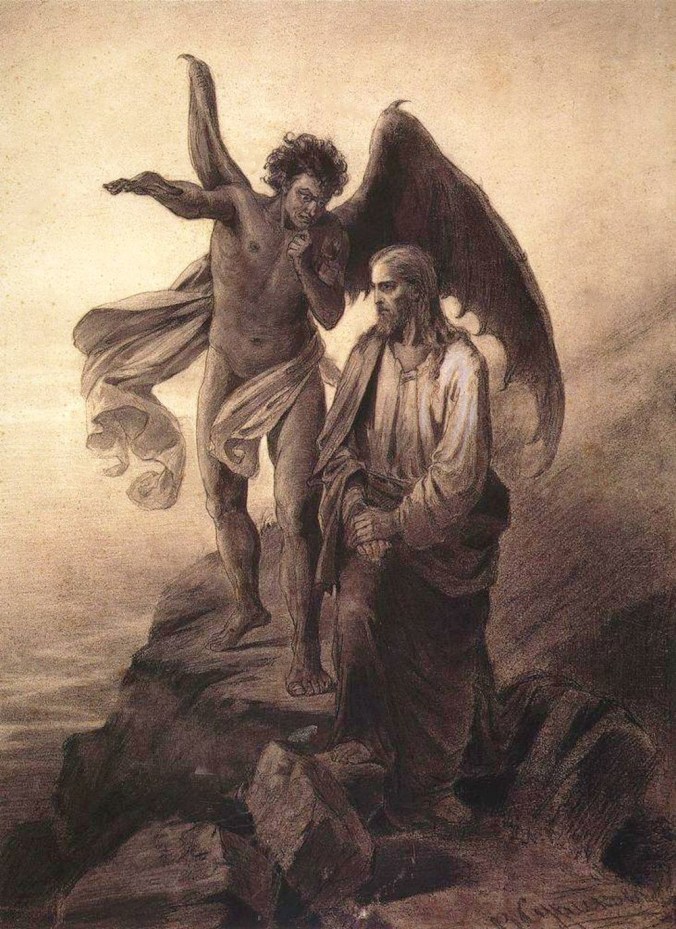
4:3 The tempter [emphasizes a function of the devil] came to him and said, “If [does not express doubt; first class condition in Greek construction: the reality of a condition affirmed from viewpoint of the speaker; can be translated “since”] you are the Son of God [same title for Jesus used at His baptism (cf. Matt. 3:17)], tell these stones to become bread.”

4:4 Jesus answered [cf. Deut. 8:3], “It is [stands] written: ‘Man does not live on bread alone [people do need bread or physical nourishment; cf. Matt. 6:11], but [cannot depend solely on own resources; people have greater need for spiritual nourishment] on every word that comes from the mouth of God.’”

4:5 Then the devil took [to lead] him to the holy city [Jerusalem] and had him stand on the highest point [pinnacle or summit; portico on southeast corner of temple complex; about 450 feet high] of the temple.

4:6 “If [since] you are the Son of God,” he said, “throw yourself down [temptation to misuse/abuse power available to Him; a presumptuous act rather than a great act of faith]. For it is written [devil quoted but twisted the meaning of Ps. 91:11-12 to suit his purposes; this passage not a license to abuse God’s power to satisfy a personal whim]: “‘He will command his angels [messengers] concerning you, and they will lift you up in their hands, so that you will not strike your foot against a stone [a spectacular rescue would have impressed the masses].’”

4:7 Jesus answered him [cf. Deut. 6:16], “It is also written: ‘Do not put the Lord your God to the test [to put on a decisive test].’”

4:8 Again, the devil took him to a very high mountain and showed him all the kingdoms of the world and their splendor [brightness, glory].

4:9 “All this I [cf. Jn. 12:31; 1 Jn. 5:19] will give you [resulting in instant power, authority, wealth apart from the suffering of the cross],” he said, “if [condition] you will bow down and worship me.”

4:10 Jesus said [cf. Deut. 6:13] to him, “Away from me, Satan [adversary]! For it is written: ‘Worship the Lord your God, and serve him only.’”

4:11 Then the devil left him [“until an opportune time” (Lk. 4:13); Satan continued to tempt Jesus (cf. Matt. 16:23; 26:36-46)], and angels [Ps. 103:20-21] came and attended him.

Matthew 4:18-20

4:18 As Jesus was walking beside the Sea of Galilee, he saw two brothers, Simon called Peter [cf. Jn. 1:42] and his brother Andrew. They were casting a net [two kinds of nets used by fishermen: a circular casting net (used while standing in the water) and a dragnet (used from a boat)] into the lake, for they were fishermen [commercial fishermen who earned their living by selling their catch].

4:19 “Come [a decisive summons; not a suggestion but a command requiring movement; Jesus initiates the relationship], follow me [literally “come behind Me”; attach your life to Mine; adopt My direction, submit to My authority, conform to My way of life],” Jesus said, “and I will make you [to make, form, fashion intentionally over time; implying process, shaping, and transformation rather than instant promotion; indicates that Jesus Himself would equip them for the work to which He was calling them; Jesus cannot make or form you into anything apart from a commitment to follow Him; the journey toward the realization of our fullest potential begins when we follow Him] fishers of men [a redeemed vocation; Jesus used the figure of their old work to describe their new calling; instead of dragging the Sea of Galilee for fish these men would now cast their nets into “the sea of sin” to “rescue the perishing”].”

4:20 At once [their response was immediate] they left their nets [represented their livelihood and security] and followed him [and by so doing their lives took on an eternal dimension; instead of making a living, they would now be making a life].

Matthew 2

Matthew 2:1-23

2:1 After Jesus was born in Bethlehem in Judea, during the time of King Herod, Magi [person or Babylonian priest or “wiseman” acquainted with the interpretation of stars and dreams as well as with other things; skilled in philosophy, medicine, natural sciences; their number and names are not recorded] from the east [“from the rising” of the sun; the geographical meaning is orient; possibly from Persia, Babylon, or Arabia] came to [arrived; probably had an entourage sufficient enough to be noticeable] Jerusalem

2:2 and asked, “Where is the one who has been born king of the Jews [designation used at start of Jesus’ life]? We saw his star [belief that appearance of a new star heralded birth of king/important person was widespread; some think refers to Balaam’s oracle in Num. 24:17] in the east [likely means the Magi were in the east when they saw the star] and have come [the Magi were so certain about the star and its meaning that they undertook a difficult journey from their homeland to Jerusalem] to worship [to do obeisance to, to prostrate oneself before] him.”

2:3 When King Herod [Herod the Great] heard this he was disturbed [unsettled; stirred up], and all Jerusalem [a troubled Herod meant trouble for others; Herod made life difficult for everybody when things were not going his way] with him.

2:4 When he had called together all the people’s chief priests and teachers of the law [scribes: copied the Scriptures and taught others how to interpret and apply them], he asked [inquired repeatedly] them where the Christ [seen as same person as king of the Jews] was to be born.

2:5 “In Bethlehem [located about five miles from Jerusalem; means “house of bread”; Jesus called Himself the Bread of Life (cf. Jn. 6:35)] in Judea,” they replied, “for this is what the prophet [Micah 5:2] has written:

2:6 “‘But you, Bethlehem, in the land of Judah, are by no means [certainly not] least [small, least in honor] among the rulers of Judah; for [fulfillment of Micah’s prophecy changed Bethlehem to place of honor] out of you will come a ruler who will be the shepherd [implies guidance and pastoral care] of my people Israel [cf. 2 Sam. 5:2 where David called the shepherd of Israel].'”

2:7 Then Herod called the Magi secretly and found out from them the exact [accurate] time the star had appeared.

2:8 He [anxious to get information] sent them to Bethlehem and said, “Go and make a careful [exact] search for the child. As soon as you find him, report to me, so [false intentions] that I too may go and worship him.”

2:9 After they had heard the king, they went on their way, and the star they had seen in the east went ahead [to lead ahead, to lead further, to go before; indicates that the star actually moved] of them until it stopped [took up its position; to stand still] over the place where the child was.

2:10 When they saw the star, they were overjoyed [joy is a mark of true worship].

2:11 On coming to the house [house not the place of Jesus’ birth; Magi did not arrive on night of Jesus’ birth], they saw the child [not same word to indicate an infant] with his mother Mary, and they bowed down [posture indicating humble submission] and worshiped him. Then [after worshiping] they opened their treasures [possibly a treasure chest containing their gifts] and presented him with gifts [the result of worship; gifts fit for a king] of gold and of incense [frankincense: used for medicinal/religious purposes; fragrant and rare spice] and of myrrh [valued as perfume; used in embalming (cf. Jn. 19:39)].

2:12 And having been warned [informed; literally means “receiving an answer” and may imply they had sought God’s counsel] in a dream not to go back to Herod, they returned [used in the sense: to take refuge from danger] to their country [homeland] by another [different] route [way].

2:13 When they [the Magi] had gone, an angel of the Lord appeared to Joseph in a dream [cf. Matt. 1:20-24]. “Get up [suggests urgency],” he said, “take the child and his mother and escape [flee; seek safety in flight] to Egypt [a Roman province, but not under Herod’s jurisdiction; large Jewish population there]. Stay there [perhaps Magi’s gifts helped them survive in Egypt] until I tell you [a promise that God would direct Joseph in future as in past], for Herod [insanely jealous ruler who lived in fear of intrigue and assassination; killed many people he felt were a threat, including his Jewish wife and their two sons] is going to [expresses imminence; to be about to; is on the verge of] search for the child to [purpose] kill [destroy] him.”

2:14 So he got up [urgency suggested; likely departed on the very night he had received God’s warning about Herod’s evil intentions], took the child and his mother during the night and left for Egypt,

2:15 where he stayed until the death of Herod [read Matt. 2:19-23]. And so was fulfilled what the Lord had said through the prophet: “Out of Egypt I called my son [cf. Hos. 11:1 (in original setting, referred to the Jews’ journey out of Egypt under Moses; Matthew saw Jesus’ experience as a later fulfillment of Hosea’s statement)].”

2:16 When Herod realized that he had been outwitted [deceived, tricked, played for a fool] by the Magi, he was furious [very angry; flew into a rage], and he gave orders to kill all the boys in Bethlehem and its vicinity [district around Bethlehem; Herod covered a wide area in attempt to kill Jesus] who were two years old and under, in accordance with the time he had learned from the Magi [cf. Matt. 2:7].

2:17 Then [Matthew saw fulfillment of prophecy in Herod’s actions] what was said through the prophet Jeremiah was fulfilled:

2:18 “A voice [call, cry] is heard in Ramah, weeping and great [much; loud] mourning [lamentation], Rachel weeping for her children and refusing to be comforted, because they are no more.”

2:19 After Herod died [4 BC], an angel of the Lord appeared in a dream [fourth dream in Matthew’s Gospel (see 1:20; 2:12,13); Joseph stayed in Egypt as instructed and until he received further instructions (see 2:13)] to Joseph in Egypt

2:20 and said, “Get up, take the child and his mother and go to the land of Israel, for those [Herod and those under his orders (possibly included Herod’s family members)] who were trying to take the child’s life are dead.”

2:21 So he [Joseph obeyed what God instructed him to do; he trusted God] got up, took the child and his mother and went to the land of Israel.

2:22 But when he heard that Archelaus [the worst of Herod’s son; a violent man who began his reign by slaughtering three thousand influential people] was reigning in Judea in place of his father Herod, he was afraid [because Archelaus had a reputation for being cruel] to go there. Having been warned in a dream, he withdrew to the district of Galilee [this district assigned to Herod Antipas, another of Herod’s sons],

Note: Herod’s kingdom was divided between his three sons. Archelaus received Judea, Samaria, and Idumea. Herod Antipas received Galilee and Perea. Herod Philip II received Traconitis.

2:23 and he went and lived in a town called Nazareth [located about 70 miles north of Bethlehem; Joseph and Mary’s former home (Lk. 1:26,27; 2:4,39); Nazareth is not mentioned in OT]. So was fulfilled what was said through the prophets: “He will be called a Nazarene [sounds like Heb. word (neser) for branch (see Isa. 11:1)].”

Matthew 3

Matthew 3:13-17

3:13 Then Jesus came from Galilee to the Jordan to [word expresses purpose] be baptized [by His own initiative; not a response to John’s call to repentance] by John [only direct encounter between Jesus and John in the Gospels].

3:14 But John tried to deter [prevent] him, saying, “I need to be baptized by you [emphasizes John’s feeling of unworthiness], and do you come to me?”

3:15 Jesus replied, “Let it be so [allow to happen] now; it is proper [appropriate, fitting, suitable, right] for us to do this to fulfill [“to fill out,” as wind fills a sail] all righteousness [righteousness of life through obedience in accordance with God’s will; Jesus wanted to do all that was part of relationship of obedience to God].” Then John consented.

3:16 As soon as [immediately] Jesus was baptized [to dip, plunge, or immerse; signified Jesus’ identification with God’s purpose in the world; Jesus identified with sinners He came to save; formal beginning of His public ministry], he went up out of the water. At that moment heaven was opened, and he [Jesus] saw [visible affirmation of Jesus] the Spirit of God descending like a dove [symbol of the Holy Spirit; symbol of gentleness, meekness, peace] and lighting on him.

3:17 And a voice from heaven [God’s voice] said [verbal affirmation of Jesus], “This is my Son [cf. Ps. 2:7], whom I love [first mention of love in NT (in context of the Father’s love for His Son); cf. Gen. 22:2]; with him I am well pleased [cf. Isa 42:1].”

Matthew 11

Matthew 11:28-30
The Great Invitation


11:28 “Come [means to believe in Jesus] to me [Jesus is accessible], all [inclusive invitation] you who are weary [one who suffers from agonizing toil] and burdened [in this context refers to those burdened with pharisaical legal rules and regulations; cf. Lk. 11:46], and I [Jesus alone] will give you rest [refresh, rejuvenate you; cf. Jer. 31:25; this does not refer to an escape from work or other demands].

11:29 Take [to lift up] my yoke [a symbol of obligation and submission; invitation to become His disciple] upon you and learn from me, for I am [note description of Jesus…] gentle [meek] and humble [lowly] in heart, and you will find [obtain] rest for your souls [or “for yourselves”].

11:30 For my yoke [as opposed to the burdensome yoke of the religious leaders (cf. Acts 15:10)] is easy [or well-fitting; a yoke is designed for two (indicating that Jesus bears the yoke with us)] and my burden [what He requires] is light [cf. 1 Jn. 5:3].”

Matthew 9

Matthew 9:35-38

9:35 Jesus went through all the towns and villages, [1] teaching [the orderly presentation of truth] in their synagogues [local assembly places that promoted Jewish culture and religion], [2] preaching the good news of the kingdom [cf. Mk. 1:15] and [3] healing [miracles of healing authenticated Jesus’ teaching and preaching] every disease and sickness.

9:36 When he saw the crowds, he had compassion [“to have movement in the intestines”; L. com (with) + pati (to suffer); cf. Lk. 15:20] on them, because they were harassed [they were abused by life; weary; despondent] and helpless [thrown off balance by the daily grind; thrown to the ground], like sheep without a shepherd [without a spiritual leader; cf. Isa. 53:6; Matt. 15:32].

Note: What do you see and feel when you see a crowd of people?

9:37 Then he said to his disciples, “The harvest is plentiful but the workers [the disciples] are few.

9:38 Ask the Lord of the harvest [God], therefore, to send out [a strong term meaning “to cast or to thrust out”; go and seek the lost where they are] workers [be willing to be one of those workers] into his harvest field.”

Note: Why are people often reluctant to work in the harvest?

Matthew 14

Matthew 14:25-33

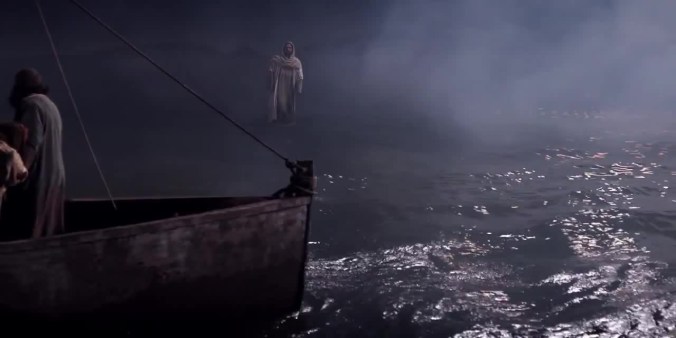
14:25 [this incident happened after the feeding of the 5000 (cf. 14:15-21)] During the fourth watch of the night [between 3:00 AM and 6:00 AM] Jesus went out to them, walking on the lake.

14:26 When the disciples saw him [Jesus] walking on the lake, [1] they were terrified. [2] “It’s a ghost,” they said, and [3] cried out in fear.

14:27 But Jesus immediately said to them [note how Jesus addressed the three fears in 14:26…]: “[1] Take courage [addressed: “they were terrified”]! [2] It is I [addressed: “It’s a ghost”; literally “I am” (cf. Jn. 8:58; 13:19; 18:5)]. [3] Don’t be afraid [addressed” “cried out in fear”].”

14:28 “Lord, if [or “since” it is you (not an expression of doubt)] it’s you,” Peter replied, “tell me to come to you on the water [not an unreasonable request since Jesus was showing that He was master over the ordinary laws of nature].”

14:29 “Come [Jesus honored Peter’s bold request],” he said.

14:30 Then Peter got down out of the boat, walked on the water and came toward Jesus [the Bible does not tell us how far Jesus was from the boat]. But when he [Peter] saw the wind [indicates he had taken his eyes off Jesus], he was afraid [fear replaced faith when Peter took his eyes off Jesus] and, beginning to sink, cried out [it is never wrong to cry out to Jesus], “Lord, save me [indicates Peter believed Jesus had the power to save]!”

14:31 Immediately Jesus reached out his hand and caught him [Jesus did not let Peter sink]. “You of little [Jesus rebuked Peter for having “little” faith but not for having “no” faith] faith [a single Gr. word: “little-faith-one” (cf. Matt. 6:30; 8:26; 14:31; 16:8)],” he said, “why did you doubt [intent of question was to cause Peter to reflect on the lesson Jesus was teaching him]?”

14:32 And when they [Peter either walked back with Jesus or was carried by Him] climbed into the boat, the wind died down.

14:33 Then those who were in the boat worshiped [literally “bowed down”] him, saying, “Truly you are the Son of God [first time disciples made this affirmation in Matthew’s gospel].”

Matthew 16

Matthew 16:13-28

16:13 When Jesus came to the region of Caesarea Philippi [a Gentile region located about 25 miles northeast of the Sea of Galilee], he asked [began to question] his disciples, “Who do people say the Son of Man [this was Jesus’ favorite self description (cf. Dan. 7:13-14); a seldom used title for the Messiah; Jesus filled this title with meaning] is?”

16:14 They replied, “Some say John the Baptist [executed by Herod Antipas who later thought Jesus was John raised from the dead (Matt. 14:1-2)]; others say Elijah; and still others, Jeremiah or one of the prophets [term falls short of who Jesus is].

16:15 “But what about you?” he asked. “Who do you say I am?”

16:16 Simon Peter answered [first clear confession of faith by disciples in Matthew’s Gospel], “You are the [use of the article defines Christ as the one promised in the OT] Christ [the Messiah, the anointed one], the Son of [Jesus had a unique relationship with the Father] the living God.”

16:17 Jesus replied, “Blessed [one to whom the Lord has shown favor] are you, Simon son of Jonah [like Peter, our origins are of the earth (“son of Jonah”) while Christ’s is of heaven (“Son of the living God,” v. 16)], for this was not revealed [to unveil] to you by man [result of human insight], but by my Father [indicates divine revelation] in heaven.

16:18 And I tell you that you are Peter [a small piece of rock], and on this rock I will build my [indicates that the church belongs to Jesus] church [first use of the word “church” in the Gospels; usage here refers to all God’s people rather than a local congregation of believers; a spiritual building made up of people of faith (1 Pet. 2:1-9)], and the gates of Hades [the underworld] will not overcome [to overpower, to gain mastery over] it.

16:19 I will give you the keys [“represent the responsibility of the church to provide opportunities for people to hear and respond to the good news” (R.J. Dean); the knowledge of the gospel] of the kingdom of heaven [the rule and reign of God]; whatever you bind on earth will be [“shall have been”] bound in heaven, and whatever you loose on earth will be loosed in heaven.”

16:20 Then he warned [to order, to instruct, to seriously warn] his disciples not [until they fully comprehended His mission] to tell anyone that he was the Christ [many Jews expecting an earthly Messiah different than the kind of Messiah Jesus was (v. 21)].

16:21 From that time on [indicates a new stage in the self-revelation of Jesus had now been reached (Tasker)] Jesus began to explain [Jesus explained what kind of Messiah He was] to his disciples that he must [refers to a moral necessity] go to Jerusalem and suffer many things at the hands of [the following groups made up the Sanhedrin which later condemned and sent Jesus to Pilate to be crucified] the elders, chief priests and teachers of the law, and that he must be killed and on the third day be raised to life [cf. 1 Cor. 15:3-4].

16:22 Peter [still shared the false notion about an earthly Messiah; indicates disciples did not fully comprehend nature of Jesus’ mission as the Messiah] took him aside and began to rebuke him. “Never, Lord! [or “God forbid it, Lord!”]” he said [an emotional response]. “This shall never happen to you!”

16:23 Jesus turned and said to Peter, “Get [get away from] behind me, Satan! You are a stumbling block [Gr. skandalon] to me; you do not have in mind [to be intent on] the things of God, but the things of men [Peter guilty of thinking like people of the world; any attempt to dissuade Jesus from His mission meant cooperation with Satan].”

16:24 Then Jesus said to his disciples, “If anyone would come after [follow] me, he must deny [in wholly unselfish manner; put God’s will before our own desires and wishes; means more than denying something for yourself] himself and take up his cross [means death to self and submission to God’s will; disciples familiar with this Roman practice of execution; Luke 9:23 adds “daily”] and follow [to follow like a disciple] me.

16:25 [a paradox] For whoever wants to save his life will lose it, but whoever loses his life for me [key words (“for me”) challenge us to consider to what or to whom we are giving our lives; for Christ’s sake] will find it.

16:26 What good [profit] will it be for a man if he gains [to win, to make a profit] the whole world, yet forfeits [to suffer loss, to suffer confiscation] his soul? Or what can a man give in exchange for his soul?

16:27 For the Son of Man is going to come [“with rewards for those who gave their lives to and for Him and with judgment on those who refused to surrender their lives to Him” (Advanced Bible Study)] in his Father’s glory with his angels, and then he will reward [to give back, to repay] each person according to what he has done [deed, conduct, the sum of one’s doings including that self-denial, adherence to their faith and confession (Meyer)].

16:28 I tell you the truth, some who are standing here will not taste death before they see the Son of Man coming [possible meanings: the transfiguration (see Matt. 17:1-13), the resurrection, coming of the Spirit at Pentecost, the fall of Jerusalem] in his kingdom.”

Matthew 17

Matthew 17:1-13

17:1 After six days [after Peter’s confession at Caesarea Philippi (Matt. 16:13-20); synoptic gospel writers do not tell us what happened during those six days] Jesus took with him [Jesus’ inner circle of disciples] Peter, James and John [nicknamed “Sons of Thunder” (Mk. 3:17)] the brother of James [first disciple to be martyred (Acts 12:2)], and led them up a high mountain [exact site not identified; possibilities include Mount Tabor, Mount Hermon, and Mount Meron] by themselves [privately].

17:2 There he [Luke 9:29 says Jesus was praying] was transfigured [Gr. metamorphoomai: to transform or to change in form, in this case an instant metamorphosis; allowed Peter, James, and John to glimpse His eternal glory] before them [this experience reinforced the truth Jesus had revealed at Caesarea Philippi (Matt. 16:21-28); Luke 9:32 says the disciples were sleepy and then became fully awake]. His face shone [to gleam] like the sun, and his clothes became as white [symbol of purity] as the light.

17:3 Just then there appeared before them Moses [represented the Law] and Elijah [represented the prophets; cf. Matt. 5:17; Heb. 1:2], talking [according to Luke 9:31, “They spoke about His departure (term means “exodus”), which He was about to bring to fulfillment at Jerusalem.”] with Jesus.

17:4 Peter [emotional; could not restrain feelings] said [read Mk. 9:6 and Lk. 9:33] to Jesus, “Lord, it is good for us to be here [Peter wanted to prolong the experience on the mountain (but they were needed in the valley: cf. Matt. 17:14-16)]. If you wish, I will put up three shelters [temporary shelters made of branches such as the ones erected during the Feast of Tabernacles (cf. Lev. 23:42-43)] — one for you, one for Moses and one for Elijah.”

17:5 While he [Peter] was still speaking, a bright cloud [in OT often represented/signified God’s presence among His people (cf. Ex. 13:21-22; 24:15-18; 1 Kings 8:10)] enveloped them [Jesus, Moses, and Elijah], and a voice from the cloud said [God interrupted Peter; words spoken for benefit of Peter, James, and John], “This is my Son, whom I love; with him I am well pleased [same message spoken at Jesus’ baptism (Matt. 3:17); cf. Ps. 2:7 and Isa. 42:1]. Listen [command; implies obedience; must stop talking in order to listen] to him!”

17:6 When the disciples heard this, they fell facedown [probably more because of fear than reverence] to the ground, terrified [literally “very much afraid”].

17:7 But Jesus came and touched [reassurance] them. “Get up,” he said. “Don’t [stop action in progress] be afraid. [Jesus reassured His disciples through His touch and His words]

17:8 When they looked up, they saw no one except Jesus [Gr: “they saw no one except Jesus alone”].

17:9 As they were coming down the mountain, Jesus instructed them, “Don’t tell anyone what you have seen [the last of these prohibitions in Matthew (cf. 8:4; 9:30; 12:16; 16:20)], until the Son of Man has been raised from the dead [at that time the prohibition would be lifted and the disciples would be able to speak from the perspective of Jesus’ death, burial, and resurrection].” [Peter later wrote of what he had witnessed: 2 Pet. 1:16-18]

17:10 The disciples asked [firmly believed Jesus was the Messiah] him, “Why then do the teachers of the law say that Elijah must come first? [cf. Mal. 4:5-6]

17:11 Jesus replied, “To be sure, Elijah comes and will restore all things.

17:12 But I tell you, Elijah has already come [prophecy about Elijah fulfilled in ministry of John the Baptist, an Elijah-type figure (cf. Matt. 11:7-14; Lk. 1:17)], and they did not recognize him, but have done to him everything they wished [cf. Matt. 14:1-12 re: death of John the Baptist]. In the same way [like the forerunner who was rejected and executed] the Son of Man is going to suffer at their [religious and political leaders] hands.”

17:13 Then the disciples understood [to comprehend] that he was talking to them about John the Baptist.

Matthew 19

Matthew 19:3-9

19:3 Some Pharisees [an influential religious sect among Judaism; means “separated ones”] came [with an ulterior motive] to Him to test [tempt or trap rather than to seek spiritual guidance; wanted Jesus to take a side (Hillel or Shammai) on a controversial topic; Pharisees regarded marriage as a transaction rather than a covenant and viewed divorce as a legal rather than a spiritual issue] Him. They asked, “Is it lawful [allowed] for a man to divorce [release] his wife for any and every reason [read Deuteronomy 24:1-4 re “something indecent” as a cause for divorce; followers of Rabbi Hillel interpreted this to mean anything that displeased the husband; followers of Rabbi Shammai interpreted this to refer only to adultery]?”

Note: Verses 4-6 record Jesus response concerning God’s design for marriage.

19:4 “Haven’t you read [see Gen. 1:27; 2:24],” He replied, “that at the beginning [before the Deuteronomy 24:1 account] the Creator ‘made [to complement and complete one another] them [God made men and women in His image; the wife is not property but a partner] male and female [only two genders; no room for same-sex marriage interpretation],’

19:5 and said [see Gen. 2:24], `For this reason a man [and woman] will leave [in order to give priority to his wife] his father and mother and be united [permanently glued or adhered] to his wife [spiritually, emotionally, bodily], and the two will become one flesh [an indissoluble union; physical intimacy and more]‘?

19:6 So [therefore: draws a conclusion from the preceding] they are no longer two, but one. Therefore [because God has not changed His intention for marriage] what God has joined [yoked] together [for a lifetime], let man [a third party] not separate [affirms God’s intention that marriage be a permanent union between one man and one woman for life].”

19:7 “Why then [if God’s intention is for marriage to be permanent as per vv. 4-6],” they asked, “did Moses command [see Deut. 24:1; not actually a command but an attempt to regulate what was occurring] that a man give his wife a certificate of divorce [see Matt. 5:31; enabled woman to seek another marriage] and send her away?”

Note: Jews debated meaning of “something indecent” in Deuteronomy 24:1. Rabbinical school of Shammai interpreted phrase to mean “sexual unfaithfulness.” School of Hillel said that a wife burning her husband’s food was “something indecent.” Hillel’s interpretation was popular in Jesus’ day.

19:8 Jesus replied, “Moses permitted [not required] you to divorce your wives because your hearts were hard [unwilling to repent, forgive, and reconcile]. But it was not this way from the beginning [God’s original intention was for marriage to be permanent; see also Malachi 2:16 concerning divorce].

19:9 I tell you that anyone who divorces [unjustifiably] his wife [including out of lust for another woman], except for [on the basis of] marital unfaithfulness [Gr. porneia: any form of sexual immorality; every kind of unlawful sexual intercourse; adultery puts personal pleasure above commitment and integrity; see also Matt. 5:32 and 19:9; 1 Cor. 7:15], and marries another woman commits adultery [against the first spouse].”

Matthew 19:16-30

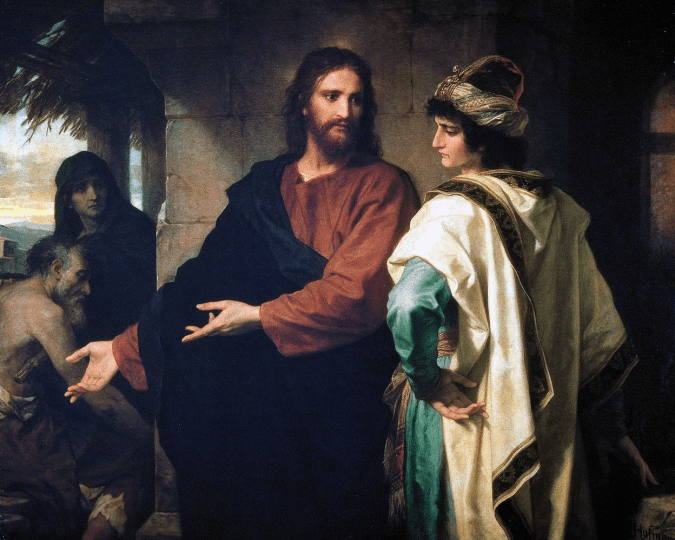
19:16 Now a man [rich (Mk. 10:22), young (Matt. 19:22), ruler (Lk. 18:18)] came up [eagerness, earnestness] to Jesus and asked [man believed Jesus could answer his question], “Teacher, what good thing must I do [man believed goodness defined by human achievement and that salvation must be earned] to get eternal life [life’s most important issue; cf. Jn. 17:3 re: Jesus’ definition of eternal life; man recognized that something was missing from his life – he did not have the assurance that he had eternal life]?”

19:17 “Why do you ask me about what is good [Jesus was not denying His own goodness and deity; wanted to know if the man was trying to flatter Him or really understood that God is the source of goodness]?” Jesus replied. “There is only One who is good. If you want to enter life, obey the commandments.”

19:18 “Which ones?” the man inquired.

19:19 Jesus replied [cf. Ex. 20; Deut. 5; Jesus cited the last six commandments], ” ‘Do not murder, do not commit adultery, do not steal [to rob, to deprive, holding back wages of one hired], do not give false testimony, honor your father and mother,’ and ‘love your neighbor as yourself.'”

19:20 “All these I have kept [indication of spiritual pride or ignorance; man sincerely felt he had obeyed outward demands of the law but had obviously not heard Jesus’ inward interpretation of some of the commandments (Matt. 5:21-48); perhaps he thought so because he was comparing himself with others],” the young man said. “What do I still lack?”

19:21 Jesus answered, “If you want to be perfect, go, sell your possessions and give to the poor [the man was trusting in his possessions as his basis for securing eternal life; the man’s riches were a barrier between himself and God; wealth occupied place in his life that belonged to God (violation of first commandment)], and you will have treasure in heaven. Then come, follow [follow as a disciple] me.”

19:22 When the young man heard this [the man faced the most important decision of his life], he went away sad [grieving and sorrowful], because he had great wealth [his gold remained his god; his possessions possessed him].

19:23 Then Jesus said [Jesus took advantage of this teachable moment] to his disciples, “I tell you the truth, it is hard [because wealth breeds self-sufficiency] for a rich [word often means things or possessions: property, wealth, means] man to enter the kingdom of heaven [the rule and reign of God in the heart of an individual].

Note: Other rich men who missed eternal life…
• man preoccupied with wealth Lk. 12:16-21
• man indifferent to God & needy Lk. 16:19-31

19:24 [exaggerated illustration to make a point (hyperbole)] Again I tell you, it is easier for a camel [the largest animal known to those who heard Jesus’ words] to go through the eye of a needle [Luke used word for surgical needle in Lk. 18:25] than for a rich man [perhaps because material wealth can make people blind to their spiritual needs] to enter the kingdom of God.”

19:25 When the disciples heard this, they were greatly astonished [to be overwhelmed; perhaps because many viewed wealth as a sign of God’s favor] and asked, “Who then can be saved [to rescue from a deadly plight]?

19:26 Jesus looked at them and said, “With man this [refers to entering the kingdom] is impossible [human achievement cannot qualify anyone for eternal life], but with God [salvation is a divine accomplishment] all things are possible.”

19:27 Peter answered him, “We have left everything to follow you [implication is that they had done what the rich, young ruler had refused to do]! What then will there be for us?”

Note: The cost of following Christ…
• Peter & Andrew left fishing business
• James & John left fishing business / father
• Matthew left job as tax collector

19:28 Jesus said to them, “I tell you the truth, at the renewal of all things, when the Son of Man sits on his glorious throne, you who have followed me will also sit on twelve thrones, judging the twelve tribes of Israel.

19:29 And everyone who has left [note precious things listed, a reminder that it costs to follow Jesus…] houses or brothers or sisters or father or mother or children or fields for my sake will receive a hundred times as much [not a promise of material riches; some rewards may be material in nature, but greater rewards are spiritual] and will inherit eternal life.

19:30 [cf. Matt. 20:16; Mk. 9:35] But many who are first [for example, the rich] will be last [impoverished], and many who are last [according to the world’s standards] will be first [in Christ’s kingdom].

Matthew 20

Matthew 20:20-28 [cf. Mark 10:35-45]

20:20 Then the mother [Salome (the sister of Mary the mother of Jesus); cf. Matt. 27:56; Mk. 16:1; Jn. 19:25] of Zebedee’s sons [James and John] came to Jesus with her sons and, kneeling down [sign of respect and submission (although her heart seemed filled with ambition)], asked a favor of him.

20:21 “What is it you want?” he asked. She said, “Grant that one of these two sons of mine may sit [request that her sons sit in the places of honor, recognition, prestige] at your right and the other at your left in your kingdom [her question indicates she thought Jesus was going to Jerusalem to defeat Rome and establish a political kingdom].”

20:22 “You don’t know what you are asking,” Jesus said to them [Jesus responded to the brothers who likely had their mother make the appeal in their behalf]. “Can you drink [to accept the suffering] the cup [figure of speech for suffering] I am going to drink? [cf. Matt. 26:39]” “We can,” they answered [response indicates they were self-confident and ignorant of the nature of Jesus’ kingdom].

20:23 Jesus said to them, “You will indeed drink from my cup [James would be beheaded (Acts 12:2) and John exiled on Patmos (Rev. 1:9)], but to sit at my right or left is not for me to grant. These places belong to those for whom they have been prepared by my Father.”

20:24 When the ten [they had not been present during the discussion] heard about this, they were indignant [may indicate they were jealous] with the two brothers.

20:25 Jesus called them together and said [reminded them of how the Gentiles looked at greatness], “You know that the rulers of the Gentiles lord it over [dominate] them [the people], and their high officials exercise authority over them.

20:26 Not so with you [Jesus’ followers must not operate according to worldly standards and values]. Instead, whoever wants to become great among you must be your servant [typically was considered an underling],

20:27 and whoever wants to be first must be your slave [Gr. “doulos” referred to one who was the property of his master and who had no personal rights]

20:28 just as the Son of Man [a messianic title Jesus often used to describe Himself] did not come to be served, but to serve, and to give his life [the supreme gift] as a ransom [a price paid for the freedom or deliverance of a slave or a captive; cf. 2 Cor. 5:19] for many.”