Matthew 7

Matthew 7:1-5

7:1 “Do not judge [the kind of judgmental attitude that destroys others in order to build up oneself; self-righteous, unjust criticism; this is not a prohibition against critical thinking], or you too will be judged.

7:2 For in the same way you judge others, you will be judged, and with the measure you use, it will be measured to you [a negative application of the Golden Rule—“Do not do to others (in this case, judge harshly) what you would not have them do to you.”].

7:3 [example of hypocritical judging…] “Why do you look [to stare or gaze] at the speck [splinter; represents the lesser] of sawdust in your brother’s eye [it is easy to spot sin in others, however small] and pay no attention to the plank [log or beam; represents the greater] in your own eye?

7:4 How can you say to your brother, ‘Let me take the speck [represents minor fault] out of your eye,’ when all the time there is a plank [represents major fault] in your own eye?

7:5 You hypocrite [actors who pretend to be holier than they actually are and holier than those they condemn], first take the plank out of your own eye, and then you will see clearly to remove the speck from your brother’s eye.

Matthew 7:13-29

7:13 “Enter through the narrow [“strait” (KJV)] gate [a way to enter into a place]. For wide is the gate and broad is the road that leads to destruction [Gr. apoleian; spiritual death; to hell itself; cf. Rev. 9:11 re: Apollyon which means Destroyer and is another name for Satan], and many enter through it [because it is easy to find and easy to follow].

7:14 But small is the gate and narrow [from Gr. verb thlibo which means to experience trouble or difficulty; road of discipleship is often difficult road to travel] the road that [the narrow way alone] leads to life [salvation; eternal life], and only a few [a small number] find it [cf. Lk. 13:24].

Note: Read the following verses for more on two paths: Deuteronomy 30:19; Psalm 1:1-2; Jeremiah 21:8.

7:15 “Watch out for false prophets [Gr. pseudopropheton or pseudo prophets who claimed to have a word from God but taught error and were motivated by self-interests (such as wealth, power, recognition); posed as members of the Christian community; cf. Matt. 24:24; their teaching did not include teaching of Matt. 7:13-14]. They come to you in sheep’s clothing [try to pass for true prophets by looking and talking like sheep], but inwardly they are ferocious wolves [cf. Acts 20:29-30].

Note: Do the math.
False prophets always…
• Subtract from Christ
• Add to salvation
• Divide the church

7:16 [instructions on how to be discerning…] By their fruit [metaphor for character and conduct; what they produce] you will recognize them. Do people pick grapes from thornbushes, or figs from thistles?

7:17 Likewise every good [healthy] tree bears good fruit, but a bad [unhealthy] tree bears bad fruit [one way to recognize false prophets is by what they produce].

7:18 A good tree cannot bear bad fruit, and a bad tree cannot bear good fruit.

7:19 Every tree [read Deut. 13:1-5; 18:14-22 re: fate of false prophets] that does not bear good fruit is cut down and thrown into the fire [final judgment of false prophets].

7:20 Thus, by their fruit [claims must be backed up by results] you will recognize them.

7:21 “Not everyone who says to me, ‘Lord, Lord,’ will enter the kingdom of heaven, but only he who does the will of my Father [these words imply a relationship with God] who is in heaven.

7:22 Many [those who were religious but had no relationship with Jesus] will say to me [note role of Jesus in the judgment] on that day [judgment day at the end of the age], ‘Lord, Lord, [notice what false prophets are able to do…] did we not prophesy in your name, and in your name drive out demons and perform many miracles [cf. Mk. 13:22; 2 Thess. 2:9]?’

7:23 Then I will tell them plainly, ‘I never knew you [those who had no personal relationship with Christ]. Away from me, you evildoers!’

7:24 “Therefore [conclusion of the Sermon on the Mount] everyone who hears these words of mine and puts them into practice is like a wise [refers to practical rather than philosophical wisdom; common sense] man who built his house on the rock [legitimate commitment].

7:25 The rain came [not a matter of if but when] down, the streams rose, and the winds blew and beat against that house; yet it did not fall, because it had its foundation on the rock.

7:26 But everyone who hears these words of mine and does not put them into practice is like a foolish [stupid; moron; unreflecting] man who built his house on sand [provided good shelter in good weather].

7:27 The rain [often a crisis makes evident the difference in how something is built] came down, the streams rose, and the winds blew and beat against that house, and it fell with a great crash.”

7:28 When Jesus had finished saying these things [His teaching on discipleship], the crowds were amazed [astonished or astounded] at his teaching,

7:29 because he taught as one who had authority, and not as their teachers of the law [the scribes; called “lawyers” in some translations].
Matthew 8

Matthew 8:1-13

8:1 When he came down from the mountainside [after the Sermon on the Mount (Matt. 5:1–7:29)], large crowds followed him.

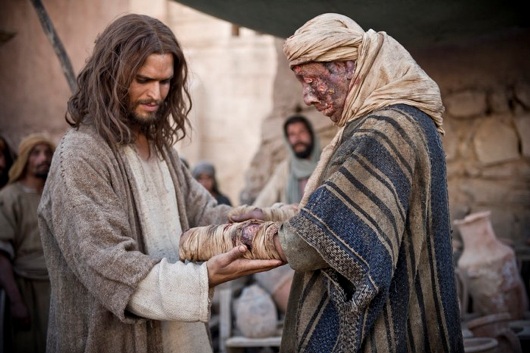
8:2 A man with leprosy [cf. Lev. 13-14 re: instructions about skin diseases; lepers were required to keep a certain distance from others (they had to call out “unclean” to warn others of their approach as per Lev. 13:45) and prohibited from participation in social and religious activities] came and knelt before him and said, “Lord, if you are willing [the leper believed that Jesus could heal him], you can make me clean [cleansing meant that this man would be restored to his family and could again participate in the social and religious life of his town].”

8:3 Jesus reached out his hand and touched [Jewish law prohibited touching lepers (Lev. 5:3; 13:1-46; Num. 5:2); possible that no one had touched this man in years; Jesus moved in the direction of people in need] the man. “I am willing,” he said. “Be clean!” Immediately he was cured of his leprosy [indicates complete restoration of health rather than just a remission; healing lepers a sign of Messiah’s arrival (Matt. 11:5)].

8:4 Then Jesus said to him, “See that you don’t tell anyone [lest doing so create a hindrance to Jesus’ ministry and cause others to seek Jesus for the wrong reasons]. But go, show yourself to the priest [as per instructions in Lev. 14] and offer the gift [Lev. 14:2-32] Moses commanded, as a testimony to them [to those who witnessed the healing and to the priest].”

8:5 When Jesus had entered Capernaum [large city located on northwestern shore of Sea of Galilee], a centurion [Roman military office in charge of 100 men] came to him, asking for help.

8:6 “Lord,” he said, “my servant [“whom his master valued highly” (Lk. 7:2)] lies at home paralyzed and in terrible suffering.”

8:7 Jesus said to him [Jesus affirmed His willingness to help…], “I will go and heal him.”

8:8 The centurion replied, “Lord [shows centurion’s respect for Jesus], I do not deserve to have you come under my roof. But just say the word [shows centurion’s unconditional trust in Jesus; Jesus did not need medicines or rituals or even to be present in order to heal], and my servant will be healed.

8:9 For I myself am a man under authority [centurion understood what it meant to obey others as well as to be obeyed by those under his command], with soldiers under me. I tell this one [Roman soldiers were trained to obey orders unquestioningly], ‘Go,’ and he goes; and that one, ‘Come,’ and he comes. I say to my servant, ‘Do this,’ and he does it.”

8:10 When Jesus heard this, he was astonished [cf. Mk. 6:6 where Jesus was “amazed” at the lack of faith of the Jews] and said to those following him, “I tell you the truth, I have not found anyone in Israel with such great faith [cf. the “great faith” of the Canaanite woman whose daughter Jesus delivered from demon-possession (at a distance as in the case of the centurion’s servant); cf. Jn. 4:46-54 re: Jesus healing the son of a royal official at a distance].

8:11 I say to you that many [not limited by geographic, ethnic, cultural, racial, or national considerations; Jews and Gentiles] will come from the east and the west [beyond the borders of Israel], and will take their places at the feast [banquet table of God’s Messiah (cf. Isa. 25:6-9 re: imagery of such a celebration)] with [note patriarchs of the Hebrew people…] Abraham, Isaac and Jacob in the kingdom of heaven.

8:12 But the subjects [or sons] of the kingdom [a common self-identifying idiom for the Jews’ belief that they were part of God’s covenant by birth] will be thrown outside [Jesus emphasized that salvation was not a matter of birthright but a right-birth—being born-again (Jn. 3:7)], into [note description of hell…] the darkness, where there will be weeping and gnashing of teeth [this phrase occurs six times in Matthew’s gospel (cf. 13:42,50; 22:13; 24:51; 25:30)].”

8:13 Then Jesus said to the centurion, “Go! It will be done just as you believed it would.” And his servant was healed [Jesus exercised authority over disease] at that very hour [at the precise moment Jesus spoke these words].

Matthew 5

Matthew 5:1-16

5:1 Now when he saw the crowds, he went up on a mountainside [allowed Him to speak to many people without a public address system] and sat down [rabbis typically sat down to teach]. His disciples [the Twelve; Gr. mathetai means pupil or learner, thus also suggesting all believers present on that day] came to him,

5:2 and he began to teach them, saying [the following beatitudes (Latin word beatitudo means “a state of blessedness”) describe how Christ’s followers should live]:

5:3 “Blessed [Gr. makarioi means more than happiness; word refers to inner peace and security regardless of external circumstances] are the poor [Gr. ptochoi means absolute or abject poverty as opposed to Gr. word penes which refers to someone who works to provide for his needs but has nothing left over] in spirit [indicates that Jesus was not talking about those who lack material possessions but rather those aware of their own spiritual poverty and who trust entirely in God’s mercy and help; cf. Lk. 18:11-13], for theirs is the kingdom of heaven [the poor in spirit allow Jesus to be their King].

5:4 Blessed are those who mourn [Gr. penthountes is strongest word for mourning; those who mourn for their own sins (what their sins have done to them and to God); those who mourn as a result of suffering], for they will be comforted [cf. Isa. 61:2; Latin cum fortis means to give strength or power to someone; cf. Rev. 21:4; Gr. paraklethesontai].

5:5 Blessed are the meek [or gentle; this word occurs three other times in NT (cf. Matt. 11:29; 21:5; 1 Pet. 3:4); do not think too little or too highly of themselves; those who are self-controlled and disciplined; power under control], for they will inherit the earth [cf. Rev. 21–22 re: new heaven and new earth].

Note: Someone wisely said, “If you think it is weak to be meek, then try being meek for a week.”

5:6 Blessed are those who hunger and thirst [these are our most demanding appetites; to have an intense longing] for righteousness [personal righteousness (pleasing God by living a life of obedience; the defeat of sin in their own lives); righteousness for the world (the defeat of sin in the world); to be righteous, do what is right, and see right done], for they will be filled [spiritually satisfied].

5:7 Blessed are the merciful [Gr. eleemon means active pity; those who are kind, sympathetic, understanding, and who are grieved by the pain of others; do what they can to help others who are in pain], for they will be shown mercy.

5:8 Blessed are the pure [means unmixed, unadulterated, without alloy] in heart [integrity and sincerity of heart; a heart with unmixed motives], for they will see God [spiritually in this world (cf. 1 Cor. 2:12-14) and face-to-face in eternity (cf. Rev. 22:4)].

5:9 Blessed are the peacemakers [those who promote peace and help to quiet strife; bridge builders], for they will be called sons of God.

5:10 Blessed are those who are persecuted because of righteousness [cf. 1 Pet. 2:20; 3:13-14; 4:12-19], for theirs is the kingdom of heaven.

5:11 “Blessed are you when people insult you, persecute you and falsely say all kinds of evil [false reports] against you because of me [cf. Matt. 10:18; 24:9; Jn. 15:20; 16:2].

5:12 Rejoice and be glad [or exult], because great is your reward in heaven, for in the same way they persecuted the prophets [e.g., Elijah (1 Kings 19:2,13-14); Micaiah (1 Kings 22:26-27); Jeremiah (Jer. 37:17; 38:6)] who were before you [cf. Parable of the Tenants in Matt. 21:33-46].

5:13 “You are the salt [a seasoning; preservative: prevents and retards decay, combats deterioration; believers are to combat moral and spiritual decay, but can only do so if they retain their virtue] of the earth. But if the salt loses its saltiness [tasteless, insipid, inability to fulfill its purpose], how can it be made salty again? It is no longer good for anything, except to be thrown out and trampled [to tread down] by men.

5:14 “You are the light [dispels darkness; light enables others to see what they otherwise would be unable to see; those who possess the light are to transmit the light; Christ is the true “light of the world” (Jn. 8:12); believers cannot shine apart from Christ] of the world. A city on a hill [visible location] cannot be hidden.

5:15 Neither do people light a lamp [small oil-filled lamps used to illuminate home] and put it under a bowl. Instead they put it on its stand, and it gives light to everyone in the house.

5:16 In the same way, let your light [good deeds; cf. Prov. 3:3-4] shine before men, that they may see your good deeds [conduct; everything we are/do should reflect the mind and will of God] and [to the end that] praise your Father in heaven.

Matthew 5:21-22

5:21 “You have heard that it was said [by interpreters of the law] to the people long ago [earlier generations], ‘Do not murder [Ex. 20:13], and anyone who murders will be subject to [to be liable] judgment.’

5:22 But I tell you [this phrase underscored the authority of Jesus over the interpretation of the law; Jesus expanded limited interpretation; Jesus traced the deed to the underlying evil disposition of the heart] that anyone who is angry [kind of anger that devalues human worth; anger is the seed of murder] with his brother [cf. 1 Jn. 3:15; Matt. 5:23-24; Eph. 4:26-27] will be subject to judgment. Again, anyone who says [illustration of name calling that belittles others] to his brother [not to be seen as limited to male siblings], ‘Raca [Aramaic derogatory expression; term of extreme contempt for a person’s head (“you idiot / moron / empty head / blockhead”)],’ is answerable to the Sanhedrin. But anyone who says, ‘You fool [Gr. moreh: English term “moron” derived from this word; expresses contempt for a person’s heart/character (“you scoundrel”)]!’ will be in danger of the fire of hell [eternal judgment; Gr. gehenna: the city dump of Jerusalem, a picture of the final place of judgment for the wicked].

Matthew 5:27-28

5:27 “You have heard that it was said, ‘Do not commit adultery [Ex. 20:14; sex outside of marriage].’

5:28 But I tell you that anyone who looks [to gaze, to stare] at a woman lustfully [desire to have illicit sexual relations with another; attitude leads to action; this commandment (7th) must be interpreted in light of the 10th commandment, “You shall not covet your neighbor’s wife.” (Ex. 20:17)] has already committed adultery with her in his heart.

Matthew 5:43-45

5:43 “You have heard that it was said, ‘Love your neighbor [Lev. 19:18] and [what follows is not included in OT reference] hate your enemy.’

5:44 But I tell you: Love your enemies [this statement must have startled Jesus’ audience; cf. Lk. 10:25-17] and pray [tap into source of strength that can help you love difficult people] for those who persecute you,

5:45 that [in order that] you may be sons of your Father in heaven. He causes his sun to rise on the evil and the good, and sends rain on the righteous and the unrighteous.

Matthew 4

Matthew 4:1-11

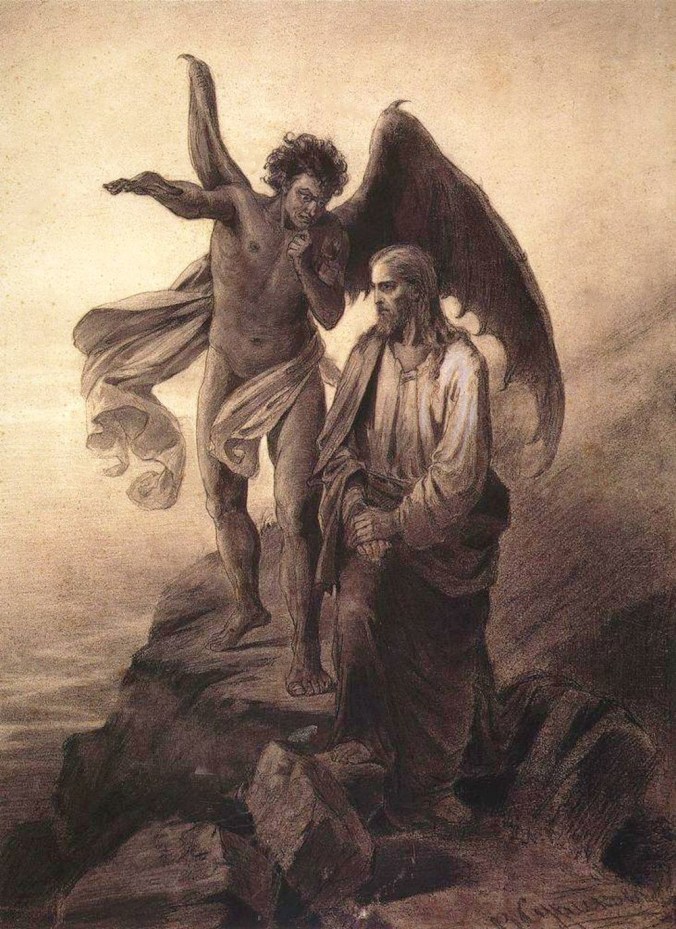
4:1 Then [immediately (Mark 1:12) following His baptism; after the heavens opened, the Spirit descended, and the Father affirmed His identity — divine approval was followed by divine testing] Jesus was led [not driven by accident; intentionally brought, guided with purpose; the wilderness was not outside God’s will but part of it] by the Spirit [the same Spirit who descended in affirmation led Jesus into testing; the Spirit leads not only into empowerment but into preparation through conflict] into the desert [desolate, solitary, stripped of distraction; the historic place of testing for Israel; the forty days echo Israel’s forty years; where Israel failed, Jesus would remain faithful] to be tempted [tested or tried; from Satan’s perspective, a temptation to cause failure; from God’s perspective, a test to prove faithfulness; the same event with two different intents; temptation often follows a commitment to obey/serve God; spiritual victory often followed by spiritual conflict; temptation tries to divert us from God and what He has called us to do; see Hebrews 4:15] by [points to source of temptation] the devil [diabolos — the slanderer, the accuser; a personal adversary].

Note: The late evangelist Angel Martinez once said: After the baptism came the battle. After the dove came the devil. After the voice from heaven came the roar from hell.

4:2 After fasting [helps individual draw near to and focus on God] forty days and forty nights, he was hungry [famished; result of fast; Satan attacked Jesus at vulnerable point].

Note: Other biblical events occurred in time periods involving the number forty.
• The Flood Genesis 7:12
• Moses on Mount Sinai Exodus 24:18
• Wilderness wandering Deuteronomy 8:2

4:3 The tempter [emphasizes a function of the devil] came to him and said, “If [does not express doubt; first class condition in Greek construction: the reality of a condition affirmed from viewpoint of the speaker; can be translated “since”] you are the Son of God [same title for Jesus used at His baptism (cf. Matt. 3:17)], tell these stones to become bread.”

4:4 Jesus answered [cf. Deut. 8:3], “It is [stands] written: ‘Man does not live on bread alone [people do need bread or physical nourishment; cf. Matt. 6:11], but [cannot depend solely on own resources; people have greater need for spiritual nourishment] on every word that comes from the mouth of God.’”

4:5 Then the devil took [to lead] him to the holy city [Jerusalem] and had him stand on the highest point [pinnacle or summit; portico on southeast corner of temple complex; about 450 feet high] of the temple.

4:6 “If [since] you are the Son of God,” he said, “throw yourself down [temptation to misuse/abuse power available to Him; a presumptuous act rather than a great act of faith]. For it is written [devil quoted but twisted the meaning of Ps. 91:11-12 to suit his purposes; this passage not a license to abuse God’s power to satisfy a personal whim]: “‘He will command his angels [messengers] concerning you, and they will lift you up in their hands, so that you will not strike your foot against a stone [a spectacular rescue would have impressed the masses].’”

4:7 Jesus answered him [cf. Deut. 6:16], “It is also written: ‘Do not put the Lord your God to the test [to put on a decisive test].’”

4:8 Again, the devil took him to a very high mountain and showed him all the kingdoms of the world and their splendor [brightness, glory].

4:9 “All this I [cf. Jn. 12:31; 1 Jn. 5:19] will give you [resulting in instant power, authority, wealth apart from the suffering of the cross],” he said, “if [condition] you will bow down and worship me.”

4:10 Jesus said [cf. Deut. 6:13] to him, “Away from me, Satan [adversary]! For it is written: ‘Worship the Lord your God, and serve him only.’”

4:11 Then the devil left him [“until an opportune time” (Lk. 4:13); Satan continued to tempt Jesus (cf. Matt. 16:23; 26:36-46)], and angels [Ps. 103:20-21] came and attended him.

Matthew 4:18-20

4:18 As Jesus was walking beside the Sea of Galilee, he saw two brothers, Simon called Peter [cf. Jn. 1:42] and his brother Andrew. They were casting a net [two kinds of nets used by fishermen: a circular casting net (used while standing in the water) and a dragnet (used from a boat)] into the lake, for they were fishermen [commercial fishermen who earned their living by selling their catch].

4:19 “Come [a decisive summons; not a suggestion but a command requiring movement; Jesus initiates the relationship], follow me [literally “come behind Me”; attach your life to Mine; adopt My direction, submit to My authority, conform to My way of life],” Jesus said, “and I will make you [to make, form, fashion intentionally over time; implying process, shaping, and transformation rather than instant promotion; indicates that Jesus Himself would equip them for the work to which He was calling them; Jesus cannot make or form you into anything apart from a commitment to follow Him; the journey toward the realization of our fullest potential begins when we follow Him] fishers of men [a redeemed vocation; Jesus used the figure of their old work to describe their new calling; instead of dragging the Sea of Galilee for fish these men would now cast their nets into “the sea of sin” to “rescue the perishing”].”

4:20 At once [their response was immediate] they left their nets [represented their livelihood and security] and followed him [and by so doing their lives took on an eternal dimension; instead of making a living, they would now be making a life].

Matthew 2

Matthew 2:1-23

2:1 After Jesus was born in Bethlehem in Judea, during the time of King Herod, Magi [person or Babylonian priest or “wiseman” acquainted with the interpretation of stars and dreams as well as with other things; skilled in philosophy, medicine, natural sciences; their number and names are not recorded] from the east [“from the rising” of the sun; the geographical meaning is orient; possibly from Persia, Babylon, or Arabia] came to [arrived; probably had an entourage sufficient enough to be noticeable] Jerusalem

2:2 and asked, “Where is the one who has been born king of the Jews [designation used at start of Jesus’ life]? We saw his star [belief that appearance of a new star heralded birth of king/important person was widespread; some think refers to Balaam’s oracle in Num. 24:17] in the east [likely means the Magi were in the east when they saw the star] and have come [the Magi were so certain about the star and its meaning that they undertook a difficult journey from their homeland to Jerusalem] to worship [to do obeisance to, to prostrate oneself before] him.”

2:3 When King Herod [Herod the Great] heard this he was disturbed [unsettled; stirred up], and all Jerusalem [a troubled Herod meant trouble for others; Herod made life difficult for everybody when things were not going his way] with him.

2:4 When he had called together all the people’s chief priests and teachers of the law [scribes: copied the Scriptures and taught others how to interpret and apply them], he asked [inquired repeatedly] them where the Christ [seen as same person as king of the Jews] was to be born.

2:5 “In Bethlehem [located about five miles from Jerusalem; means “house of bread”; Jesus called Himself the Bread of Life (cf. Jn. 6:35)] in Judea,” they replied, “for this is what the prophet [Micah 5:2] has written:

2:6 “‘But you, Bethlehem, in the land of Judah, are by no means [certainly not] least [small, least in honor] among the rulers of Judah; for [fulfillment of Micah’s prophecy changed Bethlehem to place of honor] out of you will come a ruler who will be the shepherd [implies guidance and pastoral care] of my people Israel [cf. 2 Sam. 5:2 where David called the shepherd of Israel].'”

2:7 Then Herod called the Magi secretly and found out from them the exact [accurate] time the star had appeared.

2:8 He [anxious to get information] sent them to Bethlehem and said, “Go and make a careful [exact] search for the child. As soon as you find him, report to me, so [false intentions] that I too may go and worship him.”

2:9 After they had heard the king, they went on their way, and the star they had seen in the east went ahead [to lead ahead, to lead further, to go before; indicates that the star actually moved] of them until it stopped [took up its position; to stand still] over the place where the child was.

2:10 When they saw the star, they were overjoyed [joy is a mark of true worship].

2:11 On coming to the house [house not the place of Jesus’ birth; Magi did not arrive on night of Jesus’ birth], they saw the child [not same word to indicate an infant] with his mother Mary, and they bowed down [posture indicating humble submission] and worshiped him. Then [after worshiping] they opened their treasures [possibly a treasure chest containing their gifts] and presented him with gifts [the result of worship; gifts fit for a king] of gold and of incense [frankincense: used for medicinal/religious purposes; fragrant and rare spice] and of myrrh [valued as perfume; used in embalming (cf. Jn. 19:39)].

2:12 And having been warned [informed; literally means “receiving an answer” and may imply they had sought God’s counsel] in a dream not to go back to Herod, they returned [used in the sense: to take refuge from danger] to their country [homeland] by another [different] route [way].

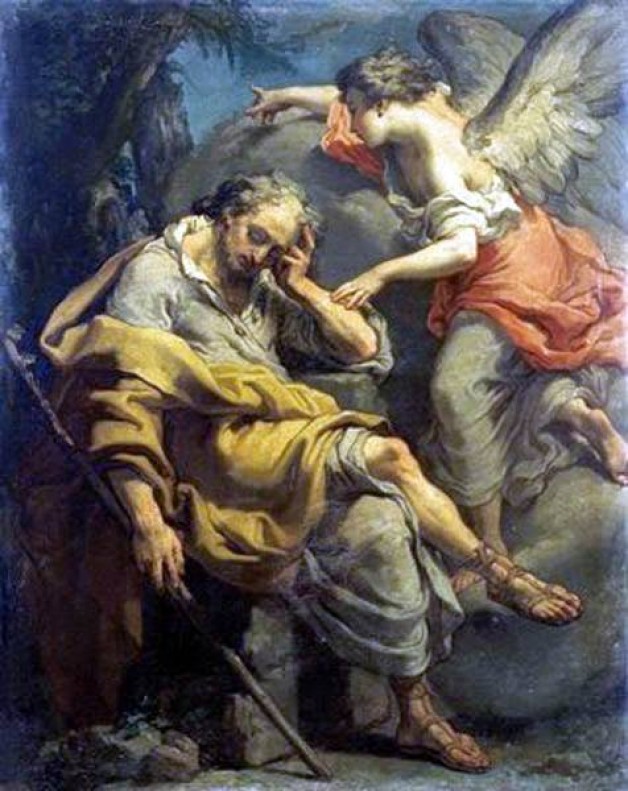
2:13 When they [the Magi] had gone, an angel of the Lord appeared to Joseph in a dream [cf. Matt. 1:20-24]. “Get up [suggests urgency],” he said, “take the child and his mother and escape [flee; seek safety in flight] to Egypt [a Roman province, but not under Herod’s jurisdiction; large Jewish population there]. Stay there [perhaps Magi’s gifts helped them survive in Egypt] until I tell you [a promise that God would direct Joseph in future as in past], for Herod [insanely jealous ruler who lived in fear of intrigue and assassination; killed many people he felt were a threat, including his Jewish wife and their two sons] is going to [expresses imminence; to be about to; is on the verge of] search for the child to [purpose] kill [destroy] him.”

2:14 So he got up [urgency suggested; likely departed on the very night he had received God’s warning about Herod’s evil intentions], took the child and his mother during the night and left for Egypt,

2:15 where he stayed until the death of Herod [read Matt. 2:19-23]. And so was fulfilled what the Lord had said through the prophet: “Out of Egypt I called my son [cf. Hos. 11:1 (in original setting, referred to the Jews’ journey out of Egypt under Moses; Matthew saw Jesus’ experience as a later fulfillment of Hosea’s statement)].”

2:16 When Herod realized that he had been outwitted [deceived, tricked, played for a fool] by the Magi, he was furious [very angry; flew into a rage], and he gave orders to kill all the boys in Bethlehem and its vicinity [district around Bethlehem; Herod covered a wide area in attempt to kill Jesus] who were two years old and under, in accordance with the time he had learned from the Magi [cf. Matt. 2:7].

2:17 Then [Matthew saw fulfillment of prophecy in Herod’s actions] what was said through the prophet Jeremiah was fulfilled:

2:18 “A voice [call, cry] is heard in Ramah, weeping and great [much; loud] mourning [lamentation], Rachel weeping for her children and refusing to be comforted, because they are no more.”

2:19 After Herod died [4 BC], an angel of the Lord appeared in a dream [fourth dream in Matthew’s Gospel (see 1:20; 2:12,13); Joseph stayed in Egypt as instructed and until he received further instructions (see 2:13)] to Joseph in Egypt

2:20 and said, “Get up, take the child and his mother and go to the land of Israel, for those [Herod and those under his orders (possibly included Herod’s family members)] who were trying to take the child’s life are dead.”

2:21 So he [Joseph obeyed what God instructed him to do; he trusted God] got up, took the child and his mother and went to the land of Israel.

2:22 But when he heard that Archelaus [the worst of Herod’s son; a violent man who began his reign by slaughtering three thousand influential people] was reigning in Judea in place of his father Herod, he was afraid [because Archelaus had a reputation for being cruel] to go there. Having been warned in a dream, he withdrew to the district of Galilee [this district assigned to Herod Antipas, another of Herod’s sons],

Note: Herod’s kingdom was divided between his three sons. Archelaus received Judea, Samaria, and Idumea. Herod Antipas received Galilee and Perea. Herod Philip II received Traconitis.

2:23 and he went and lived in a town called Nazareth [located about 70 miles north of Bethlehem; Joseph and Mary’s former home (Lk. 1:26,27; 2:4,39); Nazareth is not mentioned in OT]. So was fulfilled what was said through the prophets: “He will be called a Nazarene [sounds like Heb. word (neser) for branch (see Isa. 11:1)].”

Matthew 1

Matthew 1:1-2

1:1 A record of the genealogy of Jesus Christ the son of David [a messianic title (cf. Matt. 12:23; 20:30-31; 21:9)], the son of Abraham [first person in Bible called a Hebrew (Gen. 14:13); father of the Jewish people (John 8:39)]:

1:2 Abraham was the father of Isaac [Isaac’s birth recorded in Gen. 21:1-7], Isaac the father of Jacob [God changed his name to Israel (Gen. 32:38)], Jacob the father of Judah and his brothers [Jacob was the father of twelve sons whose descendants became known as the children of Israel],

Matthew 1:16-17

1:16 and Jacob the father of Joseph, the husband of Mary [Joseph not listed as the father of Jesus], of whom was born Jesus, who is called Christ [Gr. equivalent of the Hebrew title “messiah” which means “anointed one”].

1:17 Thus there were [note three groups of fourteen generations each] [1] fourteen generations in all from Abraham to David, [2] fourteen from David to the exile to Babylon, and [3] fourteen from the exile to the Christ.

Matthew 1:18-19

1:18 This is how the birth of Jesus Christ came about: His mother Mary was pledged [a more binding arrangement than our modern-day engagement] to be married to Joseph, but before they came together [Mary and Joseph had not yet had sexual relations], she was found to be with child [probably occurred after Mary returned from visiting her cousin Elizabeth (Lk. 1:39-56) at which time Mary would have been three months pregnant] through the Holy Spirit [see Lk. 1:34-35].

1:19 Because Joseph her husband [to be “pledged” (1:18) was as legally binding as marriage thus Joseph is called Mary’s “husband”] was a righteous [devout; law-abiding; took God’s standards seriously; had a high moral character] man and [the following indicates that Mary had not yet explained her visit from the angel to Joseph; Joseph evidently considered two options] [1] did not want to expose her to public disgrace [Joseph was discreet], he had in mind to [2] divorce her quietly [Joseph was sensitive and did not want to hurt Mary].

Matthew 1:20-23

1:20 But [God had another option for Joseph] after he had considered this [divorcing Mary], an angel of the Lord [God intervened] appeared to him in a dream [the means God used to convey His message to Joseph] and said, “Joseph son of David, do not be afraid [regardless of the repercussions] to take Mary home as your wife, because what is conceived in her is from the Holy Spirit.

Note: “It’s a tough job, but somebody’s got to do it!”
The work of angels in the Bible includes:
• Encouragement — Genesis 16:7ff
• Guidance — Exodus 14:19
• Punishment — 2 Samuel 24:16
• Exalt God — Isaiah 6:3
• Protection — Daniel 6:22
• Patrol the Earth — Zechariah 1:9-14
• Fight Evil — 2 Kings 6:16-18; Revelation 20:1-2
• Messengers — Luke 1:26
• Praise God — Revelation 7:11-12

Note: Dreams in Matthew’s Gospel include:
• Matthew 2:12 — God warned the wise men about Herod
• Matthew 2:13 — God told Joseph to take his family to Egypt
• Matthew 2:19 — God reported Herod’s death to Joseph
• Matthew 2:22 — God told Joseph not to return to Judea

1:21 She will give birth to a son, and you are to give him the name Jesus [Gr. form of Joshua which means “the Lord saves”], because he will save his people from their sins [not from their political enemies or oppressors].”

1:22 All this took place to fulfill what the Lord had said through the prophet:

1:23 [see Isaiah 7:14] “The virgin will be with child and will give birth to a son, and they will call him Immanuel [described Jesus’ role]”—which means, “God with us [see Jn. 1:14; Jesus explained God to us (Jn. 1:18)].”

Matthew 1:24-25

1:24 When Joseph woke up, [Joseph was obedient…] he did what the angel of the Lord had commanded him and took Mary home as his wife.

Note: Have you ever avoided doing what you knew was right because you feared what others might think?

1:25 But he had no union with her [Joseph was self-disciplined] until she gave birth to a son [Joseph and Mary consummated their marriage after the birth of Jesus; Jesus had half- brothers (see Matt. 12:46)]. And he gave him the name Jesus [eight days after the birth at the time of circumcision (Lk. 2:21)].

Matthew 3

Matthew 3:13-17

3:13 Then Jesus came from Galilee to the Jordan to [word expresses purpose] be baptized [by His own initiative; not a response to John’s call to repentance] by John [only direct encounter between Jesus and John in the Gospels].

3:14 But John tried to deter [prevent] him, saying, “I need to be baptized by you [emphasizes John’s feeling of unworthiness], and do you come to me?”

3:15 Jesus replied, “Let it be so [allow to happen] now; it is proper [appropriate, fitting, suitable, right] for us to do this to fulfill [“to fill out,” as wind fills a sail] all righteousness [righteousness of life through obedience in accordance with God’s will; Jesus wanted to do all that was part of relationship of obedience to God].” Then John consented.

3:16 As soon as [immediately] Jesus was baptized [to dip, plunge, or immerse; signified Jesus’ identification with God’s purpose in the world; Jesus identified with sinners He came to save; formal beginning of His public ministry], he went up out of the water. At that moment heaven was opened, and he [Jesus] saw [visible affirmation of Jesus] the Spirit of God descending like a dove [symbol of the Holy Spirit; symbol of gentleness, meekness, peace] and lighting on him.

3:17 And a voice from heaven [God’s voice] said [verbal affirmation of Jesus], “This is my Son [cf. Ps. 2:7], whom I love [first mention of love in NT (in context of the Father’s love for His Son); cf. Gen. 22:2]; with him I am well pleased [cf. Isa 42:1].”

Matthew 11

Matthew 11:28-30
The Great Invitation


11:28 “Come [means to believe in Jesus] to me [Jesus is accessible], all [inclusive invitation] you who are weary [one who suffers from agonizing toil] and burdened [in this context refers to those burdened with pharisaical legal rules and regulations; cf. Lk. 11:46], and I [Jesus alone] will give you rest [refresh, rejuvenate you; cf. Jer. 31:25; this does not refer to an escape from work or other demands].

11:29 Take [to lift up] my yoke [a symbol of obligation and submission; invitation to become His disciple] upon you and learn from me, for I am [note description of Jesus…] gentle [meek] and humble [lowly] in heart, and you will find [obtain] rest for your souls [or “for yourselves”].

11:30 For my yoke [as opposed to the burdensome yoke of the religious leaders (cf. Acts 15:10)] is easy [or well-fitting; a yoke is designed for two (indicating that Jesus bears the yoke with us)] and my burden [what He requires] is light [cf. 1 Jn. 5:3].”

Matthew 9

Matthew 9:35-38

9:35 Jesus went through all the towns and villages, [1] teaching [the orderly presentation of truth] in their synagogues [local assembly places that promoted Jewish culture and religion], [2] preaching the good news of the kingdom [cf. Mk. 1:15] and [3] healing [miracles of healing authenticated Jesus’ teaching and preaching] every disease and sickness.

9:36 When he saw the crowds, he had compassion [“to have movement in the intestines”; L. com (with) + pati (to suffer); cf. Lk. 15:20] on them, because they were harassed [they were abused by life; weary; despondent] and helpless [thrown off balance by the daily grind; thrown to the ground], like sheep without a shepherd [without a spiritual leader; cf. Isa. 53:6; Matt. 15:32].

Note: What do you see and feel when you see a crowd of people?

9:37 Then he said to his disciples, “The harvest is plentiful but the workers [the disciples] are few.

9:38 Ask the Lord of the harvest [God], therefore, to send out [a strong term meaning “to cast or to thrust out”; go and seek the lost where they are] workers [be willing to be one of those workers] into his harvest field.”

Note: Why are people often reluctant to work in the harvest?

Matthew 14

Matthew 14:25-33

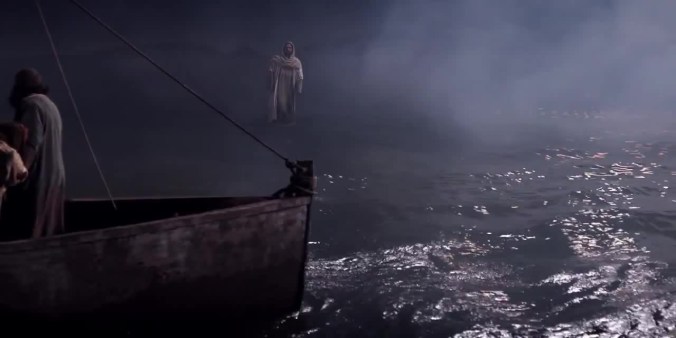
14:25 [this incident happened after the feeding of the 5000 (cf. 14:15-21)] During the fourth watch of the night [between 3:00 AM and 6:00 AM] Jesus went out to them, walking on the lake.

14:26 When the disciples saw him [Jesus] walking on the lake, [1] they were terrified. [2] “It’s a ghost,” they said, and [3] cried out in fear.

14:27 But Jesus immediately said to them [note how Jesus addressed the three fears in 14:26…]: “[1] Take courage [addressed: “they were terrified”]! [2] It is I [addressed: “It’s a ghost”; literally “I am” (cf. Jn. 8:58; 13:19; 18:5)]. [3] Don’t be afraid [addressed” “cried out in fear”].”

14:28 “Lord, if [or “since” it is you (not an expression of doubt)] it’s you,” Peter replied, “tell me to come to you on the water [not an unreasonable request since Jesus was showing that He was master over the ordinary laws of nature].”

14:29 “Come [Jesus honored Peter’s bold request],” he said.

14:30 Then Peter got down out of the boat, walked on the water and came toward Jesus [the Bible does not tell us how far Jesus was from the boat]. But when he [Peter] saw the wind [indicates he had taken his eyes off Jesus], he was afraid [fear replaced faith when Peter took his eyes off Jesus] and, beginning to sink, cried out [it is never wrong to cry out to Jesus], “Lord, save me [indicates Peter believed Jesus had the power to save]!”

14:31 Immediately Jesus reached out his hand and caught him [Jesus did not let Peter sink]. “You of little [Jesus rebuked Peter for having “little” faith but not for having “no” faith] faith [a single Gr. word: “little-faith-one” (cf. Matt. 6:30; 8:26; 14:31; 16:8)],” he said, “why did you doubt [intent of question was to cause Peter to reflect on the lesson Jesus was teaching him]?”

14:32 And when they [Peter either walked back with Jesus or was carried by Him] climbed into the boat, the wind died down.

14:33 Then those who were in the boat worshiped [literally “bowed down”] him, saying, “Truly you are the Son of God [first time disciples made this affirmation in Matthew’s gospel].”