Exodus 13

Exodus 13:1-2
At Succoth (12:37), the Lord instructed the Israelites about an act of devotion that was to become a part of Hebrew religious life.

13:1 The LORD said to Moses,

13:2 “Consecrate [set apart from common usage for holy purposes] to me every firstborn male [because God had delivered them from Egyptian bondage]. The first offspring of every womb among the Israelites belongs to me, whether man or animal.”

Exodus 13:11-16
13:11 “After the LORD brings you into the land of the Canaanites [emphasizes positive side of being set free; freed from bondage for a new relationship with God (19:3-6)] and gives it to you, as he promised on oath to you and your forefathers,

13:12 you are to give over [devote, surrender] to the LORD the first offspring of every womb. All the firstborn males of your livestock belong to the LORD.

13:13 Redeem [to buy back for a price] with a lamb every firstborn donkey [an unclean animal], but if you do not redeem it, break its neck [so that it could not be used or sacrificed]. Redeem [initially done by sacrificing an animal] every firstborn among your sons [“symbolized the Lord’s redemption of Israel and the firstborn’s devotion to God” (Advanced Bible Study)].

13:14 “In days to come, when your son asks you, ‘What does this [significance of Passover and consecration of the firstborn] mean?’ say [opportunity for instruction; cf. Ps. 107:2] to him, [summary of basic confession of faith of the Israelites; summary of historical events that brought about the exodus] ‘With a mighty hand the LORD [exodus was God’s doing, not man’s: divine deliverance not human escape] brought us out of Egypt, out of the land of slavery [condition from which the Lord delivered them].

13:15 When Pharaoh stubbornly refused to let us go, the LORD killed every firstborn in Egypt, both man and animal. This is why I sacrifice to the LORD the first male offspring of every womb and redeem each of my firstborn sons.’

13:16 And it will be like [in later times Jews wore phylacteries] a sign on your hand [a reminder “that what they reached out to do was to be in conscious recollection of what God had done for them and commanded them to do” (Dean)] and a symbol on your forehead [“indicates that what they looked at, how they saw and interpreted their world, was to be through this lens” (Dean)] that the LORD brought us out of Egypt with his mighty hand.”

Exodus 12

Exodus 12:1-14
12:1 The LORD said to Moses and Aaron in Egypt [regulations concerning Passover and Feast of Unleavened Bread given to Moses while Israelites still in Egypt],

12:2 “This month [the month of their deliverance] is to be for you the first month [called Abib (13:4) and later renamed Nisan (Neh. 2:1)], the first month of your year [religious New Year; passover provided a new beginning for Israel].

12:3 Tell the whole community of Israel [expression used to describe Israel in a religious sense] that on the tenth day [lamb killed at sunset on the 14th day (cf. 12:6)] of this month each man is to take a lamb for his family, one for each household.

12:4 | provision for small households

12:5-6 | instructions concerning lamb

12:7 | lamb’s blood on doorframes

12:8-10 | preparing and eating lamb

12:11 This is how you are to eat it: with your cloak tucked into your belt [for easy movement], your sandals on your feet [ready to travel] and your staff [walking stick] in your hand. Eat it in haste [anxious haste]; it is the LORD’s Passover [Heb. pesah: can refer to either the feast or the sacrificial victim].

12:12 “On that same night I will pass through [indicates coming judgment] Egypt and strike [smite] down every firstborn – both men and animals – and I will bring judgment [cf. God’s warning of this in 4:23; 11:5 and fulfillment in 12:29] on all the gods [in addition to Pharaoh and the people; Pharaoh’s firstborn son was considered deity; would demonstrate the impotence of Egypt’s gods] of Egypt. I am the LORD.

12:13 The blood [on the doorframes] will be a sign [a sign of faith that God would do what He promised] for you on the houses where you are; and when I see the blood, I will pass over [indicates act of grace] you. No destructive plague will touch you when I strike Egypt.

12:14 Israel charged to commemorate day for generations to come

Note: “Passover was the ancient Hebrews’ Easter and the Fourth of July all wrapped up into one” (Page H. Kelley). The feast “looked forward to a greater event – the death of Christ” … [who] “was crucified at Passover and shed His blood…” (Stephen Carlson).

Exodus 4

Exodus 4:18-26
4:18 Then Moses went [from the region of Sinai] back to [to Midian] Jethro his father-in-law and said [asked (out of respect for Jethro)] to him, “Let me go back to my own people in Egypt to [introduces Moses’ motive for wanting to return to Egypt] see if any of them are still alive.” Jethro said, “Go, and I wish you well.”

4:19 Now the LORD had said to Moses in Midian, “Go back to Egypt, for all the men [presumably Pharaoh’s officials] who wanted to kill you are dead.”

4:20 So Moses took his wife and sons [Gershom (Ex. 2:22) and Eliezer (Ex. 18:4)], put them on a donkey and started back to Egypt. And he took the staff of God in his hand.

4:21 The LORD said to Moses, “When you return to Egypt, see that you perform before Pharaoh all the wonders I have given you the power to do. [note: this is first use of this expression in Exodus…] But I will harden his heart [make him stubborn] so that he will not let the people go.

4:22 Then say [cf. Ex. 4:12] to Pharaoh, ‘This is what the LORD says: Israel [the whole people] is my firstborn [first in rank; Israel has a privileged status among he nations] son [Pharaoh was accustomed to regarding himself and no other as the “son of the gods”],

4:23 and I told you, “Let my son go, so he may worship me.” But you refused to let him go; so [Pharaoh would pay a penalty for refusing to acknowledge Israel as the Lord’s firstborn] I will kill your firstborn son [an explicit allusion to the tenth plague (cf. Ex. 11:1–12:36)].’”

4:24 At a lodging place on the way, the LORD met [in order to prompt Moses to comply with His requirements (cf. Gen. 17:1-27)] Moses and was about to kill him [this statement “represents a common attitude toward severe illness in the ancient world” (BBC, Vol. 1); Moses was likely suffering a severe illness of some kind for his failure to circumcise his son on the eighth day as per Gen. 17:12 (Moses may have failed to circumcise his son out of deference for Zipporah’s wishes); cf. Gen. 17:1-27)].

4:25 But Zipporah [instinctively connected whatever malady Moses was experiencing with their failure to circumcise their son; perhaps she performed the circumcision because Moses was too ill to do so himself] took a flint knife, cut off her son’s [the particular son not specified] foreskin and touched Moses’ feet with it. “Surely you are a bridegroom of blood [refers to circumcision as per v. 26] to me [expression reveals Zipporah’s disgust with the rite of circumcision],” she said.

4:26 So the LORD let him alone [essential that Moses (who was destined to be the great lawgiver to his people) demonstrate complete commitment to God’s law]. (At that time she said “bridegroom of blood,” referring to circumcision.)

Exodus 2

Exodus 2:1-10
2:1 Now a man [Amram (Ex. 6:20)] of the house of Levi married a Levite woman [Jochabed (Ex. 6:20)],

2:2 and she became pregnant and gave birth to a son. When she saw that he was a fine child [may indicate that Moses was a beautiful baby], she hid [and by so doing helped preserve the life of Israel’s future deliverer] him for three months [the reason for “three months” is not indicated].

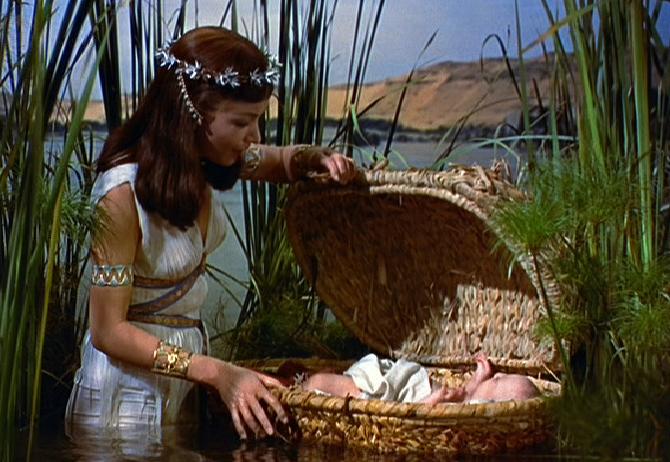
2:3 But when she could hide him no longer, she got a papyrus basket [literally “ark” as in Gen. 6:14] for him and coated it with tar and pitch. Then she placed the child in it and put it among the reeds along the bank of the Nile.

2:4 His sister [presumably Miriam (not mentioned by name until Ex. 15:20)] stood at a distance to see what would happen to him.

2:5 Then Pharaoh’s daughter [God can use the most unlikely people to aid in bringing about His purposes] went down to the Nile to bathe, and her attendants were walking along the river bank. She saw the basket among the reeds and sent her slave girl to get it.

2:6 She opened it and saw the baby. He was crying [possibly a reason why Moses’ mother was no longer able to hide him], and she felt sorry [Pharaoh’s daughter disregarded her father’s orders to throw all Hebrew male children into the Nile (1:22)] for him. “This is one of the Hebrew babies,” she said.

2:7 Then his sister [courageously stepped out] asked Pharaoh’s daughter, “Shall I go and get one of the Hebrew women [obviously she had their own mother (Jochabed) in mind] to nurse the baby for you?”

2:8 “Yes, go,” she answered. And the girl went and got the baby’s mother.

2:9 Pharaoh’s daughter said to her [Moses’ mother], “Take this baby and nurse him for me, and I will pay you.” So the woman took the baby and nursed him [Jochabed was now able to nurse and keep (until he was weaned) Moses without fear].

2:10 When [unspecified period of time; scholars suggest a period of two to four years, at which point the child would have been weaned] the child grew older, she took him to Pharaoh’s daughter and he became her son. She named him Moses, saying, “I drew him out of the water [Hebrew “mašah” means “to draw”].”

Exodus 1

Exodus 1:15-22
1:15 The king of Egypt [Pharaoh; cf. Ex. 1:8; this Pharaoh repeatedly opposed God] said to the Hebrew midwives, whose names were Shiphrah and Puah [possibly representatives of the midwives; possibly two who were particularly brave],

1:16 “When you help the Hebrew women in childbirth and observe them on the delivery stool, if it is a boy [only males posed a military threat], kill him [Pharaoh’s attempt to manage the increasing Hebrew population; Pharaoh wanted enough Jews to fulfill his labor needs but not enough to pose a possible military threat to Egypt (cf. Ex.1:10)]; but if it is a girl, let her live.”

1:17 The midwives [courageously acted to protect human life], however, feared [“to stand in awe of” or “to reverence”] God and did not do what the king of Egypt had told them to do; they let the boys live.

Note: How can reverence for God motivate you to take a courageous stand for God, even in the face of overwhelming odds?

1:18 Then the king of Egypt summoned the midwives and asked them, “Why have you done this? Why have you let the boys live?”

1:19 The midwives answered Pharaoh, “Hebrew women are not like Egyptian women; they are vigorous and give birth before the midwives arrive.”

1:20 So God was kind to the midwives [because He was pleased with their efforts to save Hebrew children] and the people increased and became even more numerous.

1:21 And because the midwives feared God, he gave them families [including male children, the very thing Pharaoh was trying to prevent] of their own.

1:22 Then [a desperate solution] Pharaoh gave this [specific] order to all his people: “Every boy that is born you must throw into the Nile [the Nile represented a life-giving force to the Egyptians but an instrument of death to the Israelite baby boys], but let every girl live.”

Leviticus 16

16:1 The LORD spoke to Moses after the death of the two sons of Aaron who died when they approached the LORD.

16:2 The LORD said to Moses: “Tell your brother Aaron not to come whenever he chooses into the Most Holy Place behind the curtain in front of the atonement cover on the ark, or else he will die, because I appear in the cloud over the atonement cover.

16:3 “This is how Aaron is to enter the sanctuary area: with a young bull for a sin offering and a ram for a burnt offering.

16:4 He is to put on the sacred linen tunic, with linen undergarments next to his body; he is to tie the linen sash around him and put on the linen turban. These are sacred garments; so he must bathe himself with water before he puts them on.

16:5 From the Israelite community he is to take two male goats for a sin offering and a ram for a burnt offering.

16:6 “Aaron is to offer the bull for his own sin offering to make atonement for himself and his household.

16:7 Then he is to take the two goats and present them before the LORD at the entrance to the Tent of Meeting.

16:8 He is to cast lots for the two goats—one lot for the LORD and the other for the scapegoat.

16:9 Aaron shall bring the goat whose lot falls to the LORD and sacrifice it for a sin offering.

16:10 But the goat chosen by lot as the scapegoat shall be presented alive before the LORD to be used for making atonement by sending it into the desert as a scapegoat.

16:11 “Aaron shall bring the bull for his own sin offering to make atonement for himself and his household, and he is to slaughter the bull for his own sin offering.

16:12 He is to take a censer full of burning coals from the altar before the LORD and two handfuls of finely ground fragrant incense and take them behind the curtain.

16:13 He is to put the incense on the fire before the LORD, and the smoke of the incense will conceal the atonement cover above the Testimony, so that he will not die.

16:14 He is to take some of the bull’s blood and with his finger sprinkle it on the front of the atonement cover; then he shall sprinkle some of it with his finger seven times before the atonement cover.

16:15 “He shall then slaughter the goat for the sin offering for the people and take its blood behind the curtain and do with it as he did with the bull’s blood: He shall sprinkle it on the atonement cover and in front of it.

16:16 In this way he will make atonement for the Most Holy Place because of the uncleanness and rebellion of the Israelites, whatever their sins have been. He is to do the same for the Tent of Meeting, which is among them in the midst of their uncleanness.

16:17 No one is to be in the Tent of Meeting from the time Aaron goes in to make atonement in the Most Holy Place until he comes out, having made atonement for himself, his household and the whole community of Israel.

16:18 “Then he shall come out to the altar that is before the LORD and make atonement for it. He shall take some of the bull’s blood and some of the goat’s blood and put it on all the horns of the altar.

16:19 He shall sprinkle some of the blood on it with his finger seven times to cleanse it and to consecrate it from the uncleanness of the Israelites.

16:20 “When Aaron has finished making atonement for the Most Holy Place, the Tent of Meeting and the altar, he shall bring forward the live goat.

16:21 He is to lay both hands on the head of the live goat and confess over it all the wickedness and rebellion of the Israelites—all their sins—and put them on the goat’s head. He shall send the goat away into the desert in the care of a man appointed for the task.

16:22 The goat will carry on itself all their sins to a solitary place; and the man shall release it in the desert.

16:23 “Then Aaron is to go into the Tent of Meeting and take off the linen garments he put on before he entered the Most Holy Place, and he is to leave them there.

16:24 He shall bathe himself with water in a holy place and put on his regular garments. Then he shall come out and sacrifice the burnt offering for himself and the burnt offering for the people, to make atonement for himself and for the people.

16:25 He shall also burn the fat of the sin offering on the altar.

16:26 “The man who releases the goat as a scapegoat must wash his clothes and bathe himself with water; afterward he may come into the camp.

16:27 The bull and the goat for the sin offerings, whose blood was brought into the Most Holy Place to make atonement, must be taken outside the camp; their hides, flesh and offal are to be burned up.

16:28 The man who burns them must wash his clothes and bathe himself with water; afterward he may come into the camp.

16:29 “This is to be a lasting ordinance for you: On the tenth day of the seventh month you must deny yourselves and not do any work—whether native-born or an alien living among you-

16:30 because on this day atonement will be made for you, to cleanse you. Then, before the LORD, you will be clean from all your sins.

16:31 It is a sabbath of rest, and you must deny yourselves; it is a lasting ordinance.

16:32 The priest who is anointed and ordained to succeed his father as high priest is to make atonement. He is to put on the sacred linen garments

16:33 and make atonement for the Most Holy Place, for the Tent of Meeting and the altar, and for the priests and all the people of the community.

16:34 “This is to be a lasting ordinance for you: Atonement is to be made once a year [occurs toward the end of September] for all the sins of the Israelites.” And it was done, as the LORD commanded Moses.

Leviticus 7

The Guilt Offering

7:1 “’These are the regulations for the guilt offering, which is most holy:

7:2 The guilt offering is to be slaughtered in the place where the burnt offering is slaughtered, and its blood is to be sprinkled against the altar on all sides.

7:3 All its fat shall be offered: the fat tail and the fat that covers the inner parts,

7:4 both kidneys with the fat on them near the loins, and the covering of the liver, which is to be removed with the kidneys.

7:5 The priest shall burn them on the altar as an offering made to the LORD by fire. It is a guilt offering.

7:6 Any male in a priest’s family may eat it, but it must be eaten in a holy place; it is most holy.

7:7 “‘The same law applies to both the sin offering and the guilt offering: They belong to the priest who makes atonement with them.

7:8 The priest who offers a burnt offering for anyone may keep its hide for himself.

7:9 [re: cooked grain offerings…] Every grain offering baked in an oven or cooked in a pan or on a griddle belongs to the priest who offers it,

7:10 [re: uncooked grain offerings…] and every grain offering, whether mixed with oil or dry, belongs equally to all the sons of Aaron.

The Fellowship Offering

7:11 “’These are the regulations for the fellowship offering [traditionally peace offering; also in verses 13-37] a person may present to the LORD :

7:12 [re: expressing thanks for God’s blessings (vv. 12-15)…] “’If he offers it as an expression of thankfulness, then along with this thank offering he is to offer cakes of bread made without yeast and mixed with oil, wafers made without yeast and spread with oil, and cakes of fine flour well-kneaded and mixed with oil.

7:13 Along with his fellowship offering of thanksgiving he is to present an offering with cakes of bread made with yeast.

7:14 He is to bring one of each kind as an offering, a contribution to the LORD; it belongs to the priest who sprinkles the blood of the fellowship offerings.

7:15 The meat of his fellowship offering of thanksgiving must be eaten on the day it is offered; he must leave none of it till morning.

7:16 [re: fellowship offering presented in fulfillment of a vow or as a freewill offering (vv. 16-18)…] “‘If, however, his offering is the result of a vow or is a freewill offering, the sacrifice shall be eaten on the day he offers it, but anything left over may be eaten on the next day.

7:17 Any meat of the sacrifice left over till the third day [decomposition was setting in by third day] must be burned up.

7:18 If any meat of the fellowship offering is eaten on the third day, it will not be accepted. It will not be credited to the one who offered it, for it is impure; the person who eats any of it will be held responsible.

7:19 “‘Meat that touches anything ceremonially unclean must not be eaten; it must be burned up. As for other meat, anyone ceremonially clean may eat it.

7:20 But if anyone who is unclean [cf. NT warning re: Lord’s Supper in 1 Cor. 11:28] eats any meat of the fellowship offering belonging to the LORD, that person must be cut off from his people [this phrase used over twenty-five times].

7:21 If anyone touches something unclean—whether human uncleanness or an unclean animal or any unclean, detestable thing—and then eats any of the meat of the fellowship offering belonging to the LORD, that person must be cut off from his people.’ “

Eating Fat and Blood Forbidden

7:22 The LORD said to Moses,

7:23 “Say to the Israelites: ‘Do not eat any of the fat of cattle, sheep or goats.

7:24 The fat of an animal found dead or torn by wild animals may be used for any other purpose [possibly grease for carts or fuel or other uses], but you must not eat it.

7:25 Anyone who eats the fat of an animal from which an offering by fire may be made to the LORD must be cut off from his people.

7:26 And wherever you live, you must not eat the blood of any bird or animal.

27 If anyone eats blood, that person must be cut off from his people.’ “

The Priests’ Share

7:28 The LORD said to Moses,

7:29 “Say to the Israelites: ‘Anyone who brings a fellowship offering to the LORD is to bring part of it as his sacrifice to the LORD.

7:30 With his own hands he is to bring the offering made to the LORD by fire; he is to bring the fat, together with the breast, and wave the breast [no explanation given why only the breast was used] before the LORD as a wave offering.

7:31 The priest shall burn the fat on the altar, but the breast belongs to Aaron and his sons.

7:32 You are to give the right thigh [KJV has “right shoulder”] of your fellowship offerings to the priest as a contribution.

7:33 The son of Aaron who offers the blood and the fat of the fellowship offering shall have the right thigh as his share.

7:34 From the fellowship offerings of the Israelites, [note: first time God speaks in the first person in Leviticus…] I have taken the breast that is waved and the thigh that is presented and have given them to Aaron the priest and his sons as their regular share from the Israelites.’ “

7:35 This is the portion of the offerings made to the LORD by fire that were allotted to Aaron and his sons on the day they were presented to serve the LORD as priests.

7:36 On the day they were anointed, the LORD commanded that the Israelites give this to them as their regular share for the generations to come.

7:37 These, then, are the regulations for the burnt offering, the grain offering, the sin offering, the guilt offering, the ordination offering and the fellowship offering,

7:38 which the LORD gave Moses on Mount Sinai on the day he commanded the Israelites to bring their offerings to the LORD, in the Desert of Sinai.

Leviticus 6

6:1 The LORD said to Moses:

6:2 “If anyone sins and is unfaithful to the LORD by [note these sins off dishonesty…] deceiving his neighbor about something entrusted to him or left in his care or stolen, or if he cheats him,

6:3 or if he finds lost property and lies about it, or if he swears falsely, or if he commits any such sin that people may do-

6:4 when he thus sins and becomes guilty, he must return [practical step to make things right with the individual who was defrauded] what he has stolen or taken by extortion, or what was entrusted to him, or the lost property he found,

6:5 or whatever it was he swore falsely about. He must make restitution [restoring to the rightful owner something that has been taken away, lost, or surrendered] in full, add a fifth of the value to it and give it all to the owner on the day he presents his guilt offering.

6:6 And as a penalty he must bring to the priest, that is, to the LORD, his guilt offering, a ram from the flock, one without defect and of the proper value.

6:7 In this way the priest will make atonement for him before the LORD, and he will be forgiven for any of these things he did that made him guilty.”

The Burnt Offering

6:8 The LORD said to Moses:

6:9 “Give Aaron and his sons this command: ‘These are the regulations for the burnt offering [Heb. word ‘olah describes a sacrifice that goes up whole to God in flames; “holocaust” means “whole-burning”]: The burnt offering is to remain on the altar hearth throughout the night, till morning, and the fire must be kept burning on the altar [a reminder that we are continually sinful and always in constant need of access to God and the forgiveness He offers; it took a lot of work to keep fire burning].

6:10 The priest shall then put on his linen clothes [cf. Ezek. 44:18], with linen undergarments next to his body, and shall remove the ashes of the burnt offering that the fire has consumed on the altar and place them beside the altar.

6:11 Then he is to take off these clothes [fine linen garments] and put on others [more ordinary clothing], and carry the ashes outside the camp to a place that is ceremonially clean.

6:12 The fire on the altar must be kept burning; it must not go out. Every morning the priest is to add firewood and arrange the burnt offering on the fire and burn the fat of the fellowship offerings [“traditionally peace offerings” (NIV footnote)] on it.

6:13 The fire must be kept burning on the altar continuously; it must not go out.

The Grain Offering

6:14 ” ‘These are the regulations for the grain offering [cf. Lev. 2]: Aaron’s sons are to bring it before the LORD, in front of the altar.

6:15 The priest is to take a handful of fine flour and oil, together with all the incense on the grain offering, and burn the memorial portion on the altar as an aroma pleasing to the LORD.

6:16 Aaron and his sons shall eat the rest of it, but it is to be eaten without yeast in a holy place; they are to eat it in the courtyard of the Tent of Meeting.

6:17 It must not be baked with yeast; I have given it as their share of the offerings made to me by fire. Like the sin offering and the guilt offering, it is most holy.

6:18 Any male descendant of Aaron may eat it. It is his regular share of the offerings made to the LORD by fire for the generations to come. Whatever touches them will become holy. [or Whoever touches them must be holy (NIV footnote); cf. v. 27] ‘ “

6:19 The LORD also said to Moses,

6:20 “This is the offering Aaron and his sons are to bring to the LORD on the day he is anointed: a tenth of an ephah [probably about 2 quarts (about 2 liters)] of fine flour as a regular grain offering, half of it in the morning and half in the evening.

6:21 Prepare it with oil on a griddle; bring it well-mixed and present the grain offering broken in pieces [or “in rolls”] as an aroma pleasing to the LORD.

6:22 The son who is to succeed him as anointed priest shall prepare it. It is the LORD’s regular share and is to be burned completely.

6:23 Every grain offering of a priest shall be burned completely; it must not be eaten.”

The Sin Offering

6:24 The LORD said to Moses,

6:25 “Say to Aaron and his sons: ‘These are the regulations for the sin offering [cf. Lev. 4:1–5:13]: The sin offering is to be slaughtered before the LORD in the place the burnt offering is slaughtered; it is most holy.

6:26 The priest who offers it shall eat it; it is to be eaten in a holy place, in the courtyard of the Tent of Meeting.

6:27 Whatever touches any of the flesh will become holy, and if any of the blood is spattered on a garment, you must wash it in a holy place.

6:28 The clay pot the meat is cooked in must be broken [because not as easy to scour clean as a metal pot; pottery was cheap]; but if it is cooked in a bronze pot, the pot is to be scoured and rinsed with water.

6:29 Any male in a priest’s family may eat it; it is most holy.

6:30 But any sin offering whose blood is brought into the Tent of Meeting to make atonement in the Holy Place must not be eaten; it must be burned.

Leviticus 5

5:1 [verses 1-4 are examples of sins that required a sin offering] “‘If a person [a witness] sins because he does not speak up [it is the responsibility of a witness to come forward and to speak up] when he hears a public charge to testify regarding something he has seen or learned about, he will be held responsible.

5:2 “‘Or if a person touches anything ceremonially unclean [laws concerning cleanness were to help insure public health]—whether the carcasses of unclean wild animals or of unclean livestock or of unclean creatures that move along the ground—even though he is unaware of it, he has become unclean and is guilty.

5:3 “‘Or if he touches human uncleanness—anything that would make him unclean—even though he is unaware of it, when he learns of it he will be guilty.

5:4 “‘Or if a person thoughtlessly takes an oath [our word is important; cf. Ecc. 5:5] to do anything, whether good or evil—in any matter one might carelessly swear about—even though he is unaware of it, in any case when he learns of it he will be guilty.

5:5 “‘When anyone is guilty in any of these ways, he must confess [cf. 1 Jn. 1:9] in what way [confession should be specific] he has sinned

5:6 and, as a penalty for the sin he has committed, he must bring to the LORD a female lamb or goat from the flock as a sin offering; and the priest shall make atonement for him for his sin.

5:7 “‘If he cannot afford a lamb, he is to bring two doves or two young pigeons to the LORD as a penalty for his sin—one for a sin offering and the other for a burnt offering.

5:8 He is to bring them to the priest, who shall first offer the one for the sin offering. He is to wring its head from its neck, not severing it completely,

5:9 and is to sprinkle some of the blood of the sin offering against the side of the altar; the rest of the blood must be drained out at the base of the altar. It is a sin offering.

5:10 The priest shall then offer the other as a burnt offering in the prescribed way and make atonement for him for the sin he has committed, and he will be forgiven.

5:11 “‘If, however, he cannot afford two doves or two young pigeons, he [the very poor; an indication of the wonderful provision God made for sinners to be forgiven] is to bring as an offering for his sin a tenth of an ephah [probably about 2 quarts (about 2 liters)] of fine flour for a sin offering. He must not put oil or incense on it, because it is a sin offering.

5:12 He is to bring it to the priest, who shall take a handful of it as a memorial portion and burn it on the altar on top of the offerings made to the LORD by fire. It is a sin offering.

5:13 In this way the priest will make atonement for him for any of these sins he has committed, and he will be forgiven. The rest of the offering will belong to the priest, as in the case of the grain offering.’”

The Guilt Offering

5:14 The LORD said to Moses:

5:15 “When a person commits a violation and sins unintentionally [cf. Lev. 4:2, 13, 22, 27] in regard to any of the LORD’s holy things, he is to bring [means “he shall restore” (Knight, Daily Study Bible Series, Leviticus)] to the LORD as a penalty [cf. 2 Kings 12:16] a ram from the flock, one without defect and of the proper value in silver, according to the sanctuary shekel [about 2/5 ounce (about 11.5 grams)]. It is a guilt [Heb. “asham”] offering.

5:16 He must make restitution for what he has failed to do in regard to the holy things, add a fifth of the value to that and give it all to the priest, who will make atonement for him with the ram as a guilt offering, and he will be forgiven.

5:17 “If a person sins and does what is forbidden in any of the LORD’s commands, even though he does not know it, he is guilty and will be held responsible.

5:18 He is to bring to the priest as a guilt offering [Heb. “asham”] a ram from the flock, one without defect and of the proper value. In this way the priest will make atonement for him for the wrong he has committed unintentionally, and he will be forgiven.

5:19 It is a guilt offering; he has been guilty of [“or has made full expiation for his” (NIV footnote)] wrongdoing against the LORD.”

Leviticus 4

The Sin Offering

4:1 The LORD said to Moses,

4:2 “Say to the Israelites: ‘When anyone sins unintentionally and does what is forbidden in any of the LORD’s commands-

4:3 “‘If the anointed priest sins [“hattath” means “to miss the mark”], bringing guilt on the people, he must bring to the LORD a young bull [this was an expensive offering] without defect as a sin offering for the sin he has committed.

4:4 He is to present the bull at the entrance to the Tent of Meeting before the LORD. He is to lay his hand on its head [symbolically transferring the offerer’s sins to the animal; cf. Lev. 1:4 re: burnt offering; 3:2 re: fellowship offering; 16:21 re: Day of Atonement] and slaughter it [substitutionary atonement] before the LORD.

4:5 Then the anointed priest [the high priest (represented the nation); cf. Lev. 6:22 re: Aaron’s successor] shall take some of the bull’s blood [cf. Heb. 9:22] and carry it into the Tent of Meeting.

4:6 He is to dip his finger into the blood and sprinkle some of it seven times before the LORD, in front of the curtain of the sanctuary [see Ex. 26:31-37 for info re: the curtain and other items in the sanctuary].

4:7 The priest shall then put some of the blood on the horns of the altar of fragrant incense [see Ex. 30:1-10 for more info] that is before the LORD in the Tent of Meeting. The rest of the bull’s blood he shall pour out at the base of the altar of burnt offering at the entrance to the Tent of Meeting.

4:8 He shall remove all the fat from the bull of the sin offering—the fat that covers the inner parts or is connected to them,

4:9 both kidneys with the fat on them near the loins, and the covering of the liver, which he will remove with the kidneys-

4:10 just as the fat is removed from the ox [male or female] sacrificed as a fellowship offering. Then the priest shall burn them on the altar of burnt offering.

4:11 But the hide of the bull and all its flesh, as well as the head and legs, the inner parts and offal-

4:12 that is, all the rest of the bull—he must take outside the camp to a place ceremonially clean, where the ashes are thrown, and burn it in a wood fire on the ash heap.

4:13 “‘If the whole Israelite community sins [“hattath” means “to miss the mark”] unintentionally [“through ignorance” (KJV); Heb. word basically means to err or to wander or go astray] and does what is forbidden in any of the LORD’s commands, even though the community is unaware of the matter, they are guilty.

4:14 When they become aware of the sin they committed, the assembly must bring a young bull [this was an expensive offering] as a sin offering and present it before the Tent of Meeting.

4:15 The elders of the community are to lay their hands on the bull’s head [symbolically transferring the offerer’s sins to the animal; cf. Lev. 1:4 re: burnt offering; 3:2 re: fellowship offering; 16:21 re: Day of Atonement] before the LORD, and the bull shall be slaughtered [substitutionary atonement] before the LORD.

4:16 Then the anointed priest is to take some of the bull’s blood [cf. Heb. 9:22] into the Tent of Meeting.

4:17 He shall dip his finger into the blood and sprinkle it before the LORD seven times in front of the curtain [see Ex. 26:31-37 for info re: the curtain and other items in the sanctuary].

4:18 He is to put some of the blood on the horns of the altar that is before the LORD in the Tent of Meeting. The rest of the blood he shall pour out at the base of the altar of burnt offering at the entrance to the Tent of Meeting.

4:19 He shall remove all the fat from it and burn it on the altar,

4:20 and do with this bull just as he did with the bull for the sin offering. In this way the priest will make atonement for them, and they will [this word speaks of certainty and assurance] be forgiven.

4:21 Then he shall take the bull outside the camp and burn it as he burned the first bull. This is the sin offering for the community.

4:22 “‘When a leader sins [“hattath” means “to miss the mark”] unintentionally [“through ignorance” (KJV); Heb. word basically means to err or to wander or go astray] and does what is forbidden in any of the commands of the LORD his God, he is guilty.

4:23 When he is made aware of the sin he committed, he must bring as his offering a male goat without defect.

4:24 He is to lay his hand on the goat’s head [symbolically transferring the offerer’s sins to the animal; cf. Lev. 1:4 re: burnt offering; 3:2 re: fellowship offering; 16:21 re: Day of Atonement] and slaughter it [substitutionary atonement] at the place where the burnt offering is slaughtered before the LORD. It is a sin offering.

4:25 Then the priest shall take some of the blood [cf. Heb. 9:22] of the sin offering with his finger and put it on the horns of the altar of burnt offering and pour out the rest of the blood at the base of the altar.

4:26 He shall burn all the fat on the altar as he burned the fat of the fellowship offering. In this way the priest will make atonement for the man’s sin, and he will [this word speaks of certainty and assurance] be forgiven.

4:27 “‘If a member of the community sins [“hattath” means “to miss the mark”] unintentionally [“through ignorance” (KJV); Heb. word basically means to err or to wander or go astray] and does what is forbidden in any of the LORD’s commands, he is guilty.

4:28 When he is made aware of the sin he committed, he must bring as his offering for the sin he committed a female goat without defect.

4:29 He is to lay his hand on the head [symbolically transferring the offerer’s sins to the animal; cf. Lev. 1:4 re: burnt offering; 3:2 re: fellowship offering; 16:21 re: Day of Atonement] of the sin offering and slaughter it [substitutionary atonement] at the place of the burnt offering.

4:30 Then the priest is to take some of the blood [cf. Heb. 9:22] with his finger and put it on the horns of the altar of burnt offering and pour out the rest of the blood at the base of the altar.

4:31 He shall remove all the fat, just as the fat is removed from the fellowship offering, and the priest shall burn it on the altar as an aroma pleasing to the LORD. In this way the priest will make atonement for him, and he will [this word speaks of certainty and assurance] be forgiven.

4:32 “‘If he brings a lamb as his sin offering, he is to bring a female without defect.

4:33 He is to lay his hand on its head and slaughter it for a sin offering at the place where the burnt offering is slaughtered.

4:34 Then the priest shall take some of the blood of the sin offering with his finger and put it on the horns of the altar of burnt offering and pour out the rest of the blood at the base of the altar.

4:35 He shall remove all the fat, just as the fat is removed from the lamb of the fellowship offering, and the priest shall burn it on the altar on top of the offerings made to the LORD by fire. In this way the priest will make atonement for him for the sin he has committed, and he will [this word speaks of certainty and assurance] be forgiven.