Ecclesiastes 5

5:1 [observations about religion, temple worship, and the kinds of worship and prayers that do not please God…] Guard your steps [make deliberate and prudent progress in approaching God; watch your step when you go to church!; approach God with reverence] when you go to the house of God [the temple; the place of public worship]. Go near to listen [cf. Jas. 1:19; Zeph. 1:7a] rather than to offer the sacrifice of fools [refers to those who have a tendency to make wrong choices; those whose choices demonstrate the opposite of wisdom], who [refers to those who approach God without reverence and with a false sense of confidence] do not know that they do wrong.

5:2 Do not be quick [rash] with your mouth [cf. Matt. 15:8], do not be hasty in your heart to utter anything [in prayer] before God. God is in heaven [His perspective, understanding, and wisdom exceeds ours; His answers must correspond to His purposes rather than ours; we can count on God to do the right thing] and you are on earth, so let your words be few [thus, the less likely we will say the wrong thing; the fool babbles on carelessly and irreverently].

Note: How we use our tongues…
• to express wanting to get out of worship Amos 8:5-6
• to express boredom at worship Malachi 1:10-13
• to speak boastful words Luke 18:9-14
• to speak words of dissension 1 Cor. 1:10
• to praise God and to curse people James 3:9-12

5:3 [a popular proverb from Solomon’s day; possible meaning: just as business worries disturb sleep, so does many words reveal a fool’s voice] As a dream comes when there are many cares, so the speech of a fool [a fool always chooses to speak rather than to listen] when there are many words [it is better to remain silent and thought a fool than to speak up and remove all doubt (Abraham Lincoln)].

5:4 When you make a vow [making a promise to do something if God will grant a request] to God, do not delay in fulfilling it. He has no pleasure in fools; fulfill your vow [act with integrity in terms of what you promise to the Lord].

Note: In what ways do people try to “bribe” God with vows?

5:5 It is better not to vow than to make a vow and not fulfill it [cf. Acts 5:1-11 re: Ananias and Sapphira].

5:6 Do not let your mouth lead you into sin [do not let careless words lead you to make obligations you cannot pay]. And do not protest [make excuses for not fulfilling your promise] to the [temple] messenger, “My vow was a mistake.” Why should God be angry at what you say and destroy the work of your hands?

5:7 [a proverb] Much dreaming [one’s aspirations] and many words are meaningless [describes the emptiness and vanity that comes from a life not focused on honoring God]. Therefore stand in awe of God.

5:8 If you see the poor oppressed in a district, and justice and rights denied, do not be surprised at such things [corruption]; for one official is eyed by a higher one, and over them both are others higher still [with so many levels of government and so many officials overseeing those areas, some corruption is inevitable; the latter part of this verse may mean that these officials cover up for one another].

Reports of corruption in government and the marketplace hardly surprise anyone today. Both in government and in business, a number of people find and seize opportunities to gain personal wealth dishonestly at the expense of others. Greed and the desire to get ahead can intoxicate and entice individuals to employ dishonest practices as a means of gaining wealth. Such practices often leave a trail of damaged and destroyed lives. And, as long as people allow their greed to go unchecked, corruption will continue to exist.

No society has ever been totally free from corruption. Corruption was as widespread in Solomon’s day as in our own. Solomon said that people should not be astonished at outbreaks of corruption in government. He noted the poor and those seeking justice and righteousness as two of the victims of corruption. Instead of finding the help they sought, they became the victims of a bureaucratic system that provided haven to corrupt officials. These officials protected or watched out for one another and disregarded their moral obligation to provide the poor and the oppressed with a fair hearing. These corrupt officials operated without regard to the demands of the law concerning how to treat the most vulnerable members of society (see Lev. 19:15 and Deut. 24:17).

5:9 The increase from the land is taken by all; the king himself profits from the fields.

The general idea of this verse seems to be that while corruption inevitably grows in the dark recesses of government bureaucracy, government is still necessary. It is better to have government, with its imperfections, than to have anarchy. A few may profit from corrupt practices, but people are best served by a king or organized authority. A good king can address and stem the tide of corruption. He can help bring stability to the land (see Prov. 29:4,14) and insure that the profit from the land benefits all—both ruler and people.

5:10 [reasons to guard against the love of money and to not make the pursuit of wealth life’s goal…] [1] Whoever loves money never has money enough [wealth is addictive]; [2] whoever loves wealth is never satisfied with his income [wealth does not satisfy]. This too is meaningless.

Solomon cautioned against the love of money and the pursuit of wealth. He offered several reasons why money breeds dissatisfaction.

First, wealth is addictive. Solomon observed that the one who loves money is never satisfied with money. Those who love money are consumed with thoughts of how to guard and add to what they have. In some cases, the love of money leads people to make moral or ethical compromises in order to acquire more (see 1 Tim. 6:10). People eager for or always grasping at money can easily lose their grip on what really matters in life. They easily can get swept away in the strong currents of greed and sink in the turbulent waters of ruin and destruction.

Second, wealth does not satisfy. Whoever loves wealth, Solomon said, is never satisfied with his income or with the things that money can buy (see Prov. 27:20). The reason things cannot ultimately satisfy is because God alone, not wealth and possessions, can satisfy the deepest hungers of the human heart (see Ecc. 3:11). Jesus said that “one’s life is not in the abundance of his possessions” (Luke 12:15). The one who dies with the most toys does not win, but only leaves more stuff behind.

5:11 [3] As goods increase, so do those who consume them [wealth attracts human leeches]. And what benefit are they to the owner except to feast his eyes on them?

Third, wealth attracts human parasites. When good things increase, you can count on the arrival of the ones who consume them. Relatives, friends, or the tax agent are always ready to nibble away at our wealth. When the prodigal son (Luke 15: 11-32) set off for a distant land with his inheritance, he found no shortage of people to help him squander his wealth on wild living. However, when he had spent all of his money he could not find a single friend to take him in or buy him a meal.

Fourth, wealth and possessions are cold companions. Howard Hughes, once the richest man in the world, died a miserable and lonely death. He could gaze at his possessions but derived no comfort from them.

5:12 The sleep of a laborer is sweet, whether he eats little or much, but [4] the abundance of a rich man permits him no sleep [wealth promotes insomnia because of worries over how it will be maintained or fear that it may be lost].

Fifth, wealth promotes insomnia. A person of average means has little or no problem sleeping at night. He does not have to worry about what will happen to his stuff or whether people like him for who he is or because of his money.

As a young (and poor) minister I drove an old car. When a friend made light of my modest transportation I reminded him of three things. First, insurance on my vehicle was cheap. Second, my car doubled in value every time I filled it up. And third, I never worried about where I parked it. Solomon said that the abundance of the rich robs him of sleep because he is always worried about his assets and what may happen to them. The wealthy are more likely to be concerned about where they park their cars.

5:13 I have seen a grievous evil under the sun: [5] wealth hoarded to the harm of its owner [hoarding wealth causes harm and suffering to the one who hoards it],

Sixth, hoarding wealth is a sickening tragedy. I once heard a preacher remark that some folks get all they can, can all they get, and then sit on the can! While it is wise to save money for the future, it is unwise to be so obsessed with money that we selfishly hoard it. The one who hoards wealth fears having any of it slip away. The irony is that the miser will eventually lose everything (Ecc. 5:15). We cannot take our money with us when we die—but we can send certain treasures on ahead (see Matt. 6:20).

Jim Elliot, a missionary martyred in Ecuador in 1956, said, “He is no fool who gives what he cannot keep to gain what he cannot lose.” The only things we can keep are the things we give to God. Since our funeral plans will not include a U-Haul, we should purpose to send valuable treasure on ahead by being generous.

5:14 or [6] wealth lost through some misfortune [wealth can be easily lost], so that when he has a son there is nothing left for him.

5:15 [7] Naked a man comes from his mother’s womb, and as he comes, so he departs. He takes nothing from his labor that he can carry in his hand [you cannot take wealth with you when you die].

5:16 [a life spent in the pursuit of wealth is a misspent life] This too is a grievous evil: As a man comes, so he departs, and what does he gain, since he toils for the wind?

5:17 All his days he [the one who makes the pursuit of wealth his aim in life] eats in darkness [metaphor for isolation and lack of joy], with great frustration, affliction and anger.

Solomon said that both the miser (5:13) and the one who loses everything in a bad business venture (5:14) will leave the world in the same way—empty-handed (5:15). According to Solomon, a life spent in the pursuit of wealth is a wasted life because life’s ultimate meaning is not found in riches (5:16). Money does not give meaning to life. In fact, both the miser and the one who loses his wealth orchestrate for themselves a lonely and miserable existence. They eat in darkness and experience sorrow, sickness, and anger—perhaps as a result of regrets over lost wealth.

5:18 Then I realized that it is good and proper for a man to eat and drink, and to find satisfaction in his toilsome labor under the sun during the few days of life God has given him—for this is his lot.

5:19 Moreover, when God gives any man wealth and possessions, and enables him to enjoy them, to accept his lot and be happy in his work—this is a gift of God.

5:20 He seldom reflects on the days of his life [his mortality], because God keeps him occupied with gladness of heart.

Solomon affirmed the importance of working hard, accepting one’s position in life, and enjoying the blessings graciously given by God (5:18). We should receive riches and wealth as a gift of God. After all, it is God who gives us “the power to gain wealth” (Deut. 8:18) and “who richly provides us with all things to enjoy” (1 Tim. 6:17). We should also recognize that it is God who allows or enables us to enjoy these gifts. For example, good food means little without the taste buds to enjoy it. Therefore, we should thank God for our taste buds as well as our food!

Viewing material resources as a gift from God brings satisfaction and joy. However, living for the sake of accumulating and holding on to wealth brings discontent as noted in verse 17. Material things alone cannot satisfy the deepest hunger of the human heart. Hoarding wealth can not fill the heart with joy. Ultimately it is our relationship with God—not things—that brings joy. Those who accept their lot in life and enjoy God’s daily blessings are less likely to be preoccupied with their mortality or depressed by the fact that life is brief. Rather they look to God for the wisdom to enjoy and make the most of every day (see Ps. 90:12).


Ecclesiastes 7

7:1 [sorrow is better than laughter: 7:1-4] A good name [Heb. “shem”; a good reputation] is better [this is the key word of this chapter; used 8 times] than fine perfume [Heb. “shemen”; perfumed oils used on joyful occasions; may allude to funeral preparations (cf. Jn. 19:39)], and the day of death [the day our names shows up in the obituary] better than the day of birth [the day when we receive our name; a good name is not established until one dies (someone still living can still ruin their reputation); cf. Prov. 10:7; 22:1].

At first glance, Solomon’s proverb about a good name looks like a bizarre statement. However, upon closer examination this proverb makes good sense. Solomon talked of the day of our birth and the day of our death. Birth marks the point when we officially receive our names. Death marks the day our names appear in the obituary. How we live between these two dates determines whether our names will be like a fragrant perfume or more like a foul stench.

If we exercise wisdom, then our good name or reputation will be better than fine or fragrant perfume (see Prov. 22:1). However, as long as we are alive we can always damage our reputation. Therefore, we should live wisely knowing that the day of one’s death is better than the day of one’s birth because death seals our reputation.

7:2 [reflecting on he certainty of death can be a motivation to seize the day; cf. Ps. 90:12] It is better to go to a house of mourning [the time and place when we cannot escape the reality of death and are forced to think about our own mortality] than to go to a house of feasting, for death is the destiny of every man; the living should take this to heart.

Given a choice, most people would attend a feast instead of a funeral. Solomon, however, said it is better to go to a house of mourning. He was not being morbid or suggesting that being sad is better than being glad. Instead, Solomon believed that the reality of death gives us a needed perspective on life. There are lessons about life we can only learn in the house of mourning.

Attending a funeral has a way of reminding us of how fragile life is and that we cannot escape our mortality. The foolish view death as an incentive to “eat, drink, and be merry, for tomorrow we die.” However, the wise view death as an incentive to turn from folly and to purposefully live each day (see Ps. 90:12). So, the next time you go to a funeral, remember Solomon’s words—that is the end of all mankind, and the living should take it to heart.

7:3 Sorrow [in times of sorrow we tend to evaluate while in times of victory we tend to celebrate] is better than laughter [the laughter of derision or scorn; both sorrow and laughter are needed for a balanced life], because a sad face is good for the heart [because sadness and sorrows can teach us lessons we might otherwise not learn].

7:4 The heart of the wise is in the house of mourning, but the heart of fools is in the house of pleasure [the place one would hear frivolous laughter].

Charlie Brown, the comic strip character, is perhaps best known for his remark, “Good grief!” Good grief is not an oxymoron. Solomon would agree that grief is good. He expanded on the thought of the previous verse by stating that grief is better than laughter. Solomon was not condemning all laughter or a healthy sense of humor (see Ecc. 3:4). Instead, Solomon was stating that grief or sorrow can be beneficial.

When a face is sad, Solomon said, a heart may be glad. In other words, grief or sorrow is good because it can sharpen our understanding about life and teach us things we might otherwise not learn. The wise reflect on what they learn in the house of mourning while the foolish are only concerned about spending more time in the house of pleasure.

7:5 [rebuke is better than praise: 7:5-6] It is better to heed a wise man’s rebuke [the rebuke of a wise man is better than the flattery of fools; cf. Ps. 141:5; Prov. 10:17; 12:1; 15:5; 17:10; 25:12; 27:5-6,17; 29:1,15] than to listen to the song [songs that lack serious moral content] of fools.

There is something in each of us that is susceptible to flattery. Regardless of who we are, most of us would rather listen to the joyful lyrics of praise than the somber rhetoric of rebuke. However, Solomon cautioned against listening to fools who sing our praises. Fools are people pleasers who do not want to upset others. They tell others what they want to hear rather than what they need to hear. That is why Solomon said it is far better to listen to a wise person’s rebuke. Although rebuke is often hard to swallow and may even wound us, it is much better for us than the soothing flattery and kisses of a fool (see. Prov. 27:5-6).

7:6 Like the crackling of thorns [make lots of noise but do not do much lasting good; the laughter of fools is noisy and self-destructive] under the pot, so is the laughter of fools [the shallow laughter of comedians]. This too is meaningless.

Fools do not put much stock in the wise person’s rebuke and often laugh at what the wise have to say. Solomon compared the laughter of the fool to the irregular and crackling sound produced by burning thorns under the pot. Nettles under the kettle make lots of noise, burn quickly, and produce little heat. In the same way the hollow and bothersome laughter of the fool betrays a shallow mind incapable of discerning, applying, or giving sound counsel.

7:7 [honesty and integrity is better than duplicity and short-cuts: 17:7-9] Extortion [to obtain money (or other goods) by coercion or intimidation] turns a wise man into a fool [a warning that even a wise man may give in to temptation or misuse power; an old Jewish saying cautions, “Do not trust in yourself until death.”], and a bribe [seems like a quick way to get things done] corrupts the heart [and ruins “a good name” (7:1)].

Solomon cautioned that even the wise can become fools. He noted in particular yielding to the temptation to take short-cuts. Extortion, or using intimidation or coercion to gain an advantage, appears to be a quick way to get things done. However, resorting to such tactics turns a wise man into a fool.

Accepting a bribe also seems like a quick way to get things done. However, doing so corrupts the heart. Bad conduct always has a negative impact on a person’s heart. We live in a world that constantly tempts us to wander off the path of honesty. The best way to stay on course is to recognize the shortcomings of short-cuts and unethical practices and avoid them.

7:8 The end [some show great enthusiasm at the start but fail to follow-through to a successful conclusion] of a matter is better than its beginning, and patience [wait for God’s timing on matters] is better than pride.

Some people are great starters who can initiate projects with great enthusiasm and energy. However, a great start does not guarantee a great finish. Some who start well get distracted and find themselves pursuing other matters. Others become discouraged because they failed to count the cost and realize that they lack the resources to finish.

Still others cannot handle criticism and are easily demoralized by the jibes and jabs of spectators. With their pride offended they abandon what they started and never see it through to a successful conclusion. Solomon said the end of a matter is better than its beginning. It is better to be patient and stick at it and see matters through to their successful conclusion.

7:9 Do not be quickly provoked in your spirit [cf. Prov. 14:17; Jas. 1:19-20], for anger resides in the lap of fools.

Solomon warned against harboring anger or resentment. No one is exempt from the temptation to express anger in an inappropriate way. When our pride is offended a natural response is to express anger—perhaps even to “fly into a rage.” Proverbs warns that those with a hot temper do foolish things (14:17). We would do well to remember that those who fly into a rage seldom make a safe landing!

7:10 [the present is better than the past] Do not say, “Why were the old days [or as we say, “the good old days”; yesterday is past and cannot be changed] better than these [in reality, every period has its hardships; “It is said that ‘the good old days’ are the combination of a bad memory and a good imagination.” (Wiersbe); do not be paralyzed by the past or hypnotized by the future]?” For it is not wise to ask such questions [romanticizing about the past is a way of running away from the opportunities of the present].

Perhaps you have wished for the good old days. We often romanticize about the past and forget that the good old days had their hardships, disappointments, and opportunities just like the present. Solomon said that it is not wise to ask why the former days were better than the present days. Dwelling on the past can paralyze us and keep us from facing the challenges and opportunities of the present.

While the past is a nice place for an occasional visit, do not dwell there (see Phil. 3:13). Do not let your memories of days gone by outweigh your dreams about days to come. Dare to seize and to live each day in a way that honors God. Allow His wisdom to keep you on course by leading you to apply yourself to today’s tasks rather than longing for days gone by.

Note: “While you are dreaming of the future or regretting the past, the present, which is all you have, slips from you and is gone.” (Hilaire Belloc, Victorian essayist) So, as the Roman poet Horace wrote, “Carpe Diem!”

7:11 Wisdom [a wise man will know how to get and use wealth; a wealthy man without wisdom will waste his fortune], like an inheritance [money], is a good thing and benefits those who see the sun.

7:12 Wisdom is a shelter [gives greater protection than money] as money is a shelter, but the advantage of knowledge [“…knowledge is the discerning side of the coin and wisdom is the implementing side.” (Holman OT Comm., Vol. 14, p.88)] is this: that wisdom preserves the life of its possessor [especially if money is stolen or vanishes in hard times].

No one would dispute the fact that an inheritance is a good thing. An inheritance is intended to benefit and to make life better for the recipient. Solomon said that wisdom, like an inheritance, is also good thing. However, wisdom has some advantages over money.

Wisdom is indispensable for the handling of money. A wealthy individual who lacks wisdom can quickly suffer the loss of wealth through bad decisions. A wise individual knows both how to get and to use wealth. And, if money is stolen or loses its value in hard economic times, wisdom knows how to shelter or protect its possessor.

7:13 Consider what God has done: Who can straighten what he has made crooked [there are some things that we cannot alter]?

We will never fully understand why God does some things the way in which He does. From our limited human perspective, some of God’s plans appear wrong or crooked. And who can fully understand why He selects certain seasons to allow adversity or prosperity to touch our lives? Solomon said there are crooked things that we cannot alter or straighten. Therefore, we should learn to yield to God’s will and look beyond His acts to consider His ways (see Ps. 103:7).

We may not understand His acts but we can trust in His ways. We can count on God to do the right things, even if all appearances seem to be to the contrary. Regardless of whether our days are filled with adversity or prosperity, we should live in the present with an awareness that God is working out His purposes.

7:14 When times are good, be happy [people often forget to thank God when good things come]; but when times are bad [people seldom forget to blame God when times are bad; wisdom can give us the perspective to make the most of difficult times], consider: God has made the one as well as the other [cf. Job 1:21; 2:10; God knows how to give us enough blessings to keep us happy and enough burden to keep us humble]. Therefore, a man cannot discover anything about his future [part of life is accepting prosperity and adversity from God’s hand without being able to understand or explain how everything will work out for the future].

People often forget to thank God when times and good and seldom forget to blame Him when times are bad. Yet God has made us to know both good and bad times. When Job’s grieving wife told him to curse God and die, Job replied, “Should we accept only good from God and not adversity?” (Job 2:10).

While good times are preferable to bad, we need both—blessings to keep us happy and burdens to keep us humble. Like a skillful weaver who works dark threads among the bright colored ones, God knows how each fits into the pattern of our lives. One day we will see the other side of the tapestry and understand why the dark threads were necessary in the pattern God planned for each of our lives.

7:15 In this meaningless life of mine I have seen both of these [cf. Ps. 73:1-17; Rom. 8:18; 2 Cor. 4:16-18; Matt. 6:2,5,16]: a righteous man perishing in his righteousness, and a wicked man living long in his wickedness.

7:16 [good people can be as harmful and villainous as bad people] Do not be overrighteous [or self-righteous like the NT Pharisees; cf. Matt: 5:20; 23:1-36], neither be overwise [or filled with pride, thinking that you know it all]— why destroy yourself [self-righteousness and pride lead to destruction and death]?

7:17 Do not be overwicked [does not mean that is acceptable to sin in moderation], and do not be a fool [do not embrace evil as a way of life or it will destroy you]— why die before your time?

7:18 It is good to grasp the one [devotion to God and the teachings of wisdom] and not let go of the other [enjoyment of the good things of life]. The man who fears God will avoid all extremes [asceticism and libertinism].

7:19 Wisdom [not a reference to accumulated facts] makes one wise man more powerful than ten rulers [possibly a reference to “the council of ten” who were responsible for the civic affairs in the cities of his day] in a city.

7:20 There is not a righteous man on earth who does what is right and never sins [cf. Rom. 3:10].

7:21 Do not pay attention to every word people say [daily gossip], or you may hear your servant cursing you—

7:22 for you know in your heart that many times you yourself have cursed others [at some time everyone has been guilty of critical gossip].

The Bible has much to say about the destructive power of the tongue. Solomon advised that we not pay attention to every word people say about us. Because people are sinners (7:20), they will say things that are unkind and hurtful. People will gossip about us whether we like it or not. Their words will inflict a measure of pain and exact a certain amount of damage.

We must keep in mind that we too are guilty of having spoken unkindly about others. We too have gossiped about or been critical of others. Wise people ignore those who complain about them, realizing that they themselves have done their share of complaining also. God’s wisdom keeps us on course by instructing us to make allowances for those who speak unkindly of us.

7:23 All this I tested by wisdom and I said, “I am determined to be wise”— but this was beyond me [the wise man knows that he does not know].

7:24 Whatever wisdom may be, it is far off and most profound— who can discover it?

7:25 [cf. Ecc. 1:13] So I turned my mind to understand, to investigate and to search out wisdom [cf. Job 28:28] and the scheme of things and to understand the stupidity of wickedness and the madness of folly.

7:26 I find more bitter than death the woman who is a snare [refers either to domestic conflict (cf. Gen. 3:16) or to the prostitute who traps and leads men to death (cf. Prov. 2:16-19; 5:3-6; 6:24-26; 7:5-27)], whose heart is a trap and whose hands are chains. The man who pleases God will escape her, but the sinner she will ensnare.

7:27 “Look,” says the Teacher, “this is what I have discovered: “Adding one thing to another to discover the scheme of things—

7:28 while I was still searching but not finding—I found one upright [wise] man among a thousand, but not one upright [wise] woman among them all [Solomon was not rating women as lower or less than man; Solomon spoke highly of women in Proverbs (12:4; 14:1; 18:22; 19:14; 31:10ff), Ecclesiastes (9:9), and Song of Songs].

7:29 This only have I found: God made mankind upright, but men [starting with Adam who sinned against God] have gone in search of many schemes [so, do not blame God for what has gone wrong].”

Ecclesiastes 3

3:1 There is a time for everything, and a season for every activity under heaven:

3:2 a time to be born and a time to die, a time to plant and a time to uproot,

3:3 a time to kill and a time to heal, a time to tear down and a time to build,

3:4 a time to weep and a time to laugh, a time to mourn and a time to dance,

3:5 a time to scatter stones and a time to gather them, a time to embrace and a time to refrain,

3:6 a time to search and a time to give up, a time to keep and a time to throw away,

3:7 a time to tear and a time to mend, a time to be silent and a time to speak,

3:8 a time to love and a time to hate, a time for war and a time for peace.

3:9 What does the worker gain from his toil?

3:10 I have seen the burden [“travail” (KJV); “task” (HCSB); “business” (NRSV)] God has laid on men.

3:11 He has made everything beautiful [“appropriate” (HCSB; NASB); “suitable” (NRSV)] in its time [cf. the times and seasons of Ecc. 3:1-8]. He has also set eternity in the hearts of men [something within us yearns for eternity]; yet they cannot fathom what God has done from beginning to end [we see brief, incomplete glimpses but not the whole picture as God does].

3:12 I know that there is nothing better for men than to be happy and do good while they live.

3:13 That everyone may eat and drink, and find satisfaction in all his toil—this is the gift of God.

3:14 I know that everything God does will endure forever [what God does has permanency]; nothing can be added to it and nothing taken from it. God does it so that men will revere him.

3:15 Whatever is has already been, and what will be has been before; and God will call the past to account.

3:16 And I saw something else under the sun: In the place of judgment [the law courts]—wickedness was there [an indication that those in positions of power were abusing that power], in the place of justice—wickedness was there.

3:17 I thought in my heart, “God will bring to judgment both the righteous and the wicked, for there [a divinely appointed time for judgment and vindication] will be a time for every activity, a time for every deed.”

Solomon declared that there is “a time for every activity under heaven” (3:1). In each of fourteen statements he illustrated that God controls the times and seasons of life and keeps all of life balanced (3:2-8). Solomon also said that God has put eternity in our hearts (3:11), a hint that there is something more than just our mere existence under the sun.

We should live each day of our lives with eternity in mind, enjoy the good gifts God has given us, and seek to please Him. Solomon then bemoaned the fact that there is wickedness at the place of judgment and also at the place of righteousness. Crime and corruption were present in the very places meant to keep them in check. His only consolation was that God will one day judge everything that both the righteous and the wicked do. Only the righteous will stand in that judgment (Ps. 1:6).

Life is a gift from God. Eternal life is also a gift from God (see Rom. 6:23). God offers the gift of eternal life to all who repent of their sins and place their faith in Christ alone for salvation. Those who turn to Him in repentance and faith experience the highest joys and deepest satisfactions available in a faith relationship with Him. Fulfillment is found in receiving life as a gift from God and seeking to please Him, convinced that God will ultimately judge all people.

3:18 I also thought, “As for men, God tests them so that they may see that they are like the animals.

3:19 Man’s fate is like that of the animals; the same fate awaits them both: As one dies, so dies the other. All have the same breath; man has no advantage over the animal. Everything is meaningless.

3:20 All go to the same place; all come from dust, and to dust all return.

3:21 Who knows if the spirit of man rises upward and if the spirit of the animal goes down into the earth?”

3:22 So I saw that there is nothing better for a man than to enjoy his work, because that is his lot. For who can bring him to see what will happen after him?

Ecclesiastes 4

4:4 And I saw that all labor and all achievement spring from man’s envy of his neighbor. This [seeking happiness in the pursuit of wealth] too is meaningless, a chasing after the wind.

As Solomon observed the avenues people pursue in their search for fulfillment in life, he turned his attention to the market place. Solomon, who stressed the importance of hard work in the book of Proverbs, was interested in what people do with their hands. However, Solomon was interested in more than the work of the hands; he also was interested in the heart. He observed that jealousy was one motivation for perfecting one’s skills in order to remain competitive in the marketplace and to have a bigger bottom line.

The drive to keep up with the Joneses is as old as the book of Ecclesiastes. Many people work hard only because they want to have more, bigger, and better things than their neighbors. Proverbs 27:20 warns that “people’s eyes are never satisfied.” We must guard against allowing the desire for the material trappings of success to drive us to unreasonable and even self-destructive efforts to get ahead.

Ecclesiastes 6

6:1 I have seen another evil under the sun, and it weighs heavily [is prevalent among] on men:

6:2 God gives a man wealth, possessions and honor, so that he lacks nothing his heart desires, but God does not enable him to enjoy them, and a stranger [may refer to a thief or to a wealthy man without an heir whose wealth goes to a stranger] enjoys them instead. This is meaningless, a grievous evil.

Solomon disclosed a troubling observation he had made—a tragedy that weighs heavily or is prevalent among humanity. He described a man, perhaps someone he knew or whom he had observed from a distance, who was very wealthy.

The statement God gives a man riches, serves as a reminder that the acquisition of wealth is more than the achievement of man. The man in question had riches and wealth—the resources with which to acquire anything he needed in order to enjoy a satisfying life. The man also had honor, an indication that he had a good reputation in his community.

However, this man lacked the ability to enjoy what he had—perhaps because of some crippling illness or some other unknown reason. To make matters even more troubling, Solomon said that a stranger would enjoy this man’s wealth, an indication that he either had no heir (see Ps. 49:10) or had suffered the loss of his fortune to a thief. This man’s situation cautions us against spending our lives seeking popular acclaim and material possessions because these do not guarantee life’s ultimate enjoyment.

Ecclesiastes 9

9:7 Go [get up and enjoy the good gifts God gives us to enjoy in this life], eat your food with gladness [enjoy your meals; cf. Prov. 15:17; 17:1], and drink your wine with a joyful heart, for it is now that God favors what you do [God approves of our enjoying and making the most of life].

The Roman poet Horace coined the Latin expression “Carpe diem!” which means “seize the day.” Robin Williams made this expression popular in the movie “Dead Poets Society.” Solomon would agree that we should seize or make the most of every day.

Because life is brief and death is unavoidable, Solomon urged that we get up and enjoy the good gifts God gives us to enjoy in this life. It is better to enjoy what may be enjoyed than to brood over what we cannot change. Therefore we should eat and drink with a cheerful heart. We should live each day with the assurance that God approves of our enjoying His daily provisions and blessings and our making the most of life (see Ps. 118:24).

9:8 [enjoy special occasions] Always [look for ways to make the everyday things special] be clothed in white [the color of joy and celebration], and always anoint your head with oil [perfume; cf. Prov. 27:9].

People tend to wear their best clothing or to use their best china only on special occasions. It was no different in Solomon’s day. Ordinary people wore ordinary garments and reserved their best garments for special and festive occasions such as weddings. Solomon advised people to wear white garments all the time and to always anoint themselves with oil or special perfume.

White was a symbol of cheerfulness, joy, and celebration. People wore white garments and perfumed or anointed themselves with oils only on important or festive occasions. Solomon was not suggesting that people literally wear white garments or anoint themselves with oil every day. Rather he was saying that people should delight in and make every occasion special, no matter how ordinary or routine.

9:9 Enjoy life with your wife [enjoy your marriage; cf. Prov. 18:22; 19:14], whom you love, all the days of this meaningless life that God has given you under the sun—all your meaningless days. For this is your lot in life and in your toilsome labor under the sun.

I was fortunate to grow up in a home where my parents modeled love and commitment to each other. As a child I was surrounded by reminders of their love—photographs affectionately signed or old love letters tucked away in safe places. My parents never wavered in their love, admiration, and respect for each another.

Solomon believed that a wife is a gift from God (see Prov. 18:22; 19:14) and that marriage was meant to be enjoyed. For this, Solomon said, is your lot in life. God approves of marital happiness between a man and a woman. A couple who love each other and are faithful to their marriage vows can enjoy a lifetime of happiness, in spite of the difficulties they may face along the way.

9:10 Whatever your hand finds to do [enjoy your work; cf. 2 Thess. 3:10], do it with all your might [do your best; cf. Col. 3:17], for in the grave, where you are going, there is neither working nor planning nor knowledge nor wisdom.

Solomon was not an advocate of laziness, sloppy work habits, or merely drifting along in life. He noticed and admired the industrious work habits of ants and urged slackers to follow the example of these tiny and tireless workers (Prov. 6:6-11).

Paul also echoed Solomon’s sentiments about work when he wrote that those unwilling to work should not eat (see 2 Thess. 3:10). Solomon encouraged hard and honest labor and making the most of every opportunity to work while on this side of the grave. He was by no means advocating workaholism. Workaholics seldom enjoy the kind of happy marriages Solomon described in the previous verse. Instead, Solomon believed that we should enjoy our work and always do our best.

9:11 I have seen something else under the sun: [our abilities are no guarantee of success] The race is not to the swift or the battle to the strong, nor does food come to the wise or wealth to the brilliant or favor to the learned; but time and chance [means occurrence or event] happen to them all.

Success happens when preparation meets opportunity. Some might argue that success comes to those who are at the right place at the right time. The late Zig Ziglar said that it is our attitude, not our aptitude, that ultimately determines our altitude. When it comes to success most people would agree that there are certain assets or abilities that can increase the possibility of success.

Solomon listed five assets of those most likely to succeed in life—being swift, strong, wise, brilliant, and learned. However, Solomon said that having these human abilities does not necessarily guarantee success. The world is not fair. Those who appear to be the least likely to succeed sometimes come out on top. God may allow time and chance to frustrate the progress of the strong or to facilitate the progress of the weak.

9:12 Moreover, no man knows when his hour [evil or bad times; death] will come [note examples of how easily the opportunity to enjoy life can end]: As fish are caught in a cruel net, or birds are taken in a snare, so men are trapped by evil times that fall unexpectedly upon them [cf. admonition in Jas. 4:13-17].

No one is immune from experiencing disappointing or disastrous reverses in this life. Regardless of what measures we take to build hedges around our lives, we cannot keep all difficulties at bay. And, no one knows exactly when such times may come. Solomon said that such times often catch us by surprise. One minute we are freely and happily going about our business and the next we find ourselves like fish unexpectedly caught in a cruel net, or like birds caught in a trap.

James echoed this same concern in the New Testament when he reminded those confidently engaged in business ventures that they had no guarantee of tomorrow (see James 4:13-17). Regardless of our hard and diligent work, we may experience defeat, deprivation, or disfavor. However, even though at times we may act responsibly and experience disappointing or disastrous reverses, we are to continue living responsibly before God.

Ecclesiastes 11

11:1 Cast your bread upon the waters [Wiersbe paraphrase: “Send out your grain in ships.”], for after many days you will find it again.

Solomon, who amassed great wealth during his lifetime, offered advice on investments. The expression send or cast your bread on the surface of the waters refers to taking calculated risks in business. Some have paraphrased this expression, “Send out your grain in ships.” Solomon certainly followed his own advice by engaging in overseas trade. His fleet of ships (see 1 Kings 9:26-28; 10:22) sailed the sea and returned with “the treasure of kings and provinces” (see Ecc. 2:8).

Sending ships out for indefinite periods of time involved faith and patience. Some ships never returned because they were lost due to weather, reefs, or pirates. And, the grain in the cargo holds was vulnerable to insects. However, the payoff came after many days when a ship did return to its port with cargo that enriched its owner.

11:2 Give portions to seven, yes to eight [advise to not put all your eggs in one basket but to spread out your wealth in different ventures; send out cargo on several ships], for you do not know [a reminder that man is ignorant of the future and therefore should exercise caution in planning] what disaster may come upon the land.

Solomon expanded on the thought of the previous verse. Instead of sending out only one ship or investing in only one venture, Solomon advised giving a portion to seven or even to eight. In other words, “Don’t put all your eggs in one basket!” Because we don’t know what disaster may happen on earth, it is better to send out cargo on different ships or to diversify our investments.

The fact that we do not know what may happen later today or tomorrow should motivate us to have a varied portfolio. In the event of unforeseen troubles, the individual with a varied and balanced portfolio is more likely to experience some return on investments.

11:3 If clouds [clouds come and go] are full of water, they pour rain upon the earth. Whether a tree [tress are anchored to the ground and somewhat permanent] falls to the south or to the north, in the place where it falls, there will it lie.

11:4 [don’t put things off lest it become to late to do them at all] Whoever watches the wind will not plant [don’t wait until circumstances are ideal to sow]; whoever looks at the clouds will not reap [don’t wait until circumstances are ideal to reap].

I enjoy reading historical accounts of great adventurers and explorers—individuals who dreamed of achievement and then courageously acted to realize their dreams. Not all of these individuals met with success. Some lost their lives in pursuit of their dreams. However, all of these individuals share a common trait—they did not allow the fear that something might go wrong as an excuse for inactivity. They launched into their respective adventures without guarantees or certainties that all would go well.

Solomon said that we should not allow the uncertainties of life to immobilize us or keep us from doing what we need to do. A farmer, for example, cannot wait until circumstances are ideal to sow or to reap. A farmer cannot spend all of his time watching the wind and looking at the clouds until conditions are absolutely favorable. In the same way we should not put things off lest it become too late to do them at all. Unless we make a commitment to act, many opportunities will pass us by and never return.

Note: “My experience is that unless you make a commitment opportunities pass by. Life seemed full of people who talked about achievement yet never did anything more adventurous than watch television.” • William Lindesay, “Alone on the Great Wall”

11:5 As you do not know the path of the wind [cf. Jn. 3:8], or how the body is formed in a mother’s womb [cf. Ps. 139:14-15], so you cannot understand the work of God, the Maker of all things.

There are many things we don’t know, such as the path of the wind or the mystery of birth. Despite all of our advances in the study of weather, no one can track the exact course of the wind with total accuracy. And, despite all of our advances in medical science, no one knows exactly how the breath of life enters the fetus in the womb or can predict with absolute certainty what a particular child will look like.

God’s works and ways are beyond the scope of our comprehension. In business as in pregnancy, we can only leave the outcome to God. We should not sit and wait for a guarantee of success before launching an enterprise. There is certainly danger in acting impulsively, but there is also danger in being passive. Many opportunities are missed by those too timid to risk or to act.

11:6 [use each day wisely] Sow your seed in the morning, and at evening let not your hands be idle [redeem the time (cf. Eph. 5:15-17)], for you do not know which [a farmer plants more than one crop to insure that one if not all will succeed] will succeed, whether this or that, or whether both will do equally well.

We should use each day wisely, making the most of every moment (see Eph. 5:15-17). Like a hard-working farmer, we should sow our seed throughout each day—in the morning and in the evening. And, like the merchant who sends out more than one ship (Ecc. 11:1), we should plant more than one crop because we do not know whether one or both will succeed.

Solomon was not advocating workaholism, but rather working wisely and responsibly in the hope of increasing the likelihood of success. The best way to avoid looking back on life and seeing it as a series of missed opportunities is to always give our best effort. Regardless of the uncertainties inherent in most enterprises, we are to act responsibly before God, trusting Him to accomplish through us what He purposes.

Note: Dealing with life’s uncertainties:
No one is exempt from life’s uncertainties. Disappointments, defeats, and disasters are no respecters of persons. Each of us must learn to live responsibly before God regardless of life’s uncertainties. Here are a few things to keep in mind the next time you get knocked to the ground or are afraid to act because of disastrous reverses.
• Uncertainties will come. Be prepared!
• Life is not fair. Accept it!
• You will get knocked down. Deal with it!
• You can get back up. Do it!
• You must not give up. Dust yourself off!
• Get back to work. Move on!

11:7 Light is sweet, and it pleases the eyes to see the sun [learn to enjoy and to thank God for each new day].

11:8 However many years a man may live, let him enjoy them all. But let him remember the days of darkness [old age and death], for they will be many. Everything to come is meaningless.

11:9 [make the most of your youth] Be happy, young man, while you are young, and let your heart give you joy in the days of your youth [not an encouragement to gratify every passion or lust but to enjoy the things that belong to youth that can never be experienced again]. Follow the ways of your heart and whatever your eyes see, but know that for all these things God will bring you to judgment [an indication that Solomon was not encouraging participation in sinful pleasures].

“Oh, to be young again!” is the lament of those who feel the aches, pains, and limitations of advancing age. Solomon, who understood the problems of old age, advised people to make the most of their youth. Rejoice, he urged, and let your heart be glad in the days of your youth. In other words, enjoy the simple pleasures of being young. Without question, the days of our youth are too few.

Time relentlessly pulls the young toward the years of increased responsibility and pressures—and ultimately to a place where they will never again experience the carefree days of their youth. So, Solomon said to the young, walk in the ways of your heart and in the sights of your eyes. This is not an endorsement to recklessly gratify sinful passions or impulses. Rather, it is a solemn reminder that life only offers a limited number of days in which to enjoy being young.

The young should live and temper their behavior with the understanding that God will bring them to judgment for what they do. God wants people to enjoy the blessings of this life within the boundaries of His revealed will. Although Solomon directed his words to those who are young, they have application to people of all ages.

11:10 So then, banish anxiety [needless worry; cf. Matt. 6:24-26] from your heart [cf. Prov. 12:25] and cast off the troubles [cf. 2 Cor. 7:1] of your body, for youth and vigor are meaningless [or transient].

Because the days of youth are so few, Solomon advised the young to remove sorrow from their hearts. Anxiety or needless sorrow or fear weigh the heart down (see Prov. 12:25). Many do not enjoy their youth the way in which God intended because their hearts are full of sorrow, sadness, and fear. Some of these become so depressed that they lose sight of all hope and choose take their own lives.

The rise of suicide among teens and young adults is alarming. And, for each person who successfully commits suicide, many others try and fail. Solomon also advised the young to put away pain from their bodies. This is an admonishment to avoid the destructive sins of the flesh and instead to cultivate healthy and holy habits. Those who embrace destructive habits in their youth lay a foundation for problems in their older years. We should instead live each day to the fullest, accepting both the challenges and opportunities each day brings, because youth and the prime of life are fleeting.

Ecclesiastes 12

12:1 Remember [to pay attention to with the intent of obeying; cf. Matt. 6:33] your Creator [the only time this term is used as a description of God in this book] in the days of your youth [before you become “set in your ways”; and thus have more years to devote in service to the Lord], before the days of trouble [days of infirmities and pain in older adulthood] come and the years approach when you will say, “I find no pleasure in them”—

Solomon cautioned those who are young to remember their Creator. He understood how easy it is for those who are caught up in the enjoyments of youth to neglect the Lord. The word remember refers to more than simple intellectual recall. To remember means to pay attention to with the intent of obeying. It is a call for responsible living based on remembering and reflecting on all that God has done for us. The best way to avoid future sorrows and heartaches is by remembering our Creator in the days of our youth.

This is the only time Solomon referred to God as Creator in this book. Remembering our Creator is a way of guarding against living a self-indulgent and sinful lifestyle while young. Those who neglect God in their youth store up regrets for the days of trouble or the days of infirmities and pain in older adulthood. However, those who remember God when they are young and live wisely can extend the joy of life to their latter years.

12:2 [note in the following verses the references to the problems that the aging must face…] before the sun and the light and the moon and the stars grow dark [cf. 11:7 to the description of the sky when one is young], and the clouds return after the rain;

The knowledge that the advancing years will bring with them increased limitations should cause each of us to live each day with more of a Godward focus. Solomon had previously referred to the light as pleasant (11:7). During youthful years the sky is bright and life seems full of endless possibilities. However, in the first part of this verse he referred to the light being darkened—perhaps a description of the loss of pleasures as one grows older.

The latter years of life often are characterized by storms or physical challenges that make life more difficult. Advancing age also impacts vision. Some see the imagery of clouds returning after the rain as a reference to glaucoma. Glaucoma is a disease of the eye characterized by partial or complete loss of vision. Clouds usually dissipate after a downpour and the sky is sunny again. However, clouds that return after the rain may refer to vision that does not clear up.

12:3 [note the imaginative description (metaphors) of old age using the figure of a house (a metaphor for the human body; cf. Job 4:19; 2 Cor. 5:1-2; 2 Peter 1:13) that is falling apart…] when the keepers of the house [arms and hands] tremble, and the strong men [legs, knees, shoulders] stoop, when the grinders [teeth] cease because they are few, and those looking through the windows [vision] grow dim;

Solomon used a series of metaphors to describe the various physiological changes that people experience as they get older. The most notable thing about this verse is the mention of a house in a state of decline. This verse does not refer to the literal decline of one’s household. Instead, Solomon imaginatively used the figure of a house that is falling into disrepair to describe some of what we experience as we grow older. He listed four characteristics of aging.

First, the guardians of the house most likely refer to the hands which tremble in old age.

Second, the strong men may refer to the major muscle groups of the legs and back that begin to weaken with age and cause one to stoop rather than to stand up straight.

Third, the grinders are teeth which cease to chew food because they are few.

Fourth, the ones who see dimly as they watch through the windows are the eyes.

12:4 when the doors [possibly hearing or a closed mouth] to the street are closed and the sound of grinding [possibly inability to chew food] fades; when men rise up at the sound of birds, but all their songs grow faint [hearing loss];

Some students interpret the doors to the street as a reference to the ears. People generally shut their doors when they want to exclude outside noise. When the doors are closed the sound of the mill fades, as do many other sounds. So, Solomon’s reference may be to the loss of hearing that often comes with the advancing years. However, paradoxically, while some older adults cannot hear well, they can be easily startled and awakened by the slightest noise—such as the sound of a bird.

Others see the doors to the street as a reference to a closed mouth. Some people lose their teeth as they grow older. As a result they may smile less to conceal this fact. Some may even lose the ability to eat certain foods, a possible meaning of the sound of the mill, or the sound of grinding, fades. Either interpretation supports the idea that Solomon tried to convey about aging—growing older increasingly limits what a person can and cannot do.

12:5 when men are afraid of heights and of dangers in the streets [fearful of stairs or steps or obstacles that can cause one to fall]; when the almond tree [hair turns white like almond blossoms] blossoms and the grasshopper drags himself along [“the grasshopper loses its spring” (HCSB); suggests a slower and more deliberate gait] and desire [perhaps appetite for food or sexual appetite] no longer is stirred. Then man goes to his eternal home [heaven] and mourners [professionals hired to participate in funeral ceremonies] go about the streets.

Solomon continued his description of the limitations of older age. As people grow older they must exercise caution in regard to heights, such as climbing or descending stairs, lest they fall and injure themselves. The dangers on the road include obstacles that can cause one to fall or increased vulnerability to the dangers of travel. Solomon described three additional physiological changes that occur in the latter years of life.

First, the almond tree blossoms. Almond trees in the Middle East blossom in midwinter and have white blossoms thus suggesting that whatever hair we have left later in life turns white.

Second, the grasshopper loses its spring or drags himself along. As we grow older we tend to walk slower and more deliberately.

Third, the caper berry has no effect or no longer bears fruit, suggesting a loss of sexual desire.

Finally, death comes and takes us to our eternal home and mourners go about in the street. All of us are aging and none of us know exactly when we will reach our eternal home, therefore we are to live every day for God.

12:6 Remember him—before the silver cord is severed, or the golden bowl is broken; before the pitcher is shattered at the spring, or the wheel broken at the well,

12:7 and the dust returns to the ground it came from, and the spirit returns to God who gave it.

12:8 “Meaningless! Meaningless!” says the Teacher. “Everything is meaningless!”

12:9 Not only was the Teacher wise, but also he imparted knowledge to the people. He pondered and searched out and set in order many proverbs.

12:10 The Teacher searched to find just the right words, and what he wrote was upright and true.

12:11 The words of the wise are like goads, their collected sayings like firmly embedded nails—given by one Shepherd.

12:12 Be warned, my son, of anything in addition to them. Of making many books there is no end, and much study wearies the body.

12:13 Now all has been heard; here is the conclusion [the bottom line] of the matter: Fear God [attitude of reverence and awe and respect for God; cf. Prov. 1:7] and keep [consistently obey] his commandments [cf. Prov. 13:13], for this is the whole duty [purpose] of man [obeying God is His purpose for everyone].

Solomon searched for meaning in life under the sun. Guided by human wisdom, Solomon explored a variety of avenues that looked promising but proved disappointing. Every earthly experience and material possession left Solomon empty. After his exhaustive search for meaning, Solomon announced the conclusion of the matter. Life’s ultimate meaning cannot be found by human wisdom; only God can give meaning to life.

Solomon concluded the candid record of his search for life’s meaning by pointing out two important things people must do.

First, Solomon said people must fear God. The word fear means “awe, respect, reverence.” The fear of the Lord consists of reverent devotion to God and submission to His will. When people fear God they not only take Him seriously, they also allow God to have His way in their lives.

Second, Solomon said people must keep His commands. Obedience is the outward demonstration of inward devotion to God. True reverence for God without obedience to God is not possible. Reverence and obedience go hand in hand. Solomon discovered that revering and obeying God give life true meaning. Solomon’s conclusion that people should revere and obey God is for all humanity in all places at all times.

12:14 For God will bring every deed [while Solomon had advised enjoying life, he did not advise enjoying sin] into judgment [we all are accountable to God; cf. Ecc. 3:17; 11:9], including every hidden thing [God knows everything about us], whether it is good or evil.

The knowledge that God will bring every act to judgment or hold people accountable, should serve as an incentive to fear and obey God. No person can sin with impunity or get away with sin. Ultimately and eventually, our sins will be exposed and judged righteously. Therefore we should live each day revering and obeying God, for that is the purpose for which He created us. By revering and obeying God we advance His redemptive purposes and, in the process, experience life’s greatest sense of fulfillment.

Note: When it comes to living life, there is a bottom line!
B — Boundaries: God has established boundaries not because He wants to spoil our fun, but because He wants to protect us.
O — Obedience: Obeying God is always the best choice in life.
T — Time: We only have a brief period when we are young and can take advantage of the opportunities and pleasures of youth.
T — Think: We must live each day with an awareness of God, what He has done for us, and what He expects of us.
O — Old Age: As we grow older we increasingly lose the capacity to do and enjoy certain things.
M — Ministry: Because life is brief we should look beyond ourselves and serve others.
L — Live: We should live each day to the fullest.
I — Integrity: God will hold us accountable for how we live our lives.
N — Neglect: Neglecting God will result in serious consequences both now and for eternity.
E — Eternity: We should live each day with eternity in mind.

2 Kings 4

What was the plight of the widow in 2 Kings 4?
Her husband, one of the sons of the prophets, had died. She was left with two children and her husband’s debt. Her husband’s creditor wanted payment of what was owed him. The widow could not meet the obligation so the creditor was going to take her two children to be his slaves.

Note: Josephus comments that she was the widow of Obadiah, the man who served on the court of Ahab and hid a hundred prophets of the Lord from Jezebel. See 1 Kings 18:1-16.

Did the creditor have the right to take her children?
Yes. The creditor was exercising his right to have the children labor to pay off the debt owed by their father. Provision for this was made in the law of Moses in Leviticus 25:39-40.

What unusual instructions did Elisha give to the woman in order to make provision for her needs?
[A] After learning that the only thing the woman had left in the house was a jar of oil, he instructed the woman to borrow as many empty vessels as possible from her neighbors (2 Kings 4:3).

[B] Elisha instructed the woman to shut herself up in a room and pour oil from her jar into each of the vessels (2 Kings 4:4).

[C] The woman faithfully did as Elisha instructed and every vessel she borrowed was miraculously filled. When there were no more vessels to fill the oil stopped (2 Kings 4:5-6).

[D] Elisha then instructed the woman to sell the oil and pay her debt and use the remaining monies to support her family (2 Kings 4:7).

What does the Bible tell us about the Shunammite woman?
[A] She was “a prominent woman” (2 Kings 4:8). In contrast to the poor widow with the two children, the Shunammite woman was wealthy but had no children.

[B] She and her husband opened their home to Elisha. They fed him whenever he passed through the area (2 Kings 4:8). They also built and furnished a chamber (guest room) for Elisha to use when traveling through the area (2 Kings 4:9-10).

Where was Shunem?
Shunem was located 16 miles east of Mount Carmel or 5 miles northeast of Jezreel.

How did Elisha repay the kindness and hospitality of the Shunammite woman?
Elisha asked his servant Gehazi to ask the woman what he could do to repay her kindness. The woman responded that she lived among her own people (2 Kings 4:13) and therefore enjoyed security and had her needs met. Gehazi, however, mentioned to Elisha that the woman had no son and that her husband was old (2 Kings 4:14). Elisha summoned the woman and told her that she would conceive and bear a son by the next year (2 Kings 4:15-17). Although the idea seemed incredible to her, Elisha’s word was fulfilled.

What happened to the Shunammite woman’s son when he was older?
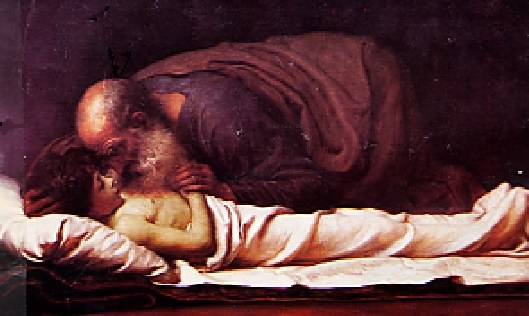
When the boy was older he was helping his father in the field. While working with his father the boy complained that his head was hurting, some suggest a case of sunstroke. The father instructed his servant to take the boy home where he later died in his mother’s arms (2 Kings 4:18-20).

What did the Shunammite woman do when her son died?
After the death of her son, the Shunammite woman put the boy’s body on the bed in the room prepared for the man of God. She then secured a donkey and one of her husband’s servants and went to Mount Carmel in search of Elisha (2 Kings 4:21-24). When her husband asked her why she was going in search of the prophet she responded, “It will be well” (2 Kings 4:23). This was an indication of her faith that the man of God would bring healing to her son. She did not reveal to her husband that the boy had died. Sorrow did not destroy the faith of this mother, it only intensified it.

As the Shunammite woman approached Mount Carmel, Elisha sent Gehazi to meet her and ask her if all was well. The mother responded saying, “It is well” (2 Kings 4:21). The woman did not give vent to her grief until she saw Elisha himself. She caught hold of his feet and revealed to him what had happened (2 Kings 4:27-28).

Two practical lessons emerge from this scene. First, do not make known to everyone you see or who asks you whatever grief might fill your heart. Go directly to one you know will understand you and share the burden with them. The Shunammite woman knew that Elisha would understand her grief and confusion (2 Kings 4:28). Second, do not be quick to push away, as Gehazi (2 Kings 4:27), those looking for help and consolation. Do not add grief to grief.

How was her son brought back to life?
Initially, Elisha sent Gehazi ahead with his staff and instructions to place the staff on the boy’s face. Gehazi went ahead of Elisha and the Shunammite woman and did as he was instructed, but without success. Gehazi returned to meet Elisha and the woman with the news that the boy was still dead (2 Kings 4:29-31).

Upon arriving at the home of the Shunammite, Elisha went to his chamber where the dead boy was lying. He shut the door, prayed to the Lord, and then stretched himself on the child. Upon stretching himself on the child a second time, the boy sneezed seven times and opened his eyes (2 Kings 4:32-35). The boy was then restored to his thankful and grateful mother (2 Kings 4:36-37). Sometimes the greatest trials lead to the greatest blessings.

What two miracles did Elisha perform at “meal-time” at the seminary?
[A] 2 Kings 4:38-41. During a famine in the land (perhaps the one predicted by Elisha in 2 Kings 8:1) Elisha sent one of the sons of the prophets out to collect items for a pot of stew. The servant returned with herbs and gourds which were put into the stew. As the sons of the prophets were eating the stew they cried out to Elisha saying, “O man of God, there is death in the pot.” Perhaps they detected a bitter taste with which they were unfamiliar. Elisha threw some meal into the pot and the stew was made edible.

[B] 2 Kings 4:42-44. Elisha multiplied some food brought to the sons of the prophets by a man from Baal-shalishah. This food represented the first-fruits of the man’s crops and was done in obedience to the law (Numbers 18:13 and Deuteronomy 18:1-5). The food was used to feed a hundred of the sons of the prophets (perhaps at Gilgal).

Practical Considerations

Both the poor and the rich are subject to the trials of life.
No one is exempt from life’s trials. Both the widow and the Shunammite woman experienced the grief of loss and the pressures of life. To their credit, both women turned to Elisha, the man of God, for guidance and help in dealing with their respective trials.

We must exercise faith in the midst of life’s trials.
Both the widow and the Shunammite woman exercised great faith in the midst of their trials. These women expected God to act on their behalf. Someone has said that expectant faith honors God and God honors expectant faith.

Little becomes much in God’s economy.
Both the widow and the man from Baal-shalishah made what they had available to God. The widow’s oil was multiplied to meet her needs and the farmer’s first-fruits were multiplied to feed a hundred men. God can use what we offer in faith and obedience.

Kindness begets kindness.
The Shunammite woman treated the servants of God with kindness. Elisha was not unmindful of that kindness and sought to repay it, even though the woman did not look for any recompense. Our appreciation for the kindness of others should express itself in gratitude.

We should support the work of God with whatever resources we have.
Both the Shunammite woman and the man from Baal-shalishah used their resources to support God’s servants and God’s work. It is both good and wise to invest our resources in God’s kingdom. The gifts of these individuals were timely and met many needs.

Great trials can lead to great blessings.
The widow, the Shunammite woman, and the sons of the prophets experienced the miraculous power and provision of God in the midst of their great trials. Great trials offer God an opportunity to do great things.

2 Kings 5

What do we know about Naaman? (2 Kings 5:1)
[A] He was a captain of the army of the king of Aram (Syria).

[B] He was a great man with his master, the king of Aram (Ben-hadad), and highly respected by the people (probably because of his military exploits).

[C] He had been used by the Lord to bring victory in battle to Aram.

[D] “But he was a leper.” Lepers were not excluded from society in Syria as in Israel. Naaman must have been in the earliest stages of the disease. There was no known cure for leprosy in Naaman’s day (nor is there a cure today).

Note: Naaman was plagued by the conjunction, “but.” Many people today are plagued by the same conjunction: “He is a nice person but. . .” or “She is a good housekeeper but. . .” Someone has written, “Every man has some but or other in his character, something that blemishes and diminishes him, some alloy to his grandeur, some damp to his joy.”

What influence did the “little girl from the land of Israel” have on Naaman? (2 Kings 5:2-4)
Naaman’s wife had a servant girl from Israel. This little girl had been taken captive by a band of Syrians. Her presence in Naaman’s home made her aware of her master’s plight. The little girl had both pity and piety. She expressed to her mistress her wish that Naaman were in Israel where the prophet Elisha could cure him. It is interesting to note that there is no previous record of Elisha ever having healed a leper. Naaman followed-up on the little girl’s suggestion (perhaps as a final course of action) and went to his master to secure permission to go to Israel.

Note: This little girl meets the qualifications of a witness. She was genuinely interested in the welfare of others. She was not afraid to share where others could find the cure for their disease. She took advantage of an opportunity to share her good news. God sometimes uses little voices to deliver great messages.

How did the king of Aram assist Naaman? (2 Kings 5:5)
The king assisted Naaman by providing him with a letter of introduction to the king of Israel. This letter probably demanded that whatever means available be employed to heal Naaman as indicated in the verses that follow. In addition to the letter, Naaman “took with him ten talents of silver and six thousand shekels of gold and ten changes of clothes” (a small fortune!).

How did the king of Israel interpret (or misinterpret) the letter from the king of Aram? (2 Kings 5:6-7)
The king of Israel (probably Jehoram), interpreted the letter as an attempt by the king of Aram to pick a quarrel and declare war against Israel. The king of Israel was so distraught over the situation that he tore his clothes.

What did Elisha do when he heard about the events in the court of the king? (2 Kings 5:8-9)
When Elisha received word about the king’s despair over the situation he sent word to the king to send Naaman to him. Elisha wanted for Naaman to know that there was a true prophet in Israel. Naaman and his entire company went to the house of Elisha and “stood at the doorway.”

What brief and simple instructions did Elisha issue to Naaman? (2 Kings 5:10)
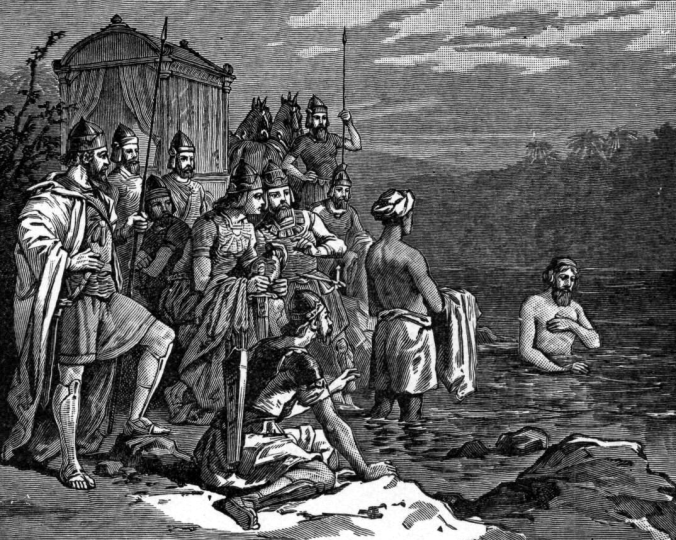
Elisha sent a messenger to Naaman instructing him to wash in the Jordan river seven times. This action, assured Elisha, would result in complete healing of the leprosy.

What was Naaman’s response to Elisha’s instructions? (2 Kings 5:11-12)
“Naaman was furious and went away.” He expected Elisha to come out and perform some kind of healing ritual. As one commentator noted, “Naaman thought there was some royal cure for a royal patient, and an honorable way to deal with such an honorable man.” In addition, if Naaman had to wash seven times he did not want to wash in the muddy Jordan. After all, there were better rivers in which to wash back home. “So he turned and went away in a rage.”

Fortunately for Naaman his servants calmed him down and urged him to obey the prophet’s simple instructions. They pointed out that if Elisha had asked him to do some great deed he would have done it. Why not then, do a simple thing? Naaman listened to his servants and washed in the Jordan according to Elisha’s instructions “and his flesh was restored like the flesh of a little child, and he was clean.” Naaman’s cure was complete.

Note: Notice Naaman’s response, “Behold, I thought. . .” Many people become furious and angry over situations because their expectations were not met. “But I thought you were going to. . .” or “I thought you should have. . .”

What did Naaman do after he was healed? (2 Kings 5:15-19).
[A] He returned to Elisha’s home to express his gratitude (unlike the nine ungrateful lepers in Luke 17:11-19). He offered a present to Elisha who strongly refused to accept any gift.

[B] He came to a new understanding about God and became a monotheist. He publicly acknowledged God before all the people accompanying him. In addition, he asked Elisha for “two mules’ load of earth” which he probably intended to use to build an altar. Some feel that Naaman thought that God was a local deity and therefore that he needed some Israelite soil in order to communewith Him from Syria.

[C] He asked for forgiveness for having to accompany his master into the house of Rimmon (a deity worshiped by the Syrians), which apparently was a part of his duties to the king. Elisha’s response (2 Kings 5:19) indicates that both of Naaman’s requests were granted.

What did Gehazi do after Naaman’s departure? (2 Kings 5:20-27)
[A] He plotted to take something from Naaman.

[B] He pursued Naaman and lied to him in order to “take something from him.” In lying to Naaman, Gehazi misrepresented Elisha and dishonored God. His carefully fabricated lie moved the grateful Naaman to give him the money and clothes he requested for the aid of the “two young men of the sons of the prophets.”

[C] Like Achan (see Joshua 7), Gehazi deposited the things in his home.

[D] He lied to Elisha about his absence. Someone has noted, “He who tells a lie is not sensible how great a task he undertakes; for he must be forced to invent twenty more to maintain one.” And another commentator has noted. “Let us be careful not to want anything beyond the reach of honesty.” Elisha rebuked Gehazi and cursed both him and his descendants with “the leprosy of Naaman” and Gehazi “went out from his presence a leper as white as snow.

Practical Considerations

Even the greatest people have problems.
Naaman was a great and respected military leader but he was a leper. No individual is exempt from problems regardless of rank, race, or riches. People must learn to take their problems to God who invites us to cast our every care upon Him (1 Peter 5:7).

We should take advantage of every opportunity to point people to God.
The little Israelite servant girl in Naaman’s household was a bold witness for God. She probably witnessed the pain in Naaman’s household and his frustration at being unable to be cured of leprosy. She had faith both in her God and in God’s servant and was not afraid to boldly proclaim that the man of God could heal her master. We should be as bold as the little servant girl in proclaiming the truth about God and in pointing people to God.

God’s instructions are simple. . .the difficulty is in obeying.
Elisha gave Naaman very simply yet specific instructions regarding how to be healed of his leprosy. God’s instructions are generally simple though specific. The problem is not with God’s instructions but with man’s unwillingness to obey those instructions.

Our preconceived notions can get us into trouble.
Naaman became furious when he received Elisha’s instructions for healing. He “thought” (2 Kings 5:11) that the matter should have been handled differently. He allowed his pride to blind him to his awful predicament and went away in a rage. Fortunately, there were some people who had better perspective than Naaman and encouraged him to obey the prophet’s instructions. After obeying, Naaman said, “Behold now, I know. …” (2 Kings 5:15). Men can never “know” the wonderful things God can do for them if they fail to obey Him according to His Word.

We should never fail to express our gratitude to God.
To Naaman’s credit, he returned to express his appreciation to the man of God. There are many who forget to express appreciation once they receive whatever blessing or benefit they hoped for. We should cultivate an attitude of gratitude.

The love of money is a root of all sorts of evil.
Paul told Timothy that “the love of money is a root of all sorts of evil” (1 Timothy 6:10). Gehazi illustrates the truth of Paul’s words. Gehazi had no regard for his master or for God. He selfishly pursued Naaman with the intent of taking something from him. His lust for material things caused him to lie and put aside his integrity.

Lies beget lies.
“O what a tangled web we weave when first we practice to deceive.” When a man lies he must fabricate even more lies in order to support his initial lie. As a man tells lies to cover lies he soon finds that he cannot remember what he has told to whom and eventually is snared by his own deceit. “He who walks in integrity walks securely, But he who perverts his ways will be found out” (Proverbs 10:9).