Proverbs 27

Proverbs 27:5-17
27:5 Better is open rebuke [whether from a friend, stranger, or enemy] than hidden love.

27:6 Wounds [cf. “open rebuke” of 27:5; “wounds” refers to the inner hurt that one may feel when rebuked by a true friend; may initially hurt but are designed for our good; cf. Eph. 4:15 re: speaking the truth in love] from a friend can be trusted, but an enemy multiplies kisses [cf. Judas betrayed Jesus with a kiss (Matt. 26:48-49); flattery is deceitful].

27:7 He who is full loathes honey, but to the hungry even what is bitter tastes sweet.

27:8 Like a bird that strays from its nest is a man who strays from his home.

27:9 Perfume and incense [these give a pleasing aroma] bring joy to the heart, and the pleasantness of one’s friend springs from his earnest counsel.

27:10 Do not forsake your friend and the friend of your father [a loyal friend of the family; cf. 1 Kings 5:1-12 re: Solomon receiving help from Hiram, a friend of David; cf. 1 Kings 12:6-8 re: Rehoboam foolishly rejected the counsel of his father Solomon’s friends], and do not go to your brother’s house [separated by geographical distance] when disaster strikes you—better a neighbor [a better source of immediate help] nearby [readily available] than a brother far away.

27:11 Be wise, my son, and bring joy to my heart; then I can answer anyone who treats me with contempt.

27:12 The prudent see danger and take refuge, but the simple keep going and suffer for it.

27:13 Take the garment of one who puts up security for a stranger; hold it in pledge if he does it for a wayward woman.

27:14 If a man loudly blesses his neighbor early in the morning, it will be taken as a curse.

27:15 A quarrelsome wife is like a constant dripping on a rainy day;

27:16 restraining her is like restraining the wind or grasping oil with the hand.

27:17 As iron sharpens iron, so one man sharpens another.

Proverbs 28

Proverbs 28:6
28:6 Better a poor man whose walk is blameless than a rich man whose ways are perverse.

Proverbs 28:8
28:8 He who increases his wealth by exorbitant interest [OT law prohibited charging interest on money loaned to fellow Hebrews (Ex. 22:25)] amasses it for another, who will be kind to the poor.

Proverbs 28:13
Whoever conceals
[covers over; hides; attempts to manage privately what God has exposed publicly in His Word; Psalm 32:3 addresses the danger of remaining silent about sin] their sins [willful rebellion; conscious crossing of God’s boundaries; not weakness alone but defiance] does not prosper [does not advance spiritually; remains stalled; forfeits peace, clarity, and strength], but the one who confesses [agrees with God; stops defending; names sin plainly and specifically] and renounces [forsakes; abandons; makes a decisive break from the pattern] them finds mercy [receives compassion instead of condemnation; experiences undeserved forgiveness; is restored rather than rejected].

Proverbs 28:20
28:20 A faithful man [being faithful more important than accumulating wealth] will be richly blessed, but one eager to get rich [such a person exalts selfish desires over faithfulness] will not go unpunished.

Proverbs 28:23-24
28:23 [cf. Prov. 27:6] He who rebukes a man will in the end gain more favor than he who has a flattering [flattery is like perfume—it smells good but should not be swallowed; cf. Prov. 7:21] tongue.

Note: “A slanderer says things behind your back that he would never say to your face, but a flatterer says things to your face that he would never say behind you back.” (ETB Adult Commentary, Winter 2003-04, p. 92)

28:24 He [one so intent on amassing wealth or getting money] who robs his father or mother and says, “It’s not wrong”—he is partner to him who destroys [or who creates havoc in society].

Proverbs 28:27


28:27 He who gives to the poor will lack nothing, but he who closes his eyes to them receives many curses [presumably administered by God].

Proverbs 30

Proverbs 30:7-9
30:7 [Prov. 30 records the sayings of Agur] “Two things I ask of you, O LORD; do not refuse me before I die [or, “as long as I am living”]:

30:8 [request 1] Keep falsehood and lies far from me [Agur wanted to live a life based on honesty]; [request 2] give me neither poverty nor riches, but give me only my daily bread [cf. Matt. 6:11].

30:9 Otherwise [note dangers of both wealth and poverty…], I may have too much and disown [or deny] you and say, ‘Who is the LORD?’ [wealth can create the illusion of self-sufficiency] Or I may become poor and steal, and so dishonor [or, profane] the name of my God.

Proverbs 31

Proverbs 31:4-7
31:4 “It is not for kings [sobriety is essential for a ruler to responsibly carry out his tasks and not put his people in jeopardy], O Lemuel [possibly the king of Massa, which may have been a north African tribe]—not for kings to drink wine, not for rulers to crave beer,

31:5 lest they drink and forget [drinking alcohol dulls one’s thinking] what the law decrees, and deprive all the oppressed of their rights [cf. Isa. 5:22-23].

31:6 [in ancient times alcohol was used as an anesthetic; cf. 1 Tim. 5:23; today we have medicines and sedatives that are safer and more effective than alcohol] Give beer to those who are perishing [alcohol used to alleviate pain rather than for sensory enjoyment], wine to those who are in anguish;

31:7 let them drink and forget [temporarily] their poverty and remember their misery no more [drinking provides only a temporary escape from reality].

Proverbs 31:10
31:10 A wife of noble character [capable; basic meaning is strength] who can find [not meant to express doubt about finding a wife of noble character]? She is worth far more than rubies [husband should see wife as more valuable than a rare gem].

A Refiner and Purifier of Silver

Malachi 3:3 says: “He will sit as a refiner and purifier of silver.”

This verse puzzled some women in a Bible study and they wondered what this statement meant about the character and nature of God.

One of the women offered to find out the process of refining silver and get back to the group at their next Bible Study.

That week, the woman called a silversmith and made an appointment to watch him at work. She didn’t mention anything about the reason for her interest beyond her curiosity about the process of refining silver.

As she watched the silversmith, he held a piece of silver over the fire and let it heat up. He explained that in refining silver, one needed to hold the silver in the middle of the fire where the flames were hottest as to burn away all the impurities.

The woman thought about God holding us in such a hot spot; then she thought again about the verse that says:  “He sits as a refiner and purifier of silver.”  She asked the silversmith if it was true that he had to sit there in front of the fire the whole time the silver was being refined.

The man answered that yes, he not only had to sit there holding the silver, but he had to keep his eyes on the silver the entire time it was in the fire. If the silver was left a moment too long in the flames, it would be destroyed.

The woman was silent for a moment. Then she asked the silversmith, “How do you know when the silver is fully refined?” He smiled at her and answered, “Oh, that’s easy — when I see my image in it”

If today you are feeling the heat of the fire, remember that God has his eye on you and will keep watching you until He sees His image in you.

Proverbs 10

Proverbs 10:4


10:4 [note two work ethics] [1] Lazy hands make a man poor, but [2] diligent hands bring wealth.

Note: The only place success comes before work is in the dictionary.

Proverbs 10:5

He who gathers [collects, assembles, brings in; implies initiative and diligence rather than passive waiting] crops [the produce of the field; the result of months of preparation and labor] in summer [the season when fruit ripens and must be gathered quickly before spoilage; represents a limited window of opportunity] is a prudent [wise, discerning, one who acts with understanding and foresight] son [a child whose conduct reflects on the honor of his family; responsible participation in the household economy was expected of sons].

But he who sleeps [falls into a deep or negligent sleep; suggests laziness or indifference when alertness is required] during harvest [the most critical agricultural season when grain must be gathered quickly before storms, animals, or decay destroy it; a moment when every hand is needed] is a disgraceful [bringing shame, dishonor, embarrassment; conduct that undermines the well-being and reputation of the family] son [one whose failure to act harms not only himself but also those who depend upon him].

Ecclesiastes 1

1:1 The words [Ecclesiastes contains advice and reflection] of the Teacher [meaning of Heb. “Qoheleth” (from “qahal” meaning to call) uncertain and may mean a “speaker in the assembly” or one who assembles a group; this name used 7 times (1:1,2,12; 7:27; 12:8,9,10], son of David, king in Jerusalem [words imply Solomonic authorship (cf. 1:12)]:

The author of Ecclesiastes called himself the Teacher. The Hebrew term designates one who assembles a group or congregation for worship and instruction. The title of the book comes from the word “ekklesia” which is the Greek word for assembly.

The Teacher identified himself as son of David, king in Jerusalem. Solomon was David’s only immediate son who was “king over Israel in Jerusalem” (see 1:12). The words recorded in the book, however, are not the decrees of a monarch. Instead they are the advice and reflections of a teacher—they are Solomon’s words concerning his search for fulfillment in life under the sun (see 1:3).

1:2 [theme of the book] “Meaningless [Heb. “hebel” means “vapor” or “breath”]! Meaningless [refers to what man does apart from God, not to God’s creation]!” says the Teacher. “Utterly meaningless! Everything is meaningless.”

The Teacher’s first words, Absolute futility, abruptly express a recurring theme of the book. The basic meaning of the word futility is “breath” or “vapor.” It refers to that which lasts no more than a fragile moment—like the breath that condenses and quickly disappears on a cold winter day. Absolute futility refers to things which are fleeting or insubstantial or activities that are in vain. Solomon argued that life itself and any actions done apart from God are futile.

Jesus also cautioned against living life apart from God and acquiring things at the expense of one’s own soul (see Luke 9:25). Such a life and acquisitions are indeed futile, especially when put into the perspective of where one will spend eternity.

Note: Use of “hebel” in other places in Scripture:
• Psalm 144:4 combine notions of insubstantial and transitory
• Proverbs 21:6 a fleeting vapor
• Ecclesiastes 8:14 absurd
• Isaiah 57:13 wind
• Jeremiah 16:19 that which is deceitful and ineffectual (as an idol)
• Zechariah 10:2 idea of empty, fleeting

1:3 What does man gain from all his labor at which he toils under the sun [comparable to “under heaven” in Ex. 17:14; Deut. 7:24; 9:14 and refers to this world]?

1:4 Generations come and generations go [the cycle of life], but the earth remains forever [for a relatively long period of time].

1:5 The sun rises and the sun sets [expresses sense of monotony], and hurries [verb means “to pant”] back to where it rises.

1:6 The wind blows to the south and turns to the north; round and round it goes [expresses sense of monotony and purposelessness], ever returning on its course.

1:7 All streams flow into the sea, yet the sea is never full [expresses futile activity]. To the place the streams come from, there they return again.

1:8 All things are wearisome [some translate “all things are weary], [the world is wearisome…] more than one can say. The eye never has enough of seeing [cf. Prov. 27:20], nor the ear its fill of hearing.

1:9 What has been will be again [the fundamental events of life (birth, marriage, work, death, etc.)], what has been done will be done again; there is nothing new [people in every generation pursue power, status, wealth, power (although these are packaged differently in every generation)] under the sun [no pursuit can give our lives meaning apart from God].

1:10 Is there anything of which one can say, “Look! This is something new” [only Jesus came and did a new thing by creating a new covenant, giving new birth, new life, and a new commandment]? It was here already, long ago; it was here before our time.

1:11 [the futility of trying to leave a legacy…] There is no remembrance of men of old, and even those who are yet to come will not be remembered by those who follow.

1:12 I, the Teacher, was [does not mean he was no longer king or was dead but rather that the author was speaking as a teacher and not as the king] king over Israel in Jerusalem.

1:13 I devoted myself to study and to explore [to investigate every facet of a matter] by wisdom [the application of human knowledge] all that is done under heaven. What a heavy burden [the burden or task of making sense out of life] God [first reference to God in this book; Heb. word used here for God is that of the Creator] has laid on men!

1:14 I have seen all the things that are done under the sun [or apart from God]; all of them [pursuits apart from God] are meaningless [doomed to disappear in the face of time and death], a chasing after the wind [even if you catch the wind you have not caught anything at all].

1:15 What is twisted [a problem] cannot be straightened [or solved]; what is lacking [lack of information; missing data] cannot be counted [cannot contribute to finding an answer].

1:16 I thought to myself, “Look [Solomon felt he had mastered intellectual pursuits], I have grown and increased in wisdom [cf. 1 Kings 3] more than [cf. 1 Kings 4:30-33; 2 Chron. 9:22] anyone who has ruled over Jerusalem before me; I have experienced much of wisdom and knowledge.”

Solomon was qualified to investigate the meaning of life under the sun because he had amassed more wisdom than any other person in Jerusalem and the surrounding nations (see 1 Kings 4:31). Early in his reign the Lord gave Solomon the opportunity to ask for anything. Overwhelmed by the thought of leading God’s people, Solomon asked for wisdom (1 Kings 3:5-9) and the Lord granted his request. Solomon’s great wisdom and insight enabled him to compose proverbs and songs and to speak on a variety of topics. His wisdom also attracted international attention (1 Kings 10:7).

1:17 Then I applied myself to the understanding of wisdom, and also of madness and folly, but I learned that this, too, is a chasing after the wind.

Solomon applied his great wisdom to the exploration of the entire spectrum of human thought. He even explored madness and folly, the opposite of wisdom, in an effort to find fulfillment in life under the sun. Solomon discovered that when you make the pursuit of knowledge your goal in life, the results always disappoint. Knowledge only increased Solomon’s sorrow because it made him painfully aware of things as they were. While people may find value in education and intellectual pursuits, these cannot satisfy the deepest hunger of their hearts.

1:18 For with much wisdom comes much sorrow [or heartache]; the more knowledge, the more grief.

Ecclesiastes 2

2:1 I [the use of this first person pronoun indicates that Solomon was actively engaged in his experiment to find meaning in life through a variety of avenues] thought in my heart, “Come now, I will test you with pleasure [with his 700 wives and 300 concubines (1 Kings 11:3) Solomon freely explored every possible avenue of sensual pleasure] to find out what is good.” But that also proved to be meaningless.

Solomon determined to pursue pleasure and enjoy what is good in his ongoing search for fulfillment. He set out to see if pleasure could satisfy the hunger of his heart for meaning. With his 700 wives and 300 concubines (1 Kings 11:3), Solomon explored every possible avenue of sensual pleasure. He cast off every restraint and did whatever he wanted. But, at the end of this journey, Solomon reviewed his experiences and considered them all meaningless. Pursuing the good life turned out to be another failed attempt at finding fulfillment.

2:2 “Laughter [cf. Prov. 14:13; 17:22],” I said, “is foolish. And what does pleasure accomplish [it does not of itself give meaning to existence]?”

2:3 I tried cheering myself with wine [as a connoisseur rather than a drunkard], and embracing folly—my mind still guiding me with wisdom [Solomon attempted to indulge in pleasure while tightly tethered to his senses so that he could analyze his experiences]. I wanted to see what was worthwhile for men to do under heaven during the few days of their lives [Solomon discovered that alcohol does not give meaning to this brief life].

Solomon explored the possibility of finding fulfillment in wine and folly. With his riches, Solomon was able to enjoy the finest wines money could buy. However, Solomon discovered that fulfillment cannot be found in a bottle. Solomon experimented with pleasures, wine and folly because he had hoped to discover what was good for people to do under heaven during the few days of their lives. However, he discovered that each of these pursuits led to a dead-end.

Like Solomon, people today long to find something to fill the divinely created vacuum within. Many people try to fill the emptiness in their lives with sensual pleasures, materialism, or exciting experiences. Neither partying, the things associated with today’s so-called “good life,” nor notable achievements can fill the void at the core of a life lived apart from God.

2:4 I undertook great projects [cf. 1 Kings 7; 9:1; 10:21; 2 Chron. 8:3-6; Solomon enlarged his sphere of activities]: I built houses for myself [“for myself” is the “gospel” of selfishness] and planted vineyards.

Solomon had a knack for making money. He amassed great wealth during his lifetime (see 1 Kings 10:14-29). His fleet of ships sailed the sea to bring him the treasure of kings and provinces (see 1 Kings 9:26-28; 10:22). Solomon also had a knack for spending money and used his wealth to build beautiful houses and to plant magnificent gardens and trees for himself.

2:5 I made gardens and parks and planted all kinds of fruit trees in them.

2:6 I made reservoirs to water groves of flourishing trees.

2:7 I bought male and female slaves and had other slaves who were born in my house. I also owned more herds and flocks than anyone in Jerusalem before me.

2:8 I amassed silver and gold for myself [cf. 1 Kings 10:14-29; Solomon’s wealth was not consumed on wars or paying tribute to another nation], and the treasure of kings and provinces [Solomon’s fleet of ships sailed the sea to bring him these treasures (cf. 1 Kings 9:26-28; 10:22)]. I acquired men and women singers, and a harem as well—the delights of the heart of man.

2:9 I became greater by far than anyone in Jerusalem before me [cf. 1 Kings 10:23-25]. In all this my wisdom stayed with me.

2:10 I denied myself nothing my eyes desired [cf. Prov. 27:20]; I refused my heart no pleasure. My heart took delight in all my work, and this was the reward for all my labor.
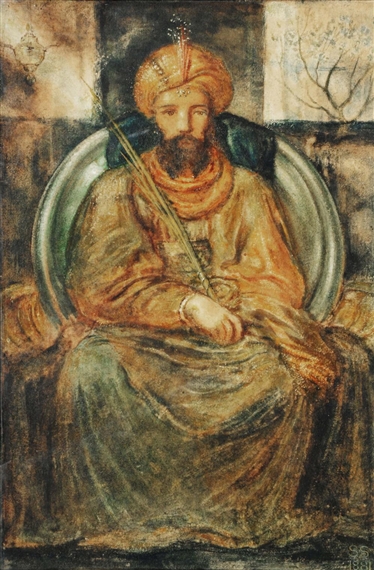
2:11 Yet when I surveyed all that my hands had done and what I had toiled to achieve, everything was meaningless, a chasing after the wind; nothing was gained under the sun [Solomon totaled all of his achievements and realized that all of these efforts resulted in a net loss].

Solomon’s heart took delight in all his work (2:10), but this delight was short-lived. His heart continued to ache for something truly meaningful and satisfying in life. When Solomon added up the value of everything he owned and had experienced, the sum was zero. He learned that self-gratification cannot satisfy the deepest human needs.

While some of the things Solomon experienced can add a measure of meaning to life, none of them led him to find ultimate meaning in life under the sun. Solomon discovered that fulfillment is not found in having a good time, pursuing the things associated with the good life, or impressive accomplishments.

2:12 Then I turned my thoughts to consider wisdom, and also madness and folly. What more can the king’s successor do than what has already been done?

2:13 I saw that wisdom is better than folly, just as light is better than darkness.

2:14 The wise man has eyes in his head, while the fool walks in the darkness; but I came to realize that the same fate overtakes them both.

2:15 Then I thought in my heart, “The fate of the fool will overtake me also. What then do I gain by being wise?” I said in my heart, “This too is meaningless.”

2:16 For the wise man, like the fool, will not be long remembered; in days to come both will be forgotten. Like the fool, the wise man too must die!

2:17 So I hated life, because the work that is done under the sun was grievous to me. All of it is meaningless, a chasing after the wind.

2:18 I hated all the things I had toiled for under the sun, because I must leave them to the one who comes after me [may refer to Solomon’s son Rehoboam who succeeded him].

2:19 [Solomon could not exert control over his heirs after his death] And who knows whether he will be a wise man or a fool? Yet he will have control [Solomon’s heir could do as he pleased] over all the work into which I have poured my effort and skill under the sun. This too is meaningless.

2:20 So my heart began to despair over all my toilsome labor under the sun.

2:21 For a man may do his work with wisdom, knowledge and skill, and then he must leave all he owns to someone who has not worked for it. This too is meaningless and a great misfortune.

2:22 What does a man get for all the toil and anxious striving with which he labors under the sun?

2:23 All his days his work is pain and grief; even at night his mind does not rest. This too is meaningless.

2:24 [be careful to not take this passage out of its context] A man can do nothing better than to eat and drink and find satisfaction in his work [in other words, people should learn to enjoy the return they get on their labor]. This too, I see, is from the hand of God,

Solomon said that there is nothing better than to enjoy food and drink and the fruit of one’s labor—the normal activities of daily life. He was not advocating a pleasure seeking philosophy nor giving license for gluttony and drunkenness. He had already found those pursuits unfulfilling. Instead, he acknowledged that we should enjoy the things God has given us to enjoy.

Paul echoed this sentiment in the New Testament when he said that it is God “who richly provides us with all things to enjoy” (1 Tim. 6:17). Although the purpose of life is not found in food or possessions, we should thank God for His daily provisions and enjoy these to His glory.

2:25 for without him [God], who can eat or find enjoyment [in other words, life is empty without God]?

2:26 To the man who pleases him, God gives wisdom, knowledge and happiness, but to the sinner he gives the task of gathering and storing up wealth to hand it over to the one who pleases God. This too is meaningless, a chasing after the wind.

God gives wisdom, knowledge, and joy to those who please Him. These gifts enable us to appreciate and enjoy all of God’s daily provisions. Wisdom and knowledge are essential to finding joy in life. The writer of Proverbs said that whoever finds wisdom finds life and receives favor from the Lord (Prov. 8:35).

God gives blessings and benefits to those who are rightly related to Him and who live in a manner pleasing to Him. However, the same cannot be said of the sinner who searches for fulfillment and satisfaction in pursuits apart from God. Those who choose to live their lives apart from God may amass riches, but in the end God will dispose of their riches in such a way that the righteous may benefit (see Prov. 13:22).