Ecclesiastes 6

6:1 I have seen another evil under the sun, and it weighs heavily [is prevalent among] on men:

6:2 God gives a man wealth, possessions and honor, so that he lacks nothing his heart desires, but God does not enable him to enjoy them, and a stranger [may refer to a thief or to a wealthy man without an heir whose wealth goes to a stranger] enjoys them instead. This is meaningless, a grievous evil.

Solomon disclosed a troubling observation he had made—a tragedy that weighs heavily or is prevalent among humanity. He described a man, perhaps someone he knew or whom he had observed from a distance, who was very wealthy.

The statement God gives a man riches, serves as a reminder that the acquisition of wealth is more than the achievement of man. The man in question had riches and wealth—the resources with which to acquire anything he needed in order to enjoy a satisfying life. The man also had honor, an indication that he had a good reputation in his community.

However, this man lacked the ability to enjoy what he had—perhaps because of some crippling illness or some other unknown reason. To make matters even more troubling, Solomon said that a stranger would enjoy this man’s wealth, an indication that he either had no heir (see Ps. 49:10) or had suffered the loss of his fortune to a thief. This man’s situation cautions us against spending our lives seeking popular acclaim and material possessions because these do not guarantee life’s ultimate enjoyment.

Ecclesiastes 9

9:7 Go [get up and enjoy the good gifts God gives us to enjoy in this life], eat your food with gladness [enjoy your meals; cf. Prov. 15:17; 17:1], and drink your wine with a joyful heart, for it is now that God favors what you do [God approves of our enjoying and making the most of life].

The Roman poet Horace coined the Latin expression “Carpe diem!” which means “seize the day.” Robin Williams made this expression popular in the movie “Dead Poets Society.” Solomon would agree that we should seize or make the most of every day.

Because life is brief and death is unavoidable, Solomon urged that we get up and enjoy the good gifts God gives us to enjoy in this life. It is better to enjoy what may be enjoyed than to brood over what we cannot change. Therefore we should eat and drink with a cheerful heart. We should live each day with the assurance that God approves of our enjoying His daily provisions and blessings and our making the most of life (see Ps. 118:24).

9:8 [enjoy special occasions] Always [look for ways to make the everyday things special] be clothed in white [the color of joy and celebration], and always anoint your head with oil [perfume; cf. Prov. 27:9].

People tend to wear their best clothing or to use their best china only on special occasions. It was no different in Solomon’s day. Ordinary people wore ordinary garments and reserved their best garments for special and festive occasions such as weddings. Solomon advised people to wear white garments all the time and to always anoint themselves with oil or special perfume.

White was a symbol of cheerfulness, joy, and celebration. People wore white garments and perfumed or anointed themselves with oils only on important or festive occasions. Solomon was not suggesting that people literally wear white garments or anoint themselves with oil every day. Rather he was saying that people should delight in and make every occasion special, no matter how ordinary or routine.

9:9 Enjoy life with your wife [enjoy your marriage; cf. Prov. 18:22; 19:14], whom you love, all the days of this meaningless life that God has given you under the sun—all your meaningless days. For this is your lot in life and in your toilsome labor under the sun.

I was fortunate to grow up in a home where my parents modeled love and commitment to each other. As a child I was surrounded by reminders of their love—photographs affectionately signed or old love letters tucked away in safe places. My parents never wavered in their love, admiration, and respect for each another.

Solomon believed that a wife is a gift from God (see Prov. 18:22; 19:14) and that marriage was meant to be enjoyed. For this, Solomon said, is your lot in life. God approves of marital happiness between a man and a woman. A couple who love each other and are faithful to their marriage vows can enjoy a lifetime of happiness, in spite of the difficulties they may face along the way.

9:10 Whatever your hand finds to do [enjoy your work; cf. 2 Thess. 3:10], do it with all your might [do your best; cf. Col. 3:17], for in the grave, where you are going, there is neither working nor planning nor knowledge nor wisdom.

Solomon was not an advocate of laziness, sloppy work habits, or merely drifting along in life. He noticed and admired the industrious work habits of ants and urged slackers to follow the example of these tiny and tireless workers (Prov. 6:6-11).

Paul also echoed Solomon’s sentiments about work when he wrote that those unwilling to work should not eat (see 2 Thess. 3:10). Solomon encouraged hard and honest labor and making the most of every opportunity to work while on this side of the grave. He was by no means advocating workaholism. Workaholics seldom enjoy the kind of happy marriages Solomon described in the previous verse. Instead, Solomon believed that we should enjoy our work and always do our best.

9:11 I have seen something else under the sun: [our abilities are no guarantee of success] The race is not to the swift or the battle to the strong, nor does food come to the wise or wealth to the brilliant or favor to the learned; but time and chance [means occurrence or event] happen to them all.

Success happens when preparation meets opportunity. Some might argue that success comes to those who are at the right place at the right time. The late Zig Ziglar said that it is our attitude, not our aptitude, that ultimately determines our altitude. When it comes to success most people would agree that there are certain assets or abilities that can increase the possibility of success.

Solomon listed five assets of those most likely to succeed in life—being swift, strong, wise, brilliant, and learned. However, Solomon said that having these human abilities does not necessarily guarantee success. The world is not fair. Those who appear to be the least likely to succeed sometimes come out on top. God may allow time and chance to frustrate the progress of the strong or to facilitate the progress of the weak.

9:12 Moreover, no man knows when his hour [evil or bad times; death] will come [note examples of how easily the opportunity to enjoy life can end]: As fish are caught in a cruel net, or birds are taken in a snare, so men are trapped by evil times that fall unexpectedly upon them [cf. admonition in Jas. 4:13-17].

No one is immune from experiencing disappointing or disastrous reverses in this life. Regardless of what measures we take to build hedges around our lives, we cannot keep all difficulties at bay. And, no one knows exactly when such times may come. Solomon said that such times often catch us by surprise. One minute we are freely and happily going about our business and the next we find ourselves like fish unexpectedly caught in a cruel net, or like birds caught in a trap.

James echoed this same concern in the New Testament when he reminded those confidently engaged in business ventures that they had no guarantee of tomorrow (see James 4:13-17). Regardless of our hard and diligent work, we may experience defeat, deprivation, or disfavor. However, even though at times we may act responsibly and experience disappointing or disastrous reverses, we are to continue living responsibly before God.

Ecclesiastes 11

11:1 Cast your bread upon the waters [Wiersbe paraphrase: “Send out your grain in ships.”], for after many days you will find it again.

Solomon, who amassed great wealth during his lifetime, offered advice on investments. The expression send or cast your bread on the surface of the waters refers to taking calculated risks in business. Some have paraphrased this expression, “Send out your grain in ships.” Solomon certainly followed his own advice by engaging in overseas trade. His fleet of ships (see 1 Kings 9:26-28; 10:22) sailed the sea and returned with “the treasure of kings and provinces” (see Ecc. 2:8).

Sending ships out for indefinite periods of time involved faith and patience. Some ships never returned because they were lost due to weather, reefs, or pirates. And, the grain in the cargo holds was vulnerable to insects. However, the payoff came after many days when a ship did return to its port with cargo that enriched its owner.

11:2 Give portions to seven, yes to eight [advise to not put all your eggs in one basket but to spread out your wealth in different ventures; send out cargo on several ships], for you do not know [a reminder that man is ignorant of the future and therefore should exercise caution in planning] what disaster may come upon the land.

Solomon expanded on the thought of the previous verse. Instead of sending out only one ship or investing in only one venture, Solomon advised giving a portion to seven or even to eight. In other words, “Don’t put all your eggs in one basket!” Because we don’t know what disaster may happen on earth, it is better to send out cargo on different ships or to diversify our investments.

The fact that we do not know what may happen later today or tomorrow should motivate us to have a varied portfolio. In the event of unforeseen troubles, the individual with a varied and balanced portfolio is more likely to experience some return on investments.

11:3 If clouds [clouds come and go] are full of water, they pour rain upon the earth. Whether a tree [tress are anchored to the ground and somewhat permanent] falls to the south or to the north, in the place where it falls, there will it lie.

11:4 [don’t put things off lest it become to late to do them at all] Whoever watches the wind will not plant [don’t wait until circumstances are ideal to sow]; whoever looks at the clouds will not reap [don’t wait until circumstances are ideal to reap].

I enjoy reading historical accounts of great adventurers and explorers—individuals who dreamed of achievement and then courageously acted to realize their dreams. Not all of these individuals met with success. Some lost their lives in pursuit of their dreams. However, all of these individuals share a common trait—they did not allow the fear that something might go wrong as an excuse for inactivity. They launched into their respective adventures without guarantees or certainties that all would go well.

Solomon said that we should not allow the uncertainties of life to immobilize us or keep us from doing what we need to do. A farmer, for example, cannot wait until circumstances are ideal to sow or to reap. A farmer cannot spend all of his time watching the wind and looking at the clouds until conditions are absolutely favorable. In the same way we should not put things off lest it become too late to do them at all. Unless we make a commitment to act, many opportunities will pass us by and never return.

Note: “My experience is that unless you make a commitment opportunities pass by. Life seemed full of people who talked about achievement yet never did anything more adventurous than watch television.” • William Lindesay, “Alone on the Great Wall”

11:5 As you do not know the path of the wind [cf. Jn. 3:8], or how the body is formed in a mother’s womb [cf. Ps. 139:14-15], so you cannot understand the work of God, the Maker of all things.

There are many things we don’t know, such as the path of the wind or the mystery of birth. Despite all of our advances in the study of weather, no one can track the exact course of the wind with total accuracy. And, despite all of our advances in medical science, no one knows exactly how the breath of life enters the fetus in the womb or can predict with absolute certainty what a particular child will look like.

God’s works and ways are beyond the scope of our comprehension. In business as in pregnancy, we can only leave the outcome to God. We should not sit and wait for a guarantee of success before launching an enterprise. There is certainly danger in acting impulsively, but there is also danger in being passive. Many opportunities are missed by those too timid to risk or to act.

11:6 [use each day wisely] Sow your seed in the morning, and at evening let not your hands be idle [redeem the time (cf. Eph. 5:15-17)], for you do not know which [a farmer plants more than one crop to insure that one if not all will succeed] will succeed, whether this or that, or whether both will do equally well.

We should use each day wisely, making the most of every moment (see Eph. 5:15-17). Like a hard-working farmer, we should sow our seed throughout each day—in the morning and in the evening. And, like the merchant who sends out more than one ship (Ecc. 11:1), we should plant more than one crop because we do not know whether one or both will succeed.

Solomon was not advocating workaholism, but rather working wisely and responsibly in the hope of increasing the likelihood of success. The best way to avoid looking back on life and seeing it as a series of missed opportunities is to always give our best effort. Regardless of the uncertainties inherent in most enterprises, we are to act responsibly before God, trusting Him to accomplish through us what He purposes.

Note: Dealing with life’s uncertainties:
No one is exempt from life’s uncertainties. Disappointments, defeats, and disasters are no respecters of persons. Each of us must learn to live responsibly before God regardless of life’s uncertainties. Here are a few things to keep in mind the next time you get knocked to the ground or are afraid to act because of disastrous reverses.
• Uncertainties will come. Be prepared!
• Life is not fair. Accept it!
• You will get knocked down. Deal with it!
• You can get back up. Do it!
• You must not give up. Dust yourself off!
• Get back to work. Move on!

11:7 Light is sweet, and it pleases the eyes to see the sun [learn to enjoy and to thank God for each new day].

11:8 However many years a man may live, let him enjoy them all. But let him remember the days of darkness [old age and death], for they will be many. Everything to come is meaningless.

11:9 [make the most of your youth] Be happy, young man, while you are young, and let your heart give you joy in the days of your youth [not an encouragement to gratify every passion or lust but to enjoy the things that belong to youth that can never be experienced again]. Follow the ways of your heart and whatever your eyes see, but know that for all these things God will bring you to judgment [an indication that Solomon was not encouraging participation in sinful pleasures].

“Oh, to be young again!” is the lament of those who feel the aches, pains, and limitations of advancing age. Solomon, who understood the problems of old age, advised people to make the most of their youth. Rejoice, he urged, and let your heart be glad in the days of your youth. In other words, enjoy the simple pleasures of being young. Without question, the days of our youth are too few.

Time relentlessly pulls the young toward the years of increased responsibility and pressures—and ultimately to a place where they will never again experience the carefree days of their youth. So, Solomon said to the young, walk in the ways of your heart and in the sights of your eyes. This is not an endorsement to recklessly gratify sinful passions or impulses. Rather, it is a solemn reminder that life only offers a limited number of days in which to enjoy being young.

The young should live and temper their behavior with the understanding that God will bring them to judgment for what they do. God wants people to enjoy the blessings of this life within the boundaries of His revealed will. Although Solomon directed his words to those who are young, they have application to people of all ages.

11:10 So then, banish anxiety [needless worry; cf. Matt. 6:24-26] from your heart [cf. Prov. 12:25] and cast off the troubles [cf. 2 Cor. 7:1] of your body, for youth and vigor are meaningless [or transient].

Because the days of youth are so few, Solomon advised the young to remove sorrow from their hearts. Anxiety or needless sorrow or fear weigh the heart down (see Prov. 12:25). Many do not enjoy their youth the way in which God intended because their hearts are full of sorrow, sadness, and fear. Some of these become so depressed that they lose sight of all hope and choose take their own lives.

The rise of suicide among teens and young adults is alarming. And, for each person who successfully commits suicide, many others try and fail. Solomon also advised the young to put away pain from their bodies. This is an admonishment to avoid the destructive sins of the flesh and instead to cultivate healthy and holy habits. Those who embrace destructive habits in their youth lay a foundation for problems in their older years. We should instead live each day to the fullest, accepting both the challenges and opportunities each day brings, because youth and the prime of life are fleeting.

Ecclesiastes 12

12:1 Remember [to pay attention to with the intent of obeying; cf. Matt. 6:33] your Creator [the only time this term is used as a description of God in this book] in the days of your youth [before you become “set in your ways”; and thus have more years to devote in service to the Lord], before the days of trouble [days of infirmities and pain in older adulthood] come and the years approach when you will say, “I find no pleasure in them”—

Solomon cautioned those who are young to remember their Creator. He understood how easy it is for those who are caught up in the enjoyments of youth to neglect the Lord. The word remember refers to more than simple intellectual recall. To remember means to pay attention to with the intent of obeying. It is a call for responsible living based on remembering and reflecting on all that God has done for us. The best way to avoid future sorrows and heartaches is by remembering our Creator in the days of our youth.

This is the only time Solomon referred to God as Creator in this book. Remembering our Creator is a way of guarding against living a self-indulgent and sinful lifestyle while young. Those who neglect God in their youth store up regrets for the days of trouble or the days of infirmities and pain in older adulthood. However, those who remember God when they are young and live wisely can extend the joy of life to their latter years.

12:2 [note in the following verses the references to the problems that the aging must face…] before the sun and the light and the moon and the stars grow dark [cf. 11:7 to the description of the sky when one is young], and the clouds return after the rain;

The knowledge that the advancing years will bring with them increased limitations should cause each of us to live each day with more of a Godward focus. Solomon had previously referred to the light as pleasant (11:7). During youthful years the sky is bright and life seems full of endless possibilities. However, in the first part of this verse he referred to the light being darkened—perhaps a description of the loss of pleasures as one grows older.

The latter years of life often are characterized by storms or physical challenges that make life more difficult. Advancing age also impacts vision. Some see the imagery of clouds returning after the rain as a reference to glaucoma. Glaucoma is a disease of the eye characterized by partial or complete loss of vision. Clouds usually dissipate after a downpour and the sky is sunny again. However, clouds that return after the rain may refer to vision that does not clear up.

12:3 [note the imaginative description (metaphors) of old age using the figure of a house (a metaphor for the human body; cf. Job 4:19; 2 Cor. 5:1-2; 2 Peter 1:13) that is falling apart…] when the keepers of the house [arms and hands] tremble, and the strong men [legs, knees, shoulders] stoop, when the grinders [teeth] cease because they are few, and those looking through the windows [vision] grow dim;

Solomon used a series of metaphors to describe the various physiological changes that people experience as they get older. The most notable thing about this verse is the mention of a house in a state of decline. This verse does not refer to the literal decline of one’s household. Instead, Solomon imaginatively used the figure of a house that is falling into disrepair to describe some of what we experience as we grow older. He listed four characteristics of aging.

First, the guardians of the house most likely refer to the hands which tremble in old age.

Second, the strong men may refer to the major muscle groups of the legs and back that begin to weaken with age and cause one to stoop rather than to stand up straight.

Third, the grinders are teeth which cease to chew food because they are few.

Fourth, the ones who see dimly as they watch through the windows are the eyes.

12:4 when the doors [possibly hearing or a closed mouth] to the street are closed and the sound of grinding [possibly inability to chew food] fades; when men rise up at the sound of birds, but all their songs grow faint [hearing loss];

Some students interpret the doors to the street as a reference to the ears. People generally shut their doors when they want to exclude outside noise. When the doors are closed the sound of the mill fades, as do many other sounds. So, Solomon’s reference may be to the loss of hearing that often comes with the advancing years. However, paradoxically, while some older adults cannot hear well, they can be easily startled and awakened by the slightest noise—such as the sound of a bird.

Others see the doors to the street as a reference to a closed mouth. Some people lose their teeth as they grow older. As a result they may smile less to conceal this fact. Some may even lose the ability to eat certain foods, a possible meaning of the sound of the mill, or the sound of grinding, fades. Either interpretation supports the idea that Solomon tried to convey about aging—growing older increasingly limits what a person can and cannot do.

12:5 when men are afraid of heights and of dangers in the streets [fearful of stairs or steps or obstacles that can cause one to fall]; when the almond tree [hair turns white like almond blossoms] blossoms and the grasshopper drags himself along [“the grasshopper loses its spring” (HCSB); suggests a slower and more deliberate gait] and desire [perhaps appetite for food or sexual appetite] no longer is stirred. Then man goes to his eternal home [heaven] and mourners [professionals hired to participate in funeral ceremonies] go about the streets.

Solomon continued his description of the limitations of older age. As people grow older they must exercise caution in regard to heights, such as climbing or descending stairs, lest they fall and injure themselves. The dangers on the road include obstacles that can cause one to fall or increased vulnerability to the dangers of travel. Solomon described three additional physiological changes that occur in the latter years of life.

First, the almond tree blossoms. Almond trees in the Middle East blossom in midwinter and have white blossoms thus suggesting that whatever hair we have left later in life turns white.

Second, the grasshopper loses its spring or drags himself along. As we grow older we tend to walk slower and more deliberately.

Third, the caper berry has no effect or no longer bears fruit, suggesting a loss of sexual desire.

Finally, death comes and takes us to our eternal home and mourners go about in the street. All of us are aging and none of us know exactly when we will reach our eternal home, therefore we are to live every day for God.

12:6 Remember him—before the silver cord is severed, or the golden bowl is broken; before the pitcher is shattered at the spring, or the wheel broken at the well,

12:7 and the dust returns to the ground it came from, and the spirit returns to God who gave it.

12:8 “Meaningless! Meaningless!” says the Teacher. “Everything is meaningless!”

12:9 Not only was the Teacher wise, but also he imparted knowledge to the people. He pondered and searched out and set in order many proverbs.

12:10 The Teacher searched to find just the right words, and what he wrote was upright and true.

12:11 The words of the wise are like goads, their collected sayings like firmly embedded nails—given by one Shepherd.

12:12 Be warned, my son, of anything in addition to them. Of making many books there is no end, and much study wearies the body.

12:13 Now all has been heard; here is the conclusion [the bottom line] of the matter: Fear God [attitude of reverence and awe and respect for God; cf. Prov. 1:7] and keep [consistently obey] his commandments [cf. Prov. 13:13], for this is the whole duty [purpose] of man [obeying God is His purpose for everyone].

Solomon searched for meaning in life under the sun. Guided by human wisdom, Solomon explored a variety of avenues that looked promising but proved disappointing. Every earthly experience and material possession left Solomon empty. After his exhaustive search for meaning, Solomon announced the conclusion of the matter. Life’s ultimate meaning cannot be found by human wisdom; only God can give meaning to life.

Solomon concluded the candid record of his search for life’s meaning by pointing out two important things people must do.

First, Solomon said people must fear God. The word fear means “awe, respect, reverence.” The fear of the Lord consists of reverent devotion to God and submission to His will. When people fear God they not only take Him seriously, they also allow God to have His way in their lives.

Second, Solomon said people must keep His commands. Obedience is the outward demonstration of inward devotion to God. True reverence for God without obedience to God is not possible. Reverence and obedience go hand in hand. Solomon discovered that revering and obeying God give life true meaning. Solomon’s conclusion that people should revere and obey God is for all humanity in all places at all times.

12:14 For God will bring every deed [while Solomon had advised enjoying life, he did not advise enjoying sin] into judgment [we all are accountable to God; cf. Ecc. 3:17; 11:9], including every hidden thing [God knows everything about us], whether it is good or evil.

The knowledge that God will bring every act to judgment or hold people accountable, should serve as an incentive to fear and obey God. No person can sin with impunity or get away with sin. Ultimately and eventually, our sins will be exposed and judged righteously. Therefore we should live each day revering and obeying God, for that is the purpose for which He created us. By revering and obeying God we advance His redemptive purposes and, in the process, experience life’s greatest sense of fulfillment.

Note: When it comes to living life, there is a bottom line!
B — Boundaries: God has established boundaries not because He wants to spoil our fun, but because He wants to protect us.
O — Obedience: Obeying God is always the best choice in life.
T — Time: We only have a brief period when we are young and can take advantage of the opportunities and pleasures of youth.
T — Think: We must live each day with an awareness of God, what He has done for us, and what He expects of us.
O — Old Age: As we grow older we increasingly lose the capacity to do and enjoy certain things.
M — Ministry: Because life is brief we should look beyond ourselves and serve others.
L — Live: We should live each day to the fullest.
I — Integrity: God will hold us accountable for how we live our lives.
N — Neglect: Neglecting God will result in serious consequences both now and for eternity.
E — Eternity: We should live each day with eternity in mind.

2 Kings 4

What was the plight of the widow in 2 Kings 4?
Her husband, one of the sons of the prophets, had died. She was left with two children and her husband’s debt. Her husband’s creditor wanted payment of what was owed him. The widow could not meet the obligation so the creditor was going to take her two children to be his slaves.

Note: Josephus comments that she was the widow of Obadiah, the man who served on the court of Ahab and hid a hundred prophets of the Lord from Jezebel. See 1 Kings 18:1-16.

Did the creditor have the right to take her children?
Yes. The creditor was exercising his right to have the children labor to pay off the debt owed by their father. Provision for this was made in the law of Moses in Leviticus 25:39-40.

What unusual instructions did Elisha give to the woman in order to make provision for her needs?
[A] After learning that the only thing the woman had left in the house was a jar of oil, he instructed the woman to borrow as many empty vessels as possible from her neighbors (2 Kings 4:3).

[B] Elisha instructed the woman to shut herself up in a room and pour oil from her jar into each of the vessels (2 Kings 4:4).

[C] The woman faithfully did as Elisha instructed and every vessel she borrowed was miraculously filled. When there were no more vessels to fill the oil stopped (2 Kings 4:5-6).

[D] Elisha then instructed the woman to sell the oil and pay her debt and use the remaining monies to support her family (2 Kings 4:7).

What does the Bible tell us about the Shunammite woman?
[A] She was “a prominent woman” (2 Kings 4:8). In contrast to the poor widow with the two children, the Shunammite woman was wealthy but had no children.

[B] She and her husband opened their home to Elisha. They fed him whenever he passed through the area (2 Kings 4:8). They also built and furnished a chamber (guest room) for Elisha to use when traveling through the area (2 Kings 4:9-10).

Where was Shunem?
Shunem was located 16 miles east of Mount Carmel or 5 miles northeast of Jezreel.

How did Elisha repay the kindness and hospitality of the Shunammite woman?
Elisha asked his servant Gehazi to ask the woman what he could do to repay her kindness. The woman responded that she lived among her own people (2 Kings 4:13) and therefore enjoyed security and had her needs met. Gehazi, however, mentioned to Elisha that the woman had no son and that her husband was old (2 Kings 4:14). Elisha summoned the woman and told her that she would conceive and bear a son by the next year (2 Kings 4:15-17). Although the idea seemed incredible to her, Elisha’s word was fulfilled.

What happened to the Shunammite woman’s son when he was older?
When the boy was older he was helping his father in the field. While working with his father the boy complained that his head was hurting, some suggest a case of sunstroke. The father instructed his servant to take the boy home where he later died in his mother’s arms (2 Kings 4:18-20).

What did the Shunammite woman do when her son died?
After the death of her son, the Shunammite woman put the boy’s body on the bed in the room prepared for the man of God. She then secured a donkey and one of her husband’s servants and went to Mount Carmel in search of Elisha (2 Kings 4:21-24). When her husband asked her why she was going in search of the prophet she responded, “It will be well” (2 Kings 4:23). This was an indication of her faith that the man of God would bring healing to her son. She did not reveal to her husband that the boy had died. Sorrow did not destroy the faith of this mother, it only intensified it.

As the Shunammite woman approached Mount Carmel, Elisha sent Gehazi to meet her and ask her if all was well. The mother responded saying, “It is well” (2 Kings 4:21). The woman did not give vent to her grief until she saw Elisha himself. She caught hold of his feet and revealed to him what had happened (2 Kings 4:27-28).

Two practical lessons emerge from this scene. First, do not make known to everyone you see or who asks you whatever grief might fill your heart. Go directly to one you know will understand you and share the burden with them. The Shunammite woman knew that Elisha would understand her grief and confusion (2 Kings 4:28). Second, do not be quick to push away, as Gehazi (2 Kings 4:27), those looking for help and consolation. Do not add grief to grief.

How was her son brought back to life?
Initially, Elisha sent Gehazi ahead with his staff and instructions to place the staff on the boy’s face. Gehazi went ahead of Elisha and the Shunammite woman and did as he was instructed, but without success. Gehazi returned to meet Elisha and the woman with the news that the boy was still dead (2 Kings 4:29-31).

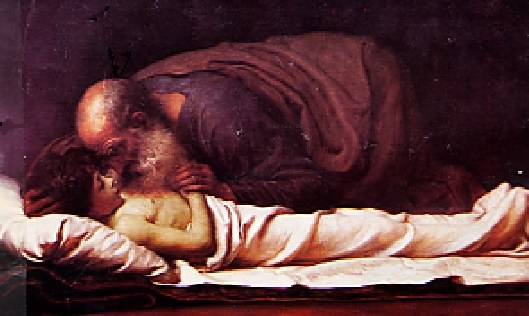
Upon arriving at the home of the Shunammite, Elisha went to his chamber where the dead boy was lying. He shut the door, prayed to the Lord, and then stretched himself on the child. Upon stretching himself on the child a second time, the boy sneezed seven times and opened his eyes (2 Kings 4:32-35). The boy was then restored to his thankful and grateful mother (2 Kings 4:36-37). Sometimes the greatest trials lead to the greatest blessings.

What two miracles did Elisha perform at “meal-time” at the seminary?
[A] 2 Kings 4:38-41. During a famine in the land (perhaps the one predicted by Elisha in 2 Kings 8:1) Elisha sent one of the sons of the prophets out to collect items for a pot of stew. The servant returned with herbs and gourds which were put into the stew. As the sons of the prophets were eating the stew they cried out to Elisha saying, “O man of God, there is death in the pot.” Perhaps they detected a bitter taste with which they were unfamiliar. Elisha threw some meal into the pot and the stew was made edible.

[B] 2 Kings 4:42-44. Elisha multiplied some food brought to the sons of the prophets by a man from Baal-shalishah. This food represented the first-fruits of the man’s crops and was done in obedience to the law (Numbers 18:13 and Deuteronomy 18:1-5). The food was used to feed a hundred of the sons of the prophets (perhaps at Gilgal).

Practical Considerations

Both the poor and the rich are subject to the trials of life.
No one is exempt from life’s trials. Both the widow and the Shunammite woman experienced the grief of loss and the pressures of life. To their credit, both women turned to Elisha, the man of God, for guidance and help in dealing with their respective trials.

We must exercise faith in the midst of life’s trials.
Both the widow and the Shunammite woman exercised great faith in the midst of their trials. These women expected God to act on their behalf. Someone has said that expectant faith honors God and God honors expectant faith.

Little becomes much in God’s economy.
Both the widow and the man from Baal-shalishah made what they had available to God. The widow’s oil was multiplied to meet her needs and the farmer’s first-fruits were multiplied to feed a hundred men. God can use what we offer in faith and obedience.

Kindness begets kindness.
The Shunammite woman treated the servants of God with kindness. Elisha was not unmindful of that kindness and sought to repay it, even though the woman did not look for any recompense. Our appreciation for the kindness of others should express itself in gratitude.

We should support the work of God with whatever resources we have.
Both the Shunammite woman and the man from Baal-shalishah used their resources to support God’s servants and God’s work. It is both good and wise to invest our resources in God’s kingdom. The gifts of these individuals were timely and met many needs.

Great trials can lead to great blessings.
The widow, the Shunammite woman, and the sons of the prophets experienced the miraculous power and provision of God in the midst of their great trials. Great trials offer God an opportunity to do great things.

2 Kings 5

What do we know about Naaman? (2 Kings 5:1)
[A] He was a captain of the army of the king of Aram (Syria).

[B] He was a great man with his master, the king of Aram (Ben-hadad), and highly respected by the people (probably because of his military exploits).

[C] He had been used by the Lord to bring victory in battle to Aram.

[D] “But he was a leper.” Lepers were not excluded from society in Syria as in Israel. Naaman must have been in the earliest stages of the disease. There was no known cure for leprosy in Naaman’s day (nor is there a cure today).

Note: Naaman was plagued by the conjunction, “but.” Many people today are plagued by the same conjunction: “He is a nice person but. . .” or “She is a good housekeeper but. . .” Someone has written, “Every man has some but or other in his character, something that blemishes and diminishes him, some alloy to his grandeur, some damp to his joy.”

What influence did the “little girl from the land of Israel” have on Naaman? (2 Kings 5:2-4)
Naaman’s wife had a servant girl from Israel. This little girl had been taken captive by a band of Syrians. Her presence in Naaman’s home made her aware of her master’s plight. The little girl had both pity and piety. She expressed to her mistress her wish that Naaman were in Israel where the prophet Elisha could cure him. It is interesting to note that there is no previous record of Elisha ever having healed a leper. Naaman followed-up on the little girl’s suggestion (perhaps as a final course of action) and went to his master to secure permission to go to Israel.

Note: This little girl meets the qualifications of a witness. She was genuinely interested in the welfare of others. She was not afraid to share where others could find the cure for their disease. She took advantage of an opportunity to share her good news. God sometimes uses little voices to deliver great messages.

How did the king of Aram assist Naaman? (2 Kings 5:5)
The king assisted Naaman by providing him with a letter of introduction to the king of Israel. This letter probably demanded that whatever means available be employed to heal Naaman as indicated in the verses that follow. In addition to the letter, Naaman “took with him ten talents of silver and six thousand shekels of gold and ten changes of clothes” (a small fortune!).

How did the king of Israel interpret (or misinterpret) the letter from the king of Aram? (2 Kings 5:6-7)
The king of Israel (probably Jehoram), interpreted the letter as an attempt by the king of Aram to pick a quarrel and declare war against Israel. The king of Israel was so distraught over the situation that he tore his clothes.

What did Elisha do when he heard about the events in the court of the king? (2 Kings 5:8-9)
When Elisha received word about the king’s despair over the situation he sent word to the king to send Naaman to him. Elisha wanted for Naaman to know that there was a true prophet in Israel. Naaman and his entire company went to the house of Elisha and “stood at the doorway.”

What brief and simple instructions did Elisha issue to Naaman? (2 Kings 5:10)
Elisha sent a messenger to Naaman instructing him to wash in the Jordan river seven times. This action, assured Elisha, would result in complete healing of the leprosy.

What was Naaman’s response to Elisha’s instructions? (2 Kings 5:11-12)
“Naaman was furious and went away.” He expected Elisha to come out and perform some kind of healing ritual. As one commentator noted, “Naaman thought there was some royal cure for a royal patient, and an honorable way to deal with such an honorable man.” In addition, if Naaman had to wash seven times he did not want to wash in the muddy Jordan. After all, there were better rivers in which to wash back home. “So he turned and went away in a rage.”

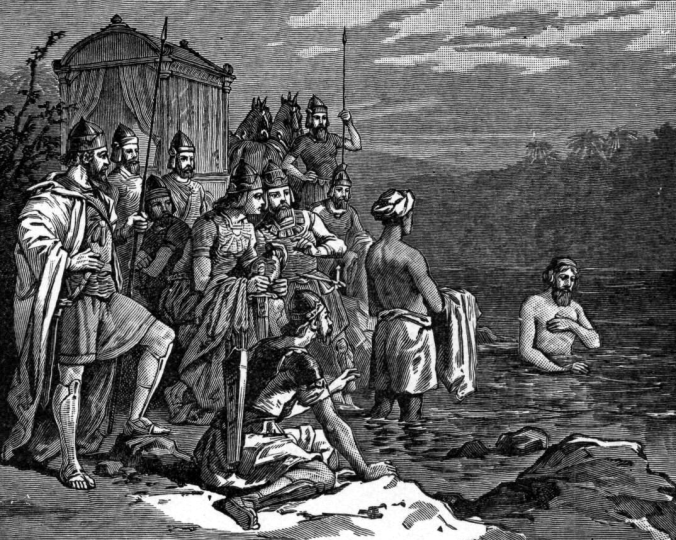
Fortunately for Naaman his servants calmed him down and urged him to obey the prophet’s simple instructions. They pointed out that if Elisha had asked him to do some great deed he would have done it. Why not then, do a simple thing? Naaman listened to his servants and washed in the Jordan according to Elisha’s instructions “and his flesh was restored like the flesh of a little child, and he was clean.” Naaman’s cure was complete.

Note: Notice Naaman’s response, “Behold, I thought. . .” Many people become furious and angry over situations because their expectations were not met. “But I thought you were going to. . .” or “I thought you should have. . .”

What did Naaman do after he was healed? (2 Kings 5:15-19).
[A] He returned to Elisha’s home to express his gratitude (unlike the nine ungrateful lepers in Luke 17:11-19). He offered a present to Elisha who strongly refused to accept any gift.

[B] He came to a new understanding about God and became a monotheist. He publicly acknowledged God before all the people accompanying him. In addition, he asked Elisha for “two mules’ load of earth” which he probably intended to use to build an altar. Some feel that Naaman thought that God was a local deity and therefore that he needed some Israelite soil in order to communewith Him from Syria.

[C] He asked for forgiveness for having to accompany his master into the house of Rimmon (a deity worshiped by the Syrians), which apparently was a part of his duties to the king. Elisha’s response (2 Kings 5:19) indicates that both of Naaman’s requests were granted.

What did Gehazi do after Naaman’s departure? (2 Kings 5:20-27)
[A] He plotted to take something from Naaman.

[B] He pursued Naaman and lied to him in order to “take something from him.” In lying to Naaman, Gehazi misrepresented Elisha and dishonored God. His carefully fabricated lie moved the grateful Naaman to give him the money and clothes he requested for the aid of the “two young men of the sons of the prophets.”

[C] Like Achan (see Joshua 7), Gehazi deposited the things in his home.

[D] He lied to Elisha about his absence. Someone has noted, “He who tells a lie is not sensible how great a task he undertakes; for he must be forced to invent twenty more to maintain one.” And another commentator has noted. “Let us be careful not to want anything beyond the reach of honesty.” Elisha rebuked Gehazi and cursed both him and his descendants with “the leprosy of Naaman” and Gehazi “went out from his presence a leper as white as snow.

Practical Considerations

Even the greatest people have problems.
Naaman was a great and respected military leader but he was a leper. No individual is exempt from problems regardless of rank, race, or riches. People must learn to take their problems to God who invites us to cast our every care upon Him (1 Peter 5:7).

We should take advantage of every opportunity to point people to God.
The little Israelite servant girl in Naaman’s household was a bold witness for God. She probably witnessed the pain in Naaman’s household and his frustration at being unable to be cured of leprosy. She had faith both in her God and in God’s servant and was not afraid to boldly proclaim that the man of God could heal her master. We should be as bold as the little servant girl in proclaiming the truth about God and in pointing people to God.

God’s instructions are simple. . .the difficulty is in obeying.
Elisha gave Naaman very simply yet specific instructions regarding how to be healed of his leprosy. God’s instructions are generally simple though specific. The problem is not with God’s instructions but with man’s unwillingness to obey those instructions.

Our preconceived notions can get us into trouble.
Naaman became furious when he received Elisha’s instructions for healing. He “thought” (2 Kings 5:11) that the matter should have been handled differently. He allowed his pride to blind him to his awful predicament and went away in a rage. Fortunately, there were some people who had better perspective than Naaman and encouraged him to obey the prophet’s instructions. After obeying, Naaman said, “Behold now, I know. …” (2 Kings 5:15). Men can never “know” the wonderful things God can do for them if they fail to obey Him according to His Word.

We should never fail to express our gratitude to God.
To Naaman’s credit, he returned to express his appreciation to the man of God. There are many who forget to express appreciation once they receive whatever blessing or benefit they hoped for. We should cultivate an attitude of gratitude.

The love of money is a root of all sorts of evil.
Paul told Timothy that “the love of money is a root of all sorts of evil” (1 Timothy 6:10). Gehazi illustrates the truth of Paul’s words. Gehazi had no regard for his master or for God. He selfishly pursued Naaman with the intent of taking something from him. His lust for material things caused him to lie and put aside his integrity.

Lies beget lies.
“O what a tangled web we weave when first we practice to deceive.” When a man lies he must fabricate even more lies in order to support his initial lie. As a man tells lies to cover lies he soon finds that he cannot remember what he has told to whom and eventually is snared by his own deceit. “He who walks in integrity walks securely, But he who perverts his ways will be found out” (Proverbs 10:9).

2 Kings 6

What miraculous incident is recorded in 2 Kings 6:1-7?
2 Kings 6:1-7 records an incident that occurred during a construction project by the sons of the prophets. Apparently, the sons of the prophets had grown in number under Elisha’s leadership resulting in the need for additional housing (2 Kings 6:1).

The sons of the prophets obtained permission from Elisha to expand their living quarters. Their plan was to secure beams for the project from the vicinity of the Jordan (2 Kings 6:2). Elisha accompanied the sons of the prophets on their expedition for building materials (2 Kings 6:3-4).

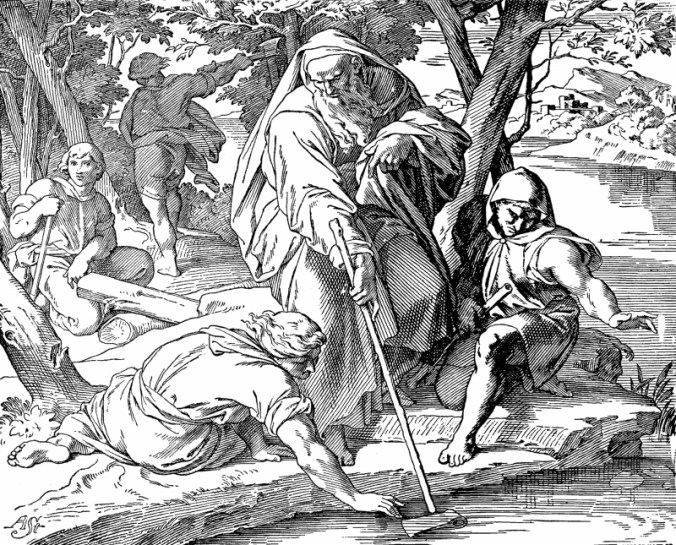
As one of the young men was felling a beam, the axe head fell off the handle into the water. This was a matter of great concern for the young man because the implement was borrowed and he was probably too poor to replace it (2 Kings 6:5).

The young man appealed to Elisha for help. Elisha’s help was both miraculous and practical. He first asked the young man to identify the place where the axe head fell. Elisha then threw a stick into the water at the place where it was lost “and made the iron float” (2 Kings 6:6). Elisha then asked the young man to recover what he had lost (2 Kings 6:7).

How were the efforts of the king of Aram frustrated while he was warring with Israel? (2 Kings 6:8-12)
The king of Aram (Ben-hadad) was sending marauding bands into Israel. These raids were obviously planned and coordinated (2 Kings 6:8). Elisha however, had the miraculous ability to know the plans of the Arameans, even the most secret plans (2 Kings 6:12). Elisha informed the king of Israel (probably Jehoram) regarding the location of the enemy encampments so that he could avoid passing through those locations. This happened on more than one occasion (2 Kings 6:9-10). The king of Aram became enraged and suspected a spy within his circle (2 Kings 6:11). One of his servants however, assured him that there had been no breach of security among his own men, but that the prophet Elisha was telling the king of Israel even “the words that you speak in your bedroom” (2 Kings 6:12).

What action did the king of Aram take to deal with Elisha? (2 Kings 6:13-14)
The king of Aram ascertained where Elisha was staying. Elisha was staying in Dothan, a town south of Jezreel and north of Shechem (2 Kings 6:13). The king of Aram then “sent horses and chariots and a great army there, and they came and surrounded the city” (2 Kings 6:14). He hoped to capture the prophet who kept frustrating his military efforts.

What action did Elisha take to deal with the king of Aram? (2 Kings 6:15-19)
Elisha’s servant discovered the Aramean army early in the morning by (2 Kings 6:15). Fearing for the life of Elisha as well as his own, he went and informed his master of the great host assembled outside the city ( 2 Kings 6:16). Elisha told his servant not to fear and prayed that his eyes might be opened to behold the host of the Lord (2 Kings 6:16-17). Elisha then prayed that the entire invading army be struck with blindness (2 Kings 6:18). Elisha then led his captives to the Israelite capital city of Samaria (2 Kings 6:19).

How were the captives treated? (2 Kings 6:20-23)
[A] Elisha prayed that the sight of his captives might be restored (2 Kings 6:20). When their eyes were opened they found themselves “in the midst of Samaria.” What a surprise!

[B] The king of Israel, not knowing exactly what to do, asked Elisha whether he should kill them (2 Kings 6:21). Notice that he referred to Elisha as “My father. . .” signifying the respect that he had for Elisha.

[C] Elisha ordered that the lives of the captives be spared and that they be treated humanely (2 Kings 6:22). The captives were given water and bread. 2 Kings 6:23 records that “he prepared a great feast for them.”

[D] Once the men had eaten, they were allowed to return to their country (2 Kings 6:23). Once home they probably reported to their king how their lives had been spared. The impact of this course of action is seen in that “the marauding bands of Arameans did not come again into the land of Israel.”

What happened when the king of Aram later besieged Samaria? (2 Kings 6:24-33)
[A] After an interval when there were no more raids by marauding bands of Arameans, the king of Aram (Ben-hadad) gathered his army and besieged Samaria (2 Kings 6:24).

[B] After a period of time the inhabitants of Samaria began to suffer famine. The people were so desperate for food that they bought forbidden food and even animal dung for exorbitant prices (2 Kings 6:25).

[C] The severity of the famine is illustrated by an incident involving two mothers who agreed to boil and eat their own children to fend off death by starvation. One of the women gave her son to be eaten on one day with the understanding that the other woman would offer her son on the next day. The woman with the still living son did not keep her word and hid her son. When the king learned of this he tore his clothes and put on sackcloth. He then vowed to kill Elisha. (2 Kings 6:26-31)

[D] The king sent a messenger to Elisha with the message, “Behold, this evil is from the Lord; why should I wait for the Lord any longer?” (2 Kings 6:32-33). This indicates that Jehoram was ready to give up and surrender to the enemy.

Practical Considerations

God is interested in all of our cares and sorrows.
The miracle in the previous chapter (2 Kings 5) was done for a great and famous man. The miraculous cleansing of Naaman no doubt became the talk of the town. In contrast, the miracle of 2 Kings 6 involved a poor, nameless, and obscure young prophet. This serves to illustrate that God is interested in the great and the small, the famous and the obscure. It further illustrates that God is interested in all of our cares and sorrows, however small or insignificant they might seem.

We must warn others of known danger.
Elisha was somehow miraculously made aware of the evil plots of the king of Aram. He did not hesitate to warn the king of Israel of the potential danger of traveling into certain regions. In like manner, we should warn others of known danger lest they travel into certain regions and encounter temptations and situations that can harm them.

The enemies of God will not hesitate to offer intense opposition.
The king of Aram went to great lengths to try to capture and silence the prophet responsible for frustrating his military plots. The enemies of God will not hesitate to put all their efforts into opposing both the people and things of God.

God takes care of His own.
The servant of Elisha had his eyes opened to behold the unseen forces of God at the ready. Elisha confidently reassured his servant, “Do not fear, for those who are with us are more than those who are with them” (2 Kings 6:16). We too, are reassured in I John 4:4, “You are from God, little children, and have overcome them; because greater is He who is in you than he who is in the world.”

2 Kings 7

What unbelievable news did Elisha have for the king? (2 Kings 7:1-2)
Elisha predicted that there would be an abundance of food on the following day. The “royal officer” of the king doubted Elisha’s incredible prophecy. As a result, Elisha told him that he would see but not partake of the miraculous provision of food for the starving inhabitants of the besieged city. Someone has noted, “Unbelief is highly offensive to God; it is the parent of the grossest sins, and deprives man of the richest blessings.”

How was the word of Elisha fulfilled? (2 Kings 7:3-8)
Four leprous men reasoned that since they were going to die anyway as a result of the siege, they might as well die trying. These men went to the Aramean (Syrian) camp to beg for food but, to their amazement, found the camp fully provisioned but deserted. The men ate to their satisfaction and plundered the camp for valuables.

Why was the Aramean camp deserted? (2 Kings 7:5-7)
The Arameans abandoned their camp in haste because the Lord caused them to hear sounds in the night that sounded like a mighty invading army. The Arameans reasoned that it was probably a coalition of Israelites, Hittites, and Egyptians coming against them (see Proverbs 28:1). Such an army would easily defeat them so they fled for their lives while they felt there was still time, leaving everything behind and scattering items as they fled (see also 2 Kings 7:15).

What did the four leprous men do when they were satisfied? (2 Kings 7:9-14)
Once they had eaten and hidden valuables, the lepers felt convicted that they were not doing the right thing. Fearing punishment, they returned to the city to report their findings to the king. The king, initially reasoning that this was a trap (see 2 Kings 7:12), agreed to send a small contingent to “Go and see” (2 Kings 7:14). The king’s men thus confirmed the report of the lepers.

Note: The city had been delivered from the enemy but did not know it. The inhabitants could have remained secure but dying within their walls. Ignorance, and not the sword, could have ultimately killed them were it not for the testimony of the four leprous men.

Practical Consideration: We have a moral obligation to share the good news.
The four lepers who found the abandoned Syrian camp reasoned, “This day is a day of good news, but we are keeping silent. . .Now therefore come, let us go and tell the king’s household” (2 Kings 7:9). The lepers felt they had a moral obligation to share their good news with those still suffering under the siege of the enemy. We too, have a moral obligation to share the good news with others. The Apostle Paul declared, “I am under obligation both to Greeks and to barbarians, both to the wise and to the foolish” (Romans 1:14). Every believer is under obligation to share the good news of Jesus Christ with others.

What did the people do when they received the news? (2 Kings 7:16-20)
Upon receiving the news of the abandoned Syrian camp, the starving people rushed from the city to plunder the camp. Interestingly, as the throngs of people rushed from the once besieged city, they trampled to death the royal officer who had doubted the word of Elisha.

2 Kings 8

What advice did Elisha give to the Shunammite woman? (2 Kings 8:1-2)
Elisha told the woman that there was going to be a seven-year drought in the land and advised her to live elsewhere during that period of time. The woman and her household thus went to live in the land of the Philistines to avoid the drought and resulting famine. (Someone has noted that even the shade of a tree you don’t like can shelter you from the storm!)

What happened when the woman returned to her home after the seven-year period? (2 Kings 8:3-6)
Upon returning home, the woman discovered that someone had taken advantage of her absence by taking her property (perhaps it was the king or some relative). She therefore went to appeal to the king to have her property returned to her.

Meanwhile, Gehazi, Elisha’s servant, was relating to the king all the great things that Elisha had done, not the least of which was raising a dead boy to life. (This event probably occurred prior to Gehazi being cursed with Naaman’s leprosy.) While Gehazi was relating the events of Elisha’s deeds to the king, the Shunammite woman was admitted into his presence.

Gehazi confirmed the woman’s identity and the woman confirmed Gehazi’s story. The king then ordered that the woman’s property be returned along with anything that land had produced during her absence.

Practical Consideration: Good deeds do not always go unnoticed.
King Jehoram asked Elisha’s servant Gehazi to relate to him all the great things that the prophet had done. It is easy to think that no one notices the good that we do. We should however, labor knowing that God is watching and that the good which we do may be an encouragement to others. Jesus said, “Let your light shine before men in such a way that they may see your good works, and glorify your Father who is in heaven” (Matthew 5:16).

Who was Hazael? (2 Kings 8:8)
Hazael was a man who served on the court of Ben-hadad, king of Aram.

What encounter did Elisha have with Hazael? (2 Kings 8:7-10)
When Ben-hadad became seriously ill he was informed that Elisha was in Damascus. The king, who had once sought to capture the prophet (see 2 Kings 6:8-23), sent Hazael to inquire of Elisha regarding the outcome of his illness. Hazael, laden with gifts, went and so inquired of Elisha. Elisha told Hazael that while his master would recover from his illness, he would nevertheless surely die.

What did Elisha know about Hazael? (2 Kings 8:11-15)
While Hazael feigned altruistic concern for his master, Elisha knew the evil lurking in Hazael’s heart. He knew that Hazael would usurp the throne of Syria by killing Ben-hadad. He also knew that Hazael would perpetrate great evil upon the sons of Israel. This knowledge caused Elisha to weep. And indeed Hazael murdered his master and perpetrated many atrocities upon the Israelites during his more than forty-year reign.

Practical Consideration: The heart of man is deceitful.
A recent news report announced that doctors in a Portland, Oregon hospital placed the wrong heart within a transplant patient. They felt, however, that the man would live long enough to undergo another operation and receive the right heart. The only thing that is worse than receiving the wrong heart is living life with a heart that is wrong. Jeremiah 17:9 declares, “The heart is more deceitful than all else and is desperately sick; Who can understand it?” Elisha had insight into the heart of Hazael and wept at the evil he saw lurking there. May we always allow the Great Physician access to our hearts. He is the only One who understands the heart and is capable of making a heart right.

What does the Bible tell us about Joram (Jehoram)?
[A] He was the son of good king Jehoshaphat (king of Judah). Ahab also had a son named Joram (Jehoram) who ruled in Israel (see pages 4 and 5 of these notes). The two should not be confused.

[B] He began his reign at the age of thirty-two and reigned eight years in Jerusalem.

[C] He was an evil king who “walked in the way of the kings of Israel” (2 Kings 8:18 and 2 Chronicles 21:6). He was probably influenced to do evil by his wife Athaliah, Ahab’s daughter (see 2 Kings 8:26 and 2 Chronicles 22:2). This was a poor matrimonial alliance, to say the least.

[D] Jehoram “killed all his brothers with the sword, and some of the rulers of Israel also” (2 Chronicles 21:4) when he became king of Judah.

[E] He led Judah spiritually astray (2 Chronicles 21:11).

[F] He was unsuccessful in putting down the revolts of Edom and Libnah (2 Kings 8:20-23)

[G] Elijah sent him a letter informing him that both he and his family would suffer severe judgment because of their wickedness (2 Chronicles 21:12-15).

[H] His death was no great loss and upset no one! 2 Chronicles 21:20 records, “and he departed with no one’s regret.”

Practical Consideration: Live so that people will cry at your funeral.
King Jehoram of Judah was such a wicked ruler that when he died no one cried at his funeral. In fact, the writer of Chronicles records that “he departed with no one’s regret” (2 Chronicles 21:20). How sad! We should live our lives in such a way that people will cry at our funeral.

Who was Ahaziah?
[A] He was the youngest son of Joram who became king of Judah after his father’s death (2 Kings 8:24-25)

[B] He began his reign at the age of twenty-two and reigned only one year in Jerusalem (2 Kings 8:26).

[C] Like his father, he too, was influenced to do evil because of his relation to the house of Ahab (2 Kings 8:27 and 2 Chronicles 22:4). He was especially influenced to do evil by his mother (2 Chronicles 22:3).

2 Kings 9

What does the Bible tell us about Jehu?
[A] He was “the son of Jehoshaphat the son of Nimshi” (2 Kings 9:2). His father was not the Jehoshaphat who was the king of Judah.

[B] He was a captain in the army of Israel (2 Kings 9:5).

[C] Elijah was instructed by God to anoint Jehu king over Israel (1 Kings 19:16).

[D] He had a reputation as a furious chariot-driver (2 Kings 9:20).

Who anointed Jehu king over Israel?
Although Elijah had been instructed to anoint Jehu king over Israel, the task was left to his successor Elisha. Elisha did not personally anoint Jehu but rather sent one of the sons of the prophets to Ramoth-gilead to anoint him (2 Kings 9:1). The servant of Elisha did as he was instructed. He found Jehu sitting among his brothers and privately anointed him king over Israel in a house. Afterwards the servant “opened the door and fled” (2 Kings 9:10).

What instructions/commission did Jehu receive at his anointing?
Jehu was commissioned to be God’s instrument of judgment on the evil house of Ahab (2 Kings 9:7-10 and 2 Chronicles 22:7). Ahab’s whole house was to be completely destroyed because of all the evil Ahab and Jezebel inflicted upon God’s prophets and servants. God does not forget the sufferings and wrongs inflicted upon His people. In addition, the servant proclaimed that Jezebel would be killed, eaten by dogs, and left unburied (2 Kings 9:10). Payday was coming.

Practical Consideration: Wrong cannot triumph forever.
Someone has noted that while the wheels of God’s justice move slowly, when they come they grind finely. God gave the house of Ahab every opportunity to repent. The refusal of the house of Ahab to repent and its determination to walk contrary to God’s law invited God’s judgment. The Apostle Paul reminds us that God is not mocked and that we cannot break the law of the harvest (see Galatians 6:7). Wrong cannot triumph forever nor can it escape the awful judgment of God.

Who publicly proclaimed Jehu king?
The captains of the army who were sitting with Jehu when the servant of Elisha came publicly proclaimed him king, after Jehu shared with them what had happened in the house (2 Kings 9:11-13). With the support of the army, Jehu had the means for fulfilling his commission.

How did Jehu fulfill his commission against the house of Ahab?
[A] 2 Kings 9:14-16 amplify 1 Kings 8:29. After being wounded in battle, Jehoram (Joram) “returned to Jezreel to be healed of the wounds” (2 Kings 9:14). While recovering from his wounds, he received a visit from Ahaziah (2 Kings 8:29 and 9:16). Jehu issued an order that no one be allowed to leave Ramoth-gilead lest his plan to destroy the house of Ahab be revealed in Jezreel (2 Kings 9:15).

[B] Jehu led a company of men to Jezreel where Jehoram (Joram) was recovering from his battle wounds. The watchman on the tower saw the approaching band and reported it to Jehoram (Joram). The king sent a messenger to meet the approaching band to in an effort to determine their intentions. The messenger joined Jehu’s band as did a second messenger sent out by the king (2 Kings 9:17-20). As the band neared the city the watchman determined Jehu was leading them (2 Kings 9:20).

[C] King Jehoram (Joram) decided to go out and meet Jehu. Jehoram and Ahaziah (king of Judah) then drove their chariots to meet Jehu “and found him in the property of Naboth the Jezreelite” (2 Kings 9:21). Jehoram asked Jehu, “Is it peace?” to which Jehu replied that there could be no peace as long as Jezebel’s evil influence remained (2 Kings 9:22). Jehoram, sensing immediately that things were not right, turned and fled on his chariot. Jehu however, drew his bow and slew him with an arrow through the heart (2 Kings 9:23-24). He then ordered an officer named Bidkar to deposit the body of Jehoram on the field of Naboth in fulfillment of the word of the Lord (2 Kings 9:25-26 and 1 Kings 9:21:19).

What happened to King Ahaziah?
Ahaziah fled from the presence of Jehu. Jehu ordered his men to shoot Ahaziah in his chariot. Jehu’s men shot Ahaziah “but he fled to Megiddo and died there” (2 Kings 9:27). His servants then buried him in Jerusalem (2 Kings 9:28). Jehu ordered his men to kill Ahaziah because he was related to Ahab and “walked in the way of the house of Ahab” (see 2 Kings 8:26-27).

What did Jezebel do when she heard that Jehu was in Jezreel leading a coup d’ état?
Jezebel put on her cosmetics and adorned herself (2 Kings 9:30). Some suggest that she may have done so because of the belief that her appearance in the next world would be a continuation of the way she looked at death. When Jehu arrived in Jezreel, Jezebel looked out the window and referred to Jehu as Zimri (2 Kings 9:31) who assassinated Elah (destroying the evil house of Baasha) and usurped the throne of Israel (see 1 Kings 16:8-20). Zimri reigned only seven days and then committed suicide when Omri was made king over Israel. Perhaps Jezebel was trying to intimidate Jehu and suggest that his fate would be similar to Zimri’s.

Practical Consideration: Pride goes before destruction.
The writer of Proverbs (16:18) declared, “Pride goes before destruction, and a haughty spirit before stumbling.” When Jezebel learned of Jehu’s coup d’ ‚tat she did not repent or humble herself in any way, but rather adorned herself and behaved as arrogantly and defiantly as she always had. She tenaciously held on to her pride to the moment of death. Jezebel certainly illustrates the fact that pride goes before a fall!

How was Jezebel slain?
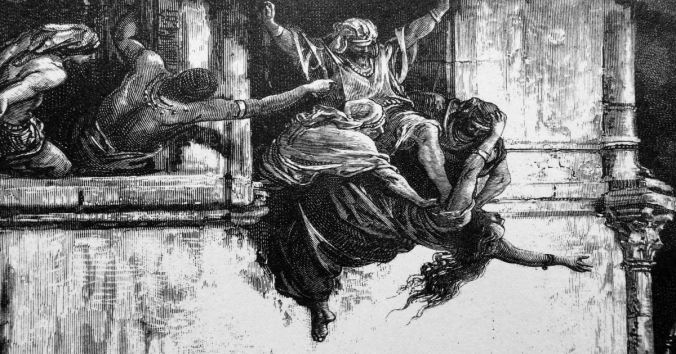
Jehu looked up to Jezebel’s window and asked who among those present with her were on his side. Two or three officials indicated their loyalty to Jehu and threw Jezebel from the window at his command. Jezebel fell to the ground where Jehu “trampled her under foot” (2 Kings 9:33) with his chariot.

Later, while dining, Jehu remembered that Jezebel was still lying dead on the ground and ordered that she be buried. When those assigned to bury her found her body the dogs, with the exception of her skull, hands, and feet, had already eaten it. Someone has suggested that not even the dogs would eat a mind that had conceived such evil, hands that had acted so wickedly against God, and feet that had not walked in His path. Jezebel’s death fulfilled the word of the Lord spoken through Elijah (see 1 Kings 21:23).