2 Samuel 4

2 Samuel 4:1
4:1 When Ish-Bosheth son of Saul heard that Abner [the man who had established Ish-Bosheth as Israel’s king (2 Sam. 2:8-9); the power behind the throne (cf. 2 Sam. 3:11)] had died in Hebron, he lost courage, and all Israel became alarmed.

2 Samuel 4:5-6
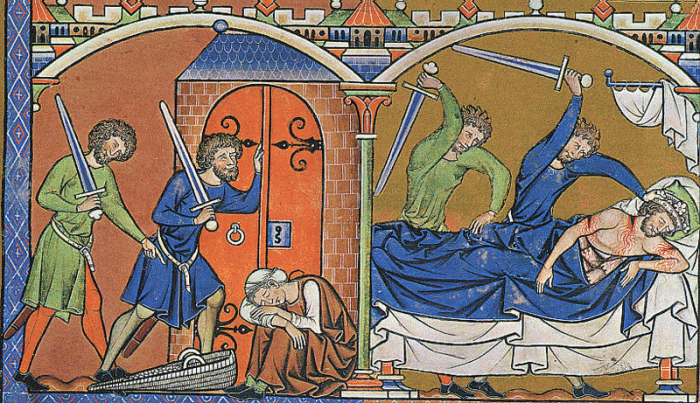
4:5 Now Recab and Baanah [served Ish-Bosheth as leaders of raiding bands (4:2)], the sons of Rimmon the Beerothite, set out [with malicious and premeditated intent to murder Ish-Bosheth] for the house of Ish-Bosheth, and they arrived there in the heat of the day while he was taking his noonday rest [Ish-Bosheth was most vulnerable at this time].

Note: Do you refuse to take advantage of others in order to get what you want? In what ways do you act with an attitude that fosters integrity? How well do you measure on the scale of integrity? Do you prize the attainment of your goals above the means used to achieve them? Do you take advantage of situations that could cause others to question your integrity?

4:6 They went into the inner part of the house as if to get some wheat, and they stabbed him in the stomach [and then decapitated him (4:7)]. Then Recab and his brother Baanah slipped away [they traveled all night to David’s court in Hebron (4:7-8)].

2 Samuel 4:9-11
4:9 David answered [did not answer in the way Ish-Bosheth’s murderers had hoped] Recab and his brother Baanah [these men had underestimated David’s integrity and determination to do things God’s way and wait on His timing], the sons of Rimmon the Beerothite, [David took an oath…] “As surely as the LORD lives, who has delivered me out of all trouble,

4:10 when a man [the Amalekite messenger (1:1-16)] told me, ‘Saul is dead,’ and thought he was bringing good news, I seized him and put him to death in Ziklag. That was the reward I gave him for his news!

4:11 How much more [David felt that the actions of Baanah and Recab were worse than that of the Amalekite]—when wicked men have killed [in a cowardly manner and with self-serving motives] an innocent [Ish-Bosheth had done nothing to warrant his death] man in his own house and on his own bed [helpless and defenseless]—should I not now demand his blood from your hand [accountability] and rid the earth of you! [David ordered the execution of the two men (4:12)]

2 Samuel 5

2 Samuel 5:1-12
5:1 All the tribes [a representative group (the elders of the tribes) rather than all the people (cf. 1 Chron. 12:23-40)] of Israel [without a ruler after the deaths of Ish-Bosheth and Abner] came to David at Hebron [David’s Judean capital located 20 miles south of Jerusalem] and said, [note three factors that convinced Israel’s elders that David should be their new leader…] [1] “We are your own flesh and blood [they could trace their lineage back through Jacob’s sons to Abraham just like David].

5:2 In the past, while Saul was king over us, [2] you [a proven military leader] were the one who led Israel on their military campaigns [read 1 Sam. 18:6-7 re: David’s abilities as a soldier and general]. [3] And the LORD said to you [these words indicate that the elders were aware of God’s earlier words concerning David (1 Sam. 16:1-4,12)], ‘You [David] will shepherd [describes the role God intended for Israel’s kings; as a shepherd David had cared for his father’s sheep (1 Sam. 16:11)] my people Israel, and you [David] will become their ruler [leader; one in front of the people].’”

Note: The word “shepherd” describes the future ruler God would send (Ezek. 34:23). Jesus Christ is the perfect Shepherd (Jn. 10:1-18).

5:3 When all the elders of Israel had come to King David at Hebron, the king made a compact [or “cut a covenant”] with them at Hebron before the LORD [indicates that the ceremony had religious as well as political significance], and they [“all the elders of Israel”] anointed [David first anointed by Samuel (1 Sam. 16:13) and later by the men of Judah (2 Sam. 2:4); this was David’s third anointing] David king over Israel.

5:4 David was thirty years old when he became king, and he reigned forty years [the traditional length of a generation (Num. 32:13; Josh. 5:6); Solomon also reigned forty years (1 Kings 11:42)].

5:5 In Hebron he reigned over Judah seven years and six months, and in Jerusalem he reigned over all [indicates a united nation] Israel and Judah thirty-three years.

5:6 The king [David] and his men [David’s private army (cf. 1 Sam. 23:13)] marched to Jerusalem [located between Judah in south and tribe of Ephraim in north; situated on mountain plateau approx. 2,500 feet above sea level] to attack the Jebusites [part of the native population of Canaan; appear in lists of inhabitants of Canaan that Israel would defeat (Ex. 23:23; Deut, 7:1-2], who lived there. The Jebusites said to David, “You will not get in here; even the blind and the lame can ward you off [a boast that the city was impregnable].” They thought, “David cannot get in here [cf. 1 Chron. 11:5].”

5:7 Nevertheless, David captured the fortress of Zion [first mention of Zion in Bible; the hill on which David built his new capital], the City of David.

5:8 On that day, David said, “Anyone who conquers the Jebusites will have to use the water shaft [cf. 1 Chron. 11:6] to reach those ‘lame and blind’ [the Jebusites] who are David’s enemies.” That is why they say, “The ‘blind and lame’ [the Jebusites] will not enter the [David’s] palace.”

5:9 [1 Chron. 11:5-8] David then took up residence in the fortress and called it the City of David. He built up the area around it, from the supporting terraces inward.

5:10 [1 Chron. 11:9] And he became more and more powerful, because [the reason for David’s success lay in more than his leadership ability and military skill] the LORD God Almighty was with him.

5:11 Now Hiram [later assisted Solomon in building the temple (1 Kings 5:1-12)] king of Tyre [an important Phoenician city] sent messengers to David [Hiram interested in maintaining good relations with David], along with cedar logs and carpenters and stonemasons, and they built a palace for David.

5:12 And David knew that the LORD [the true source of his successes and blessings] had established him as king [David was both a good military and spiritual leader] over Israel and had exalted his kingdom for [note the reason God had brought David to power…] the sake of his people Israel.

Note: David acknowledged God’s hand at work in his life. What are some ways you can acknowledge God’s hand at work in your life?

2 Samuel 7

2 Samuel 7:1-5
7:1 After the king was settled [suggests a certain amount of time had passed since the ark was moved from Kiriath Jearim (1 Chron. 13:5) to Jerusalem] in his palace [built by exceptional Phoenician craftsmen (2 Sam. 5:11)] and the LORD had given him rest [denotes stability God had brought to the empire] from all his enemies around him,

7:2 he said [David’s words reveal his heart for God] to Nathan [first mention of Nathan; apparently appointed by David to serve in the royal court] the prophet, “Here I am, living in a palace of cedar, while the ark of God [the visible representation of God’s presence with His people; cf. 2 Sam. 6:1-19] remains in a tent.”

7:3 Nathan [who had confidence in David] replied [gave his approval before consulting God] to the king [who wanted to honor God], “Whatever you have in mind, go ahead and do it, for the LORD is with you.”

Note: Why should we always ask God for guidance concerning our courses of action (even when we are confident our motives are right)? What steps can we take to insure our human plans are in accordance with God’s will?

7:4 That night the word of the LORD came [perhaps through a dream or a vision] to Nathan, saying:

7:5 “Go and tell my servant [emphasizes David’s submission to God’s will and purpose] David, ‘This is what the LORD [not Nathan; stresses heavenly origin of what Nathan was conveying to David] says: Are you the one to build me a house to dwell in?

Note: David accepted Nathan’s message with humility and thanksgiving (1 Chron. 17:16-27). Rather than growing despondent, David willingly and sacrificially invested in what he would not personally see through to completion. When Solomon was a young man, David made extensive preparations for building the temple (v. 5). He personally purchased a parcel of land from Araunah the Jebusite (see 1 Chron. 21:20-30) and instructed his young son to build the temple at that site (1 Chron. 22:1). He also organized workers (1 Chron. 22:2) and gathered materials for the project (1 Chron. 22:3-4). David did his best to strengthen the hand of the one who would fulfill his dream (1 Chron. 22:14-16).

2 Samuel 7:8-16


7:8 “Now then, tell [God gave Nathan a message to deliver to David] my servant [although David was king surrounded by many who served him, he also was a servant of God] David, `This is what the LORD Almighty [El Shaddai, a name that emphasizes God’s mighty power; cf. Gen. 17:1 re: use of “God Almighty”] says: I [a reminder that God caused everything good in David’s life to happen] took you from the pasture and from following the flock to be ruler over my people Israel.

7:9 I have been with you wherever you have gone, and I have cut off all your enemies [recent enemies were the Jebusites (2 Sam. 5:6-7) and the Philistines (2 Sam. 5:25)] from before you. Now I will make your name great, like the names of the greatest men of the earth.

7:10 And I will provide a place [the promised land] for my people Israel and will plant them so that they can have a home of their own and no longer be disturbed. Wicked people [such as the Egyptians] will not oppress them anymore, as they did at the beginning

7:11 and have done ever since the time I appointed leaders over my people Israel. I will also give you rest from all your enemies [cf. 7:1]. “‘The LORD declares to you that the LORD himself will establish a house [a family dynasty of national leadership] for you [indicates that although God rejected David’s offer to build a physical structure for Him, God did not reject David]:

7:12 When your days are over and you rest with your fathers [refers to David’s death], I will [these words stress the Lord’s role in building David’s house] raise up your offspring to succeed you, who will come from your own body, and I will establish his kingdom.

7:13 He is the one [emphasize God’s sovereign choice of David’s descendant] who will build a house [no earthly structure can contain God (cf. 1 Kings 8:27)] for my Name [the temple would serve as a reminder of God’s presence among His people], and I will establish the throne of his kingdom forever [God sent Jesus (a legal descendant of David as per Matt. 1:6-17; Lk. 3:23-31) to create an eternal kingdom].

7:14 I will be his father, and he will be my son. When he [Solomon (and his descendants)] does wrong, I will punish him with the rod of men, with floggings inflicted by men.

7:15 But my love [Heb. “hesed”; mercy; lovingkindness; God’s faithful, loving commitment] will never be taken away from him, as I took it away from Saul [cf. 1 Sam. 13:13-14], whom I removed from before you.

7:16 Your house [Heb. “bayit”; can refer to a building, a household, a family, or a dynasty; in this context refers to a dynasty from which Israel’s kings would come] and your kingdom will endure forever before me; your throne will be established forever.'”

2 Samuel 7:18
7:18 Then King David went in [to the tent where the ark of God was housed] and sat before the LORD, and he said: “Who am I [words stress David’s feelings of unworthiness of the good favor shown to him by God], O Sovereign LORD, and what is my family, that you have brought me this far [refers to God’s work in David’s life up to this point]?

2 Samuel 7:21
7:21 For the sake of [emphasizes that God was acting for His ultimate glory] your word and according to your will, you have done this great thing [emphasizes what God had already done in David’s life and what He had just promised to do] and made it known to your servant.

2 Samuel 7:25-27
7:25 “And now, LORD God, keep [cause to stand] forever the promise [literally means “word”] you have made concerning your servant and his house [indicates that David accepted God’s promise to him]. Do as you promised [literally means “said”],

7:26 so that your name [God’s reputation] will be great forever [acknowledgment that God’s promise was for something greater than David’s personal benefit]. Then men will say [note what David wanted other nations to see…], ‘The LORD Almighty is God over Israel!’ And the house of your servant David will be established before you.

7:27 “O LORD Almighty, God of Israel, you have revealed this to your servant [to David, God’s promise was as good as accomplished], saying, ‘I will build a house for you.’ So your servant has found courage [literally means “found his heart”] to offer you this prayer.

2 Samuel 22

Note: This psalm of victory is almost identical to Psalm 18.

2 Samuel 22:1-7
22:1 David sang to the LORD the words of this song when [or after; note the occasion of writing] the LORD delivered him from the hand of all his enemies and [separate mention of Saul indicates David did not consider him an enemy (what grace!)] from the hand of Saul.

Note: We are to praise God for who He is as well as for what He accomplishes for us and through us.

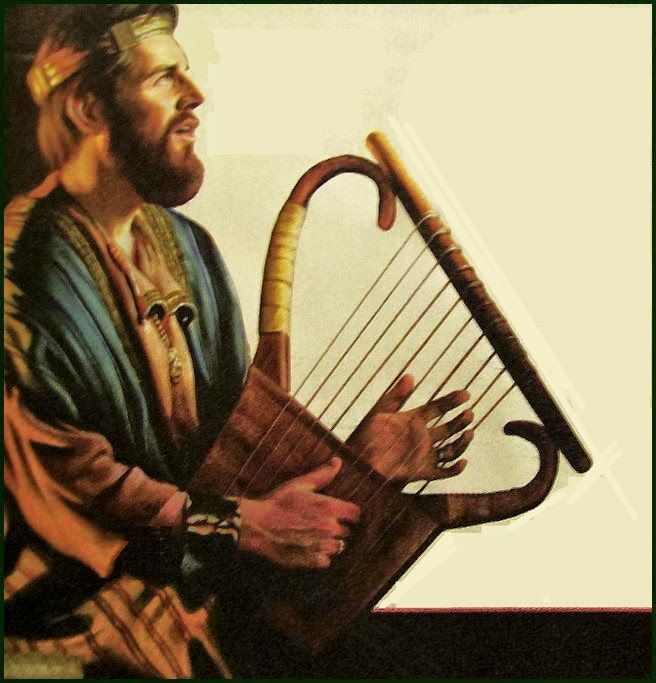
22:2 He said: “The LORD is my rock [a common poetic figure for God (cf. Deut. 32:4,15; 1 Cor. 10:4); term denotes a large craggy formation that affords shelter/concealment and that can be easily defended], my fortress [a place of refuge and safety] and my deliverer [cf. Ps. 40:17; 144:2];

22:3 my [indicates that David had a personal relationship with God] God is my rock [denotes a place of protection in distressing times where one might find and take refuge], in whom I take refuge, my shield [cf. Ps. 5:12; 84:11] and the horn [symbol of strength and power] of my salvation [for David this was a reference to physical and political salvation; cf. Lk. 1:69]. He is my stronghold [denotes a secure height], my refuge [comes from a word that means “to flee” and emphasizes the Lord as One to whom David could flee for protection and security] and my savior— from violent men [Saul, Absalom, and Sheba were among those who had tried to kill David; literally means “unjust violence”] you save me.

Note: For what deliverances in your life, physical and spiritual, can you praise the Lord as a great Savior?

22:4 I call to [note that David did not call on his troops or allies to save him] the LORD, who is worthy of praise [related to the word “hallelujah”], and I am saved from my enemies.

Note: How has God proved to you that He is the responsive Savior? How will you demonstrate your dependence on God in your present circumstances?

22:5 “The waves of death [metaphor describes trials that seemed as ocean currents] swirled about me; the torrents [refers to flash floods] of destruction [word translated “destruction” is “belial” (name for Satan in 2 Cor. 6:15) and denoted a worthless thing or ungodly person (cf. 2 Sam. 20:1 re: Sheba); “floods of ungodly men” KJV] overwhelmed [to submerge or engulf] me.

22:6 The cords of the grave [“sorrows of hell” KJV] coiled around me; the snares of death confronted me.

22:7 In my distress [describes a tight spot in which one is hemmed in] I called to [who we call in times of distress is important] the LORD; I called out to my God [cf. Heb. 4:16]. From his temple he heard my voice; my cry came to his ears [cf. Ps. 130:1-2].

Note: Why was physical distance not a barrier in David’s relationship with God? Why are we able to call on God any time, any place, and know that He will hear our prayers? Why should God’s availability to us cause us to have an attitude of thanksgiving?

2 Samuel 22:26-29
22:26 “To the faithful [basically means “to be kind and gracious, to be pious or merciful”] you show yourself faithful, to the blameless [requires that one be perfectly, wholly God’s, displaying integrity in word and deed; cf. Gen. 17:1; Job 1:8; Deut. 18:13] you show yourself blameless,

Note: In what ways have you found the Lord to be reliable?

22:27 to the pure [one whose character is not mixed or polluted; cf. Ps. 24:4] you show yourself pure, but to the crooked [one who obstinately pursues every perverted desire] you show yourself shrewd [God opposes and confounds the crooked].

22:28 You save the humble [the afflicted and downtrodden; those who realize their spiritual poverty; those who glory in the Lord rather than in themselves], but your eyes are on the haughty [describes individuals who exude pride in their status or accomplishments] to bring them low.

22:29 You are my lamp [the One who illuminated David’s life and path], O LORD; the LORD turns my darkness into light.

2 Samuel 8

2 Samuel 8:15
8:15 David reigned over all [northern and southern tribes; all the territory that had come under David’s control] Israel, doing what was just [implies treating each person fairly before God regardless of economic or social status] and right [involves living in a right relationship with God and others] for all [suggests David’s impartiality] his people.

Note: What are some ways those who have power might fail to treat others justly and righteously? What steps can we take to see that others are treated fairly in those situations? How can you use your position to show kindness to those who in some ways are subordinate to you?

For more on justice and righteousness, read:
• Job 37:23; Jer. 9:24 (re: God)
• Ps. 106:3; Prov. 21:3 (re: those who follow God)
• 1 Kings 10:9 (re: king)

For more on how David demonstrated justice and righteousness throughout his life, read:
• 1 Sam. 24:3-13; 26:7-25 (refused to kill Saul)
• 2 Sam. 1:10-16; 4:5-12 (enforced God’s law against those who murdered Saul and his sons)
• 2 Sam. 3:33-37 (valued people)
• 2 Sam. 2:4b-7 (treated others with respect)

Zephaniah 1

New American Standard Bible

• God’s judgment is announced (1:1-18) | God’s judgment on all the earth (1:1-3)


1:1 The word of the Lord
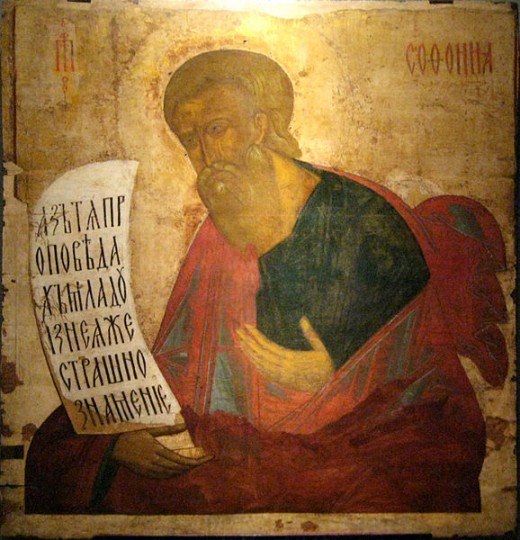
[concerning a universal judgment which will begin in Judah and ends with a promise of restoration] which came to Zephaniah [name means “Yahweh sheltered or stored up”; traced his ancestry back four generations] son of Cushi [personal name meaning “Cushite”], son of Gedaliah, son of Amariah, son of Hezekiah [indicates Zephaniah was from a royal bloodline; the only prophet of royal descent], in the days of Josiah [reigned from 640 to 609 BC; instituted reforms in 621 BC to bring the nation back to God] son of Amon, king of Judah:

1:2 “I will completely remove [refers to the intensity and totality of destruction] all things
 from the face of the earth [expression used in reference to the flood in Gen. 6:7; 7:4],” declares the Lord.

1:3 “I will remove [note the thoroughness of destruction…] man and beast;
I will remove the birds of the sky

And the fish of the sea,

And the ruins along with the wicked;

And I will cut off man from the face of the earth,” declares the Lord.

• God’s judgment on Judah (1:4-13)

1:4 “So I will stretch out My hand [a particular act of judgment] against Judah [Zephaniah preached message of judgment  at a time of religious reformation; God’s prophets saw farther and deeper]
And against all the inhabitants of Jerusalem.
And I will cut off the remnant of Baal [judgment aimed at totally eliminating Baalism] from this place,
And the names of the idolatrous priests along with the priests.

1:5 “And those who bow down on the housetops to the host of heaven [refers to astrologers; worship of the heavens was not allowed; a pagan practice],
And those who bow down and swear to the Lord and yet swear by Milcom,

1:6 And those who have turned back from following the Lord,
And those who have not sought the Lord or inquired of Him.”

1:7 Be silent before the Lord God!
For the day of the Lord [the day of reckoning; Judah had refused to draw near to God so God promised to draw near in judgment] is near,
For the Lord has prepared a sacrifice [Judah itself would be sacrificed for its own sins],
He has consecrated His guests [the other nations that God would use to punish Judah].

1:8 [the “sacrifice” of verse 7 is identified as including the following groups…] “Then it will come about on the day of the Lord’s sacrifice
That I will punish the princes [they set a bad example for the people; bore responsibility for bad conditions in Jerusalem], the king’s sons And all who clothe themselves with foreign garments [indicative of the influence of pagan cultures on God’s people].

1:9 “And I will punish on that day all who leap on the temple threshold [a pagan practice (cf. 1 Sam. 5:5); Baal worshipers believed that evil spirits resided in the threshold of each pagan temple and therefore leaped over the threshold], Who fill the house of their lord [possible reference to the government being supported by unjust gain or could refer to supporting pagan places of worship] with violence and deceit [these words refer to what the powerful do to the weak; indicates a lack of justice].

1:10 “On that day [the Day of the Lord],” declares the Lord,
“There will be the sound of [1] a cry from the Fish Gate [located along the north wall], [2] A wail from the Second Quarter [located north of the Temple area], And [3] a loud crash from the hills [probably reference to Zion, Opel, Moriah or specifically to the temple mount].

1:11 “Wail, O inhabitants of the Mortar [possible “market district” or a place where merchants gathered], For all the people of Canaan will be silenced; All [reference to the merchants or bankers] who weigh out silver will be cut off.

1:12 “It will come about at that time
That I will search Jerusalem with lamps [clay oil lamps in use at the time; the people of Jerusalem would try in vain to hide],
And I will punish the men
Who are stagnant in spirit [who remained complacent and silent in the midst of a sinful generation],
Who say in their hearts,
‘The Lord will not do good or evil!’

1:13 “Moreover, their wealth will become plunder
And their houses desolate;
Yes, they will build houses but not inhabit them,
And plant vineyards but not drink their wine.”


• The day of the Lord is described (1:14-18)

1:14 Near [imminent] is the great day of the Lord,
Near and coming very quickly;
Listen, the day of the Lord!
In it the warrior cries out bitterly.

1:15 A day of wrath is that day,
A day of trouble and distress,
A day of destruction and desolation,
A day of darkness and gloom,
A day of clouds and thick darkness,

1:16 A day of trumpet and battle cry
Against the fortified cities
And the high corner towers.

1:17 I will bring distress on men
So that they will walk like the blind,
Because they have sinned against the Lord;
And their blood will be poured out like dust
And their flesh like dung.

1:18 Neither their silver nor their gold
Will be able to deliver them [the people would not be able to buy their way out of the impending judgment]
On the day of the Lord’s wrath;
And all the earth will be devoured
In the fire of His jealousy,
For He will make a complete end,
Indeed a terrifying one,
Of all the inhabitants of the earth.

Haggai 2

New American Standard Bible

● Third Message (2:1-9) | Another message of encouragement.


2:1 On the twenty-first of the seventh month, the word of the Lord came by Haggai the prophet saying,

2:2 “Speak now to Zerubbabel the son of Shealtiel, governor of Judah, and to Joshua the son of Jehozadak, the high priest, and to the remnant of the people saying,


2:3 [1] ‘Who is left among you [survivors would be about 70 years-old] who saw this temple in its former glory [before the Babylonians destroyed it]? [2] And how do you see it now? [3] Does it not seem to you like nothing in comparison? [the older returned exiles who had seen the past beauty of the temple were called to account for their display of disappointment over the present realities; these older folks who remembered the former splendor of the temple should have led the way in the rebuilding, but instead their disappointment had led to disillusionment]

2:4 But now [1] take courage, Zerubbabel,’ declares the Lord, [2] ‘take courage also, Joshua son of Jehozadak, the high priest, and all you people of the land [3] take courage,’ declares the Lord, ‘and work [it’s not enough to take courage, one must also work]; for I am with you [God’s presence is key in doing His work],’ declares the Lord of hosts.

2:5 ‘As for the promise which I made you when you came out of Egypt, My Spirit is abiding in your midst; do not fear [God’s presence mitigates all fears]!’

2:6 For thus says the Lord of hosts, ‘Once more in a little while [at some future date], I am going to shake the heavens and the earth, the sea also and the dry land.

2:7 I will shake all the nations; and they will come with the wealth of all nations, and I will fill this house with glory,’ says the Lord of hosts.

2:8 ‘The silver is Mine and the gold is Mine,’ declares the Lord of hosts.

2:9 ‘The latter glory of this house will be greater than the former,’ says the Lord of hosts, ‘and in this place I will give peace,’ declares the Lord of hosts.”

● Fourth Message (2:10-19) | God’s blessings are promised for obedience in rebuilding the temple.

2:10 On the twenty-fourth of the ninth month, in the second year of Darius, the word of the Lord came to Haggai the prophet, saying,

2:11“Thus says the Lord of hosts, ‘ Ask now the priests for a ruling:

2:12 If a man carries holy meat in the fold of his garment, and touches bread with this fold, or cooked food, wine, oil, or any other food, will it become holy?’” ‘And the priests answered, “No.”

2:13 Then Haggai said, “If one who is unclean from a corpse touches any of these, will the latter become unclean?” And the priests answered, “It will become unclean.”

2:14 “Then Haggai said, “’’So is this people [those who had refused to rebuild the temple]. And so is this nation before Me,’’declares the Lord, ‘and so is every work of their hands; and what they offer there is unclean.

2:15 But now, do consider from this day onward [note what the season of God’s chastening were like]: before one stone was placed on another in the temple of the Lord,

2:16 from that time when one came to a grain heap of twenty measures, there would be only ten; and when one came to the wine vat to draw fifty measures, there would be only twenty.

2:17 I smote you and every work of your hands with blasting wind, mildew and hail; yet you did not come back to Me,’ declares the Lord.

2:18 ‘Do consider from this day onward, from the twenty-fourth day of the ninth month; from the day when the temple of the Lord was founded [from the day of the most recent start of the work under Zerubbabel (Ezra 5:2; Hag. 1:14)], consider [a call for deeper reflection on the meaning of the work they were engaged in]:

2:19 Is the seed still in the barn? Even including the vine, the fig tree, the pomegranate and the olive tree, it has not borne fruit. Yet from this day [the day the work on the temple began] on I will bless you [God promised to bless His people when they obeyed His will].’”

● Fifth Message (2:20-23) | Haggai gives a personal message to Zerubbabel.

2:20 Then the word of the Lord came a second time to Haggai on the twenty-fourth day of the month, saying,

2:21 “Speak to Zerubbabel governor of Judah, saying [this prophecy would be fulfilled in a day beyond Zerubbabel’s day], ‘I [God] am going to shake the heavens and the earth [a reference to God’s intervention in human affairs; an indication of God’s power over the created order].

2:22 I will overthrow the thrones of kingdoms and destroy the power of the kingdoms of the nations; and I will overthrow [note the destruction of the means by which nations impose their rule on others] the chariots and their riders, and the horses and their riders will go down, everyone by the sword of another [the nations are depicted as God’s agents of judgment on one another].’

2:23 ‘On that day [refers to the same time period as the “little while” of 2:6],’ declares the Lord of hosts, ‘I will take [Hebrew word involves God’s action for a special purpose] you, Zerubbabel [in the lineage of the Messiah], son of Shealtiel, My servant [only a few people in OT called God’s “servant”; cf. Abraham (Gen. 26:24); Moses (Ex. 14:31); David (2 Sam. 7:8); God’s messianic Servant (Isa. 52:13; 53:11)],’ declares the Lord, ‘and I will make you like a signet ring [a special ring used to sign letters and documents; a symbol of royal authority; a mark of honor conferred on administrative representatives of the king; whoever possessed the king’s signet possessed great power and honor], for I have chosen [to carefully select for a mission or a purpose] you,’”declares the Lord of hosts.

Haggai 1


New American Standard Bible

● First Message (1:1-11)
| Haggai urges that work be started on rebuilding the temple.

1:1 In the second year of Darius
[Darius I Hystaspes; seized throne of Persia after death of Cambyses in 522-521 BC] the king, on the first day of the sixth month, the word of the Lord [the book of Haggai has five separate prophecies, all of which came during a four-month period in 520 BC] came by the prophet Haggai [a prophet to the Jews who returned to Jerusalem from Babylonia; Haggai was concerned that the returning Jews make the rebuilding of the Temple and the reestablishment of the priestly offerings their first priority] to Zerubbabel the son of Shealtiel, governor of Judah, and to Joshua the son of Jehozadak, the high priest, saying,

1:2 [more than a decade had passed since the return from exile] “Thus says the Lord of hosts [God is the God of power], ‘This [use of “this” instead of “My” possibly indicates the Lord’s displeasure with His people] people says [note how the people had an excuse for putting off God’s work; putting off God’s word is wrong; the people had not made God’s work a priority], “The time has not come, even the time for the house of the Lord to be rebuilt.”’”

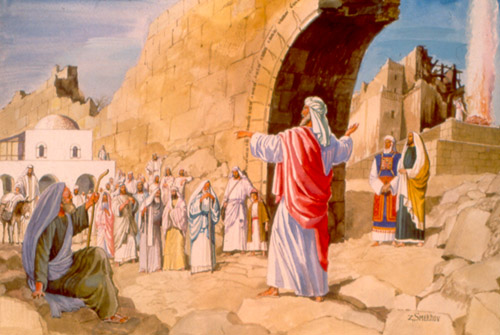
1:3 Then the word of the Lord came by Haggai the prophet, saying,1:4 “Is it time for you yourselves to dwell in your paneled [an indication that their homes were luxurious and finished to perfection; the people invested resources in paneling their houses] houses [the people made the building of their homes top priority] while this house lies desolate [whatever excuses they had for not finishing God’s house did not keep them from finishing their own houses]?”1:5 Now therefore, thus says the Lord of hosts, “Consider [Haggai called on the people evaluate their attitudes] your ways!1:6 [note that the people were not experiencing much in terms of blessings] You have sown much, but harvest little; you eat, but there is not enough to be satisfied; you drink, but there is not enough to become drunk; you put on clothing, but no one is warm enough; and he who earns, earns wages to put into a purse with holes.”1:7 Thus says the Lord of hosts, “Consider your ways!1:8 Go up to the mountains, bring wood and rebuild the Temple, that I may be pleased with it and be glorified,” says the Lord.1:9 “You look for much, but behold, it comes to little; when you bring it home, I blow it away. Why?” declares the Lord of hosts, “Because of My house which lies desolate, while each of you runs to his own house.1:10 [note the effect of the people’s sin on nature] Therefore, because of you the sky has withheld its dew and the earth has withheld its produce.

1:11 I called for a drought on the land, on the mountains, on the grain, on the new wine, on the oil, on what the ground produces, on men, on cattle, and on all the labor of your hands.”

● Second Message (1:12-15) | A message of encouragement.


1:12 Then Zerubbabel the son of Shealtiel, and Joshua the son of Jehozadak, the high priest, with all the remnant of the people, obeyed the voice of the Lord their God and the words of Haggai the prophet, as the Lord their God had sent him
[the people were motivated to obey because they believed the Lord had sent Haggai to them]. And the people showed reverence for the Lord.

1:13 Then Haggai, the messenger of the Lord, spoke by the commission of the Lord to the people saying, “‘I am with you,’ declares the Lord.”

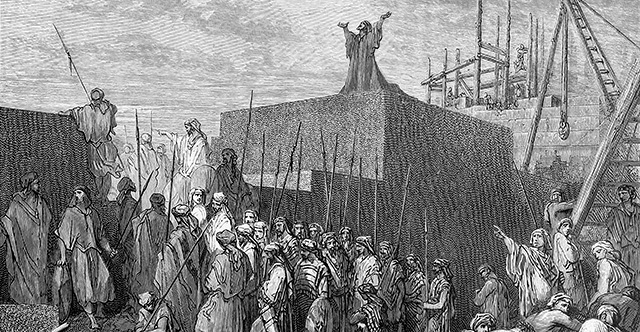
1:14 So the Lord stirred up the spirit of Zerubbabel the son of Shealtiel, governor of Judah, and the spirit of Joshua the son of Jehozadak, the high priest, and the spirit of all the remnant of the people; and they came and worked on the house of the Lord of hosts, their God,

1:15 on the twenty-fourth day of the sixth month in the second year of Darius the king [the people began to rebuild the Temple 23-days after Haggai began his  ministry for the Lord and stirred the people to action].

Zechariah 1

New American Standard Bible

1:1 In the eighth month of the second year [October—November 520 BC] of Darius [Persian king; cf. Ezra 6:8-10 re: his willingness to finance rebuilding of the temple; after the return from Babylonian exile events dated by reign of Darius because Israel had no king to serve as a reference point for dates], the word of the Lord [prophetic word of revelation] came to Zechariah [name means “the Lord remembers”; served in post-exilic period before completion of temple; ministry overlapped with that of Haggai (see Haggai 1:1); born in exile] the prophet [one called by God to be His spokesman], the son of Berechiah, the son of Iddo [priest who returned to Jerusalem with Zerubbabel] saying,

1:2 “The Lord was very angry with your fathers [the forefathers of those who had returned from exile in Babylon; the exile was a direct result of the sins of their fathers; the destruction of the temple was also a consequence of the sins of their fathers].

1:3 [note how divine grace follows the divine wrath of verse 2] Therefore [do not make the same mistake as forefathers] say to them, ‘Thus says the Lord of hosts [powers or armies], “ Return to Me [a call to repentance],” declares the Lord of hosts, “that I may return to you,” says the Lord of hosts.

1:4 “Do not be [a warning to learn from their own history] like your fathers [preexilic forefathers], to whom the former prophets proclaimed, saying [note the general summary of the prophets’ message…], ‘Thus says the Lord of hosts, “Return now from your evil ways and from your evil deeds.”’ But they did not listen or give heed to Me [cf. 2 Chron. 36:16; we always ignore God’s Word to our own peril (Prov. 13:13)],” declares the Lord.

1:5 “Your fathers, where are they? And the prophets [those who warned their fathers of the imminent Babylonian exile], do they live forever? [obvious answer: both their forefathers and the prophets were dead]


1:6 But did not My words and My statutes, which I commanded My servants [it is an honor to be the Lord’s servant] the prophets, overtake your fathers [disregarding the warnings of the prophets proved disastrous for both the Northern and Southern Kingdoms]? Then [during the exile and afterward] they repented and said, ‘As the Lord of hosts purposed to do to us in accordance with our ways and our deeds, so He has dealt with us.’”’”

• Vision One | The man on the red horse (1:7-17).

1:7 On the twenty-fourth day of the eleventh month, which is the month Shebat, in the second year of Darius [after the third and fourth messages of the prophet Haggai], the word of the Lord came to Zechariah the prophet, the son of Berechiah, the son of Iddo, as follows:
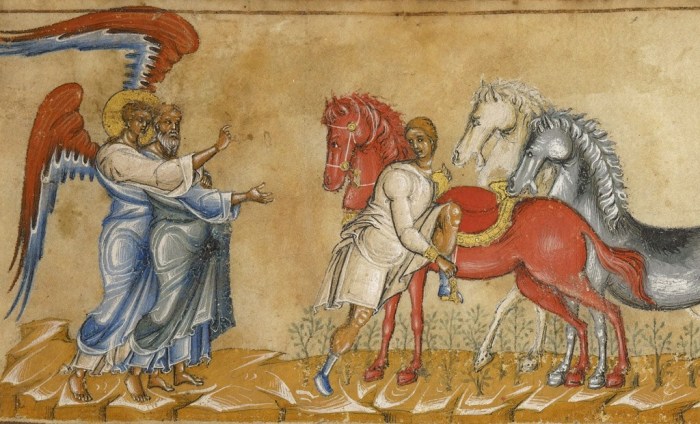
1:8 I saw [Israel’s restoration revealed through the visions given to Zechariah in chapters 1-8] at night [Zechariah received all eight visions in the same night], and behold, a man [the angel of the Lord as per v. 11] was riding on a red horse [“red” associated with war and death], and he was standing among the myrtle trees which were in the ravine, with red, sorrel and white [associated with vengeance and triumph (cf. Rev. 19:11,14)] horses behind him.

1:9 Then I said [Zechariah asked the angel about the meaning of the vision], “My lord, what are these?” And the angel who was speaking with me said to me, “I will show you what these are.”

1:10 And the man [the angel of the Lord as per v. 11] who was standing among the myrtle trees [evergreen trees] answered and said, “These [the horsemen (angelic messengers)] are those whom the Lord has sent to patrol the earth.”

1:11 So they answered the angel of the Lord who was standing among the myrtle trees and said, “We have patrolled the earth, and behold, all the earth [including the Persian Empire] is peaceful and quiet.”

1:12 Then the angel of the Lord said, “O Lord of hosts, how long will You have no compassion for Jerusalem and the cities of Judah, with which You have been indignant these seventy years [the people had suffered for seventy years under the Babylonian yoke]?”

1:13 The Lord answered the angel who was speaking with me with gracious words, comforting words [the oracle of verses 14-17].

1:14 So the angel who was speaking with me said to me, “Proclaim, saying, ‘Thus says the Lord of hosts, “I am exceedingly jealous [intolerant of rivalry or unfaithfulness] for Jerusalem and Zion.

1:15 But I am very angry with the nations [those that had treated God’s people harshly; includes Assyria and Babylonia] who are at ease [who feel secure; an indication of arrogance]; for while I was only a little angry [for a little while], they furthered the disaster [the nations went too far in trying to annihilate the Jews; a warning against anti-Semitism].”

1:16 Therefore thus says the Lord [what follows are very gracious and comforting words], “[response to question of v. 12] I will return to Jerusalem with compassion; My house [temple] will be built in it,” declares the Lord of hosts, “and a measuring line will be stretched over Jerusalem.”’

1:17 Again, proclaim, saying, ‘Thus says the Lord of hosts, “My cities will again overflow with prosperity, and the Lord will again comfort Zion and again choose Jerusalem.”’”

• Vision Two | The four horns and the four carpenters (1:18-21).

1:18 Then I lifted up my eyes and looked, and behold, there were four horns [a symbol of strength; a reference to the nations that attacked and scattered Judah, Israel and Jerusalem].

1:19 So I said to the angel who was speaking with me, “What are these?” And he answered me, “These are the horns which have scattered [note all-inclusive designation for God’s people…] Judah, Israel and Jerusalem.”

1:20 Then the Lord showed me four craftsmen [reference to those nations/individuals God used to overthrow Israel’s enemies].

1:21 I said, “What are these coming to do?” And he said, “These are the horns which have scattered Judah so that no man lifts up his head; but these craftsmen [reference to those nations/individuals God used to overthrow Israel’s enemies] have come to terrify [those characterized as “at easy” in v. 15] them, to throw down the horns of the nations who have lifted up their horns against the land of Judah in order to scatter it.”
Ruth 4

4:1 Meanwhile Boaz went up to the town gate [an outdoor court] and sat there. When the kinsman-redeemer he had mentioned came along, Boaz said, “Come over here, my friend, and sit down.” So he went over and sat down.

4:2 Boaz took ten [According to Jewish tradition, ten is the minimum number of men needed to establish a synagogue or to have a quorum at public meetings.] of the elders [Hebrew zaqan = “to have a beard”] of the town and said, “Sit here,” and they did so [serving as witnesses].

4:3 Then he said to the kinsman-redeemer, “Naomi, who has come back from Moab, is selling the piece of land that belonged to our brother [i.e., relative or kinsman] Elimelech.

4:4 I thought I should bring the matter to your attention and suggest that you buy it in the presence of these seated here and in the presence of the elders of my people. If you will redeem it, do so. But if you will not, tell me, so I will know. For no one has the right to do it except you, and I am next in line.” “I [emphatic] will redeem it,” he said.

4:5 Then Boaz said, “On the day you buy the land from Naomi and from Ruth the Moabitess, you acquire the dead man’s widow, in order to maintain the name of the dead with this property.”

4:6 At this, the kinsman-redeemer said, “Then I cannot redeem it because I might endanger my own estate [because he would have to count Ruth’s first son as the legal heir of Elimelech. That son would probably be entitled to inherit part of his own estate too.]. You redeem it yourself. I cannot do it [the nearer relative forfeited his right of redemption to Boaz in the presence of witnesses].”

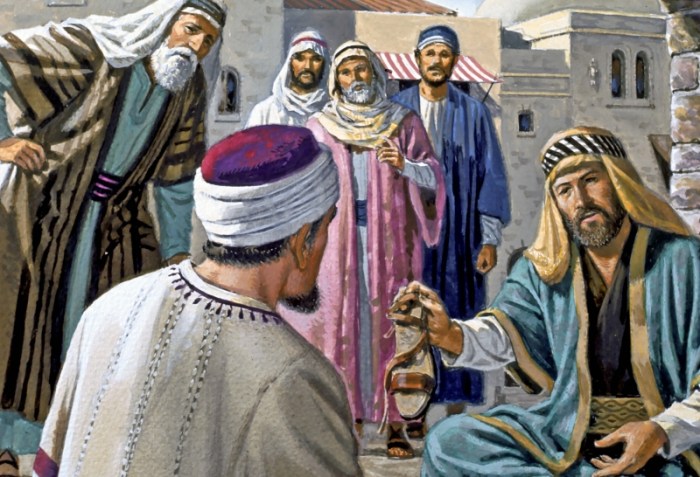
4:7 (Now in earlier times in Israel, for the redemption and transfer of property to become final, one party took off is sandal and gave it to the other. This was the method of legalizing transactions in Israel.)

4:8 So the kinsman-redeemer said to Boaz, “Buy it yourself. ” And he removed his sandal.

4:9 Then Boaz announced to the elders [the number of witnesses made the transaction legally secure] and all the people, “Today you are witnesses that I have bought from Naomi all the property of Elimelech, Kilion and Mahlon [Boaz did not have the same concerns about endangering his estate as the nearer goel had].

4:10 I have also acquired Ruth the Moabitess, Mahlon’s widow, as my wife, in order to [legally] maintain the name of the dead [Mahlon] with his property, so that his name will not disappear from among his family or from the town records. Today you are witnesses!”

4:11 Then the elders and all those at the gate said, “We are witnesses [probably an established legal response]. May the Lord make the woman who is coming into your home like Rachel and Leah, who together built up the house of Israel [a blessing of fertility]. May you have standing in Ephrathah and be famous in Bethlehem.

4:12 Through the offspring the Lord gives you by this young woman, may your family be like that of Perez, whom Tamar [a childless widow who became the mother of twin boys, Perez and Zerah — Genesis 38] bore to Judah.”

4:13 So Boaz took Ruth and she became his wife. Then he went to her, and the Lord enabled her to conceive [see Genesis 29:31; 30:2], and she gave birth to a son.

4:14 The women [see 1:19] said to Naomi, “Praise be to the Lord, who this day has not left you without a kinsman-redeemer [once empty (see 1:21), Naomi was now full]. May you become famous throughout Israel!

4:15 He will renew your life and sustain you in your old age [as a goel]. For your daughter-in-law, who loves [the only use of the term love in the Old Testament to describe the relationship of one woman to another] you and who is better than seven [a number symbolizing completion] sons [seven sons was the proverbial description of a perfect family], has given him birth.”

4:16 Then Naomi took the child, laid him [whose line would produce the ultimate kinsman-redeemer] in her lap and cared for him [as a guardian].

4:17 The women living there said, “Naomi [no longer bitter (see 1:20) but now pleasant] has a son [i.e., a grandson].” And they [the women] named him Obed [a name which means “servant” … perhaps given to memorialize Ruth’s loyal service to Naomi]. He was the father of Jesse, the father of David.

4:18 This, then, is the family line of Perez: Perez was the father of Hezron,

4:19 Hezron the father of Ram, Ram the father of Amminadab,

4:20 Amminadab the father of Nahshon, Nahshon the father of Salmon,

4:21 Salmon the father of Boaz, Boaz the father of Obed [by levirate law Obed was considered the son of Mahlon … but genealogically (by actual paternity) he was considered the son of Boaz],

4:22 Obed the father of Jesse, and Jesse the father of David.