John 5

John 5:14-47

5:14 Later Jesus found [implies Jesus was looking for the man] him [the invalid that Jesus had healed at the pool of Bethesda (5:1-13)] at the temple and said to him, “See, you are well again. Stop [do not continue] sinning [suggests that the man’s infirmity had resulted from some sinful act or habit; may indicate that the now healed man might be tempted to resume his earlier destructive way of life; not all sicknesses are related to an individual’s sins (cf. Jn. 9:2-3)] or something worse [a reference to punishment in hell] may happen to you.”

Note: Have you ever allowed God to use you to warn someone of the consequences of their sinful attitude or actions?

5:15 The man [no indication that the man expressed gratitude to Jesus] went away and told [perhaps out of fear of the Jewish leaders because he had been healed on the Sabbath and had violated Sabbath rules by carrying a burden (cf. 5:10)] the Jews that it was Jesus who had made him well.

5:16 So, because Jesus was doing [indicates Jesus continued working on the Sabbath] these things on the Sabbath, the Jews persecuted [verb indicates continuous action] him.

Note: Jesus healed people on the Sabbath on seven different occasions.
• A demon-possessed man Luke 4:31-37
• Peter’s mother-in-law Luke 4:38-39
• A lame man John 5:1-18
• A man with a shriveled hand Luke 6:6-11
• A crippled woman Luke 13:10-17
• A man with dropsy Luke 14:1-6
• A man born blind John 9:1-16

5:17 Jesus said to them, “My [indicates intimate relationship] Father is always [even on the Sabbath] at his work [sustaining the universe] to this very day, and I, too, am working.”

5:18 For this reason the Jews tried all the harder to kill him; not only was he breaking the Sabbath, but he was even calling God his own Father, making himself equal with God.

5:19 Jesus gave them this answer: “I tell you the truth, the Son can do nothing by himself; he can do only what he sees his Father doing, because whatever the Father does the Son also does.

5:20 For the Father loves the Son and shows him all he does. Yes, to your amazement he will show him even greater things than these.

5:21 For just as the Father raises the dead and gives them life, even so the Son gives life [Jesus had the ability to renew life physically and to give new life spiritually] to whom he is pleased to give it.

5:22 Moreover, the Father judges no one, but has entrusted all judgment to the Son,

5:23 that all may honor the Son just as they honor the Father. He who does not honor the Son [cf. Phil. 2:9-11] does not honor the Father, who sent him.

5:24 “I tell you the truth [“amen, amen”], whoever hears [cf. Rom. 10:17] my word [the message of the gospel (God’s solution to the dilemma of sin)] and [note that hearing is not enough] believes him who sent me [these words stress the unity of the Father and the Son] has [immediately upon believing; cf. Jn. 3:18; 1 John 5:12-13] eternal life and will not be condemned [or “does not come into judgment”; cf. Rom. 8:1]; he has crossed [expresses certainty] over from death to life [cf. 1 John 3:14].

Note: What characterizes the lives of those who have truly passed from spiritual death to spiritual life?

5:25 I tell you the truth [“amen, amen”], a time is coming and has now come when the dead [the spiritually dead living under God’s condemnation] will hear the voice of the Son of God and those who hear [to receive and obey] will live.

5:26 For as the Father has life in himself [God is the source and Creator of life], so he has granted the Son to have life in himself.

5:27 And he has given him authority to judge because he is the Son of Man [used in Dan. 7:13-14 as a reference to the Messiah].

5:28 “Do not [stop an action in progress] be amazed at this, for a time is coming [note promise of a future resurrection] when all [suggests a general resurrection of the good and evil alike; none excluded] who are in their graves [those physically dead] will hear his voice

5:29 and come out—those who have done good [those who have believed in Christ; a reminder that works demonstrate the validity of our faith] will rise to live, and those who have done evil [those who do not have a personal relationship with Jesus] will rise to be condemned.

5:30 By myself I can do nothing [cf. Jn. 5:19]; I judge only as I hear, and my judgment is just, for I seek not to please myself but him who sent me.

5:31 “If I testify about myself, my testimony is not valid [in order to be considered valid it had to be supported by two or three witnesses (Deut. 17:6; 19:15)].

5:32 There is another [the Father (cf. Jn. 5:36)] who testifies in my favor, and I know that his testimony about me is valid.

Note: Five witnesses that supplied a compelling testimony to Jesus’ claims:
1. John the Baptist 5:33-35
2. Jesus’ works 5:36
3. The Father 5:37
4. The Scriptures 5:39-40
5. Moses 5:45-47

5:33 “You have sent [fact-finding groups] to [1: John the Baptist was the first witness cited by Jesus] John [cf. Jn. 1:6-8] and he has testified to the truth.

5:34 Not that I accept human testimony [using their system of evidence, Jesus cited the testimony of John for the benefit of his hearers]; but I mention it that you may be saved.

5:35 John was a lamp that burned and gave light [cf. Jn. 1:8], and you chose for a time to enjoy his light.

5:36 “I have testimony weightier [more persuasive; less subject to refutation] than that of John. For the very [2: Jesus’ works: the second witness] work [could include the miracles as well as the teaching and other activities of Jesus; cf. Nicodemus’ words in Jn. 3:2] that the Father has given me to finish, and which I am doing, testifies that the Father has sent me.

5:37 And the Father [3: the third witness to Jesus] who sent me has himself testified [at Jesus’ baptism (Matt. 3:16-17); on the Mount of Transfiguration (Matt. 17:5); before His crucifixion (Jn. 12:28); and in His resurrection (Rom. 1:3-4)] concerning me. You have never heard his voice [they failed to hear God’s voice in Jesus (cf. Jn. 3:34; 17:8)] nor seen his form [they failed to see God in Jesus (cf. Jn. 14:9)],

5:38 nor does his word dwell in you [Jesus’ unhearing and unseeing audience], for you do not believe the one [Jesus] he [the Father] sent.
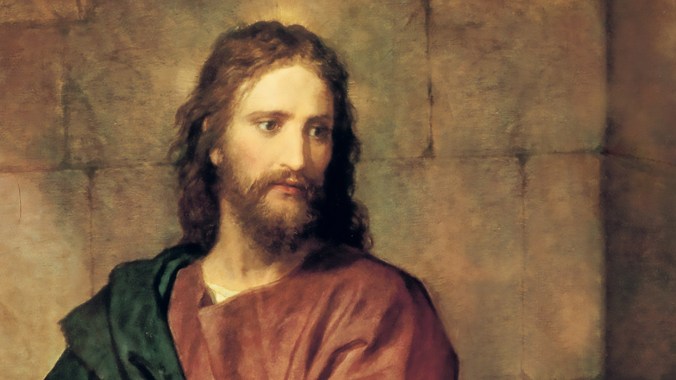

5:39 You diligently study [research, investigate; the religious leaders were not lax in their study of the Scriptures yet still failed to see the written Word as a testimony to the living Word; while some miss Jesus because they neglect or reject the Bible, some study the Bible without seeing Jesus as its key message] the Scriptures [the OT] because you think [indicates mistaken opinions/assumptions] that by them [cf. Gal. 3:21] you possess eternal life. These are the Scriptures [4: Scriptures are the fourth witness] that testify about me,

Note: Why is it important to study the Scriptures carefully?

5:40 yet [in spite of the testimony of the Scripture about Jesus] you refuse [a deliberate choice] to come to [indicates the idea of believing in Jesus as Savior and Lord] me [Jesus] to have life.

5:41 “I do not accept praise from men,

5:42 but I know you [Jesus knew the condition of people]. I know that you do not have the love of God in your hearts.

5:43 I have come in my Father’s name, and you do not accept me [the Father’s personal representative]; but if someone else [other alleged Messiah’s had come (e.g. Simeon ben Kosebah claimed to be the Messiah in AD 132, a claim upheld by Akibah, the most eminent rabbi of the day)] comes in his own name, you will accept him.

5:44 How can you believe if you accept praise from one another [they fed on one another’s acceptance thus making it difficult for anyone to make a stand that differed from the rest], yet make no effort to obtain the praise that comes from the only God?

5:45 “But do not think I will accuse you before the Father. Your accuser is Moses [i.e., the writings of Moses which they admired so greatly (cf. Jn. 9:28) and misused so tragically; cf. Deut. 31:19-22], on whom your hopes [trust] are set.

5:46 If you believed Moses [5: the fifth witness], you would believe me, for he wrote [cf. Gen. 3:15; Num. 21:9; Num. 24:17; Deut. 18:15-18; Lk. 24:44] about me.

Note: The Bible itself condemns those who reject Jesus.

5:47 But since you do not believe what he [Moses] wrote [their own Scriptures], how are you going to believe what I say?”

John 6

John 6:1-14

6:1 Some time after this [indefinite period of time; John does not specify the exact lapse of time (perhaps a year) between the events of chapter 5 (in Jerusalem) and those of chapter 6 (in Galilee)], Jesus [at the height of His popularity in Galilee] crossed [when He heard of John the Baptist’s death (Matt. 14:13)] to the far [eastern] shore of the Sea of Galilee (that is, the Sea of Tiberias [named after the city of Tiberias, built by Herod the Great (as his capital) about AD 22 on the west shore of the lake]),

6:2 and a great crowd of people followed [continuous action: kept following] Him [to a town called Bethsaida (Lk. 9:10)] because they saw [actually had been seeing His miracles for some time (cf. 2:23)] the miraculous signs [and wanted to benefit from His healing powers] He had performed on the sick [weak, feeble, without strength].

6:3 Then Jesus went up on a mountainside [perhaps to have some time alone with His disciples; Jesus always being pressed by the crowds; He needed quiet time] and sat down with His disciples.

6:4 The Jewish Passover Feast [one year before Jesus’ death] was near [late March or early April].

6:5 When Jesus looked up and saw [Jesus saw opportunity to satisfy a human need and teach a spiritual truth] a great crowd coming toward Him, He said to Philip, “Where [what marketplace] shall we buy bread for these people to eat?”

6:6 He asked this only to test him [Jesus’ question called attention to the disciples’ responsibility; He wanted them to propose some plan of action], for He already had in mind what He was going to do [He knew what was available and what He would do with it].

6:7 Philip answered him, “Eight months’ wages [Philip saw cost or practical side of things; money is not the answer to every need; eight months wages approximately 200 denarii] would not buy enough bread for each one to have a bite!”

6:8 Another of His disciples, Andrew, Simon Peter’s brother, spoke up,

6:9 “Here [Andrew was busy bringing somebody to Jesus] is a boy [Andrew was observant; only John mentions the boy] with [the kind of food eaten by poor] five small barley [cheapest of all grains; considered an inferior sort of bread] loaves and two small fish [probably small pickled fish], but how far will they go among so many?”

Note: “Instead of complaining about what we do not have, we should give thanks to God for what we do have, and He will make it go farther.” (Wiersbe, Be Alive, p. 73)

6:10 Jesus said, “Have the people sit [recline] down [to facilitate serving].” There was plenty of grass [it was spring (cf. 6:4) and there was plenty of green (cf. Mk. 6:39) grass on hillside] in that place, and the men sat down [cf. Mk. 6:40 — “in groups of hundreds and fifties”], about five thousand [indication of Jesus’ popularity] of them [not including women and children; cf. Matt. 14:21].

6:11 Jesus then took the loaves [meager human resources in divine hands], gave thanks [a reminder that God is the source of everything we have and need; important to express gratitude to God for providing for our material needs; similar to what was done by the head of each family at the Passover], and distributed [disciples involved in this process] to those who were seated as much as they wanted [many of these probably seldom had enough to eat]. He did the same with the fish.

Note: The first question we should ask is “God, what do you want done?” — not, “How much will it cost?” We are not responsible for multiplying the available resources, only for bringing them to Jesus. We must not try to accomplish what God has asked us to do on the basis of what we have but rather on the basis of what He has.

Note: Verse 11 is a beautiful picture of evangelism:
• a picture that reminds us that we can only give to others what we have received from the Lord.
• a picture that reminds us that we are filled so that we can go forth and share with others.

6:12 When they had all had enough [completely filled; suggests an ample supply of food] to eat, He said to his disciples, “Gather [good stewardship] the pieces [excess bread rather than scraps; the pieces broken by Jesus and not consumed (cf. Mk. 6:41)] that are left over [Jesus was and able to abundantly meet needs]. Let nothing [including leftover fish as per Mk. 6:43] be wasted.”

6:13 So they [disciples] gathered them [Jewish custom to leave some food for those who served] and filled twelve baskets [Gr. kophinos: usually denotes a large basket, such as might be used to carry bulky objects] with the pieces of the five barley loaves left over by those who had eaten.

6:14 After the people saw the miraculous sign that Jesus did, they began to say, “Surely this is the Prophet who is to come into the world.” [The people were persuaded that Jesus was the political Messiah who had come to deliver them from the Romans. — cf. Deut. 18:15 / “Since Moses had provided food and water in the desert, the people expected that the Prophet like Moses would do likewise.” (Expositor’s, Vol. 9, p. 72)]

Note: The feeding of the 5000 is Jesus’ only miracle that is recorded in all four Gospels. Read the following accounts: Matthew 14:13-21; Mark 6:30-44; Luke 9:10-17; John 6:1-15.

John 6:24-27

6:24 [the following day] Once the crowd realized that neither Jesus nor his disciples were there [the place where He multiplied the loaves and fish], they got into the boats and went to Capernaum in search of Jesus.

6:25 When they found him on the other side of the lake, they asked him, “Rabbi, when did you get here?”

6:26 Jesus answered [Jesus told the people that they were looking for Him with the wrong motives], “I tell you the truth, you are looking for me, not because you saw miraculous signs [the people failed to see the power and generous love of God; they had not seen beyond the “free meal”; they failed to recognize the meaning of the miracle] but because [on the previous day] you ate the loaves and had your fill [the people liked the sample and wanted more].

Note: How does the content of our prayers reveal whether we are focused on physical or spiritual concerns? How can we put more emphasis on spiritual matters in our prayers?

6:27 Do not [warning against focusing attention on material things as our greatest needs; cf. Lk. 12:15] work for food that spoils [temporal needs], but for food that endures to eternal life [refers to Jesus Himself], which the Son of Man will give [only Jesus can “give” us everlasting life] you. On him [on Him alone] God the Father has placed his seal of approval [a mark of ownership and authenticity].”

John 6:32-35

6:32 Jesus said to them, “I tell you the truth [Jesus corrected a misunderstanding concerning the source of the miraculous provision of manna in the wilderness], it is not Moses who has given you the bread from heaven [manna; manna came to an end after forty years (Josh. 5:12)], but it is my Father who gives you the true [original or genuine] bread from heaven [same as “bread of God” in 6:33].

6:33 For the bread of God [same as “bread from heaven” in 6:32] is he [Jesus] who comes down from heaven and gives [continually; will not end like manna in he wilderness] life to the world [all people, not just the Jews].”

6:34 “Sir,” they said, “from now on give us this bread [the people misunderstood and thought of bread they could eat (as their forefathers had eaten manna) with their mouths and digest with their stomachs].

6:35 Then Jesus declared [Jesus redirected the people’s focus from physical food to Himself], “I am the bread [spiritual sustenance; spiritual manna; water and bread signify the life that Jesus offers] of life [eternal life]. He who comes to me [an outward, active response; means to “believe in Christ”] will never [stresses the absolute spiritual satisfaction that only Jesus provides] go hungry, and he who believes [an inward response; the life He offers is available only to those who believe; those who reject Him miss the life He offers] in me [Jesus] will never be thirsty.

Note: What kind of hunger and thirst does Jesus satisfy?

John 6:41-71

6:41 At this the Jews [used to refer to Jesus’ Jewish antagonists in particular, not to Jews in general] began to grumble [four of the seven uses of this word in the NT occur in John’s Gospel; to mutter or murmur with hushed voices so as not to be overheard] about him because he said, “I am the bread that came down from heaven.”

6:42 They said, “Is this not Jesus, the son of Joseph, whose father and mother we know? How can he [the one from Nazareth] now say, ‘I came down from heaven’?”

6:43 “Stop grumbling [same word as in 6:41; unproductive muttering] among yourselves [they needed illumination from God, not from one another],” Jesus answered.

6:44 “No one can come to me unless the Father who sent me draws [can mean “to attract” or “to drag” something; cf. Jn. 12:32; does not mean that God forces people to come to Jesus] him, and [note that those who come to Jesus have a new future…] I will raise him up at the last day.

6:45 It is written in the Prophets [cf. Isa. 54:13; Jer. 31:31-34]: ‘They will all be taught by God.’ Everyone who listens to the Father and learns from him comes to me.

6:46 No one has seen the Father [cf. Jn. 1:18; 1 Tim. 6:15-16] except the one [Jesus] who is from God; only he [Jesus] has seen the Father.

6:47 I tell you the truth, he who believes [continues to believe] has [a present and ongoing possession] everlasting [eternal in duration] life [an unending relationship with the Father].

6:48 I am the bread of life.

Note: Seven “I Am” Statements in John’s Gospel:
• “I am the bread of life” (6:35,48,51)
• “I am the light of the world” (8:12;9:5)
• “I am the gate” (10:7,9)
• “I am the good shepherd” (10:11,14)
• “I am the resurrection and the life” (11:25)
• “I am the way … truth … life” (14:6)
• “I am the true vine” (15:1,5)

6:49 Your forefathers ate the manna [physical, temporary bread that sustained the partaker for a day] in the desert, yet they died.

6:50 But here is the bread that comes down from heaven [cf. 6:41], which a man may eat and not die.

6:51 I am the living bread that came down from heaven. If anyone eats [to believe in Christ] of this bread, he will live forever. This bread is my flesh, which I will give [refers to Jesus’ death on the cross] for the life of the world.”

6:52 Then the Jews began to argue sharply among themselves, “How can this man give us his flesh to eat?”

6:53 Jesus said to them, “I tell you the truth, unless you eat the flesh of the Son of Man and drink his blood, you have no life in you.

6:54 Whoever [those who accept by faith Jesus’ sacrificial death] eats my flesh and drinks my blood has eternal life, and I will raise him up at the last day [cf. 6:41].

6:55 For my flesh is real food and my blood is real drink.

6:56 Whoever eats my flesh and drinks my blood remains in me, and I in him.

6:57 Just as the living Father sent me and I live because of the Father, so the one who feeds on me will live because of me.

6:58 This is the bread that came down from heaven. Your forefathers ate manna and died, but he who feeds on this bread will live forever.”

6:59 He said this while teaching in the synagogue in Capernaum.

6:60 On hearing it, many of his disciples [those who accompanied Jesus and the twelve (cf. Jn. 6:67,70)] said, “This is a hard teaching. Who can accept it?”

6:61 Aware that his disciples were grumbling [cf. 6:41] about this [the content of His teaching], Jesus said to them, “Does this offend [Gr. “skandalizo” means “to cause to stumble”; cf. 1 Cor. 1:23] you?

6:62 What if you [those who did not believe that Jesus came down from heaven] see the Son of Man ascend to where he was before!

6:63 The Spirit gives life; the flesh counts for nothing. The words I have spoken to you are spirit and they are life.

6:64 Yet there are some of you who do not believe.” For Jesus had known [cf. Jn. 2:23-25 re: what Jesus knew about people] from the beginning [or from the time these disciples began to follow Jesus] which of them did not believe and who would betray him.

6:65 He went on to say, “This is why I told you that no one can come to me [refers to making a genuine, ongoing commitment] unless the Father has enabled him.”

6:66 From this time [suggests many left Jesus as a result of His statements] many of his disciples turned back [abandoned Jesus physically as well as spiritually; and returned to their old ways] and no longer followed him [one of the saddest moments in Jesus’ ministry].

Note: What has tempted you not to follow Jesus? What kept you from that course? Why do some would-be disciples today turn from Jesus?

6:67 “You do not want to leave too, do you? [context indicates Jesus expected them to say no]” Jesus asked [Jesus gave them an opportunity to respond for themselves and to affirm their loyalty to Him] the Twelve [refers to Jesus’ hand-picked group of followers].

6:68 Simon Peter answered [on behalf of the Twelve (with the exception of Judas Iscariot); cf. Matt. 16:16 (Mk. 8:29; Lk. 9:20)] him, “Lord, to whom shall we go [there is no other way; cf. Acts 4:12; staying with Jesus might be difficult at times, but leaving Jesus would be folly]? You [Jesus alone] have the words [Jesus’ overall teaching] of eternal life.

6:69 We [in contrast to those who turned back from following Jesus (6:66)] believe and know [their faith in Jesus was fixed and settled] that you are the Holy One of God [cf. Isa. 41:14; 47:4; 48:17; Mk. 1:24; use of this title indicates that the Twelve recognized Jesus as the promised Messiah].”

6:70 Then Jesus replied, “Have I not chosen you, the Twelve? Yet one of you is a devil [cf. Jn. 13:2,27 re: Satan’s influence on Judas]!”

6:71 (He meant Judas, the son of Simon Iscariot, who, though one of the Twelve, was later to betray him.)

John 7

John 7:28-44

7:28 Then Jesus, still teaching in the temple courts, cried out [a forceful announcement; Jesus spoke with emotion and intensity], “Yes, you know me, and you know where I am from [the people only knew earthly facts (about where Jesus was from geographically)]. I am not here on my own [Jesus had come because His Father had sent Him; cf. Jn.20:21], but he [the Father] who sent me is true [describes God’s faithfulness and dependability]. You do not know him,

7:29 but [unlike His doubters] I know [suggests relational knowledge] him because I am from him and he sent me.”

7:30 At this [at Jesus’ claim to be from God (considered blasphemy)] they [some in the crowd; those who rejected His messianic claim] tried to seize him [a spontaneous attempt to seize Jesus], but no one laid a hand on him, because [note that the underlying reason they were not able to seize Jesus was divine…] his time [the time appointed by the Father; refers to the time of Jesus’ passion] had not yet come [cf. Jn. 2:4; 7:8; 8:20; 12:23,27; 13:1; 17:1].

7:31 Still, many in the crowd put their faith in [believed in] him. They said, “When the Christ comes, will he do more miraculous signs than this man?”

7:32 The Pharisees heard the crowd whispering such things about him. Then the chief priests and the Pharisees […the Sanhedrin] sent temple guards to arrest him [an official attempt to seize Jesus].

7:33 Jesus said, “I am with you for only a short time [a reference to His coming death], and then I go to the one who sent me.

7:34 You [those who had been sent to arrest Jesus (7:32)] will look for me, but you will not find me; and where I am, you cannot come [a reference to Jesus’ death and resurrection].”

7:35 The Jews [refers to Jesus’ opponents in particular, not to the Jews in general] said [they could only speculate about what Jesus meant] to one another, “Where does this man intend to go that we cannot find him? [some speculated that Jesus intended to go to Jews living outside the land of Israel…] Will he go where our people live scattered [by previous deportations or commercial interests] among the Greeks, and teach the Greeks [signifies all non-Jews; Gentiles]?

7:36 What did he mean when he said, `You will look for me, but you will not find me,’ and `Where I am, you cannot come’ [a reference to Jesus’ death and resurrection]?”

Note: What can you do to help others understand Jesus’ teachings?

7:37 On the last and greatest day [either the seventh day or the eighth day which was later added as a day on which to reflect on the feast] of the Feast [the Feast of Tabernacles (or “booths”) celebrated in our month of October], Jesus stood and said in a loud voice [so that everyone nearby could hear Him], “If anyone is thirsty, let him come [an invitation] to me and drink.

7:38 Whoever believes in me, as the Scripture [cf. Ezek. 47:9; Zech. 14:8; Isa. 12:3; 35:6] has said, streams of living water will flow from within him [a promise of abundant, unending life to one who believes in Jesus].”

7:39 By this he meant the Spirit [“living water” symbolized the Holy Spirit], whom those who believed in him were later to receive. Up to that time the Spirit had not been given [the Holy Spirit came on the Day of Pentecost (Acts 2) after the ascension of Jesus and continually abides in believers], since Jesus had not yet been glorified [refers to Jesus’ death and resurrection].

7:40 On hearing his words [His teachings in the temple (including what He had said about living water)], some of the people said, “Surely this man is the Prophet [some thought Jesus was the prophet promised by Moses (Deut. 18:15) whom they expected to prepare the way for the Messiah].”

7:41 Others said, “He is the Christ [Gr. translation of Heb. word Messiah which means “Anointed One” (cf. Jn. 4:42; 7:26)].” Still others asked […as they tried to sort out what they knew about Jesus’ background as it related to their understanding of the Messiah], “How can the Christ come from Galilee?

7:42 Does not the Scripture say that the Christ will come from David’s family and from Bethlehem [cf. Ps. 89:3-4; 132:11; Isa. 9:6-7; 11:1; Micah 5:2], the town where David lived?”

7:43 Thus the people were divided because of Jesus.

7:44 Some wanted to seize him, but no one laid a hand on him.

John 8

John 8:1-12

8:1 But Jesus [following the conclusion of the Feast of Tabernacles: John 7] went to the Mount of Olives [where He often retreated].

8:2 At dawn He appeared again in the temple courts [see Luke 21:37], where all the people gathered around Him, and He sat down to teach them.

8:3 The teachers [scribes: experts in the law] of the law and the Pharisees [concerned about the (ultrastrict) interpretation and application of the law] brought [coldheartedly] in [interrupted Jesus as He taught in the temple courts] a woman [but not the man!] caught [seized] in adultery [prohibited in Ex. 20:14]. They made her stand before the group [a humiliating place]

Note: The religious leaders seemed concerned about the broken law, the sinful woman, and the popular teacher. Rank these in order of the leaders’ primary concern.

8:4 and said to Jesus “Teacher, this woman [again, note the absence of the man or any mention of the man] was caught in the act of adultery.

Note: In what ways are we like the religious leaders when interacting with those who have failed morally?

8:5 In the Law Moses commanded us [see Lev. 20:10; Deut. 22:22-24] to stone such women [and men]. Now what do you say?

8:6 They were using this question [and woman] as a trap [true motive of religious leaders], in order to have a basis for [the religious leaders callously used the woman as an object to help them trap Jesus; they demonstrated no concern for her worth as a person] accusing Him [an offer of forgiveness would result in an accusation of breaking the Mosaic Law and pressing the Mosaic Law would be viewed as a violation of Roman law concerning who could administer capital punishment]. But Jesus bent down and started to write [the only biblical reference to Jesus writing anything] on the ground with His finger.

Note: Do we look at people who have failed morally as merely objects who have committed a terrible sin and therefore should be rejected, or as people whom God created and loves?

8:7 When they kept on questioning Him, He straightened up and said to them, “If any one of you is without sin [perhaps some of the woman’s accusers were guilty of having committed the same sin, if not with the body perhaps in the heart as per Matt. 5:27-30], let him [the first to accuse as per Deut. 17:7] be the first [to begin the execution] to throw a stone at her.”

Note: The religious leaders “kept on questioning” Jesus. In what ways do people today respond when they hear of someone’s moral failure?

8:8 Again He stooped down and wrote on the ground [giving the woman’s accusers time to reflect on their own lives].

8:9 At this, those who heard [and could not argue with the convicting challenge of Jesus; convicted by their own consciences] began to go away one at a time [they had applied the Law to the woman but not to themselves], the older ones first, until only Jesus was left, with the woman still standing there.

Note: For what reasons should we not be judgmental toward those who do wrong? How can recognizing our own sinfulness help us avoid passing judgment on or condemning others (see Matt. 7:1-5)?

8:10 Jesus straightened up and asked her, “Woman [not “adulteress” or “sinful woman”], where are they? Has no one condemned [pronounced you guilty and passed sentence on] you?”

Note: What should we do, and not do, when ministering to those who have been caught in some sin?

8:11 “No one, sir,” she said. “Then neither do I [sinless Jesus] condemn you [Jesus, as Judge, threw the case out of court],” Jesus [not condemning the woman nor condoning her sin] declared. “Go now and [because forgiveness comes with responsibility] leave [turn from] your life of sin [while we cannot go back and have a new start, we can start now and have a new ending].”

8:12 When Jesus spoke again to the people [refer back to Jn. 7:52; Jn. 7–8 record dialogue between Jesus and religious leaders in Jerusalem during Feast of Tabernacles (cf. Jn. 7:14,37); bright lampstands burned in the Court of the Women (a reminder of the pillar of cloud by day and of fire by night; cf. Ex. 13:21], he said, “I am [Jesus was identifying Himself with the covenant God of the OT; cf. Ex. 3:14] the [not “a” or “another” but rather “the one and only” true light] light [light enables people to see what they otherwise would be unable to see; dispels spiritual darkness; illumines the truth; a symbol of the holiness of God (cf. 1 Jn. 1:5)] of the world [all people, not just the Jews; cf. Isa. 49:6]. Whoever follows me will never [a strong negative assertion] walk in darkness [spiritual darkness, alienation, and separation from God], but will have the light of life.”

John 8:30-47

8:30 Even as he spoke [in the temple courtyard during the Feast of Tabernacles], many put their faith in him [to believe something to be true; verses that follow indicate these individuals did not make a genuine commitment to follow Jesus; cf. Jas. 2:19].

8:31 To the Jews who had believed him [those who only had accepted His words as being true], Jesus said, “If you hold to [“to continue in, to be at home with, to abide in”; to live according to Jesus’ teaching] my teaching, you are really my disciples.

Note: Why is it important to count the cost of following Jesus? Read Luke 14:25-35.

8:32 Then you will know [accept; obey] the truth [the truth of the gospel message; the truth about Jesus; cf. Jn. 14:6], and the truth [not a reference to academic learning; personal discovery of who Jesus is and commitment to Him as Lord and Savior] will set you free […from spiritual tyranny].”

8:33 They answered him [note that they did not consider themselves in bondage…], “We are Abraham’s [founder of the Jewish nation] descendants and have never been slaves of anyone [they failed to mention that they had been slaves of the Egyptians, the Assyrians, and the Babylonians, and that they were under Roman domination in their own day]. How can you say that we shall be set free?”

Note: Those who answered Jesus mistakenly thought that Abraham’s righteousness guaranteed their righteousness. We must remember that God has no grandchildren. Someone humorously, yet wisely, noted that being born in a Christian home does not make you a Christian anymore than being born in the back seat of a car makes you a spare tire.

8:34 Jesus replied [Jesus explained that He was not referring to political or social slavery, but to a bondage worse than these], “I tell you the truth [literally “amen, amen”], everyone who sins is a slave to sin [the greatest bondage is internal, not external; cf. Rom. 6:12-23].

8:35 Now a slave [note the uncertain status of slaves in ancient culture…] has no permanent place [slaves had no legal status in the Roman Empire] in the family, but [note different status of a son…] a son belongs to it [family] forever.

8:36 So if the Son [Jesus; a son / heir had the right to free slaves or make a slave a family member] sets you free, you will be free indeed [certain and permanent freedom].

8:37 I know you are Abraham’s descendants [although physical descendants, they bore no spiritual resemblance to Abraham]. Yet you are ready to kill me [they preferred to get rid of Jesus rather than get rid of their sins], because you have no room for my word [His teachings; Jesus’ words exposed their sins].

Note: What crowds out the Word from people’s lives today?

8:38 I am telling you what I have seen in the Father’s presence, and you [those who had rejected Jesus’ truth] do what you have heard from your father.”

8:39 “Abraham is our father, [this was physically but not spiritually or morally true]” they answered. “If you were Abraham’s children,” said Jesus, “then you would do the things Abraham did.

8:40 As it is, you are determined to kill me, a man who has told you the truth that I heard from God. Abraham did not do such things [Abraham welcomed God’s messengers (Gen. 18:1-8)].

8:41 You are doing the things your own father does.” “We are not illegitimate children,” they protested. “The only Father we have is God himself.”

8:42 Jesus said to them, “If [Jesus did not believe this was true] God were your Father, you would love me, for I came from God [refers to Jesus’ divinity] and now am here [among God’s chosen people]. I have not come on my own; but he sent me.

8:43 Why is my language not clear to you [after all, Jesus was not speaking a foreign language]? Because you are unable to hear [accepting and obeying what Jesus taught; cf. 1 Cor. 2:12-14] what I say.

Note: Why do we sometimes fail to understand or accept what others are saying?

8:44 You belong to your father [used in the ethical sense], the devil [Gr. “diabolos” means “slanderer”], and you want to carry out your father’s desire [this word often translated “lust”]. He was a murderer [the devil was the instigator Jesus’ murder (cf. Jn. 6:70-71; 13:27)] from the beginning, not holding to the truth, for there is no truth in him. When he lies, he speaks his native language, for he is a liar and the father of lies.

Note: How does Satan use people to obstruct God’s work?

8:45 Yet because I [in contrast to the devil] tell the truth, you do not believe me!

8:46 Can any of you prove me guilty of sin? [silence; even Jesus’ enemies could find nothing wrong with Him] If I am telling the truth, why don’t you believe me?

8:47 He who belongs to God hears what God says. The reason you do not hear [or obey] is that you do not belong to God.”

John 9

9:1 As he [Jesus] went along, he saw [Jesus was aware of the needy around Him] a man blind from birth.

9:2 His disciples asked [they asked a theological question; thy wanted to know the cause of the man’s condition] him, “Rabbi [teacher], who sinned [disciples sought to fix blame; Jesus sought to fix problem; disciples interested in past causes; Jesus interested in future possibilities; disciples help to popular belief that certain afflictions were punishment for sin], this man [some rabbis believed that a person could sin in a prenatal state (citing Jacob and Esau in womb; Gen. 25:22-23)] or his parents, that he was born blind?”

Note: What are some birth defects or disabilities that can be attributed to the sinful actions of parents?

9:3 “Neither this man nor his parents sinned [does not mean they were sinless, but rather that the man’s blindness was not the result of his sins of those of his parents],” said Jesus, “but this [the man’s blindness] happened [however it came about] so that the work of God might be displayed in his life.

9:4 As long as it is day [conveys sense of urgency; time is limited; cf. Ps. 90:12], we [included disciples] must do the work of him who sent me. Night is coming, when no one can work.

Note: How does your life and ministry reflect an urgency to serve God?

9:5 While I am in the world, I am the light of the world [a claim to deity; cf. Jn. 8:12].”

9:6 [Jesus acted to bring light to a man who had spent his entire life in darkness] Having said this, he spit [cf. Mk. 7:32-35; 8:22-25] on the ground, made some mud with the saliva [Jesus was the sole source of the cure], and put it on the man’s eyes.

9:7 “Go,” he told him, “wash in the Pool of Siloam [unlike pool of Bethesda (Jn. 5:2), this pool not known for its healing power; located on the southeastern end of Jerusalem]” (this word means Sent). So [the man demonstrated his faith by obeying Jesus] the man went and washed, and came home seeing [see Matt. 9:27-31; 12:22; 21:14 re: other instances of Jesus’ restoring sight to the blind; OT predicted that the Messiah would open eyes of the blind (cf. Isa. 29:18; 35:5)].

9:8 His neighbors and those who had formerly seen him begging asked, “Isn’t this [the man walking about like a sighted person] the same man who used to sit and beg [probably his only means of livelihood]?”

9:9 Some claimed that he was. Others said, “No, he only looks like him.” But he himself insisted, “I am the man.”

9:10 “How then were your eyes opened [see verses 15, 19, 26]?” they demanded.

9:11 He replied, “The man [see verse 17] they call Jesus made some mud [an aid to the man’s faith] and put it on my eyes [see John 9:6-7]. He told me to go to Siloam [this word means Sent: see verse 7; the One sent by God (see v. 4) sent the blind man to the pool named Sent] and wash [perhaps a test of faith; cf. story of Naaman in 2 Kings 5:10-14]. So I went and washed, and then I could see.”

9:12-16 The man’s neighbors brought him to the Pharisees who investigated the healing. Some of the Pharisees felt Jesus had broken the Sabbath by making and applying the mud ointment and by healing the man born blind.

9:17 Finally they [Pharisees] turned again [hoping to find something in the man’s testimony which they could use to discredit Jesus] to the blind man, “What have you to say about Him? It was your eyes He opened.” The man replied, “He is a prophet [the man was growing in his understanding about Jesus; see verses 11 and 38].”

9:18-23 The Pharisees (considered the most conservative religious leaders of their day) summoned and questioned the man’s parents.

9:24 A second time they summoned the man who had been blind [before their hostile assembly]. “Give glory to God [a challenge to stop lying and to tell the truth; cf. Joshua 7:19],” they said. “We [stressed the arrogance and spiritual blindness of the religious leaders] know this man is a sinner.”

9:25 He [looking at their angry faces with his new sight] replied [boldly took a stand for Jesus], “Whether he is a sinner or not, I don’t know. One thing I [personally] do know. I was blind but now I see [these words inspired John Newton to write “Amazing Grace”]!”

Note: Compare the “We know” (9:24) of the Pharisees to the “I do know” of the man. Your personal testimony is a powerful witnessing tool. A man with an experience is never at the mercy of a man with an argument.

9:26 Then they asked him, “What did he do to you? How did he open your eyes?”

9:27 He answered, “I have told you already and you did not listen. Why do you want to hear it again? Do you want to become his disciples, too?”

9:28 Then they hurled insults at him and said, “You are this fellow’s [used in a derogatory sense] disciple! We are disciples of Moses [cf. John 5:45-47]!

9:29 We know that God spoke to Moses, but as for this fellow [used in a derogatory sense], we don’t even know where he comes from.”

9:30 The man answered [in simple, logical terms], “Now that is remarkable [amazing]! You don’t know where He comes from, yet He opened my eyes [in accordance with Isaiah’s prophecy recorded in Luke 4:16-19].

9:31 We [including the Pharisees] know that God does not listen to [habitual] sinners [see Ps. 66:18]. He listens to the godly man who does His will.

9:32 Nobody has ever heard of opening the eyes of a man born blind.

9:33 If this man were not from God [or a sinner as the Pharisees insisted], He could do nothing [the once blind man had greater spiritual sight or insight than the religious leaders].”

9:34 To this they replied, “You were steeped in sin at birth; how dare you lecture us!” And they threw him out.

Note: The Pharisees threw the man out of the synagogue. This may mean (1) that they threw the man out of the place where they interrogated him or (2) that they excommunicated him from the synagogue (as feared by his parents in verse 22). Excommunication would mean the man would be ostracized religiously, socially, and economically.

9:35 Jesus heard that they had thrown him out [of the synagogue; persecuted for holding firm to his belief in Jesus], and when He found him, he said, “Do you [personally] believe in the Son of Man [messianic reference Jesus used to refer to Himself]?”

Note: The man had heard Jesus’ voice but had never seen His face.

9:36 “Who is he, sir?” the man [the man had already declared Jesus to be a prophet and a man of God (cf. Jn. 9:17,33)] asked. “Tell me so that I may believe in him.”

9:37 Jesus said, “You have now seen [for the first time] Him; in fact, He is the One speaking with you.”

9:38 Then the man said, “Lord [see how the man referred to Jesus in verses 11 and 17], I believe [to place personal faith in Jesus],” and he worshiped [literally means “kissed the hand” or to show reverence by homage or prostration] Him.

Note: The man who had received his physical sight now received his spiritual sight.

9:39 Jesus said, “For judgment I have come into this world, so that the blind [those who realize their need for a Savior] will see and those who see [those self-righteous individuals like the Pharisees] will become blind.”

9:40 Some Pharisees who were with him heard him say this and asked, “What? Are we blind too?”

9:41 Jesus said, “If you were blind, you would not be guilty of sin; but now that you claim you can see [Pharisees had sight but no light; they were spiritually blind], your guilt remains.

John 2

John 2:1-11

2:1 On the third day [possibly: since the event in Jn. 1:43-51 (call of Philip and Nathanael)] a wedding [a major community event lasting several days; host expected to have sufficient food and wine for guests; perhaps wedding of a friend or relative] took place at Cana [located a few miles north of Nazareth; the home of Nathanael (Jn. 21:2)] in Galilee. Jesus’ mother [perhaps Mary’s name omitted to place emphasis on Jesus; Joseph is not mentioned (possibly he had already died)] was there [probably had been there for a while; possibly had some responsibilities (she took initiative to deal with shortage of wine; she gave orders to servants)],

2:2 and Jesus and his disciples [those He had called previously to follow Him (cf. Jn. 1)] had also been invited [to call] to the wedding [Jesus participated in normal activities of community life; Jesus’ presence implies His blessing on marriage].

2:3 When the wine [for the Jews, wine represented life and abundance] was gone [to run short, to fail], Jesus’ mother said [an impatient urging] to him [perhaps because she believed Jesus could resolve the problem], “They have no more wine [possible indication that wedding feast was nearing its end; Mary looked to Jesus to help alleviate the problem (perhaps she expected her oldest son to obtain more wine locally)].”

2:4 “Dear woman [a form of address; not disrespectful; cf. Jn. 4:21; 19:26], why do you involve me [Jesus’ actions would be determined by Him, not by Mary or anyone else]?” Jesus replied. “My time [a reference to Jesus’ death, burial, and resurrection (cf. Jn. 2:4; 7:30; 8:20; 12:23,27; 13:1; 17:1)] has not yet come [possibly, “I shall choose the appropriate moment,” referring to His intention to provide the needed wine (Rienecker/Rogers)].”

2:5 His mother said [Mary’s words indicate that she did not take Jesus’ reply to mean His refusal to help] to the servants, “Do whatever [indicates Mary was confident Jesus would do something] he [Jesus] tells you.”

2:6 Nearby stood six [number representing imperfection] stone [stone not subject to ritual contamination or impurities as were clay containers (cf. Lev. 6:28; 11:33; 15:12)] water jars, the kind used by the Jews for ceremonial washing [washing hands in a special way before a meal; ritual (not just hygienic) purification (Mk. 7:1-4)], each holding [to have room for, to contain; does not necessarily indicate what they actually contained at the time] from twenty to thirty gallons.

2:7 Jesus [He did what He could to help] said to the servants, “Fill [“to fill full”] the jars with water [apparently from a well]”; so they filled them to the brim [no room left for adding anything else to the jars].

2:8 Then he told them, “Now draw some out [of the stone water jars] and take it to the master [superintendent of a banquet whose duty it was to arrange tables and food] of the banquet.” They did so,

2:9 and the master of the banquet tasted the water that had been turned into wine. He did not realize where it had come from, though the servants who had drawn the water knew. Then he called the bridegroom aside

2:10 and said, “Everyone brings out the choice wine first and then the cheaper [lesser, inferior] wine after the guests have had too much to drink [ability to distinguish better wine somewhat impaired after much drink; does not necessarily imply that the guests were already drunk]; but you have saved [to guard, to keep back, to preserve] the best till now.”

2:11 This, the first [beginning] of his miraculous signs [a phenomenon that points to something beyond itself; an act or miracle with a meaning designed to lead to belief in Jesus as the Messiah, the Son of God (Rienecker/Rogers)], Jesus performed at Cana in Galilee. [in addition to relieving an embarrassing situation for the host of the wedding, Jesus’ miracle resulted in…] [1] He thus revealed [to manifest, to make visible, to make clear; His Messianic glory was manifested in the abundance of wine which was the OT figure for joy of the final days (Rienecker/Rogers)] his glory [possibly: manifested His character], and [2] his disciples put their faith in [to believe in, to trust in; however, not everyone who saw Jesus’ miracles believed] him.

John 1

1:1 In the beginning [before the creation of the universe] was [the Word has always existed] the Word [a title for Jesus used by John], and the Word was with [face-to-face; existed distinct from God yet inseparable from (Jn. 1:18) and associated with (Jn. 17:5; 1 Jn. 1:2) God; with God at the beginning] God, and the Word was [not another God but…] God [affirms divinity of Jesus; the Word had complete equality with God].

1:2 He [the Word] was with God in the beginning [cf. Jn. 17:5,24].

1:3 Through him [Jesus] all [without exception] things were made [“came into existence”; something which previously did not exist but which came into being; cf. Jn. 1:10; 1 Cor. 8:6; Col. 1:16-17; Heb. 1:2]; without him nothing [not one single thing] was made [brought into existence/being] that has been made.

1:4 In him was life [word occurs 36 times in John’s Gospel; spiritual and physical life; cf. 1 Jn. 1:1-2], and that life [the life that comes only through Christ] was the light of men [apart from Christ people live in darkness].

1:5 The light shines [denotes continuing action] in the darkness [in dark, fallen world], but the darkness has not understood [“has not overcome, has not extinguished, or has not obliterated”] it.

1:6 There came a man [and as such played a subservient role] who was sent from God; his name was John [John lived in the desert until his public appearance (Lk. 1:80); read Jesus’ words about John in Matt. 11:11].

1:7 He [John] came as a witness to testify concerning that light [Jesus the Messiah], so [the purpose of John’s witness] that through him all [gift of eternal life offered to all but not all choose to believe; cf. Jn. 3:16-17; 12:32] men [those who heard John’s testimony] might believe [“trust in” Jesus].

Note: John pointed people to Jesus. In what ways are you pointing people to Jesus?

1:8 He [John] himself was not [message more important than messenger] the light; he came only as a witness [cf. Jn. 3:25-30; 5:35; read Mk. 6:14-29 re: price John paid for being faithful witness] to [John did not call attention to himself but to the light] the light.

1:9 The true [that which is authentic and real; the true source of enlightenment] light that gives light to every [offer of salvation is for all people] man was coming [refers to Jesus, “the true light”] into the world.

1:10 He was in [Jesus became an inhabitant of the world He created] the world [the created world (including people)], and though the world was made through him, the world [here a reference to humanity in general; humanity in opposition to God; people lost in sin] did not recognize [know; implies willful rejection] him.

1:11 [a paradox] He came to that which was his own [three views re: meaning of “his own”: (1) people of Israel, (2) earth’s inhabitants, (3) Christ’s immediate family members; literally “his own things”], but his own [His own people; cf. Rom. 1:18-32; 2:1-29 re: rejection by both Jews and Gentiles] did not receive him.

1:12 Yet to all who received him, to those who believed in his name [“name” represented the character and nature of a person], he gave the right [power or authority] to become children of God–

Note: How would you explain to someone the difference between knowing about Jesus and receiving Him?

1:13 children born [note three references to natural human birth] not of [1] natural descent, nor of [2] human decision or [3] a husband’s will, but [note reference to spiritual birth] born of God.

1:14 [this is John’s “nativity scene”] The Word became flesh and made his dwelling [literally “pitched His tent” (see Matt. 1:23 re: the name Immanuel)] among us [cf. Phil. 2:5-11]. We have seen his glory, the glory of the One and Only [“one of a kind” (or unique)], who came from the Father, full of [1] grace and [2] truth [note the order: grace often paves the way for truth].


Note: About Grace and Truth

The religious leaders of Jesus’ day were undoubtedly full of truth. Their attitudes were so starched in truth that they avoided the wrinkles that result from contact with sinful humanity.

Truth kept them a measured and safe distance away from publicans, prostitutes, and the hoi polloi — the masses who were distressed and downcast like sheep without a shepherd.

The religious leaders could quote chapter and verse to tell you what you were doing wrong while thanking God that they were not like you (Luke 18:11). Truth never looked so ugly.

Jesus was different from the religious leaders of His day. Because He was full of grace, He stopped at a well to converse with a woman who dragged her sinful past with her every time she went to fetch water. As a result, He had the opportunity to share truth with her (John 4:1-38).

Grace ushered Jesus into the home of a tax-collector named Zaccheus and gave Him the opportunity to share truth with this sinful citizen of Jericho (Luke 19:1-10). Grace rescued a woman caught in adultery and consequently made her receptive to truth (John 8:1-11).

Grace allowed Jesus to interact with sinful humanity in a way the religious leaders did not understand. Truth transformed that sinful humanity in a way the religious leaders could not comprehend.

Grace and truth must work together if the world is to be open to the gospel of Jesus Christ. So, as you begin each day, determine to be like Jesus — full of grace and truth. Dare to be known as “a friend of tax-gatherers and sinners” (Matthew 11:19).

Don’t let truth to keep you isolated in the holy place. Instead, allow grace to take you by the hand and introduce you to hurting people in the market-place. Determine to allow grace to make you receptive to others so that others will be receptive to the truth of the gospel.


1:15 John testifies concerning him. He cries out, saying, “This was he of whom I said, `He who comes after me has surpassed [means literally “in front of” and indicated a superior position] me because he was [existed] before [Jesus existed before John’s physical birth] me.'”

1:16 From the fullness [the sum total of all that is in God (cf. Col. 1:19] of his grace [God’s unmerited favor] we have all [refers to all Christians] received one blessing after another.

1:17 For the law [which condemns the guilty] was given through Moses; grace [God’s unmerited favor] and truth [designates God’s fidelity] came through Jesus Christ [Gr. translation of “messiah”].

Note: How do you show the grace of God to others?

1:18 No one has ever seen God [cf. Ex. 33:20], but God the One and Only [Jesus], who is at the Father’s side, has made him known [means to “explain something fully”].

1:19 Now this was John’s [already introduced in the prologue] testimony when the Jews [does not refer to the people as a whole; most likely refers to the 71 members of the Sanhedrin (the Jewish high court); the Jewish leaders in Jerusalem; some of these were Pharisees (cf. 1:24)] of Jerusalem sent priests and Levites [descended from the tribe of Levi and chosen to serve God in matters related to the formal worship of God; temple servants who assisted the priests] to ask [in order to gain a clearer understanding of his claims re: his role] him who he was.

1:20 He did not fail to confess, but confessed freely [frankly and publicly], “I [emphatic] am not [a strong negative] the Christ [“Anointed One”].”

Note: John the Baptist consistently pointed others to Jesus. Are you prepared to point others to Jesus?

1:21 They asked him, “Then who are you? Are you Elijah [cf. 2 Kings 2:11 re: Elijah’s ascension to heaven in a chariot of fire; Jews believed Elijah would return to announce end time (cf. Mal. 4:5); John came and ministered “in the spirit and power of Elijah” (cf. Lk. 1:17)]?” He said, “I am not.” “Are you the Prophet [refers to individual mentioned in Deut. 18:15,18]?” He answered, “No.”

Note: Asking questions provides an opportunity for others to learn about Jesus’ identity.

1:22 Finally they [the investigating committee] said, “Who are you? Give us an answer to take back to those who sent us. What do you say about yourself?”

1:23 John replied in the words of Isaiah [40:3] the prophet, “I am the voice [not the Word] of one calling in the desert, ‘Make straight the way [or road] for the Lord.’”

1:24 Now some Pharisees [term means “separated ones” and were largest group of Jews in NT times] who had been sent [text does not indicate who sent these Pharisees; may have represented the Pharisees on the Sanhedrin and thus part of the group introduced in Jn. 1:19]

1:25 questioned [follow-up question indicates their concern about John’s authority and the purpose behind his baptizing] him, “Why then do you baptize [Gr. “baptizo” which means “to immerse”] if you are not the Christ, nor Elijah, nor the Prophet [referred to the individual mentioned in Deut. 18:15,18; a figure associated with the Messiah’s coming]?”

1:26 “I [in contrast to Jesus] baptize with water,” John replied, “but [once again John pointed his questioners to Christ] among you stands one you do not know.

1:27 He is the one who comes after me [or “the Coming One”], [note description of one of the most degrading or menial chores of a slave] the thongs of whose sandals I am not worthy to untie [John regarded himself as lower than the most humble servant].”

1:28 This all happened at Bethany on the other side [east] of the Jordan, where John was baptizing.

1:29 The next day John saw Jesus coming toward him and said, “Look, the Lamb [only John’s Gospel and Revelation use “Lamb” as a title for Jesus] of God [perhaps refers to Suffering Servant (Isa. 53:4-7); perhaps refers to Passover sacrifice (see 1 Cor. 5:7) or is an allusion to lambs offered in daily sacrifices in temple (Lev. 4:32-35)], who [note special role of this Lamb] takes away [“to lift”] the sin of the world [not merely the sin of Israel]!

1:30 This [Jesus] is the one I meant when I said [cf. Jn. 1:15], ‘A man who comes after me has surpassed [means literally “in front of” and indicated a superior position] me because he was [existed] before [Gr. “protos” means “first” and here refers to rank of importance] me [refers to Jesus’ preexistence].’

1:31 I myself did not know him [as the Messiah (until he saw sign to which 1:32-33 refer)], but the reason I came baptizing with water was that he might be revealed to Israel.”

1:32 Then John gave this testimony [explains how he knew Jesus was the One he awaited]: “I saw the Spirit come down from heaven as a dove and remain on him [details of Jesus’ baptism are described in the Synoptics: Matt. 3:16; Mk. 1:10; Lk. 3:22].

1:33 I would not have known him, except that the one who sent me to baptize with water told me, ‘The man on whom you see the Spirit come down and remain is he who will baptize with the Holy Spirit [a baptism that would give spiritual life].’

1:34 I have seen and I testify that this is the Son of God [title attached to Jesus in all four Gospels; designation expresses Jesus’ deity as the one, unique Son of God; cf. Matt. 3:17].”

1:35 The next day [the third day since Jn. 1:19] John was there again with two of his disciples [one of these was Andrew (see Jn. 1:40)].

1:36 When he saw Jesus passing by, he said [once again John pointed others to Jesus], “Look, the Lamb of God [cf. Jn. 1:29]!”

1:37 When the two disciples heard him say this, they followed [the two disciples did not allow the opportunity to talk with Jesus to pass them by] Jesus.

Note: God expects us to act on opportunities to learn more about Jesus’ identity.

1:38 Turning around, Jesus saw them following and asked, “What do you want?” They said, “Rabbi” (which means Teacher), “where are you staying?”

1:39 “Come,” he replied, “and you will see.” So they went and saw where he was staying, and spent that day [what a marvelous day that must have been] with him. It was about the tenth hour.

1:40 Andrew, Simon Peter’s brother [this designation indicates Peter had the preeminent place in the early church when this gospel was written], was one of the two who heard what John had said and who had followed Jesus.

1:41 The first thing Andrew [followers are natural recruiters; cf. Jn. 6:4-9; 12:20-22 re: other occasions when Andrew brought others to Jesus] did was to find his brother Simon and tell him, “We have found the Messiah” (that is, the Christ [“Anointed One”]).

1:42 And he brought him to Jesus. Jesus looked [a penetrating, searching gaze that looked beyond the actualities to behold the possibilities] at him and said, “You are [speaks of the actuality] Simon son of John. You will be [speaks of the possibility] called Cephas [Aramaic word meaning “rock”]” (which, when translated, is Peter).

1:43 The next day Jesus decided [resolved] to leave for Galilee. Finding Philip, he said to him, “Follow me.”

1:44 Philip, like Andrew and Peter, was from the town of Bethsaida.

1:45 Philip found [like Andrew had found Simon] Nathanael [probably the Bartholomew of the other Gospels and Acts] and told him [note that Philip had studied the Scriptures and knew about the Messiah…], “We have found the one Moses wrote about in the Law [read Deut. 18:15-18], and about whom the prophets also wrote—Jesus of Nazareth, the son of Joseph [refers to Jesus’ family line].”

1:46 “Nazareth! Can anything good come from there [Nazareth possibly despised because Roman army stationed there; Nazareth is not mentioned in the OT]?” Nathanael asked. “Come and see,” said Philip [Philip did not argue with Nathanael but instead brought him to Jesus; Nathanael did not allow a stereotype about Nazareth to keep him from investigating further].

1:47 When Jesus saw Nathanael approaching, he said of him, “Here is a true Israelite, in whom there is nothing false [no deceit, cunning, or treachery in Nathanael; indicates that Nathanael was a man of honesty and integrity].”

1:48 “How do you know me?” Nathanael asked. Jesus answered, “I saw you while you were still under the fig tree [“under the fig tree” was a euphemism (according to Jewish tradition) for meditating on the Scriptures] before Philip called you.”

1:49 Then Nathanael declared, “Rabbi, you are [note two titles for the Messiah…] the Son of God [denotes His relationship with God]; you are the King of Israel [denotes His relationship with the chosen people].”

1:50 Jesus said, “You believe because I told you I saw you under the fig tree. You shall see greater things than that.”

1:51 He then added, “I tell you the truth, you shall see heaven open, and the angels of God ascending and descending on the Son of Man [first use of this term in John’s Gospel].”

Note: “The thought is that the Son of Man is the means of bridging the gap between earth and heaven.” (Leon Morris)

John 10

John 10:7-30

10:7 Therefore Jesus said again, “I tell you the truth, I am [Jesus controls access to the sheepfold] the gate [or “‘door”; the access to the place of safety (eternal security); Jesus is the gate or avenue to salvation] for the sheep.

10:8 All [specifically those who falsely claimed to speak for God; included messianic pretenders (cf. Acts 5:37); likely included prominent religious leaders who were not concerned about the welfare of the people] who ever came before me were thieves [use trickery and deception] and robbers [often use violence; “thieves and robbers” are those without a legitimate claim of ownership], but the sheep did not listen to them.

10:9 I [Jesus alone is the entrance] am the gate [cf. Jn. 14:6]; whoever enters through me [cf. Acts 4:12; 1 Tim. 2:5] will be saved [there is safety and security in Christ]. He will come in [safety in the sheepfold] and go out [nourishment out in the pastures], and find pasture [essential for the life and health of the sheep].

10:10 The thief [false shepherds; any person who hinders others from knowing Jesus] comes only to steal and kill and destroy [these actions show a disregard for the sheep and for the owner of the sheep; these actions threaten security of flock]; I [in contrast to the thief] have come that they may have life, and have it to the full [beyond what is necessary; a surplus].

Note: Who do you think are some of the thieves and robbers who come today to kill, steal, and destroy?

10:11 “I am the [note use of definite article: only Jesus can make such a claim] good [excellent, virtuous, competent, noble, praiseworthy; good in contrast to worthless shepherds who abandon flock (Zech. 11:17)] shepherd [indicates Jesus’ care for believers]. The good shepherd lays down [suggests a voluntary and sacrificial death] his life [implies great value shepherd places on sheep] for [for the benefit or sake of] the sheep.

10:12 The hired hand [paid laborer; has no vested interest in the sheep; does not have same level of commitment as owner of sheep] is not the shepherd who owns the sheep. So when he sees the wolf [could signify anything that threatens God’s people] coming, he abandons [leaves the sheep in a defenseless and vulnerable position; indicates lack of care for welfare of sheep] the sheep and runs away [not willing to risk life or limb]. Then the wolf attacks the flock and scatters it.

10:13 The man runs away [lack of allegiance reflected in action] because he is a hired hand and cares nothing for the sheep.

10:14 “I am the good [totally different from uncaring hirelings] shepherd; I know [implies more than intellectual or factual knowledge; denotes loving, caring, and trusting relationship; Jesus knows us intimately] my sheep and my sheep know me–

10:15 just as [note close relationship between Father and Son] the Father knows me and I know the Father–and I lay down my life for the sheep.

10:16 I have other sheep [among the Gentiles] that are not of this [refers to Jewish believers] sheep pen. I must bring [or “lead”] them also. They [Gentile believers] too will listen [this is what identifies the sheep as His] to my voice, and there shall be one flock [a flock that previously did not exist; cf. Gal. 3:28; Eph. 2:14] and one shepherd [Jesus].

Note: All people deserve an opportunity to hear the gospel. Today, over 2,000 people groups in the 10/40 Window are still waiting to hear the gospel. The 10/40 Window is a rectangular shaped area located 10 to 40 degrees north of the equator stretching from North Africa all the way to East Asia.

10:17 The reason my Father loves me is that I lay down my life [expresses Jesus’ obedience to the Father and great love for humanity]–only to take it up again [reference to the resurrection].

10:18 No one takes it from me [Jesus could have easily frustrated the plans of those who executed Him (cf. Matt. 26:53)], but I lay it down of my own accord [stresses voluntary nature of Jesus’ death]. I have authority [power] to lay it down and authority [power] to take it up again. This command [charge or commission; involved both Jesus’ death and resurrection] I received from my Father.”

10:19 At these words the Jews were again divided.

10:20 Many [the unbelieving Jews] of them said, “He is demon-possessed [cf. Jn. 7:20; 8:48] and raving mad [common belief that insanity and demon-possession were linked]. Why listen to him?”

10:21 But others [those impressed with Jesus’ words and miracles] said, “These are not the sayings of a man possessed by a demon. Can a demon open the eyes of the blind?”

10:22 Then came the Feast of Dedication [known today as Hanukkah; commemorated the cleansing of the temple in 164 BC on the 25th day of the month of Kislev (roughly equivalent to our month of December); sometimes referred to as the Feast of Lights; a patriotic and religious celebration] at Jerusalem. It was winter,

10:23 and Jesus was in the temple area walking in Solomon’s Colonnade [a covered portico or walkway near the gate called Beautiful (cf. Acts 3:2) located on the east side of the temple].

10:24 The Jews [likely refers to the religious leaders rather than the common people] gathered around [encircled or cornered] him, saying, “How long will you keep us in suspense? If you are the Christ [Gr. equivalent of the Heb. word for Messiah], tell us plainly [Jesus’ enemies were looking for an occasion to accuse Him of blasphemy].”

10:25 Jesus answered, “I did tell you [refers to Jesus’ teachings; Jesus’ teachings and miracles provided sufficient proof of His identity], but you do not believe [they failed to comprehend the meaning of His teachings; they did not want to believe]. The miracles [should have been sufficient to cause them to understand that He was indeed the Messiah] I do in my Father’s name speak for me,

10:26 but you do not believe because you are not my sheep.

10:27 My sheep listen to my voice; I know [implies more than intellectual knowledge; denotes loving and caring relationship] them, and they follow [continual action] me.

Note: How do you go about listening for your Shepherd’s voice every day so you can follow His lead?

10:28 I [Jesus alone is the source of eternal life] give them eternal life, and [eternal life expressed from a negative standpoint…] they shall never perish; no one can snatch them out of my hand [secure and protected by Jesus’ power].

10:29 My Father, who has given them to me, is greater than all; no one [no power, no person, no organization, no thing] can snatch them out of my Father’s hand.

Note: On what or whom do you rely to “keep you saved”?

10:30 I [“I alone”] and the Father are one [a claim of equality with God; a claim of deity; cf. Jn. 1:1; both are distinct persons in the Trinity yet identical in will and purpose (cf. Jn. 5:19-23)].”

John 11

John 11:1-4

11:1 Now a man named Lazarus was sick [the nature of his sickness not mentioned; sickness is a reality of life for all people]. He was from Bethany [first mention of Bethany in John’s Gospel; village located about two miles from Jerusalem along the road to Jericho], the village of Mary [the more contemplative of the sisters as per Lk. 10:38-42] and her sister Martha [the active worker as per Lk. 10:38-42].

11:2 This Mary, whose brother Lazarus now lay sick, was the same one who poured perfume on the Lord and wiped his feet with her hair [cf. Mk. 14:3-9; Jn. 12:1-10].

11:3 So the sisters sent word [wording of their message indicates that Jesus had a close relationship with this family] to Jesus [Mary and Martha’s first response was to send for Jesus when they needed help; Jesus was in Perea, a two-day journey from Bethany (cf. Jn. 10:40)], “Lord, the one you love [cf. Jn. 11:5 re: Jesus’ feelings toward this family] is sick.”

Note: Lazarus could be identified to Jesus as “the one you love.” How would others identify you to Jesus?

11:4 When he heard this, Jesus said [Jesus’ words remind us that God is sovereign and often has purposes for sicknesses that have nothing to do with personal sin], “This sickness will not end in death [Lazarus would not remain dead; Jesus would bring him back to life]. No, it is for God’s glory [reminder that God can receive glory even in the midst of the earthly tragedies that His people face] so that God’s Son may be glorified through it.”

Note: How does God use our earthly trials to bring glory to Himself? How would you want your own illness or death to bring glory to God?

John 11:11-27

11:11 After he had said this, he went on to tell them, “Our [indicates that Lazarus was also a friend of the disciples] friend Lazarus has fallen asleep [a euphemism for death; cf. Matt. 9:18-24]; but I am going there to wake him up.”

Note: What are some euphemisms that we use today for “dying” or “death”?

11:12 His disciples replied, “Lord, if he sleeps, he will get better [“to be healed, to recover”].”

11:13 [John explained the misunderstanding for his readers] Jesus had been speaking of his death, but his disciples thought he meant natural sleep.

11:14 So then he told them plainly [boldly], “Lazarus is dead,

11:15 and for your sake I am glad [not glad that Lazarus had died, but glad that the disciples would have the opportunity to see Lazarus raised from the dead and to understand that Jesus has power over death] I was not there [had Jesus been there He would have prevented Lazarus’ death], so that you may believe [Lazarus’ resurrection would strengthen their faith more than a healing would have]. But let us go to him [to Bethany in Judea].”

Note: For more on Jesus’ power over death, read the following: John 5:21; 6:40, 54; 8:51; 10:17-18, 27-28. Jesus had brought two people back from the dead before this incident — the widow’s son at Nain (Lk. 7:11-17) and Jairus’ daughter (Lk. 8:41-56).

11:16 Then Thomas (called Didymus) said to the rest of the disciples, “Let us also go [with Jesus to Bethany, close to Jerusalem (dangerous territory because vindictive enemies there wanted to kill Jesus)], that we may die with him [these words express Thomas’ courage, faith, and devotion to Jesus].”

Note: Are you willing to follow Jesus anywhere, even at the risk of your own life?

11:17 On his arrival, Jesus found that Lazarus had already been in the tomb for four days [Lazarus beyond what anyone might consider a “near-death” experience].

17:18 Bethany was less than two miles from Jerusalem,

17:19 and many Jews [friends; religious leaders; professional mourners] had come to Martha and Mary to comfort [console] them in the loss of their brother.

11:20 When Martha [older sister] heard that Jesus was coming, she went out to meet him [did not wait for Jesus to get to her], but Mary stayed at home.

11:21 “Lord [in this context, a title of respect],” Martha said to Jesus, “if [this word may express a need to place blame or responsibility or may be an attempt to understand why Lazarus had died] you had been here, my brother would not have died [affirms Martha’s belief that Jesus had the power to heal the sick].

Note: Have you had an experience when you discovered God’s timing was different (and better) than yours? Explain.

11:22 But I know [Martha affirmed her faith in Christ] that even now God will give you whatever you ask.”

11:23 Jesus said to her, “Your brother will rise again [Jesus was referring to the immediate situation].”

11:24 Martha answered, “I know he will rise again [probably did not expect Jesus to raise her brother from the dead since she later protested about removing the stone from the burial place (cf. v. 39)] in the resurrection at the last day [Martha interpreted Jesus’ words to mean the future resurrection in the last day (cf. Jn. 5:28-29; Dan. 12:2-3)].”

Note: Outlook of those present…
• Martha was looking to the future 11:24
• Friends were looking to the past 11:37
• Jesus looking at the present 11:23

11:25 Jesus said [no one but Jesus could make such a claim] to her, “I am [the fifth “I am” statement in John’s Gospel] the resurrection [no resurrection apart from Jesus] and the life [no life apart from Jesus; cf. Jn. 17:3]. He who believes [places their faith in Jesus for salvation] in me will live [eternal life], even though he dies [physical death];

Note: Seven “I Am” Statements in John’s Gospel:
• “I am the bread of life” 6:35,48,51
• “I am the light of the world” 8:12;9:5
• “I am the gate” 10:7,9
• “I am the good shepherd” 10:11,14
• “I am the resurrection and the life” 11:25
• “I am the way … truth … life” 14:6
• “I am the true vine” 15:1,5

11:26 and whoever lives [has eternal life] and believes in me will never [“never, never die!”] die [spiritually]. Do you believe this?”

11:27 “Yes, Lord,” she told him, “I believe [perfect tense: indicates a fixed and settled faith] that you are [1] the Christ [the Messiah, the fulfillment of OT promise concerning a deliverer sent from God], [2] the Son of God [affirmation of His deity], [3] who was to come into the world [affirmation that Jesus is fulfillment of promised Messiah]. [cf. Martha’s confession with Jn. 20:31 and also Peter’s confession at Caesarea Philippi (Matt. 16:16)]

John 11:38-54

11:38 Jesus, once more deeply moved [angry, emotionally indignant: perhaps at what death had done to His friend or perhaps at the lack of faith expressed by some present (v. 37)], came to the tomb. It was a cave [probably with a horizontal shaft used as a grave] with a stone laid across the entrance.

11:39 “Take away the stone [“The stone would be extremely heavy in order to keep beasts of prey out of the tomb” (Lightfoot)],” he said. “But, Lord,” said Martha, the sister of the dead man, “by this time there is a bad [offensive; unpleasant] odor, for he has been there four days [confirms Martha did not expect Jesus to raise Lazarus].”

11:40 Then Jesus said, “Did I not tell you that if you believed, you would see the glory of God? [cf. Jn. 11:4]

11:41 So they took away the stone. Then Jesus looked up and said [public prayer], “Father, I thank you that you have heard me.

11:42 I knew that you always hear me, but I said this for the benefit of the people standing here, that they may believe that you sent me.”

11:43 When he had said this, Jesus called in a loud voice [to shout], “Lazarus, come out! [“Here! outside!]

Note: “A quaint Puritan writer said that if Jesus had not named Lazarus when He shouted, He would have emptied the whole cemetery!” (W.W.Wiersbe • Be Alive • p. 140)

11:44 The dead man came out, his hands and feet wrapped [to bind around] with strips of linen, and a cloth around his face [cf. Jn. 20:7]. Jesus said to them, “Take off the grave clothes and let him go [to release].”

11:45 Therefore many of the Jews who had come to visit Mary, and had seen what Jesus did, put their faith in him.

Note: Modern Bethany is called El Azariyeh, a modern version of Lazarus.

11:46 Some present did not believe and reported to Pharisees what Jesus had done.

11:47-54 Religious leaders met together and plotted death of Jesus.

John 12

John 12:12-15

12:12 The next day [the day after the feast in Bethany] the great crowd that had come for the Feast [Passover] heard that Jesus was on his way to Jerusalem [Triumphal Entry].

12:13 They took palm branches and went out to meet him, shouting, “Hosanna [the equivalent of saying “Praise God!”]!” “Blessed is he who comes in the name of the Lord!” “Blessed is the King of Israel [cf. Ps. 118:25-26; Zeph. 3:15; Jn. 1:49; the crowd thought that Jesus was the national leader who had come to liberate them from Roman rule and restore their nation to its former glory]!”

12:14 Jesus found a young donkey [rather than a mighty horse or a chariot; a reminder that He was a humble servant] and sat upon it, as it is written [cf. Zech. 9:9],

12:15 “Do not be afraid, O Daughter of Zion; see, your king is coming, seated on a donkey’s colt.”

John 12:23-36

12:23 Jesus replied, “The hour has come [refers to Jesus’ approaching death; Jesus said His hour had not yet come in Jn. 7:6,8,30; 8:20; Jesus said His hour had come in Jn. 31:1; 16:32; 17:1; Jesus was on a divine schedule] for the Son of Man [Jesus’ most frequently used title to describe Himself] to be glorified.

12:24 I tell you the truth, [agricultural metaphor to explain reason for Jesus’ coming death…] unless a kernel of wheat falls to the ground and dies [death releases the potential of the kernel of wheat], it remains only a single seed. But if it dies [cf. 1 Cor. 15:36], it produces many seeds.

12:25 The man who loves [a choice] his life will lose it, while the man who hates [to hold one’s life in comparative disregard to the surpassing value of knowing Jesus and possessing eternal life] his life in this world will keep it for eternal life.

Note: Someone said that until you have something worth dying for you do not really have anything worth living for.

12:26 Whoever [a disciple learns from and follows his teacher] serves me must follow [continually] me; and where I am, my servant also will be. My Father will honor the one who serves me.

Note: To follow Jesus is the duty of the disciple. To be with Jesus is the reward of the disciple. How has following Jesus made a difference in your life?

12:27 “Now my heart is troubled [reveals Jesus’ inner struggle as He faced His approaching death], and what shall I say? ‘Father, save me from this hour’? No [in spite of the terrors awaiting Him, Jesus remained obedient to the Father], it was for this very reason I came to this hour.

Note: Read about Jesus’ struggle in the Garden of Gethsemane in Matthew 26:36-46; Mark 14:32-42; and Luke 22:39-46.

12:28 Father, glorify [to bring the honor due one’s character] your name!” Then a voice [audible] came from heaven [cf. Lk. 3:21-22; 9:28-36 re: other occasions when God spoke], “I have glorified it [in the life and ministry of Jesus], and will glorify it again [in the death and resurrection of Jesus].”

12:29 The crowd that was there and heard it [the voice from heaven] said it had thundered [cf. Acts 22:9]; others said an angel had spoken to him.

12:30 Jesus said, “This voice was for your benefit [a helpful sign], not mine.

12:31 Now is the time for judgment on this world [fallen humanity]; now the prince [or “ruler”] of this world [cf. 1 Jn. 5:19] will be driven out.

12:32 But I, when I am lifted up [on a cross; cf. Jn. 3:14; 8:28] from the earth, will draw all [does not mean that everyone will ultimately be saved (cf. Jn. 5:28-29); Jesus’ offer of salvation is extended to all people, not just to the Jews] men [believers from all over the world] to myself.”

12:33 He said this [“lifted up” (12:32)] to show the kind of death he was going to die.

12:34 The crowd spoke up, “We have heard from the Law that the Christ will remain forever [cf. Ps. 89:4; Isa. 9:7; Dan. 7:14; the crowd thought the Scripture taught that the Christ would establish a physical, earthly kingdom and rule it permanently], so how can you say, ‘The Son of Man [the only time in the Gospels that this term is used by anyone other than Jesus] must be lifted up’? Who is this ‘Son of Man’?”

12:35 Then Jesus told them, “You are going to have the light just a little while longer. Walk while you have the light, before darkness overtakes you. The man who walks in the dark [cf. 1 Jn. 2:11] does not know where he is going.

12:36 Put your trust in [believe in] the light while you have it [cf. 2 Cor. 6:1-2], so that you may become sons of light.” When he had finished speaking, Jesus left and hid himself from them [this marked the end of Jesus’ public ministry].