2 Chronicles 7

2 Chronicles 7:1-3
7:1 When Solomon finished praying [note that God gave an immediate sign of His basic approval of Solomon’s prayer; a more definitive answer to his prayer would come 13 years later], fire came down from heaven and consumed the burnt offering and the sacrifices, and the glory of the LORD filled the temple.

7:2 The priests could not enter the temple of the LORD because the glory of the LORD filled it.

7:3 When all the Israelites saw the fire coming down and the glory of the LORD above the temple, [note the response of the people to the evidence of God’s glory] [1] they knelt on the pavement with their faces to the ground, and [2] they worshiped and [3] gave thanks to the LORD, saying, “He is good; his love endures forever.”

2 Chronicles 7:11-22
Solomon’s prayer at the dedication of the temple is recorded in 2 Chronicles 6:14-42. God’s answer to Solomon’s prayer came 13 years later and is recorded in these verses. The reason for the delay of 13 years is not given. God in His infinite wisdom answers our prayers in His own time and in His own way.

7:11 When Solomon had finished the temple [took seven years to build (1 Kings 6:38; 9:10)] of the LORD and the royal palace [construction of his personal palace took thirteen years (1 Kings 7:1)], and had succeeded in carrying out all he had in mind to do [emphasizes the thoroughness of Solomon’s work] in the temple of the LORD and in his own palace,

7:12 the LORD appeared to him at night and said: “I have heard [to hear and to take appropriate action in response to the message received] your prayer and have chosen this place [cf. Deut. 12:5] for myself as a temple for sacrifices.

Note: Someone has said that God always answers prayer, but His answer may be yes, no, or later. How do you respond when the answers to your prayers are delayed? Why does God sometimes delay the answer to our prayers? What do you say to God while awaiting His answer? Read Habakkuk 1:2.

7:13 [note three potential natural disasters for disobedience; cf. covenant curses in Deut. 28:15-68] “When I [1] shut up the heavens so that there is no rain [drought], or [2] command locusts to devour the land [read about the destructive power of locusts in Joel 1:4-7] or [3] send a plague [a fatal illness that affects both people and animals] among my people,

7:14 if [clause leaves no room for negotiation] my people, who are called by my name [in OT a name represented one’s existence, character, reputation], will [note four conditions that must be met…] [1] humble [abandon trust in self and submit totally to God; complete rejection of human pride and absolute submission to God; cf. Jas. 4:6] themselves and [2] pray [cf. Jas. 4:2-3 re: two faults of many people’s prayer life] and [3] seek [searching until finding] my face [represented His disclosed presence] and [4] turn [to change direction or loyalty; start living according to terms of covenant] from their wicked [evil; cf. Lev. 18:1-30] ways, then [note God’s specific response when conditions met…] will I [A] hear [verb implies acting upon that which is heard] from heaven and will forgive [remove sin as a barrier to fellowship with God; forgiveness was their greatest need] their sin [every wrong deed] and will [B] heal [reversal of conditions mentioned in 7:13 (remove drought, locusts, plague)] their land.

7:15 [direct response to Solomon’s request in 2 Chron. 6:40] Now my eyes will be open and my ears attentive [indicates giving full attention] to the prayers offered in this place.

7:16 I have chosen and consecrated [literally “I have caused it to become holy”; God set apart the temple as His special place for people to worship Him] this temple so that my Name [represents God’s presence] may be there forever. My eyes and my heart [“eyes” and “heart” show God’s personal involvement] will always be there.

7:17 “As for you, if [condition; God expects the same of us] you [Solomon] walk before me as [following the example of] David your father did, and do all I command [probably refers to specific directions in specific circumstances that might arise], and observe my decrees and laws [encompasses fixed teachings from written Word of God; cf. Deut. 17:18-20],

Note: Prayer must be accompanied by an obedient life. God expects obedience from those who pray.

7:18 I will establish [literally “cause to stand”] your royal throne, as I covenanted with David your father when I said [cf. 2 Sam. 7:12-16], ‘You shall never fail to have a man to rule over Israel.’

7:19 “But [reminder that Solomon, like us, had the capacity to disobey God] if [condition] you [Solomon and his descendants and the people as a whole] turn away and forsake the decrees and commands I have given you and go off to serve other gods and worship them,

7:20 then [consequence] I will uproot Israel [punishment against entire nation, not just king] from my land, which I have given them, and will reject this temple [the place God was accepting as a place for worship and prayers] I have consecrated for my Name. I will make it a byword and an object of ridicule among all peoples.

7:21 And though this temple is now so imposing [literally “most high”], all who pass by will be appalled and say, ‘Why has the LORD done such a thing to this land and to this temple?’

7:22 People will answer, ‘Because they have forsaken the LORD, the God of their fathers, who brought them out of Egypt, and have embraced other gods, worshiping and serving them—that is why he brought all this disaster on them.’”

Ezra 10

A Penitent Proposal
Ezra 10:1-6

Ezra’s actions and prayer had a tremendous impact on the people. Their consciences were awakened to the seriousness of the problem. At this time a man named Shecaniah stepped forward to make a penitent proposal. He was a man who was not only willing to admit sin, but to do something about it. He proposed that the offenders “put away [divorce] all the [pagan] wives and their children.” While this proposal seems harsh by modern standards, the religious identity of the Jewish people was at stake. Shecaniah exhorted Ezra to act on his proposal and promised him the support of the people. Ezra responded by calling upon the people to take an oath to put Shecaniah’s proposal into action.

A Powerful Proclamation
Ezra 10:7-9

A proclamation was issued throughout Judah and Jerusalem commanding all the exiles (repatriates) to assemble in Jerusalem within three days to stand examination concerning the issue of mixed [Jewish/pagan] marriages. Those who failed to comply with the proclamation were subject to a two-fold penalty: the forfeiture of their property and exclusion from the assembly [community] of exiles (which meant that they would be treated as foreigners). Ezra had the authority to inflict such a penalty (see Ezra 7:26). According to Ezra 10:9, “all” the people responded by being present within the specified period of time. They all assembled before the Temple were they stood trembling in the cold winter rain.

A Painful Procedure
Ezra 10:10-44

Ezra addressed the assembly of people and accused them of unfaithfulness to the Lord and exhorted them to repent of their sin by separating themselves from their foreign wives. The people responded by agreeing with Ezra. A court system was set up to hear every individual case. This was important because there were probably women who, like Ruth, were devout followers of God and were bringing their children up in the fear of the Lord. The intent was not to break up such marriages. The investigation resulted in 113 men guilty of marrying pagan women with almost 25 percent of those offenders being religious leaders. Through this painful procedure Ezra helped preserve the national identity and religious purity of Israel for at least one more generation.

Practical Considerations:

We should pray for revival in our churches and nation.
Just as Ezra’s prayer brought about repentance and revival in Judah, so we should pray to the end that God will send revival in our lives, in our church, and in our nation.

True repentance is evidenced by a changed life.
When the people of Judah were convicted of their sin they confessed it and repented of it. Their repentance was evidenced by the fact that they separated themselves from their foreign wives. Someone has said, “‘Tis not enough to say, ‘I’m sorry and repent’ and then go on from day to day just as I always went.”

Ezra 9

Ezra Prepared. Prepare Yourself.

A story is told of a couple who sent their only son away to college. Their expectations were high, but his grades were low. After a few months the collegian was kicked out of school. Knowing the disappointment that his parents would feel, he sent his mother a telegram that read, “Flunked all my courses-kicked out of school-coming home-prepare Pop.” The next day the young man received a telegram that read: “Pop prepared-prepare yourself!”

So it was with the people of Jerusalem and Judah when Ezra was made aware of their failure and the fact that they had embraced a perilous sin. The message to the people was, “Ezra prepared-prepare yourself!” Ezra 9 and 10 record how Ezra dealt with the sin of the people that threatened the security and well being of the nation.

A Perilous Problem
Ezra 9:1-4

Ezra 9:1-4 introduces the account of a problem that Ezra encountered in Jerusalem and Judah. Ezra was approached by a group of community leaders who informed him about a perilous problem: the intermarriage of the Jews with the idolatrous pagan peoples of the land.

According to Ezra 9:1-2, the problem was prevalent throughout the Jewish community. Sadly, the very people charged with the responsibility of modeling obedience to God’s Word (the priests, Levites, princes, and rulers) set the worst example in the matter.

This problem was especially perilous because it threatened the distinctiveness of the Jewish faith and threatened to reintroduce idolatry to the land. Deuteronomy 7:4 tells us why this sin was so dangerous: “For they [pagan wives] will turn your sons away from following Me to serve other gods; then the anger of the Lord will be kindled against you, and He will quickly destroy you.”

Ezra responded to the problem by tearing his garment and robe and pulling the hair from his head and beard. This was a convicting display of Ezra’s intense distress over the news. Ezra did not speak or preach but merely sat down appalled [dumbfounded] for several hours. As he sat speechless, “everyone who trembled at the words of the God of Israel on account of the unfaithfulness of the exiles” gathered around him. Ezra’s actions caused many people to reflect on the gravity of the matter and convicted many others of the need to repent of the sin in question.

A Public Prayer
Ezra 9:5-15

Ezra did not rise until the time of the evening offering, at which time he fell on his knees and began to pray. His prayer was something of a prayer-sermon. Although Ezra was not guilty of the sin in question, he nevertheless identified himself with the people.

In his prayer, Ezra recounted the painful past of the Jews and how they had experienced the wrath and judgment of God because of their refusal to forsake idolatrous relationships and practices. Most recently they had been in exile when God, in His mercy, ordered events to permit their return to their homeland. God had given them an opportunity to begin anew but they had once again violated His command to remain separate from pagan peoples.

Ezra ended his prayer with the warning that if they repeated the sins of the earlier generations, they would experience even greater judgment.

Practical Considerations:

Leaders must set the proper example.
When Ezra was informed that the people had sinned against God by marrying their heathen neighbors, he learned that the leaders (priests, Levites, princes, and rulers) had “been foremost in this unfaithfulness.” The very people charged with the responsibility of modeling obedience to the law violated that trust by transgressing the law. Their disobedience no doubt emboldened others to do the same. We must keep in mind that God will hold leaders accountable for the example they set.

We must be aware of the danger of bad habits.
Someone has said that bad habits are hard to break. That was certainly the case with the repatriates. Their sin was the same sin that, generations earlier, had opened the door to idolatry. We must be on guard lest we allow ourselves to be enslaved by practices that will cool our love for God, stifle our longing to know God, and hinder our service for God. If we don’t break bad habits then bad habits will break us.

Parents should teach their children the importance of seeking a Christian marriage partner.
The problem with Jewish/pagan marriages was explained by God in Deuteronomy 7:4, “For they will turn your sons away from following Me to serve other gods.” That is exactly what happened in Judah. Their own history illustrated how Solomon’s foreign wives had turned his heart away from the Lord. The same problem will plague Christian/non-Christian marriages. In such cases compromise precedes compatibility. Unfortunately, it is often the Christian partner in such a relationship who compromises for the sake of compatibility and peace in the relationship.

Ezra 8

The People Who Returned With Ezra
Ezra 8:1-20

Ezra 8:1-20 records the people who returned to Jerusalem with Ezra. When the group assembled at the designated starting point for the journey, Ezra noticed the absence of Levites. Ezra would need the assistance of the Levites to do the work that God had called him to perform. Ezra rectified the situation by sending some leaders of the people to recruit some Levites for the journey. This effort was successful and resulted in both Levites and temple servants joining the group.

The Prayer for Protection of Ezra
Ezra 8:21-23

These verses reveal the fact that Ezra felt a great sense of responsibility for the safety of the people who were returning with him. The journey involved a 900-mile trek through dangerous regions. Ezra called the people to fast and entreat the Lord for a safe journey, especially in light of the numbers of children and the possessions that they would have with them. Ezra 8:23 indicates that the people felt confident God had heard their prayers.

The Priests Charged by Ezra
Ezra 8:24-30

Ezra 8:24-30 informs us that Ezra charged the priests with the responsibility of caring for the offerings and treasures that were to be delivered to the Temple in Jerusalem. This was a way to insure an accurate inventory and delivery of the items.

The Protection of God Over the People and Ezra
Ezra 8:31-36

Ezra 8:31-32 confirms Ezra 8:23. God had indeed heard the prayers of His people for a safe journey. The entire group arrived safely in Jerusalem. After three days of rest, the offerings and utensils were delivered to the ecclesiastical leaders (8:33-34), sacrifices were offered (8:35), and the civil leaders were presented with a copy of King Artaxerxes’ decree (8:36).

Practical Considerations:

We must depend upon God in all that we do.
Ezra depended upon God every step of the way. From the moment he made his requests known to the king to the day he set foot in Jerusalem, Ezra depended upon God. Ezra’s dependence upon God is evident in his continual acknowledgement of God’s leadership, provision, protection, and enabling (See Ezra 7:6, 9, 28 and 8:18, 22, 31).

We must be wise stewards of what God has entrusted to us.
Ezra was a wise steward of all that God entrusted into his care. He was a wise steward in his care of the people who returned to Jerusalem with him. He was a wise steward of the offerings and temple utensils that had been entrusted into his care. God honored Ezra’s careful planning and wise administration.

Each of us must do our part.
When Ezra took inventory of the people who were going to return to Jerusalem with him, he noticed the absence of the Levites. Ezra needed the Levites in order to accomplish God’s work in Jerusalem. In like manner, when we do not do our part there is a gap in the ministry team. All of us are needed. Each of us must respond personally to God’s will, regardless of what others may do.

Ezra 7

Ezra: A Man Prepared for a Purpose

The Bible is clear about the fact that God works through people. When God was ready to deliver His people from Egyptian bondage, He worked through a man named Moses. A study of the life of Moses will reveal how God prepared him for what He had prepared for him. When Haman devised a diabolical plot to exterminate the Jews from the Persian Empire, God worked through Mordecai and Esther to foil Haman’s plans. When the time came for the Jews to be released from Babylonian captivity, God even worked through a heathen Persian king named Cyrus to accomplish His purpose.

In like manner, when the repatriates began to backslide and compromise the integrity of their faith, God used a man named Ezra to set the people back on course. Ezra was a man who was prepared for what God had prepared for him. He was a man prepared for a purpose. Our lesson today will introduce us to this remarkable man who is held in very high esteem in the Jewish hierarchy of great men. Our lesson today will again affirm the fact that God works through people!

The  Story Between Ezra 6 and 7

The first six chapters of the book of Ezra record the events of the first return of the exiles under the leadership of Sheshbazzar, whom King Cyrus of Persia appointed to govern Judah. The first group of repatriates were responsible for rebuilding the Temple that Nebuchadnezzar had destroyed in 586 B.C. They completed the Temple in the sixth year of Darius (515 B.C.).

Ezra 7-10 records the events of the second return of the exiles under the leadership of Ezra, the great spiritual leader who was concerned with teaching the people the Word of God, restoring proper worship, and dealing with the problem of intermarriage between the Jews and unbelieving Gentiles.

The story in Ezra 7 begins in the seventh year of Artaxerxes (458 B.C.). There is a “gap” of fifty-eight years between chapters 6 and 7 of Ezra. There are two references in Scripture that fill in the story between these chapters. First, Ezra 4:6 mentions the fact that the Jews continued to feel the malicious opposition of their enemies. Second, the book of Esther records events in Persia during the reign of Ahasuerus that had an impact on the Jewish people.

The Priestly Pedigree of Ezra
Ezra 7:1-5

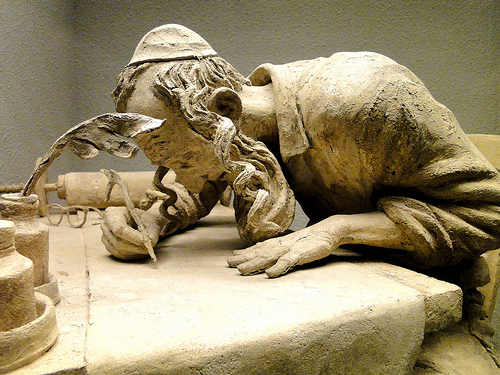
Our first introduction to Ezra is in the seventh chapter of the book that bears his name. Ezra 7 begins with an account of Ezra’s priestly pedigree. This was an important matter to the Jews because it linked Ezra with Aaron, the first chief priest, thus establishing Ezra’s authenticity and credibility. Although greatly abbreviated, Ezra’s genealogy is a “who’s who” of important priests in Hebrew history.

The Preparation and Piety of Ezra
Ezra 7:6-10

Ezra 7:6 tells us of Ezra’s qualifications and the decree, which authorized his return to Jerusalem. Ezra’s priestly pedigree, preparation, and piety gave him credibility and uniquely qualified him to do God’s work. Notice that Ezra was “a scribe skilled in the law of Moses.” Ezra was an expert in the Mosaic Law. He was an interpreter and teacher of the law who had been trained to the point of proficiency. The Jewish historian Josephus tells us of Ezra’s piety. Josephus wrote that Ezra enjoyed a reputation in society for his integrity and the high qualities of his character.

Ezra 7:7-10 is a summary statement of Ezra’s journey from Babylon to Jerusalem. Ezra 7:10 reveals the key to Ezra’s success in life and in service.


Notice that Ezra set his heart “to study the law of the Lord.” The word “study” means, “to seek.” Ezra put forth effort to study God’s Word.

Notice also that Ezra was determined to “practice” what he had learned through his study of God’s Word. Ezra was a doer of the Word (see James 1:22-25). He translated his discoveries into deeds!

Ezra was also determined to teach God’s Word in Israel. The order is important: Study, practice, and then teach!

The Purpose and Power of Ezra
Ezra 7:11-26

Ezra 7:11-8:36 is an amplification of the summary or general comments of Ezra 7:6-10. Ezra 7:11-26 is a record of the decree of King Artaxerxes. This decree spelled out the scope of Ezra’s power and purpose.

First, it authorized the return of Ezra, and any Jews who wanted to accompany him, to Jerusalem.

Second, it authorized Ezra to investigate the state of affairs among the Jews in Judah.

Third, the decree provided for the needs of the Temple.

Fourth, Ezra was authorized to obtain whatever else he needed for the Temple at the expense of the royal treasury.

Fifth, those who worked in the Temple were granted a tax-exempt status.

Finally, Ezra was authorized to set up both a judicial and educational system.

The Praise of Ezra
Ezra 7:27-28

Ezra 7:27-28 records the praise of Ezra following the king’s decree. This brief psalm of praise reveals several things about Ezra.

First, it reveals Ezra’s humility. There is not a hint of self-praise or self-commendation.

Second, it reveals his faith in God. Ezra acknowledged that it was God who had “put such a thing as this in the king’s heart.”

Third, it reveals Ezra’s understanding that God is the source of blessings. He acknowledged that God had extended lovingkindness to him before the king.

Finally, it reveals the fact that Ezra was strengthened and encouraged by God’s blessings.

Practical Considerations:

It is important to have a purpose in life.
Ezra had a purpose in life. Ezra 7:10 summarizes Ezra’s purpose: To study, practice, and teach God’s Word to the people of Israel. Ezra’s purpose found expression in his practices and priorities. He practiced what he believed and made it a priority of his life to return to Jerusalem to teach the people God’s Word. Someone has said, “The only life worth envying is the one who has found a cause bigger than himself.” Ezra had a purpose/cause bigger than himself.

We must be careful to guard our influence in society.
We noted in our lesson that Josephus wrote that Ezra enjoyed a reputation in society for his integrity and the high qualities of his character. When the time came for Ezra to present his requests before the king we can be certain that the king took Ezra’s credibility into account. Ezra’s words were believable because his life was credible. Like Ezra, we should purpose to live our lives in obedience to God’s Word and so guard our witness and influence in our community. Only then will we be prepared for service and have credibility in service. We should be careful to guard our influence lest we be disqualified from service and ministry opportunities (see 1 Corinthians 9:24-27).

Ezra 6

Meddling Politicians
Ezra 5:3-6:7

Once the people resumed the work of rebuilding the Temple, potential opposition surfaced. This time the opposition came from meddling politicians. When these Persian politicians arrived at the construction site, they asked to see the building permit and wanted the names of every member of the building committee. Fortunately for the Jews, God was watching over them and they were allowed to continue the work, pending an official investigation into the legality of their work.

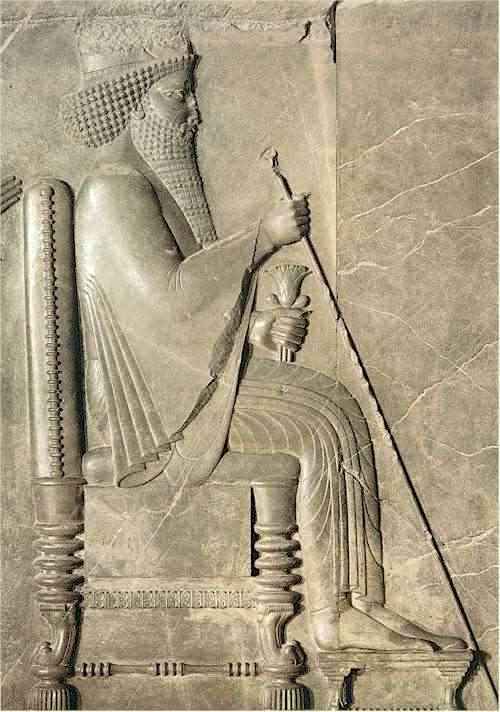
Tattenai, a Persian governor, wrote a letter to King Darius explaining the situation and asked that a search of the archives be conducted to see if Cyrus had indeed issued a building permit to the Jews for the reconstruction of their Temple. A search of the archives was conducted and yielded the proclamation that Cyrus had issued, allowing the Jews the right to rebuild their Temple. King Darius then responded to Tattenai’s letter by telling him to stop meddling with the Jews and allow them to finish their work.

Marvelous Proclamation
Ezra 6:8-15

King Darius must have stunned Tattenai when he went so far as to issue his own marvelous proclamation regarding the rebuilding project.

First, Darius instructed Tattenai that the work was to be financially supported from the royal treasury “without delay” (Ezra 6:8).

Second, Darius decreed that the Jews were to be supplied with whatever they needed to offer acceptable sacrifices to God (Ezra 6:9-10). Part of the motivation behind this order was that the Jews might pray “for the life of the king and his sons.”

Third, Darius decreed that any man who violated his decree would be impaled on a timber from his own house and experience the wrath of God.

According to Ezra 6:13-15, Tattenai and his colleagues “carried out the decree with all diligence.” As a result, the Jews were successful in completing the work of rebuilding the Temple by the “sixth year of the reign of King Darius,” twenty-one years after the foundation had been laid or four and one-half years after Haggai and Zechariah motivated the people to resume the work.

Memorable Passover
Ezra 6:16-22

After the Temple was completed, the Jews “celebrated the dedication of this house of God with joy.” Five weeks after the Temple was dedicated the Jews observed the Passover and the Feast of Unleavened Bread. Ezra was careful to point out that all of this was done with joy (Ezra 6:16 and 22). This was indeed a memorable and joyous time for the Jews who once again had a Temple in which to worship and offer sacrifices.

Practical Consideration:

The accomplishment of God’s will brings great joy to His people.
After the successful completion of the Temple, the people celebrated with joy. In fact, “the Lord caused them to rejoice” (Ezra 6:22). There is joy in faithfully serving the Lord and performing His will.

Ezra 5

Down and Out and Up and At ‘Em!

Have you ever encountered a problem so big that you were stopped dead in your tracks? Have you ever been immobilized by frustration, fear, or confusion? Have you ever abandoned a worthy project because others discouraged, taunted, or ridiculed you? Have you ever compromised your convictions simply for the sake of keeping the peace? Is there anything in your life that you can look back on and wish that you would have had the courage and resolve to complete?

Is there any venture that we can undertake that is problem-free? Is it worth abandoning a worthy project because there are people who don’t believe in it and won’t support it? Can we be at peace with ourselves if we compromise our convictions for the sake of keeping the peace? Is it worth living with regrets in the future because we lack the resolve and purpose of heart to follow through in the present?

Wow! What a barrage of questions! Yet they are all questions that spring directly from the book of Ezra. No sooner had the Jews started the work of rebuilding the Temple than they encountered opposition from their enemies. This should come as no surprise, after all, our enemies are supposed to oppose us and try to discourage us — it’s in their job description!

Opposition and problems will come whenever God’s people get involved in God’s work and that work begins to move forward. Thus the question is not, “Will opposition and problems come?” but rather, “How will we respond when opposition and problems come?”

The response of the Jews to the opposition they encountered is recorded in Ezra 4:24. They abandoned the work of rebuilding the Temple until the second year of King Darius (a total of some sixteen years). The Jews allowed themselves to be stopped dead in their tracks. They were immobilized by fear and discouragement. They abandoned their worthy project. They compromised their convictions for the sake of keeping the peace. They allowed their enemies to reorder their priorities, reshape their vision, and redirect their efforts. They were down and out!

Misplaced Priorities
Ezra
4:24 and Haggai 1:1-11

The Old Testament book of Haggai (the third book from the end of the Old Testament) fills in the story between Ezra 4:24 and 5:1. Haggai 1:1-11 tells us what the people did after they abandoned the work of rebuilding the Temple. According to Haggai, it is a story of misplaced priorities, indifference, and selfishness.

When they encountered opposition the people began to make excuses, saying it was just not the right time to rebuild the Temple (Haggai 1:2). The people had somehow lost their vision. They could no longer see the bigger picture. They were no longer motivated to work, make sacrifices, or deal with problems. Without a vision they were no longer motivated to venture.

Haggai tells us that when the people abandoned the work of rebuilding the Temple, they took up less dangerous pursuits. They began to work on their own houses. They allowed good pursuits to keep them from the best pursuits. They sought security over the sweat and sacrifice that leads to success. How the people of Judah must have lost credibility in the eyes of their enemies.

Motivating Prophets
Ezra 5:1-2 and Haggai 1:12-15

There is no question about the fact that the people of Judah needed to change. They needed to change their attitudes, their agenda, and their actions. They needed for someone to remind them of God’s priorities, rekindle their vision, and revive their efforts.

Sixteen years after they abandoned the work of rebuilding the Temple, God sent the prophets Haggai and Zechariah to motivate the people to get “up and at ’em!” Haggai and Zechariah preached such convicting and motivating messages that the people were stirred into action. They resumed the long-neglected work of rebuilding the Temple.

Meddling Politicians
Ezra 5:3-6:7

Once the people resumed the work of rebuilding the Temple, potential opposition surfaced. This time the opposition came from meddling politicians. When these Persian politicians arrived at the construction site, they asked to see the building permit and wanted the names of every member of the building committee. Fortunately for the Jews, God was watching over them and they were allowed to continue the work, pending an official investigation into the legality of their work.


Tattenai, a Persian governor, wrote a letter to King Darius explaining the situation and asked that a search of the archives be conducted to see if Cyrus had indeed issued a building permit to the Jews for the reconstruction of their Temple. A search of the archives was conducted and yielded the proclamation that Cyrus had issued, allowing the Jews the right to rebuild their Temple. King Darius then responded to Tattenai’s letter by telling him to stop meddling with the Jews and allow them to finish their work.

Practical Considerations:

We should not allow opposition to keep us from serving God.
Those who seek to serve God will encounter opposition. Jesus said to His disciples, “If the world hates you, you know that it has hated Me before it hated you. If you were of the world, the world would love its own; but because you are not of the world, but I chose you out of the world, therefore the world hates you…If they persecute Me, they will also persecute you” (John 15:18-20). We should persevere in the face of opposition and problems, knowing that “the eye of [our] God [is] upon [us]” (Ezra 5:5).

We should not allow the good to keep us from the best.
When the people of Judah were discouraged from rebuilding the Temple, they invested their efforts in other important, but less noble pursuits. Eventually they became comfortable and slowly grew indifferent to the greater work that God had for them to do. We must be careful lest comfort keeps us from commitment and security keeps us from service.

God was interested in more than the rebuilding of the Temple.
While the rebuilding of the Temple was of paramount importance, so too was the rebuilding of lives. God knew that the lives, hopes, and dreams of the people would also be rebuilt during the course of the Temple reconstruction in the face of opposition. Edwin Markham wrote:

We are all blind until we see
That in the human plan
Nothing is worth the making if
It does not make the man.

Why build these cities glorious
If man unbuilded goes?
In vain we build the work, unless
The builder also grows.

God’s will shall prevail.
It was God’s will that the Jewish exiles be allowed to return to their homeland. It was God’s will that the Temple be rebuilt. God did not allow His will to be thwarted. He used godly prophets, meddling politicians, and pagan rulers in His plan. Each became an instrument in His hand to accomplish His will.

Ezra 4

Problems and Postponement

While Ezra 3 began with great promise, Ezra 4 begins with great problems. While Ezra 3 closed with great rejoicing, Ezra 4 opens with the great resistance of the enemies of Judah. We must keep in mind that opposition often follows obedience.

Someone has said that if the devil is not bothering you, perhaps it is because you are not bothering the devil! Whenever God’s work moves forward, Satan mobilizes his evil forces to interfere with that work. Jesus outlined Satan’s agenda in John 10:10, “The thief [Satan] comes only to steal, and kill, and destroy.” And indeed, that was Satan’s agenda when the Jews began the great work of rebuilding the Temple.

Ezra 4:1 refers to the “enemies of Judah.” These “enemies” were people of mixed blood who were living in the land when the Jews returned from exile. They were Jewish “half-breeds” who eventually came to be known as Samaritans. They were hated by the Jews because they had intermarried with pagan peoples and had adopted pagan worship practices, including idolatry.

When these people learned that the returned exiles were rebuilding the Temple they offered their assistance. Their offer was turned down however, because the Jewish repatriates wanted to maintain the integrity and purity of their faith. They wanted to have absolutely no involvement with anyone who was involved in idolatry. After all, they had just spent years in captivity because of their involvement in idolatrous practices. They had learned their lesson the hard way.

Ezra 4:4 confirms the fact that opposition often follows obedience and that those who refuse to compromise must pay a price. When the Jews refused the help of the Samaritans their troubles began as they were intimidated, bribed, discouraged, and frightened from continuing the work. Their enemies even went so far as to hire “counselors against them.” These counselors were people in official positions who were bribed to cast the Jews in a bad light.

Ezra 4:5 leads us to the conclusion that the pressure was kept up until the reign of Darius (Ezra 4:24). The enemies of Judah caused so many problems that the work was postponed for some sixteen years! Ezra 4:6-23 is a parenthetical inclusion that details the opposition that the Jews experienced from their enemies after the rebuilding of the Temple and on through their work on the walls of the city. Ezra 4 should be read with this pattern in mind: Ezra 4:1-5 (6-23) 24.

Practical Considerations:

Opposition often follows obedience.
Whenever God’s work begins to move forward, Satan does all that he can to hinder and interfere with that work. Whenever God’s people make a commitment to obey and serve Him, Satan will always marshal his evil forces to discourage and demoralize them. We should however, not allow opposition to discourage us from serving God.

We must guard against non-Christian influences in our lives.
The Jews did not allow the syncretistic Samaritans to assist them in the work of rebuilding the Temple. They did not want to endanger the integrity of their faith. We too, must be careful lest our faith in God be corrupted by the wrong influences. The Apostle Paul stated, “Do not be deceived: ‘Bad company corrupts good morals'” (1 Corinthians 15:33).

Ezra 3

Someone has said, “You can tell it’s going to be a rotten day when you call Suicide Prevention, and they put you on hold. You can tell it’s going to be a bad day when you turn on the news and they’re showing emergency routes out of the state. You can tell it’s going to be a rotten day when your car horn goes off accidentally and remains stuck as you follow a group of Hell’s Angels on the freeway.”

Have you ever had a day like that? Who among us does not have to deal with problems every day of the week?

Problems seem to be woven into the fabric of our lives. They often come upon us unexpectedly and hold on tenaciously. Problems also seem to come upon us most frequently when we have made a commitment to begin anew some aspect of our lives. Just when we make a commitment to obey God, we encounter opposition!

Even Jesus was not exempt from this dilemma. You will recall that after His baptism came the battle, after the dove came the devil, and after the voice from heaven came the roar from hell in the wilderness temptations. In our study today, we will see that opposition often comes after obedience. We will also see the importance of looking to God as our strength, shield, and refuge in times of trouble.

Purpose and Priorities
Ezra 3:1-6

Ezra 3:1-6 tells us much about the common purpose and priorities of the Jews who returned to Judah. On the seventh month, the people, who had returned to their former villages and cities, “gathered together as one man to Jerusalem” (Ezra 3:1). This indicates a sense of common purpose among the people. They had a common desire to rebuild the Temple which had been destroyed years earlier by Nebuchadnezzar.

We can only imagine what a special day this must have been for the people. It was a day they had probably dreamed and thought about many times during their years in exile (Psalm 137:1-5).

Ezra 3:2 informs us that the first thing the people did was to “build the altar of the God of Israel, to offer burnt offerings on it, as it is written in the law of Moses, the man of God.” This indicates that the people had proper priorities.

According to Ezra 3:3, one of the factors that motivated the Jews to rebuild the altar was their great fear of the peoples of the land. It is interesting that they did not rebuild the walls of the city first. After all, the very reason walls were built around cities in ancient times was for protection and security from enemies and outside threats. The Jews however, made the rebuilding of the altar their top priority because they had finally learned that the Lord was their greatest source of strength and protection.

Project and Progress
Ezra 3:7-9

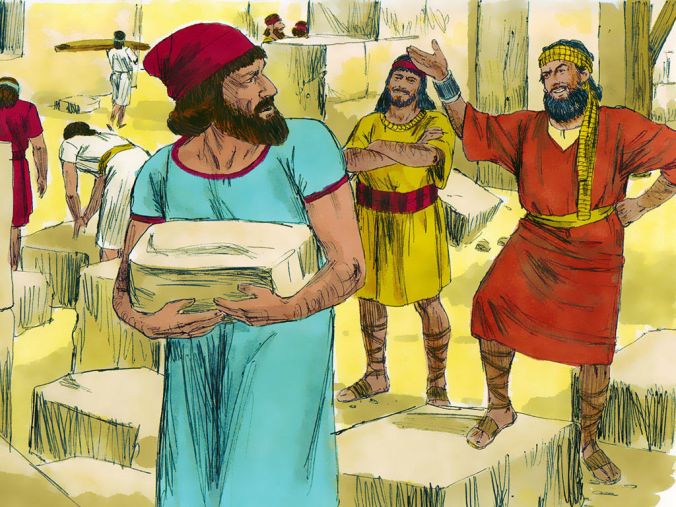
Ezra 3:7-9 informs us that once the altar had been rebuilt and the sacrificial system reinstituted, the people were ready to turn their attention to the major project of rebuilding the Temple. The first order of business was the rebuilding of the foundation. Notice three things that helped the people to make progress in the work.

First, the people contributed to the work. The people contributed money to hire the workmen and provisions to be used in negotiating with other provinces for building supplies.

Second, the people cooperated in the work. There was something for everyone to do. Some were capable of giving, others were capable of working, while still others were capable of negotiating with the Phoenicians for cedar wood. In like manner, the work of ministry in the local church today depends on both the contributions and cooperation of the people. Paul made clear in I Corinthians 12:14-18 that the contribution and cooperation of every church member is needed and necessary.

Third, the work was coordinated. Such a major project required careful planning and capable coordination. The Levites were responsible for overseeing the work (Ezra 3:8) and the workmen (Ezra 3:9).

Ezra 3:10-13

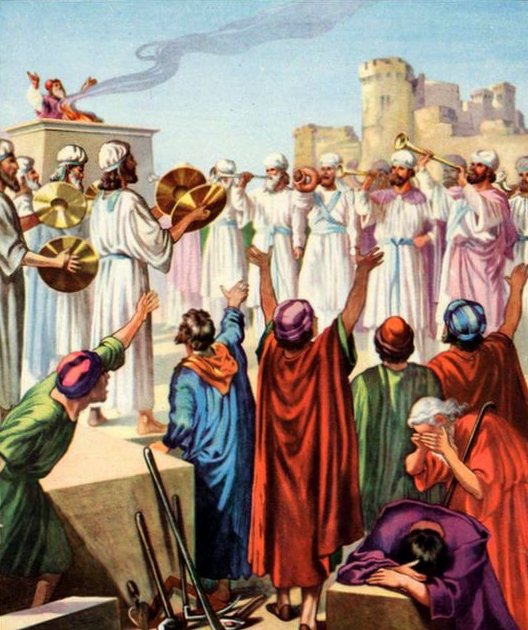
Once the foundation of the Temple had been laid, a worship service was held to celebrate this new beginning. This was an emotional event for all who participated. The emotions ranged from praise to pathos. Ezra 3:11 tells us that “the people sang, praising and giving thanks to the Lord.”

While some people rejoiced and shouted aloud for joy however, those who were older and had seen the glory of the first Temple “wept with a loud voice.” Perhaps the older generation wept because they felt that the second Temple would be less-than-adequate in both size and splendor. Ezra 3:13 records that the mingled shouts of praise and loud weeping resulted in a terrible cacophony of sound that “was heard far away.”

Practical Considerations:

Problems are woven into the fabric of life.
We should not be surprised or despair when we encounter problems or when problems encounter us. Someone has said that problems will either make us or break us. When we encounter problems we should try to understand how God can use them to strengthen us. Problems are woven into the fabric of life!

The Weaver
My life is but a weaving, between my Lord and me,
I cannot choose the colors, He worketh steadily.
Oft times He weaveth sorrow, and I in foolish pride,
Forget He sees the upper, and I, the underside!
Not ’till the loom is silent, and the shuttles cease to fly,
Shall God unroll the canvas, and explain the reason why,
The dark threads are as needful,
In the Weaver’s skillful hand,
As the threads of gold and silver,
In the pattern He has planned.

The Lord is the greatest source of strength and protection.
The repatriates made the rebuilding of the altar their first priority when they returned to Judah. Even though they were fearful of the people of the land, they did not rebuild the walls of the city as their first line of protection. They rebuilt the altar and in so doing acknowledged their dependence upon God for protection. In our search for protection and security may we remember, “Unless the Lord builds the house, They labor in vain who build it; Unless the Lord guards the city, The watchman keeps awake in vain” (Psalm 127:1).

There is a place for each of us in God’s work.
The Jewish repatriates made progress in laying anew the foundation of the Temple because each person did his part. The people contributed to the work and cooperated in the work while still others coordinated the work. The Apostle Paul reminds us (I Corinthians 12:14-18) that the contribution of every member of the church is needed and necessary in order to perform the work of ministry. We are responsible for using the gifts God has given us.

Serving God brings joy to the one who serves.
After the successful completion of the foundation of the Temple, the people who participated in the work rejoiced and gave thanks to God. Others however, looked back and became saddened because they felt the new Temple would be less-than-adequate. We should maintain Paul’s attitude in life as expressed in Philippians 3:13, “forgetting what lies behind and reaching forward to what lies ahead.”

Ezra 2

The People Who Returned
Ezra 2:1-67

Ezra 2:1-67 contains a register of the people who returned to Judah. The list begins with the leaders of the people and then lists the numbers of repatriates according to their clan, their hometown, the priests, and those who were not able to give evidence of their origin. One commentator has noted that “the protective hand of God and the vitality of Israel are clearly evident in this genealogical listing.”

The Priority of the Repatriates
Ezra 2:68-70

Upon arriving in Jerusalem and viewing the depressing ruins of the Temple, the repatriates “offered willingly to the house of God to restore it on its foundation. According to their ability they gave to the treasury” (Ezra 2:68b-69a). Their priority was to rebuild the Temple. In so doing they would also rebuild their homes and their lives. The people faced both the joys and challenges of a new beginning. The road ahead would certainly be filled with hazards and discouragements as well as victories and triumphs, but after all, that is what the road to the land of Beginning Again is paved with.