Ezekiel 25

25:1 The word of the LORD came to me [Ezekiel functioned as God’s messenger]:

25:2 “Son of man [this expression designated Ezekiel as a member of the human race], set your face against [indicates that the Ammonites were to be the focus of Ezekiel’s prophetic attention] the Ammonites [people descended from Abraham’s nephew Lot (through Lot’s incestuous relationship with his daughter (Gen. 19:36-38); resided in region east of Jordan River and generally hostile toward God’s people; note: Amman is the capital of modern day Jordan] and prophesy against them [no evidence that the Ammonites actually heard Ezekiel’s words, but his words served to encourage God’s people].

Note: Ammonite and Israelite hostilities include:
• Judges 11:32-33 Jephthah fought against and defeated the Ammonites
• 1 Samuel 11:11 Saul defeated the Ammonites
• 2 Samuel 10:6-14; 12:26-31 David defeated the Ammonites
• Amos 1:13 Ammonites pushed into Gilead and slaughtered pregnant women

25:3 Say to them [the Ammonites; the people on whom God’s judgment would fall], ‘Hear the word of the Sovereign LORD. This is what the Sovereign LORD says: Because you said “Aha! [a cry of malicious satisfaction over the misfortune of God’s people] [1] over my sanctuary when it was desecrated and [2] over the land of Israel when it was laid waste [Assyrians defeated Northern Kingdom in 722 BC] and [3] over the people of Judah [the Southern Kingdom] when they went into exile [587 BC; Jews remained in exile until Cyrus, king of Persia, allowed them to return in 538 BC],

25:4 therefore [note hat God’s judgment was imminent] I am going to give you to the people of the East [denotes the Babylonians or Chaldeans] as a possession. They will set up their camps and pitch their tents among you; they will eat your fruit and drink your milk.

25:5 I will turn Rabbah into a pasture for camels and Ammon into a resting place for sheep. Then you will know that I am the LORD.

25:6 For this is what the Sovereign LORD says: Because you have clapped your hands and stamped your feet, rejoicing with all the malice of your heart against the land of Israel,

25:7 therefore I will stretch out my hand against you and give you as plunder to the nations. I will cut you off from the nations and exterminate you from the countries. I will destroy you, and you will know that I am the LORD.’”

25:8 “This is what the Sovereign LORD says: ‘Because Moab and Seir said, “Look, the house of Judah has become like all the other nations,”

25:9 therefore I will expose the flank of Moab, beginning at its frontier towns—Beth Jeshimoth, Baal Meon and Kiriathaim—the glory of that land.

25:10 I will give Moab along with the Ammonites to the people of the East as a possession, so that the Ammonites will not be remembered among the nations;

25:11 and I will inflict punishment on Moab. Then they will know that I am the LORD.’”

25:12 “This is what the Sovereign LORD says: ‘Because Edom took revenge on the house of Judah and became very guilty by doing so,

25:13 therefore this is what the Sovereign LORD says: I will stretch out my hand against Edom and kill its men and their animals. I will lay it waste, and from Teman to Dedan they will fall by the sword.

25:14 I will take vengeance on Edom by the hand of my people Israel, and they will deal with Edom in accordance with my anger and my wrath; they will know my vengeance, declares the Sovereign LORD.’”

25:15 “This is what the Sovereign LORD says [this expression stresses Ezekiel’s role as God’s messenger]: ‘Because the Philistines [lived along southwest coastline of the promised land; modern day designation Palestine derived from term meaning “Philistines”] acted in vengeance and took revenge with malice in their hearts [the Philistines were committed to the total destruction of God’s people], and with ancient hostility sought to destroy Judah,

25:16 therefore this is what the Sovereign LORD says: I am about to stretch out my hand against the Philistines, and I will cut off the Kerethites and destroy those remaining along the coast.

25:17 I will carry out great vengeance on them and punish them in my wrath [God’s judgment designed to awaken the Philistines to the evil of their actions]. Then [as a result of God’s judgment] they [the Philistines] will know that I am the LORD, when I take vengeance on them [the Lord held the Philistines accountable for how they had treated others].’”

Ezekiel 28

28:1 The word of the LORD came to me:

28:2 “Son of man, say to the ruler [God’s attention shifted from the city to its ruler or king; although not named, this ruler was probably Ethbaal II who ruled Tyre in Ezekiel’s time] of Tyre, ‘This is what the Sovereign LORD says: “‘In the pride of your heart you say, “I am a god [an arrogant claim to divinity often made by many ancient rulers]; I sit on the throne of a god in the heart of the seas [the king felt that he and his island city were safe from all enemies].” But [note God’s evaluation of Tyre’s king] you are a man and not a god, though you think you are as wise as a god.

28:3 Are you wiser than Daniel? Is no secret hidden from you?

28:4 By your wisdom and understanding you have gained wealth for yourself and amassed gold and silver in your treasuries.

28:5 By your great skill in trading [setting up trade routes and trading colonies] you have increased your wealth, and because of your wealth your heart has grown proud.

28:6 “‘Therefore this is what the Sovereign LORD says: “‘Because you think you are wise, as wise as a god,

28:7 I am going to bring foreigners against you [Tyre fell to Alexander the Great in 322 BC)], the most ruthless of nations; they will draw their swords against your beauty and wisdom and pierce your shining splendor.

28:8 They will bring you down to the pit, and you will die a violent death in the heart of the seas.

28:9 Will you then say, “I am a god,” in the presence of those who kill you? You will be but a man, not a god, in the hands of those who slay you.

28:10 You will die the death of the uncircumcised at the hands of foreigners. I have spoken, declares the Sovereign LORD.’”

28:11 The word of the LORD came to me:

28:12 “Son of man, take up a lament concerning the king of Tyre and say to him: ‘This is what the Sovereign LORD says: “‘You were the model of perfection, full of wisdom and perfect in beauty.

28:13 You were in Eden, the garden of God; every precious stone adorned you: ruby, topaz and emerald, chrysolite, onyx and jasper, sapphire, turquoise and beryl. Your settings and mountings were made of gold; on the day you were created they were prepared.

28:14 You were anointed as a guardian cherub, for so I ordained you. You were on the holy mount of God; you walked among the fiery stones.

28:15 You were blameless in your ways from the day you were created till wickedness was found in you.

28:16 Through your widespread trade you were filled with violence, and you sinned. So I drove you in disgrace from the mount of God, and I expelled you, O guardian cherub, from among the fiery stones.

28:17 Your heart became proud on account of your beauty, and you corrupted your wisdom because of your splendor. So I threw you to the earth; I made a spectacle of you before kings.

28:18 By your many sins and dishonest trade you have desecrated your sanctuaries. So I made a fire come out from you, and it consumed you, and I reduced you to ashes on the ground in the sight of all who were watching.

28:19 All the nations who knew you are appalled at you; you have come to a horrible end and will be no more.’”

28:20 The word of the LORD came to me:

28:21 “Son of man, set your face against Sidon; prophesy against her

28:22 and say: ‘This is what the Sovereign LORD says: “‘I am against you, O Sidon, and I will gain glory within you. They will know that I am the LORD, when I inflict punishment on her and show myself holy within her.

28:23 I will send a plague upon her and make blood flow in her streets. The slain will fall within her, with the sword against her on every side. Then they will know that I am the LORD.

28:24 “‘No longer will the people of Israel have malicious neighbors who are painful briers and sharp thorns. Then they will know that I am the Sovereign LORD.

28:25 “‘This is what the Sovereign LORD says: When I gather the people of Israel from the nations where they have been scattered, I will show myself holy among them in the sight of the nations. Then they will live in their own land, which I gave to my servant Jacob.

28:26 They will live there in safety and will build houses and plant vineyards; they will live in safety when I inflict punishment on all their neighbors who maligned them. Then they will know that I am the LORD their God.’”

Ezekiel 26

26:1 In the eleventh year [of King Zedekiah’s reign, around the time of Jerusalem’s fall], on the first day of the month, the word of the LORD came to me:

26:2 “Son of man, because Tyre [a wealthy Phoenician port city; cf. originally assigned to tribal territory of Asher during Joshua’s time (Josh. 19:29); tribe of Asher never subdued region] has said of Jerusalem, ‘Aha! [a cry of malicious satisfaction over the misfortune of God’s people ; cf. Ezek. 25:3] The gate [so called because of its geographical location, political significance, and key role in international trade] to the nations is broken, and its doors have swung open to me; now that she lies in ruins I will prosper [Tyre expected to prosper economically because of the fall of Jerusalem and of the Southern Kingdom],’

26:3 therefore this is what the Sovereign LORD says [note message of divine judgment]: I am against you, O Tyre, and I will bring many nations [God would use these nations (once sources of business) as instruments of His judgment] against you, like the sea casting up its waves [people understood this imagery because Tyre was located along coast of Mediterranean Sea].

26:4 They will destroy the walls of Tyre and pull down her towers; I will scrape away her rubble and make her a bare rock.

26:5 Out in the sea she will become a place to spread fishnets, for I have spoken, declares the Sovereign LORD. She will become plunder for the nations,

26:6 and her settlements on the mainland will be ravaged by the sword. Then they will know that I am the LORD.

26:7 “For this is what the Sovereign LORD says: From the north I am going to bring against Tyre Nebuchadnezzar king of Babylon, king of kings, with horses and chariots, with horsemen and a great army.

26:8 He will ravage your settlements on the mainland with the sword; he will set up siege works against you, build a ramp up to your walls and raise his shields against you.

26:9 He will direct the blows of his battering rams against your walls and demolish your towers with his weapons.

26:10 His horses will be so many that they will cover you with dust. Your walls will tremble at the noise of the war horses, wagons and chariots when he enters your gates as men enter a city whose walls have been broken through.

26:11 The hoofs of his horses will trample all your streets; he will kill your people with the sword, and your strong pillars will fall to the ground.

26:12 They will plunder your wealth and loot your merchandise; they will break down your walls and demolish your fine houses and throw your stones, timber and rubble into the sea.

26:13 I will put an end to your noisy songs, and the music of your harps will be heard no more.

26:14 I will make you a bare rock, and you will become a place to spread fishnets. You will never be rebuilt, for I the LORD have spoken, declares the Sovereign LORD.

26:15 “This is what the Sovereign LORD says to Tyre: Will not the coastlands tremble at the sound of your fall, when the wounded groan and the slaughter takes place in you?

26:16 Then all the princes of the coast will step down from their thrones and lay aside their robes and take off their embroidered garments. Clothed with terror, they will sit on the ground, trembling every moment, appalled at you.

26:17 Then they will take up a lament concerning you and say to you: “‘How you are destroyed, O city of renown, peopled by men of the sea! You were a power on the seas, you and your citizens; you put your terror on all who lived there.

26:18 Now the coastlands tremble on the day of your fall; the islands in the sea are terrified at your collapse.’

26:19 “This is what the Sovereign LORD says: When I make you a desolate city, like cities no longer inhabited, and when I bring the ocean depths over you and its vast waters cover you,

26:20 then I will bring you down with those who go down to the pit, to the people of long ago. I will make you dwell in the earth below, as in ancient ruins, with those who go down to the pit, and you will not return or take your place in the land of the living.

26:21 I will bring you to a horrible end and you will be no more. You will be sought, but you will never again be found, declares the Sovereign LORD.”

Ezekiel 18

8:1 The word of the LORD came to me [Ezekiel, a prophet to God’s people in exile in Babylon in 6th century BC; Jeremiah was a contemporary preaching in Judah]:

18:2 “What do you [those seeking to evade personal responsibility for the fall of Judah in 587 BC] people [indicates universal awareness of the proverb] mean by quoting this proverb [popular saying; cf. Jer. 31:29] about [the particular proverb implied that the exiles were innocent victims of the sins of past generations] the land of Israel: “`The fathers [previous generations] eat sour grapes [sinned], and the children’s [refers to Ezekiel’s generation] teeth are set on edge [interpretation (and misapplication of the proverb): we are being unfairly punished (refers to the exile) for the sins of the previous generation]‘?

Note: Why do people tend to blame others for their mistakes or failures? How does society contribute to these attitudes toward responsibility? When you have been faced with personal failure, have you taken ownership or have you sought to place blame on others?

18:3 “As surely as I live, declares the Sovereign LORD [title emphasizes absolute sovereignty of God; literally “Lord Yahweh”], you will no longer [stop immediately] quote this [misleading proverb that spoke of transferring responsibility for their sin to someone else] proverb [because it was false and blasphemed God’s character; God was not punishing the innocent but had merely delayed His wrath until Ezekiel’s day] in Israel.

Note: When have you questioned God’s justice?

18:4 For every living soul belongs to me [universal ownership of all creation], the father as well as the son — both alike belong to me. The soul [individual] who sins [miss the target] is the one [individual] who will die [ultimate outcome of sin].

18:5 [Ezekiel explained the principal of individual responsibility by using an example of a family traced through three generations; note generation one…] “Suppose there is a righteous [basically denotes conformity to an ethical or moral standard] man who does what is just [cf. Amos 5:24] and right [in right relationship with God and man; justice and righteousness are products of faith in God].

18:6 He does not [righteous living includes abstaining from evil; God desires our total allegiance] eat [refers to pagan festivals] at the mountain shrines [high places dedicated to the worship of false gods] or look [to raise his eyes or to long for] to the idols of the house of Israel [cf. 2 Kings 21:11]. He does not defile [to make unclean] his neighbor’s wife [as per the seventh of he Ten Commandments (Ex. 20:14; Deut. 5:18)] or lie with a woman during her period [cf. Lev. 15:19-24; 18:19; 20:18].

18:7 He does not oppress [refers to mistreatment of the poor and weak (cf. Ezek. 18:12; 22:29] anyone, but returns what he took in pledge [collateral] for a loan [cf. Ex. 22:26-27; Deut. 24:10-11]. He does not commit robbery [refers to the wealthy violently seizing (or taking by force) property from the poor; cf. Lev. 6:1-4; Isa. 10:1-2; Mic. 2:1-2] but [note examples of righteous living…] gives his food to the hungry [cf. Isa. 58:6-8] and provides clothing for the naked.

18:8 He does not lend at usury or take excessive interest [cf. Ex. 22:25; Deut. 23:19; Deut. 23:20; cf. cf. Neh. 5:7; Ezek. 22:12 re: profiting from others’ difficulties]. He withholds [keeps] his hand from doing wrong [to distort; crooked dealings] and judges fairly between man and man.

18:9 He follows [as a way of life] my decrees and faithfully keeps my laws. That man is righteous; he will surely live [this does not teach that people may earn salvation; righteous living gives evidence of genuine saving faith], declares the Sovereign LORD.

18:10 [note example using the generation two…] “Suppose he [the righteous man of 18:4-7] has a violent son [a son who lives a life diametrically opposed to his father’s], who sheds blood [typically refers to the unjust taking of life (cf. Gen. 9:6)] or does any of these other things!

18:11 (though the father has done none of them): “He eats at the mountain shrines. He defiles his neighbor’s wife.

18:12 He oppresses the poor and needy. He commits robbery. He does not return what he took in pledge. He looks to the idols. He does detestable things.

18:13 He lends at usury and takes excessive interest. Will such a man live? He will not! Because he has done all these detestable things, he will surely be put to death [the father’s righteousness cannot save the son] and his blood will be on his own head [each person bears responsibility for his or her own sin].

18:14 [note example using generation three…] “But suppose this son [the unrighteous son] has a son who sees all the sins his father commits, and though he sees them, he does not do such things:

18:15 “He does not eat at the mountain shrines or look to the idols of the house of Israel. He does not defile his neighbor’s wife.

18:16 He does not oppress anyone or require a pledge for a loan. He does not commit robbery but gives his food to the hungry and provides clothing for the naked.

18:17 He withholds his hand from sin and takes no usury or excessive interest. He keeps my laws and follows my decrees. He will not die for his father’s sin; he will surely live.

18:18 But his father will die for his own sin, because he practiced extortion, robbed his brother and did what was wrong among his people.

18:19 “Yet you ask, `Why does the son not share the guilt of his father?’ Since the son has done what is just and right [choices in conformity with God’s standards] and has been careful to keep all my decrees [made the right decisions], he will surely live [regardless of what his father did].

18:20 The soul [Heb. “nephesh” refers to the total person; the word here refers to “life” or “person”] who sins is the one who will die [cf. 18:4]. The son will not share the guilt of the father, nor will the father share the guilt of the son. [while others may influence us, ultimately each of us make our own choices; each person is responsible and accountable for his or her own sins] The righteousness of the righteous man will be credited to him, and the wickedness of the wicked will be charged against him.

18:21 “But [a reminder that there is hope for the wicked] if a wicked man turns away from all the sins he has committed and keeps all my decrees and does what is just and right, he will surely live; he will not die.

18:22 None of the offenses he has committed will be remembered against him. Because of the righteous things he has done, he will live.

Note: Whom does God hold accountable for their action? What is one occasion when God punished your behavior? How was God’s action appropriate in that case?

18:23 [two rhetorical questions asked in order to establish God’s concern for individuals] Do I take any pleasure in the death of the wicked [obvious answer is no]? declares the Sovereign LORD. Rather, am I not pleased when they turn [“to change direction” (denotes a new spiritual direction in life)] from their ways and live [obvious answer is yes]?

18:24 “But if a righteous man turns from [a persistent choice to do wrong rather than a temporary lapse of judgment] his righteousness and commits sin and does the same detestable things the wicked man does, will he live? None of the righteous things he has done will be remembered. Because of the unfaithfulness he is guilty of and because of the sins he has committed, he will die [salvation is not the issue here but rather judgment; cf. 1 Cor. 3:10-15 re: recompense for a believer’s works].

Note: Correct conduct can be damaged by evil actions.

18:25 “Yet you [exiles in Babylon] say [note charge of injustice leveled against God], `The way of the Lord is not just [right or fair; the people charged God with punishing innocent people (an attack on God’s character)].’ [God’s countercharge…] Hear, O house of Israel: Is my way unjust [“unfair” (NRSV); “not right” (NASB)]? Is it not your ways that are unjust? [the people were in exile because of their own sins]

18:26 [note in verses 26-27 that God did not act in an arbitrary manner] If a righteous man turns from his righteousness and commits sin, he will die for it; because of the sin he has committed he will die.

Note: Past goodness does not compensate for persistent sinning.

18:27 But if a wicked man turns away from the wickedness he has committed and does what is just and right, he will save his life.

18:28 Because he considers all the offenses [destructive actions] he has committed and turns away [repents] from them [all of them], he will surely live; he will not die.

18:29 [cf. 18:25] Yet the house of Israel says, `The way of the Lord is not just.’ Are my ways unjust, O house of Israel? Is it not your ways that are unjust?

Note: Set aside time to critically examine your life for behavior or attitudes that are not acceptable to God.

18:30 “Therefore, O house of Israel [here refers to citizens of Judah], I will judge you, each one [each individual is responsible for his or her own actions] according to his ways [indicates the judgment would be comprehensive], declares the Sovereign LORD. Repent [a decision each culpable person must make]! Turn away from all your offenses [deliberate action against God’s will]; then sin will not be your downfall.

18:31 Rid yourselves [literally “to cause to send away” or “to cast away” (has sense of hurling with deliberate force)] of all the offenses you have committed, and get a new heart [place where decisions are made] and a new spirit [here designates life]. Why will you die, O house of Israel?

18:32 [cf. Ezek. 33:11] For I take no pleasure in the death of anyone, declares the Sovereign LORD. Repent and live!
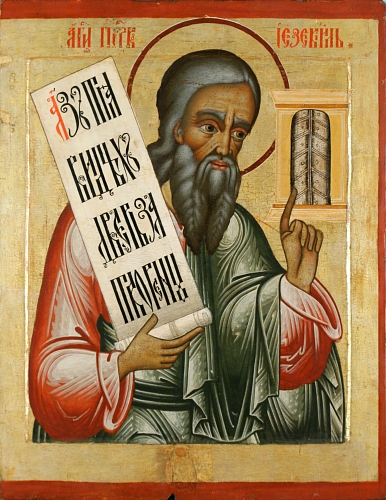
Ezekiel 14

14:1 Some of the elders of Israel came to me and sat down in front of me.

14:2 Then the word of the LORD came to me:

14:3 “Son of man, these men have set up idols in their hearts and put wicked stumbling blocks before their faces [these elders apparently had adopted Babylonian values]. Should I let them inquire of me at all?

14:4 Therefore speak to them and tell them, ‘This is what the Sovereign LORD says: When any Israelite [note hypocritical behavior…] sets up idols in his heart [the seat of intelligence and spiritual life] and puts a wicked stumbling block before his face and then goes to a prophet [the people were covering all their religious bases (or trying to serve two masters)], I the LORD will answer him myself in keeping with his great idolatry.

14:5 I will do this to recapture the hearts [the people had enthroned idols in God’s rightful place] of the people of Israel, who [along with the elders mentioned in the previous verses] have all deserted me for their idols [the Babylonians worshiped idols].’

14:6 “Therefore say to the house of Israel, ‘This is what the Sovereign LORD says: Repent [the solution to the problem]! Turn [an important step in distancing one’s self from idols] from your idols and renounce [an important step in distancing one’s self from idols] all your detestable practices!

14:7 “‘When any Israelite or any alien living in Israel separates himself from me and sets up idols in his heart and puts a wicked stumbling block before his face and then goes to a prophet to inquire of me, I the LORD will answer him myself.

14:8 I will set my face against that man and make him an example and a byword. I will cut him off from my people. Then you will know that I am the LORD.

14:9 “‘And if the prophet is enticed to utter a prophecy, I the LORD have enticed that prophet, and I will stretch out my hand against him and destroy him from among my people Israel.

14:10 They will bear their guilt—the prophet will be as guilty as the one who consults him.

14:11 Then the people of Israel will no longer stray from me, nor will they defile themselves anymore with all their sins. They will be my people, and I will be their God, declares the Sovereign LORD.’”

14:12 The word of the LORD came to me:

14:13 “Son of man, if a country sins against me by being unfaithful and I stretch out my hand against it to cut off its food supply and send famine upon it and kill its men and their animals,

14:14 even if these three men—Noah, Daniel and Job—were in it, they could save only themselves by their righteousness, declares the Sovereign LORD.

14:15 “Or if I send wild beasts through that country and they leave it childless and it becomes desolate so that no one can pass through it because of the beasts,

14:16 as surely as I live, declares the Sovereign LORD, even if these three men were in it, they could not save their own sons or daughters. They alone would be saved, but the land would be desolate.

14:17 “Or if I bring a sword against that country and say, ‘Let the sword pass throughout the land,’ and I kill its men and their animals,

14:18 as surely as I live, declares the Sovereign LORD, even if these three men were in it, they could not save their own sons or daughters. They alone would be saved.

14:19 “Or if I send a plague into that land and pour out my wrath upon it through bloodshed, killing its men and their animals,

14:20 as surely as I live, declares the Sovereign LORD, even if Noah, Daniel and Job were in it, they could save neither son nor daughter. They would save only themselves by their righteousness.

14:21 “For this is what the Sovereign LORD says: How much worse will it be when I send against Jerusalem my four dreadful judgments—sword and famine and wild beasts and plague—to kill its men and their animals!

14:22 Yet there will be some survivors—sons and daughters who will be brought out of it. They will come to you, and when you see their conduct and their actions, you will be consoled regarding the disaster I have brought upon Jerusalem—every disaster I have brought upon it.

14:23 You will be consoled when you see their conduct and their actions, for you will know that I have done nothing in it without cause, declares the Sovereign LORD.”

Ezekiel 12

12:1 The word of the LORD came to me:

12:2 “Son of man, you are living among a rebellious people. They have eyes to see but do not see and ears to hear but do not hear, for they are a rebellious people.

12:3 [a symbolic action that portrayed Jerusalem’s fall and the exile of more of its people to Babylon…] “Therefore, son of man, pack your belongings for exile and in the daytime, as they watch, set out and go from where you are to another place. Perhaps they will understand, though they are a rebellious house.

12:4 During the daytime, while they watch, bring out your belongings packed for exile. Then in the evening, while they are watching, go out like those who go into exile.

12:5 While they watch, dig through the wall and take your belongings out through it.

12:6 Put them on your shoulder as they are watching and carry them out at dusk. Cover your face so that you cannot see the land, for I have made you a sign to the house of Israel.”

12:7 So I did as I was commanded. During the day I brought out my things packed for exile. Then in the evening I dug through the wall with my hands. I took my belongings out at dusk, carrying them on my shoulders while they watched.

12:8 In the morning the word of the LORD came to me:

12:9 “Son of man, did not that rebellious house of Israel ask you, ‘What are you doing?’

12:10 “Say to them, ‘This is what the Sovereign LORD says: This oracle concerns the prince [King Zedekiah of Judah] in Jerusalem and the whole house of Israel who are there.’

12:11 Say to them, ‘I am a sign to you.’ “As I have done, so it will be done to them [Ezekiel’s prophecy came true (2 Kings 25:1-7)]. They will go into exile as captives.

12:12 “The prince among them will put his things on his shoulder at dusk and leave, and a hole will be dug in the wall for him to go through. He will cover his face so that he cannot see the land.

12:13 I will spread my net for him, and he will be caught in my snare; I will bring him to Babylonia, the land of the Chaldeans, but he will not see it, and there he will die.

12:14 I will scatter to the winds all those around him—his staff and all his troops—and I will pursue them with drawn sword.

12:15 “They will know that I am the LORD, when I disperse them among the nations and scatter them through the countries.

12:16 But I will spare a few of them from the sword, famine and plague, so that in the nations where they go they may acknowledge all their detestable practices. Then they will know that I am the LORD.”

12:17 The word of the LORD [the source of the revelation] came [we are not told how it came] to me:

12:18 “Son of man [Ezekiel; Jesus used this expression to refer to Himself during His earthly ministry (cf. Matt. 26:64; Mk. 10:45)], [Ezekiel’s actions emphasized the sad state of people who wondered if each day might be their last…] tremble [this word used to designate an earthquake in Amos 1:1 and Zech. 14:5 and the rattling sound of bones coming together in Ezek. 37:7] as you eat your food, and shudder in fear as you drink your water [a long siege would result in a lack of food and water].

12:19 Say to the people of the land [expression designating common people]: ‘This is what the Sovereign LORD says about those living in Jerusalem and in the land of Israel: They will eat their food in anxiety and drink their water in despair [cf. Ezekiel’s prophetic drama in 12:18 re: those not yet in exile], for their land will be stripped of everything in it because of the violence [from Heb. word “hamas” (name denoting a terrorist group today); the people satisfied their were selfish desires through ruthless means] of all who live there.

12:20 The inhabited towns [throughout Judah] will be laid waste and the land will be desolate [God’s judgment would be thorough and awful]. Then [as a result of God’s judgment] you will know that I am the LORD.’”

12:21 The word of the LORD came to me [God gave Ezekiel a further message for the exiles]:

12:22 “Son of man, what is this proverb [proverbs contain time-tested advice for living] you [plural; refers to the people of the land] have in the land of Israel: ‘The days go by and every vision [prophetic visions (cf. Isa. 1:1; Obad. 1:1; Nah. 1:1)] comes to nothing [or fails; for 150 years prophets had prophesied doom but still no destruction had occurred, thus the people tended to ignore prophets of doom]’?

12:23 Say to them [God countered the people’s proverb], ‘This is what the Sovereign LORD says: I am going to put an end to this proverb [indicates the time of judgment was at hand], and they will no longer quote it in Israel.’ Say to them, ‘The days are near when every vision [earnings of coming judgment and exile] will be fulfilled [and thereby validate the ministry of Ezekiel and earlier prophets who sought to hold Israel (Judah) accountable].

12:24 For there will be no more false visions [such as messages concerning Jerusalem’s security and Babylonia’s imminent fall] or flattering [or smooth; messages telling the people that they did not need to change] divinations [divination involved consulting he stars and omens to discern future events] among the people of Israel.

12:25 But I the LORD will speak what I will, and it [the coming judgment] shall be fulfilled without delay [earlier delays had in fact provided an opportunity for people to repent and turn to God (cf. 2 Pet. 3:8-9)]. For in your days, you rebellious house, I will fulfill whatever I say, declares the Sovereign LORD.’”

12:26 The word of the LORD [Ezekiel was not presenting his own opinion] came to me [yet another message for Israel]:

12:27 “Son of man, the house of Israel [refers to the Southern Kingdom of Judah] is saying, ‘The vision [messages] he [Ezekiel] sees is for many years from now [instead of saying this vision would fail the people reworked their proverb to say it did not pertain to their generation], and he prophesies about the distant future [thus the people wrongly breathed a sigh of relief thinking these messages did not apply to them].’

12:28 “Therefore say to them, ‘This is what the Sovereign LORD says: None of my words will be delayed any longer; whatever I say will be fulfilled [in the form of the Babylonian army bringing death, disease, famine, and exile], declares the Sovereign LORD.’”

Ezekiel 7

7:1 The word of the LORD [Ezekiel’s prophecy was not based on his own observations and conclusions, instead it came from the Lord] came [text does not specify how] to me:

7:2 “Son of man [God never addressed Ezekiel by his proper name; this designation used 93 times], this is what the Sovereign LORD says to the land of Israel [this designation applied to Southern Kingdom of Judah after the Northern Kingdom fell]: The end [cf. Amos 8:2]! The end has come [although the actual end was yet several years in the future, this phrase indicates the certainty of God’s judgment] upon the four corners [may designate the four compass points; denotes that judgment would extend to Israel’s borders] of the land.

7:3 The end is now upon you [the land and its inhabitants] and I will unleash my anger against you. I will judge you according to your conduct and repay you for all your detestable practices.

7:4 I will not look on you with pity or spare you; I will surely repay you for your conduct and the detestable practices among you. Then you will know that I am the LORD.

7:5 “This is what the Sovereign LORD says: Disaster! An unheard-of [God’s judgment would be thorough] disaster is coming.

7:6 The end has come! The end has come! It has roused itself against you. It has come!

7:7 Doom has come upon you—you who dwell in the land. The time has come, the day is near; there is panic, not joy, upon the mountains.

7:8 I am about to pour out my wrath on you and spend my anger against you; I will judge you according to your conduct and repay you for all your detestable practices.

7:9 I will not look on you with pity or spare you; I will repay you in accordance with your conduct and the detestable practices among you. Then you will know that it is I the LORD who strikes the blow.

7:10 “The day is here! It has come! Doom has burst forth, the rod has budded, arrogance has blossomed!

7:11 Violence has grown into a rod to punish wickedness; none of the people will be left, none of that crowd—no wealth, nothing of value.

7:12 The time has come, the day has arrived. Let not the buyer rejoice nor the seller grieve, for wrath is upon the whole crowd.

7:13 The seller will not recover the land he has sold as long as both of them live, for the vision concerning the whole crowd will not be reversed. Because of their sins, not one of them will preserve his life.

7:14 Though they blow the trumpet and get everything ready, no one will go into battle, for my wrath is upon the whole crowd.

7:15 “Outside is [three words used to describe God’s judgment and that describe the horrors of siege warfare…] the [1] sword, inside are [2] plague and [3] famine; [God’s judgment would be inescapable regardless of where one lived…] those in the country will die by the sword [invading Babylonian army killed people in rural areas as they approached a city], and those in the city will be devoured by famine and plague.

7:16 All who survive and escape will be in the mountains [offered hiding places], moaning [this mournful sound would express the people’s guilt and grief] like doves of the valleys, each because of his sins [the people had brought judgment on themselves because of their sins].

7:17 Every hand will go limp, and every knee will become as weak as water.

7:18 They will put on sackcloth and be clothed with terror. Their faces will be covered with shame and their heads will be shaved.

7:19 [money would prove useless to those living in besieged cities…] They will [God’s judgment would bring a change in people’s values…] throw their silver into the streets, and their gold will be an unclean [filthy or vile] thing. Their silver and gold will not be able to save them in the day of the LORD’S wrath. They will not satisfy their hunger or fill their stomachs with it, for it has made them stumble into sin.

7:20 They were proud of their beautiful jewelry and [instead of using it to glorify God…] used it to make their detestable idols and vile images. Therefore I will turn these into an unclean thing for them.

7:21 I will hand [this expression emphasizes God’s initiative in Judah’s judgment] it [silver, gold, jewelry] all over as plunder to foreigners and as loot to the wicked of the earth, and they will defile [to profane or to treat something holy as common] it [Nebuchadnezzar looted temple (2 Kings 25:13-17) and placed items in pagan temple (Dan. 1:2) where they were later defiled by Belshazzar (Dan. 5:2-4)].

7:22 I will turn my face [refers to God’s presence with His people] away from them [just as they had abandoned God], and they will desecrate my treasured place; robbers will enter it and desecrate it.

7:23 “Prepare chains [probably refers to chains that held captives together], because the land is full of bloodshed [“crimes of bloodshed” (HCSB); cf. description of the pagan city of Nineveh in Nah. 3:1] and the city is full of violence [from Heb. word “hamas” (which denotes a terrorist organization today)].

7:24 [read God’s warning given centuries earlier in Lev. 26:27-33] I will bring the most wicked of the nations [Babylonia] to take possession of their houses; I will put an end to the pride of the mighty, and their sanctuaries will be desecrated.

7:25 When terror [times of destruction and uncertainty as a result of God’s judgment] comes, they will seek peace [the absence of war as well as inner peace; Heb. word “shalom” denotes wholeness and completeness], but there will be none.

7:26 Calamity upon calamity [expression emphasized the repeated nature of God’s judgment on His people] will come, and rumor upon rumor [the people would desperately search to find something on which to base hope]. [in their desperation the people would return to traditional ways of seeking God…] They will try to get a vision from the prophet [ironically, the people were in trouble because they had ignored the repeated warnings of God’s prophets]; the teaching of the law by the priest will be lost, as will the counsel of the elders [those who administered justice in local communities].

7:27 The king [lacking answers and ability to save his people] will mourn, the prince will be clothed with despair, and the hands of the people of the land will tremble. I will deal with them according to their conduct, and by their own standards I will judge them. Then [when God’s judgment had occurred] they will know that I am the LORD.”

Ezekiel 3

3:1 And he said to me, “Son of man, eat what is before you, eat this scroll; then go and speak to the house of Israel.”

3:2 So I opened my mouth, and he gave me the scroll to eat.

3:3 Then he said to me, “Son of man, eat this scroll I am giving you and fill your stomach with it.” So I ate it, and it tasted as sweet as honey in my mouth.

3:4 He then said to me: “Son of man, go now to the house of Israel [Northern Kingdom no longer existed at this time; Ezekiel used this term to designate the people of the Southern Kingdom of Judah] and speak my words to them.

3:5 You are not being sent to [Ezekiel’s audience would not be those of another nation…] a people of obscure speech [literally “deep of lip”] and difficult language [literally “heavy of tongue;” in such a case the speaker might need a translator], but to the house of Israel [no communication barrier because they spoke the same language; however, a common language did not guarantee acceptance of God’s message]

3:6 not to many peoples of obscure speech and difficult language [non-Israelites], whose words you cannot understand. Surely if I had sent you to them, they would have listened to you.

3:7 But the house of Israel is not willing to listen to you [the bearer of God’s truth] because they are not willing to listen to me [the source of the message of truth], for the whole house of Israel is hardened and obstinate [these words emphasize the scope of Israel’s rejection of God].

3:8 But I [God provides the strength to accomplish difficult tasks] will make you [“Divine work can only be accomplished in dependence upon divine strength.” (Watchman Nee)] as unyielding and hardened as they are [the stubborn people would meet their match in the equally stubborn Ezekiel].

3:9 I will make your forehead like the hardest stone [God promised to make Ezekiel strong], harder than flint. Do not be afraid of them or terrified by them, though they are a rebellious house.”

3:10 And he said to me, “Son of man, listen [Ezekiel needed to stay in tune with God] carefully and take to heart [Ezekiel needed to listen to God and internalize His truth] all the words I speak to you.

3:11 Go now to your countrymen in exile [the exiles carried to Babylon in 605 BC and 597 BC by Nebuchadnezzar; Jeremiah was proclaiming God’s message to those who remained in Jerusalem and Judah] and speak to them. Say to them, ‘This is what the Sovereign LORD says [we have a responsibility to share God’s Word with others],’ whether they listen or fail to listen [the listener is responsible for what he does with what he hears].”

3:12 Then the Spirit lifted me up, and I heard behind me a loud rumbling sound—May the glory of the LORD be praised in his dwelling place!—

3:13 the sound of the wings of the living creatures brushing against each other and the sound of the wheels beside them, a loud rumbling sound.

3:14 The Spirit then lifted me up and took me away, and I went in bitterness and in the anger of my spirit, with the strong hand of the LORD upon me.

3:15 I came to the exiles who lived at Tel Abib near the Kebar River. And there, where they were living, I sat among them for seven days—overwhelmed.

3:16 At the end of seven days the word of the LORD came to me:

3:17 “Son of man, I have made you a watchman for the house of Israel; so hear the word I speak and give them warning from me.

3:18 When I say to a wicked man, ‘You will surely die,’ and you do not warn him or speak out to dissuade him from his evil ways in order to save his life, that wicked man will die for his sin, and I will hold you accountable for his blood.

3:19 But if you do warn the wicked man and he does not turn from his wickedness or from his evil ways, he will die for his sin; but you will have saved yourself.

3:20 “Again, when a righteous man turns from his righteousness and does evil, and I put a stumbling block before him, he will die. Since you did not warn him, he will die for his sin. The righteous things he did will not be remembered, and I will hold you accountable for his blood.

3:21 But if you do warn the righteous man not to sin and he does not sin, he will surely live because he took warning, and you will have saved yourself.”

3:22 The hand of the LORD was upon me there, and he said to me, “Get up and go out to the plain, and there I will speak to you.”

3:23 So I got up and went out to the plain. And the glory of the LORD was standing there, like the glory I had seen by the Kebar River, and I fell facedown.

3:24 [Ezekiel was to embrace a vow of silence, only speaking to proclaim God’s message (3:24-27)] Then the Spirit came into me and raised me to my feet. He spoke to me and said: “Go, shut yourself inside your house.

3:25 And you, son of man, they will tie with ropes; you will be bound so that you cannot go out among the people.

3:26 I will make your tongue stick to the roof of your mouth so that you will be silent and unable to rebuke them, though they are a rebellious house.

3:27 But when I speak to you, I will open your mouth and you shall say to them, ‘This is what the Sovereign LORD says.’ Whoever will listen let him listen, and whoever will refuse let him refuse; for they are a rebellious house.

Ezekiel 2

2:1 He said to me, “Son of man [God used this term 93 times to refer to Ezekiel], stand up on your feet and I will speak to you.”

2:2 As he spoke, the Spirit came into me and raised me to my feet, and I heard him speaking to me.

2:3 He said [God gave Ezekiel a tough assignment; cf. Isa. 6:9-13]: “Son of man, I am sending you to the Israelites [Northern Kingdom no longer existed at this time; Ezekiel used this term to designate the people of the Southern Kingdom of Judah], to a rebellious nation that has rebelled [willful violation of God’s commands] against me; they and their fathers [indicates the practice of rebellion had begun with prior generations] have been in revolt [as evidenced by their idolatry] against me to this very day [the people continued in their rebellion against God].

2:4 The people to whom I am sending you are obstinate [literally means “hard of face” implying stubborn and willful opposition to God] and stubborn [hardhearted]. Say to them, ‘This is what the Sovereign LORD says [phrase used to introduce a prophet’s words (cf. Amos 1:3,6; Obad. 1:1; Hag. 1:2) and emphasizes the prophet’s role as God’s messenger and one responsible for passing on the message the Lord had given him rather than his own opinions].’

2:5 And whether they listen or fail to listen [Ezekiel’s responsibility was to faithfully deliver God’s message]—for they are a rebellious house [the house of Judah]—they will know that a prophet has been among them [as events unfolded the people would come to realize that God had sought to reach and communicate with them through Ezekiel].

2:6 And you, son of man, do not be afraid of them or their words. Do not be afraid, though briers and thorns are all around you and you live among scorpions. Do not be afraid of what they say or terrified by them, though they are a rebellious house.

2:7 You must speak my words to them, whether they listen or fail to listen, for they are rebellious.

2:8 But you, son of man, listen to what I say to you. Do not rebel like that rebellious house; open your mouth and eat what I give you.”

2:9 Then I looked, and I saw a hand stretched out to me. In it was a scroll,

2:10 which he unrolled before me. On both sides of it were written words of lament and mourning and woe.

Ezekiel 1

1:1 In the thirtieth year [some believe “thirtieth” designates the years since Josiah’s reforms; others believe it designates the 30th year of Ezekiel’s life when he would have assumed his priestly duties (cf. Num. 4:3)], in the fourth month [corresponds to June or July of our calendar] on the fifth day, while I was among the exiles by the Kebar River [a canal that ran along eastern side of city of Babylon; located in southern Iraq], the heavens were opened and I saw visions of God.

1:2 On the fifth of the month—it was the fifth year [592 BC] of the exile of King Jehoiachin [sat on the throne only three months when Jerusalem fell to Babylonians; exiled to Babylon in 597 BC; imprisoned 37 years in Babylon until set free by Evil-merodach, Nebuchadnezzar’s successor (2 Kings 25:27-30)]

1:3 the word of the LORD [commonly denotes a message God brought to a prophet (Jer. 1:4; Zeph. 1:1; Hag. 1:1)] came [thus initiating Ezekiel’s prophetic ministry] to Ezekiel the priest, the son of Buzi [only mentioned in this verse], by the Kebar River in the land of the Babylonians [aka the Chaldeans]. There the hand of the LORD [this expression also occurs in 3:14,22; 8:1; 33:22; 37:1; 40:1] was upon him.

1:4 I looked, and I saw a windstorm coming out of the north—an immense cloud with flashing lightning and surrounded by brilliant light. The center of the fire looked like glowing metal,

1:5 and in the fire was what looked like four living creatures. In appearance their form was that of a man,

1:6 but each of them had four faces and four wings.

1:7 Their legs were straight; their feet were like those of a calf and gleamed like burnished bronze.

1:8 Under their wings on their four sides they had the hands of a man. All four of them had faces and wings,

1:9 and their wings touched one another. Each one went straight ahead; they did not turn as they moved.

1:10 Their faces looked like this: Each of the four had the face of a man, and on the right side each had the face of a lion, and on the left the face of an ox; each also had the face of an eagle.

1:11 Such were their faces. Their wings were spread out upward; each had two wings, one touching the wing of another creature on either side, and two wings covering its body.

1:12 Each one went straight ahead. Wherever the spirit would go, they would go, without turning as they went.

1:13 The appearance of the living creatures was like burning coals of fire or like torches. Fire moved back and forth among the creatures; it was bright, and lightning flashed out of it.

1:14 The creatures sped back and forth like flashes of lightning.

1:15 As I looked at the living creatures, I saw a wheel on the ground beside each creature with its four faces.

1:16 This was the appearance and structure of the wheels: They sparkled like chrysolite, and all four looked alike. Each appeared to be made like a wheel intersecting a wheel.

1:17 As they moved, they would go in any one of the four directions the creatures faced; the wheels did not turn about as the creatures went.

1:18 Their rims were high and awesome, and all four rims were full of eyes all around.

1:19 When the living creatures moved, the wheels beside them moved; and when the living creatures rose from the ground, the wheels also rose.

1:20 Wherever the spirit would go, they would go, and the wheels would rise along with them, because the spirit of the living creatures was in the wheels.

1:21 When the creatures moved, they also moved; when the creatures stood still, they also stood still; and when the creatures rose from the ground, the wheels rose along with them, because the spirit of the living creatures was in the wheels.

1:22 Spread out above the heads of the living creatures was what looked like an expanse, sparkling like ice, and awesome.

1:23 Under the expanse their wings were stretched out one toward the other, and each had two wings covering its body.

1:24 When the creatures moved, I heard the sound of their wings, like the roar of rushing waters, like the voice of the Almighty, like the tumult of an army. When they stood still, they lowered their wings.

1:25 Then there came a voice from above the expanse over their heads as they stood with lowered wings.

1:26 Above the expanse over their heads was what looked like a throne of sapphire, and high above on the throne was a figure like that of a man.

1:27 I saw that from what appeared to be his waist up he looked like glowing metal, as if full of fire, and that from there down he looked like fire; and brilliant light surrounded him.

1:28 Like the appearance of a rainbow in the clouds on a rainy day, so was the radiance around him. This was the appearance of the likeness of the glory of the LORD. When I saw it, I fell facedown, and I heard the voice of one speaking.