2 Kings 16

What does the Bible tell us about Ahaz?
Ahaz, the son of Jotham, was twenty years old when he became king of Judah and reigned a total of sixteen years in Jerusalem (2 Kings 16:1-2). Unlike his father, “he did not do what was right in the sight of the Lord his God” (2 Kings 16:2). The Scripture outlines his evil deeds: “he walked in the ways of the kings of Israel, and even made his sons pass through the fire. . .and he sacrificed and burned incense on the high places. . .” (2 Kings 16:3-4 and 2 Chronicles 28:3-4) and “made molten images for the Baals” (2 Chronicles 28:2).

What military problems did Ahaz face during his evil reign?
Ahaz faced some difficult military problems because of his sin (see 2 Chronicles 28:5 and note the word “Wherefore,” and see also 2 Chronicles 28:19). God allowed “Rezin king of Aram and Pekah son of Remaliah, king of Israel” (2 Kings 16:5 and 2 Chronicles 28:5) to invade Judah. Rezin and Pekah first began to pressure Judah during the reign of Jotham (2 Kings 15:37). Rezin was successful in recovering Elath for Aram (2 Kings 16:6). Ahaz and Judah suffered great losses. Many people were killed or taken captive, Ahaz’s son

Maaseiah was killed, and one of the top officials in Ahaz’s administration was also killed (2 Chronicles 28:6-7). All of this happened to Ahaz and Judah “because they had forsaken the Lord God of their fathers” (2 Chronicles 28:6). Pekah, the king of Israel, took 200,000 captives and a great deal of spoil with him to Samaria. Pekah intended to make slaves of his captives when he was warned by Oded, a prophet of the Lord, to release them lest he and the nation add to their guilt before the Lord and further provoke His anger. The officers of the army then fed and clothed the captives and led them to Jericho where they were released (2 Chronicles 28:8-15).

Practical Consideration: We forfeit security when we forsake the Lord.
The last six kings of the Northern Kingdom had little peace and no national security. While some of them had an occasional military victory, the nation became increasingly vulnerable to outside invasion. They were harassed by their enemies and lost multiplied millions of dollars in their efforts to appease their oppressors. There was constant turmoil in the government as the throne was violently usurped on several occasions. We too, forfeit security when we forsake the Lord.

Where did Ahaz turn for help against his adversaries?
Rather than turn to the Lord for help against his adversaries (which included the Syrians, Northern Kingdom, Edomites, Philistines – see 2 Chronicles 28:16-18), Ahaz took silver and gold from the Lord’s house and his own treasuries and used it to try to secure the help and cooperation of Tiglath-pileser king of Assyria (2 Kings 16:7-8). The king of Assyria captured Damascus and put Rezin to death (2 Kings 16:9).

According to 2 Chronicles 28:21 however, the tribute Ahaz paid to the Assyrian king “did not help him” (see 2 Chronicles 28:20-21). In desperation, Ahaz sacrificed to the gods of the Syrians reasoning that because these gods had helped them perhaps they would help him. “But they became the downfall of him and all Israel” (2 Chronicles 28:22-23).

Ahaz went a step further and “closed the doors of the house of the Lord, and made altars for himself in every corner of Jerusalem. And in every city of Judah he made high places to bum incense to other gods, and provoked the Lord, the God of his fathers, to anger” (2 Chronicles 28:24-25 and see also 2 Kings 16:10-18). See also Isaiah 7:1-13 regarding the role Isaiah played in trying to get Ahaz to trust the Lord for help and Ahaz’s refusal to do so.

Practical Consideration: It is difficult to deal with problems without help from the Lord.
When the Assyrian King Pul invaded the land of Israel, King Menahem of Israel gave him a great deal of money to keep him from devastating Israel. When King Ahaz of Judah was having problems with his adversaries he took treasures from the house of the Lord and his own treasuries to try to secure the help and cooperation of the King of Assyria. The Bible tells us that ‘it did not help him” (2 Chronicles 28:21). The Lord invites us to turn to Him for help when we are in trouble. He invites us to cast our cares upon Him because He cares for us (see 1 Peter 5:7). There are only two ways to deal with problems, with or without the Lord’s help.

2 Kings 17

Who was Hoshea and what happened to the Northern Kingdom of Israel during his reign?
Hoshea was the last king of the Northern Kingdom of Israel (2 Kings 17:1). While he did evil in the sight of the Lord, he was not as wicked as the kings before him (2 Kings 17:2). He was a vassal of Shalmaneser V (the son of Tiglath-pileser III) king of Assyria (2 Kings 17:3).

He secretly turned to Egypt for help to get out from under Assyria’s thumb but was arrested and imprisoned by Shalmaneser when he learned of this conspiracy (2 Kings 17:4). Afterwards Shalmaneser invaded Israel and began a siege of Samaria that would last for three years (2 Kings 17:5) and would be completed by his brother and successor Sargon II. In the ninth year of Hoshea, Samaria fell to the Assyrians.

The Assyrians took the people of Israel into exile and dispersed them and repopulated the land with foreign peoples (2 Kings 17:6, 24) in 722 B.C. (see Deuteronomy 28:58-68). Someone noted, “God does not pay at the end of every day, but at the end – He pays.”

Practical Considerations: God will not keep His anger forever.
God gave the Northern Kingdom of Israel repeated opportunities to repent and return to Him. He sent His prophets and even used other nations to redemptively chastise His people in an effort to call them back to Himself. The leaders and people of Israel continually turned a deaf ear to God’s prophets and failed to learn from their national calamities. As a result, there was no recourse but to judge the nation. When the judgment of God finally came, the Northern Kingdom was carried away into exile and forever ceased to exist as a nation. Psalm 103:9 reminds us, “He will not always strive with us; nor will He keep His anger forever.”

What are some of the reasons why Israel fell?

Compromise: Compromise says, “It’s o.k.”

[A] “because the sons of Israel had sinned against the Lord their God” (2 Kings 17:7). God does not act capriciously. He does things for a reason.

Departure: Departure says, “Walk away.”

[B] “and walked in the customs of the nations. . .and in the customs of the kings of Israel which they had introduced” (2 Kings 17:8 and 15b-17 and also 20-22).

[C] “did things secretly which were not right, against the Lord their God” (2 Kings 17:9).

[D] “set for themselves sacred pillars and Asherim” (2 Kings 17:10-11).

[E] “and they served idols” (2 Kings 17:12).

Rejection: Rejection says, “Turn away.”

[F] “they did not listen [to God’s warnings through His prophets], but stiffened their neck” (2 Kings 17:13-14). God mercifully and patiently warned the people through His prophets. See also Proverbs 29:1.

Apostasy: Apostasy says, “Stay away.”

[G] “they rejected His statutes and His covenant” (2 Kings 17:15) and “they forsook all the commandments of the Lord their God” (2 Kings 17:16).

Practical Consideration: We spurn God’s Word at great personal risk.
Proverbs 13:13 states, “The one who despises the word will be in debt to it, But the one who fears the commandment will be rewarded.” The Living Bible paraphrases this verse, “Despise God’s Word and find yourself in trouble. Obey it and succeed.” One scholar has commented, “The whole Bible is an exposition of this text.” The truth of this verse is poignantly illustrated in Israel’s rejection of God’s Word and subsequent fall.

Did the Southern Kingdom of Judah learn anything from Israel‘s fall?
Apparently not. Judah engaged in some of the same evil practices that resulted in the destruction of Israel (see 2 Kings 17:19).

What happened in the land of Israel after the fall?
The Assyrians repopulated the land with foreign peoples (2 Kings 17:24). These new inhabitants had more than their share of difficulties (2 Kings 17:25) and concluded that they needed to learn about the particular “god of the land” (2 Kings 17:26), so as not to offend and provoke his wrath. The Assyrians therefore sent a priest back to the land to instruct the new inhabitants, but a syncretistic religion evolved (2 Kings -17:27-32) and the people “feared the Lord and served their own gods” (2 Kings 17:33 and 34-41). These new inhabitants intermarried with the Israelites that were not carried into captivity and became known as Samaritans.

2 Kings 18

What does the Bible tell us about Hezekiah?
Hezekiah, the son of Ahaz, became king over Judah at the age of twenty-five and reigned twenty-nine years in Jerusalem (2 Kings 16:20 and 18:1-2). His mother’s name was Abi (Abijah in 2 Chronicles 29:1) the daughter of Zechariah (2 Kings 18:2). Although his father Ahaz was an absolutely wicked monarch (2 Kings 16:2-4), Hezekiah “did right in the sight of the Lord, according to all that his father David had done” (2 Kings 18:3 and 2 Chronicles 29:2). Some scholars credit his mother as the godly influence in his life. Her name as given in Kings (Abi) means “my father,” and as given in Chronicles (Abijah) means “my father is the Lord.”

What did Hezekiah do that others kings did not do?
Hezekiah “removed the high places and broke down the sacred pillars and cut down the Asherah” (2 Kings 18:4 and see also 2 Chronicles 31:1). To understand the significance of this accomplishment, it is helpful to review the tolerance for and failure on the part of the kings of Judah (beginning with Rehoboam) to remove the high places.

King Solomon: The high places were used during the reign of Solomon. 1 Kings 3:2 records, “The people were still sacrificing on the high places, because there was no house built for the name of the Lord until those days.” Even Solomon “sacrificed and burned incense on the high places” (2 Kings 3:3). Ironically, while Solomon built the house of the Lord (1 Kings 6:1-2), he also “built a high place for Chemosh the detestable idol of Moab … and for Molech the detestable idol of the sons of Ammon. Thus also he did for all his foreign wives, who burned incense and sacrificed to their gods” (1 Kings 11:7-8).

King Rehoboam: Even Solomon’s son Rehoboam allowed the people of Judah to build “for themselves high places and sacred pillars and Asherim” (1 Kings 14:23).

King Abijam: Rehoboam’s son Abijam “walked in all the sins of his father which he had committed before him” (1 Kings 15:3), which included a tolerance of the high places.

King Asa: Abijam’s son Asa did what was right in the sight of the Lord and instituted many good reforms, “but the high places were not taken away” (1 Kings 15:14).

King Jehoshaphat: Asa’s son Jehoshaphat also did what was right in the sight of the Lord, “however, the high places were not taken away” (1 Kings 22:43).

King Jehoram: Jehoshaphat’s son Jehoram did nothing to remove the high places. He married Ahab’s daughter and did evil in the sight of the Lord (2 Kings 8).

King Ahaziah: Jehoram’s son Ahaziah also did evil in the sight of the Lord and did nothing to remove the high places (2 Kings 8).

Queen Athaliah: Ahaziah’s mother Athaliah usurped the throne when she heard of his death and perpetrated her evil agenda for six years.

King Joash: Ahaziah’s son Joash, rescued from Athaliah’s murderous purge, did right in the sight of the Lord (for a period of time), “only the high places were not taken away” (2 Kings 12:3).

King Amaziah: Joash’s son Amaziah also did what was right in the sight of the Lord, “only the high places were not taken away” (2 Kings 14:4).

King Azariah (Uzziah): Amaziah’s son Uzziah did what was right in the sight of the Lord as his father had done, “only the high places were not taken away” (2 Kings 15:4).

King Jotham: Uzziah’s son Jotham also did what was right in the sight of the Lord, “only the high places were not taken away” (2 Kings 15:35).

King Ahaz: Jotham’s son Ahaz was a thoroughly wicked monarch who “sacrificed and burned incense on the high places and on the hills and under every green tree” (2 Kings 16:4).

King Hezekiah: Hezekiah, the son of the wicked King Ahaz, finally did what no other king before him had done — he “removed the high places and broke down the sacred pillars and cut down the Asherah” (2 Kings 18:4 and see also 2 Chronicles 31:1). One can only speculate regarding how different Judah’s history might have been had the high places been removed generations before Hezekiah.

What did Hezekiah destroy in addition to the high places?
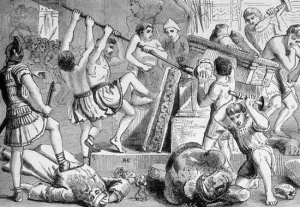
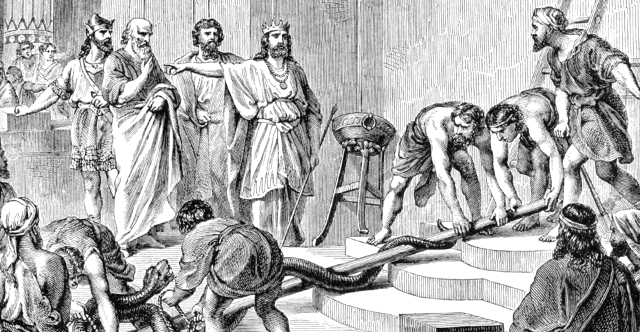
Hezekiah “also broke in pieces the bronze serpent that Moses had made, for until those days the sons of Israel burned incense to it; and it was called Nehushtan” (2 Kings 18:4). The term “Nehushtan” means “a brass thing,” or contemptuously, “only a piece of brass.” This relic with an interesting history (see Numbers 21:4-9) had become an object of worship and veneration, and as such, an idol. Hezekiah destroyed it rather than allow it to continue distracting the people from the proper worship of God.
Practical Consideration: We should not tolerate anything that cools our love for God.
For generations the kings of Judah had either tolerated the high places or stopped short of removing them as they initiated their respective reforms. As a result, the succeeding generation was distracted from a proper worship of God. Hezekiah finally led the nation of Judah to remove the high places and return to a proper worship of God. He also destroyed the bronze serpent of Moses because it had become an object of worship and veneration to the people. We too, should not tolerate anything in our lives that keeps us from being rightly related to God. We should remove from our lives anything that threatens to cool or compromise our love for God.

What characterized the life of Hezekiah?
Hezekiah “trusted in the Lord, the God of Israel” (2 Kings 18:5). This immediately sets him apart from many of the kings of Judah who trusted in their political alliances, military strength, and idols rather than in the Lord. Hezekiah also “clung to the Lord” (2 Kings 18:6). This is a reference to Hezekiah’s loyalty to the Lord (see Joshua 23:6-8 for more on the matter of clinging to the Lord). This loyalty was evidenced in the fact that “he did not depart from following Him, but kept His commandments, which the Lord had commanded Moses” (2 Kings 18:6).

Because of his close relationship with the Lord, the Scripture records that “the Lord was with him; and wherever he went he prospered” (2 Kings 18:7). His loyalty to the Lord motivated him to rebel against the Assyrians and to defeat the Philistines, nations that on many occasions, imposed their idolatrous worship on their neighbors and vassals (2 Kings 18:7-8).

What grim event did Hezekiah witness during his reign?
Hezekiah witnessed the destruction of the Northern Kingdom by the Assyrians. This event occurred during the sixth year of Hezekiah’s reign and probably had a sobering impact on him.

What military crisis did Hezekiah face during his reign?
The Assyrians, under the leadership of Sennacherib (the son of Sargon II), invaded Judah in the fourteenth year of Hezekiah’s reign (701 B.C.). The Assyrians “came up against all the fortified cities of Judah and seized them” (2 Kings 18:13). Hezekiah confessed to Sennacherib that he had done wrong in rebelling against Assyria (see 2 Kings 18:7) and agreed to pay tribute to Sennacherib in an effort to deter him from doing further damage to Judah. In order to meet the heavy tribute demanded by the Assyrians, Hezekiah exhausted the silver and gold in the treasuries of his own house and the house of the Lord and even stripped the gold that overlaid the doors and doorposts of the temple (2 Kings 18:14-16).

Practical Consideration: Trouble is no respecter of persons.
Even though Hezekiah was a man who trusted in and was loyal to God, he experienced personal trouble and problems. Trouble is no respecter of persons. God can however, use troubles to shape, mold and strengthen us. As someone noted, “Trouble is a divine factor in human life.”

Did Hezekiah’s payment of tribute deter the Assyrians?
Hezekiah’s payment of tribute did not deter the Assyrians from their determination to subjugate Judah. Sennacherib sent three of his top officials (2 Kings 18:17) to Judah in an effort to intimidate the people into surrendering. These top officials were the “Tartan” (a word which means field marshal or commander in chief), the “Rab-saris” (a word which means chief eunuch), and the “Rabshakeh” (a word which means chief cupbearer). A large army accompanied these officials (2 Kings 18:17).

Upon their arrival in Jerusalem, three of Hezekiah’s officials went out to meet them (2 Kings 2:18:18). The three Assyrian officials then proceeded to ridicule Hezekiah’s dependence upon the Lord and said that he would find no help from the Lord or even from a political alliance with Egypt (2 Kings 2:19-21 and 2 Chronicles 32:9-11). They suggested that Hezekiah erred in removing the high places and that they had been commissioned by God to destroy Judah (2 Kings 18:22 and 25 and 2 Chronicles 32:12).

To boast about their superiority, the Assyrians offered the Judeans two thousand horses if they thought they could muster up enough men to ride them (2 Kings 18:23-24). Rabshakeh told the assembled crowd that they were foolish to follow Hezekiah or to trust in the Lord (2 Kings 18:28-30 and 32b and see also 2 Chronicles 32:7-8). He told the crowd to not listen to Hezekiah’s rantings about trusting in the Lord but rather to peacefully surrender and enjoy the beneficent goodness of Sennacherib (2 Kings 18:31-32 and 2 Chronicles 32:18), after all, none of the gods of their defeated foes had been able to deliver their followers from the mighty Assyrian army (2 Kings 18:33-35 and 2 Chronicles 32:13-15). Hezekiah’s three officials then proceeded to report to him the message from Sennacherib (2 Kings 18:36-37).

2 Kings 19

How did Hezekiah respond to the report of the Assyrian’s intimidating message?
When Hezekiah received the report of the Assyrian’s message, he “tore his clothes, covered himself with sackcloth and entered the house of the Lord” (2 Kings 19:1). He also sent messengers to Isaiah the prophet (2 Kings 19:2) to inform him of the situation and to ask him to “offer a prayer for the remnant that is left” (2 Kings 19:4).

When the messengers presented their mournful message to Isaiah (see 2 Kings 19:3-4), they received a hopeful message from the prophet. Isaiah instructed the messengers to tell Hezekiah not to fear because of the Assyrian’s message. He stated that the Lord would intervene by causing Sennacherib to hear a rumor that would cause him to return to his own land where he would “fall by the sword” (2 Kings 19:6-7).

Practical Consideration: We should set a good example in times of trouble.
People take notice of how we handle both our troubles and triumphs. All eyes were on the king when the nation of Judah found itself in trouble. Hezekiah went into the house of the Lord and sent for God’s prophet when he encountered trouble. He set a proper example for the people of Judah by taking his troubles to the Lord. We too, should turn to the Lord in our times of trouble. We should also seek counsel from godly individuals even as Hezekiah sought counsel from Isaiah. We should set a good example for others in our times of trouble by taking our burdens to the Lord.

Practical Consideration: We should ask for the prayers of others when we find ourselves in the midst of troubles and trials.
Hezekiah asked Isaiah to pray for the nation because of the threats of the Assyrians. We too, should ask others to pray for us and with us as we deal with the troubles and trials of life. Someone commented, “Every praying agency we can set in operation is a positive gain.”

How did Sennacherib respond when he learned that his plan of intimidation failed?
When Rabshakeh departed from Jerusalem, he found Sennacherib “fighting against Libnah” (2 Kings 19:8). Sennacherib heard a rumor that Tirhakah king of Cush (Ethiopia) was coming up to fight against him (2 Kings 19:9). He then sent a letter (2 Chronicles 32:17) by messengers to Hezekiah informing him once again of the futility of trusting in the Lord for deliverance. Sennacherib even offered his military victories as indication that no god or army was able to stand before the Assyrians. With such a record Hezekiah should surrender or be prepared to meet the same fate (2 Kings 19:9-13).

What did Hezekiah do when he received Sennacherib’s letter?
Hezekiah read the letter and then went into the house of the Lord “and spread it out before the Lord” (2 Kings 13:14). He acknowledged the sovereignty of God (2 Kings 19:15) and insolence of Sennacherib (2 Kings 19:16 and 2 Chronicles 32:19). While he affirmed the Assyrian’s victories over other nations, he attributed those victories to the fact that the gods of those defeated nations were no gods at all, but merely the work of men’s hands (2 Kings 19:15-18). He then asked the Lord to deliver Judah from the boastful Assyrians “that all the kingdoms of the earth may know that Thou alone, O Lord, art God” (2 Kings 19:19).

The prophet Isaiah acknowledged that God had indeed heard Hezekiah’s prayer (2 Kings 19:20 and 2 Chronicles 32:20) and would grant Judah deliverance from the arrogant Sennacherib (2 Kings 19:21-28). God promised that Sennacherib would not so much as shoot an arrow against Jerusalem (2 Kings 19:32) but would return home (2 Kings 19:33). The Lord promised that He Himself would defend the city of Jerusalem for His sake and that of His servant David (2 Kings 19:34).

Practical Consideration: Our heart is more important than our words in prayer.
We do not always know how to pray as we should. We sometimes find ourselves without words to express our concerns and anguish in prayer. That is why we must remember that God is not so much concerned with our words in prayer or with the length of our prayers. In the words of Bunyan, “In prayer it is better to have a heart without words, than words without a heart.” The recorded prayers of Hezekiah are brief, but from an earnest and sincere heart. As a result, God heard Hezekiah’s prayers.

Practical Consideration: We should cast all our cares upon God.
God invites us to cast our cares upon Him because He cares for us (see Psalm 55:22 and 1 Peter 5:7). When Hezekiah received Sennacherib’s arrogant and intimidating letter he did not respond in kind. Instead he took the letter into the house of the Lord and spread it out before Him. He allowed God the opportunity to answer the letter. We too, should take our concerns before the Lord in prayer “that we may receive mercy and may find grace to help in time of need” (Hebrews 4:16).

What caused Sennacherib to return home?
During the night “the angel of the Lord went out, and struck 185,000 in the camp of the Assyrians” (2 Kings 19:35 and 2 Chronicles 32:21). This loss caused Sennacherib to return to Nineveh (2 Kings 19:36) where sometime later his own sons assassinated him “as he was worshiping in the house of Nisroch his god” (2 Kings 19:37 and 2 Chronicles 32:21). Esarhaddon, his son, succeeded him (2 Kings 19:37).

2 Kings 20

What does the Bible tell us about the illness that struck Hezekiah?
Hezekiah became ill to the point of death (2 Kings 20:1). Although the nature of the illness is not specifically stated, it involved a boil that was treated by a poultice (2 Kings 20:7).

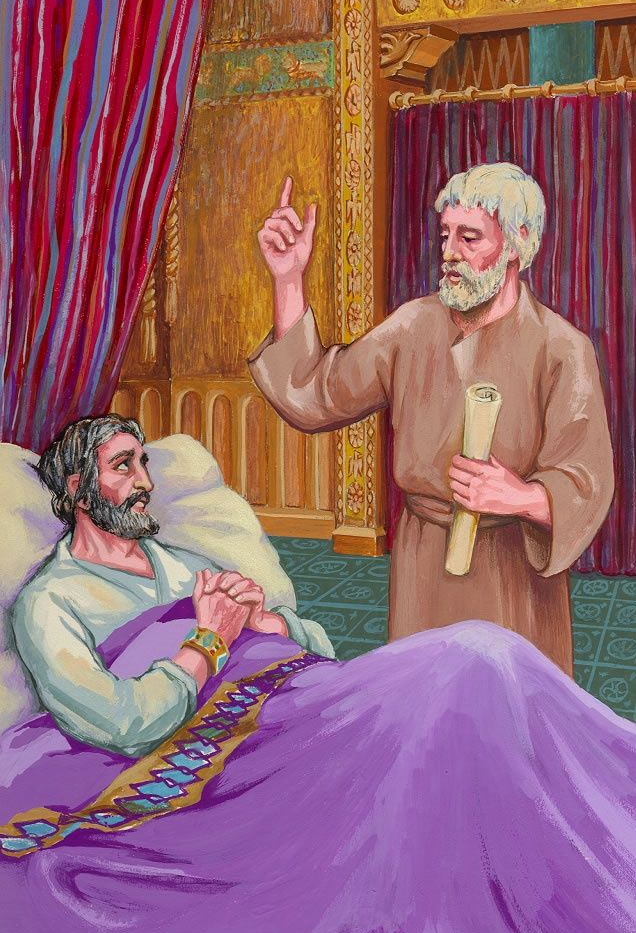
Isaiah the prophet instructed Hezekiah to set his house in order because he was going to die (2 Kings 20:1). The news caused Hezekiah to weep and to cry out to the Lord in prayer (2 Kings 20:2-3).

Once again, God heard the sincere prayer of Hezekiah and told Isaiah to inform the king that God would add fifteen years to his life and deliver and defend Jerusalem from the Assyrians (2 Kings 20:5-6).

As a confirmation that these things would happen, God caused the sun to move backwards ten steps (perhaps degrees) on the stairway of Ahaz, believed to have been a sundial or time-telling device (2 Kings 20:8-11).

Who came to visit Hezekiah after his recovery?
The Babylonians sent envoys with letters and a gift to Hezekiah after his recovery (2 Kings 20:12). These envoys were also interested in hearing about the turning back of the shadow on the sundial (see 2 Chronicles 32:31). From a practical standpoint, they were probably also interested in the prospect of an alliance to keep the Assyrians in check. Hezekiah was so pleased by their overtures that he showed them everything in his house, armory, and treasury (2 Kings 20:13-15).

Isaiah was not pleased to learn of Hezekiah’s actions and prophesied that Babylon would carry away Judah’s treasures and members of the royal family (2 Kings 20:16-19). The writer of Kings noted that the rest of Hezekiah’s acts, including the tremendous engineering feat of the tunnel, are detailed in the book of Chronicles (see 2 Chronicles 29-32). After Hezekiah died, “Manasseh his son became king in his place” (2 Kings 20:21).

2 Kings 21

Who was Manasseh?
Manasseh was the son of good King Hezekiah (2 Kings 20:21). He became king over Judah at the age of twelve and reigned fifty-five years in Jerusalem (2 Kings 21:1), longer than any other king of Judah. (Uzziah’s reign lasted fifty-two years – 2 Kings 15:2). His mother’s name was Hephzibah.

What characterized the reign of Manasseh?
Manasseh’s reign was characterized by unbridled evil. According to the Scripture, “he did evil in the sight of the Lord” (2 Kings 21:2). Manasseh’s evil was not only “according to the abominations of the nations whom the Lord dispossessed before the sons of Israel” (2 Kings 21:2), but in fact surpassed the wickedness of “the nations whom the Lord destroyed before the sons of Israel” (2 Kings 21:9 and 2 Chronicles 33:9) and the wickedness of the Amorites (2 Kings 21:11). Note the evil things that characterized his reign:

[A] “For he rebuilt the high places which Hezekiah his father had destroyed” (2 Kings 21:3). He undid all of the religious reforms of his father. He reintroduced the very things that had caused the nation to stumble for generations.

[B] “and he erected altars for Baal and made an Asherah, as Ahab king of Israel had done, and worshiped all the host of heaven and served them” (2 Kings 21:3). Manasseh obviously did not learn anything from the destruction of the Northern Kingdom. He did not take into consideration the fact that the house of Ahab experienced the judgment of God (2 Kings 9:6-10) for doing the very things he was doing in Judah. Manasseh desecrated the house of the Lord with altars and Asherah (2 Kings 21:4-5 and 2 Chronicles 33:7-8).

[C] Manasseh violated the law of God at every turn (see Leviticus 20:1-6). He “made his sons pass through the fire, practiced witchcraft and used divination, and dealt with mediums and spiritists” (2 Kings 21:6 and 2 Chronicles 33:6). Manasseh failed to learn from the judgment Ahaz suffered for doing the same things he was doing (see 2 Kings 16:1-4 and 2 Chronicles 28:1-4 for similar information on Ahaz).

[D] Manasseh “seduced” (2 Kings 21:9) and “misled Judah and the inhabitants of Jerusalem” (2 Chronicles 33:9) to sin against God (see also 2 Kings 21:11).

[E] In addition to leading the nation astray, “Manasseh shed very much innocent blood until he had filled Jerusalem from one end to another” (2 Kings 21:16). It is believed that among those killed by Manasseh were many of the prophets of God. Tradition says that Manasseh had Isaiah the prophet sawn in two with a woodcutting saw (see Hebrews 11:37).

Practical Consideration: God is not an indifferent spectator.
Manasseh sinned as though God were an indifferent spectator. He brazenly committed sins that had brought the judgment of God upon others who had committed the same sins. He acted as though he would not be held accountable for his sin. He was wrong! God not only took note of Manasseh’s sin, but held both him and the nation accountable. Paul reminds us, “Do not be deceived, God is not mocked; for whatever a man sows, this he will also reap” (Galatians 6:7).

What would result from the apostasy of Manasseh and Judah?
The apostasy of Manasseh and Judah marked the Southern Kingdom for destruction (2 Kings 21:10-15). Two analogies are used to describe the extent of the coming judgment. First, Judah had been measured and found crooked. It would have to be destroyed (2 Kings 21:13a). Second, Judah was like to a dirty dish and would therefore be wiped clean and turned upside down (2 Kings 21:13b). God had had His fill and would turn the nation over to her enemies (2 Kings 21:14-15).

What event changed Manasseh’s life?
Because Manasseh and the people of Judah turned a deaf ear to the Lord (2 Chronicles 33:10), God allowed the nation to be invaded by the Assyrians. Manasseh was captured and led away like an animal (the Assyrians put hooks through his nose and thus led him away) to Babylon (see also Psalm 32:9).

While in captivity, Manasseh did not entreat Baal or any of the host of heaven or any mediums or spiritists. Instead, “he entreated the Lord his God, and humbled himself greatly before the God of his fathers” (2 Chronicles 33:12). God finally had Manasseh’s attention. The proud, rebellious, stiff-necked king was brought to his knees. Perhaps he acknowledged the attitude of the Psalmist (119:75), “I know, O Lord, that Thy judgments are righteous, And that in faithfulness Thou hast afflicted me.”

The Lord “was moved by his entreaty and heard his supplication, and brought him again to Jerusalem to his kingdom” (2 Chronicles 33:13). All of this served to convince Manasseh that “the Lord was God” (2 Chronicles 33:13).

Practical Consideration: Adversity has a way of changing some people’s theology.
Manasseh zealously advanced his idolatrous agenda while he sat on his throne. He worshiped and served strange gods and misled the people of Judah to do the same. When Manasseh found himself in captivity however, he did not entreat any of the false gods he had so zealously served. Instead, Manasseh humbled himself and called upon the God of his fathers. God graciously and mercifully heard his prayer and allowed him to return to Jerusalem. Manasseh returned home with a new theology and understanding of God.

What reforms did Manasseh institute after his repentance?
Upon returning to Jerusalem, Manasseh strengthened Jerusalem and Judah militarily (2 Chronicles 33:14). He also destroyed all of the idolatrous things he had instituted and tried to restore religious order to Judah (2 Chronicles 33:16), although the people continued to worship on the high places (2 Chronicles 33:17).

Practical Consideration: It is not always possible to undo the damage we have done.
When Humpty Dumpty was broken, not even all the king’s horses and men could put him back together again! When Manasseh returned to Jerusalem from Babylon, he tried to undo the damage he had done. Unfortunately, he could not. We should be careful about the decisions we make and actions we take lest we find ourselves unable to repair any resulting damage.

Who was Amon?
Amon was the son of Manasseh. He became king over Judah at the age of twenty-two, after the death of his father (2 Kings 21:19). His “mother’s name was Meshullemeth the daughter of Haruz of Jotbah” (2 Kings 21:19). His two-year reign was characterized by evil (2 Kings 21:20). He continued serving and worshiping the idols that Manasseh had served and worshiped (2 Kings 21:21 and 2 Chronicles 33:22). Amon forsook the Lord, did not walk in His ways, and did not humble himself before the Lord as his father had done (2 Kings 21:22 and 2 Chronicles 33:23). His servants assassinated him (2 Kings 21:23 and 2 Chronicles 33:24). The people of the land, in turn, killed them (2 Kings 21:24 and 2 Chronicles 33:25).

Practical Consideration: Some people never learn!
Manasseh’s son Amon repeated the sins of his father, in spite of the fact that his father suffered God’s judgment for those sins. Some people never learn! Some people engage in the same behavior that they have seen destroy others. Go figure!

Who was Josiah?
Josiah was the son of Amon (2 Kings 21:26). He became king over Judah at the age of eight and reigned thirty-one years (2 Kings 22:1). His “mother’s name was Jedidah the daughter of Adaiah of Bozkath” (2 Kings 22:1). Josiah “did what was right in the sight of the Lord” (2 Kings 22:2 and 2 Chronicles 34:2). He began to seek the Lord “while he was still a youth” (2 Chronicles 34:3). He is remembered as a king among kings because of his zeal for the Lord (2 Kings 23:25).

Practical Consideration: We should be concerned about what God thinks.
Josiah “did right in the sight of the Lord” (2 Kings 22:2). Too often we are not concerned about what God thinks but about what others think. Too often we are concerned about doing what others think is right rather than what God says is right. The Scripture records that Josiah did not “turn aside to the right or to the left” (2 Kings 22:2). He was consistent in his obedience to God and did not allow himself to be swayed from following God and doing what was right in His sight.

2 Kings 22

What reforms did Josiah initiate early in his reign?
[A] In the twelfth year of his reign, Josiah “began” to destroy all of the idolatrous things that had been reintroduced by his father. He purged Jerusalem and Judah “of the high places, the Asherim, the carved images, and the molten images” (2 Chronicles 34:3 and 34:6-7). He led the people to tear down every vestige of idolatry. He had all of the idolatrous images and items ground to powder and scattered the powder “on the graves of those who had sacrificed to them” (2 Chronicles 34:4). Furthermore, “he burned the bones of the priests on their altars (this was the fulfillment of a prophesy uttered 360 years earlier – see 1 Kings 13:2), and purged Judah and Jerusalem” (2 Chronicles 34:5).

[B] He began the work of restoring the house of the Lord, “which the kings of Judah had let go to ruin” (2 Chronicles 34:11), during the eighteenth year of his reign (2 Kings 22:3 and 2 Chronicles 34:8). A building fund offering was collected and delivered to the workmen (2 Kings 22:4-7 and 2 Chronicles 34:9-11). While this restoration work was taking place (2 Chronicles 34:12-13), “Hilkiah the priest found the book of the law of the Lord given by Moses” (2 Chronicles 34:12). “Hilkiah gave the book to Shaphan who read it” (2 Kings 22:8 and 2 Chronicles 34:15). Shaphan gave Josiah an update on the progress of the work, he also reported to him that Hilkiah had found a book (2 Kings 22:9-10 and 2 Chronicles 34:16-18). “And Shaphan read from it in the presence of the king” (2 Chronicles 34:18).

Practical Consideration: Our attitude toward God determines our attitude toward sin.
Josiah began seeking the Lord when he was sixteen years old. By the age of twenty he began a reformation that would purge Judah of the sinful things his father had done. Josiah loathed idolatry because he sought to know and serve the Lord. Our attitude toward God determines our attitude toward sin. The more we love God the less tolerant we are of sin. The more we love sin the less tolerant we are of God and anything godly.

What was Josiah’s response when he heard the words of the lost book?


Josiah “tore his clothes” (2 Kings 22:11 and 2 Chronicles 34:19) and asked the priest and some men to inquire of the Lord concerning the words of the book (2 Kings 22:12-13 and 2 Chronicles 34:20-21). Josiah was fearful because the lives of the people did not match the message of the book. The delegation sought the counsel of a prophetess named Huldah who lived in Jerusalem (2 Kings 22:14 and 2 Chronicles 34:22). Huldah confirmed that the nation would indeed be judged for its sin (2 Kings 22:15-17 and 2 Chronicles 34:23-25), but that Josiah would not experience the coming judgment because of his tender heart and humility (2 Kings 22:18-20 and 2 Chronicles 34:26-28).

After receiving Huldah’s message, Josiah called all the people of Jerusalem to the house of the Lord where he read to them “all the words of the book of the covenant, which was found in the house of the Lord” (2 Kings 23:1-2 and 2 Chronicles 34:29-30). Josiah then made a covenant to faithfully follow the Lord and all the people made the same covenant with him (2 Kings 23:3 and 2 Chronicles 34:31-33).

Practical Consideration: We should not treat the Bible like a lost book.
When Hilkiah found the lost book of the law in the house of the Lord, it changed the course of events in the life of Judah. We are fortunate to have Bibles in our homes. We treat the Bible like a lost book however, when we fail to read, study, and obey its message.

2 Kings 23

What reforms were initiated as a result of the covenant into which Josiah and the people entered?
Josiah intensified the reforms he began in the twelfth year of his reign.

[A] He ordered Hilkiah the priest to remove and destroy anything in the house of the Lord that had been “made for Baal, for Asherah, and for all the host of heaven” (2 Kings 23:4 and 6).

[B] He did away with the priests who served in any idolatrous capacity (2 Kings 23:5 and 8).

[C] He dealt with the male cult prostitutes (2 Kings 23:7).

[D] He defiled the place where children were made to pass through the fire (2 Kings 23:10).

[E] He destroyed everything related to idolatrous practices (2 Kings 23:11-14).

[F] His reforms even extended to the former Northern Kingdom (2 Kings 23:15 and 19-20). He also burned the bones of the priests (2 Kings 23:16-18) who had served and worshiped at the altar that was at Bethel in fulfillment of the word spoken by the man of God to Jeroboam in 1 Kings 13:1-2.

[G] He “removed the mediums and the spiritists and the teraphim [small idols] and the idols and all the abominations that were seen in the land of Judah and in Jerusalem” (2 Kings 23:24).

Practical Consideration: God’s Word defines what is pleasing and displeasing to God.
Josiah began his reforms before the lost book of the law was found. He did a commendable job of removing and destroying that that was displeasing to God. After he heard the words of the book found in the house of the Lord, Josiah had an even clearer understanding of what God required of His people and intensified his reforms. The more we study God’s Word the more we understand about what pleases and displeases God.

What feast did Josiah reinstitute?
Josiah reinstituted the Passover feast as Hezekiah had done (see 2 Chronicles 30). The celebration was so great (see 2 Chronicles 35:1-18 for details) that “such a Passover had not been celebrated from the days of the judges who judged Israel, nor in all the days of the kings of Israel and of the kings of Judah” (2 Kings 23:22).

What impact did Josiah’s life and reforms have on the timing of God’s judgment?
God’s judgment was delayed because of Josiah’s tender heart and humble spirit and faithfulness to the Lord (2 Kings 22:18-20 and 23:26-27). God’s judgment however, would still come.

How did Josiah die?
The archers of Pharaoh Neco king of Egypt killed Josiah in battle (2 Kings 23:29-30). Read 2 Chronicles 35:20-25 for more information. Jehoahaz, his son, succeeded him (2 Kings 23:30).

Who was Jehoahaz?
Jehoahaz was the son of Josiah. The people of Judah anointed him king after his father was killed in battle (2 Kings 23:30 and 2 Chronicles 36:1). The twenty-three year old monarch reigned a total of three months in Jerusalem (2 Kings 23:31 and 2 Chronicles 36:2). Unlike his father, “he did evil in the sight of the Lord” (2 Kings 23:32). He was captured and taken to Egypt by Pharaoh Neco where he later died (2 Kings 23:33-34). Pharaoh Neco imposed a tribute upon Judah during Jehoahaz’s brief reign (2 Kings 33:34 and 2 Chronicles 36:3).

Practical Consideration: We should be concerned about how we will be remembered.
Jehoahaz was the son of a godly father. He was the beneficiary of a good parental example. He witnessed the favor of God upon his father’s reign. Yet, in the three short months that he occupied the throne, “he did evil in the sight of the Lord.” He did enough wrong in three months to mark his reign as evil. He is not remembered for anything good, only that he did that which was displeasing in the sight of God. We should be concerned about how we will be remembered. If someone were to add up the influence of our lives, would we be remembered for evil or good?

2 Kings 24

Who was Eliakim (Jehoiakim)?
After the capture of Jehoahaz, Pharaoh Neco appointed Eliakim, the twenty-five year old son of Josiah, king over Judah and changed his name to Jehoiakim (2 Kings 23:34 and 36 and 2 Chronicles 36:4). Notice that Pharaoh Neco appointed Jehoiakim to reign “in the place of Josiah his father” (2 Kings 23:34) rather than in the place of Jehoahaz. This suggests that Pharaoh never recognized or acknowledged Jehoahaz’s succession. Like so many before him, Jehoiakim also “did evil in the sight of the Lord” (2 Kings 23:37 and 2 Chronicles 36:5). During his eleven-year reign he taxed the people of Judah in order to pay tribute to Pharaoh Neco. Read Jeremiah 36 to learn of the account of Jehoiakim burning the scroll of Jeremiah, which contained a call from God to repentance.

Practical Consideration: God’s Word is indestructible.
When the scroll containing the words which God had spoken to Jeremiah “concerning Israel, and concerning Judah, and concerning all the nations” (Jeremiah 36:2) was read in the presence of Jehoiakim, “the king and all his servants who heard all these words were not afraid, nor did they rend their garments” (Jeremiah 36:24). Instead, the king showed his disrespect for the word of God by burning the scroll (Jeremiah 36:23 and 27). Perhaps he thought he could abrogate God’s Word by burning it. How wrong he was.

Jeremiah dictated the words of the Lord to Baruch once again, with an added message about the fate of Jehoiakim (Jeremiah 36:27-32). Men do not break God’s Word, they only break themselves against it. Isaiah reminds us, “The grass withers, the flower fades, but the word of our God stands forever” (Isaiah 40:8).

Note: The name Eliakim means “whom God has set.” The name Jehoiakim means “whom Jehovah has set.” Some suggest that Neco made the following distinction: He felt that God (El) was a supreme being but that Jehovah (Yah) was merely a local deity. Therefore he changed Eliakim’s name to Jehoiakim to show his (Neco) authority over him (Jehoiakim).

What problems did he encounter during his reign?
The Babylonians gained military momentum during his reign and spread their empire as far as Egypt (2 Kings 24:7). Jehoiakim became a vassal of the Babylonian Empire for a period of three years (2 Kings 24:1). When Jehoiakim rebelled against Babylon, they, along with other nations, swept into Judah “to destroy it, according to the word of the Lord” (2 Kings 24:2-4). Nebuchadnezzar took Jehoiakim captive to Babylon (2 Chronicles 36:6). The Babylonian king also plundered the house of the Lord (2 Chronicles 36:7). It was at this time that Daniel and his friends were taken into exile by the Babylonians (see Daniel 1:1-7).

Practical Consideration: When God is not for you, you are at the mercy of those who are against you.
Judah’s last kings were not concerned about pleasing God. They persisted in leading the nation in a way contrary to God’s will. As a result, God marked them for destruction and allowed their enemies to harass them. In the final years of the kingdom of Judah, the nation was unable to withstand even the attacks of marauding bands from the surrounding nations. It was also unable to stand against the Babylonian war machine. A nation without God is defenseless.

Who was Jehoiachin?
Jehoiachin, the son of Jehoiakim, became king over Judah at the age of eighteen (2 Kings 24:8). His three-month reign was also characterized by evil (2 Kings 24:9). He is also known as Coniah in Scripture (Jeremiah 22:24). Read Jeremiah 22:24-30 for more information on Jehoiachin, the last king in a direct line from Solomon to rule over Judah.

What problems did he encounter during his reign?
During the reign of Jehoiachin, Nebuchadnezzar besieged Jerusalem (2 Kings 24:10-11 and 2 Chronicles 36:10a). During the siege, Jehoiachin, his family, and his leaders, surrendered to the Babylonians (2 Kings 24:12) and were taken away into exile along with thousands of others (2 Kings 24:14-16). Only the poorest people of the land were left behind (2 Kings 24:14). Nebuchadnezzar also took with him the treasures of the house of the Lord and of the king’s house (2 Kings 24:13). Jehoiachin remained in prison until Evil-merodach became king of Babylon (2 Kings 25:27). Jehoiachin remained a house prisoner and was treated kindly by the Babylonian monarch until his (Jehoiachin’s) death (2 Kings 25:28-30).

Who became king over Judah after Jehoiachin’s surrender?
Nebuchadnezzar appointed Mattaniah, Jehoiachin’s twenty-one year old uncle, king over Judah and changed his name to Zedekiah (2 Kings 24:17-18 and 2 Chronicles 36:10b). In typical fashion, he too, did evil in the Lord’s sight and showed no respect for God, God’s Word, or God’s prophets (2 Kings 24:19 and 2 Chronicles 36:11-16). He too, rebelled against Nebuchadnezzar (2 Kings 24:20).

2 Kings 25

What did Nebuchadnezzar do when Zedekiah rebelled against him?
Nebuchadnezzar went to Jerusalem and besieged the city (2 Kings 25:1-2). The siege resulted in a severe famine that left the inhabitants of Jerusalem without food (2 Kings 25:3). When the Chaldeans (Babylonians) broke into the city, the king and his army fled the city but were overtaken on the plains of Jericho (2 Kings 25:4-5). Zedekiah was captured and sentenced (2 Kings 25:6). His sons were killed in his presence after which he was blinded (the last thing he saw was the death of his sons), fettered, and taken to Babylon by his captors (2 Kings 25:7).

Practical Consideration: God is faithful to warn of danger, but it is our responsibility to heed His warnings.
Zedekiah was an evil ruler. God, however, made every attempt to call Zedekiah and the nation to repentance. Zedekiah and the people responded by stiffening their necks, hardening their hearts (2 Chronicles 36:13), mocking God’s messengers, despising God’s words, and scoffing at God’s prophets (2 Chronicles 36:16). Because they did not heed God’s call to repentance, both Zedekiah and the nation suffered great loss. Zedekiah lost his sons, his sight, and his throne. The people lost their freedom and their homeland.

What did Nebuchadnezzar do to the city of Jerusalem?
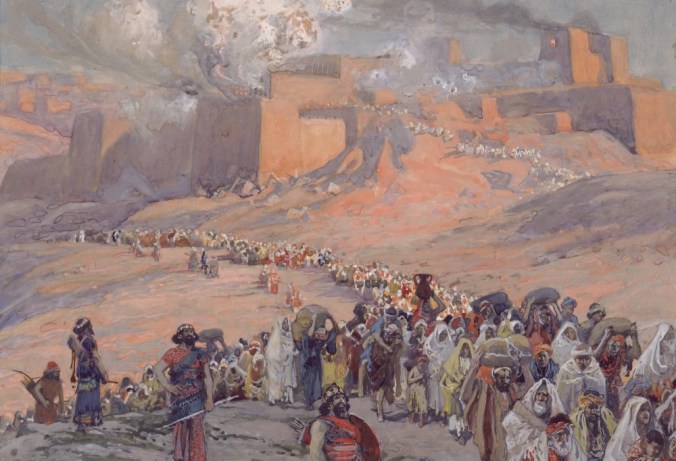
Nebuzaradan, the captain of the guard and a servant of Nebuchadnezzar, went to Jerusalem (2 Kings 25:8). He plundered (2 Kings 25:13-17) and burned the temple and the city (2 Kings 25:9) and broke down the walls around Jerusalem (2 Kings 25:10 and 2 Chronicles 36:18-19). He also carried many of the Jews into exile, leaving only the poorest to cultivate the land (2 Kings 25:8-12 and 2 Chronicles 36:20) and put to death various religious, civic, and military leaders (2 Kings 25:18-21). “So Judah was led away into exile from its land” (2 Kings 25:21). The Southern Kingdom fell in 586 B.C., which marked the end of any independent Jewish state until May 14, 1948.

Practical Consideration: The book of misery is written with the ink of disobedience.
Both the rulers and people of Judah experienced great personal losses and sufferings at the hands of their enemies. These things, however, could have been avoided through obedience to God. The people chose instead to continue in their sinful ways. We too, author our own misery every time we chose to disobey God’s Word and walk in a manner contrary to His will.

Who was given charge over Judah after the destruction of Jerusalem?
Nebuchadnezzar appointed Gedaliah to serve as governor over Judah who encouraged those who remained behind to “live in the land and serve the king of Babylon” and thus avoid any further trouble (2 Kings 25:22-24). Gedaliah was assassinated by a member of the royal family named Ishmael and a group of ten men who afterward fled to Egypt for refuge (2 Kings 25:25-27).