1 Kings 8

1 Kings 8:22-30 | Prayer of Dedication


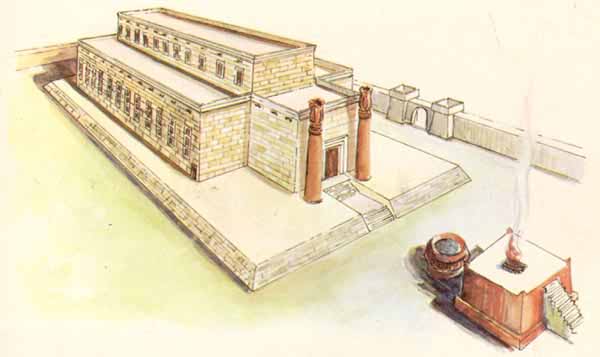
8:22 Then Solomon stood before the altar [the temple had two altars: the gold altar or altar of incense was inside the inner sanctuary in front of the wall of the Most Holy Place; the bronze altar of burnt offering (on which priests sacrificed animals) was placed in front of the temple (Solomon stood before this altar)] of the LORD in front of the whole assembly of Israel [indicates that Solomon’s prayer was part of a public worship service], spread out his hands toward heaven [our spiritual posture in prayer is more important than our physical posture]

Note: Prayer postures in the Bible…
• Solomon “spread out his hands toward heaven” 1 Kings 8:22
• Hezekiah prayed while lying ill in bed 2 Kings 20:1-2
• Daniel prayed while kneeling Daniel 6:10
• Peter prayed while kneeling Acts 9:40

8:23 and said: “O LORD [the personal name for God (the name He revealed to Moses)], God of Israel, there is no God like you [Solomon praised the Lord for His uniqueness] in heaven above or on earth below [people in surrounding nations commonly worshiped various gods/idols] [Solomon praised the Lord for His faithfulness; cf. Deut. 7:7-9] you who [God has covenant responsibilities] keep your covenant of love [Heb. “chesed” which has been translated “lovingkindness,” “covenant love,” “loyalty,” and “steadfast love”] with your servants [God’s people have covenant responsibilities] who continue wholeheartedly in your way.

Note: How can we affirm God’s faithfulness in our prayer life?

8:24 [illustration of God’s faithfulness…] You have kept your promise [that David’s son would build temple (2 Sam. 7:12-13)] to your servant David my father; with your mouth you have promised and with your hand you have fulfilled it—as it is today.

Note: What experiences in your life have affirmed God’s faithfulness?

8:25 “Now LORD, God of Israel, keep for your servant David my father the promises [other promises besides the one referred to in 8:24] you made to him when you said, ‘You shall never fail to have a man to sit before me on the throne of Israel [cf. 2 Sam. 7:12-16], if [a conditional promise] only your sons are careful in all they do to walk before me as you have done [cf. 1 Kings 2:2-4].’

Note: Promises in the Bible
• Some of God’s promises are to everyone Genesis 9:16
• Some of God’s promises are to believers John 14:2-3
• Some of God’s promises are made at a particular time to a particular person 1 Kings 17:14
• Satan temps us to misapply God’s promises Ps. 91:11-12 / Lk. 4:9-12

8:26 [Solomon was concerned that the Lord continue to bless Israel beyond his lifetime] And now, O God of Israel, let your word that you promised your servant David my father come true.

Note: Some tend to think only of their generation. In what ways do you demonstrate concern for future generations?

8:27 “But will God really dwell on earth [God is omnipresent]? The heavens, even the highest heaven [“heaven of heavens”], cannot contain you [cf. Isa. 66:1-2; Acts 7:48-50]. How much less this temple I have built [God’s greatness and magnitude cannot be contained in any earthly structure]!

8:28 Yet give attention to your servant’s prayer [refers generally to any prayer offered to God; can refer specifically to intercession or supplication] and his plea for mercy [denoted entreating a favor from God based on His grace; can also be translated “supplication” or “plea” (cf. 1 Kings 8:52; Ps. 55:1)], O LORD my God. Hear the cry [can indicate an expression of praise to God (Ps. 105:43) or a cry (“a wailing cry of petition”) for God’s help (Pss. 5:2; 61:1)] and the prayer that your servant is praying in your presence this day.

8:29 May your eyes be open toward this temple night and day [Solomon wanted God to keep His attention on the temple at all times], this place of which you said, ‘My Name [signified God’s self-revealed character] shall be there,’ so that you will hear [be attentive and responsive to] the prayer your servant prays toward [the temple provided a way for worshipers to focus on God’s reality and holiness] this place.

8:30 Hear [to hear and to act on what was heard; cf. 8:31-53 re: seven specific instances when a person might pray a prayer towards the temple (8:31-32; 8:33-34; 8:35-36; 8:37-40; 8:41-43; 8:44-45; 8:46-53] the supplication of your servant and of your people Israel when they pray toward this place. Hear from heaven, your dwelling place, and when you hear, forgive.

1 Kings 8:56
8:56“Praise be to the LORD, who has given rest [implied the end of war and the ensuing security; peaceful settlement in the promised land, freedom from enemies, the Lord’s presence in their midst; people of Israel able to build the temple because they were not preoccupied with war] to his people Israel just as he promised. Not one word has failed of all the good promises he gave through his servant Moses [cf. Deut. 12:1-14].

1 Kings 4

1 Kings 4:29-34
4:29 God [the source of Solomon’s wisdom] gave [cf. Jas. 1:5] Solomon wisdom [cf. 1 Kings 3:16-28 re: the application of wisdom in determining the mother of an infant; cf. 1 Kings 4:1-19 re: the use of wisdom to organize and govern Israel more effectively] and very great insight [cf. Ps. 119:99], and a breadth of understanding as measureless [impossible to measure] as the sand [imagery of each grain of sand representing a piece of understanding] on the seashore.

4:30 Solomon’s wisdom was greater than [surpassed] the wisdom of all [all who lived to that point] the men [cf. 4:31] of the East [included Mesopotamia and Arabia; cf. Matt. 2:1], and greater than all the wisdom of Egypt [cf. Gen. 41:8; Ex. 7:11].

4:31 He was wiser than any other man, including [noted wise men of Solomon’s day included…] Ethan the Ezrahite—wiser than Heman, Calcol and Darda, the sons of Mahol. And his fame spread to all the surrounding nations.

4:32 He spoke three thousand proverbs [a proverb is a comparison drawn from life; not all of these are included in the Book of Proverbs] and his songs [Pss. 72; 127 are credited to Solomon] numbered a thousand and five.

4:33 [Solomon’s interests and knowledge included botany and biology] He described plant life, from the cedar of Lebanon [used in royal building projects (2 Sam. 5:11; 1 Kings 6:9); ideal building material that resisted dry rot and insects, had a grain suitable for carving, and had a pleasant fragrance] to the hyssop [“cedar” and “hyssop” used in worship (cf. Lev. 14:4; Num. 19:6); hyssop used to place blood on doorframes at Passover (Ex. 12:22); Ps. 51:7] that grows out of walls. He also taught [described] about animals and birds, reptiles and fish [many of Solomon’s observations from nature are recorded in Proverbs (e.g. Prov. 6:5-6; 19:12)].

4:34 Men [also the queen of Sheba (1 Kings 10:1)] of all nations came to listen to Solomon’s wisdom, sent by all the kings of the world, who had heard of his wisdom.

1 Kings 5

1 Kings 5:1-7
5:1 When Hiram king [ruled for more than 30 years] of Tyre [the capital of Phoenicia; a major seaport] heard that Solomon had been anointed king to succeed his father David, he [Hiram wanted to maintain the mutually beneficial relationship between the two kingdoms] sent his envoys to Solomon, because he had always been on friendly terms with David [he had sent men and materials to help David construct his palace (2 Sam. 5:11)].

5:2 Solomon sent back this message [perhaps via sealed letter or oral message entrusted to responsible messenger] to Hiram:

5:3 “You know that because of the wars waged against my father David from all sides, he could not build [David had shed too much blood to build a temple (cf. 1 Chron. 22:8; 28:3)] a temple for [“in honor of” or “to honor the Lord”] the Name [stands for all that the Lord is (His character, His attributes, the essence of His being)] of the LORD [Heb. YHWH: the personal name of God reveled to Moses (Ex. 3:15; 6:3)] his God [Elohim: a plural form for deity (signifies the fullness of the majesty of God)] until the LORD put his enemies under his feet.

5:4 But now the LORD my God has given me [Solomon’s name is Heb. word “shalom” which means “peace” or “wholeness”] rest on every side [cf. 1 Chron. 22:9-10], and there is no adversary [from Heb. word for “satan”; here refers to anyone who might give him trouble] or disaster [Solomon not distracted by wars; did not have to spend resources on wars; could give priority to building project].

5:5 I intend [Solomon wanted to carry out his father’s wishes and God’s will], therefore, to build a temple for [“in honor of” or “to honor the Lord”] the Name of the LORD my God, as the LORD told my father David, when he said [cf. 1 Chron. 28:6], ‘Your son whom I will put on the throne in your place will build the temple for my Name.’

Note: What does it mean to honor the Lord? List practical ways in which you can honor the Lord.

5:6 “So give orders that cedars of Lebanon [used in royal building projects (2 Sam. 5:11; 1 Kings 6:9); ideal building material that resisted dry rot and insects, had a grain suitable for carving, and had a pleasant fragrance] be cut for me. My men will work with yours, and I will pay you for your men whatever wages you set. You know that [Solomon knew when to seek help from others] we have no one so skilled in felling timber as the Sidonians [from city of Sidon in Phoenicia].”

5:7 When Hiram heard Solomon’s message, he was greatly pleased and said, “Praise be to the LORD [Hiram probably worshiped Baal yet recognized the Lord as Israel’s God] today, for he has given David a wise son to rule over this great nation.”

1 Kings 6

1 Kings 6:11-14
6:11 The word of the LORD came [the precise method of speaking remains unspecified] to Solomon:

6:12 “As for this temple you are building, if [blessing conditional on obedience; presence of the temple would not guarantee God’s presence] you follow my decrees, carry out my regulations and keep all my commands and obey [the temple and all its ritual worship could not substitute for obedience] them, I will fulfill through you the promise I gave to David your father.

6:13 And I will live among the Israelites and will not abandon [used in OT to describe physical act of leaving (Ex. 2:20) and the spiritual act of forsaking God (Jer. 1:6); God refused to completely abandon His people (Isa. 54:7); cf. Amos 9:11-15 re: a remnant] my people Israel [Solomon’s obedience directly affected the people of Israel].”

6:14 So Solomon built the temple and completed [project took a little more than seven years (1 Kings 6:37-38)] it.

1 Kings 7

1 Kings 7:51
7:51 When all the work King Solomon had done for the temple of the LORD was finished [Solomon honored his father’s dream of building and furnishing a temple for the Lord], he brought in the things his father David had dedicated—the silver and gold and the furnishings—and he placed them in the treasuries [this wealth helped defray future temple expenses] of the LORD’S temple.

1 Kings 13

Summarize the events recorded in 1 Kings 12:25-33.
According to 1 Kings 12:25-33, Jeroboam built golden calf shrines (idols) at Dan and Bethel (rival worship centers) and recruited false priests. He did so because he feared that if the people of the ten Northern Tribes continued to return to Jerusalem to worship at the Temple, they might want to see the kingdom reunited under Rehoboam. He thus feigned altruism by telling the people that he had erected the worship centers in the north for their convenience. 1 Kings 12:30 tells us “this thing became a sin.” God was not pleased with what Jeroboam had done. He succeeded in keeping the northern tribes at home, but sowed the seeds that would yield a harvest of idolatry and ruin for the nation. The occasion for the events of 1 Kings 13 is the dedication festival of the Bethel altar.

What do we know about the “man of God” who mysteriously appears in 1 Kings 13:1?
A. He is referred to as a “man of God” rather than a prophet throughout the chapter.

B. He was from Judah, Israel’s rival kingdom.

C. He came “by the word of the Lord,” that is to say, “in” the power of God’s Word, obeying its impulsion.

D. He came to Bethel, the center of the problem. God sent this man to the heart of the matter.

Where was Jeroboam when the “man of God” arrived on the scene?
He “was standing by the altar to burn incense” (1 Kings 13:1). Jeroboam was playing a leading role in the national apostasy. According to 1 Kings 14:16, Jeroboam was held accountable for causing Israel to sin. Everything rises and falls on leadership.

Why did the “man of God” cry against the altar rather than against the king?
A. The altar was a symbol of the system of idolatry, which the king had imposed upon Israel.

B. The altar represented the system that would ultimately lead to the downfall of the Northern Kingdom. Recall that the Northern Kingdom of Israel fell to the Assyrians in 722 B.C. (see 2 Kings 17:6-23). 2 Kings 17:22 states, “And the sons of Israel walked in all the sins of Jeroboam which he did; they did not depart from them.”

C. A prediction regarding the destruction of the altar would carry with it and include the destruction of its architect.

What did the “man of God” prophesy in verse 2?
That a child born to the house of David would desecrate the altar erected by Jeroboam. The descendant’s name was Josiah (which means “whom Jehovah sustains”). King Josiah fulfilled this prophecy 360 years later (see 2 Kings 23:15-16). Note also that this is a very specific prophecy. There are only three other instances in the Bible where specific names were included in a prophecy: Israel (Genesis 17:19), Solomon (I Chronicles 22:9), and Cyrus (Isaiah 45:1).

How was the altar to be desecrated by Josiah?
By burning on the altar the bones of the priests who had used it. See 2 Kings 23:15-16.

What sign did the “man of God” give to show Jeroboam that this was no idle threat?
The altar would be split apart and the ashes upon it poured out in the very presence of Jeroboam. See verses 4 and 6.

What was Jeroboam’s response to the “man of God” and what happened to Jeroboam?
Jeroboam defiantly stretched out his hand and called for the arrest of the “man of God” (verse 4). Like all tyrants who feel they have been threatened or embarrassed, Jeroboam resorted to the use of force. But God protected his messenger by causing Jeroboam’s outstretched arm to become paralyzed “so that he could not draw it back to himself.” This served as a warning to Jeroboam not to harm God’s messenger and as advance notice of judgment to come.

What impact did the events have on Jeroboam according to verse 6?
Jeroboam asked the “man of God” to “entreat” God on his behalf “that my hand may be restored to me.” The word “entreats” means “to soften.” Jeroboam asked the “man of God” to soften the face of the Lord or to smooth the Lord’s angry countenance through prayer. Notice two things about Jeroboam’s request.

A. Jeroboam asked the “man of God” to “entreat the Lord your God” thus implying that he had no personal relationship with the God of Israel. Someone noted, “They who in prosperity reject the warnings of God’s messengers are ready enough in distress to have recourse to their prayers.”

B. Jeroboam betrayed his impenitent heart by expressing greater concern for his sufferings than for his sins. Yet God in his grace allowed the king’s hand to be restored to normal. Even this did not cause Jeroboam to repent of his evil ways according to 1 Kings 13:33-34.

What invitation did the king issue to the “man of God” according to verse 7? What do you think was Jeroboam’s motivation in issuing the invitation?
The king invited the “man of God” to his home for rest, refreshment, and a reward for restoring his arm. It was customary to offer a prophet a gift or reward if he performed something requested of him (see 1 Samuel 9:7-8, 1 Kings 14:3, 2 Kings 5:5 and 8:9). Regarding Jeroboam’s motivation, his offer could have been a step to try to “buy” the prophet.

Why did the “man of God” refuse Jeroboam’s invitation?
A. Because God said no (see verse 9).

B. Because accepting Jeroboam’s invitation could have been perceived as his approval of what was going on in Bethel. He did not want to imply any kind of friendly relationship with Jeroboam.

C. Rejecting Jeroboam’s invitation was a marked way of showing God’s abhorrence of Jeroboam’s actions.

Notice also that the “man of God” was instructed by God to take a different route home. Perhaps this was to insure his safety lest anyone be lying in wait to harm him.

What do we know about the old prophet of Bethel mentioned in verse 11?
A. It is possible that he was a “false” prophet.

B. He was living in Bethel, a center of idolatry.

C. He had sons who witnessed the events of 1 Kings 13:1-10.

What did the old prophet of Bethel do when he heard the report from his sons? What do you think motivated his actions?
He got on his donkey and pursued the “man of God” to persuade him to come to his home for rest and refreshment. He could have been motivated to pursue the “man of God” for several reasons:

A. Perhaps he was filled with shame for being a faithless prophet in the midst of faithlessness.

B. Perhaps he felt that he would somehow benefit from an association with the courageous “man of God.”

C. Perhaps he saw an opportunity to gain the king’s favor by getting the “man of God” to contradict himself and thus impair the weight of his message.

What should have “tipped off” the “man of God” regarding what kind of prophet the old man was?
A. He was living in Bethel but apparently had not spoken out against the sins of Jeroboam. It is possible that the old prophet did not agree with the king, but he lacked the courage to speak out and the sense to protect his family from such sin. If the old prophet had spoken out against the corruption in Bethel there would have been no need for God to send the “man of God.”

B. “‘An angel spoke to me’ is regarded by the story as an inferior medium of revelation to the direct command by the Lord already quoted.” (Broadman Bible Commentary, Volume 3)

How did the “man of God” disobey God?
Note that verse 14 states the “man of God” was sitting under an oak tree when the old prophet found him. Delay sometimes gives opportunity for the tempter to overtake us.

The “man of God” disobeyed God by violating the command of God, which he defined in verses 9 and 10 and verses 16 and 17. It is interesting to note that the “man of God” nobly resisted greater temptation when invited by the king and yet yielded to a lesser temptation when he accepted the invitation of the old prophet. 1 Corinthians 10:12 states, “Therefore let him who thinks he stands take heed lest he fall.”

D.C. Martin comments (Bible Book Study Commentary, page 80), “One main lesson in this baffling story is probably this. When we have a strong conviction of the Lord’s expressed will, one from Him alone, then we must be extremely cautious when considering doing something different, even if the new thought seems to come from a messenger of the Lord.”

How was the “man of God” punished?
A lion killed him and remained with the body until the old prophet of Bethel arrived on the scene (see verse 28). Note the behavior of the lion and the donkey in verse 24. This was regarded as a sign that these animals were under the Lord’s control.

What did the old prophet do when he learned of the death of the “man of God”?
He took the body back to Bethel and buried the “man of God” in his own grave. He then spoke to his sons and asked them to bury him in the same grave (see verses 29-31).

Why do you think the old prophet asked his sons to bury him in the same grave as the “man of God”?
The old prophet was now convinced that what the “man of God” had spoken would come true. Perhaps he hoped to escape having his bones burned on the altar as the “man of God” had prophesied. According to 2 Kings 23:16-18 the bones of the old prophet were not burned on the altar because he was buried in the same grave as the “man of God.”

What impact did the events of 1 Kings 13:1-32 have on Jeroboam?
Absolutely none, according to 1 Kings 13:33-34. He continued to blatantly sin against God. Such behavior would have disastrous results in the life of Jeroboam, his family, and the nation. We are reminded in verse 34 that sin will not triumph. See Galatians 6:7 and Colossians 3:25.

Do you think there is any connection between Jeroboam’s sin and his son’s illness?
Yes. See 1 Kings 13:34. The child’s illness was yet another warning from God to the impenitent Jeroboam.

Practical Considerations

God will hold us accountable for how we live our lives.
God held Jeroboam accountable for the sinful leadership he offered the nation of Israel. Jeroboam continued in his evil ways (1 Kings 13:33) even after repeated warnings from God. See Proverbs 29:1. The “man of God” was held accountable for disobeying God’s instructions. He had a clear word from God and compromised it by listening to the lie of the old prophet of Bethel.

We should speak out against the evil in our day.
The “man of God” spoke out against Jeroboam’s evil. The old prophet of Bethel remained silent in the midst of evil. When God’s people are silent, evil grows.

The consequences of sin are always severe.
The consequences of sin were severe for Jeroboam, his family, and for the nation. Jeroboam sowed seeds of sin that yielded a terrible harvest at the hands of the Assyrians in 722 B.C. The Bible teaches us that we cannot break the law of the harvest (see Galatians 6:7).

Delay sometimes gives opportunity for the tempter to overtake us.
The “man of God” was “sitting under an oak” when the old prophet of Bethel found him and enticed him to return to his home.

We must listen to God if we expect Him to listen to us.
Jeroboam was not interested in what God had to say until his son Abijah became sick. Only then did he seek to get a word from God. We cannot ignore God and spurn His laws and then expect Him to listen to us. Proverbs 28:9 states, “He who turns away his ear from listening to the law, even his prayer is an abomination.”

Children suffer when their parents refuse to follow God.
Abijah suffered because his father was unrepentant and persisted in his evil ways. This impenitent attitude (1 Kings 13:33-34) resulted in the prophesy of severe judgment upon Jeroboam’s house (1 Kings 14:10-11). Abijah was the first male to be cut off from Jeroboam’s house.

1 Kings 14

Why do you think Jeroboam asked his wife to put on a disguise and travel to Shiloh to see the prophet Ahijah?
A. Perhaps he felt that the prophet would not help him in light of his unresponsiveness to the message of the “man of God.”

B. Perhaps he felt that he might discredit his sinfully contrived religious system if the people knew he was consulting a true prophet rather than his carelessly appointed false priests and hirelings in a time of personal distress. Jeroboam’s actions indicate that he had no confidence in either his golden calves of his false priests. It is interesting to note that people often have no need for God’s man until they are in distress.

C. Perhaps he felt that since Ahijah had rightly prophesied his ascent to the throne he could rightly reveal the outcome of his son’s illness.

D. Perhaps he sent his wife because he did not have the courage to face the prophet himself, knowing that Ahijah would probably condemn him for his sinful leadership.

Note that Jeroboam said to his wife, “He will tell you what will happen to the boy” (verse 2). He did not ask his wife to ask the prophet how his son’s health might be restored.

Note also that the disguise did not work. God revealed to the blind old prophet that Jeroboam’s wife was coming to see him. God also instructed Ahijah regarding what to tell Jeroboam’s wife (see 1 Kings 14:5). This accentuates the fact that a prophet is a servant of God and is to be obedient to fulfill the instructions he receives from God. A prophet must tell God’s message faithfully without respect of persons, even as Ahijah delivered God’s message to Jeroboam’s wife.

What news did Jeroboam’s wife receive from Ahijah?
Ahijah reviewed God’s goodness to Jeroboam (verses 7-8), Jeroboam’s sin (verses 8-9), and prophesied the complete destruction of the house of Jeroboam (verses 10-16) and the scattering of the Northern Kingdom of Israel (see 2 Kings 17:6-23). Ahijah was the first of a long line of prophets to speak of exile beyond the Euphrates River.

God’s judgment is always just and always justified. So that Jeroboam and the people and the generations to come might know the reason for such severe judgment, Ahijah stated the reason in verse 16. We see in this verse the severe consequences (God “will give up Israel”) and contagious nature (Jeroboam “made Israel to sin”) of sin. See Psalm 103:8-9. God will not tolerate evil forever.

Note that only one member of Jeroboam’s family, Abijah, was to receive a proper burial (see verses 13 and 17-18). The descendants of Jeroboam would be denied a proper burial (verse 11). As prophesied in verse 14, Jeroboam’s house was destroyed (see 1 Kings 15:25-30).

What confirmation do we have in 1 Kings 14:17-18 that what Ahijah spoke would come to pass?
A. The child died as soon as Jeroboam’s wife stepped over the threshold of her home, just as Ahijah had said (verse 12). This was the beginning of judgment.

B. The nation mourned the child’s death (verse 13) as Ahijah had said.

1 Kings 15

What does the Scripture tell us about Nadab?
A. He was the son of Jeroboam (15:25).

B. He became king of Israel during the second year of Asa’s reign in Judah (15:25).

C. He reigned over Israel only two years (15:25), a short and unproductive reign.

D. Like his father before him, he did evil in the sight of the Lord (15:26). Refer to 1 Kings 12:28-31 for a record of the evil which Nadab’s father Jeroboam did in the sight of the Lord. Proverbs 16:12 states, “It is an abomination for kings to commit wickedness, For a throne is established on righteousness.” But where sin rules and righteousness is disregarded there can be no stable throne.

E. He was assassinated by Baasha who plotted against him and usurped the throne (15:27-28). This was the first “regicide” in the history of the kingdom.

What was Baasha’s first act once he usurped the throne?
Baasha “struck down all the household of Jeroboam” and thus fulfilled the word of Ahijah the prophet to Jeroboam (see 1 Kings 14:10-11). Baasha was the “broom” God used to “make a clean sweep of the house of Jeroboam” (1 Kings 14:10).

Why did Baasha completely destroy the house of Jeroboam?
A. From Baasha’s view: Because it was politically expedient. Such action would ensure that any surviving member of Jeroboam’s household would not threaten his reign.

B. From the writer’s view: To fulfill the word of The Lord through Ahijah the prophet. Psalm 119:91b states, “For all things are Thy servants.” God, in this case, used the wicked to punish the wicked.

What does the Scripture tell us about Baasha?
A. He was the son of Ahijah (not the same person as the prophet) of the house of Issachar (an undistinguished tribe named after the ninth son of Jacob). See 1 Kings 15:27.

B. He was the first person to assassinate a king of Israel, namely Nadab the son of Jeroboam (15:27-28).

C. He utterly destroyed the house of Jeroboam. He not only destroyed the male members of the household as per the prophesy of Ahijah in 1 Kings 14:10, but also “did not leave to Jeroboam any persons alive” (15:29).

D. He usurped the throne of Israel and reigned a total of twenty-four years (15:33).

E. His capital city was Tirzah, a few miles north of Shechem (the capital city of Jeroboam). Some believe that Jeroboam moved his capital from Shechem to Tirzah (see 1 Kings 14:17) while others hold that Baasha made Tirzah the capital city of the northern kingdom.

F. Like Jeroboam, “he did evil in the sight of the Lord” (15:34). His reign was not distinguished from the wicked and evil reigns of Jeroboam and Nadab. 1 Kings 16:7 states that his house was “like the house of Jeroboam.” He was a wicked man who killed a wicked king and continued a wicked reign. He usurped the throne because he wanted power and dominion, not because he was interested in introducing religious reforms. This is seen in that he embraced the sins of Jeroboam.

G. He failed to recognize that God had exalted him (that is, allowed him to attain the throne) and made him leader over Israel (16:2) and consequently lived his life in a manner displeasing to God.

Practical Consideration

A life of sin leads to misery and death.
Nadab continued to try God’s patience (Psalm 103:9) by following the wicked example of his father. He suffered the consequences of not honoring God with his life. As long as men think they can live their lives without regard to God or His Word, they will suffer the consequences of their foolishness. Sin rewards men in the currency of misery, frustration, and death.

1 Kings 15:9-21 NIV

15:9 In the twentieth year of Jeroboam king of Israel [the Northern Kingdom], Asa [names means “doctor” or “healing”] became king of Judah [Asa was the third king of the Southern Kingdom of Judah],

15:10 and he reigned in Jerusalem forty-one years [length of his reign surpassed the reigns of David (1 Kings 2:11) and Solomon (1 Kings 11:42)]. His grandmother’s name was Maacah [mother of Abijah] daughter of Abishalom [Absalom].

15:11 Asa did what was right in the eyes of the LORD [Asa sought to keep the Lord’s commands and to carry out his covenant responsibilities as Judah’s king], as his father [used here in the sense of forefather or ancestor] David had done.

15:12 He expelled the male shrine prostitutes [part of Canaanite religious practice: men and women cult prostitutes engaged in sexual relations in hope of bringing fertility to the land; included the practice of sodomy and other sexual acts] from the land [these practices had been tolerated in the land since reign of Rehoboam (1 Kings 14:24)] and got rid of all the idols [worshiping idols a violation of the First and Second Commandments (Ex. 20:4-6)] his fathers [Solomon, Rehoboam, and Abijah] had made.

15:13 He even deposed [an indication of Asa’s commitment to spiritual reformation] his grandmother Maacah from her position as queen mother [she wielded influence from this position], because she had made [possibly did so after Asa began instituting his reforms (cf. 2 Chron. 15:10-16)] a repulsive [frightening, horrible, abominable] Asherah [a Canaanite fertility goddess and mother of 70 sons, of whom Baal was the most famous; worshiped by Canaanites and Phoenicians] pole [used as an image in worship of Asherah; some believe the pole was a phallic symbol that was part of worship practices of fertility cult]. Asa cut the pole down and burned it in the Kidron Valley [cf. 2 Chron. 15:16; Kidron Valley separated the city of David and the temple from the Mount of Olives].

15:14 Although he did not remove the high places [worship sites throughout the countryside where people worshiped pagan gods], Asa’s heart was fully committed to the LORD all his life.

15:15 He brought into the temple of the LORD the silver and gold and the articles [these items (probably the plunder of military victories) would ensure adequate financial support to maintain formal worship of God] that he and his father had dedicated.

15:16 There was war [being committed to God does not mean an absence of difficult or threatening problems] between Asa and Baasha king of Israel throughout their reigns.

15:17 Baasha king of Israel went up against Judah and fortified Ramah [located five miles north of Jerusalem on main north-south road running through Israel and Judah; this was a strategic location from which to launch a further invasion of Judah] to prevent anyone from leaving or entering the territory of Asa king of Judah.

15:18 Asa [resorted to bribery and political intrigue to deal with Baasha rather than trusting God as he did when threatened by Zerah the Cushite (2 Chron. 14:9-15)] then took all the silver and gold that was left in the treasuries of the LORD’S temple [Asa used the funds he had set aside in the temple treasury (cf. 1 Kings 15:15) to hire a pagan king to attack the Northern Kingdom; Asa started his reign well (called Judah back to God) but did not finish well (depended on money and military power to deal with Baasha)] and of his own palace. He entrusted it to his officials and sent them to Ben-Hadad [name “Hadad” referred to Arameans’ storm god] son of Tabrimmon, the son of Hezion, the king of Aram [geographical region located northeast of holy land and west of Mesopotamia; also known as Syria], who was ruling in Damascus [located northwest of the Northern Kingdom of Israel].

15:19 [1] “Let there be a treaty between me and you,” he said, “as there was between my [Asa’s] father [King Abijah] and your [Ben-hadad’s] father.  [2] See, I am sending you a gift of silver and gold [an extra incentive for Ben-hadad to restore earlier treaty with Judah].  [3] Now [accept the bride and…] break your treaty with Baasha king of Israel so he [Baasha and the armies of the Northern Kingdom Israel] will withdraw from me.”

Note: Have you ever been tempted to compromise your faith in an effort to overcome some obstacle? What factors cause you to shift your focus from God? What definite actions can help you stay focused on the Lord as you seek solutions to your problems?

15:20 Ben-Hadad agreed with King Asa and sent the commanders of his forces against the towns of Israel. He conquered Ijon, Dan, Abel Beth Maacah [these three towns lay in the northern part of Israel close to border with Aram] and all Kinnereth [referred to area around Sea of Galilee] in addition to Naphtali [referred to area north and west of Sea off Galilee].

15:21 When Baasha heard this [the attacks against Israel in the north], he stopped building Ramah [in the south] and withdrew [Baasha not able to fight a war on two fronts] to Tirzah [current capital of Northern Kingdom; located a few miles north of Shechem].

1 Kings 16

What word from the Lord did Jehu the son of Hanani have for Baasha?
Essentially the same message that Ahijah delivered to Jeroboam. Because Baasha had provoked God to anger by walking in the sinful ways of Jeroboam, his household would suffer the same fate as Jeroboam’s. The words of Jehu must have weighed heavily on Baasha in light of the fact that he had been God’s instrument to make a clean-sweep of the house of Jeroboam. See Proverbs 16:12.

What does the Scripture tell us about Elah?
A. He was the son of Baasha (16:8) who became king after his father’s death (in the twenty-sixth year of Asa’a reign in Judah).

B. Like the man his father killed (Nadab), he reigned two years at Tirzah (16:8).

C. Just as his father had conspired against Nadab (15:27) and killed him, Elah’s servant Zimri (one of his chariot commanders) conspired against him and killed him (16:9-10).

D. Just as his father had usurped the throne from Nadab, Zimri usurped the throne from Elah (16:10).

E. Elah was no different than his father Baasha or Nadab or Jeroboam. He too, provoked God to anger with his sin (16:13). His life and reign was characterized by wickedness and evil. See Proverbs 16:12.

What was Zimri’s first act once he usurped the throne?
Zimri “killed all the household of Baasha” (16:11-12) and thus fulfilled the word of the prophet Jehu to Baasha. Zimri was as thorough in his annihilation of Baasha’s household as Baasha was in the annihilation of Jeroboam’s household. Like Baasha, Zimri eliminated every possible threat to his reign from the house of Jeroboam.

What does the Scripture tell us about Zimri?
A. He was a military man. He was the “commander of half [Elah’s] chariots” (16:9). It is possible that he was not even an Israelite since no father or tribe is listed for him.

B. He was an opportunist. He took advantage of the opportunity to assassinate Elah while Elah was in a drunken stupor (16:9) and thus usurped the throne of Israel. It is possible that Arza (16:9) was a part of Zimri’s conspiracy to kill Elah.

C. He destroyed the household of Baasha (16:11-12).

D. He reigned a total of seven days (16:15).

E. He committed suicide when Omri, the commander of the army, was declared king and besieged the city of Tirzah (16:18). Someone has said, “The usurper is often the dupe of his own wickedness.”

F. He was an evil man. Even though he reigned seven days, the writer declared that he did evil in the sight of the Lord as the rulers before him. See Proverbs 16:12.

How are we introduced to Omri?
He was a military man (16:16). He was the commander of the army of the Israel. He was involved in a military campaign against the Philistine city of Gibbethon (see also 1 Kings 15:27) when Zimri killed Elah and usurped the throne. When the people who were with Omri heard of the coup d’ état led by Zimri, they made Omri king over Israel. Omri then went from Gibbethon to Tirzah and besieged the city (16:17). This event led Zimri to commit suicide (16:18).

What opposition did Omri encounter after the death of Zimri?
He encountered strong opposition from Tibni the son of Ginath. The northern kingdom was divided in its choice for a king. Half the people followed Omri and half followed Tibni. Omri eventually prevailed after a four-year struggle (16:15, 23) and officially began his reign in the thirty-first year of Asa’s reign in Judah (16:23).

Where did Omri move the capital of the Northern Kingdom of Israel?
Omri moved the capital from Tirzah to Samaria, which remained the capital city until it fell to the Assyrians in 722 B.C. (16:24). This was the third capital city of Israel (Shechem, Tirzah, Samaria). It was strategically located on a high hill.

What kept Omri from being a great man in the eyes of the writer?
The fact the Omri “did evil in the sight of the Lord, and acted more wickedly than all who were before him” (16:25). Micah 6:16 refers to “the statutes of Omri.” Those who were before Omri led Israel astray by example and temptation, but Omri went further and led them astray by compulsion. Like his predecessors, he “walked in all the way of Jeroboam” (16:26), who by now has been established as the king by which evil is measured.

The writer was not as impressed by Omri’s political and military accomplishments as the Assyrians who referred to Israel in their records as “the land of Omri.” He was interested in Omri’s moral and spiritual condition and contributions. The sum of these is recorded in 1 Kings 16:25, “He acted more wickedly than all who were before him.” Up to this point in the narrative, Omri has the distinction of being the most evil and wicked king in Israel’s brief history. No accomplishments in the eyes and estimation of the world can make up for such failure in the eyes of God.

Who succeeded Omri as king of Israel?
His son Ahab, another godless ruler who plunged Israel deeper into idolatry, succeeded Omri. His twenty-two year reign is littered with evil. As with the other kings in the narrative, the historian summed up Ahab’s reign in 1 Kings 16:30, “And Ahab the son of Omri did evil in the sight of the Lord more than all who were before him.” Ahab went beyond the “more” wicked behavior of his father (16:25). Ahab led Israel to the summit of wickedness.

In what way did Ahab go beyond the wickedness of those before him?
A. By marrying Jezebel the daughter of Ethbaal king of the Sidonians [Phoenicians] (16:31). This was a politically expedient marriage. Jezebel was a devoted worshipper of Baal [the chief male god of the Phoenicians…Ashtoreth was their female deity] and had a missionary zeal for spreading the worship of Baal. She was a strong-willed woman who held sway over Ahab.

B. Ahab “went to serve Baal and worship him” (16:31). This attests to the influence Jezebel had over Ahab.

C. Ahab “erected an altar for Baal in the house of Baal, which he built in Samaria” (16:32). Ahab allowed the idolatrous worship of Baal to become better organized in Israel. By building a temple for Baal and erecting an altar he fanned the flames of idolatry into a raging fire.

D. Ahab also “made the Asherah” (16:33).

All of this led the historian to conclude, “Ahab did more to provoke the Lord God of Israel than all who were before him” (16:33).

Practical Considerations

We should learn good lessons from bad examples.
Baasha failed to learn good lessons from Nadab’s and Jeroboam’s bad examples. Instead, he entered into and embraced the same sins that had destroyed Jeroboam and Nadab. As a result, his household experienced the same awful punishment as the house of Jeroboam. We err when we think that we can commit the same sins as others and escape judgment. See Galatians 6:7 and Colossians 3:25.

Those who despise God’s Word will be in debt to it.
Proverbs 13:13 states, “The one who despises the word will be in debt to it, But the one who fears the commandment will be rewarded.” The Living Bible paraphrases this verse: “Despise God’s Word and find yourself in trouble. Obey it and succeed.” One scholar has written. “The whole Bible is an exposition of this text.” The Amplified Bible translates this verse, “Whoever despises the Word [of God] brings destruction upon himself, but he who (reverently) fears and respects the commandment [of God] shall be rewarded.” This truth from the book of Proverbs is repeatedly illustrated in the history of Israel’s kings. This truth is also illustrated in our lives every time we think that we are smarter than God and choose to ignore his Word.

God is more interested in our character than in our career.
Omri was a powerful military leader who earned the respect of the neighboring nations, but he was a moral and spiritual failure. All of his political and military accomplishments could not make up for his spiritual deficit. The historian summed up Omri’s life with the words, “Omri did evil in the sight of the Lord” (16:25). It is what we are in the sight of the Lord that matters most rather than what we do in the sight of man. God measures our success in terms of our character rather than our career. No measure of vocational success can make up for spiritual failure.

The behavior of parents has an immeasurable impact on their children.
Omri may have been a politically and militarily successful man, but he was a failure as a parent. He failed to provide godly spiritual leadership to the people closest to him and to the people of the kingdom. Omri’s children learned to disregard God through his example. As a result they were even more godless than their father.

1 Kings 17

Who was Elijah the Tishbite?
A. He was one of the greatest prophets of the Old Testament. He was “the most important leader of the true worship of Yahweh since Moses and Samuel.” (Broadman Bible Commentary, Volume 3)

B. He is referred to as “the Tishbite.” It is believed that Tishbe was a place in Gilead (“of the settlers of Gilead”) east of the Jordan River. Some believe that Elijah was a Gentile thus further accentuating that there was none in Israel to speak for God.

C. He is described in 2 Kings 1:8 – “He was a hairy man with a leather girdle bound about his loins.”

D. His name means “God-Jehovah” or “Jehovah is my God.”

Why did he appear on the scene so suddenly?
A. This is the first mention of Elijah in the Bible.

B. He is introduced as though he were already a well-known prophet.

C. His abrupt entrance into the scene was most likely due to the increasing national apostasy under Ahab. The worship of God was in danger of being completely supplanted by the worship of Baal. Elijah appears on the scene as a new Moses to deliver Israel out of the bondage of idolatry.

What message did Elijah deliver to Ahab?
“As the Lord, the God of Israel lives, before whom I stand, surely there shall be neither dew nor rain these years, except by my word” (1 Kings 17:1).

Note: The use of the phrase “As the Lord, the God of Israel lives” must have reminded Ahab that the dead and dumb idols which he served were not living and of no comparison to the living God.

What is the significance of this prediction of drought?
It is a direct challenge to Baal who was the Canaanite god in charge of storms and rain. Elijah’s prediction was meant to accentuate Baal’s impotence as a god. The drought was also to become an instrument in God’s hands to punish Israel for turning to other gods (see Deuteronomy 11:16-17).

What did Elijah do after announcing the drought?
God instructed Elijah to hide himself by the brook Cherith, which is east of the Jordan (17:2-3). The fact that Elijah was told to “hide” himself implies that it may have been necessary in order to escape any retaliatory action on the part of the Ahab. God protected and provided (“I have commanded the ravens to provide for you there.” [17:4]) for Elijah by the brook Cherith. He had water to drink and the ravens brought him bread and meat in the morning and evening (17:6). This retreat to the brook Cherith would also give Elijah’s prediction time to come to pass.

What did Elijah do when the brook dried up because of the drought?
God instructed Elijah to go to the Phoenician coastal city of Zarephath (located between the coastal cities of Tyre and Sidon) in the homeland of Jezebel. God told Elijah, “I have commanded a widow there to provide for you” (17:9). Notice that God made provision for Elijah in Zarephath before he commanded him to leave the brook Cherith.

Elijah did as God instructed and met the (Gentile) widow gathering sticks for a cooking fire on which to prepare a final meal for herself and her son (17:10-12). Elijah asked the woman for water and then for bread. The woman told the prophet that she had “only a handful of flour in the bowl and a little oil in the jar” (17:12). Certainly not enough for an extra guest.

Elijah instructed the woman to prepare a cake of bread for him “first” and then afterwards to prepare one for herself and her son (17:13). Elijah then promised the woman that God would bless her kindness and obedience. God would not allow her bowl of flour and jar of oil to be exhausted until after the drought. God would sustain them through the difficult days of the drought.

Why do you think God sent Elijah to a Phoenician city for assistance rather than to a city in Israel?
Luke 4:25-26 records the words of Jesus in reference to this incident in the life of Elijah: “But I say to you in truth, there were many widows in Israel in the days of Elijah, when the sky was shut up for three years and six months, when a great famine came over the land; and yet Elijah was sent to none of them, but only to Zarephath, in the land of Sidon, to a woman who was a widow.” Jesus uttered these words when telling the people of Nazareth that a prophet is not welcome in his hometown.

Some feel that Elijah was sent to Zarephath because that would be the last place anyone would suspect him of hiding because it was in the homeland of Jezebel, a hotbed of Baal worship.

What happened to the widow’s son?
He became ill and died (17:17).

How did the widow respond to this event?
As a mother overwhelmed with grief, she blamed Elijah for the boy’s death (17:18).

What then, did Elijah do?
He took the boy from his mother’s bosom to the upper room where he was living and laid the boy on his own bed (17:19). Elijah then earnestly cried out to the Lord in prayer asking God to “let this child’s life return to him” (17:21). The Lord answered Elijah’s prayer by reviving the boy (17:22). Nothing is too difficult for the Lord! This is the first recorded instance of an individual being revived from the dead. This convinced the widow that Elijah was truly a man of God (17:24).

One scholar stated, “The design of miracles is not for display, or to excite wonder, but for the confirmation of truth.” What truths about God are stressed by the miracles in 1 Kings 17?

A. God is in control of nature. He caused the heavens to be shut up, for birds to provide food for his prophet, and for a widow’s pantry to remain inexhaustible through a drought.

B. God is in control of life and death. He caused the widow’s son to be revived after he had died of a severe illness.

What instruction did Elijah receive from the Lord after three and one-half years?
God instructed Elijah to go “show” himself to Ahab because He was going to end the drought (18:1). Elijah promptly obeyed (18:2). This was a courageous thing to do in light of the severity of the drought that Elijah had proclaimed (17:1). The severe physical drought was also paralleled by a great spiritual drought. There was a famine of spiritual values and a drought for God’s Word.

Practical Considerations

Faithful men are needed in the worst of times.
God can raise up faithful men to do the most difficult tasks during the darkest days. God had been preparing Elijah in the rough region of Gilead for the task of confronting Ahab and Jezebel. When the time came for the evil rule of Ahab to be challenged, he sent Elijah to trouble (see 1 Kings 18:17) Ahab and the northern kingdom of Israel.

God will not allow sin to go unchallenged or unpunished.
God sent Elijah to Ahab to hold him accountable for his sin. The sin of Ahab and the nation was punished by a severe drought (see Deuteronomy 11:16-17). If we persist in our sin God will hold us accountable. He will send a Nathan or an Elijah into our lives to get us to face our sin. God will also punish us if we persist in our sin. God’s efforts are redemptive in purpose.

God is interested in meeting our needs.
God was interested in protecting Elijah and providing for his needs. God was also interested in providing for the needs of the widow and her son. God is interested in meeting our needs as well. He invites us to cast our burdens upon Him (Psalm 55:22 and 1 Peter 5:7) and to find rest in Him when we are weary and heavy-laden (Matthew 11:28-30).

Verse by Verse NIV

1 Kings 17:1-18
17:1 Now Elijah [this is the first mention of Elijah in the Bible; name means “God-Jehovah” or “Jehovah is my God”; the dominant religious figure in first half of 9th century BC; he is described in 2 Kings 1:8] the Tishbite, from Tishbe in Gilead [it is believed that Tishbe was a place in Gilead (“of the settlers of Gilead”) east of the Jordan River], said to Ahab [(874-853 BC) king of Northern Kingdom of Israel whose reign was marred by religious failure; married Jezebel, a devout worshiper of Baal; cult of Baal became most popular religion in Northern Kingdom], “As the LORD, the God of Israel, lives [in contrast to the dead and dumb idols which Ahab and the people served], whom I serve [Elijah publically and courageously declared his allegiance to God], there will be neither dew nor rain [a direct challenge to Baal who was the Canaanite god in charge of storms and rain; drought was also an instrument in God’s hands to punish Israel for turning to other gods (see Deut. 11:16-17)] in the next few years [three and a half years (cf. 1 Kings 18:45; Jas. 5:17-18)] except at my word.”

17:2 Then [after he had delivered God’s message to Ahab] the word of the LORD came to Elijah:

17:3 “Leave here, turn eastward and hide [it may have been necessary to hide in order to escape any retaliatory action on the part of the Ahab and Jezebel; this retreat to the Kerith Ravine would also give Elijah’s prophecy time to come to pass] in the Kerith Ravine, east of the Jordan.

17:4 You will drink from the brook, and I have ordered [expresses God’s authority] the ravens [cf. Ps. 119:91b] to feed you there [a very important word; where God guides He provides].”

17:5 So he did what the LORD had told him [Elijah was obedient to God’s instructions]. He went to the Kerith Ravine, east of the Jordan, and stayed there.

17:6 The ravens brought him bread and meat in the morning and bread and meat in the evening, and he drank from the brook.

17:7 Some time later the brook dried up because there had been no rain in the land.

17:8 Then the word of the LORD came to him:

17:9 “Go at once to Zarephath [coastal city located between the coastal cities of Tyre and Sidon in the homeland of Jezebel] of Sidon and stay there. I have commanded a widow in that place to supply you with food [notice that God made provision for Elijah in Zarephath before he commanded him to leave the Kerith Ravine].”

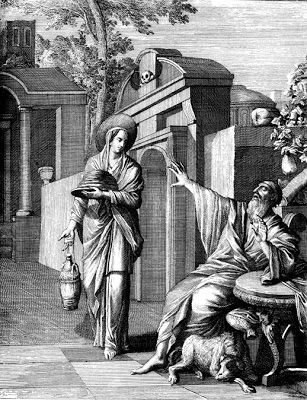
17:10 So he went to Zarephath [perhaps God sent Elijah to Zarephath because that would be the last place anyone would suspect him of hiding and because it was in the homeland of Jezebel, a hotbed of Baal worship]. When he came to the town gate, a widow [a Gentile woman; read Lk. 4:25-26 re: what Jesus said about this woman when telling the people of Nazareth that a prophet is not welcome in his hometown] was there gathering sticks. He called to her and asked, “Would you bring me a little water in a jar so I may have a drink?”

17:11 As she was going to get it, he called, “And bring me, please, a piece of bread.”

17:12 “As surely as the LORD your God lives [the widow acknowledged that the Lord lives even as she was preparing to die],” she replied, [note the hopelessness of the widow’s situation…] “I don’t have any bread—only a handful of flour in a jar and a little oil in a jug. I am gathering a few sticks to take home and make a meal for myself and my son, that we may eat it—and die.”

17:13 Elijah said [Elijah told woman to take a big step of faith] to her, “Don’t be afraid. Go home and do as you have said. But first make a small cake of bread for me from what you have and [Elijah’s instructed the woman to feed him first and then her son (these instructions were contrary to her parental instinct)] bring it to me, and then make something for yourself and your son.

17:14 For this is what the LORD, the God of Israel, says: ‘The jar of flour will not be used up and the jug of oil will not run dry until the day the LORD gives rain on the land.’”

17:15 She went away and did as Elijah had told her [the widow exercised faith]. So [as a result of her obedience the woman experienced the truth of Elijah’s assurance of provision from God] there was food every day for Elijah and for the woman and her family.

17:16 For the jar of flour was not used up and the jug of oil did not run dry, in keeping with the word of the LORD spoken by Elijah.