Romans 10

10:1 Brothers and sisters, my heart’s desire and prayer to God for the Israelites is that they may be saved.

10:2 For I can testify about them that they are zealous for God, but their zeal is not based on knowledge.

10:3 Since they did not know the righteousness of God and sought to establish their own, they did not submit to God’s righteousness.

10:4 Christ is the culmination of the law so that there may be righteousness for everyone who believes.

10:5 Moses writes this about the righteousness that is by the law: “The person who does these things will live by them.”

10:6 But the righteousness that is by faith says: “Do not say in your heart, ‘Who will ascend into heaven?’” (that is, to bring Christ down)

10:7 “or ‘Who will descend into the deep?’” (that is, to bring Christ up from the dead).

10:8 But what does it say? “The word is near you; it is in your mouth and in your heart,” that is, the message concerning faith that we proclaim:

10:9 If you declare with your mouth, “Jesus is Lord,” and believe in your heart that God raised him from the dead, you will be saved.

10:10 For it is with your heart that you believe and are justified, and it is with your mouth that you profess your faith and are saved.

10:11 As Scripture says, “Anyone who believes in him will never be put to shame.”

10:12 For there is no difference between Jew and Gentile—the same Lord is Lord of all and richly blesses all who call on him,

10:13 for, “Everyone who calls on the name of the Lord will be saved.”

10:14 How, then, can they call on the one they have not believed in? And how can they believe in the one of whom they have not heard [people cannot believe until they have heard the gospel; people must hear in a way that they understand the significance of the message and realize that a personal response is required]? And how can they hear without someone [a herald or one who brings a message; every believer is sent by the Lord (Jn. 20:21) to share the good news] preaching to them?

Note: Do you believe that Christ is the only hope for a lost world? How would you respond to those who accuse Christians of being intolerant toward those who believe there are other ways or paths to God?

10:15 And how can they preach [to announce or proclaim something] unless they [all believers must heed the divine call to evangelism] are sent? As it is written [cf. Isa. 52:7], “How beautiful are the feet of those who bring good news!”

Note: What trips you up and keeps you from taking the good news to others? What can you do to get your feet moving in the right direction?

10:16 But not all the Israelites accepted the good news. For Isaiah says, “Lord, who has believed our message?”

10:17 Consequently, faith comes from hearing the message, and the message is heard through the word about Christ.

10:18 But I ask: Did they not hear? Of course they did: “Their voice has gone out into all the earth, their words to the ends of the world.”

10:19 Again I ask: Did Israel not understand? First, Moses says, “I will make you envious by those who are not a nation; I will make you angry by a nation that has no understanding.”

10:20 And Isaiah boldly says, “I was found by those who did not seek me; I revealed myself to those who did not ask for me.”

10:21 But concerning Israel he says, “All day long I have held out my hands to a disobedient and obstinate people.”

Romans 8

8:1 There is therefore now no condemnation for those who are in Christ Jesus.

The word “therefore” should be understood in light of what Paul has written in Romans 6:1-7:25. It can be understood as meaning, “The conclusion of the matter is this.” Notice the believer’s victory over sin as stated in verse 1: “no condemnation.” “Condemnation” is the opposite of justification.

8:2 For the law of the Spirit of life in Christ Jesus has set you free from the law of sin and of death.

The believer’s victory over sin is again stated in verse 2: “free from the law of sin and death.” Sin no longer has a claim on the believer. He is acquitted and no longer under condemnation. The “Spirit of life” is the Holy Spirit.

8:3 For what the Law could not do, weak as it was through the flesh, God did: sending His own Son in the likeness of sinful flesh and as an offering for sin, He condemned sin in the flesh,

What is it that the law could not do? It could not condemn sin or break the power of sin. Why? Because it was weak through the flesh or because it had to depend upon sinful human nature to carry out its precepts. But God was able to break the power of sin and bring its authority to an end through His Son, that is through the death of Christ.

8:4 in order that the requirement of the Law might be fulfilled in us, who do not walk according to the flesh, but according to the Spirit.

Sin was condemned to the end that the requirement of the Law might be fulfilled, that is, that the righteous demands of the law might be carried out, in us. The latter part of the verse refers to an identifying characteristic of the true child of God: “who do not walk [order one’s behavior or conduct] according to the flesh, but according to the Spirit.”

8:5 For those who are according to the flesh set their minds on the things of the flesh, but those who are of the Spirit, the things of the Spirit.

Our mind-set, or what our minds are set on, matters. What we set our minds on determines what we think about throughout the day, how we view life, what we value, what motivates us, and how we behave. We must understand that the battle for control of our lives takes place in our minds. Paul differentiated two distinct and opposing mind-sets in the world—the mind-set of the flesh and the mind-set of the Spirit. Those who habitually set their minds on the things of the flesh allow the direction of their lives to be determined by their sinful nature. Those whose minds are set on the Spirit see life from God’s viewpoint. Consequently they seek to live in a way that pleases God.

“Flesh” here denotes the sinful nature. The phrase “set their minds” refers to deliberately and habitually setting one’s mind upon a certain thing, in this case, the flesh. Cranfield comments that Paul’s meaning here is “that those who allow the direction of their lives to be determined by the flesh are actually taking the flesh’s side in the conflict between the Spirit of God and the flesh, while those who allow the Spirit to determine the direction of their lives are taking the Spirit’s side.”

8:6 For the mind set on the flesh is death, but the mind set on the Spirit is life and peace,

Notice that “death” is the fruit or direction toward which the fleshly mind moves. The fruit or inclination of “the mind on the Spirit” is toward “life and peace.”

Paul described the results we can expect from either of the two opposing mind-sets. Following the flesh is always a losing proposition. The flesh, or our sinful nature, is opposed to God and always leads to death, both spiritual and physical.

Following the Spirit leads to the full and abundant life on earth that Jesus promised (Jn. 10:10), to eternal life, and to peace with God.

Paul made it clear that there is no middle ground between walking in the Spirit and walking in the flesh. We must choose to live according to the Spirit, or we will be walking according to the flesh.

8:7 because the mind set on the flesh is hostile toward God; for it does not subject itself to the law of God, for it is not even able to do so;

The reason “the mind set on the flesh is death” is because it is “hostile toward God.” That is to say, it is at enmity against God. Swindoll comments, “Within their mind-set, non-Christians have clenched fists raised toward heaven in open defiance to the King. Those without Christ refuse to submit themselves to God’s standard of right and wrong. Instead, they go their own way…they do their own thing.”

Paul’s words echo what Jesus said — we cannot serve two masters (Matt. 6:24). Those who try to serve two masters end up loving one and hating the other. The principle is simple: the closer we draw toward one master the more we will despise the other. Those who daily set their minds on the Spirit lose interest in and despise the things of the flesh. And, those who set their minds on the flesh have no interest in the things of the Spirit—the things that please God. They are, in fact, hostile to or at enmity against God.

Hostility toward God is a key characteristic of a sinful mind-set. Sometimes this hostility is expressed in obvious hateful attitudes and irreverent rhetoric against God. These more public expressions of hostility can be seen and heard from comedy clubs to college classrooms. However, more often, hostility toward God is expressed through quiet everyday living that disregards God by going its own way and doing its own thing.

8:8 and those who are in the flesh cannot please God.

Cranfield comments, “Those who allow the direction of their lives to be determined by their fallen nature are, so long as they do so, unable to please God, because they are fundamentally hostile to Him and opposed to His will.”

Those whose lives are controlled by the flesh cannot please God because the flesh is devoted to its own self-gratification. And, like a hungry beast, the flesh constantly needs nourishment. That is why Paul cautioned us to clothe ourselves with Christ and not to feed or make provision for our flesh in regard to its lusts (Rom. 13:14).

We must daily and intentionally choose to set our minds on the Spirit and to place all of our desires and actions under His control. And, we must understand that the most spiritual thing that we do every day is to make choices. We must choose to be in the right mind!

8:9 However, you are not in the flesh but in the Spirit, if indeed the Spirit of God dwells in you. But if anyone does not have the Spirit of Christ, he does not belong to Him.

Paul here directly addresses the Roman Christians. They were not in the flesh (in the sense in which the term is used in verse 8) but rather “in the Spirit.” The direction of their lives was not determined by the flesh but by the indwelling Holy Spirit. Phillips notes, “This passage distinguishes between the saved and the unsaved, for the unsaved do not have the indwelling Holy Spirit.” The “if indeed” of verse 9a should be understood as meaning “inasmuch” or “since.” The word “dwell” comes from the Greek word for “home.” The Holy Spirit resides within every believer [that is, makes his home in] and desires to work in the life of every believer to help him overcome sin and produce His own fruit (see Galatians 5:22-23). This verse also points out the fact that the indwelling Holy Spirit is a distinguishing mark of every believer (see Romans 8:16).

8:10 And if Christ is in you, though the body is dead because of sin, yet the spirit is alive because of righteousness.

The word “body” in this verse refers to the believer’s human body. Swindoll comments, “When individuals become Christians, they die to sin and become spiritually alive forever. Their physical bodies, however, do not receive immortality right away. The bodies of believers remain subject to physical death, even though they will be resurrected and thereby become immortal (I Cor. 15:50-57).” The word “spirit” is a reference to the human spirit rather than to the Holy Spirit. Wuest defines it as “that part of man which gives him God-consciousness and enables him when that spirit is made alive by the Holy Spirit, to worship God.”

8:11 But if the Spirit of Him who raised Jesus from the dead dwells in you, He who raised Christ Jesus from the dead will also give life to your mortal bodies through His Spirit who indwells you.

This verse refers to the promise of the believer’s future physical resurrection. Vaughan and Corley comment that this verse “brings out two additional thoughts: (1) that the resurrection of believers is dependent upon the resurrection of Christ and (2) that it is the Spirit who both raised Christ and will raise us.” The words “give life” means “to cause to live, make alive”

8:12 So then, brethren, we are under obligation, not to the flesh, to live according to the flesh —

The word “obligation” translates the Greek word for “debtor.” The believer is no longer under obligation to or bound by some duty to the flesh. Commentator David Brown paraphrases verse 12: “Emancipated from the tyrannous service of Sin into the service of Righteousness, we owe nothing to the flesh; we disown its claims, and are deaf to its imperious demands.” Cranfield comments that Paul probably intended to continue the thought by stating that we are rather under obligation to the Spirit to live according to the Spirit but broke off to insert the warning of verse 13a.

8:13 for if you are living according to the flesh, you must die; but if by the Spirit you are putting to death the deeds of the body, you will live.

The verb “die” in verse 13 refers to more than physical death, for even those who live according to the Spirit will die physically. Cranfield notes that it refers to the fact that those who live according to the flesh “will die without hope of life with God.” Note that it is only “by the Spirit” that one can put to death the deeds of the body or flesh. Vaughan and Corley comment that the phrase “putting to death” is an equivalent to “reckon…dead” (Romans 6:11). They add, “The statement of the verse suggests that either we kill sin or it will kill us.”

8:14 For all who are being led by the Spirit of God, these are the Sons of God.

This verse explains verse 13b. The only way in which a believer can put to death the deeds of the body is by allowing himself to be led, directed, and controlled by the Holy Spirit (see also Galatians 5:16-18 and Ephesians 5:18). Swindoll comments that “the key to the Christian life is personal commitment to and cooperation with the Spirit’s work in our lives.”

8:15 For you have not received a spirit of slavery leading to fear again, but you have received a spirit of adoption as sons by which we cry out, “Abba! Father!”

The Holy Spirit, who resides within every believer, is not a “spirit of slavery” who keeps men enslaved to the anxious fears they knew before their conversion. The Holy Spirit is rather a “spirit of adoption” or the agent who brings about our adoption into the family of God by enabling us to believe in Him. Because the believer has been adopted into the family of God, he enjoys an intimacy with God that allows him to “cry” out to God. Cranfield notes that “cry” should be understood as denoting “an urgent and sincere prayer to God irrespective of whether it is loud or soft (or even unspoken), formal or informal, public or private.” The word “Abba” was a term used by Palestinian children (but not confined to their use alone) to refer to their fathers. It has variously been translated as meaning “Daddy,” “my Father,” or “dear Father.” It is a term that witnesses to the intimacy of a child’s relationship with his father.

8:16 The Spirit Himself bears witness with our spirit that we are children of God,

Here we have yet another assurance that we belong to God. The Holy Spirit “reassures us and testifies with us that our salvation in Christ is secure” (Swindoll). Phillips comments, “The ‘witness of the Spirit’ in this connection is significant. This function of the Spirit of God is mentioned three times in the New Testament. He witnesses to us (Heb. 10:15), in us (I John 5:10), and with us (Romans 8:16).” Johnson comments, “This consciousness perhaps consists in the indefinable but real conviction through the promises of God that we now belong to God (I John 5:6, 9-12).”

8:17 and if children, heirs also, heirs of God and fellow heirs with Christ, if indeed we suffer with Him in order that we may also be glorified with Him.

The word “if” in verse 17a should be understood as meaning “inasmuch” or “since” (as in verse 9). Notice that we are both “heirs of God and fellow heirs with Christ.” Wuest notes that “Roman law made all children including adopted ones, equal inheritors.” Phillips points out, “The condition for enjoying the inheritance is suffering ‘with Christ,’ not mere suffering.” Erdman adds, “These sufferings are not merely the trials and distresses incident to all human life, but rather, the hardships and sacrifices and persecutions we suffer for the sake of Christ, and specifically in His service. Those who thus suffer, or who endure all distress patiently as His servants, will surely share his heavenly glory, a glory he had with the Father ‘before the world was.'” Vaughan and Corley comment that verse 17b introduces the next subsection (verses 17b-30) which Paul wrote to encourage the Roman Christians in the midst of their sufferings. E.H. Gifford entitles this section, “The sources of comfort under the necessity of suffering.”

8:18 For I consider that the sufferings of this present time are not worthy to be compared with the glory that is to be revealed to us.

Wuest comments that the word “consider” refers to “a process of reasoning which results in the arriving at a conclusion.” Based upon his understanding of the gospel, Paul was convinced that the sufferings of the Roman Christians (see verse 17b) were “not worthy (that is, weighing as much, of like value, worth as much) to be compared with the glory that is to be revealed in us.” Cranfield notes that “this present time” refers to “the period which began with the gospel events and will be ended by the Parousia [the second coming of Jesus].” Swindoll comments that “when we are ushered into Christ’s presence, we will bathe in the everlasting joy that far exceeds the temporary groans now threatening to drown us.”

8:19 For the anxious longing of the creation waits eagerly for the revealing of the sons of God.

Verses 19-22 reveal the fact that all creation has suffered because of man’s sin. Vaughan and Corley comment, “These verses express what has been called Paul’s ‘cosmic soteriology.'” The phrase “anxious longing” translates the Greek word apokaradokia, a conjunction of the words apo [away], kara [the head], dokein [to watch]. It means watching with the head outstretched. Swindoll writes that “creation’s groans will not last forever [but] will come to an end when believers inherit Christ, the radiant glory of God.”

8:20 For the creation was subjected to futility, not of its own will, but because of Him who subjected it, in hope

When was the creation subjected to futility? When the ground was cursed after the fall (see Genesis 3:17-18). Swindoll notes that the subjection of creation to futility “was an act of God in response to man’s sin.” The first chapter of Genesis acknowledges that when God created the universe He declared it to be “very good.” But as a consequence of man’s sin, the earth itself became a victim of man’s disobedience.

8:21 that the creation itself will also be set free from its slavery to corruption into the freedom of the glory of the children of God.

Wuest comments that Paul “conceives of all creation as involved in the fortunes of humanity.” Vaughan and Corley write, “Creation, though subjected to the effects of man’s sin, will also partake of the benefits of man’s deliverance.” Swindoll notes, “The enslavement and corruption the world now experiences will end after Christians are glorified and non-Christians are judged.”

8:22 For we know that the whole creation groans and suffers the pains of childbirth together until now.

Vaughan and Corley write, “Even now creation is experiencing the birth pangs that will issue in a new day. The whole creation will eventually undergo a change corresponding to that which believers will experience.” See Revelation 21 which speaks of “a new heaven and a new earth.” Vaughan and Corley comment, “Implied in all of this is that if creation exhibits expectation concerning the future, believers should do no less.”

8:23 And not only this, but also we ourselves, having the first fruits of the Spirit, even we ourselves groan within ourselves, waiting eagerly for our adoption as sons, the redemption of our body.

Not only is creation groaning, but believers as well. Wiersbe comments, “The reason we groan is because we have experienced ‘the first fruits of the Spirit,’ a foretaste of the glory to come…we Christians have tasted of the blessings of heaven through the ministry of the Spirit.” Swindoll comments, “Deep within us resides a taste of the wonderful inheritance that will one day be ours.” Johnson writes, “First fruits are the pledge or first installment of the whole harvest which is to come (Lev. 23:10; Rom. 11:16). The Spirit’s present work in us is the pledge of all that God has promised to do in the future for us.” Vaughan and Corley comment, “The meaning is that the Holy Spirit within us is the first fruits (the God-given guarantee and the foretaste) of our full inheritance (cf. Eph. 1:13, 14).” The reference to “our adoption” is to “that condition in which all the privileges and benefits of our status as sons of God will be realized” (Vaughan and Corley).

8:24 For in hope we have been saved, but hope that is seen is not hope; for why does one hope for what he sees?

The believer was saved “in hope.” The believer’s salvation experience is characterized by hope. Vaughan and Corley comment, “This hope (expectation) which is an ingredient in our salvation implies that there is more of God’s bounty in store for us.”

8:25 But if we hope for what we do not see, with perseverance we wait eagerly for it.

Johnson comments, “Our present salvation includes the hope of the future resurrection of our bodies (Phil. 3:21), but inasmuch as it is not yet realized (“seen”) we must wait for it patiently (v. 25; 5:3-5).”

8:26 And in the same way the Spirit also helps our weakness; for we do not know how to pray as we should, but the Spirit Himself intercedes for us with groanings too deep for words;

“And in the same way” that hope helps us during times of suffering and weakness, the Holy Spirit also helps us. The word “help” translates the Greek word sunantilambano, made up of sun [together with], anti [over against], and lambano [to take]. Robertson suggests the meaning of the word to be: “The Holy Spirit lays hold of our weaknesses along with (sun) us and carries His part of the burden facing us (anti) as if two men were carrying a log, one at each end.” Johnson points out, “The word is found elsewhere in the New Testament only in Martha’s plea to Jesus to tell Mary to get into the kitchen and help her (Luke 10:40).” Paul uses the example of prayer to show how the Holy Spirit helps us. When we are at a loss regarding what to pray for regarding a particular situation, the Holy Spirit lends a hand by interceding for us. Vaughan and Corley comment, “The idea is that in those times when our yearnings are too deep for words but can only groan under the sense of need, the Holy Spirit prompts, and is in, these sighs and groans.”

8:27 and He who searches the hearts knows what the mind of the Spirit is, because He intercedes for the saints according to the will of God.

The believer can pray with the assurance that God “who searches the hearts and knows what the mind [the meaning, the desire, the preferences] of the Spirit is” understands our groanings and sighs.

8:28 And we know that God causes all things to work together for good to those who love God, to those who are called according to His purpose.

Swindoll comments, “The Greek term for know in this context refers to the possession of absolute, unshakable confidence.” This verse teaches that God causes (or uses) everything that enters the life of the believer to work for his best interest, to contribute to his welfare. He is truly the Potter and we are the clay.

Notice also that God causes “all” things to work together for good. Swindoll notes, “Many times we do not see, even in retrospect, how some events in our lives could possibly be for our good. But simply because we may be unable to figure out all the whys and the hows does not imply that God is without good reasons or that He has lost control.”

Recall that Paul stated in I Corinthians 13:12 that “for now we see in a mirror dimly” and “know in part.” But God knows what He is doing. He knows how to take the threads of life’s experiences and weave them into a beautiful pattern. There is no experience that can baffle God’s ability to do such a wonderful work. As Swindoll comments, “Every circumstance is for our ultimate good.”

Refer to the words of Joseph to his brothers in Genesis 50:20 – “And as for you, you meant evil against me, but God meant it for good in order to bring about this present result, to preserve many people alive.” Vaughan and Corley note, “Two expressions describe God’s people: They are those who love Him; they are those who are called according to His purpose. Only those who fit these two qualifications can legitimately claim the promise of Romans 8:28.”

8:29 For whom He foreknew, He also predestined to become conformed to the image of His Son, that He might be the first-born among many brethren;

This verse defines the “purpose” (verse 28) of God and the “good” which is denoted in verse 28. It is the purpose of God to conform all believers “to the image of His Son.” Someone has defined “conformity” as an inner change with an outward expression. God uses the “all things” of verse 28 in the process of making the believer more like Christ. The word “foreknew” can be translated “set His heart on beforehand.” Swindoll comments, “Even before He created us, He was committed to this task; and He will not quit until He finishes it in every Christian.” Paul also wrote of this work of God in Philippians 1:6. Cranfield comments on the latter part of the verse, “It was in order that His only-begotten Son might not be alone in enjoying the privileges of sonship, but might be the head of a multitude of brothers, of the company of those who in, and through, Him have been made sons of God.”

8:30 and whom He predestined, these He also called; and whom He called, these He also justified; and whom He justified, these He also glorified.

Vaughan and Corley comment, “It has often been remarked that verses 29 and 30 contain an unbroken chain reaching from eternity to eternity. All those foreknown of God are, without exception, eventually glorified.” MacGorman writes, “In verse 30 Paul bridged eternity past and future with his summation of God’s redemptive purpose.” MacGorman points out the four mighty spans in this bridge.

“Predestined…called…justified…glorified.” Notice also that Paul speaks of glorification (a future event) in past tense terms. Erdman comments, “That past tense, ‘glorified,’ in reference to an experience which at least in its fullness is still future, has been termed ‘amazing,’ ‘the most daring anticipation of faith that even the New Testament contains’; but the future glory of believers is a present reality in the mind and purpose of God.” Jensen adds, “God sees us not only as we are, but as we shall be; with Him it is done; with us, experimentally, it is yet to be.”

8:31 What then shall we say to these things? If God is for us, who is against us?

Wiersbe writes, “The emphasis in this final section is on the security of the believer. We do not need to fear the past, present, or future because we are secure in the love of Christ.” Phillips comments, “The closing verses of this magnificent chapter explore all possible avenues of departure from the salvation which is in Christ Jesus only to find every one blocked and guarded by the grace of God.” Vaughan and Corley point out that in verses 31-35 Paul raises five unanswerable questions, which “are all designed to give to believers a deep sense of spiritual security.” The word “if” in verse 31 should be understood as “since.” Wuest paraphrases the verse, “In view of the fact that God is for us, who is or could be against us, so as to do us harm? That is, since God is for the saints, on their side, who can harm them?” Cranfield comments, “The statement ‘God is for us’ is a concise summary of the gospel.”

8:32 He who did not spare His own Son, but delivered Him up for us all, how will He not also with Him freely give us all things?

Wiersbe comments, “The argument here is from the lesser to the greater. If when we were sinners, God gave us His best, will He not give us all that we need?” Cranfield notes that “by ‘all things’ is probably meant the fulness of salvation (compare 5:10) or else ‘all that is necessary for our salvation.'” Swindoll writes, “The Lord will see us through to our glorification. No one will be able to thwart the achievement of His goal in our lives.”

8:33 Who will bring a charge against God’s elect? God is the one who justifies;

Indeed who can bring a charge against God’s elect, those who have been declared righteous in Christ. Wiersbe comments, “We may accuse ourselves, and men may accuse us; but God will never take us to court and accuse us. Jesus has already paid the penalty and we are secure in Him.” Swindoll writes that “no one will ever be able to make a case against a believer that will put his or her salvation in jeopardy. How do we know this is true? Because it is based on the fact that ‘God is the one who justifies.'”

8:34 who is the one who condemns? Christ Jesus is He who died, yes, rather who was raised, who is at the right hand of God, who also intercedes for us.

Swindoll comments, “In this passage we learn that not only is the eternal Judge of all on our side, but so is the eternal Attorney of all believers.” So, “who is the one who condemns?” It is certainly not Christ Jesus, answers Paul. As MacGorman notes, “The only one who could condemn us is actually pleading our case at the right hand of God.”

8:35 Who shall separate us from the love of Christ? Shall tribulation, or distress, or persecution, or famine, or nakedness, or peril, or sword?

If no person can accuse us, then who or what can separate us from the love of Christ? Paul pulls out all the stops to illustrate his point that there is absolutely nothing that can separate us from the love of Christ? Notice the items listed in verse 35. Paul had experienced all but the last (“sword”) of these. Refer to Paul’s personal testimony about these things in II Corinthians 11:23-33. Remember too, that the things listed in verse 35 are a part of the “all things” of verse 28.

8:36 Just as it is written, “For Thy sake we are being put to death all day long; We were considered as sheep to be slaughtered.”

This is a quote of Psalm 44:22. Cranfield comments, “The main effect of the quotation of Psalm 44:22 is to show that the tribulations which face Christians are nothing new or unexpected, but have all along been characteristic of the life of God’s people.” Erdman writes, “Surely, for Paul and his friends in Rome, these were no empty words. They knew so well, and were yet to know, what it means to suffer for the sake of their Lord.”

8:37 But in all these things we overwhelmingly conquer through Him who loved us.

“But” is a little conjunction sounding a triumphant note in verse 37. “In all these things,” writes Cranfield, “probably means ‘in the experiencing of all these things’, not evading them or being spared them, but meeting them steadfastly.” Cranfield adds that “we overwhelmingly conquer” “not through any courage, endurance or determination of our own, but through Christ, and not even by our hold on Him but by His hold on us, that we are victorious.”

8:38 For I am convinced that neither death, nor life, nor angels, nor principalities, nor things present, nor things to come, nor powers,

Wuest comments that “For I am persuaded” should be understood as meaning, “I have come through a process of persuasion to a settled conviction.” Paul was persuaded that neither “death, nor life” shall be able to separate the believer from the love of God. “Death” is not a menace to the believer (see Philippians 1:21-23). Neither is “life” with all of its trials and distresses, afflictions and inflictions. Neither is there any unseen spiritual power (“angels…principalities…powers”), whether good or bad, which can separate us from the love of God. Neither will any “things [in the] present” or any “things to come” be able to separate us from the love of God.

8:39 nor height, nor depth, nor any other created thing, shall be able to separate us from the love of God, which is in Christ Jesus our Lord.

Erdman comments that “height…depth” means that “nothing in the illimitable spaces above or beneath” shall be able to separate us from the love of God. Neither can “any other created thing,” a phrase which makes Paul’s list comprehensive, separate us from the love of God. There is absolutely nothing that “shall be able to separate us from the love of God, which is in Christ Jesus our Lord.” Thus the great eighth chapter of Romans begins with “no condemnation” and ends with “no separation.”

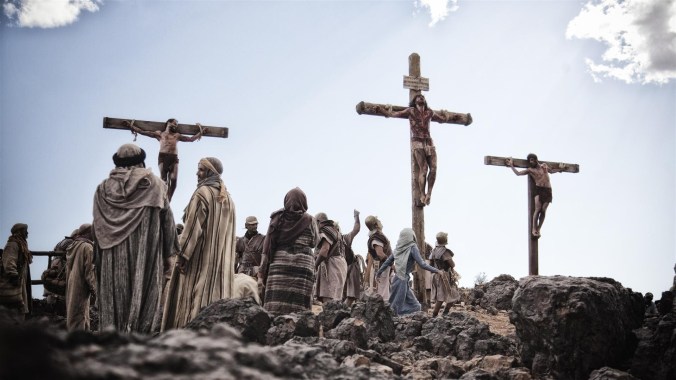
The Resurrection of Christ

1 Corinthians 15:3-4

In his letter to the Corinthians, Paul summed up the essence of the gospel in the statement: “For I delivered to you as of first importance that which I also received, that Christ died for our sins according to the Scriptures, and that He was buried, and that He was raised on the third day according to the Scriptures.”

That is the gospel! That is the good news!

It may be stated in other ways quite more eloquently, more fully, and in more detail, but everything is summarized in the marvelous declaration that “Christ died for our sins…was buried…and was raised on the third day.” The death, burial, and resurrection of Jesus Christ are three events that forever changed the course of human history. Together, these events comprise the greatest event in human history.

CHRIST DIED FOR OUR SINS

Paul stated in I Corinthians 15:3 “that Christ died for our sins according to the Scripture.” This verse contains three very important facts.

First, the fact that “Christ died.” That is history!

Second, the fact that “Christ died for our sins.” That was necessary!

Third, the fact that “Christ died for our sins according to the Scriptures.” That is accuracy!

Consider these three very important facts in reverse order, considering first what the Scriptures record about Christ’s death, considering second why His death was necessary, and considering third the historical/physical aspects of His death.

Consider first the fact that the death of Christ was “according to the Scriptures.”

Throughout the New Testament, the apostles appealed to two areas of Christ’s life to establish His Messiahship. These areas are the resurrection of Jesus Christ and fulfilled Messianic prophecy.

The Old Testament, written over a 1500 year period, contains several references to the coming Messiah. Ray Stedman comments, “To read the Old Testament is to be gripped by the feeling that Someone is coming! All the prophets speak of Him, all the sacrifices point to Him, all the longings and dreams of men are of someone who will come and solve all their problems. But when you close the Old Testament, He has not yet arrived.”

The references to Christ in the Old Testament are specific in regard to His birth, life, death, and resurrection (see Acts 2:22-32). All of these prophecies and references were fulfilled in the Person of Jesus Christ and solidly confirm His credentials as Messiah. For the moment however, we are concerned with those Messianic prophecies concerning the death of Jesus Christ. Consider the following:

Psalm 41:9 prophesied that the Messiah would be betrayed by a friend. This was fulfilled when Judas Iscariot betrayed Christ (see Matthew 10:4).

According to Zechariah 11:12, the Messiah would be sold for thirty pieces of silver. This was fulfilled when Judas Iscariot was paid thirty pieces of silver for betraying Christ (see Matthew 26:15).

Prophecy also recorded that the Messiah’s betrayer would throw money into God’s House. This was fulfilled when Judas Iscariot threw the thirty pieces of silver into the sanctuary and departed to hang himself (see Matthew 27:7).

Prophecy further stated that the betrayal money would be used to buy the Potter’s Field (see Matthew 27:9-10). This was fulfilled when the religious leaders took the money that Judas had thrown into the sanctuary and bought the Potter’s Field as a burial place for strangers.

In these prophecies we see that the Messiah would be betrayed by a friend for thirty (not 29) pieces of silver (not gold) and that the money would be thrown down (not placed) in the House of the Lord and ultimately be used to buy the Potter’s Field. All of these prophecies were accurately fulfilled in Christ Jesus. Time will not permit us to look at all of the Messianic prophecies that were fulfilled at the time of Christ’s death, but the following list contains a few of the many prophecies:

Prophecy stated that the Messiah would be forsaken by His disciples (Zechariah 13:7). This was fulfilled in Mark 14:50.

Prophecy stated that the Messiah would be accused by false witnesses (Psalm 35:11). This was fulfilled in Matthew 26:59-61.

Prophecy stated that the Messiah would be silent before His accusers (Isaiah 53:7). This was fulfilled in Matthew 27:12-19.

Prophecy stated that the Messiah would be wounded and bruised (Isaiah 53:5). This was fulfilled in Matthew 27:26.

Prophecy stated that the Messiah would be smitten and spat upon (Isaiah 50:6). This was fulfilled in Matthew 26:67.

Prophecy stated that the Messiah would be mocked (Psalm 22:7-8). This was fulfilled in Matthew 27:31.

Prophecy stated that the Messiah would fall under the weight of the cross (Psalm 109:24-25). This was fulfilled in Luke 23:26.

Prophecy stated that the Messiah’s hands and feet would be pierced (Psalm 22:16). This was fulfilled in Luke 23:33.

Prophecy stated that the Messiah would be crucified with thieves (Isaiah 53:12). This was fulfilled in Matthew 27:38.

Prophecy stated that the Messiah would make intercession for His persecutors (Isaiah 53:12). This was fulfilled in Luke 23:34.

Prophecy stated that the Messiah would be rejected by His own people (Isaiah 53:3). This was fulfilled in Matthew 21:42-43.

Prophecy stated that the Messiah would be hated without a cause (Psalm 69:4). This was fulfilled in John 15:25.

Prophecy stated that the Messiah’s friends would stand far off (Psalm 38:11). This was fulfilled in Luke 23:49.

Prophecy stated that people would shake their heads at the Messiah (Psalm 109:25). This was fulfilled in Matthew 27:39.

Prophecy stated that the Messiah would be stared upon (Psalm 22:17). This was fulfilled in Luke 23:35.

Prophecy stated that the Messiah’s garments would be parted and lots cast for them (Psalm 22:18). This was fulfilled in John 19:23-24.

Prophecy stated that the Messiah would suffer thirst (Psalm 69:21 fulfilled in John 19:28) and have gall and vinegar offered to Him (Psalm 69:21 fulfilled in Matthew 27:34).

Prophecy stated that the Messiah would cry out regarding being forsaken (Psalm 22:1). This was fulfilled in Matthew 27:46.

Prophecy stated that the Messiah would commit Himself to God (Psalm 31:5). This was fulfilled in Luke 23:46.

Prophecy stated that the Messiah’s bones would not be broken (Psalm 34:20). This was fulfilled in John 19:33.

Prophecy stated that the Messiah’s heart would be broken (Psalm 22:14). This was fulfilled in John 19:34.

Prophecy stated that the Messiah’s side would be pierced (Zechariah 12:10). This was fulfilled in John 19:34.

Prophecy stated that darkness would come over the land (Amos 8:9). This was fulfilled in Matthew 27:45.

Prophecy stated that the Messiah would be buried in a rich man’s tomb (Isaiah 53:9). This was fulfilled in Matthew 27:57-60.

All of these prophecies were accurately fulfilled in the Person of Jesus of Nazareth thus confirming Him as the Messiah (the Christ), the Son of God. The fulfillment of these prophecies shows that Christ indeed died according to the Scriptures. These 29 prophecies from the Old Testament which speak of the betrayal, trial, death, and burial of the Lord Jesus Christ were spoken at various times by various voices during the five centuries from 1000-500 B.C., and yet all of them were literally fulfilled in Jesus in one twenty-four hour period. Thus, “Christ died according to the Scriptures.”

Consider second the fact that “Christ died for our sins.”

This is a statement of purpose. Christ “came to seek and to save that which was lost” (Luke 19:10). Christ died according to the Scripture. That is accuracy! But Christ died for our sins. That was necessary!

The death of Christ was necessary because the Scriptures declare that “all have sinned and fall short of the glory of God” (Romans 3:23). Sin separates man from God (Isaiah 59:2) and carries with it a death penalty (Romans 6:23a).

Jesus came to pay the penalty that we were obligated to pay. He came to be our substitute by taking our place on the cross. We must however, accept what He has done on our behalf before we can enter into a right relationship with God. We must accept the free gift of eternal life (Romans 6:23b) which God offers to all men.

This gift can only be accepted or rejected, we cannot work for it. We receive it by grace through faith (Ephesians 2:8-9). We must place our faith and trust in the Lord Jesus Christ (Romans 10:9-10) in order to receive eternal life and enter into a right relationship with God (John 3:16 and 1:12).

Consider third the fact that “Christ died.”

Jesus Christ died an actual physical/historical death. Let’s consider some of the physical/historical aspects of His death. According to the Scripture (Mark 15:15 and Matthew 27:26), Pilate turned Jesus over to be scourged prior to His crucifixion. The Jewish limit for scourging was forty lashes, but they usually administered only thirty-nine lashes (in case of a miscount). Paul stated in II Corinthians 11:24, “Five times I received from the Jews thirty-nine lashes.” Jesus however, was whipped by the Romans and not the Jews, and the Romans set no limitations.

A victim was usually stripped of clothing and tied to an upright post, exposing his back to the lictors. The instrument used by the scourgers (or lictors) was called a “flagrum” (or “flagellum”). It was a whip-like instrument with several leather thongs of different lengths with pieces of bone and metal attached at intervals. Such an instrument literally laid open the back of the victim, lacerating veins, muscle, and tissue, and chipping bones. The victim’s back was usually a mass of bleeding flesh.

According to Mark 15:15-20, Jesus was mocked by the Roman soldiers after He had been scourged. The Roman soldiers put mock royal garments upon Jesus along with a crown of thorns, beating Him on the head, spitting upon Him, and abusing Him violently. The soldiers then stripped Him of these garments and clothed Him with His own. The stripping off of the mock garments must have been excruciatingly painful as they had undoubtedly come into contact with His bleeding back. After these things, Jesus was led away to be crucified (see Mark 15:20).

Crucifixion was a form of torture perfected by the Romans. It was a form of execution “designed to produce a slow death mixed with maximum pain and suffering” (Edwards). Josh McDowell writes that the pain of crucifixion included dizziness, cramps, thirst, starvation, fever, tetanus, the pain of untended wounds, difficulty in breathing, and much more. All of this was intensified to a point at which the victim could barely endure the pain and agony, but stopping just short of the point of relief of unconsciousness and death.

Marcus Tillius Cicero, the famous Roman orator, spoke of the horrifying cross saying, “Even the mere word, cross, must remain far not only from the lips of the citizens of Rome, but also from their thoughts, their eyes, their ears.” After enduring a sleepless night without food, the mockery of three Jewish trials and three Roman trials, a scourging and mocking by Roman soldiers, Jesus was led away to be nailed to a cross. Jesus suffered all of these horrible things and then cried out “It is finished,” breathed His last and then died (see Luke 23:46 and John 19:30).

After the death of Christ, Joseph of Arimathea asked Pilate for the body of Jesus (see Luke 23:50-52). Before Pilate could release the body however, he required official certification of Christ’s death. This certification of Christ’s death was confirmed by the Roman soldiers who had gone to the execution sight to break the legs of the victims to expedite their death. When these soldiers, who were not unfamiliar with the signs and evidences of death, came to Jesus, “they saw that He was already dead, and they did not break His legs” (John 19:31-33).

John tells us that “one of the soldiers pierced His side with a spear, and immediately there came out blood and water” (John 19:34). McDowell comments that this proves death by crucifixion and rupture of the heart. Had Jesus been alive when the Roman soldier pierced His side, blood would have spurted out with every heart-beat, but it did not, it merely flowed out. Thus, “Christ died [in this terrible manner] for our sins according to the Scriptures.”


CHRIST WAS BURIED

Paul stated in 1 Corinthians 15:4 that after Christ died “He was buried.”

First, consider where Christ was buried.

Some eight hundred years before the death of Jesus, the prophet Isaiah prophesied that the Messiah would be buried in a rich man’s tomb (see Isaiah 53:9). According to Matthew 27:57-60, on the evening of Christ’s death, a rich man from Arimathea named Joseph “gathered up courage” (see Mark 15:42-43) and asked Pilate for the body of Jesus. After ascertaining that Jesus was already dead, Pilate “granted the body to Joseph” (see Mark 15:44-45).

Joseph then took the body of Jesus, wrapped Him in a linen cloth, and placed Him in his (Joseph’s) own new tomb (see Matthew 27:59-60). According to Matthew 27:60 and Mark 15:16, this tomb had been “hewn out in the rock.” It was not a natural cave. It was an excavation in the rock. The tomb had a resting place for the body cut out of the rock. The stone outside of the tomb was large and had been cut to such dimensions as to form a tight seal around the mouth of the tomb once rolled into place. And so Christ was buried in a rich man’s tomb according to the Scriptures.

Second, consider how Christ was buried.

According to John 19:38-40, after Joseph was granted permission to take the body of Jesus, he was joined by Nicodemus, who helped him prepare the body of Jesus for burial according to the Jewish customs of the day.

John 19:39 records that Nicodemus brought with him “a mixture of myrrh and aloes, about a hundred pounds weight.” Joseph and Nicodemus then straightened and washed the body of Jesus. Once this was done, they took linen wrappings (strips of linen cloth about a foot wide) and wrapped the body of Jesus from the ankles to the shoulders (see comments on Lazarus in John 11:44). The “mixture of myrrh and aloes” were of a gummy consistency. These spices were placed between the folds of the linen wrappings and served as both a preservative and as a cement to glue the linen wrappings into a solid covering.

According to John 20:7, the head of Christ was wrapped with a separate piece of cloth. [See again in John 11:44 that the face of Lazarus was also wrapped around with a cloth.] This fact argues against the Shroud of Turin being the burial cloth of Christ. When John and Peter arrived at the empty tomb, they noticed “the face-cloth, which had been on His head, not lying with the linen wrappings, but rolled up in a place by itself” (John 19:4-8).

Third, consider what was done after Christ was buried.

After the body of Christ had been prepared for burial, a large stone was rolled into place, tightly covering the entrance to the tomb. Regarding the size of the stone, a marginal note in one of the earliest manuscripts states that the stone was of such proportions as to require twenty men to roll it away. Two Georgia Tech engineering professors who toured the Holy Land calculated that it would require a stone weighing no less than one and one-half tons to cover the doorway of the Garden Tomb.

According to Matthew 27:62-66, the chief priests and Pharisees went to Pilate and asked that the tomb of Christ be secured until the third day because they remembered that Christ had said, “After three days I am to rise again.” Pilate, who was as concerned as the Jews that there be no more trouble, gave the Jews a Roman Guard. A Roman Guard was comprised of sixteen soldiers, each well armed and trained to protect six-feet of ground. In addition, each man in a Roman Guard was cognizant of the fact that failure to successfully fulfill an assigned duty was punishable by death.

Matthew 27:66 states that “along with the guard they set a Roman seal on the stone.” This was an extra precautionary measure that was taken to prevent anyone from tampering with the contents of the tomb.

A seal was set by stretching a cord across the face of the rock and sealing it on either end with a sealing clay. This sealing clay was then stamped with the official signet of the Roman governor. [See Daniel 6:17 for an Old Testament example of “sealing.”] Breaking or violating the Roman seal was a serious offense, bringing upon the lawbreaker the weight of Roman law and the terror of Roman wrath. That seal was far more sacred to the Roman soldiers who guarded the tomb than Israel’s law or the concern of the Jewish religious leaders. They would not risk jeopardizing their lives by allowing anyone to tamper with the seal. Thus was Christ buried.

Mgr. E. Le Camus comments, “Never had a criminal given so much worry after his execution. Never had a crucified man been granted the honor of being guarded by a squad of soldiers.” Jesus was dead and securely buried in a rich man’s tomb…or so it seemed!

CHRIST WAS RAISED

Paul wrote in I Corinthians 15:4 that after Christ died for our sins according to the Scriptures and was buried, “He was raised on the third day according to the Scriptures.” Something happened on the third day, something so great that it changed the course of human history from B.C. (Before Christ) to A.D. (Anno Domini – “the year of our Lord”). Something so dramatic happened that it completely changed eleven men’s lives so that all but one died a martyr’s death. That something was an empty tomb, an empty tomb that a fifteen minute walk from the center of Jerusalem could have either confirmed or disproved. Consider the following facts about the resurrection of Jesus Christ.

First, the Roman seal was broken.

The seal that had been stretched across the face of the stone and represented the power and authority of the Roman Empire was broken! Who would be brave (or foolish) enough to break the Roman seal. Certainly not the Roman soldiers who knew the penalty of such a crime, and certainly not the disciples who had displayed signs of cowardice and hidden themselves (see Mark 14:50). Only John was present at the crucifixion.

Second, the empty tomb.

Paul Althus comments that the resurrection proclamation “could not have been maintained in Jerusalem for a single day, for a single hour, if the emptiness of the tomb had not been established as a fact for all concerned.” Christianity had its beginnings in the one city in the entire world where it could have been forever stopped had the tomb not been empty. The Jews, the Romans, and the followers of Jesus all knew that the tomb was empty. J.N.D. Anderson comments, “There was no point in arguing about the empty tomb. Everyone, friend and opponent, knew that it was empty. The only questions worth arguing about were why it was empty and what its emptiness proved.”

Third, the large stone covering the entrance of the tomb was moved.

The stone probably weighed no less than one and one-half tons. Mark 16:4 records that the stone “was extremely large.” Regarding the position of the stone on that first Easter morning, the Gospel writers used the following words:

Matthew used the Greek word “kulio” which means “to roll.” (See Matthew 27:60).

Mark used the word “anakulio.” (See Mark 16:3-4). The word “kulio” used with the preposition “ana” means “to roll up or upward,” suggesting a slope or incline at the tomb’s entrance.

Luke used the word “apokulio.” (See Luke 24:2). The word “kulio” used with the preposition “apo” means “rolled away from” (in the sense of distance) from the tomb.

John used an entirely different Greek word to describe the position of the stone (see John 20:1). John used the word “airo” which means “to pick up and carry away.”

Thus, it would have been virtually impossible for the cowardly disciples to roll away the stone by virtue of its size and the presence of the Roman Guard.

It would also have been impossible for a man to push it away from the inside as is suggested by the proponents of the “Swoon Theory,” who posit that Jesus did not die on the cross but merely swooned (or fainted).

Proponents of the Swoon Theory hold that Jesus was revived by the cool dampness of the tomb, somehow managed to get out of the linen wrappings (remember that Jesus gave instructions for Lazarus to be unbound when He raised Lazarus from the dead – John 11:44), walked on feet that had been pierced through, pushed the stone away with hands that had borne the weight of His entire body while on the cross, fought off an entire Roman Guard, and then appeared to His disciples as the Lord of Life!

No, it was a power far greater than any human power that moved the stone far away from the entrance of the tomb.

Fourth, consider the fact that the Roman Guard went A.W.O.L.

Something happened on that first Easter morning that made the Roman guards like dead men and frightened them away (see Matthew 28:4). After the stone had been rolled away and the Roman Seal broken, the guards fled to the chief priests and reported to them what had happened. The chief priests then bribed them to say that the disciples had stolen the body and assured them that should the event come to the governor’s attention, they would keep them out of trouble (see Matthew 28:11-15).

Fifth, the grave-clothes were still in the tomb.

When Peter and John arrived at the tomb, they saw the linen wrappings lying there with the face-cloth rolled up in a place by itself (see John 19:4-8). The first thing that struck Peter and John was not the empty tomb, but rather the empty linen wrappings. The linen wrappings were undisturbed. They were lying in the tomb like an empty cocoon. The body had vanished from within the linen wrappings.

Sixth, consider the post-resurrection appearances of Christ.

According to 1 Corinthians 15, Jesus appeared to many people after His resurrection, friends and foes alike. He appeared to Mary Magdalene and the other women, Peter, the Emmaus disciples, to over 500 people at one time, to James, Stephen, Paul, and John (while on Patmos).

In 1 Corinthians 15:6, Paul inserted the little phrase, “most of whom remain until now.” Paul was stating that the majority of those who saw Christ after His resurrection were still alive and available for questioning. These post-resurrection appearances were not hallucinations as some skeptics have suggested.

According to the field of psychiatry, hallucinations are individualistic, subjective, and tend to recur with regularity over an extended period of time. Yet over 500 people saw the same thing at the same time and at the same place, thus arguing against the individualistic and subjective nature of hallucinations. In addition, the post-resurrection appearances took place over a forty day period and then abruptly stopped, thus arguing against the long-term recurrence of hallucinations.

Finally, consider the fact that it was the women who saw Jesus first.

McDowell sees this as an “authenticating feature” of the resurrection because according to the Jewish principle of legal evidence, women were invalid witnesses and did not have the right to give testimony in a court of law. If the resurrection accounts had been contrived, then the fabricators of the account would not have included women in the story, at least not as the first witnesses.

Thus, Christ was “raised on the third day according to the Scriptures.” The tomb of Confucius is still occupied. The tomb of Buddah is still occupied. The tomb of Mohammed is still occupied. But the tomb of Christ is empty. The resurrection confirms the Messiahship of Jesus. It confirms the fact that Jesus is exactly who He claimed to be, the Son of God who came to make a way for man to be reconciled to God. The empty tomb is the silent witness to the resurrection of Christ which has never been refuted.

The Romans and Jews could not produce the body of Christ or explain where it went. Those who suggest that the disciples stole the body cannot explain how these cowardly men, who fled when Jesus was crucified, could have mustered the courage to fight off a Roman Guard and steal the body.

In addition, they cannot explain why such men would then devote their entire lives to a lie and die a martyr’s death for a lie. No, the lives of these men and countless millions of others throughout history have been changed because Jesus Christ is alive.

McDowell notes that it is not because of the insufficiency of the evidence that men reject the resurrection, but rather in spite of the sufficiency of evidence. When it comes to the resurrection, notes McDowell, the burden of unbelief is far greater than the burden of belief. The difficulties of belief may be great, but the absurdities of unbelief are greater. In the words of the great hymn , “I serve a risen Savior, He’s in the world today, I know that He is living, whatever men may say.”

SOURCES

Evidence That Demands A Verdict
by Josh McDowell

The Resurrection Factor
by Josh McDowell

Answers to Tough Questions Skeptics Ask About the Christian Faith
by Josh McDowell and Don Stewart

“On the Physical Death of Jesus Christ”
by William D. Edwards, M.D., et. al.
Article published in the Journal of the American Medical Association, March 21, 1986

Romans 2

THE CONDEMNED CRITIC

Romans 2:1-16

A story is told about a fountain pen salesman who spent an hour with a prosperous merchant commending the use of fountain pens. The salesman was so persuasive that the merchant ordered 500 pens for sale in his stores. As the salesman was writing out the order, the merchant exclaimed, “Hold on, sir! I cancel the order!” With that, the merchant turned to wait on a customer. The salesman left in disgust and confusion. Later, the merchant’s book-keeper asked, “Why did you cancel that fountain pen order?” “Why?” asked the merchant, “Because he talked about fountain pens for an hour, using a number of forcible arguments, and the booked my order with a lead pencil. He did not practice his profession.” And so we have the hypocrite who preaches fountain pens but uses pencils!

“Hypocrite!” Even the sound of the word is unnerving. Nobody likes to be called a hypocrite. Webster tells us that a “hypocrite” is a person who pretends to be what he is not or pretends to be better (more pious and virtuous) than he really is without really being so. A hypocrite is a person who has a problem with his heart and with his hands. A hypocrite has a problem with his heart in that he lives a lie. He is like an actor on a stage assuming another identity. He is not genuine. A hypocrite has a problem with his hands in that he is always accusingly pointing his finger at others. The hypocrite never stops to think that every time he points a finger at others, the other three fingers are pointing back at him.

In Romans 1:18-32, Paul built a case against the heathen by showing that they are in desperate need of the righteousness of God. In Romans 2:1-16, Paul continued to build his case against humanity in an effort to show why all men need to embrace the truth of the gospel. Paul’s case in Romans 2:1-16 is against the hypocrite, especially the proud Jew and cultured Gentile who felt they were not as bad as the people Paul had described in Romans 1:18-32. Paul’s intent in these verses was to show that the self-righteous hypocrite needed the righteousness of God just as much as the most depraved and wicked heathen.

What the Hypocrite Feels: Romans 2:1

According to Romans 2:1, the hypocrite feels that other men’s sins are worse than his own. Paul painted a vivid picture of the descent and depravity of man in Romans 1:18-32. There were many in Paul’s day, as in our own, who read Paul’s letter and said to themselves, “That certainly doesn’t describe me. I am not like that, but I know many people who are!” That is what the hypocrite feels. “They are wicked, but I am not.” The hypocrite has a tendency to compare himself with adulterers, drunkards, homosexuals, prostitutes, and rapists, and then pride himself on his morality, church membership, and respectability. He flatters himself with his own comparisons, never realizing that he is measuring himself against the wrong standard. Like the Pharisee who stood praying in the Temple (see Luke 18:9-14), the hypocrite prays, “God, I thank Thee that I am not like other people; swindlers, unjust, adulterers, or even like this tax-gatherer. I fast twice a week; I pay tithes of all that I get.”

We noted earlier that the hypocrite has a problem with his heart and his hands. We should add that the hypocrite also has a problem with his head. The hypocrite has a problem with his head because he is blind to his own faults. We have a tendency to see the faults of others much more clearly than our own. The hypocrite has a problem with his head because he forgets his own wrongs and weaknesses. The hypocrite has a problem with his head because he cleverly renames his own wrongs. Other people lie but we merely stretch the truth. Other people steal but we borrow. Other people are prejudiced but we have convictions. Other people are stubborn but we stand on our principles. It is interesting that men have a tendency to observe in others the faults that exist in themselves. The hypocrite is quick to say, “People like that ought to be stoned.” Fortunately Jesus is quick to respond, “He that is without sin among you, let him cast the first stone” (see John 8:1-11).

What the Hypocrite Finds: Romans 2:2-3

According to Romans 2:2-3, the hypocrite finds that he too is guilty and faces the judgment of God. The hypocrite has a tendency to think that God will judge others but not him. He has deluded himself into thinking that somehow God will judge him according to a different standard. The hypocrite is quick to wish that others experience the sad consequences of their sin or receive due punishment for their sin, but often fails to realize that he too will be held accountable for his own sin. Paul wrote in Colossians 3:25, “For he who does wrong will receive the consequences of the wrong which he has done, and that without partiality.”

What the Hypocrite Forgets: Romans 2:4

According to Romans 2:4, the hypocrite is one who forgets the purpose of God’s goodness. “The riches of [God’s] kindness and forbearance and patience” are designed to lead men to repentance. God’s goodness and patience should not be misinterpreted as license to do wrong but rather as an opportunity to do right and to get right with God. God’s patience should have caused the hypocrite to repent, but instead, the hypocrite responded in stubbornness and an unrepentant heart. The hypocrite disregarded the kind patience of God and continued to point an accusing finger at others while practicing the same things. This did not go unnoticed by God.

What the Hypocrite Faces: Romans 2:5-16

According to Romans 2:5-16, the hypocrite faces the judgment of God, even as the heathen. Paul wrote of the breadth and basis of God’s judgment in Romans 2:6-10. Regarding the breadth of God’s judgment, it is universal. God will render to “every man” according to his deeds. Regarding the basis of God’s judgment, God will render to every man “according to his deeds.” Judgment in the Bible is according to works and salvation is by faith. God will judge each man according to his works and recompense him accordingly (see Romans 2:7-10) and without partiality (see Romans 2:11). Paul concluded this section by indicating that men will be judged according to the truth (see Romans 2:2), according to their deeds (see Romans 2:5-11), and according to the light they have received (see Romans 2:12-16). One day the hypocrite will be exposed for what he really is. Thus Paul once again demonstrated that men desperately need to hear and embrace the truth of the gospel. The depraved heathen and the smug hypocrite alike are in need of the righteousness of God.

Practical Considerations

Men should measure themselves against the right standard.
One of the hypocrite’s greatest problems is that he measures himself against the wrong standard. The hypocrite measures himself against other people and mistakenly flatters himself by thinking that he is better or more righteous or more moral. Phillips comments, “If people are going to measure themselves by somebody else, then they must measure themselves alongside of Christ; and when they do that, all grounds for hypocrisy and smugness will be swept away.”

Men may fool others, but they cannot fool God.
A hypocrite is a person who is not genuine. A hypocrite lives a lie. He is like an actor on a stage assuming a role. A hypocrite may fool others with his pious and moral exterior, but God looks at the heart of a man to determine what is really there

Jesus said, “Woe to you, scribes and Pharisees, hypocrites! For you are like whitewashed tombs, which on the outside appear beautiful, but inside they are full of dead men’s bones and all uncleanness. Even so you too outwardly appear righteous to men, but inwardly you are full of hypocrisy and lawlessness” (Matthew 23:27-28).

Jeremiah 17:9 states, “The heart is more deceitful than all else and is desperately sick; who can understand it?” The answer is found in Jeremiah 17:10, “I, the Lord, search the heart, I test the mind, Even to give to each man according to his ways, According to the results of his deeds.”

All men face the judgment of God.
The hypocrite mistakenly thinks that he is better than others and will somehow be judged according to a different standard. The hypocrite however, faces the judgment of God even as all men. The hypocrite needs to get his own house in order rather than spending his time condemning and pointing out the condition of other men’s houses.

All men need a friend who will be honest with them about them.
One of the hypocrite’s problems is that he is blind to his own faults. He has a tendency to forget his own wrongs and shortcomings and to cleverly rename his own wrongs. The hypocrite needs a friend who can honestly and lovingly point out his faults. Proverbs 27:6 states, “Faithful are the wounds of a friend, but deceitful are the kisses of an enemy.”

All men need the righteousness of God.
Paul built a case against the hypocrite to make him aware of a greater need, namely his need for the righteousness of God. All men, regardless of who they are, have sinned against God and need the forgiveness that God offers through the Lord Jesus Christ. This includes heathen and hypocrite alike.

THE GOOD NEWS IS NOT JUST FOR BAD GUYS!

Romans 2:17-29

Someone has rightly stated, “Being born in a Christian home does not make you a Christian any more than being born in the back seat of a car makes you a spare tire!” Humorous, but true. Unfortunately, there are many people who think that they are in right standing with God by virtue of being born in a Christian home or because they are a member of a church. The fact of the matter is a person does not enter into a right relationship with God by virtue of rank, race, riches, or religion, but rather through a personal relationship with the Lord Jesus Christ.

One evangelist observed that it is harder to reach “religious” people for Christ than it is to reach “irreligious” people. Religious people are often harder to reach for Christ because they have a tendency to think that the Good News is for bad guys. They tend to see the Good News of the Gospel as addressed to the person who is “down and out” rather than to the person who is “up and out.”

The religious person needs to realize that there is no salvation in church membership, activities, and ordinances. The religious person needs to come to the realization that he is dead in his trespasses and sins and desperately needs new life in Jesus Christ. The religious person needs to understand that the Good News is not just for bad guys. The Good News is for all men, regardless of how good they think they might be.

We noted in a previous lesson that Romans 1:18-3:20 contains the courtroom transcript of God’s case against mankind. Paul, serving as the prosecuting attorney, has built a dramatic and damning case against the heathen (Romans 1:18-32) and the hypocrite (Romans 2:1-16). Paul continues to build his case against mankind, in an effort to show why all men need to embrace the gospel of Christ, by indicting the religious man (in this case, the Jew). We could very easily substitute the title “church member” in place of Jew in these verses and thus apply the message to ourselves. Romans 2:17-3:8 record God’s indictment against all sinners who count on religion to put them in right standing with God.

The Advantages of Being a Jew: Romans 2:17-18

Paul began his case against the religious man by addressing the most religious people of his day, the Jews. He began by citing the advantages that the Jews enjoyed. First, the Jews had the advantage of a Hebrew birth. In a day when men were groping in darkness and worshiping idols made with human hands, the Jew had the benefit of being raised in a home that exposed him to the synagogue and taught him the importance of the Sabbath and of sacrifices. Second, the Jew had the advantage of a Hebrew Bible. One of the greatest advantages of the Jew over the heathen was his possession of the Law (Torah). This helped him to understand the will of God and to develop a keen sense of moral discernment.

The Attitude of the Jew: Romans 2:19-20

Romans 2:19-20 reveals the attitude of the Jew toward others. Because the Jew had been instructed in the Word of God, he saw himself as a guide to the spiritually and morally blind, a light to those in darkness, a corrector of the foolish (stupid or unlearned), and a teacher of babes. In many cases the Jew set himself up as a teacher of others and acted with contemptuous pride and with deep scorn for those less fortunate than himself. On the outside, the Jew acted intellectually and religiously right, but he had some problems on the inside.

The Accountability of the Jew: Romans 2:21-24

Paul charged the Jews with ethical and moral failure in Romans 2:21-24 by using a series of rhetorical questions. Each question draws attention to the shameful inconsistencies in the lives of these religious people. First, Paul charged the Jews with spiritual insincerity. They took great pride in teaching others but did not bother to practice what they taught. Second, Paul charged the Jews with spiritual insensitivity. They preached against stealing, adultery, and idolatry, and yet violated their own teaching at each point. Finally, Paul charged the Jews with spiritual insolvency. Because they boasted in the law and violated that same law, they turned people away from God. The watching world no longer believed their message. They ruined their witness.

The Actions of the Jew: Romans 2:25-29

Having addressed the matter of Jewish pride in the Law, Paul further addressed Jewish pride in the rite of circumcision. Like religious people everywhere, the Jews took pride in observing the ordinances, rites, and rituals of religion, thinking that by so doing they would find favor with God. Paul informed the Jews that observing the rite of circumcision would not put them in a right relationship with God. He told them that a true Jew was one whose heart had been circumcised. Externals do not make one a child of God. A person can be baptized, galvanized, Sanforized, pasteurized, and circumcised, but unless he has placed his faith in the Lord Jesus Christ, he is not in right standing with God.

Practical Considerations

Being a “Baptist” is not enough!
Even as the Jew took pride in being a Jew, many people today take pride in being a Baptist, or Presbyterian, or Methodist. Many feel they have an inside track with God because they are a Brand X, Y, or Z. We must realize however, that apart from Christ we are hopelessly lost. Someone has said, “If you die and go to heaven your tag will fall off, and if you die and go to hell your tag will burn off!” The important thing is to personally know the Lord Jesus Christ.

Owning a Bible is not enough!
Like the Jew, many today take great pride in the fact that they possess the Word of God. Some even take great pride in the particular translation they possess and look down upon those who use any other translation. Still others take pride in the fact that they have a large family Bible prominently displayed on a coffee table. But owning a Bible is not enough. We must spend time in the pages of the Bible and follow-up by practicing what we read.

Looking good is not enough!
The Jew, which Paul indicted, had a bright and polished exterior. He put on a good show. He could teach others all about the Law and tell them how they should live their lives. He was an intellectual and religious success in every way.

But while the religious Jew looked good on the outside, he was rotten on the inside. He was an ethical and moral failure. He taught other people lessons that he himself did not practice and thus contributed to turning them away from God.

Erdman comments, “So today reproach is often brought upon the name of Christ by the inconsistencies of Christians.” Looking good is not enough. We must be certain that our profession and practice match. We must be genuine and real on the inside.

Ephesians 6

6:1 Children [indicates that children must have been present in the congregation when this letter was read; Gr. “tekna” refers to young children living at home], obey [listen attentively and respond positively; this command assumes the instruction of parents is in keeping with God’s Word] your parents in the Lord [or as a Christian should], for this is right [because it is in line with God’s will; cf. Col. 3:20].

6:2 [the fifth commandment (Ex. 20:12)] “Honor [to give weight or consideration to; to count as valuable; children must honor parents for life] your father and mother”—which is the first commandment with a promise—

Note: Is it possible to obey parents without honoring them?

6:3 [note two benefits of honoring parents][the first benefit relates to quality of life] that it may go well with you and [the second benefit relates to quantity of life] that you may enjoy long life on the earth [the general principle is that children who listen to their parents can avoid the sins and dangers that can easily shorten their lives].”

6:4 [a prohibition (cf. Col. 3:21)] Fathers, do not exasperate [to provoke or irritate to the point of anger] your children; instead, [a command] bring them up [to nourish or feed] in the training [discipline; includes punishment for wrongdoing] and instruction [educate rather than exasperate] of the Lord [reminder to parents to offer training and instruction that is in keeping with God’s Word].

Note: Some parents exasperate their children by always saying one thing and doing another. Inconsistent and unfair discipline can also exasperate children. Showing favoritism is another common way of provoking children to anger. Humiliation, cruelty, and verbal and physical abuse can exasperate children and cause them to lose heart (see Col. 3:21).

Note: Martin Luther wisely wrote: “Spare the rod and spoil the child—that is true. But beside the rod keep an apple to give him when he has done well.” Parents must try to encourage and praise and not just scold or correct.

6:5 Slaves [there were several million slaves in the Roman empire in Paul’s day], obey [listen attentively and respond positively] your earthly [distinguished slave owners from God, our ultimate Master] masters with respect and fear, and with sincerity [uprightness; without pretense or evil motivation] of heart, just as you would obey Christ.

6:6 Obey them not only to win their favor when their eye is on you [eyeservice: refers to working only when master is watching; cf. Col. 3:22], but like slaves of Christ, doing the will of God from your heart [in such a manner as to pass God’s inspection].

Note: How should you as a Christian employee or employer seek to demonstrate your relationship to Christ?

6:7 [cf. Col. 3:23] Serve wholeheartedly [with enthusiasm], as if you were serving the Lord [work should be an expression of commitment to the Lord], not men,

6:8 [cf. Col. 3:24] because you know that the Lord will reward everyone for whatever good he does, whether he is slave or free.

6:9 And masters, treat your slaves in the same way [that is, out of concern for God’s will and the well-being of their slaves]. Do not threaten them, since [reason for not threatening them] you know that he who is both their Master and yours [earthly masters will one day have to answer to their heavenly Master] is in heaven, and there is no favoritism [no one is more important than anyone else] with him.

6:10 Finally [signals Paul’s concluding remarks], be strong in the Lord [we must derive our strength from God] and in his [not our] mighty power.

Becoming a Christian is no guarantee that life will be easier or trouble-free. In fact, becoming a Christian often invites trouble from Satan and his evil forces. Jesus said that Satan’s agenda is “to steal and to kill and to destroy” (John 10:10). Peter said that Satan is like a lion looking for anyone to devour (1 Peter 5:8).

I heard a preacher remark that for Jesus, the battle came after His baptism, the Devil came after the dove, and the roar from hell came after the voice from heaven. Christians are indeed engaged in a spiritual battle.

Although the death and resurrection of Jesus have assured the victory, we must still battle daily against the forces of evil. The best way to do poorly in this battle is to try to fight alone and in our own strength. We need and must depend upon the vast divine strength that the Lord can provide and is so willing to give.

6:11 Put on [this is a command to dress and prepare for battle; it is the responsibility of the Christian to take the armor God provides and put it on] the full [complete] armor [cf. Isa. 59:17; Rom. 12:13] of God so that you can take your stand [cf. Ps. 18:30-39] against [“stand against” means to resist the enemy; no surrender] the devil’s schemes [a reminder that the devil does not fight fair; cf. 2 Cor. 2:11].

In addition to providing strength for the battle, God also provides believers with armor. He does not want for His people to engage in spiritual warfare unprotected or unarmed. However, it is the responsibility of every believer to put on the full or complete armor of God. Failure to do so will compromise a believer’s ability to stand against the tactics of the Devil, our primary enemy.

Stand against is a military term that refers to holding one’s position and not surrendering to the enemy. The word tactics, or schemes, reminds us that the Devil does not fight fair. He is cunning and deceitful and looks for every opportunity to destroy believers, both individually and corporately. He looks for areas in which we are weak and vulnerable, surveys our landscape for signs of eroding convictions, and calculates how much it will take to get us to make compromises. We must be armored and armed if we are to withstand his attacks.

Note: Satan’s schemes and methods of operation include the following:
• slander Gen. 3:4-5
• sowing tares Matt. 13:38-39
• lies John 8:44
• temptation Acts 5:3
• trickery 2 Cor. 2:11
• blinding minds 2 Cor. 4:4
• masquerading 2 Cor. 11:14-15
• Inciting persecution Rev. 2:10
• accusation Rev. 12:10
• deception Rev. 20:3

6:12 For our struggle [indicates hand-to-hand combat] is not against flesh and blood, but against [note descriptive terms for demons that illustrate the extent of Satan’s warfare…] the rulers [cf. Eph. 1:21], against the authorities [cf. Eph. 1:21], against the powers of this dark world [powers who aspire to control the world] and against the spiritual forces of evil in the heavenly realms [the dwelling place of demons].

The reason we need divine strength is because of the nature of spiritual warfare. The battle in which we are engaged is not against human enemies made of flesh and blood. Instead, we are engaged in a hand-to-hand struggle against demonic forces controlled by Satan. Paul used four terms to describe Satan’s powerful army.

The goal of this army of evil is to destroy believers and defeat the church. Satan’s tactics include using human instruments, like the secular media or world systems, to gain battlefield advantage. However, he is the real enemy. We should never underestimate his cunning or his determination to carry out his destructive agenda.

6:13 Therefore [in response to the reality of “our struggle”] put on [believers must put on the armor that God has made available them] the full [in order to leave no area vulnerable to attack] armor of God, so that when the day of evil comes, you may be able to stand [cannot stand against the great opposition of Satan without God’s armor; cf. Jas. 4:7; 1 Pet. 5:9] your ground, and after you have done everything, to stand.

Because of the nature of the enemy and the reality of the battle in which we are engaged, we must take up the full armor of God. God’s armor is available, but each believer is personally responsible for preparing for battle. We must put on the full armor in order to leave no area vulnerable to attack. We have all experienced the evil day — those days when we go through trials and temptations and attacks launched against us by the enemy. We must arm ourselves and be prepared to take our stand and yield nothing to the enemy when we are engaged in these daily battles.

6:14 Stand firm then, with the belt of truth [the truth of God’s Word, the gospel, personal character of believer; enables us to stand against Satan’s lies (Jn. 8:44) and false doctrine; important to know the truth, speak the truth, and insist on the truth; cf. Jn. 17:17] buckled around your waist [belt or girdle made of leather, about six inches wide, held other pieces of armor in place (breastplate, sheath for sword)], with the breastplate [protected body from neck to thighs; protected vital organs; protects the heart (seat of emotions, self-worth, and trust); often had a back piece to protect from blows from behind] of righteousness [evidence that we have been made right with God; Satan will attack and seek to frustrate all committed to righteous living] in place,

Paul was chained to a Roman soldier when he wrote to the Ephesians. Perhaps prompted by the living object lesson assigned to restrict his movement, Paul helped his readers understand how to prepare for battle.

Like a Roman soldier, believers must fasten the belt of God’s truth around their waist. A fastened belt signified that a soldier was on duty and ready to fight. Truth refers to the character of the believer. We must live lives that are unquestionably consistent with the truth of God’s Word and that tell a skeptical world that we are convinced Jesus is “the truth” (John 14:6). We must know the truth, intelligently articulate the truth, insist on the truth, and always live the truth.

Additionally, we must put on the breastplate of righteousness, an essential piece of armor designed to protect vital organs. Our lives and daily choices must reflect the fact that we have been made righteous through the blood of Christ. We must live in a way that pleases the One who gave His life to make us right with God. Doing so is not an easy task because Satan continually tries to penetrate the believer’s breastplate to damage the heart and thwart righteous living.

6:15 and with your feet [Roman soldiers wore shoes with studded soles (cleats) to help them hold their ground in hand-to-hand combat; Isa. 52:7; Rom. 10:15] fitted with the readiness that comes from the gospel of peace.

Romans soldiers wore thick military sandals studded with cleats to help give them stability and traction in combat. Our feet should be sandaled with readiness to share the gospel of peace.

While visiting a remote mountain village in India, I saw a woman who had no feet sitting by the side of the road. She lived in a place with little access to the gospel. I immediately looked at my own feet as the Lord reminded me of my responsibility to take the gospel to those who have little or no access to its life-saving message.

Isaiah described the feet of those who bring good news as beautiful feet (Isa. 52:7) because of their willingness to be sent. We must make our feet available to march into the entire world with the gospel of peace.

6:16 In addition to all this, take up the shield [Roman shield approximately four feet high by two feet wide] of faith [complete reliance on God and willingness to do His will; cf. 1 Jn. 5:4], with which you can extinguish all the flaming arrows of the evil one.

6:17 Take the helmet [protects head; cf. 1 Thess. 5:8] of salvation [helmet protects our minds from doubting our salvation] and the sword [the only offensive weapon mentioned] of the Spirit, which is the word of God [cf. Isa. 11:4-5; 2 Thess. 2:8; Heb. 4:12].

A blow to the head can easily disorient, disable, or destroy any opponent. The enemy is always aiming for the head, seeking to strike a deadly blow with the battle-axe of doubt, confusion, and false doctrine. That is why we must put on the helmet of salvation (see 1 Thess. 5:8). We must protect and keep our minds focused on the fact that God has saved us from the penalty of sin, daily helps us to be victorious over the power of sin, and one day will rescue us from the presence of sin.

The only offensive weapon mentioned is the sword of the Spirit. Roman soldiers were proficient in the use of short double-edged swords that could be used in close combat. The sword of the Spirit is God’s Word. God’s Word is “sharper than any two-edged sword” (Heb. 4:12). Just as Jesus used God’s Word when Satan tempted him in the wilderness, we must use God’s Word to send Satan away. Jesus promised that the Holy Spirit will help us to effectively wield the sword of the Spirit (see John 14:26).


Note: The battle for the mind is real. The consequences of losing ground to the enemy are serious for yourself and others. Our victories and failures will be felt beyond our own generation. Too much is at stake to stay home from the fight. Make it your aim to drag into heaven with a dirty uniform. Here are a few of the rules of engagement.

D = Devil | Know the enemy. Do not be “ignorant of his intentions” (2 Cor. 2: 11) or his “tactics” (Eph. 6:11).

E = Equipment | Know how to use your weapons and always wear your armor.

F = Fight | Don’t just passively wait for the enemy to attack. Take the initiative to engage on strategic fronts.

E = Enlist | Do not go into battle alone. The “one another” passages in the New Testament remind us that we need one another. Remember that Satan is a pirate looking for a vessel without a fleet.

N = Neutrality | The failure to choose sides is unacceptable. The stakes are too high to remain unaligned, uninvolved, and uncommitted.

S = Stand | Hold your ground. Do not be intimidated. Do not walk away.

E = Endure | In the words of Winston Churchill: “Never give in. Never give in. Never, never, never, never—in nothing, great or small, large or petty—never give in, except to convictions of honor and good sense. Never yield to force. Never yield to the apparently overwhelming might of the enemy.”


6:18 And pray [a sign of our need for and dependence on God] in the Spirit [Spirit helps us when we pray (Rom. 8:26)] on all occasions with all kinds of prayers and requests. With this in mind, be alert [pray with your eyes open; cf. 1 Pet. 5:8] and always [don’t stop] keep on praying for all [no believer is exempt from Satan’s attacks] the saints.

6:19 Pray also for me, that [note that Paul did not ask for prayers for his release from prison] whenever I open my mouth, words may be given [Paul depended on the Spirit for inspiration and wisdom to speak] me so that I will fearlessly make known the mystery [God’s plan to make Jews and Gentiles into a new people in Christ] of the gospel,

6:20 for which I am an ambassador [a government’s legal representative, in this case, of God’s kingdom] in chains. Pray that I may declare it fearlessly, as I should.

6:21 Tychicus [carried Paul’s letters to Ephesians, Colossians (and probably to Philemon); also mentioned in Acts 20:4; Col. 4:7; 2 Tim. 4:12; Titus 3:12], the dear brother and faithful servant in the Lord, will tell you everything [news about Paul and his welfare], so that you also may know how I am and what I am doing.

6:22 I am sending him to you for this very purpose, that you may know how we are, and that he may encourage [perhaps Ephesians were discouraged by Paul’s imprisonment; Paul and the Ephesian believers were very close because Paul had lived in Ephesus for three years (Acts 20:17-38)] you.

6:23 Peace to the brothers, and love with faith from [point to source of peace, love, faith] God the Father and the Lord Jesus Christ.

6:24 Grace to all who love our Lord Jesus Christ with an undying love.

Ephesians 5

5:1 Be imitators of God [follow example of Christ], therefore, as dearly loved children

5:2 and live [to walk about] a life of love [self-sacrificing kind of love], just as Christ loved us and gave himself up for us as a fragrant [designates that the sacrifice was acceptable] offering [indicates a gift] and sacrifice [designates a slain animal (as in OT sacrifices)] to God.

5:3 But among you there must not be even a hint [any indication or amount, however slight or perceptible] of sexual immorality [any kind of sexual perversion; Gr. “porneia”], or of any kind of impurity [uncleanness, filthiness; sexual indulgence], or of greed [inordinate desire for anything (in this case may refer to sexual immorality)], because these are improper [unsuitable] for God’s holy people.

5:4 Nor should there be obscenity [filthy speech and conduct], foolish [silly] talk or coarse joking, which are out of place, but rather [replace obscenity and course language with something better] thanksgiving.

Note: Do you take bad language for granted? Do you ever resort to or use foul language to help you remain inconspicuous in the world?

5:5 For of this you can be sure: No immoral [one who practices sexual immorality], impure or greedy person—such a man [one whose life is governed and characterized by immorality, impurity, and greed] is an idolater [one who makes something else more important than God]—has any inheritance in the kingdom of Christ and of God [emphasizes unity of Father and Son].

5:6 Let no one [false teachers (cf. Eph. 4:14); Paul warned Ephesian elders to watch out for false teachers (Acts 20:28-31)] deceive [to lead astray, to mislead] you with empty [void of content and truth; without weight or depth] words [words that minimized the seriousness of sin (especially those sins already named by Paul); words that distort the truth], for because of such things [empty words; sinful behavior] God’s wrath comes on those who are disobedient.

5:7 Therefore [because of the things that are out of place among God’s people (5:4) and because of God’s wrath on sin (5:6)] do not be partners [one who shares together with another] with them [those who pretend to be Christians but live contrary lifestyles].

5:8 For you were once [formerly] darkness [life outside of Christ], but now [after hearing and responding to the gospel] you are light [life in Christ; radically different from former existence] in the Lord. Live as children of [those who are characterized by] light

5:9 (for the fruit [the natural outcome] of the light consists in [cf. Gal. 5:22-23] all goodness, righteousness and truth)

5:10 and find out [take the initiative; be responsible to discover through the study of God’s Word, prayer, and wise counsel] what pleases [is acceptable to] the Lord.

5:11 Have nothing to do with the fruitless [end in death and decay] deeds of darkness [light and darkness cannot coexist], but rather expose [a characteristic of light is to expose] them [the things that thrive in the dark].

Note: How can believers “expose” the “fruitless deeds of darkness” today?

5:12 For it is shameful even to mention what the disobedient do in secret.

5:13 But everything exposed by the light becomes visible [to make known; nothing can hide from the revealing power of light],

5:14 for it is light that makes everything visible [light pierces darkness; these words describe the mission of believers]. This is why it is said [possibly words from a hymn known to Paul’s readers and based on Isa. 26:19; 51:17; 52:1; 60:1]: “Wake up, O sleeper, rise from the dead, and Christ will shine on you.”

5:15 Be very careful [watch, give heed], then, how you live [to conduct one’s life]—not as unwise but as wise [take what you know about Christ and apply it to everyday life],

5:16 making the most of [to buy up at the marketplace] every opportunity [cf. Gal. 6:10], because the days are evil.

5:17 Therefore do not be foolish, but understand what the Lord’s will is [cf. 1 Thess. 4:3].

5:18 Do not [discontinue an action in progress; prohibit a habitual action] get drunk [associated with old life] on wine, which leads to debauchery [excess; wastefulness; out of control]. Instead, be [continually] filled [controlled by; “be filled” is a command for all believers] with the Spirit.

Note: What or who is in control of your life? To “be filled with the Spirit” does not mean that we get more of the Spirit, but rather that the Spirit gets more of us!

5:19 Speak to one another with psalms [songs of praise; OT psalms], hymns and spiritual songs [written by believers for use in worship]. Sing and make music in your heart to the Lord,

5:20 always giving thanks [the focus of singing] to God the Father for everything, in the name of our Lord Jesus Christ.

5:21 Submit [voluntarily surrender one’s rights] to one another out of reverence [fear] for Christ.

Note: Paul taught that all Christians are to “submit to one another out of reverence for Christ” (Eph. 5:21). The submission Paul wrote about was modeled by Christ (see Phil. 2:5-8) and reflects the essence of the gospel. The Holy Spirit can enable us to conduct our relationships in light of Christ’s example (Eph. 5:18).

Paul applied the principle of mutual submission to the marriage relationship. Paul asked Christian wives to submit voluntarily to their own husbands as to the Lord (v. 22). Paul was not suggesting that women are inferior to men. Nor was Paul suggesting that a husband was to dominate his wife.

Paul challenged Christian husbands to love their wives with the sacrificial, self-giving kind of love modeled by Christ (v. 25). This kind of love is always concerned about the well-being and interests of others. A husband and wife in a Christian marriage should live by the Christlike standards of mutual submission and self-giving love.

5:22 Wives, submit [voluntarily; without external coercion] to your [one’s own] husbands [not to all men] as to the Lord.

Note: What are some misconceptions about the meaning of the word “submit”?

5:23 For the husband is the head [authority, provider, leader] of the wife as Christ is the head of the church, His body, of which He is the Savior [protector].

5:24 Now as the church submits [continual action or state] to Christ, so also wives should submit to their husbands in everything [every area of life; “presupposes that the husband is completely fulfilling his God-given responsibilities properly” (Hobbs, p. 64) and will not ask wife to do something that is immoral, in which case her higher obligation is to obey God].

5:25 Husbands [men who have entered into a covenant relationship before God], love [Gr. agape: sacrificial love; continual habitual action] your wives [this is a direct and weighty command, not a suggestion—see Genesis 2:24; to actively choose her highest good; not merely affection, but a daily, willful commitment expressed through action (see 1 Corinthians 13:4–7)], just as [a high standard for husbands] Christ loved [sacrificially to the point of death; compassionately, gently] the church [the standard is not culture, emotion, or convenience, but the perfect, initiating, and unwavering love of Christ (see John 13:34)] and gave himself up for her [a call to sacrificial leadership; laying down personal rights, comfort, and even life itself for her good (see John 15:13)].

Note: Notice how husbands are to love their wives. This kind of love removes fear of submission.

5:26 to make her [the church] holy, cleansing her by the washing with water [most likely refers to baptism] through the word [the gospel message; or, perhaps the baptismal candidate’s confession made at baptism or baptismal formula pronounced over candidate],

5:27 and to present [at a future time; cf. Rev. 19:7; 21:2] her to himself as a radiant [moral splendor, beauty, purity] church, without stain or wrinkle or any other blemish, but holy [set apart for God’s use] and blameless.

5:28 In this same way, husbands ought [continual moral obligation] to love [the kind of love that seeks the highest good for the other; Gr. “agapao”] their wives [2] as their own bodies. He who loves his wife loves himself [cf. Matt. 22:39].

5:29 After all, no one ever hated his own body, but he feeds [to nurture] and cares [to cherish tenderly; both words refer to self-preservation] for it, just as Christ does the church—

5:30 for we [all Christians] are members of his body [the church].

5:31 [cf. Gen. 2:24; Matt. 19:4-6] “For this reason a man will leave his father and mother and be united [be glued] to his wife, and the two will become one [therefore what affects one affects the other] flesh [“one flesh” refers to sexual intimacy].”

5:32 This is a profound mystery [a truth once hidden but now revealed]—but I am talking about Christ and the church.

5:33 However [introduces Paul’s summary exhortation], each one of you [husbands] also must love his wife [3] as he loves himself, and the wife must respect [honor or revere; with attitude and actions] her husband.

Note: What are some practical ways in which a husband and wife can express mutual respect and affirmation?

Ephesians 4

4:1 As a prisoner [Roman confinement; a reminder of what it had cost Paul to walk in obedience to the Lord; Paul was not asking his readers to do anything he had not already done or to pay a price he himself was unwilling to pay] for the Lord, then, I urge you to live a life worthy [“weighing the same as” or “that which balances the scales”] of the calling [general calling to be a Christian] you have received.

4:2 [qualities/evidence of Christlikeness or worthy living] Be completely humble [the quality of esteeming ourselves as small but recognizing God’s power and ability; cf. Phil. 2:3; see Phil. 2:8 re: example of Christ; submission to God’s will] and gentle [meekness: strength under control; no malice or desire for revenge]; be patient [longsuffering in dealing with others; ability to wait on the Lord in difficult circumstances], bearing [have patience till the provocation is past; putting up with less serious differences in others; opposite of exasperation with others] with one another [these qualities are exhibited in relationship with others] in love [Gr. agape: accepting others as God has accepted us].

4:3 Make every effort [urgently, diligently, and passionately do your part] to keep [guard, maintain, preserve what the Holy Spirit makes possible] the unity [oneness; not the same as uniformity; unity in diversity; unity in the church is constantly at peril] of [made possible by] the Spirit through the bond [that which keeps/links something together] of peace.

4:4 [note the seven doctrinal truths that undergird church harmony] There is [1] one body [refers to all believers in Christ; the church] and [2] one Spirit [Holy Spirit who indwells the body of Christ] — just as you were called to [3] one hope [resurrection to everlasting life through Christ; refers to destination of all believers in heaven] when you were called —

4:5 [4] one Lord [Jesus, to whom all believers owe allegiance], [5] one faith [in the work of Christ on the cross that cleanses us from our sins], [6] one baptism [in the Holy Spirit, given to believers at conversion];

4:6 [7] one God and Father of all [those who believe in the one Lord], who is over all [God’s sovereignty] and through all [God’s pervasiveness] and in all [His indwelling].

4:7 But to each [there are no ungifted people in the church] one of us [every believer has received at least one spiritual gift] grace [we do not earn or deserve spiritual gifts] has been given [at conversion when we receive the Holy Spirit] as Christ apportioned [gifts are varied; Christ decides on and dispenses the gifts] it.

4:8 This is why it says [cf. Ps. 68:18; Paul used this verse prophetically re: Jesus]: “When he [Christ] ascended on high, he led captives [allusion to triumphal procession with prisoners of war on display (case death, Satan, sin)] in his train and gave gifts [like spoils of war distributed by triumphant king to people; in this case, spiritual gifts] to men.”

4:9 (What does “he ascended” mean except that he also descended to the lower, earthly regions [reference to incarnation]?

4:10 He who descended is the very one who ascended higher than all the heavens, in order to fill the whole universe [reference to omnipresence/power].)

4:11 It was he who gave some to be apostles [one sent forth on a mission], some to be prophets [one who speaks for God; a forthteller more than a foreteller], some to be evangelists [those gifted uniquely to present the gospel and call sinners to repentance], and some to be [dual function of the one who leads a local congregation] pastors [shepherds] and teachers,

4:12 to prepare [equip, enable, make usable or workable] God’s people for [gifts used to glorify God, for good of body, to minister to a lost world, but never to glorify self] works [practical deeds] of service [usual term for deacon], so that the body of Christ may be built up [numerically through the work of evangelists; spiritually through the work of pastor-teachers]

4:13 until [ultimate goal of church growth; become more like Christ; note threefold goal…] we all reach [arrive at, attain to] [1] unity in the faith [a common set of beliefs] and in [2] the knowledge [full, accurate and true knowledge about Jesus] of the Son of God and [3] become mature [a full-grown person], attaining to the whole measure [Christlike stature] of the fullness of Christ.

4:14 Then [result of maturity is doctrinal stability] we [every believer is an infant at conversion] will no longer be infants [baby, immature; can refer to longtime believers who have never grown up; cf. 1 Cor. 3:1-4 and Heb. 5:13-14], tossed [agitated] back and forth by the waves, and blown [to be borne to and fro] here and there by every wind of teaching [false doctrines; sound doctrine is the best antidote to false doctrine] and by the cunning [wicked dice playing; refers to intentional fraud] and craftiness [cleverness, trickery] of men [who peddle error] in their deceitful [wandering from the path of truth] scheming.

Note: Sound doctrine is the best antidote to false doctrine.

4:15 Instead [in contrast to immature Christian], speaking the truth in love [truth spoken for the benefit of the one to whom it is spoken; cf. Ps. 141:5; Prov. 27:6], we will in all things [growth in every aspect of life] grow up into him who is the Head [seat of decisions; source of resources necessary for life], that is, Christ.

4:16 From [through our faith union with] him [the Head] the whole body [functions properly only as it is controlled by the Head], joined and held together by every supporting ligament, grows and builds itself up in love, as each part [member] does its work.

4:17 So I tell you this, and insist on it in the Lord, that you must no longer [believers must live distinctively different from the unconverted] live as the Gentiles do [notice fourfold description of the unconverted], [1] in the futility [empty, useless, meaningless] of their thinking [phrase refers to human thought that is foolish].

4:18 They are [2] darkened in their understanding [means they cannot understand spiritual truth; cf. 1 Cor. 2:12-14] and [3] separated [by sin] from the life of God because of the ignorance [reason why they are darkened] that is in them due to the [4] hardening [by willful resistance to the gospel] of their hearts.

4:19 Having lost all sensitivity [callousness; do not acknowledge moral guidance; result of a hard heart], they have given themselves over to sensuality [living according to basic impulses and physical desires] so as to indulge in every kind of impurity, with a continual lust for more [means they are never satisfied].

4:20 You [believers], however, did not come to know [intimate knowledge] Christ that way.

4:21 Surely you heard of him and were taught [by the Holy Spirit who illuminated their darkened minds] in him in accordance with the truth that is in Jesus.

4:22 You were taught [a reminder of three things they had been taught], with regard to your former way of life [believers must live differently from their own unconverted past], [1] to put off [what is not worth keeping] your old self [former way of thinking and living], which is being corrupted by its deceitful [because they never satisfy] desires [lusts];

4:23 [2] to be made [continually; day by day] new [cf. 2 Cor. 5:17] in the attitude of your minds [conduct springs from our thought life; cf. Prov. 23:7; we must think as God desires];

4:24 and [3] to put on [must first put off the old (v. 22)] the new [fresh] self [embrace a new way of living], created to be like God in true righteousness [upright behavior] and holiness [Godlike character].

4:25 Therefore each of you [includes every believer] must put off [as one would remove a filthy garment] falsehood [Satan is the “father of lies” (Jn. 8:44)] and speak truthfully to his neighbor, for [note mutual responsibility…] we are all members of one body [therefore we should not do anything to destroy one another].

Note: How does speaking falsehood disrupt unity in the church? How does speaking truthfully contribute to maintaining unity in the church?

4:26 “In your anger [violent irritation; anger must remain under control] do not sin” [cf. Ps. 4:4]: Do not let the sun go down [establishes urgency; this is a command and not a suggestion; try to resolve anger before the end of the day; do not store or nurse your anger; see Deuteronomy 24:13,15 re: things that should be resolved by the end of the day; do not allow anger to harden into bitterness (see Hebrews 12:15)] while you are still angry,

Note: What can happen if anger is vented thoughtlessly? What can happen if anger is kept inside?

4:27 and [be aware that there are consequences to leaving anger unresolved] do not give the devil [slanderer] a foothold [an opportunity; unresolved anger gives Satan the opportunity to disrupt unity and love among believers].

4:28 He who has been stealing must steal no longer [stop an action in progress], but must work [honest work a good antidote to stealing], doing something useful with his own hands, that he may have something to share [we must not consume all of our resources on ourselves but consider and respond to the needs of the less fortunate (cf. Phil. 2:3-4)] with those in need.

4:29 Do not let any unwholesome [worthless, rotten, putrid, disgusting, coarse] talk [language, communication] come out of your mouths, but only what is helpful for building others up according to their needs, that it may benefit those who listen.

4:30 And do not grieve the Holy Spirit [the Holy Spirit can be grieved because He is loving (there must be love present before there can be grief)] of God, with whom you were sealed [marks believers as God’s property (cf. Eph. 1:13-14)] for the day of redemption [release through the payment of a price].

4:31 Get rid [to pick up and carry away; cf. use of this word in Jn. 11:39; 20:1] of all bitterness [“…a figurative term denoting that fretted and irritable state of mind that keeps a man in perpetual animosity–that inclines him to harsh and uncharitable opinions of men and things–that makes him sour, crabby and repulsive in his general demeanor–that brings a scowl over his face and infuses venom into the words of his tongue.” (Eadie)], rage [outbursts of anger] and anger [attitude of hatred], brawling and slander [speaking evil of someone], along with every form of malice [badness; deliberate attempt to harm another].

4:32 Be kind [useful, benevolent behavior toward others] and compassionate [tenderhearted] to one another, forgiving each other [cf. Matt. 6:12,14-15; 18:35; Mk. 11:25], just as in Christ God forgave you [cf. Lk. 23:34].

Ephesians 3

3:1 For this reason [God’s purpose to include Gentiles in His redemptive plan — refer to 2:1-22] I, Paul, the prisoner [see also 4:1 and 6:20 — Paul was in prison because of his ministry to the Gentiles as recorded in Acts 21:27-29; 22:21-22] of Christ Jesus [not of the Roman government] for the sake of you Gentiles— [Paul interrupted his prayer for the Ephesians and parenthetically elaborated on how he came to be a minister to the Gentiles in verses 2-13. He resumed his prayer in verse 14.]

Note: Paul endured hardships and imprisonment for the sake of sharing the gospel with the Gentiles (see 2 Cor. 11:16-33). What have we endured for the sake of sharing the gospel with others?

3:2 Surely you have heard about the administration [stewardship: from the Greek oikonomia or “law of the house” — refers to a commission or appointment — see 1 Cor. 4:2 regarding what is expected of stewards] of God’s grace [the means by which God chose and equipped an unworthy vessel like Paul for ministry] that was given to me [God entrusted Paul with the responsibility of sharing the gospel — see also 1 Tim. 1:12-14] for you [Paul saw himself as a man obligated to share the good news with all people — see Rom. 1:14],

Note: Do you feel obligated to share the good news with all people? Do we indeed owe Christ to all people? Do we have a right to withhold the gospel from any person?

3:3 that is, the mystery [a truth mostly concealed in the OT but now an open secret to those in God’s family — namely to unite Jewish and Gentile believers into one family, the body of Christ] made known to me by revelation [disclosed by the Holy Spirit — see also Acts 22:17-21], as I have already written briefly [see 1:9-12; 2:11-12].

Note: What convinced Paul of God’s plan to combine believing Gentiles with believing Jews to constitute His new covenant people?

3:4 In reading this, then, you will be able to understand my insight [comprehension and understanding] into the mystery [namely, that in Christ, Jew and Gentile become one in God’s sight — see also 3:6] of Christ [Christ was the source of the revelation and the Gentiles were the subject of the revealed mystery],

Note: Does our insight into the gospel motivate us to share the good news with others? Are we motivated to impart our understanding of the gospel with others?

3:5 which was not made known [with fullness and clarity] to men [see 1 Pet. 1:10-12] in other generations [OT taught that Gentiles would be included in God’s plan: Gen. 12:3 and Ps. 46:10 — but no one knew the full meaning of God’s promise to Abraham in Gen. 12:3 — see Paul’s explanation in Gal. 3:8] as it has now been revealed [the mystery is now revealed more clearly than ever before] by the Spirit [who made possible the newer and clearer revelation — see 2 Pet. 1:20-21] to God’s holy [refers to those “set apart” for the task of proclaiming the gospel to others] apostles and prophets [the instruments God used to write Scripture].

Note: The Holy Spirit played an important role in helping Paul understand God’s inclusive purpose. What role does the Holy Spirit play today in helping believers tell others what Jesus can do for them?

3:6 This mystery [the content of this mystery…] is that through the gospel the Gentiles are heirs [see 2:12] together [the word “together” is used three times in this verse — there are indeed no second-class citizens in God’s kingdom — see Gal. 3:28 and 1 Cor. 12:13 — Gentiles have the exact same legal status before God as His chosen people] with Israel [of the wonderful riches of God — see Gal. 3:29], members together [indistinguishable in God’s eyes from any other member of His family] of one body [by virtue of our spiritual birth we are all members of the body of Christ, the church — see Eph. 4:4], and sharers together in the promise in Christ Jesus [contrast with 2:1-22].

Note: Are we more likely to be concerned about the salvation of those similar to us or those different from us? Why? Are we willing to accept into our fellowship those who are different from us? What is Paul’s instruction about this?

3:7 I became [by the grace and power of God] a servant [from the Greek diakonos — Paul served God by sharing the gospel with Gentiles everywhere he went] of this gospel by the gift of God’s grace [and not by Paul’s merit or worth] given me through the working [from the Greek energia] of His power [from the Greek dunamis — like Paul we too must rely on God’s power to share the gospel].

Note: Telling others about Jesus is divine work. Divine work can only be done in dependence upon divine power. God’s grace and power helped Paul become an effective communicator of the gospel.

3:8 Although I [the name Paul means “little” in Latin] am less [perhaps Paul was making an allusion to his own name] than the least [see 1 Cor. 15:9 and 1 Tim. 1:15 — only the grace and power of God can make “the least” into a minister] of all God’s people [Paul always marveled that God had chosen him for such a noble task], this grace [the special endowment from God to carry out his ministry] was given me: to preach [from the Greek euaggelizo — to announce good news — see Acts 26:16] to the Gentiles the unsearchable riches [a message so rich that no person can ever calculate its wealth] of Christ,

Note: What was Paul’s attitude about his responsibility to share the gospel? What is your attitude about sharing the gospel?

3:9 and to make plain [to shed light upon something so that no person will be in the dark] to everyone [Jews and Gentiles alike] the administration of this mystery [the outworking of God’s revealed plan to unite Jews and Gentiles into one body], which for ages past was kept hidden in God [see Gal. 4:4-5], who created all things.

Note: How can we make plain the good news to those who do not understand it? See Acts 8:26-40.

3:10 His intent [see 3:8-9] was that now [in order that], through the church [the instrument responsible for making the message of salvation known to the world], the manifold [variegated — suggests the beauty of] wisdom of God should be made known [to all humanity and…] to the rulers and authorities [the unfolding drama of redemption displays God’s wisdom to “the rulers and authorities”…] in the heavenly realms,

3:11 according to His eternal purpose [The unfolding of this great mystery is not a divine afterthought. Like Paul, those who share the gospel participate in the “eternal purpose” of God.] which He accomplished in Christ Jesus our Lord.

Note: What is the church’s responsibility in sharing the gospel with others? The Baptist Standard (9/2/98) reported: “More than 10,000 churches in the denomination failed to baptize even one person last year.” Is a church that is not growing fulfilling God’s purpose? Why, or why not? How can a church help its members overcome their reluctance to tell others about Jesus?

3:12 In Him [see 1 John 5:14 and Matt. 7:7-11] and through faith in Him we may approach [have personal access to] God [see Heb. 4:16] with freedom [boldness] and confidence [assurance of acceptance].

3:13 I ask you, therefore, not to be discouraged because of my sufferings [imprisonment] for you [because Paul stood for the equality of Gentiles with Jews in the body of Christ], which are your glory.

Note: How can these two verses help you remain confident that God will be with you as you speak for Him?

3:14 For this reason [these words point back to Eph. 2:14-22] I kneel [reflected both Paul’s posture and attitude; to earnestly pray for the Ephesian believers] before the Father,

3:15 from whom his [God’s] whole family [Gr. “patria” from “pater” (father)] in heaven and on earth derives its name.

3:16 I pray [this is Paul’s second prayer for the church at Ephesus in this letter (see also Eph. 1:15-19a)] that out of his glorious riches [God’s riches are beyond measure] he may strengthen [opposite of discouraged in 3:13] you with power [spiritual energy] through his Spirit in your inner being,

3:17 so that Christ may dwell [to reside continuously or permanently] in your hearts [refers to the center of one’s emotions and will] through faith [refers to the ongoing faith of the continuing Christian life]. And I pray that you, being [note present result of a past action] rooted [agricultural metaphor that expresses stability] and established [metaphor from building trades that expresses stability] in love,

3:18 may have power, together with [reminder that we are part of a body of believers] all the saints [term for believers], to grasp [to reach out and hold; to apprehend (and to comprehend)] how [four dimensions express the all-inclusive and all-encompassing love of God in Christ] wide [His love is wide enough to encompass the world and narrow enough to embrace me] and long [His love will never run short but will extend into eternity; His love is inexhaustible] and high [only His love can lift us high] and deep [cf. Ps. 86:13; “There is no pit so deep but that God’s love is not deeper still.” (Corrie ten Boom)] is the love of Christ,

Note: Depth and height are two ways of expressing the same dimension. Height is measured from bottom to top. Depth is measured from top to bottom.

3:19 and to know [experiential knowledge] this love that surpasses [is unfathomable; beyond anyone’s capacity to understand] knowledge—that you may be filled to the measure [with nothing lacking] of all the fullness of God [expressed in Christ (cf. Col. 2:9-10); cf. Matt. 5:48].

Note: Consider the following things about God’s love.
• Reaching: came to us as baby in a manger
• Unconditional: modeled by Jesus
• Self-sacrificing: humiliating death on a cross
• Victorious: could not be kept in a tomb
• Unending: will continue after heaven and earth pass away

3:20 Now to him who is able to do immeasurably more [“exceedingly abundantly above” NKJV] than all we ask or imagine, according to his power that is at work within us,

3:21 to him [God and God alone] be glory in the church [exists to glorify God] and in Christ Jesus throughout all generations, for ever and ever! Amen.

Romans 1

PAUL: READY TO REACH ROME

Romans 1:1-17

The Epistle of Paul to the Romans has been called The Gospel According to Paul. Throughout the centuries it has been praised as “the most profound book in existence,” the “Cathedral of the Christian faith,” and the “Constitution of Universal Christianity.” Martin Luther remarked that it was “the chief part of the New Testament and the perfect Gospel.” Calvin stated, “If a man understands it, he has a sure road open to him to the understanding of the whole Scripture.” The lives of Augustine, Martin Luther, John Calvin, and John Wesley were all forever changed by the message of Romans.

The Apostle Paul wrote Romans to the believers in Rome sometime between the years A.D. 56-58 from the city of Corinth. A woman named Phoebe delivered the letter. The church in Rome was probably established through the evangelistic witness of early converts who went to Rome after their conversion. These were people who were either converted in Jerusalem on the Day of Pentecost or people who had been converted through the itinerant ministries of Paul and Peter. Paul wrote to the Romans for at least three reasons. First, to introduce himself to the Romans and inform them of his intentions to visit them. Second, to present to them the ABC’s of the gospel of salvation in Christ. Third, to enlist some economic support from them for his missionary trip to Spain. In Romans 1:1-17, Paul introduced himself to the believers in Rome, expressed his concern for and interest in them, and proclaimed his unbounded confidence in the gospel of Jesus Christ.

Paul’s Credentials: Romans 1:1-7

Paul’s letter to the Romans begins in the customary style of ancient Greek letters: the name of the sender and recipient followed by a brief greeting. Paul immediately identified himself as the sender and presented his credentials. First, Paul identified himself as “a bond-servant of Christ Jesus.” As a Roman citizen, Paul understood the meaning of freedom and enjoyed its many privileges, yet he felt it an honor to be known as “a bond-servant of Christ Jesus.” The word “bond-servant” identified Paul as belonging to Christ. Second, Paul identified himself as “an apostle.” The word “apostle” means “one who is sent.” As an apostle, Paul was authorized to represent Christ and proclaim His message. Third, Paul identified himself as one who had been “set apart for the gospel of God.” Paul had been set apart for the purpose of proclaiming the gospel. This was his single aim and purpose in life.

In Romans 1:2-6, Paul briefly digressed from his greeting to discuss the good news he had been set apart to proclaim. Paul stated that the gospel, which he proclaimed, was actually not a new thing but had its roots deep in the Old Testament (see verse 2). Paul also declared that Jesus Christ was the center of the gospel (see verse 3). He stated that Jesus Christ was declared to be the Son of God by the resurrection from the dead (see verse 4). The resurrection distinguished Jesus as being who He claimed to be, namely the Son of God, Lord. Paul received his apostolic commission from the risen Christ (see verse 5). Paul described the Roman believers as “saints” (those separated from sin unto God) who were loved by God and then wrote his usual salutation: “Grace to you and peace from God our Father and the Lord Jesus Christ” (verse 7).

Paul’s Concern: Romans 1:8-15

In Romans 1:8-15, Paul expressed his concern for and interest in the believers in Rome. He was thankful to God because their faith was being proclaimed throughout the whole world (see verse 8). The testimony of the church was spreading throughout the known world. We should ask ourselves how well known our faith is. Do the people we associate with know that we are Christians? Paul also told the Roman believers that they were constantly in his prayers and that whenever he prayed he asked God for the opportunity to visit them (see verses 9-10). Paul wanted to visit the Roman believers to both encourage them and to be encouraged by them (see verses 11-12). He informed them that he had often planned to visit them (see verse 13) but had thus far been prevented (probably by his busy missionary activities).

In Romans 1:14 we find the first of three consecutive “I am” expressions. Paul stated, “I am under obligation (debtor).” Paul felt that he had a debt to pay to all mankind. He possessed the treasure of the gospel and felt morally obligated to share it with all men regardless of whether they were Greeks (civilized) or barbarians (uncivilized), wise (educated) or foolish (uneducated). In Romans 1:15, Paul stated, “I am eager to preach the gospel to you also who are in Rome.” Because Paul felt he had a debt to pay, he was ready, willing, and eager to go to Rome to preach the gospel. We should ask ourselves how eager we are to share the good news of Jesus Christ.

Paul’s Confidence: Romans 1:16-17

In Romans 1:16 we find the third of Paul’s “I am” expressions. Paul stated, “For I am not ashamed of the gospel.” Paul was stating that he was proud of the gospel and would not give in to any pressure or temptation to be ashamed of the gospel. Paul was unashamed of the gospel because of its supremacy. He knew that it was far superior to any religion or philosophy known to man. He was unashamed of the gospel because of its sufficiency. Paul knew that it was the “dynamite” (power) of God unto salvation. Paul knew that the message of the gospel was powerful enough to transform lives. Paul was unashamed of the gospel because of its simplicity. He knew that it was the power of God unto salvation to everyone who believes. God put salvation on the lower shelf where it is within the reach of anyone who believes. Paul was unashamed of the gospel because of its substance. He knew that the righteousness of God was revealed in the gospel. He knew that the gospel showed how the righteousness of God could be imparted to sinful man. Paul was ready to reach Rome with the glorious gospel of Jesus Christ.

Practical Considerations

Like Paul, we should declare ourselves Christ’s bondservants.
Paul so loved the Lord Jesus Christ that he chose a lifetime of obedience to Him. Paul was a bondservant of Christ because he had consecrated himself to Christ. He had come to the point of separating himself from all other masters to serve only the living Christ. His attitude was, “O Lord, being loved, what else can I do than to separate myself from everything that I may serve you?” (Nee)

Like Paul, we are authorized to represent Christ.
Paul referred to himself as “an apostle,” which means “one who is sent.” As an apostle, Paul was authorized to act as Christ’s representative and to share Christ’s message. According to II Corinthians 5:20, “we are ambassadors for Christ.” We have been authorized to represent Christ and to share his message with others.

Like Paul, we have been set apart for the gospel of God.
Paul recognized that God had set him apart for the proclamation of the gospel. We too, have been set apart for the proclamation of the good news of God’s love in Jesus Christ. According to II Corinthians 5:18, God has given to each of us the ministry of reconciliation, that is, the ministry of telling men how to enter into a right relationship with God through Jesus Christ.

Like the Roman believers, we should live in a manner that our faith might be known.
Paul gave thanks to God because the faith of the Roman believers was being proclaimed throughout the known world. Their faith in Jesus Christ had become famous. We too, should live our lives in such a manner that those with whom we associate know we are Christians. Jesus said, “Let your light shine before men in such a way that they may see your good works, and glorify your Father who is in heaven” (Matthew 5:16).

Like Paul, we should realize that we are under obligation to make Christ known.
Paul was cognizant of the fact that the good news was for sharing with all mankind. Paul felt a great responsibility to share the gospel with all men, regardless of rank, race, or riches. We too must realize that if we possess the treasure of the gospel, we are under obligation to share it with others. We were not given this great treasure that we might hoard it or hide it, but rather that we might herald it. We are morally obligated to share the gospel.

Like Paul, we should be eager to share the gospel.
Paul was always ready and willing to share the gospel. We too should be ready and willing to share the gospel with others. I Peter 3:15 states, “but sanctify Christ as Lord in your hearts, always being ready to make a defense to everyone who asks you to give an account for the hope that is in you, yet with gentleness and reverence.” Charles Finney was one of the great preachers of the Second Great Awakening, a movement of revival that shook America for God. Prior to his conversion, Finney was a lawyer and, by his own testimony, a sinful and worldly man. Prior to his conversion in 1821, Finney did not think that Christians were really sincere, for how could they believe that people “were on the verge of hell and yet be so indifferent in regard to this terrific fact?” Finney said that if he were ever converted he would be a Christian in earnest and “pull men out of the fire.” Are we convinced that people need the Lord? Are we eager to earnestly share Christ with others?

Like Paul, we should not be ashamed of the gospel.
The gospel message is without equal. It is the greatest message that has ever been proclaimed. It is good news because it contains the message that all men need to know, namely, how to enter into a right relationship with God through faith in His Son, Jesus Christ. The gospel is the power of God unto salvation. No message can so change the lives of men like the gospel. A story is told of a conversation between a Christian and a Communist. While standing on a street corner, the Communist noticed a man in a tattered and torn suit of clothes on the opposite street corner. The Communist turned to the Christian and said, “Do you see that man in the tattered and torn suit? I want you to know that Communism can put a new suit on that man!” The Christian then looked at the Communist and replied; “Ah, but Christianity can put a new man in that suit!” Like Paul, we should purpose that we would not yield to any pressure or temptation to be ashamed of the gospel.

THE DESCENT OF MAN

Romans 1:18-32

Lord of the Flies is the fictional account of the calamitous adventures of a group of English boys who found themselves stranded on a coral island following a plane crash. To the initial delight of the boys, they found themselves on the island without the presence of any adults. They were prepared to have a wonderful time. But it was not long before they became increasingly savage in their attitude and behavior toward one another. The boys continued to revert to savagery until two of the boys were killed and they had set their island ablaze before their rescue. At their rescue, one of the boys stood shaking with emotion and “wept for the end of innocence [and] the darkness of man’s heart.” William Golding’s classic story of what happened to a group of boys when left on their own somewhat parallels Paul’s account of what happens to men when they choose to ignore and leave God out of their lives. They do not become nobler in character, wiser in intelligence, or moral in behavior. Instead, they continue on a downward spiral of sin and depravity that accentuates their need for “the righteousness of God.”

In Romans 1:18-3:20, Paul shows why men urgently need to hear and embrace the message of the gospel. These verses can be viewed as the account of a dramatic and damning courtroom case against mankind, with Paul serving as the prosecuting attorney, mankind as the defendants, and God as the judge. The charge against mankind is that he is unrighteous because he is without Christ. In these verses Paul builds a case against the heathen (Romans 1:18-32), the hypocrite (Romans 2:1-16), the Hebrew (Romans 2:17-3:8), and all humanity (Romans 3:9-20). In our lesson today, we will examine the evidence against the heathen in Romans 1:18-32. These verses clearly show that man is not moving upward but rather downward. These verses outline not the ascent of man, but the descent of man.

Suppressing the Truth: Romans 1:18-20

The first negative note of Paul’s letter is found in Romans 1:18. “For the wrath of God [i.e., God’s anger against sin] is revealed from heaven against all ungodliness and unrighteousness of men, who suppress the truth in unrighteousness.” The word “ungodliness” refers to irreverence toward God and the word “unrighteousness” refers to injustice toward men. Ungodliness and unrighteousness result whenever and wherever men “suppress the truth.” To “suppress the truth” means to hold down, hinder, stifle, repress, or hold back the truth about God. Men suppress the truth because they do not want to be convicted or governed by it. According to Romans 1:19 and 20, God’s wrath is justified because He has made His existence evident to man both within and without. God has made His existence known to man within [that is, in his conscience. See Romans 2:15] and without [that is, in creation. See Psalms 8 and 19]. Abraham Lincoln once remarked, “I can see how it might be possible for a man to look down upon the earth and be an atheist, but I cannot conceive how he could look up into the heavens and say there is no God.” Yet, even with what God has made evident to man both within and without, men still try to suppress the truth. And if men suppress the truth long enough, they will soon exchange the truth.

Exchanging the Truth: Romans 1:21-23

Romans 1:21-23 detail what happens when men suppress the truth. First, men ignore and are indifferent to God: “For even though they knew God [i.e., possessed a knowledge of God through conscience and creation], they did not honor Him as God, or give Him thanks.” When men suppress the truth they ignore God and do not give Him the thanks that the creature owes the Creator. Second, men become ignorant. Men who suppress the truth soon become “futile in their speculations, and their foolish heart [becomes] darkened.” This means that men go astray in their thinking and turn their thoughts to worthless things. In addition, their heart becomes darkened. The farther away a man gets from God, the darker life becomes. There is no light apart from God, only spiritual darkness. Third, men become insolent. When men suppress the truth they become increasingly ignorant until they foolishly exchange the truth of God for a lie. They fashion and worship idols of every kind. And once men conceive an idol, it is not long before they are deceived by that idol. That is why Paul wrote, “Professing to be wise, they became fools [i.e., morons].

Abandoning the Truth: Romans 1:24-32

The final step in the descent of man is the abandoning of the truth. When men willfully suppress the truth and foolishly exchange the truth, it is not long before they cast off all restraint and abandon the truth. Paul introduces the final steps away from God with the thrice-repeated phrase, “God gave them over.”

Notice the first use of this phrase in verse 24: “Therefore God gave them over in the lusts of their hearts to impurity, that their bodies might be dishonored among them.” The phrase “God gave them over” means that God let them do what they wanted to do, He let them go their own way that they might discover the futility of life away from God.

Notice “God gave them over in the lusts of their hearts to impurity.” This describes the moral condition in which they were already living, namely, sexual immorality. Notice the second use of the phrase in verse 26: “For this reason God gave them over to degrading passions.”

In verses 24 and 25 God gave them over to an excess of natural passions (sexual immorality). In verses 26 and 27, we read that God gave them over to an excess of unnatural passions (sexual perversion). Unrestrained by the truth of God, men went from idolatry to immorality to sexual perversion expressed in homosexual behavior.

Notice the third use of the phrase in verse 28: “And just as they did not see fit to acknowledge God any longer, God gave them over to a depraved mind, to do those things which are not proper.” The Greek play on words in this verse render it, “As they found God worthless in their knowledge…God gave them over to a worthless [depraved] mind.” A “depraved mind” is one that can no longer distinguish between right and wrong or good and evil. It is a mind incapable of forming right moral judgments. According to Romans 1:29-32, a depraved mind results in depraved and exploitive behavior and practices.

These verses show that wickedness is without bounds when unrestrained. Tragically, those with a depraved mind encourage, approve, and applaud those who engage in harmful practices. Thus we see the descent of man. These verses accentuate the fact that the only hope for man is to be found in a right relationship with God through faith in the Lord Jesus Christ.

Practical Considerations

God hates sin!
Paul referred to “the wrath of God” in Romans 1:18. While it is important to proclaim God’s love, mercy, and grace, we must not neglect to mention His wrath. God’s wrath is His holy aversion to all that is evil. Schaeffer notes, “There is no real preaching of the Christian gospel except in light of the fact that man is under the wrath of God.”

God has not left Himself without a witness.
God has made His existence evident to man in his conscience as well as in creation. Phillips comments, “It is significant that the Bible makes no attempt to prove that there is a God…The fact of God’s existence is self-evident and taken for granted. The person who says differently is bluntly called a fool (Ps. 14:1; 53:1). The root cause of atheism is traced in both these psalms to moral rather than to intellectual sources. It is not that a man cannot believe so much as that he will not.”

There is no light apart from God.
Men who suppress the truth about God and are indifferent to God plunge themselves into darkness. They plunge themselves into intellectual darkness and try to explain life and the cosmos without any reference to God. They plunge themselves into spiritual darkness and give their worship to things and ideas in the place of God. They plunge themselves into moral darkness and abuse and exploit their fellow man. They learn to live in darkness and avoid the light lest their evil deeds be exposed (see John 3:19-21). There is no light apart from God, only deep darkness!

Man does not improve apart from God.
The evolutionist is wrong! Man is not getting better. Man is not progressing. Apart from God man is in danger and becomes dangerous, both to himself and others. Men who cast off the restraints of God’s truth are only capable of walking deeper into the darkness. The deeds of those who try to live life apart from God, willfully suppressing the truth, only serve to accentuate the fact that men desperately need God.

Ephesians 2

2:1 As for you, you were [note Paul’s terrible description of humanity outside of Christ…] dead [spiritually dead and unresponsive; alienated from God; those who are spiritually dead have no communication with God] in your transgressions [Gr. paraptoma: to fall aside or beside] and sins [Gr. hamartia: to miss the mark of the divine command; “transgressions and sins” separate us from God who is the source of life],

2:2 in which you used to live [walk; describes the conduct or direction of one’s life] when you followed [reminder that every person serves or follows some master] the ways of this world [refers to humanity in revolt against God] and of the ruler [refers to Satan’s control] of the kingdom of the air [the realm or sphere of the demonic; perhaps indicates nature of the demonic powers (that is, they are spiritual beings that do not have bodies)], the spirit [refers to Satan] who is now [a real and present threat; Satan always working his agenda: “to steal and kill and destroy” (Jn. 10:10a)] at work in those who are disobedient [disobedient are not free (as they might think) but in bondage to Satan].

2:3 All [Jews and Gentiles alike] of us [prior to salvation all people abide in the “dominion of darkness” (Col. 1:13)] also lived among them at one time [cf. Rom. 3:23], gratifying [doing what feels natural] the cravings of our sinful nature [Gr. sarkos: flesh; everything human apart from God; cf. Gal. 5:19-21 re: sins of the flesh] and following its [sinful nature] desires and thoughts. Like the rest, we were by nature objects of wrath [Jewish idiom for those who deserve God’s punishment].

2:4 But [conjunction introduces difference that God makes in the lives of those who place their faith in Christ] because of his great love [Gr. agape: selfless love that seeks the best for others; defines God’s very nature and being (1 Jn. 4:8,16)] for us [God’s love directed to Jews and Gentiles alike], God, who is rich [God’s mercy overflows from an inexhaustible storehouse] in mercy [lovingkindness or compassion (cf. Hebrew word “hesed”],

2:5 [note three acts accomplished by God…] [1] made us alive [means that we are saved] with Christ even when we were dead in transgressions [cf. 2:1]—it is by grace [God’s undeserved favor] you have been saved [completed (past) action with present and ongoing results].

2:6 And God [2] raised us up with Christ and [3] seated us with him in the heavenly realms in Christ Jesus,

2:7 in order that in the coming ages [future ages on earth on through to eternity] he might show [to demonstrate, to prove] the incomparable [to exceed, to surpass] riches of his grace, expressed in his kindness to us in Christ Jesus.

2:8 For it is by grace you have been saved [cf. 2:5], through faith [the channel or means through which we receive the gift of God’s salvation offered “by grace”]—and this [the entire process of salvation] not from yourselves, it is the gift of God—

Note: “The only thing that a man can contribute to his redemption is the sin from which he needs to be redeemed.” (William Temple)

2:9 not by works [not on the basis of anything we do; good works (however good) cannot bring about or contribute to our salvation], so that no one can boast.

2:10 For we are God’s workmanship [that which is made; a work of art, a poem, a masterpiece], created [believers are “new creatures” (2 Cor. 5:17) – the masterpiece of God’s creation] in [by virtue of our faith relationship with] Christ Jesus to do [Gr. peripateo: to walk about in; not to obtain or maintain salvation but to demonstrate the new life one has in Christ] good works [a goal and result of our salvation; the evidence of salvation (cf. Jas. 1:22; 2:14-26); cf. Matt. 5:16], which God prepared in advance for us to do.

Note: List some of the good works you know God has prepared for you to do.

2:11 Therefore [cf. 2:1-10 (one sentence in the Greek text) re: former moral condition of Gentiles who had become Christians], remember [a call to action on the basis of the memory; we should never forget what life was like before Jesus] that formerly you who are Gentiles [pagan/heathen] by birth and called “uncircumcised” [derisive term used by Jews to draw physical distinctions between themselves and others] by those who call themselves “the circumcision” [eventually became a mark of prideful exclusion] (that done in the body by the hands of men [outward cutting: not circumcision of the heart; cf. Rom. 2:28-29; Col. 2:11])—

2:12 remember that at that time you were [1] separate from Christ [no expectation of a Messiah to save them], [2] excluded [estranged] from citizenship in Israel and [3] foreigners [they had no share or part in promises] to the covenants [plural; probably refers to the many reaffirmations of covenant to Abraham and his descendants] of the promise, [4] without hope [no confident expectation concerning life or life after death] and [5] without God [from Gr. word from which we get our word atheist; had many gods but without the one true God] in the world.

2:13 But now [two words introduce difference made by God’s intervention; shifts focus from past to present; contrasts with “formerly” (v.1)] in Christ Jesus [contrasts with “separate from Christ” (v. 2)] you who once were far away [Jews considered Gentiles far away from God’s promises/covenants; cf. Isa. 57:19] have been brought near through the blood [Heb. 9:22] of Christ.

2:14 For he himself [Christ is the One who has solved the problems of our relationship with God and others] is our peace [well-being, wholeness, security; cf. Isa. 9:6; Christ is also our Peacemaker], who has made the two [Jews and Gentiles] one [the church] and has destroyed the barrier, the dividing wall [religious, cultural, attitude barriers; perhaps Paul thinking of actual wall that divided Court of the Gentiles from the rest of temple; a sign on wall restricted Gentiles to a specific area; cf. Acts 21:28-29] of hostility,

2:15 by abolishing [to wipe out; to make ineffective; to nullify] in his flesh the law with its commandments and regulations [as a means of seeking to be right with God; thousands of Jewish rules and regulations were in existence at the time of Christ]. His purpose [in abolishing “the law with its commandment and regulations”] was [1] to create in himself one new man [does not mean that Jews became Gentiles or that Gentiles became Jews; instead, Jews and Gentiles became Christians, a new kind of people/race (cf. Gal. 3:28; Col. 3:11); the church] out of the two [Jews and Gentiles], thus making peace [Christ brings peace between those who were separated],

2:16 and in this one body [the church] [2] to reconcile [“to change thoroughly” or to change from one condition to another; to remove barriers to peace; to bring two parties together who were at odds with one another; God does not need to be reconciled to us, we need to be reconciled to God] both of them to God through the cross, by which he put to death their hostility [between people and between people and God].

2:17 He came and preached peace [peace with God and peace between Jews and Gentiles] to you who were far away [Gentiles: knew little or nothing about God] and peace to those who were near [Jews].

2:18 For [reason Christ preached peace to both Jews and Gentiles] through him [Christ; cf. Acts 4:12] we both [Jews and Gentiles] have access [pictures being presented to a king in his throne room] to the Father by one Spirit.

2:19 Consequently [because of death of Jesus on the cross], you [Gentiles] are no longer foreigners and aliens [people without status], but [contrasts old status/condition with new status/condition] fellow citizens [with all rights and privileges] with God’s people [the saints] and members [suggests intimate status] of God’s household,

2:20 built on the foundation of the apostles and prophets, with Christ Jesus himself as the chief cornerstone [Christ holds the building together; cf. Ps. 118:22].

2:21 In him [Christ] the whole building is joined together [signifies function of cornerstone] and rises [grows; conveys idea of a dynamic church in process of growth] to become a holy temple [word refers to what was the Most Holy Place in the Jewish temple] in the Lord.

2:22 And in him [Christ] you too [Gentile believers joined with Jewish believers] are being built together to become a dwelling [an entirely new kind of dwelling: the whole body of believers, the church, made up of both Jews and Gentiles; God’s abode is in the church, not in the Jerusalem temple] in which God lives [in us corporately and individually] by his Spirit.